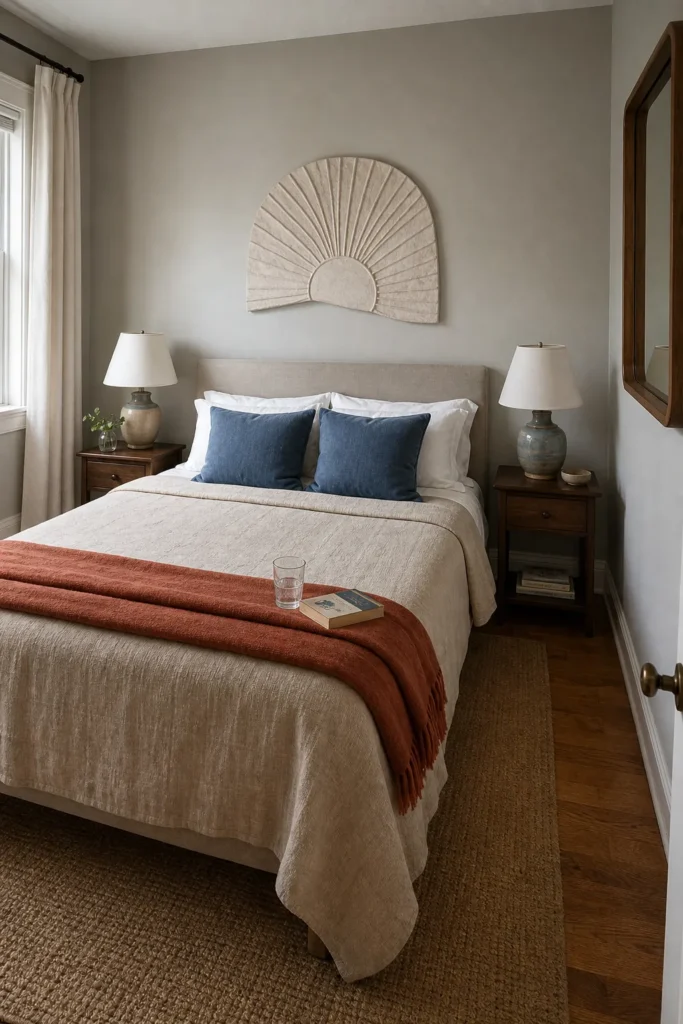
Guest Bedroom Wall Decor Ideas That Look Finished on a Budget
A guest room often becomes the last room to be decorated and the first room expected to feel welcoming. That is why blank walls are so frustrating: the furniture may be in place, the bedding may be fresh, yet the room still reads as temporary. The good news is that a finished-looking guest bedroom does not require expensive original art or a wall full of accessories. It needs one clear focal point, correct scale, a repeated color story, and enough restraint for guests to use the room comfortably.
These guest bedroom wall decor ideas focus on decisions that make inexpensive pieces look deliberate. Start with what you already own, spend where size matters, and let useful items such as mirrors and hooks count as decoration. The result can feel collected and cozy without becoming crowded.
Start With a Wall Plan, Not a Shopping List
Before buying guest room wall art, stand in the doorway and identify the wall your eye lands on first. In most rooms, it is the wall behind the bed. In others, it may be a long wall opposite the door or the narrow wall beside a window. Choose one wall to carry the visual weight. The remaining walls can support it with a mirror, a small print, or nothing at all.
This single decision prevents the most common budget mistake: purchasing several small objects that never add up to a finished composition. A room with one properly scaled arrangement usually looks more intentional than a room with six unrelated bargains.
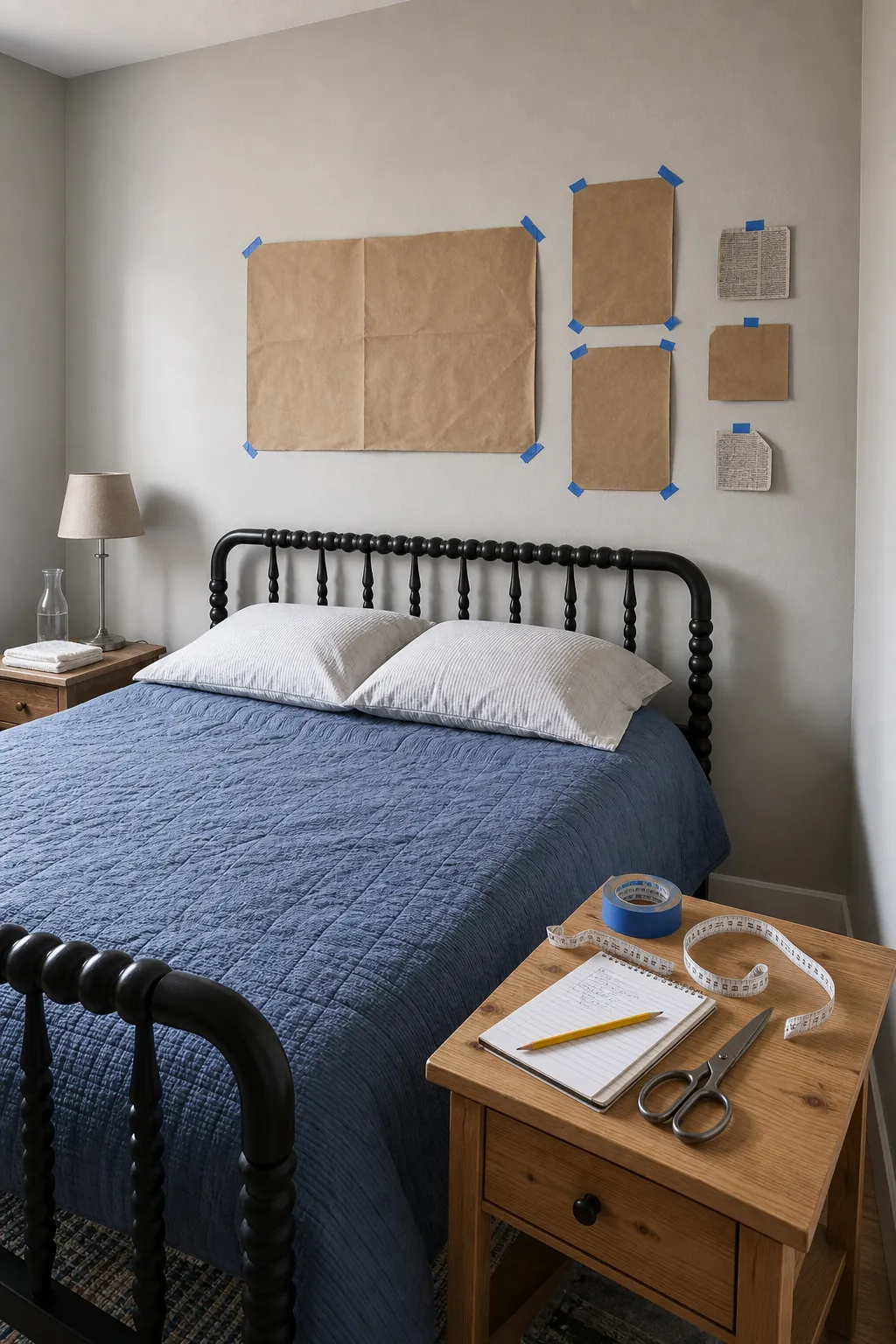
Use painter’s tape and scrap paper to mock up the shape of the arrangement. Leave the templates in place for a day and look at them from the doorway, from the bed, and with the room’s lamps switched on. This costs nothing and answers the questions that online shopping cannot: Is the piece wide enough? Does it crowd the headboard? Does the arrangement compete with the window?
As a practical starting point, aim for above-bed decor that spans roughly one-half to two-thirds of the bed or headboard width. Treat that as a visual test rather than an inflexible rule. An ornate or very tall headboard may need less above it, while a simple low headboard can support a broader statement. Keep the bottom of the arrangement visually connected to the bed instead of floating near the ceiling.
Make the Bed Wall Do the Heavy Lifting
If the bed wall is your focal wall, choose one strong approach: a single large piece, a matched pair, or a compact grid. Do not default to a gallery wall simply because you own several small frames. The simplest bedroom wall decor is often the most convincing because the bed, pillows, lamps, and headboard already create multiple lines and shapes.
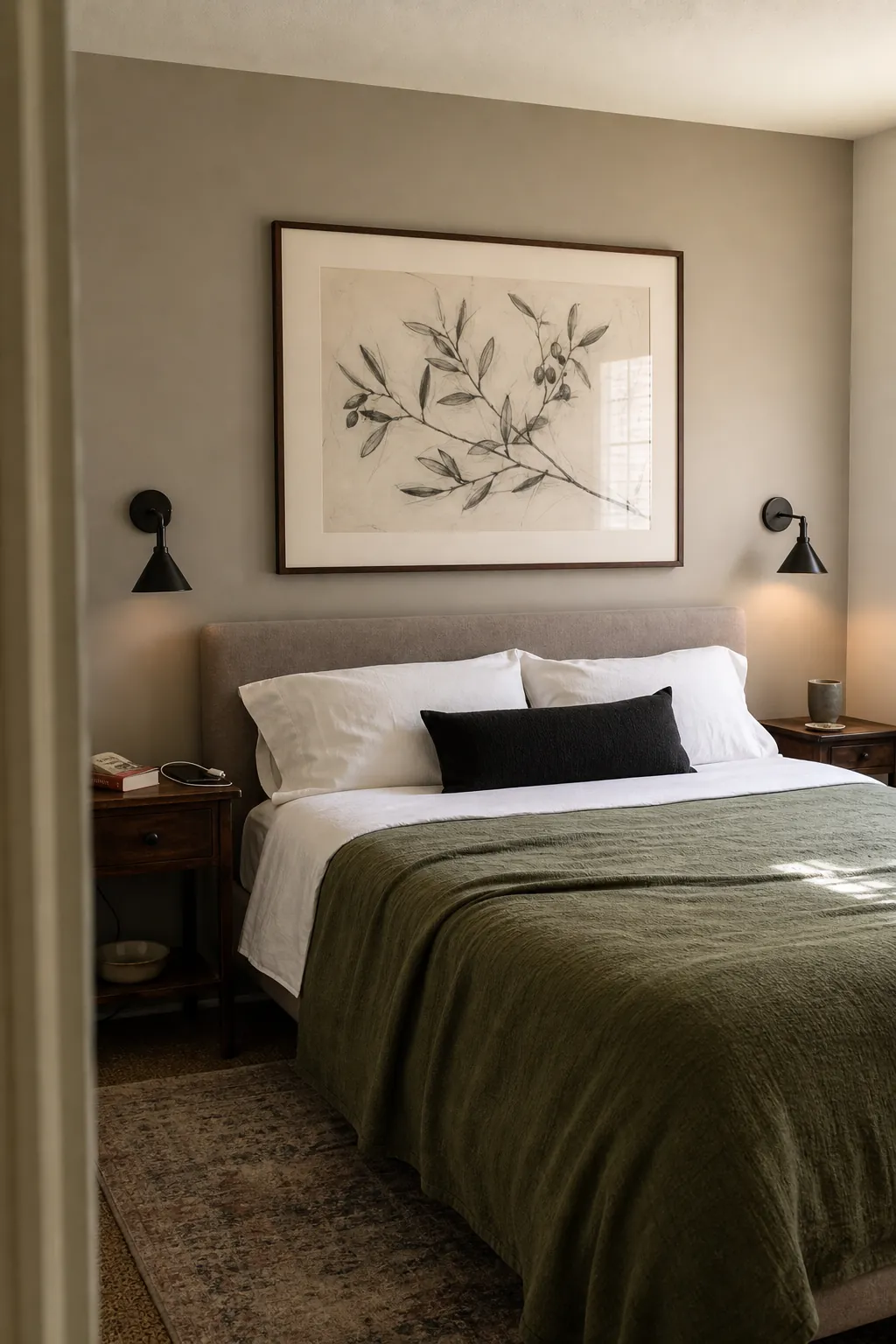
A large frame does not require an expensive print. Put a low-cost digital download, a piece of remnant fabric, a vintage bookplate, or your own black-and-white photograph inside a larger frame with an oversized mat. The generous border makes a modest image feel important. If a custom mat is outside the budget, cut a clean opening from archival-style mat board or use a ready-made frame whose mat fits a standard print size.
Be conservative with anything mounted above a sleeping guest. Avoid a shelf loaded with pottery, a heavy mirror, or glass-fronted art if it makes you or a visitor uneasy. Use hardware rated for the object’s weight and compatible with the actual wall material. Drywall anchors, masonry plugs, and studs solve different problems. For a lighter option, consider an unglazed canvas, a securely mounted textile, or a lightweight framed print with acrylic glazing.
Use Printable Art Without the Printable Look
Printable wall art is one of the easiest ways to stretch a small budget, but the download itself is only half the design. The polished effect comes from consistent paper, intentional framing, and a composition sized to the furniture. Three unrelated downloads in three almost-matching frames will look improvised; a coordinated set printed on the same paper can look custom.
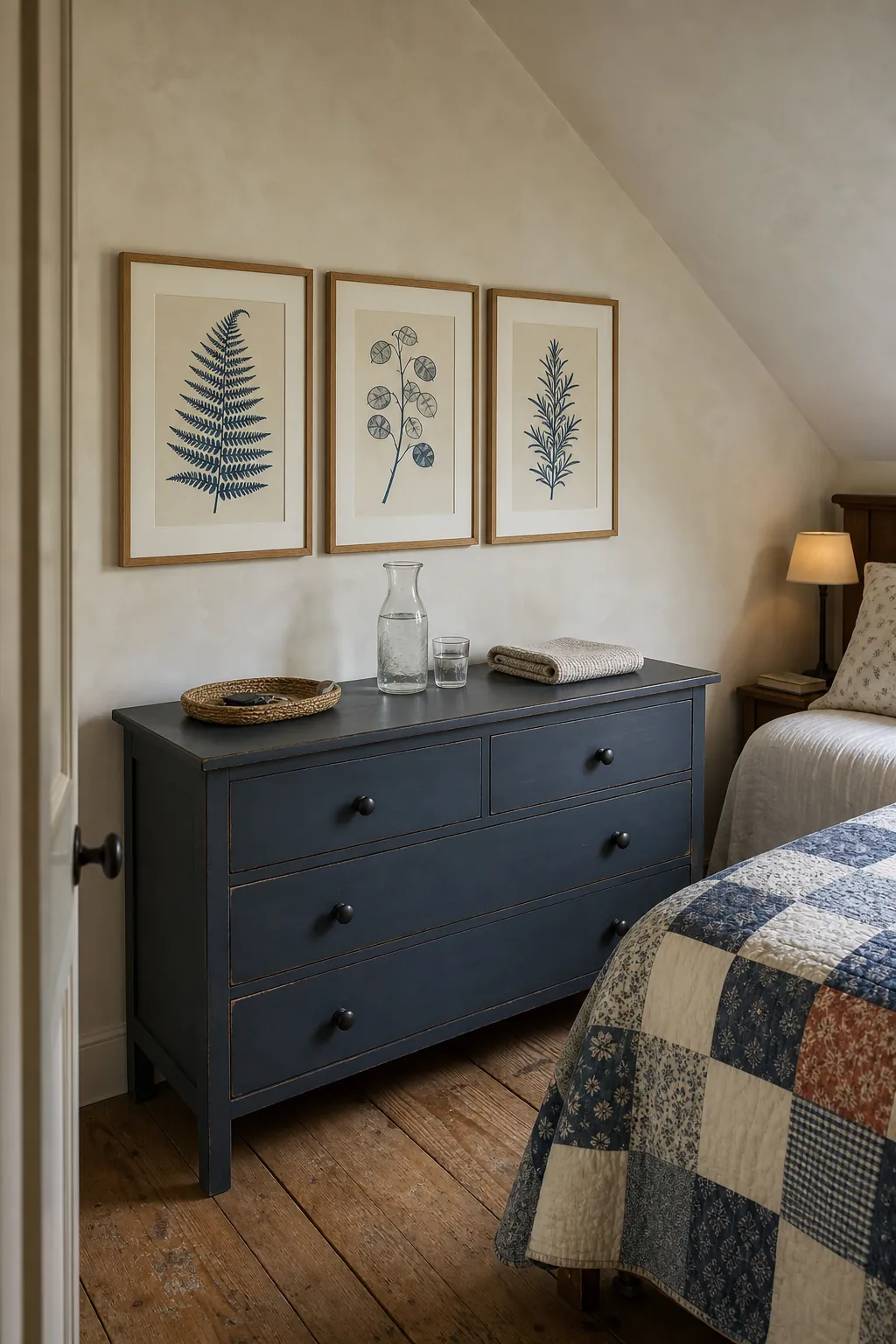
Choose files with enough resolution for the intended print size, then print all pieces through the same service or on the same stock. Matte paper generally looks calmer in a bedroom and reduces glare from bedside lamps. Repeat one frame finish—black, warm wood, or antique brass—and keep the spacing even. A set of three prints can feel like a single substantial piece when the outside edges create a clean rectangle.
To avoid a generic guest room, choose a subject that belongs to the home rather than a filler quote. Botanical studies can echo a garden outside the window. Historic maps can nod to the town guests are visiting. Family travel photos can be converted to black and white for a quieter palette. The goal is not to make the room deeply personal to the host; it is to give the room a point of view.
Turn a Useful Wall Into Decor
A guest bedroom has to work for someone who does not know where anything is. That makes functional wall pieces especially valuable. A full-length mirror helps a guest get dressed without leaving the room. Hooks near the door give a handbag, jacket, robe, or hat an obvious home. A plug-in sconce frees the nightstand for a phone, glasses, and water.
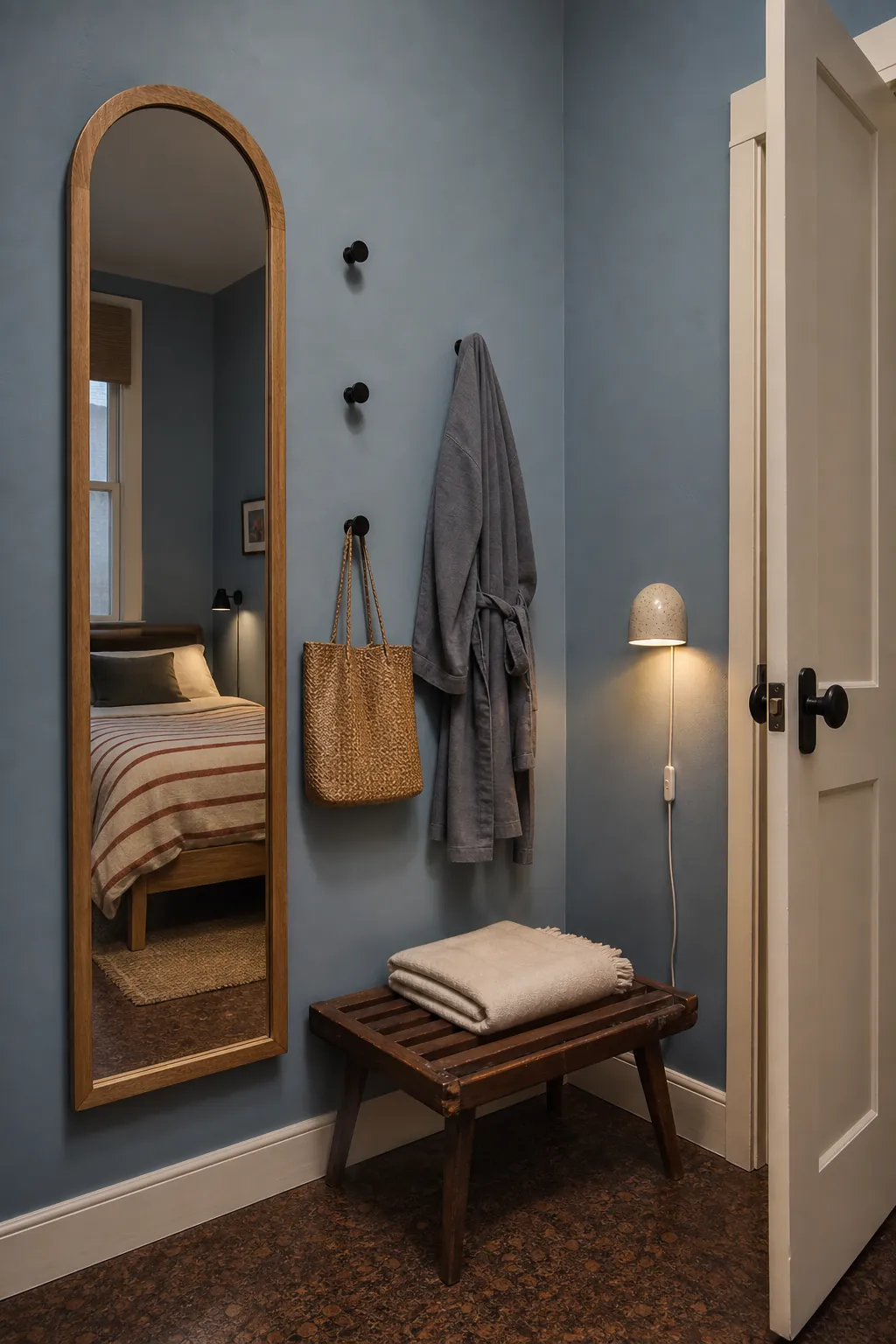
Treat these items as part of the composition. Match the mirror frame to one wood tone already in the room. Align hooks with a nearby door casing or dresser edge. Choose sconces that repeat the black, brass, or ceramic finish used elsewhere. Repetition is what makes affordable objects look selected rather than leftover.
Keep the area beneath functional wall decor clear enough to use. A mirror blocked by a pile of spare pillows is not useful. Hooks installed above a fragile vignette invite accidents. In a guest room, breathing room is not empty design; it is hospitality.
Create a Collected Moment With Thrifted Pieces
Thrift stores, flea markets, estate sales, and your own cupboards are useful sources for budget bedroom wall decor because they offer texture and irregularity that mass-produced sets often lack. Look for shallow woven trays, small framed sketches, carved wood pieces, textile samples, vintage plates, or an old frame that can be refinished.
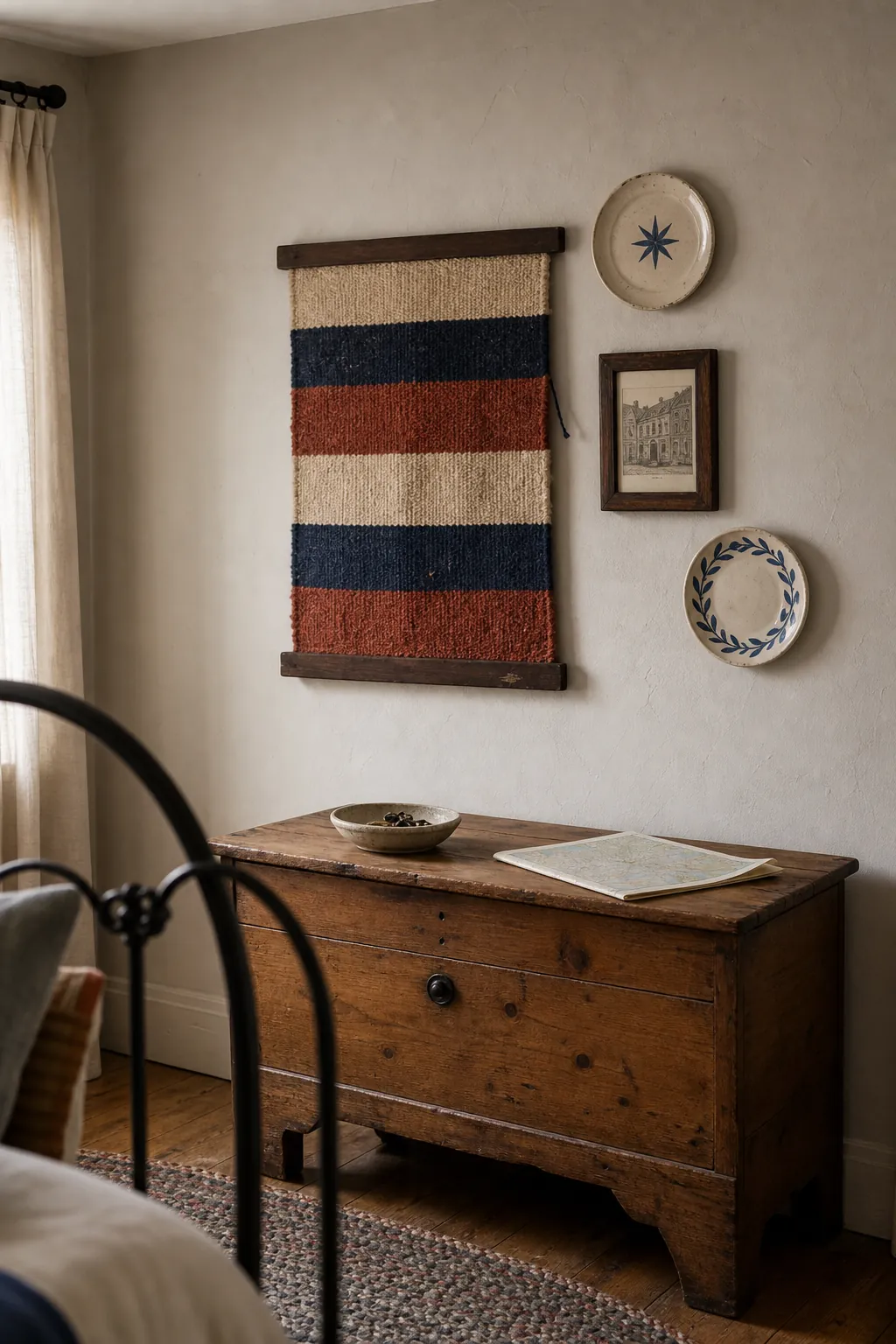
The trick is to edit before hanging. Limit the group to a shared material, color, or story. For example, combine a rust-and-indigo woven textile with two small cream ceramic plates and one dark wood frame. Their shapes can vary because the palette connects them. Lay the entire arrangement on the floor first, place the largest item slightly off center, and keep the gaps deliberate.
Do not force every find into the room. A collection looks expensive when it appears curated, and curated means something was left out. If the arrangement feels busy, remove the smallest or least connected object instead of buying another piece to balance it.
Add Architecture With Paint or Removable Pattern
When framed art is not the right answer, let the wall finish become the decor. A painted color block behind the headboard can visually widen a narrow bed and make a basic frame feel anchored. A narrow wallpaper panel can create the effect of a custom mural without covering the entire room. Simple applied trim can give a flat wall shadow and structure.
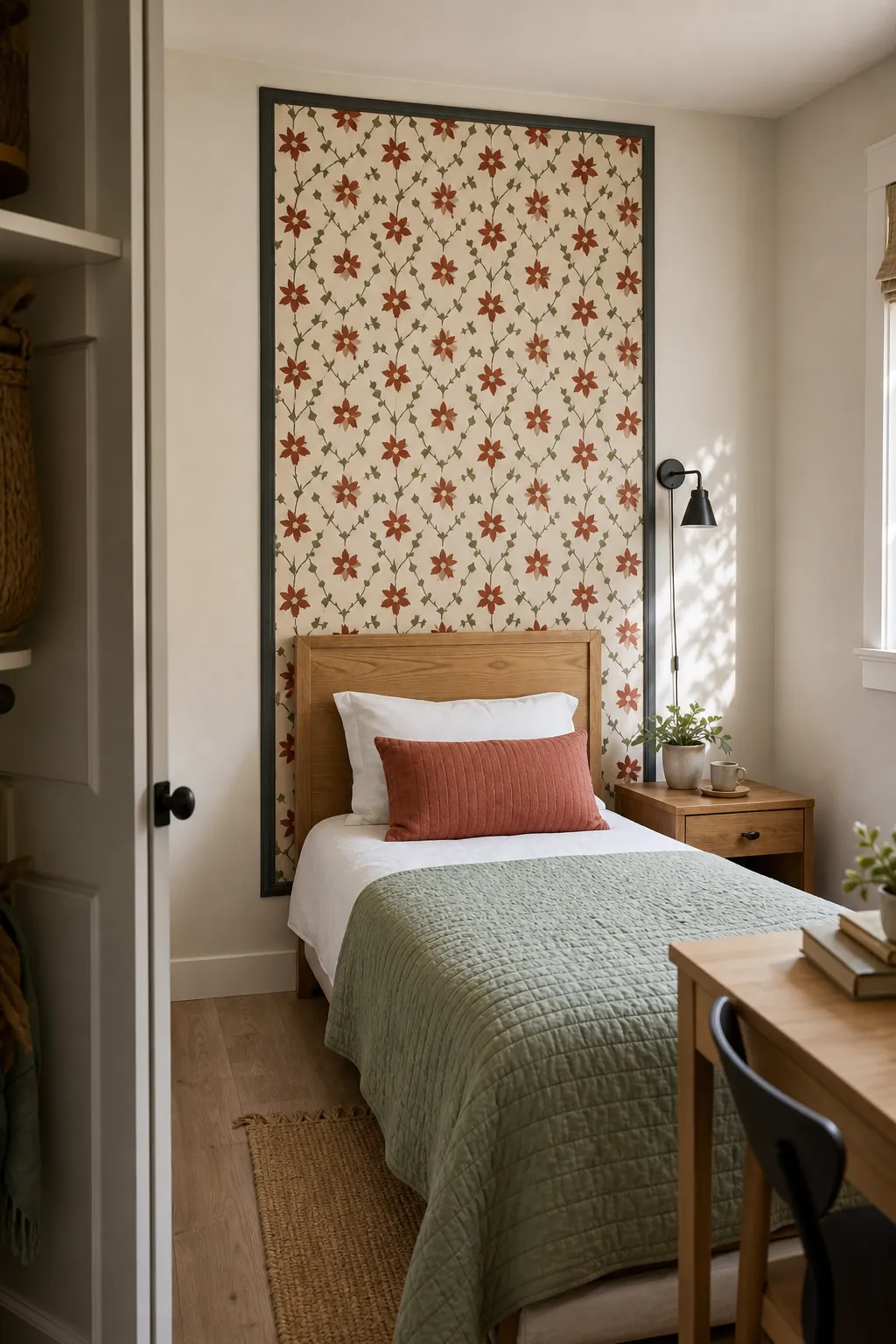
For a renter-friendly version, frame a length of removable wallpaper inside thin molding, or apply it to a lightweight panel that can be secured appropriately. A hand-painted arch is another low-cost option, but test its outline with tape first. The arch should relate to the headboard rather than forming an awkward halo around it.
Choose pattern based on the room’s existing visual noise. If the bedding is striped or floral, a quiet grasscloth-look texture or solid painted shape may be enough. If the bedding is plain, a small-scale block print can add character. Keep the palette to two or three colors already present in the quilt, curtains, rug, or lamps so the feature feels built in.
Finish the Room by Repeating, Editing, and Leaving Space
The last pass is where cozy guest bedroom ideas become a finished room. Repeat the focal wall’s main color in two or three small places: a pillow stripe, a lampshade edge, a folded throw, or the spine of a bedside book. Repeat one material, such as warm oak or matte black metal, on opposite sides of the room. These echoes create connection without requiring matching furniture.
- Lower anything that appears to float. Art should relate to the furniture beneath it.
- Remove one weak accessory. Empty nightstand space is more useful to a guest than decorative filler.
- Check the room at night. Glare, deep shadows, and awkward reflections often appear only after the lamps are on.
- Sit and lie on the bed. Confirm that wall pieces feel secure and that shelves, frames, or sconces do not crowd the sleeping area.
A guest bedroom looks finished when every wall choice seems to know its job. One piece anchors the bed, one useful element serves the guest, and the quieter surfaces give both room to work. Spend on scale only when you need to; use printable art, thrifted texture, paint, and repetition for the rest. The most welcoming room is not the fullest one. It is the one that feels considered before the guest sets down a bag.