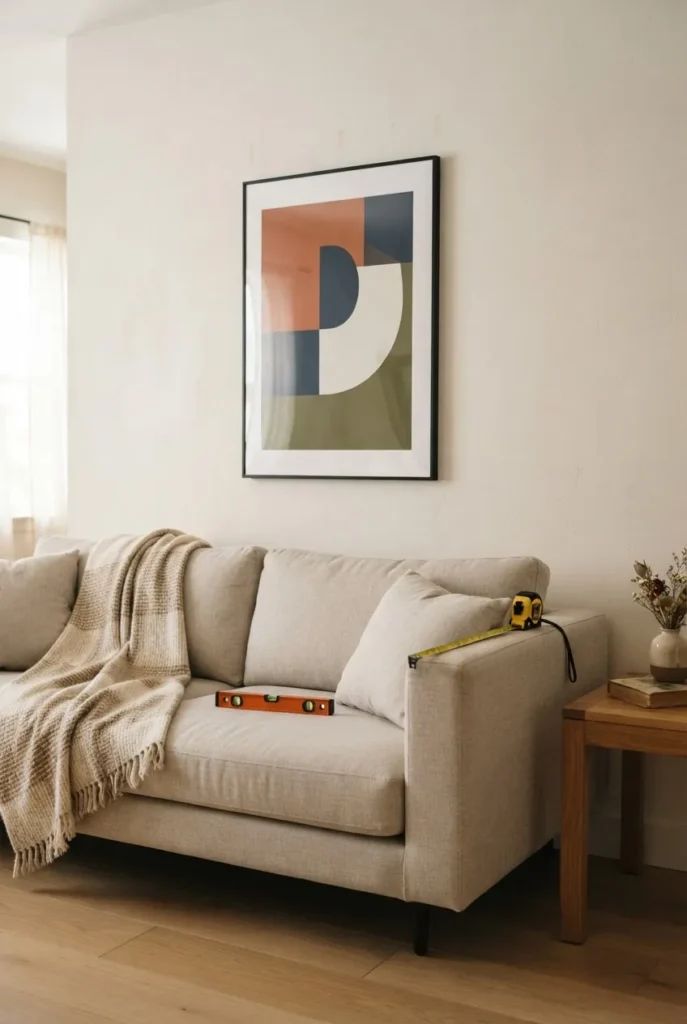
How High to Hang Art Above a Sofa Without Awkward Gaps
Art above a sofa looks awkward for one of three reasons: it is hung too high, it is too small for the sofa, or it is centered on the empty wall instead of the furniture below it. The fix is usually simpler than people expect. Treat the sofa and the art as one arrangement, then measure the gap from the sofa back to the bottom of the frame.
For most living rooms, the best starting point is a 6 to 8 inch gap between the top of the sofa and the bottom of the art. Some rooms can handle 8 to 10 inches, and a few tall-cushion sofas need slightly more, but once the gap gets much larger, the art often starts floating away from the couch. That is the awkward look people notice before they can explain what is wrong.
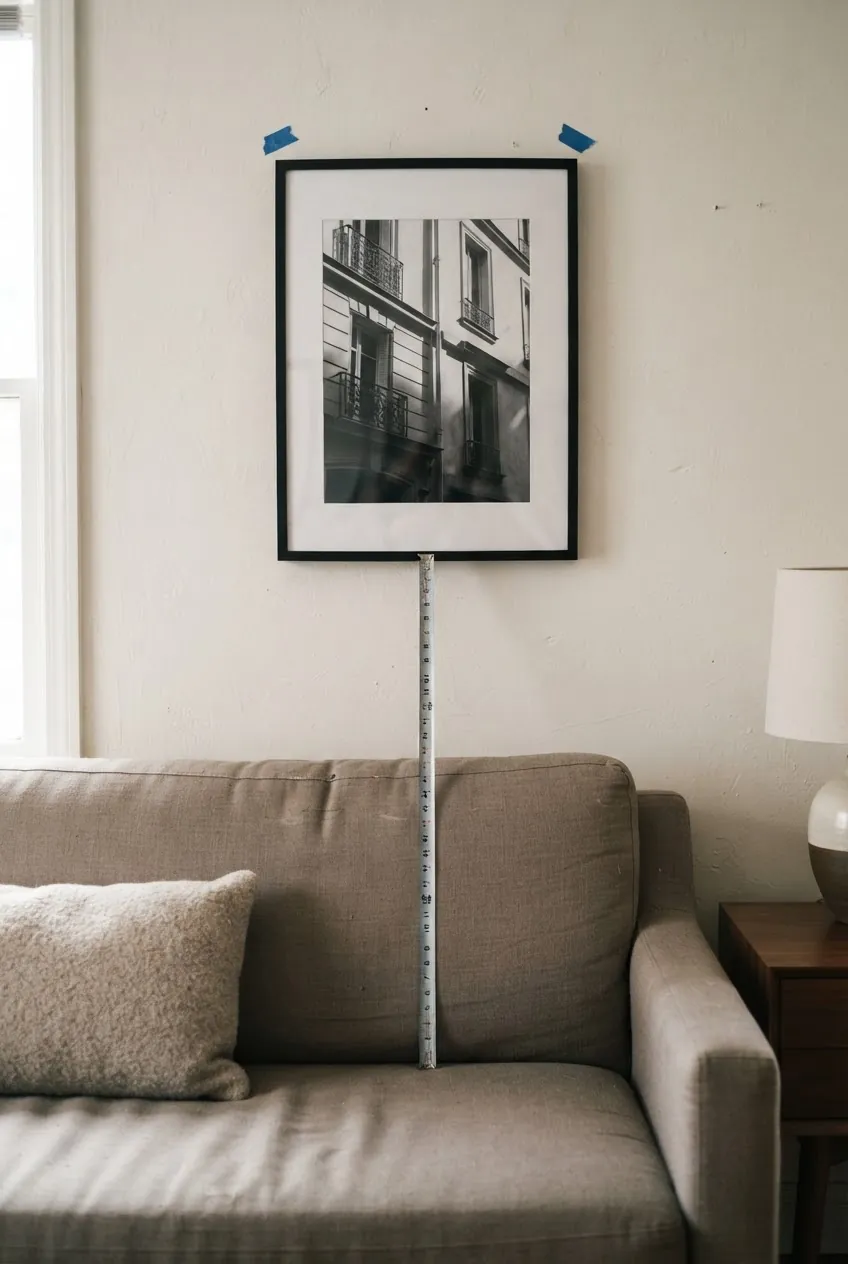
Start With the Sofa Gap, Not the Ceiling
The most common mistake is measuring the blank wall and trying to center the picture in that empty space. Above furniture, that usually pushes the frame too high. The sofa is the anchor, so the art should relate to the sofa first and the ceiling second.
Use this quick rule: place the bottom edge of the frame about 6 to 8 inches above the sofa back. If your sofa has loose back pillows, measure from the visual top of the cushions when they are fluffed the way they normally sit. If your sofa has a very low back, you may be closer to 8 to 10 inches. If the room has a low ceiling or an oversized piece, 5 to 6 inches can look more connected than a higher placement.
- Too high: the art looks separate from the couch and the wall feels empty underneath.
- Too low: the frame feels cramped, vulnerable to heads, or visually heavy on the sofa.
- Usually right: the art feels like it belongs to the seating area and the gap does not call attention to itself.
Use Eye Level Differently Above Seating
The classic picture hanging rule says to center art around eye level, often about 57 to 60 inches from the floor. That is useful for hallways and bare walls, but it is incomplete above a sofa. In a living room, people judge the art from a seated position and read it together with the cushions, pillows, lamp, and coffee table.
That is why a picture can technically be near eye level and still look wrong. If the sofa gap is huge, the art will feel disconnected even if the center height sounds correct on paper. Step back, sit down, and look at the wall from the place people actually use the room. The art should sit comfortably in that seated sightline.
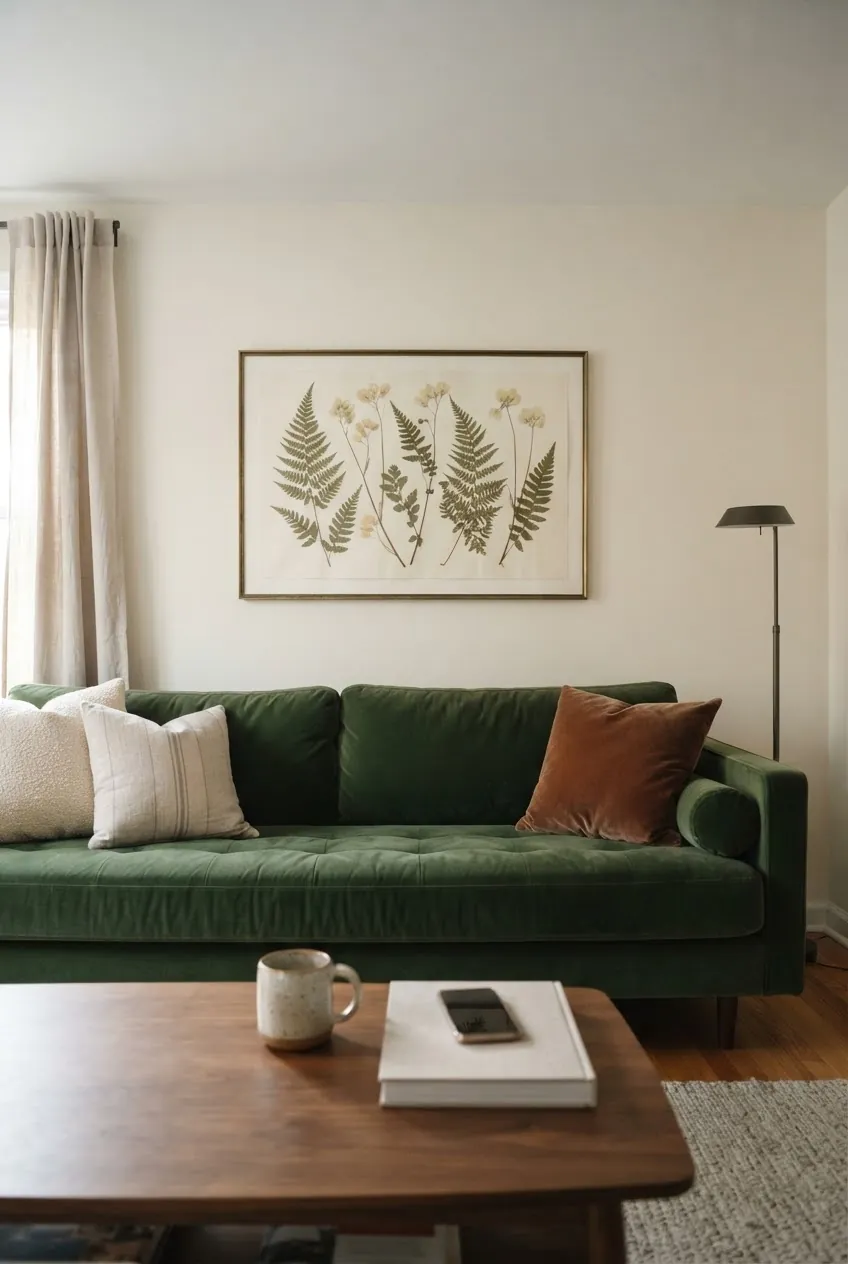
Check the Width Before You Blame the Height
Sometimes the height is not the real problem. A small piece hung above a long sofa can look awkward even at the perfect gap because it does not have enough visual weight. As a starting point, choose art or a grouped arrangement that is roughly two thirds of the sofa width. It does not need to be exact, but it should look intentional next to the furniture below it.
For an 84 inch sofa, a total art width around 54 to 66 inches usually feels balanced. That could be one large piece, two coordinated frames, or a gallery wall treated as one larger shape. If your art is much narrower, lowering it will help, but it may still feel lonely on the wall.
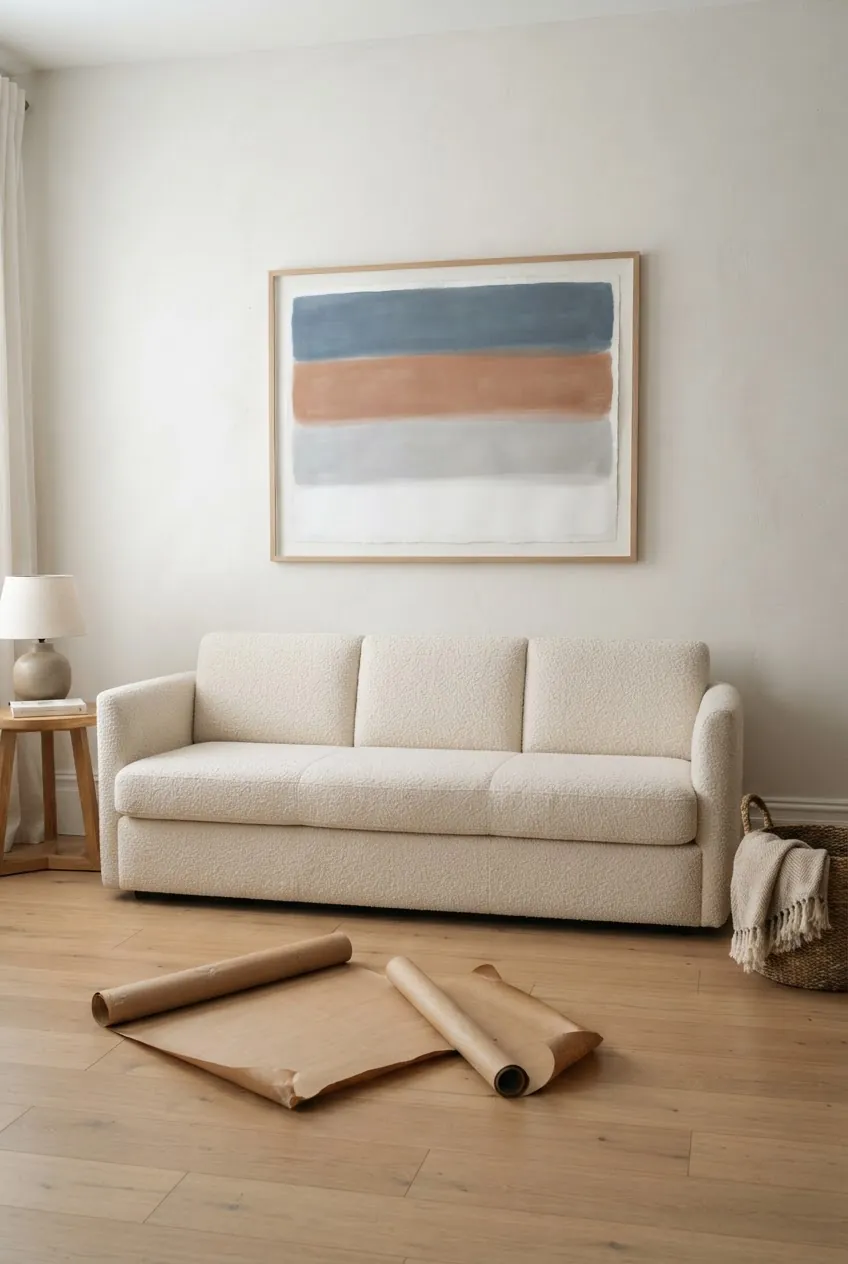
For Gallery Walls, Measure the Whole Group
A gallery wall above a sofa should not be treated as a set of unrelated frames. Plan the outside shape first, then hang that whole shape as if it were one large artwork. The bottom row should usually sit near the sofa with the same 6 to 8 inch starting gap, and the spaces between frames should stay consistent enough that the arrangement reads as one unit.
Before making holes, tape paper templates to the wall. This is the easiest way to see whether the gallery wall is creeping too high or spreading too wide. Most awkward gallery walls above couches have one of two problems: the bottom row floats too far above the sofa, or the entire grouping is too narrow for the seating below it.
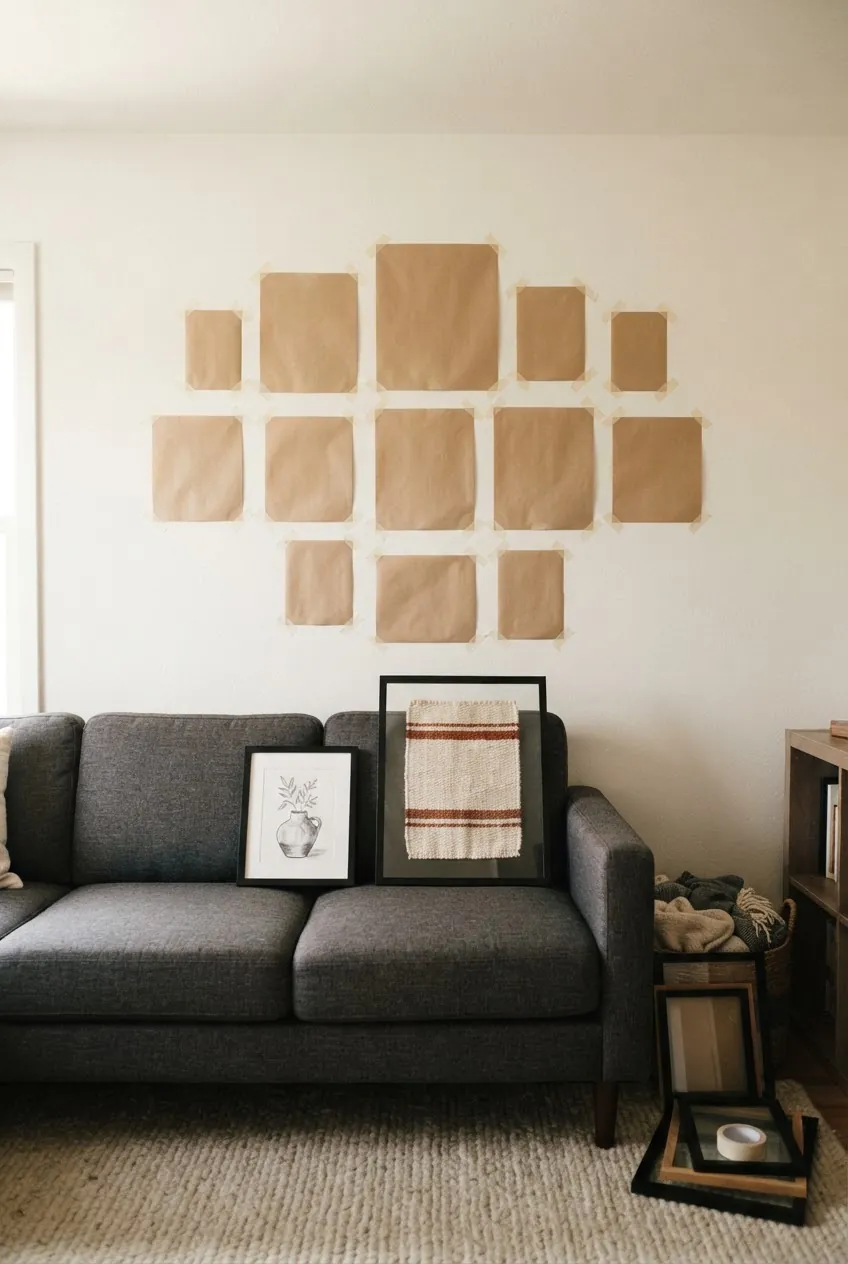
Adjust for Low Ceilings, Tall Sofas, and Windows
Rules are starting points, not orders. If your sofa has a very tall back, if there is a window frame beside the art, or if your ceiling is low, use the 6 to 8 inch rule as a test rather than a final answer. Low ceilings often look better when the art is slightly lower because the wall above the piece feels calmer. Tall sofa backs may need a touch more clearance so the frame does not feel crowded.
When the room has windows, sconces, shelves, or a picture light, make the art relate to those features without letting them pull it away from the sofa. The couch should still win the placement decision. If centering the picture between the sofa and ceiling makes the bottom gap huge, lower it.
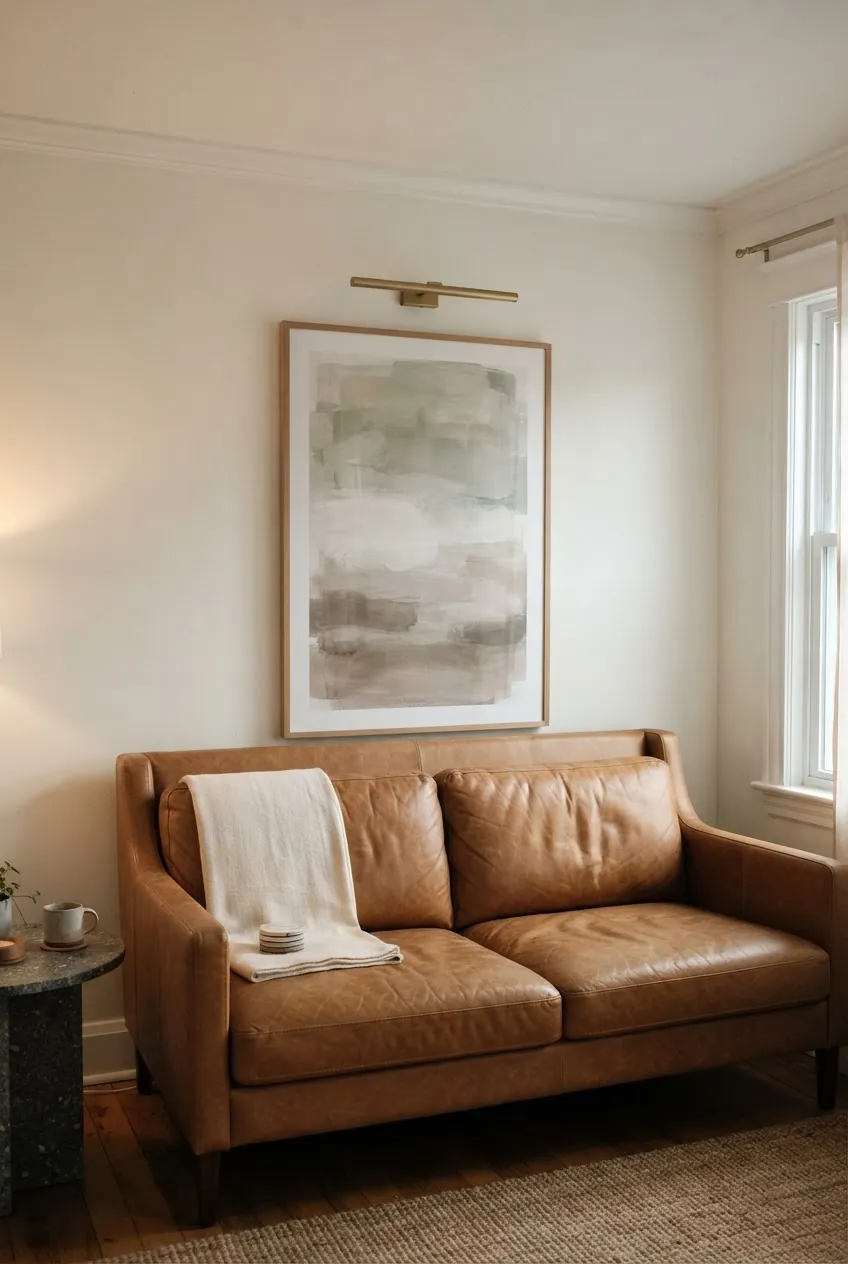
Do a Five-Minute Final Check Before Hanging
Once you have a likely height, test it before putting holes in the wall. Tape the outline, lean the frame on the sofa for a minute, or have someone hold the art while you sit across the room. You are looking for visual connection, not a perfect number.
- Gap: does the bottom edge sit about 6 to 8 inches above the sofa, or close enough for your room?
- Width: does the art or arrangement cover roughly two thirds of the sofa width?
- Centerline: is it centered over the sofa or the main seating span, not random wall space?
- Viewing angle: does it look right when you are sitting down?
- Nearby features: do windows, lamps, shelves, and ceiling height support the placement?
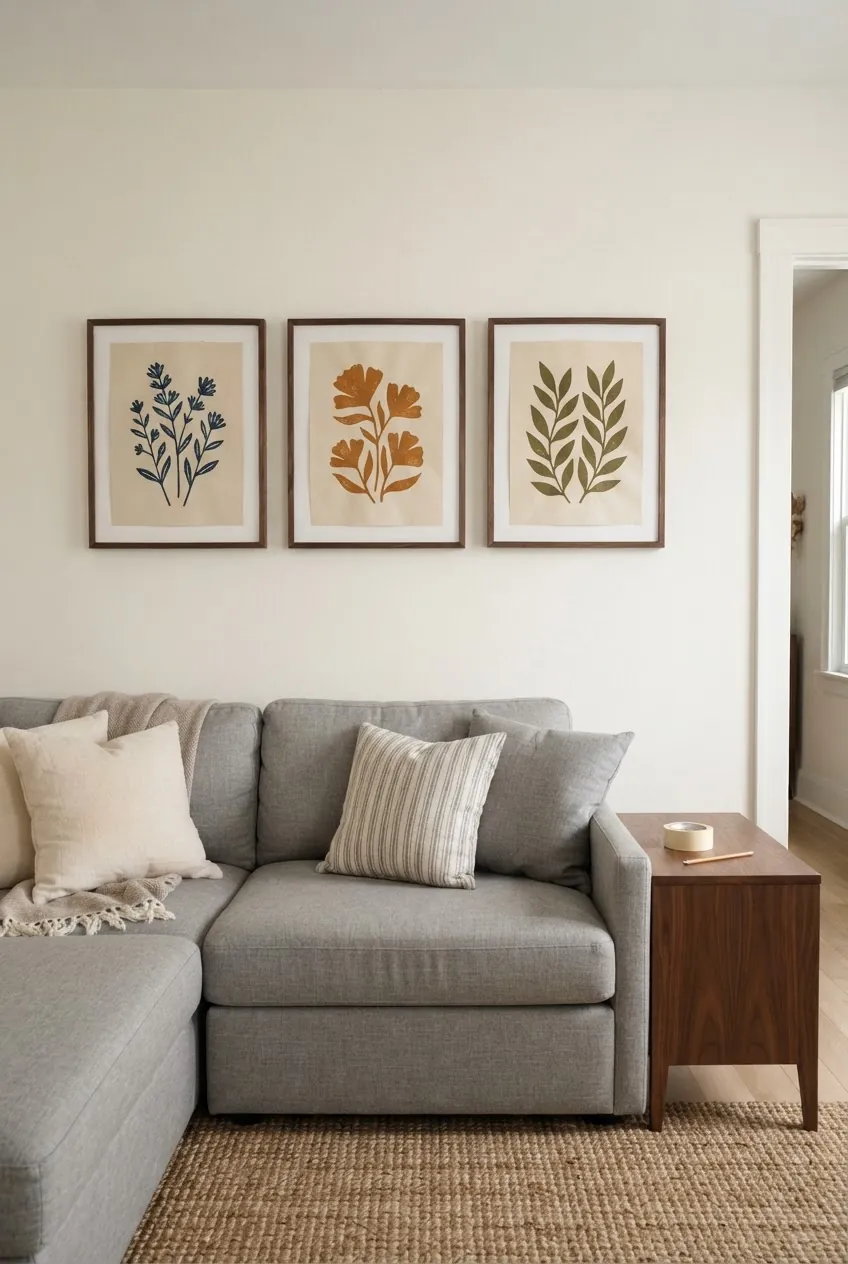
If the art still feels awkward, lower it first before buying something new. Then check the width. In most living rooms, those two changes solve the problem: a modest gap above the sofa and enough art width to balance the couch.