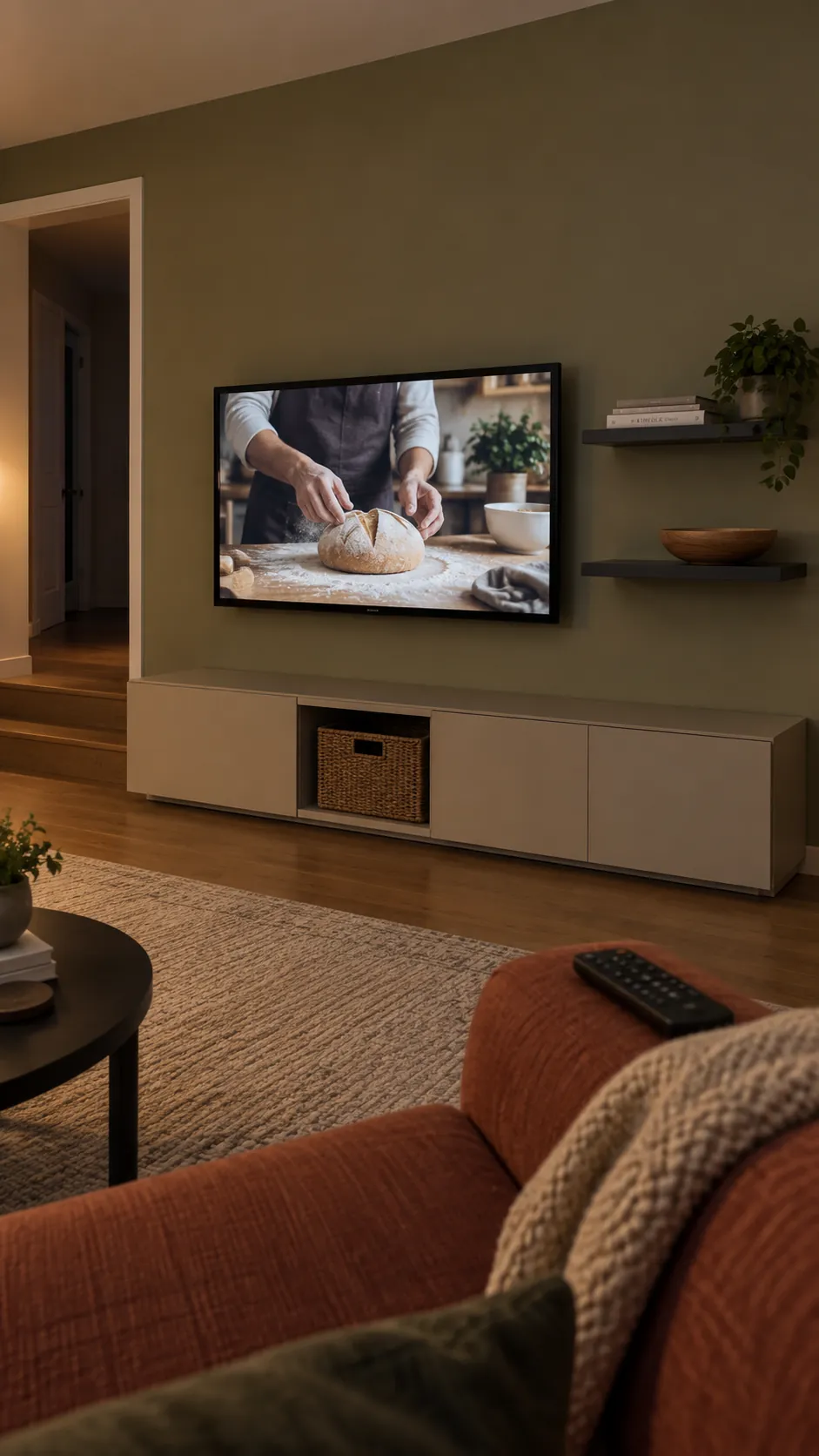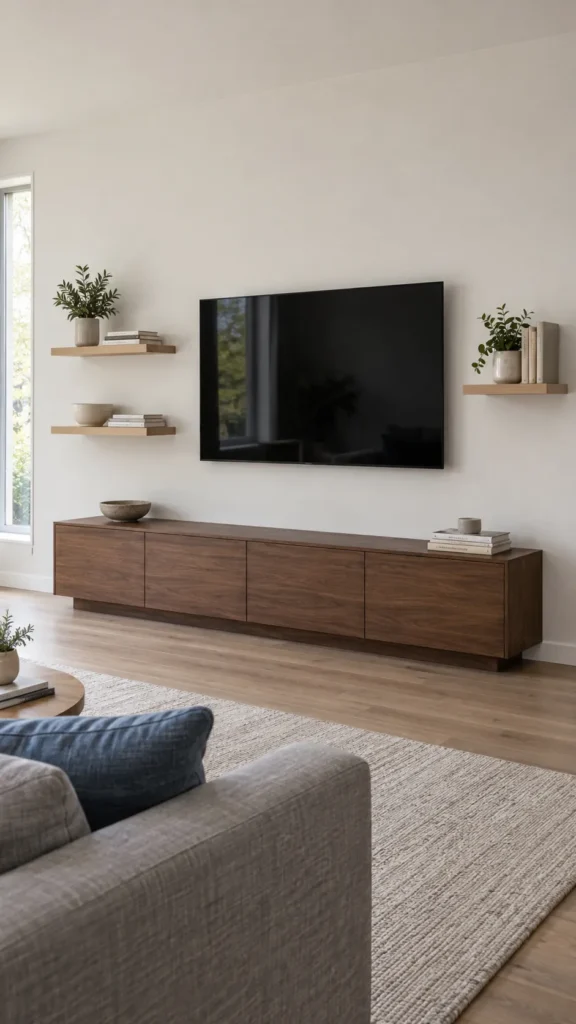
How to Arrange Floating Shelves Around a TV
A shelf that looks balanced on an empty wall can feel crowded once books, plants, and a moving picture enter the scene. Plan the shelves and their contents together, leaving the television enough space to function. The best arrangement usually starts with fewer boards than you think you need.
Map the space the television actually needs
Keep the screen at a comfortable height for your seating before deciding where shelves will go. Measure its width and height, the console below, and the available wall on both sides. Check the television and bracket instructions for ventilation, movement, cable connections, and access before marking a clear zone around the equipment.
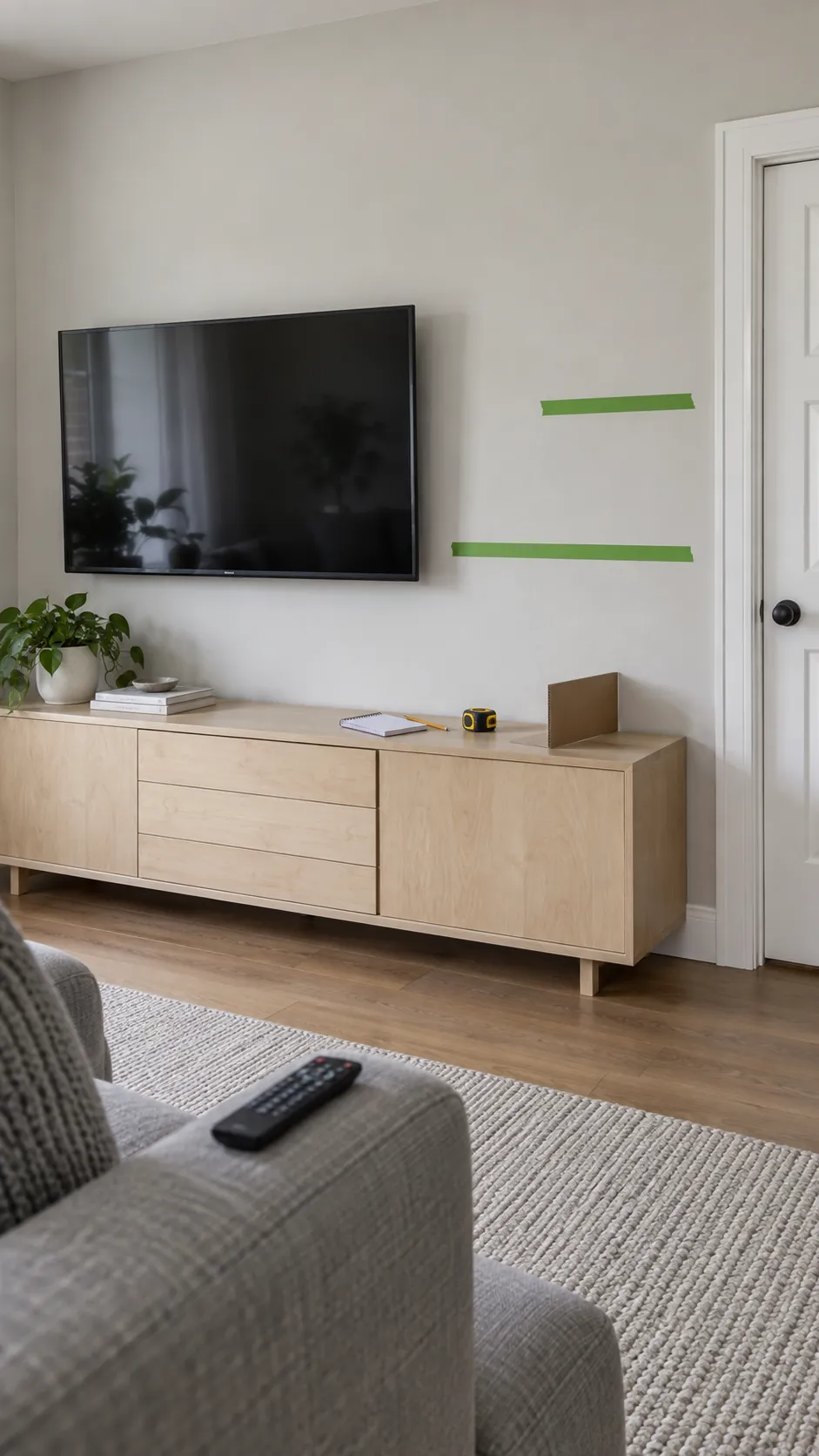
Use removable tape to represent the full shelf depth and length where practical, then view the outline from the sofa and the room entrance. Open nearby doors and curtains to check for interference. A shelf that clears the bezel straight on may still obstruct an extending bracket or project awkwardly into a walkway. Do not choose a universal gap from a picture online when your equipment requires something different.
Choose matching sides when the wall is balanced
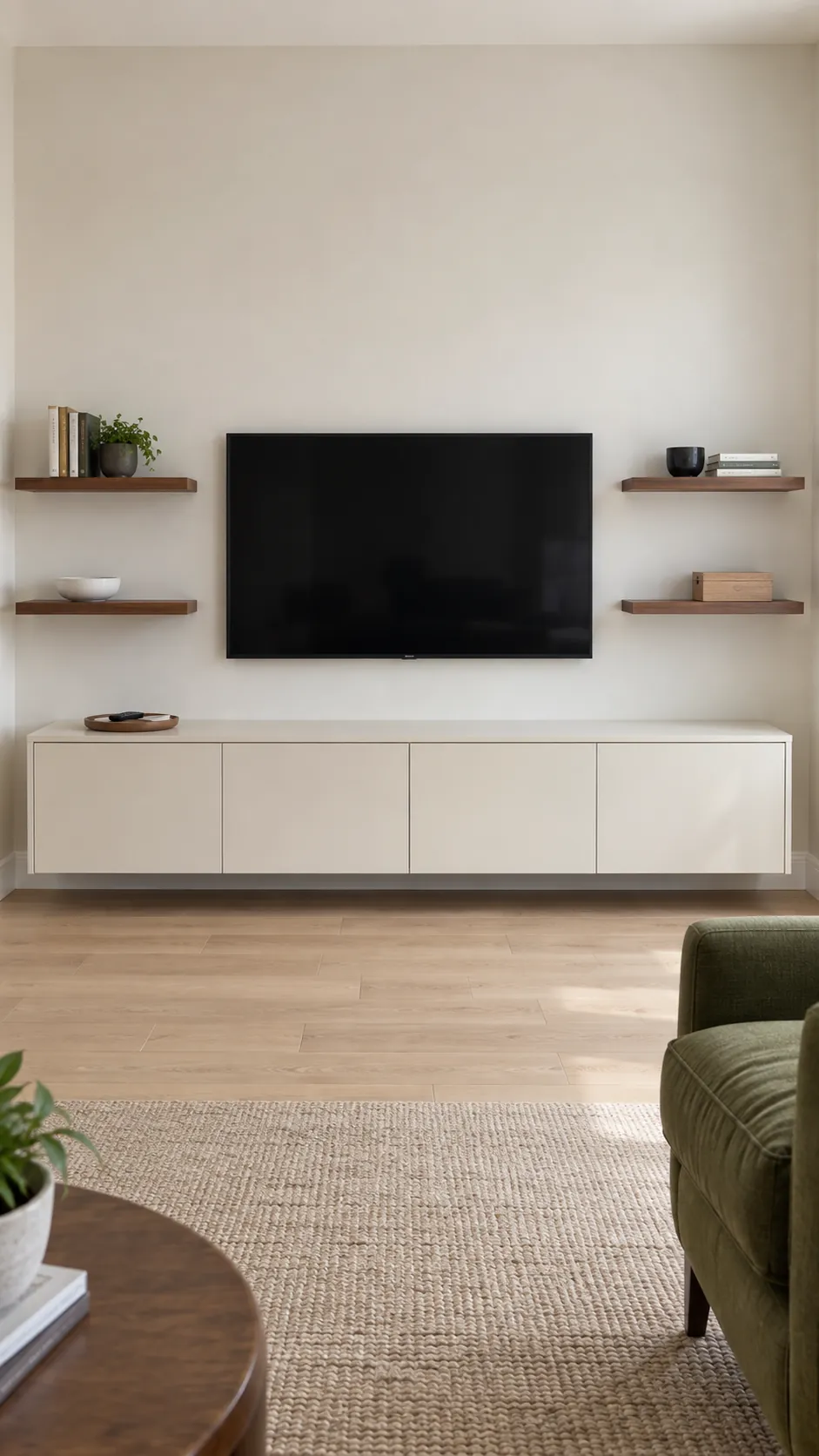
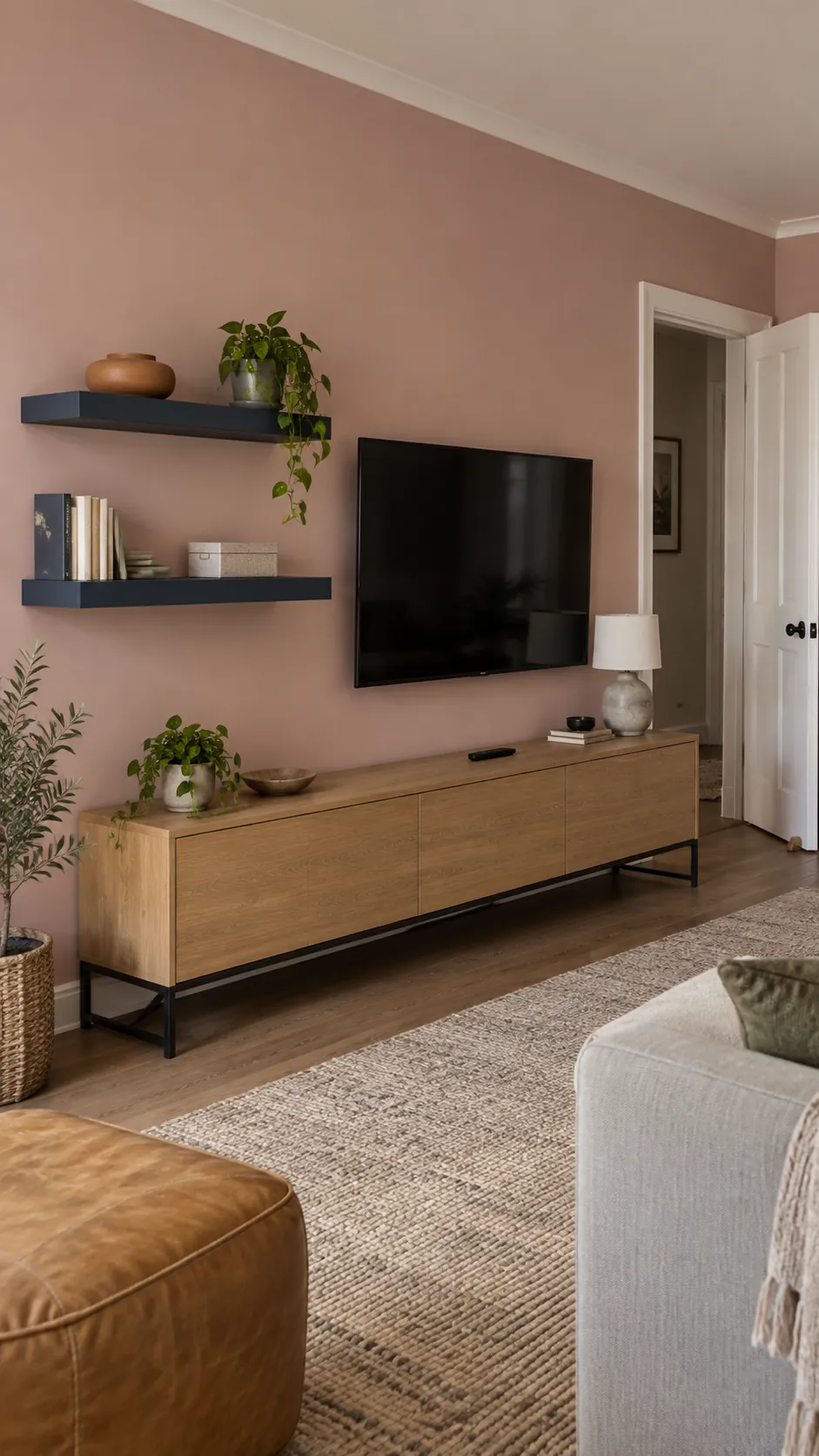
Two shelves beside TV edges on each side create a calm arrangement when the screen has similar wall space to its left and right. Match shelf length, thickness, and height so the structure reads clearly before you add objects. Let the top pair share a level line, then leave enough vertical room for the actual books or vessels planned for the lower pair.
Symmetry does not mean copying every accessory. A short stack of books on the left can balance a low bowl on the right if their visual weight is similar. Keep taller objects toward the outside and leave the inner shelf ends relatively quiet. This stops the contents from crowding the television even when the boards themselves are evenly spaced.
Use an offset grouping when one side has more room
Asymmetrical shelves around TV screens work well beside a doorway, window, or existing cabinet that limits one side. Put a small stack of shelves in the larger open area rather than squeezing equal boards into unequal spaces. A long console below can connect the shelf group and television into one composition.
Start with two shelves of different lengths and give them one shared alignment, such as matching outer ends. Shift the shorter shelf only after testing its contents, since offset boards plus scattered accessories can quickly become restless. Balance the other side with open wall or an existing lamp rather than automatically adding another shelf. The goal is comfortable weight across the wall, not the same number of objects everywhere.
Choose depth and fixings for the real load
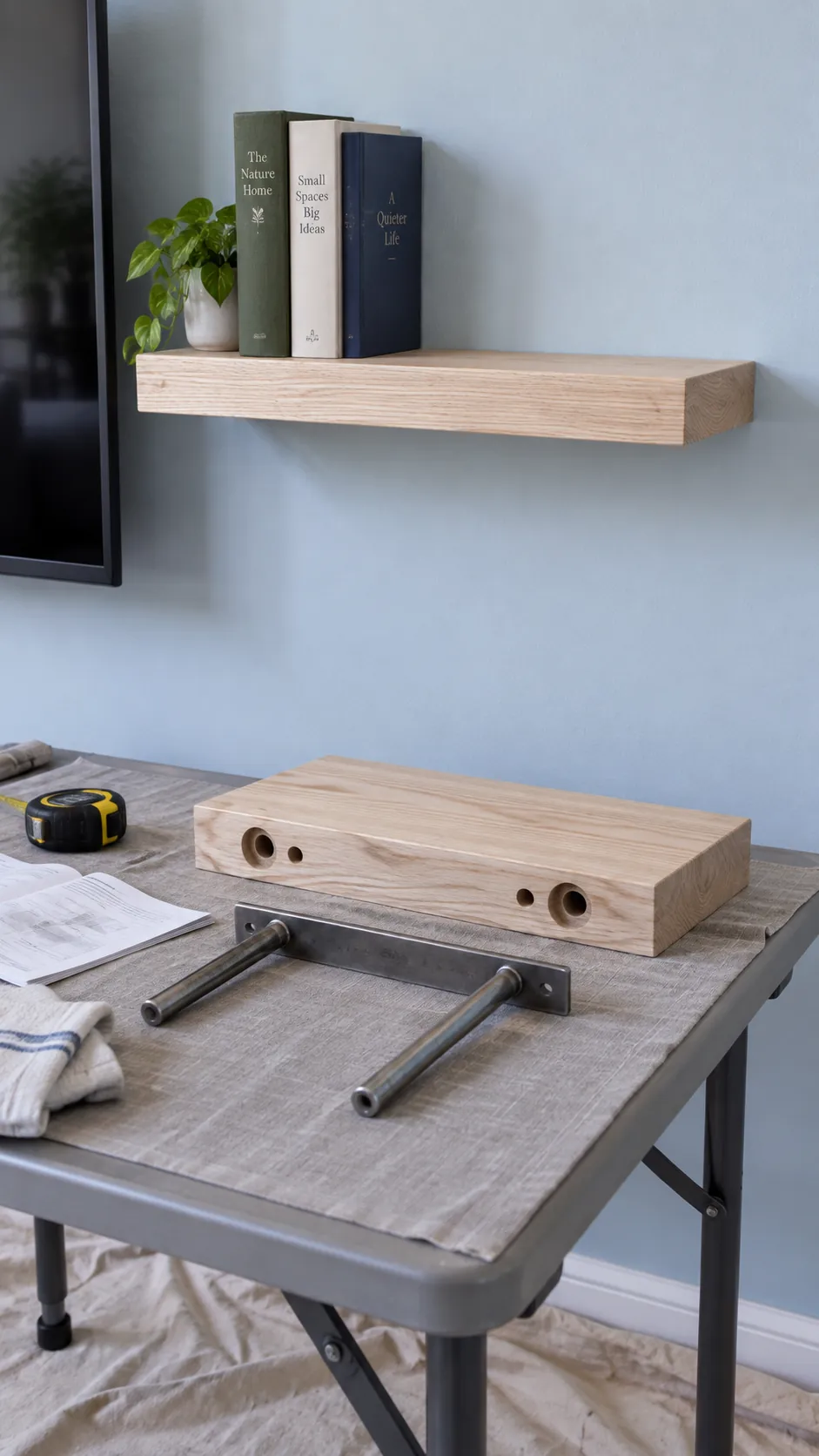
Slim display shelves suit a few small objects, while books and media equipment need depth and a load rating appropriate to their weight. Include the shelf’s own weight and every item it will carry when following the mounting system instructions. Hidden supports do not eliminate the need for suitable structural attachment or approved anchors for the actual wall construction.
Check for concealed services before drilling and choose fixings specified for the shelf system and substrate. Do not assume a decorative floating shelf can hold a heavy speaker, a row of large books, or a child pulling on its edge. Keep equipment ventilation and cable bend space in mind if the shelf will carry electronics. If the wall or fixing method is uncertain, get qualified installation advice before loading it.
Style small groups with clear gaps between them
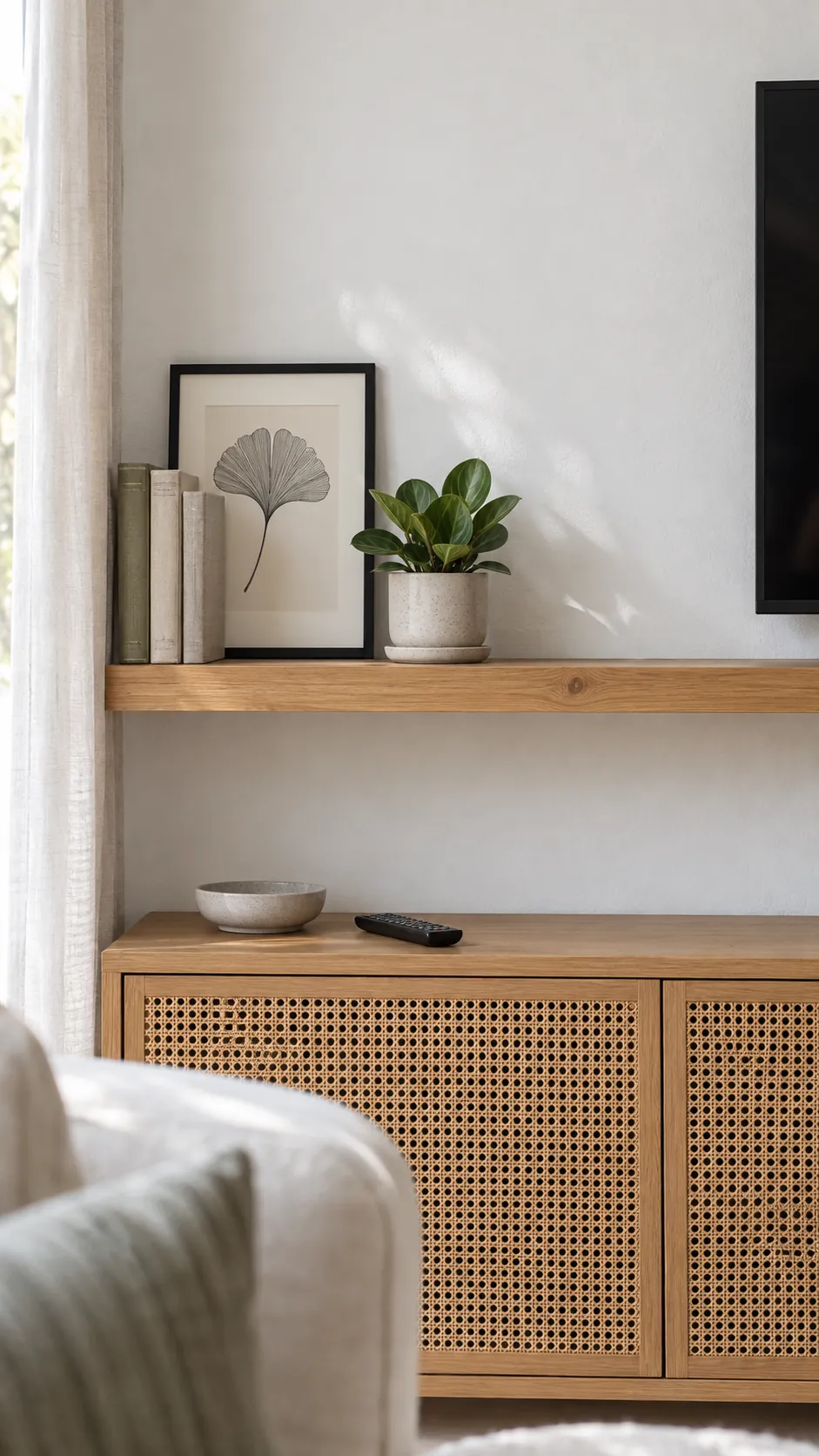
TV wall shelf decor works better when each shelf has an obvious pause. Place a modest book group near one end and a single contrasting object farther along, leaving part of the board empty. Vary heights within a small group while limiting the overall palette so the display does not compete with the screen.
A plant can soften the horizontal lines, but keep leaves and trailing stems away from the screen and its ventilation. Water plants elsewhere and use suitable containment so moisture cannot reach electronics. Avoid heavy or unstable objects above the TV, especially where children, pets, or vibration could dislodge them. If you use a picture, make sure it is secure and small enough to leave the shelf’s proportions visible.
Test the wall with the screen on
Turn on an ordinary program and sit where you normally watch. Check whether a shiny vase reflects light, a lamp throws glare onto the screen, or a tall object distracts you at the edge of your vision. Remove or relocate the offending object before changing the whole floating shelves TV wall layout.
Confirm that you can reach connections, operate the bracket, and dust the shelf surfaces without moving fragile objects over the television. Leave the console useful for everyday storage instead of making every surface a display. Photograph the finished living room TV wall from your seat and look for the busiest area first. If one less object makes the screen easier to watch, that empty space has earned its place.