How to Choose a Mirror Above a Sofa: Size, Shape, and Height
A mirror can brighten a living room and make the seating area feel complete, but the wrong one magnifies every proportion problem around it. A piece that is too wide can make the sofa look pinched, while a mirror hung too high appears detached even when its frame is beautiful. The safest choice comes from measuring the furniture, inspecting the future reflection, and planning the mounting before buying.
Measure The Sofa And Usable Wall
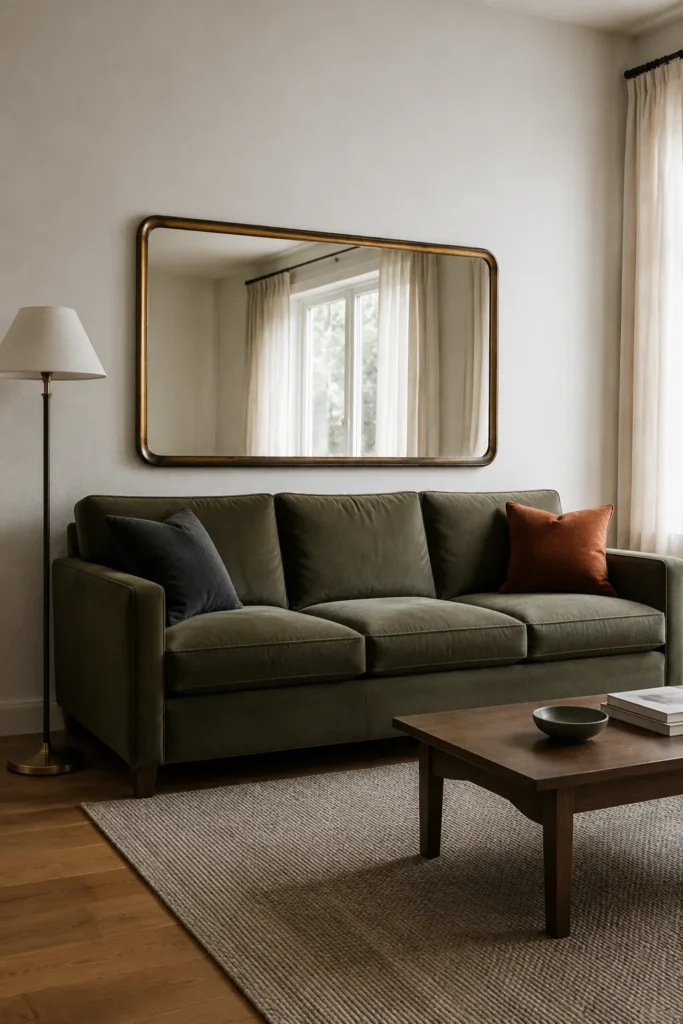
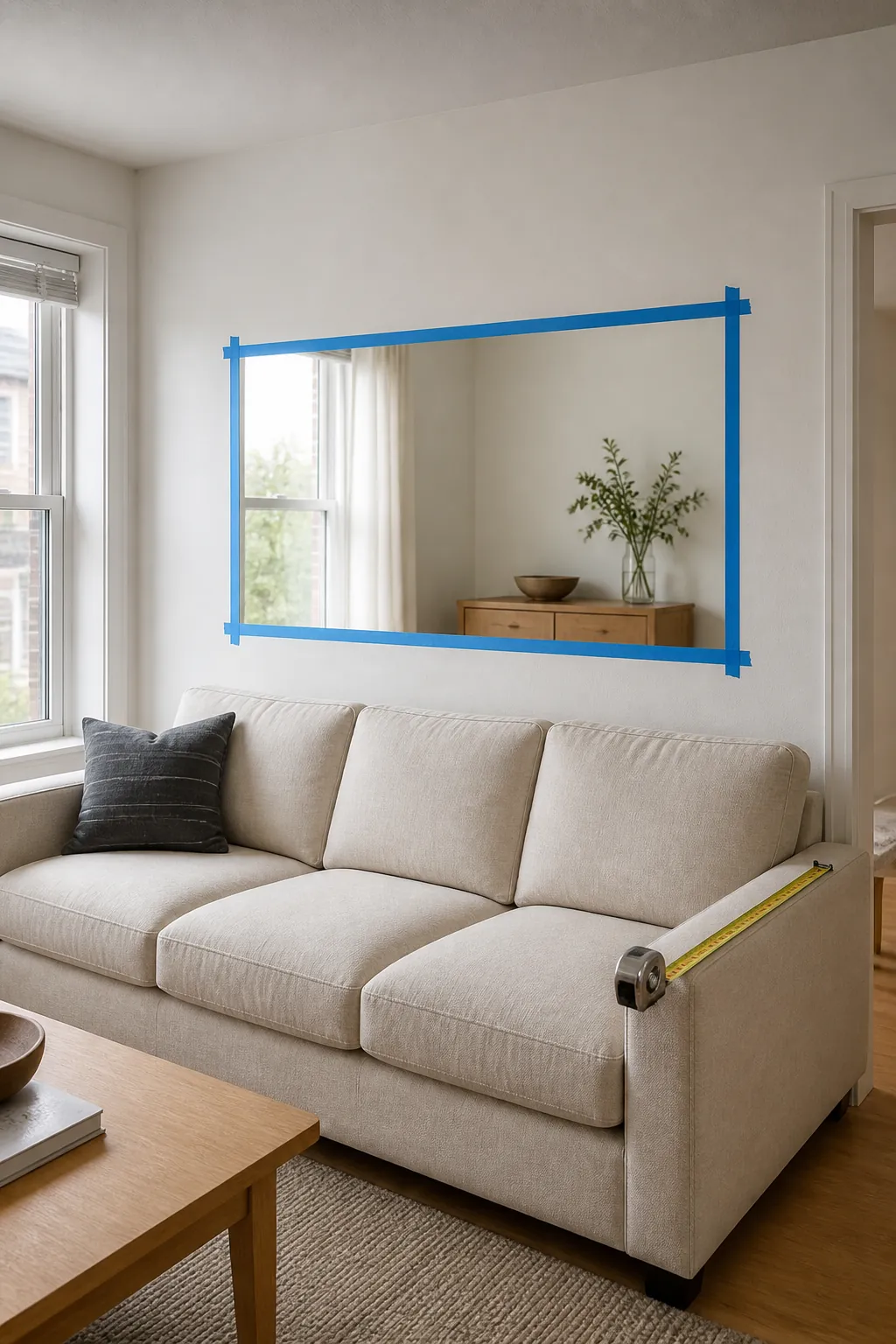
Measure the sofa across its full visual width, including broad arms, then record the clear wall area between nearby windows, shelves, lamps, or doorways. A mirror around one half to two thirds of the sofa width usually creates enough presence without matching the furniture edge for edge. Treat that range as a starting point rather than a command, since a very heavy frame reads larger than a frameless design of the same dimensions.
Mark the proposed outline with low tack painter tape and view it from the room entrance. Sit on the sofa as well, because a mirror that looks balanced while standing can feel looming at seated height. This inexpensive test catches the common mistake of buying a piece that technically fits the wall but overwhelms the seating zone.
Check What The Mirror Will Reflect
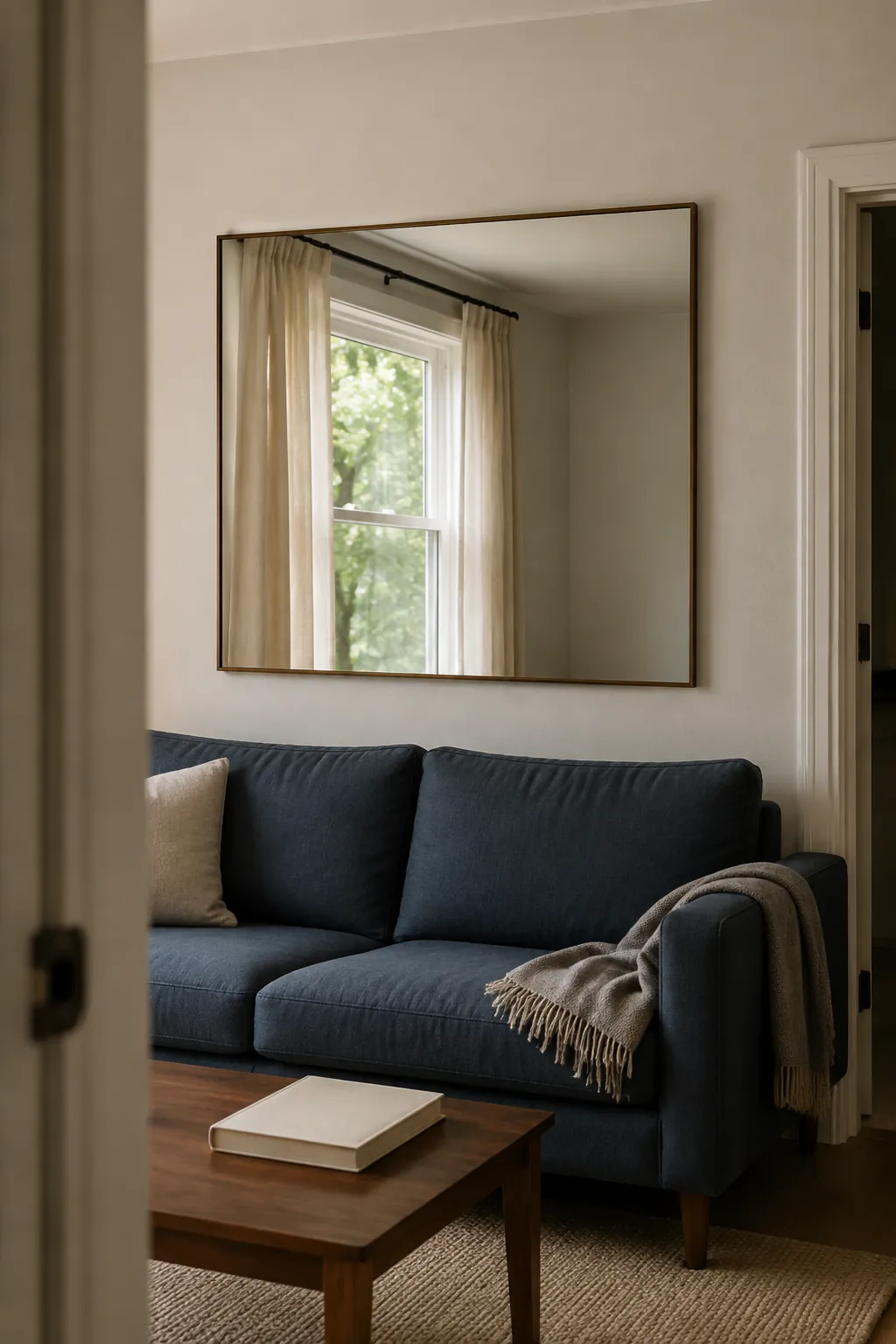
A mirror does not create a neutral blank surface. It repeats the window, ceiling fixture, artwork, television, storage, or doorway facing it, so that reflected view matters as much as the frame. Favor a location that captures daylight, a calm architectural line, or an attractive part of the room. Avoid reflecting a cluttered work surface or a bright lamp bulb that will create glare from the main seat.
Stand where the mirror center will sit and use a small handheld mirror to preview the view from several angles. Then check the reflection from the doorway and adjacent chairs, not just from directly in front. A good reflection adds depth without making the room visually busier.
Choose A Shape That Corrects The Room
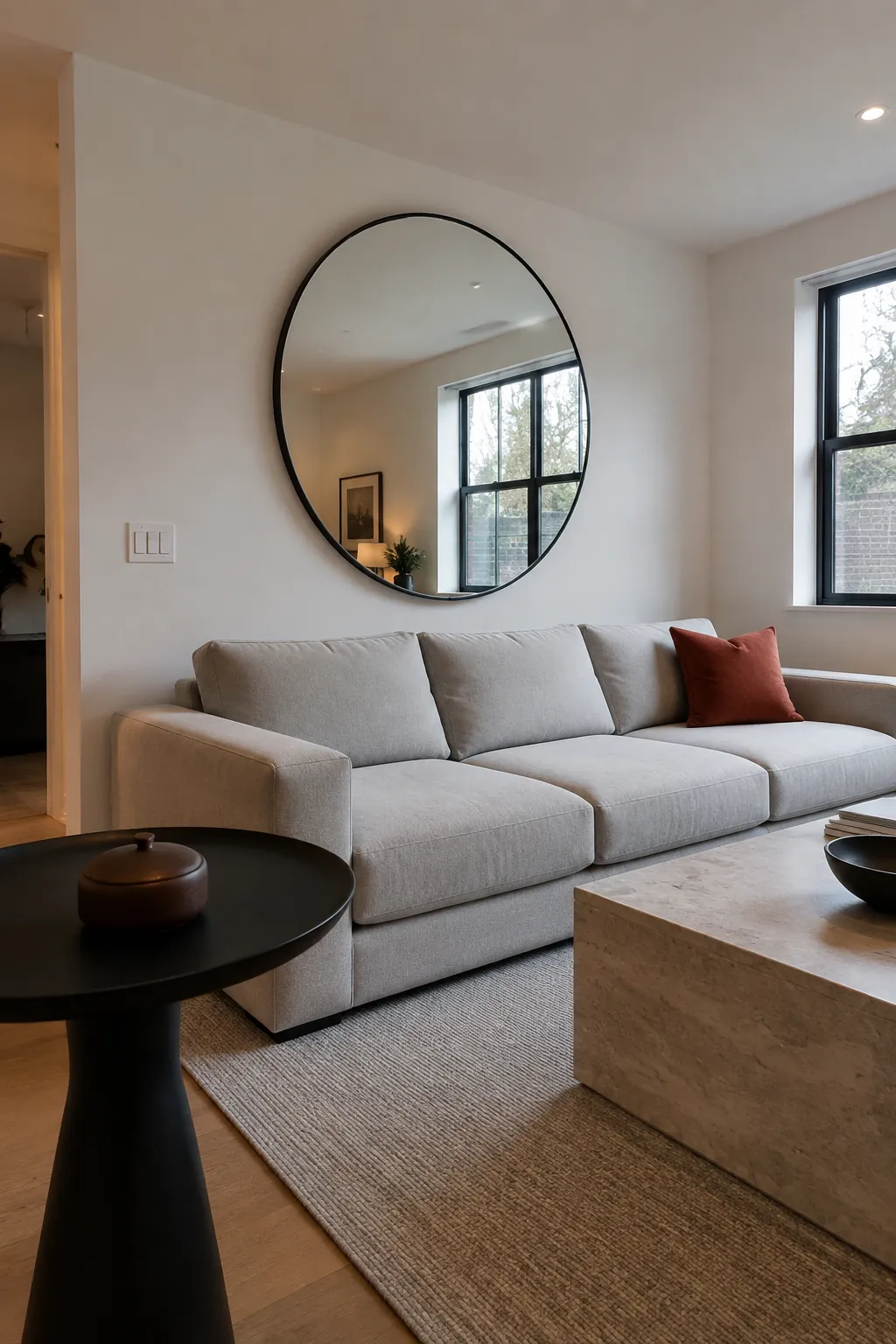
A round mirror softens rooms dominated by rectangular sofas, tables, windows, and rugs. An arched mirror adds height without introducing sharp upper corners, while a horizontal rectangle reinforces the length of a low couch. Organic shapes can handle an off center wall, but their visual weight is harder to estimate from listed dimensions alone.
Let the existing architecture guide the decision. Repeat one curve from a lamp or table if the room needs cohesion, or introduce a curve when every major line feels rigid. The shape should solve a visual imbalance rather than simply follow a trend.
Match Frame Weight To The Furniture
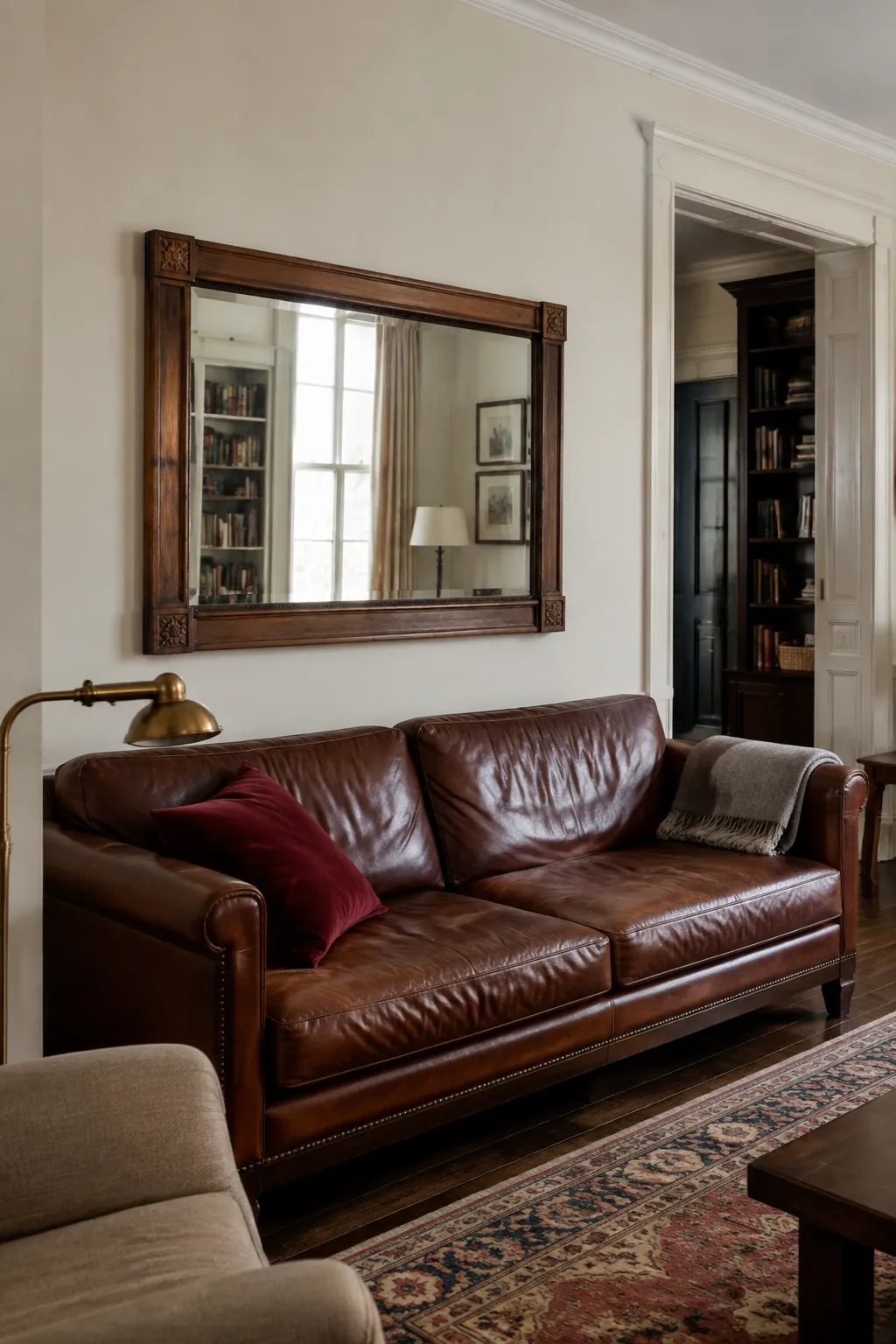
A thick carved frame adds substantial visual weight, so it can look larger than a slim metal frame with identical outside measurements. Pair a generous frame with a substantial sofa or a room containing dark timber and strong architectural detail. Choose a narrow frame when the couch is delicate, the wall is small, or the reflected view should remain the main event.
The finish does not need to match every metal or wood in the room. It should share an undertone or repeat one nearby detail, such as aged brass from a lamp or warm oak from a table. Small material connections look more natural than a room where every finish is identical.
Set The Height From The Sofa
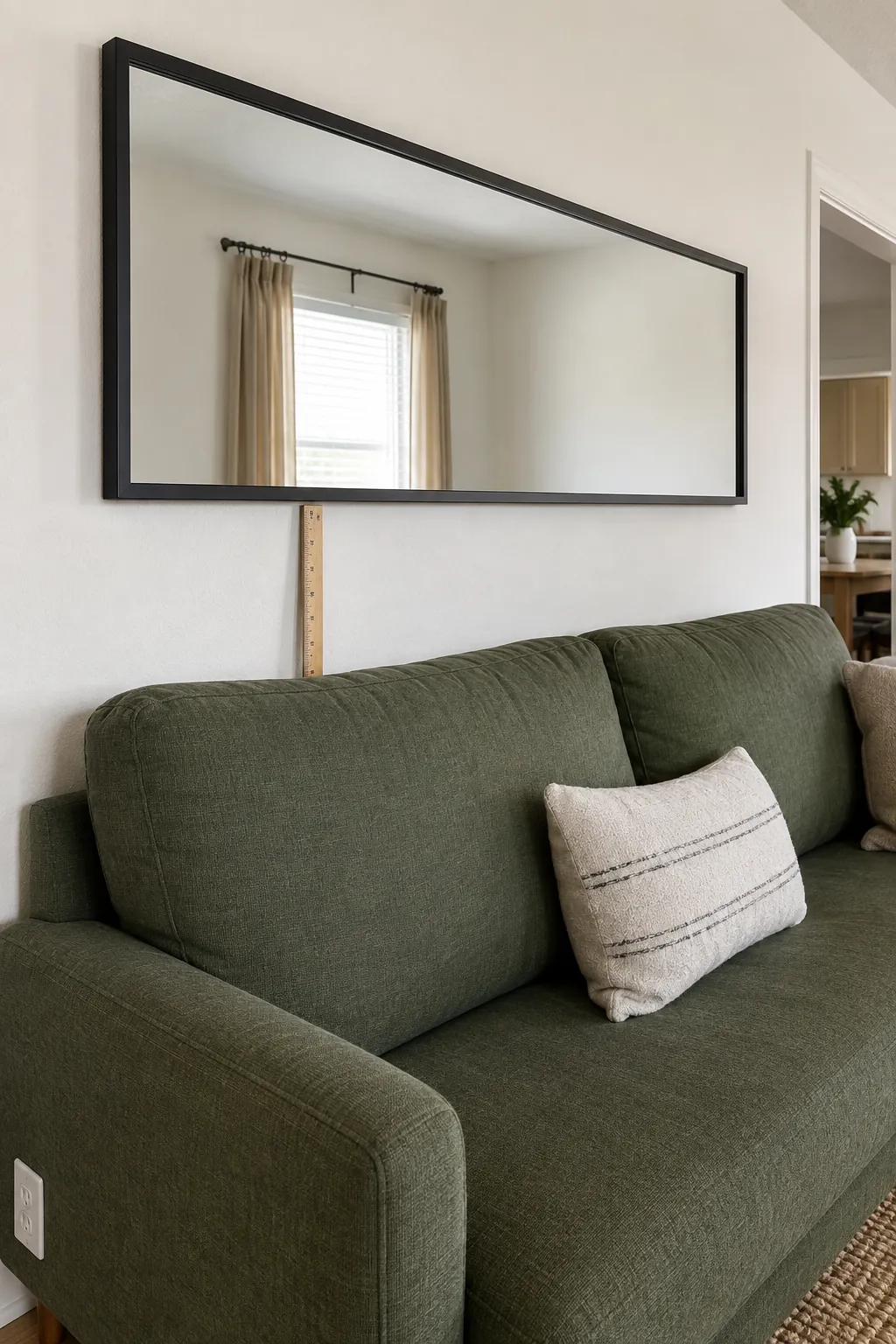
For a mirror tied to a seating group, the sofa is usually the more useful reference than a universal eye level rule. Begin with roughly six to ten inches between the sofa back and the bottom of the frame, then adjust for tall cushions, low ceilings, and the mirror shape. The goal is a clear safe gap that still allows both pieces to read as one composition.
When the wall has a very high ceiling, resist lifting the mirror simply to fill empty space. Add height through the mirror shape or nearby lighting instead. Large blank space above the mirror is less distracting than an awkward gap directly above the couch.
Center On The Seating Composition
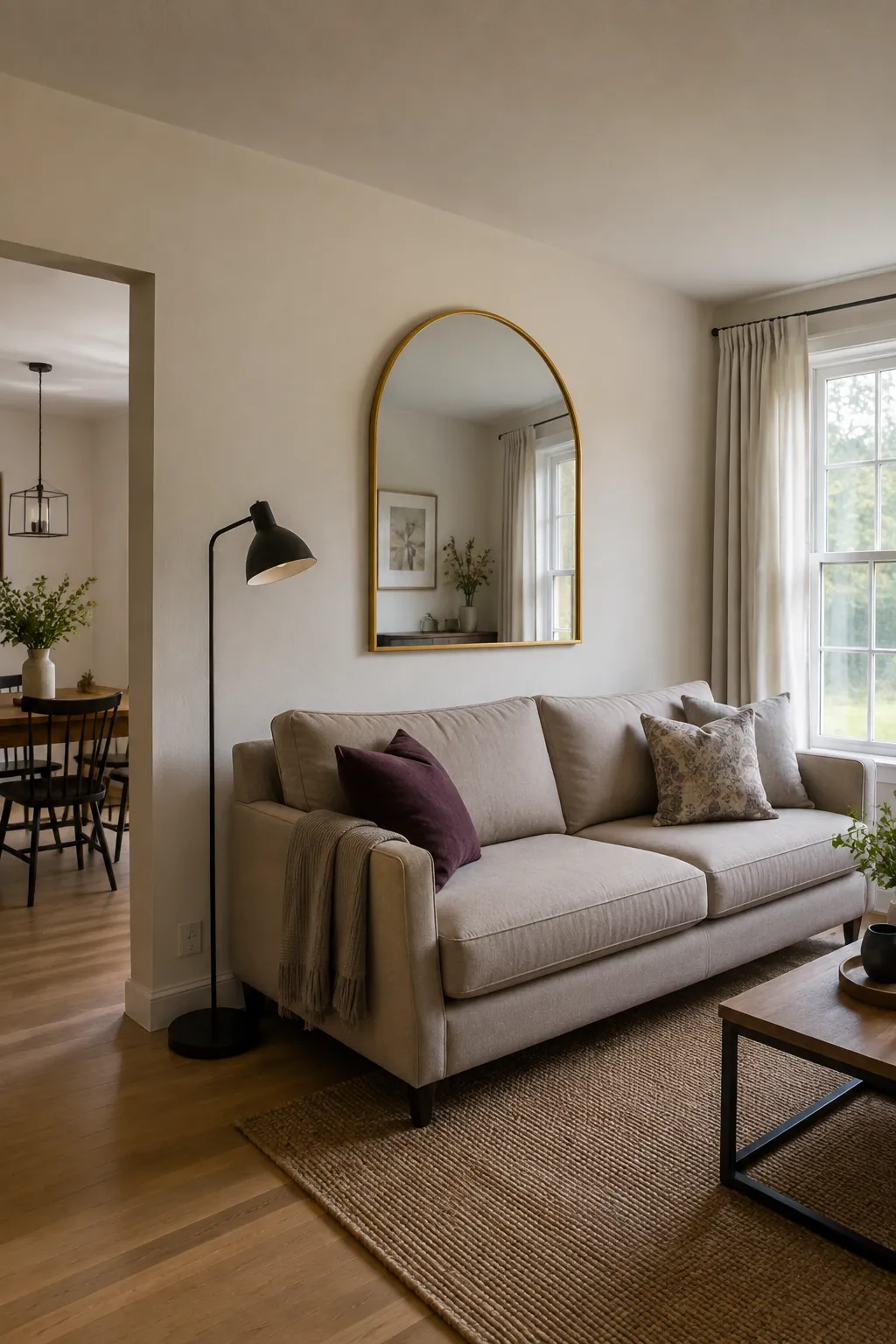
If the couch is intentionally placed away from the wall center, centering the mirror on the entire wall can make the seating arrangement feel disconnected. Center it over the sofa or over the functional seating composition that includes a side table and lamp. This principle is especially useful in open rooms where a doorway, dining area, or window forces the furniture off the architectural center.
Asymmetry can work when another tall element balances the open side. Tape the mirror outline in both possible positions and photograph the room from the main entrance. The camera view often makes competing centers easier to recognize.
Plan A Secure Installation Before Buying
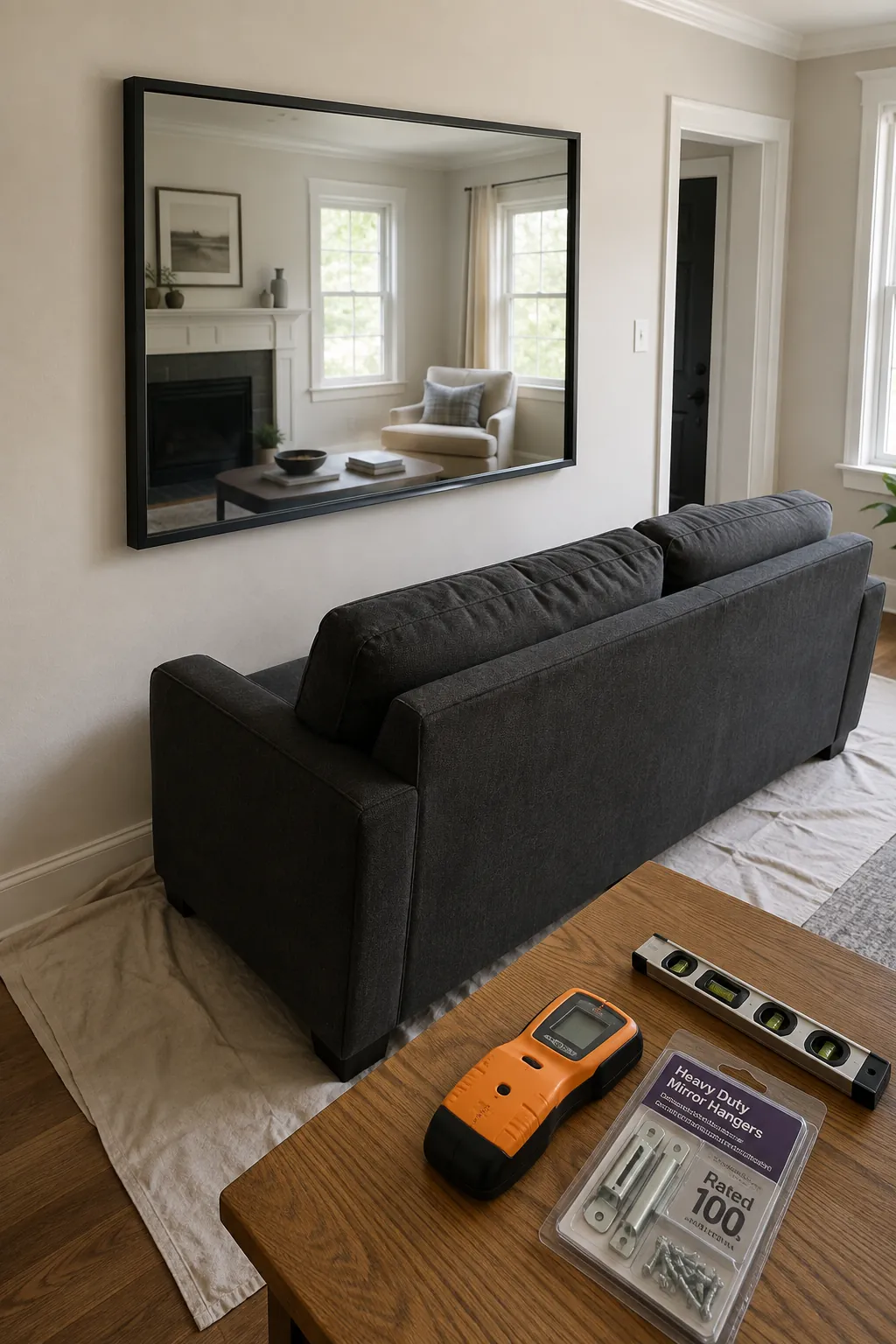
Record the mirror weight, frame depth, hanger type, and wall construction before committing to a large piece. Heavy mirrors should use rated hardware fixed into studs or suitable masonry anchors, often with two attachment points that prevent tipping. Do not rely on light picture hooks, adhesive strips, or a single uncertain screw above a place where people sit.
Ask a professional installer when the mirror is unusually heavy, antique, frameless, or difficult to lift safely. Confirm the final taped outline, reflection, and mounting locations before drilling. The best mirror above a sofa is not merely attractive; it is correctly scaled, useful to the room, and secure enough to be forgotten once it is hung.