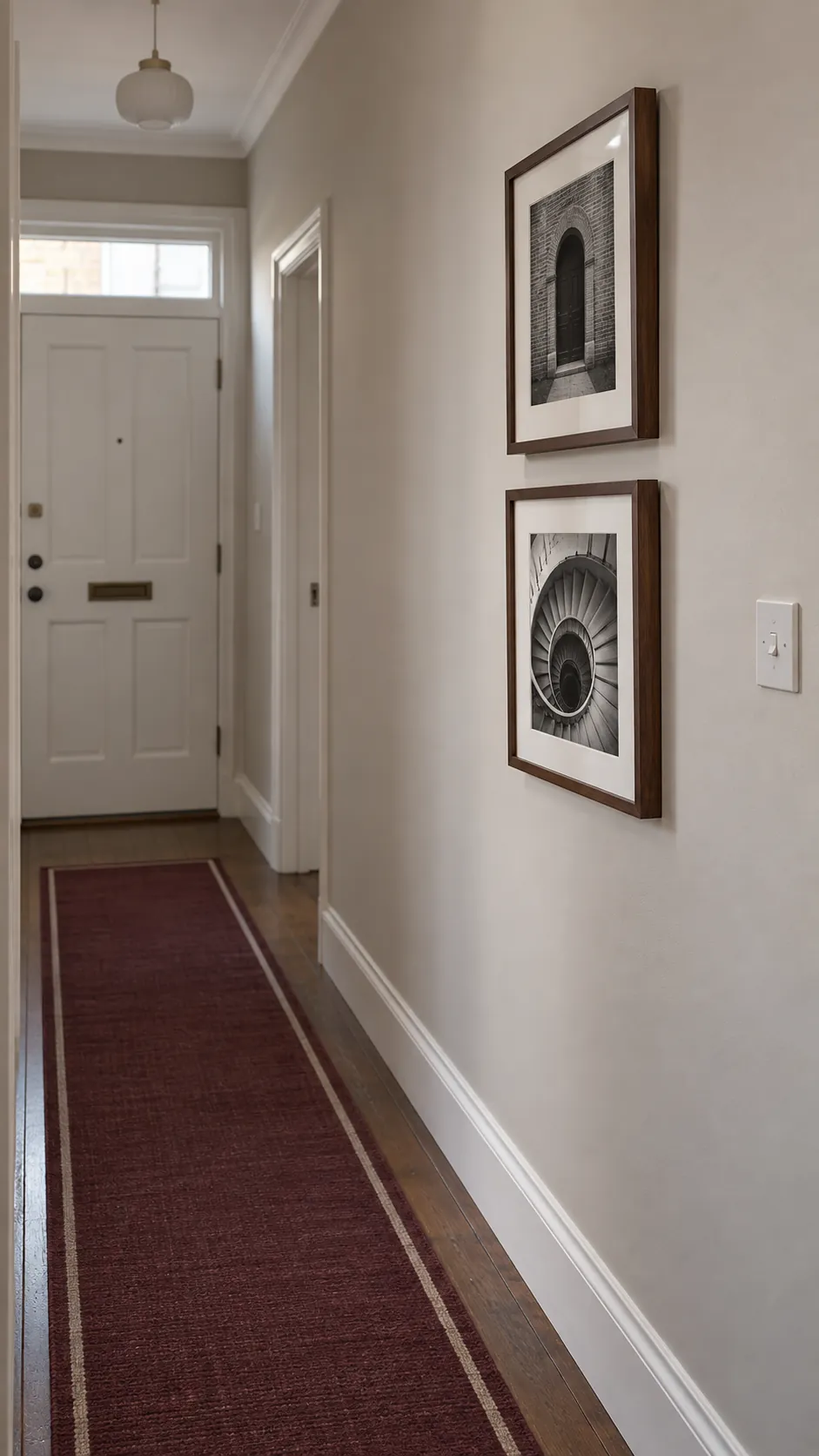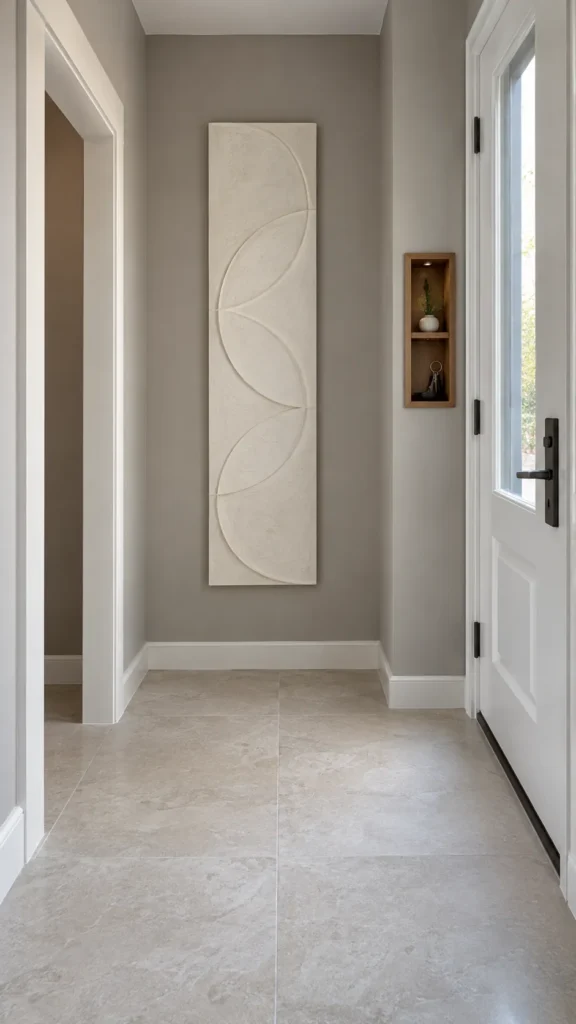
How to Decorate a Narrow Entryway Wall Without Crowding It
A beautiful frame loses its appeal when your shopping bag catches it on the way in. In a tight entrance, the useful question is how much the wall can hold while the passage still feels easy to use. Start with movement, give the eye one place to settle, and let the remaining wall stay quiet.
Measure the passage before choosing the decoration
A wall can look empty while the space beside it is already fully occupied. Open the front door, the nearest closet and any adjacent drawers. Then walk through with the things you actually carry, such as a grocery bag, backpack or folded stroller. The usable decorating area begins outside those movements.
Measure the narrowest point from the wall to the opposite obstruction. Subtract the full depth of anything you propose to add, including knobs, brackets and hanging coats. A shelf advertised as shallow can still catch a shoulder when someone turns through a doorway. Treat any numerical clearance target as a starting point to check against your household needs and applicable local requirements, especially where accessibility matters.
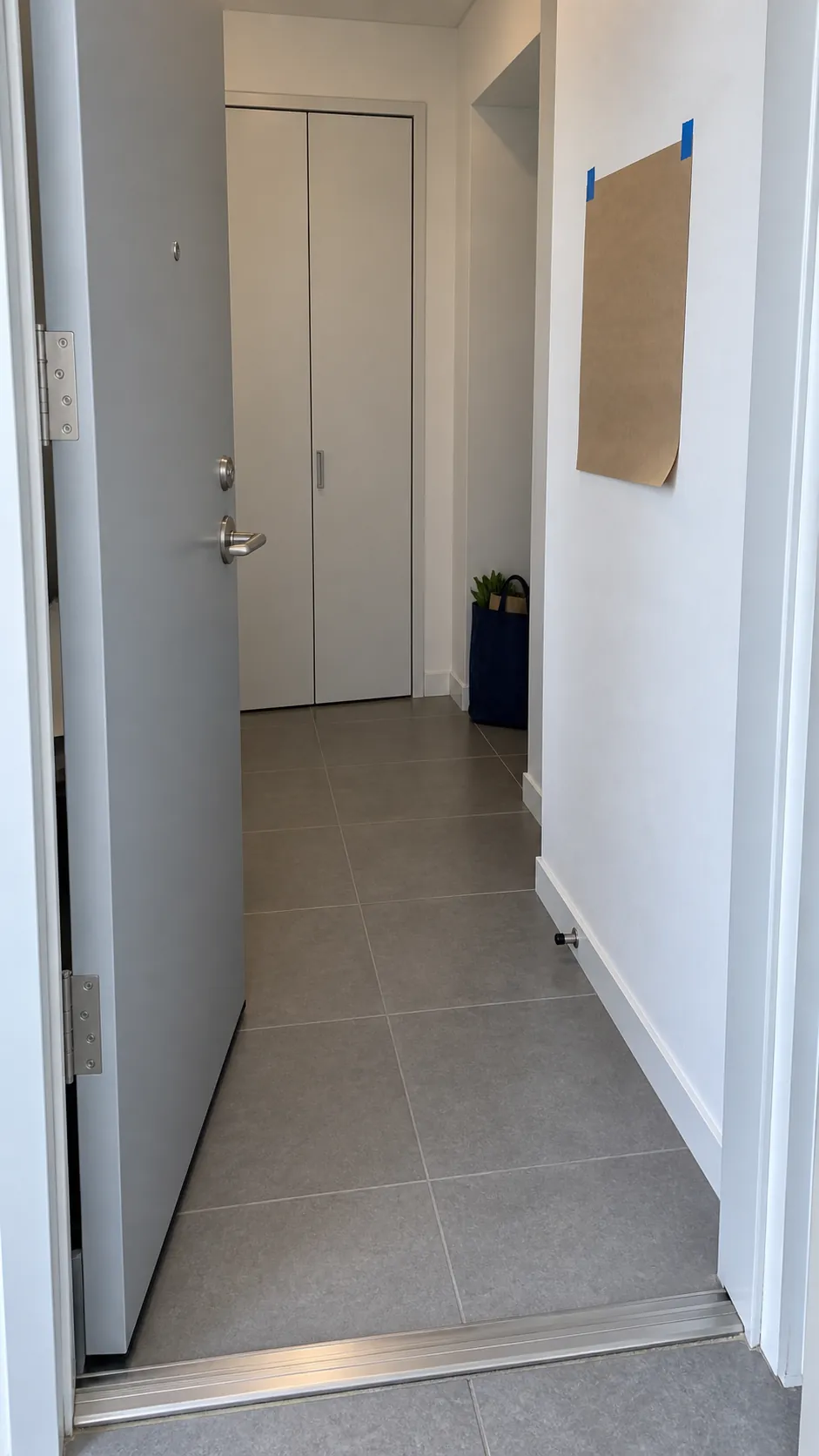
Mark the outline of a frame with paper and a small amount of surface appropriate tape. To test a shelf, hold a cardboard mockup at its proposed depth while another person passes. If that feels awkward, choose decoration that stays close to the wall. Narrow foyer wall decor works best when the route through the room feels effortless.
Give a skinny wall one clear focal point
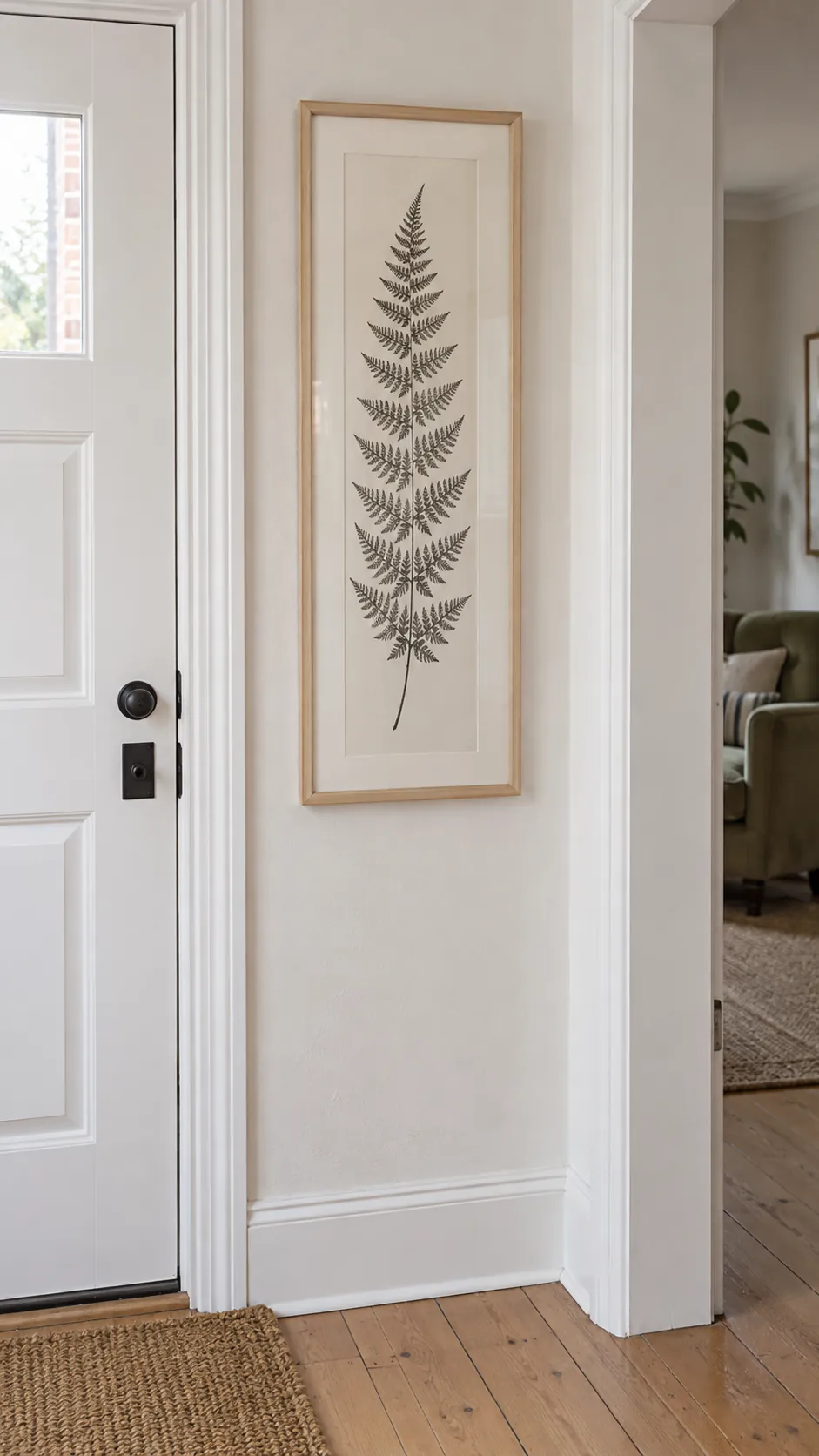
A short strip of wall beside a door usually benefits from one vertical piece rather than several unrelated objects. Choose a slim print, a textile panel or a shallow relief that leaves visible wall around its edges. The empty border keeps the door casing and the decoration from competing.
For a practical example, a wall strip that measures 28 inches across might accommodate an 18 inch wide frame with about 5 inches remaining on each side. That is a proportion to test with paper, not a rule that overrides switches or trim. A tall botanical drawing can bring detail to an otherwise plain entry without requiring furniture underneath it.
Hang the piece for the normal view into the entry. A center near adult eye level is a reasonable first trial, but adjust for the actual picture shape and the people using the room. Vertical decor for an entryway should not be pushed toward the ceiling merely because the wall is tall.
Place a mirror where you can actually use it
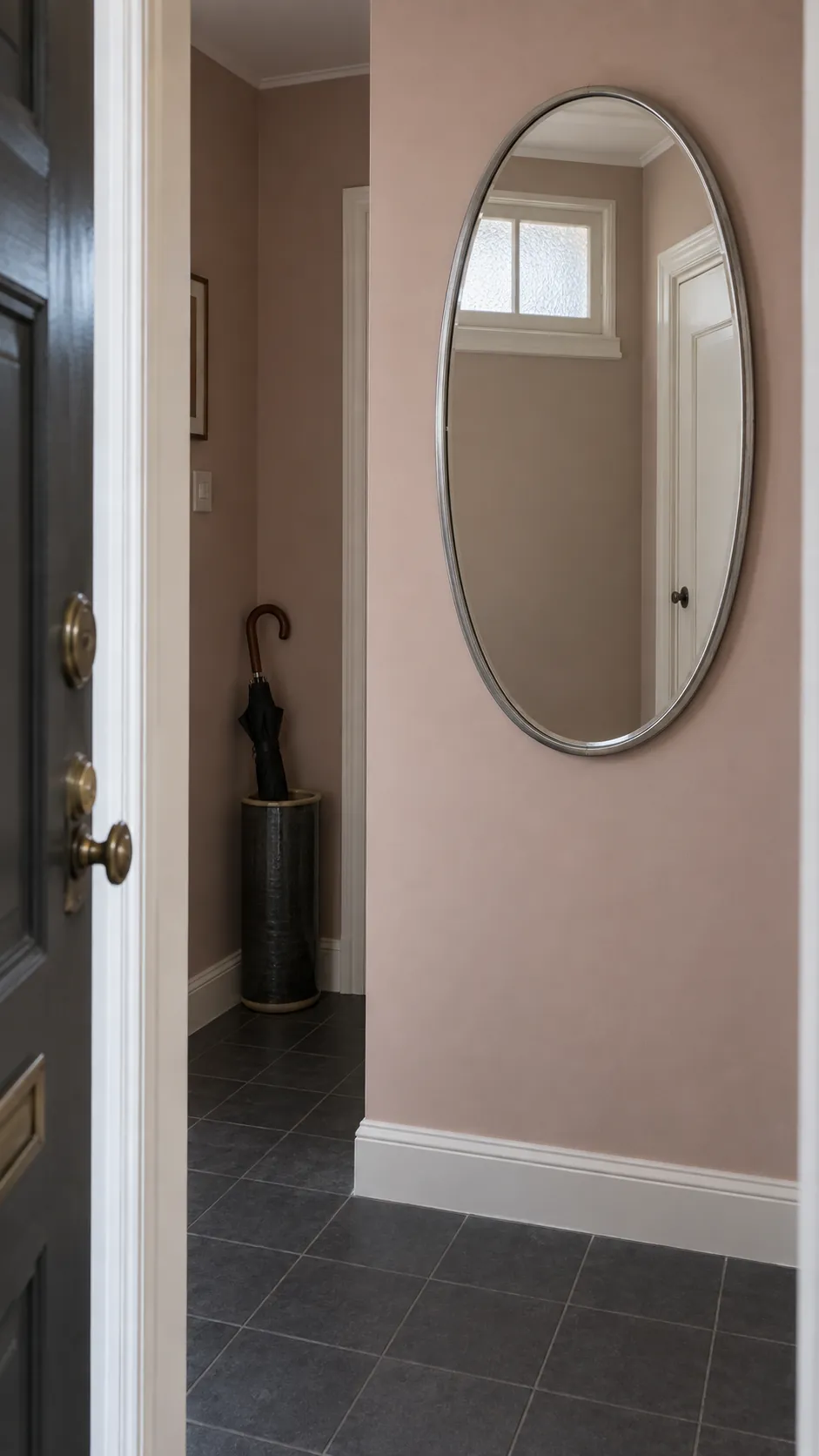
A mirror earns its space when someone can pause in front of it without blocking the door. Before choosing a shape, stand at the proposed viewing position and check what the mirror will reflect. A view toward daylight or a calm opposite wall usually feels more considered than a reflection of overflowing shoes.
Tall, narrow entryway mirror ideas suit a short wall strip, while a modest oval can soften a hall with several rectangular doorways. Neither shape creates physical space. If the passage is too tight to step back, a mirror on another wall may be more useful than a decorative one squeezed into the available gap.
Use fixings appropriate to the mirror weight and wall construction, following the manufacturer instructions. A heavy mirror should not depend on an adhesive product chosen only because it is convenient. In a rental, ask what mounting is allowed before buying the piece; a lightweight print may be the simpler choice.
Separate the key drop from bulky storage
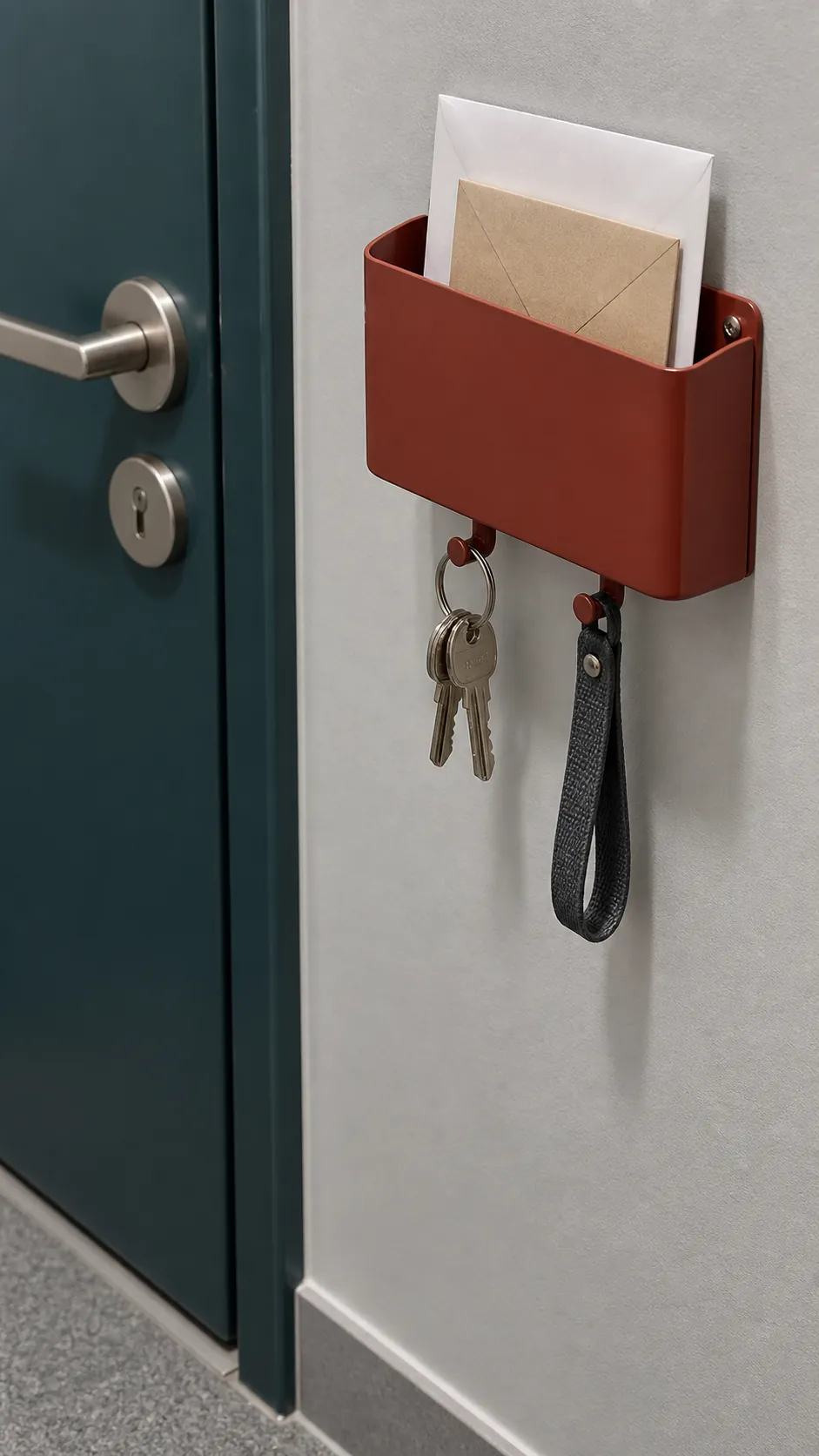
The smallest useful landing spot may be a compact wall pocket for keys and incoming mail. It does not need to become a console table. Place it where you naturally reach after unlocking the door, outside the door swing and away from a tight turning point.
Coats change the calculation. A hook may project only a few inches, but a coat or full tote extends much farther. If those items obstruct the passage, keep them in a closet or a wider zone farther inside. Small hall entry decor should support the daily routine rather than display every part of it on the same wall.
Use color and light when the wall cannot take depth
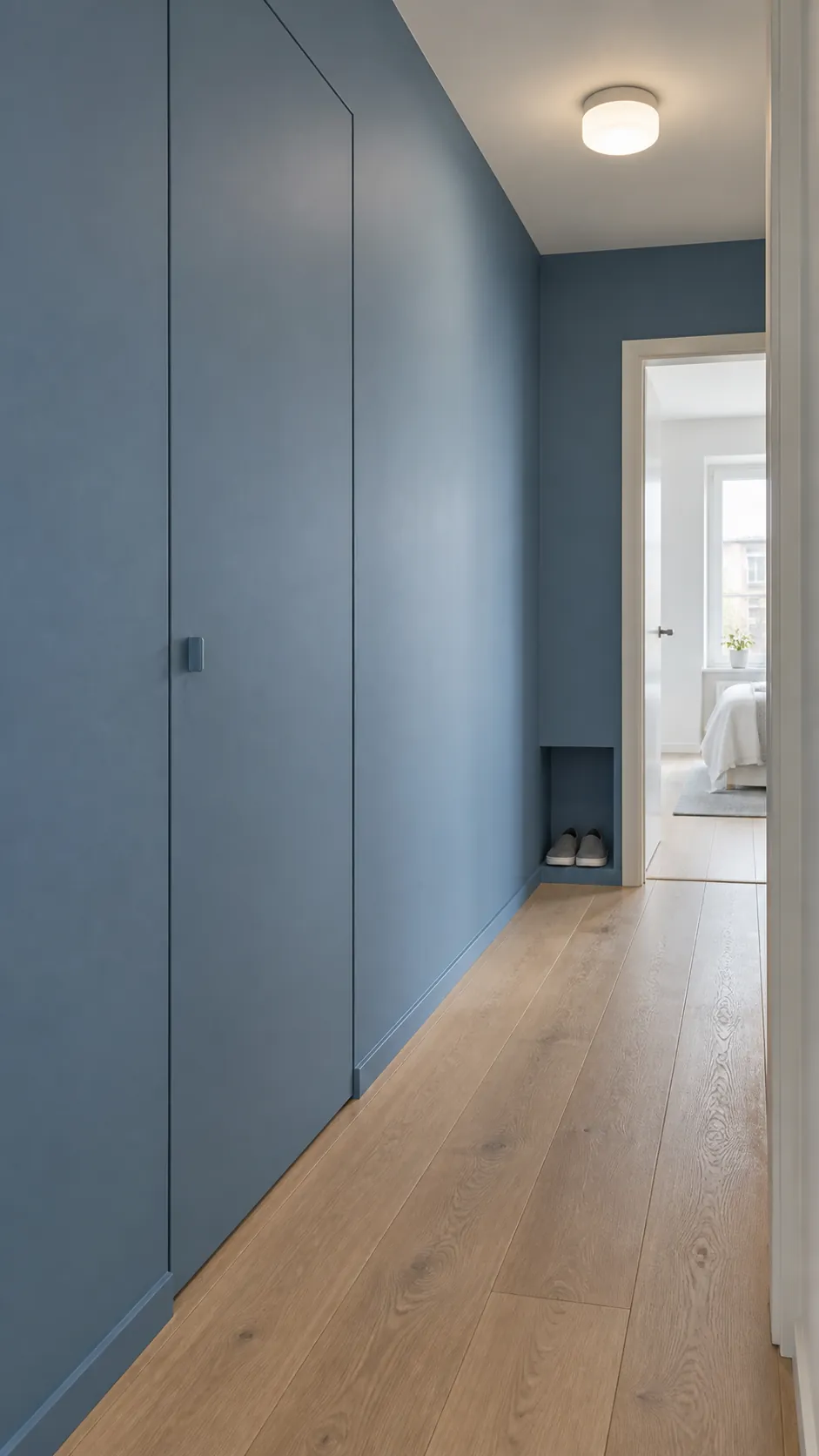
Paint can define an entry zone without occupying the walking route. A muted blue or soft green wall can give a plain passage enough character that it needs only a small picture. Carrying the same color onto suitable trim can reduce visual breaks, while contrasting trim emphasizes the shape of the doorway.
Look at samples in the actual entry during the day and after dark. A color that reads pale near a store window may appear dull in a windowless hall. Choose a finish suited to the surface and expected cleaning, then follow the paint instructions for preparation and curing.
Light deserves the same scrutiny. Replace an unsuitable bulb with one compatible with the existing fixture before adding a projecting wall light. Check that faces and keys are easy to see, and that a mirror does not bounce glare toward the doorway. If a new wired fixture is needed, have its placement and installation assessed by a qualified professional.
Edit the arrangement after a week of use
Leave the entry with one main visual decision and only the practical items that fit comfortably. A pair of small prints can work on a longer wall, but keep them grouped as one arrangement rather than scattering them around switches and corners. Matching frame finishes can connect different subjects without requiring identical pictures.
Live with the arrangement before filling the remaining blank areas. Notice whether bags brush the wall, mail gathers under the picture or someone has to sidestep a basket. Those are more useful clues than how much empty wall appears in a photograph. Move the offending object, reduce its depth or give it a home elsewhere.
The final test is the moment you arrive carrying something in each hand. The door should open, the keys should find their place and the route forward should stay clear. If the decoration helps that moment feel calmer, the wall is finished.