How to Decorate Blank Walls on a Budget: 6 High-Impact Ideas
The fastest way to waste money on a blank wall is to buy several small things simply because each one is cheap. Once hung, they look lonely, so you buy more. Budget wall decor works when you solve scale first and shopping second.
Photograph the whole wall, measure the furniture beneath it, and tape out the intended footprint. Above a sofa, bed, or console, aim for a composition around 60–75% of the furniture width. Then set one total budget—including frames, printing, hardware, and delivery—before choosing an idea.
Stretch inexpensive fabric into oversized art
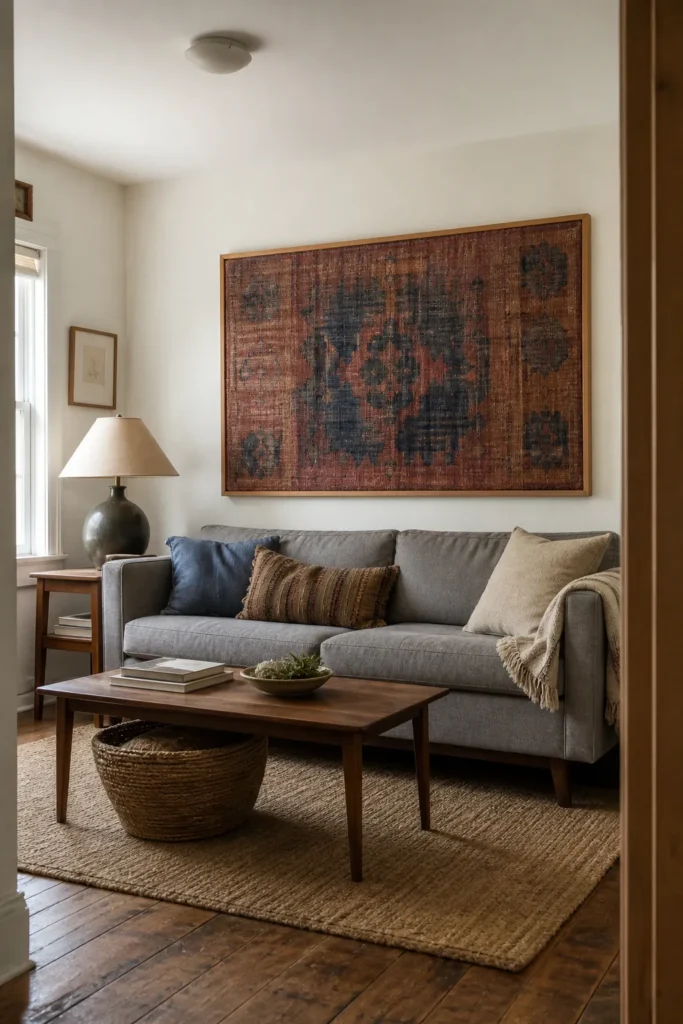
A vintage textile, remnant, tablecloth, or graphic shower curtain can cover far more wall than a similarly priced print. Stretch it over a thrifted frame or simple lightweight stretcher, keeping the pattern straight and the fabric taut. This is one of the strongest affordable wall art alternatives for a large blank wall because the material supplies scale without expensive glazing.
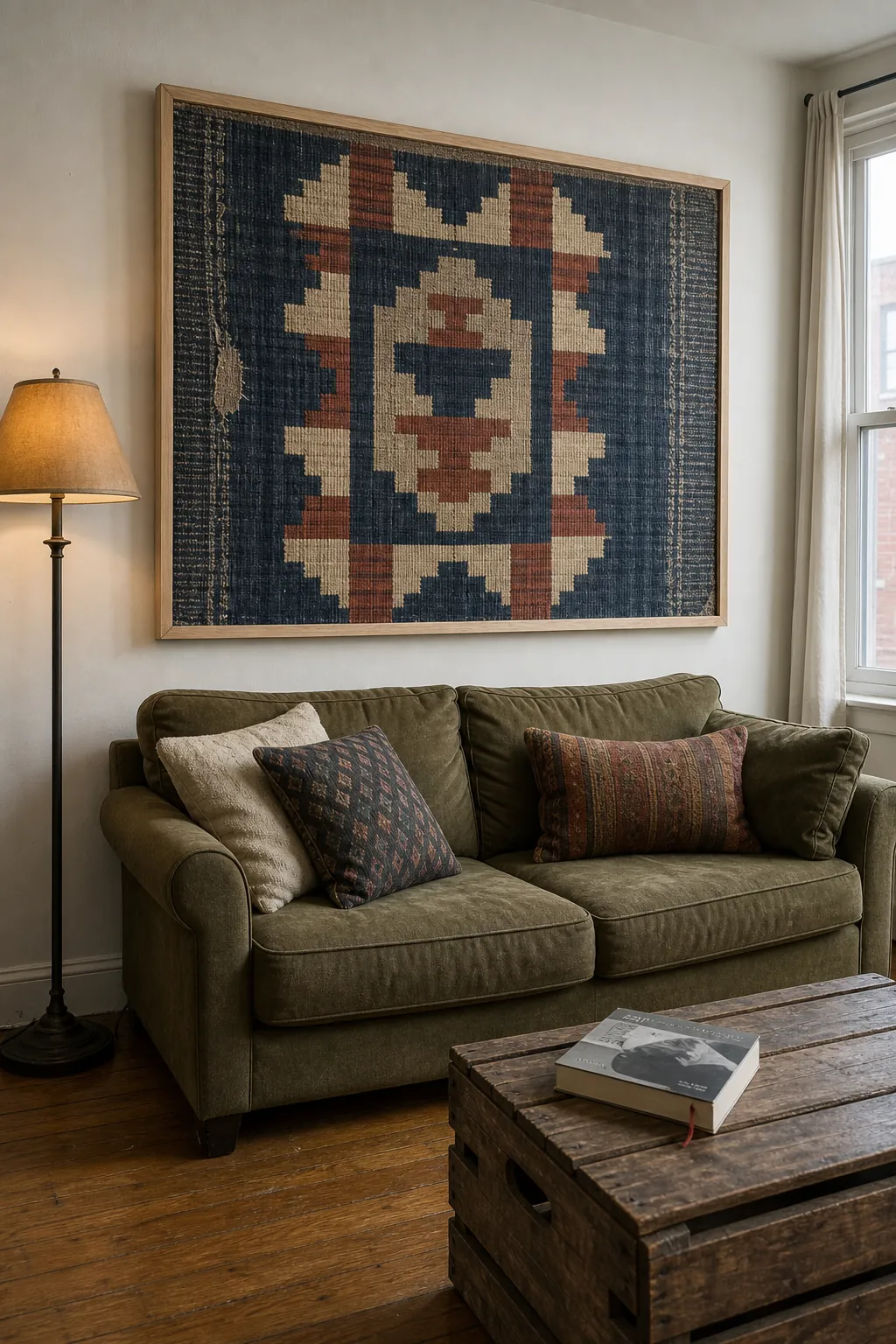
Inspect old fabric for odor, stains, fading, and weakened edges. If the wall needs renter-safe treatment, rest the finished piece on a long console or use only lease-approved hanging hardware rated for its weight.
Build one disciplined gallery from thrifted frames
A gallery wall looks expensive when the outer boundary is clear, not when every frame matches. Collect frames secondhand, unify them with similar mats or a restrained palette, and fill them with your photos, public-domain museum images, children’s drawings, postcards, or pages you legally own. Lay the complete arrangement on the floor before hanging.
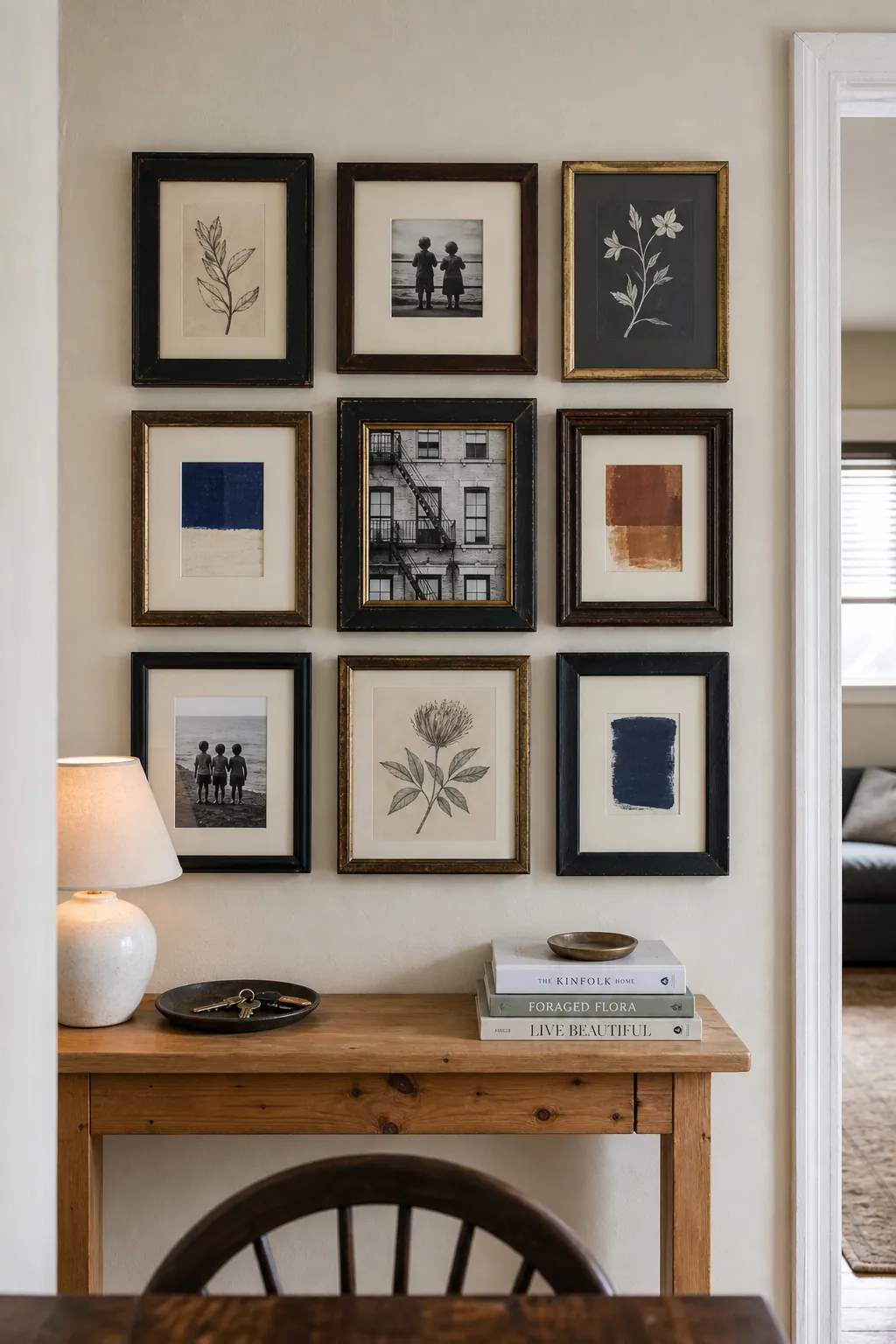
Keep two or three consistent gap sizes and align at least one strong edge. A tight nine-frame grid feels calmer; an organic arrangement can absorb mismatched sizes. Either way, size the whole group to the furniture below it.
Use decals for a large shape without a large frame
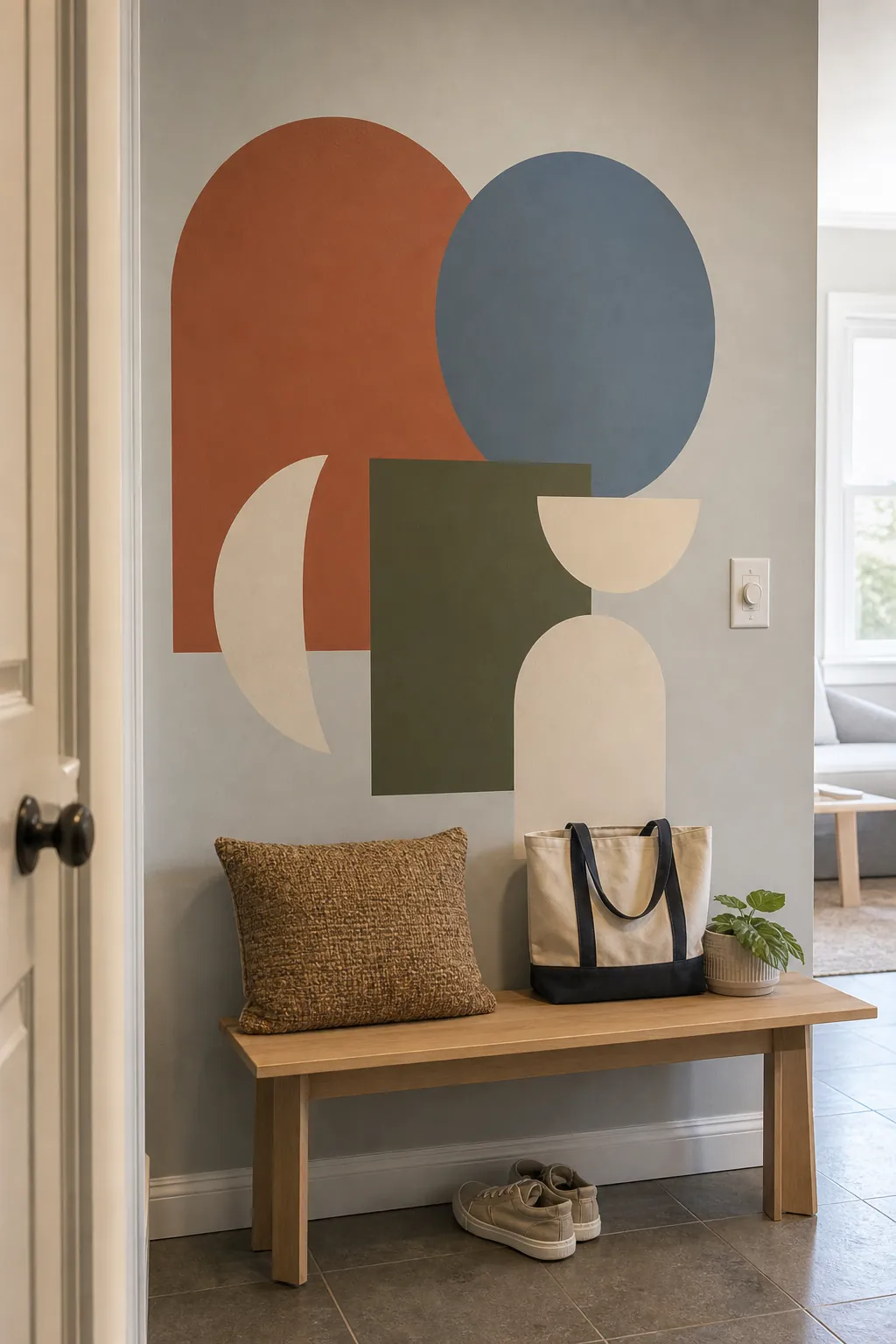
Wall decals for blank walls can create an arch, botanical branch, color-block rhythm, or short quote for less than large framed art. They are particularly useful where shipping a huge frame is impractical. “Removable” still requires caution: check the lease, test the actual wall, and avoid weak, flat, chalky, peeling, or recently painted surfaces.
Lean a secondhand mirror and build around it
A tall mirror creates verticality and bounces daylight without asking you to fill every inch. Search resale listings by dimensions, not style names, and inspect the backing and glass before buying. Leaning mirrors must be secured against tipping according to the product instructions—especially around children and pets.
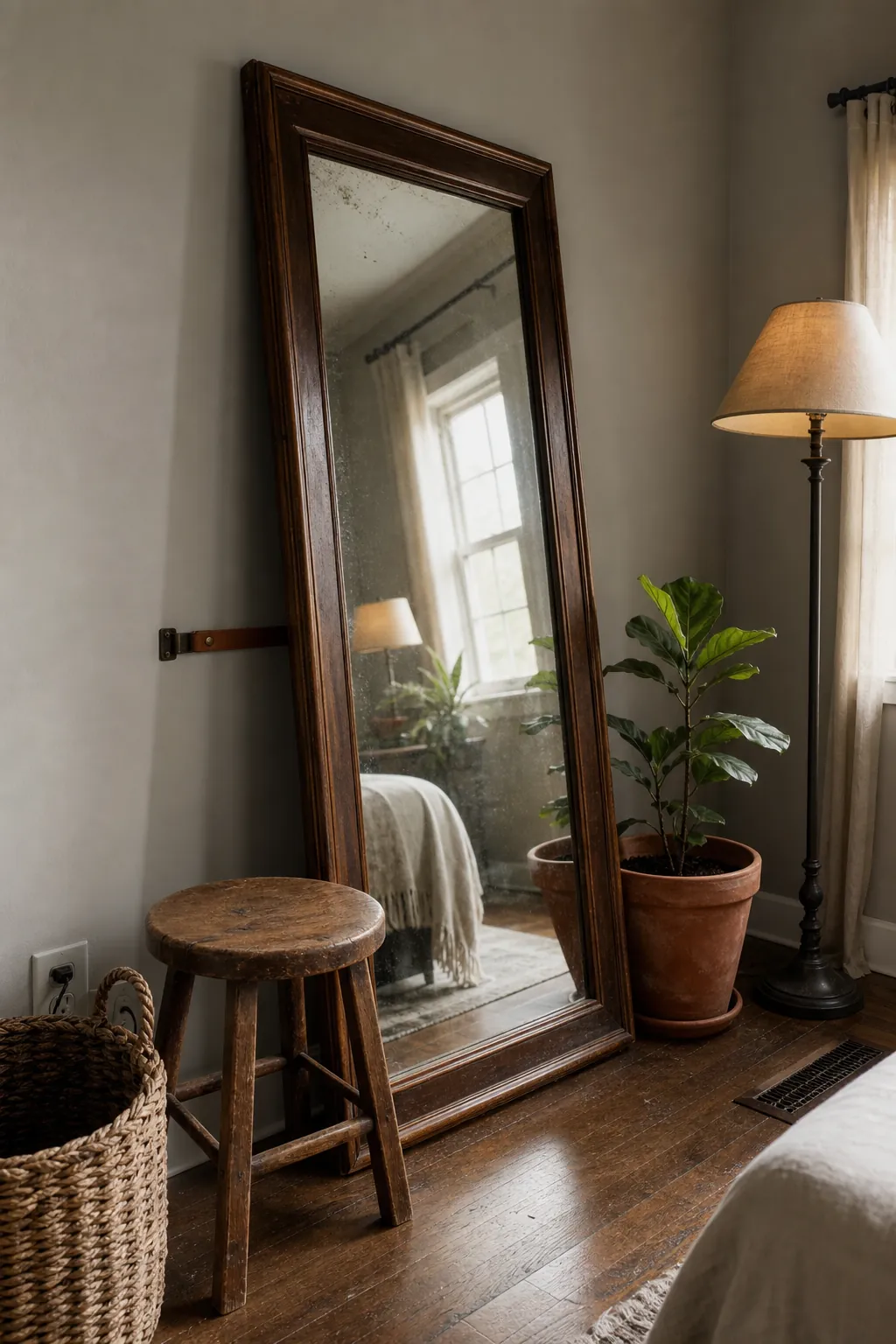
Ground it with a stool, basket, floor lamp, or plant you already own. That small cluster makes a deliberate vignette and keeps you from buying filler for the rest of the wall.
Rotate prints on one long picture ledge
If your lease allows mounting, one correctly installed picture ledge can hold changing layers of prints, small canvases, and objects. You spend on secure hardware once and can swap inexpensive paper art without making new holes. Choose a ledge long enough to relate to the console, desk, or sofa below.
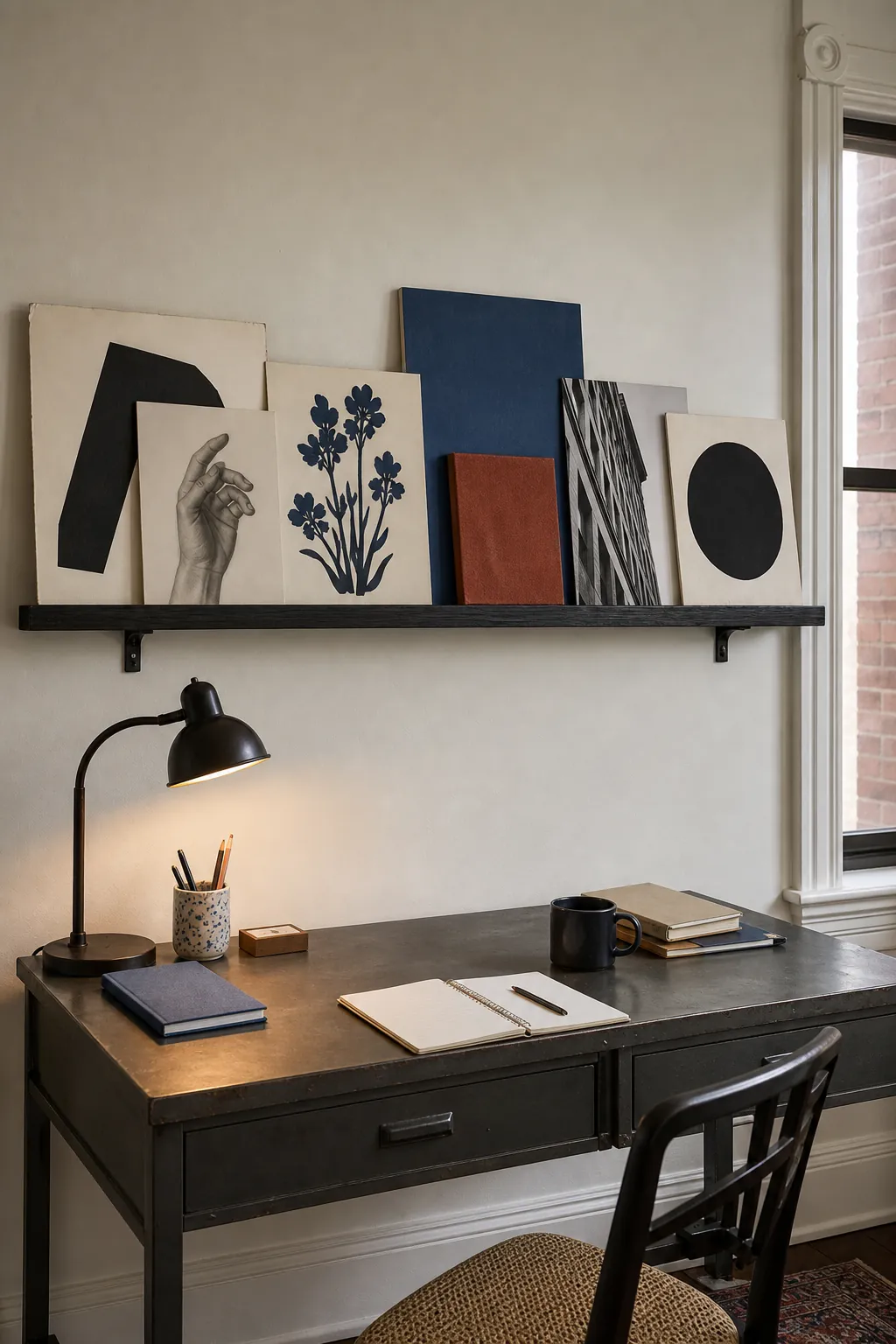
Find studs or use the correct wall-specific anchors, respect the ledge’s load rating, and keep breakables away from beds and seating. If mounting is prohibited, skip this idea rather than improvising with unsupported adhesive.
Fill height with furniture you can take with you
Sometimes the cheapest wall decor is not attached to the wall. A tall secondhand bookcase, ladder shelf, or modular storage system adds height, holds books and personal objects, and moves to the next home. This solves big wall decor on a budget while adding function.
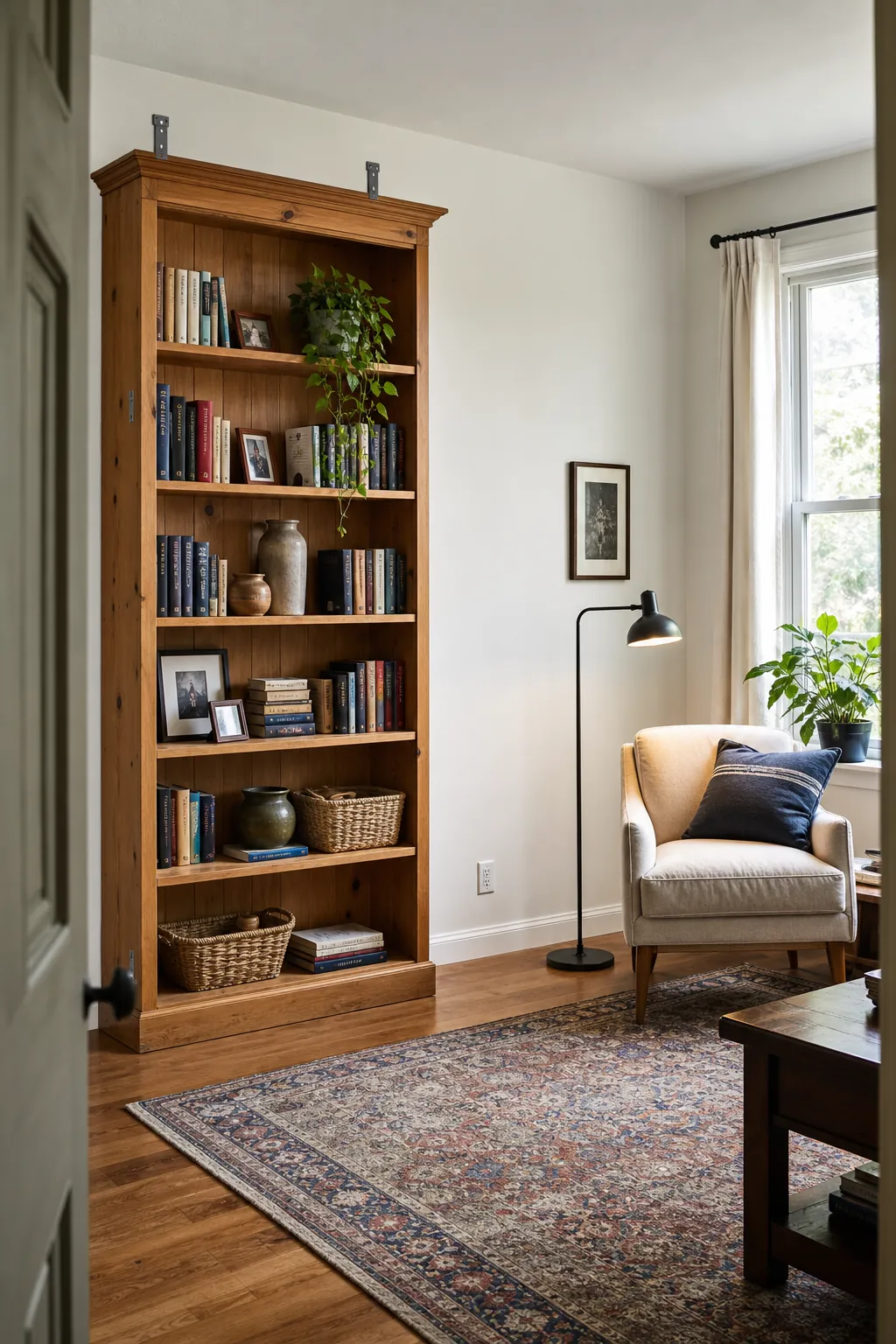
Anchor tall furniture as required for tip-over safety, then leave some shelves partly empty. Repeating book colors, baskets, and a few larger objects looks calmer than filling every gap with bargain-bin decor.
A simple budget plan before you shop
- Choose one wall and one furniture anchor.
- Measure a 60–75% target width and tape it out.
- Pick one primary strategy, not six unrelated purchases.
- List every hidden cost: frame, print, fastener, transport, and repair.
- Shop your home first, then thrift and resale sources by exact dimensions.
- Stop when the main composition holds the wall; empty space is allowed.
A blank wall does not need to become a storage unit for cheap objects. Give it one strong idea at the correct scale, repeat something you already own, and let the rest breathe. That is how inexpensive pieces look intentional—and how a small budget stays small.