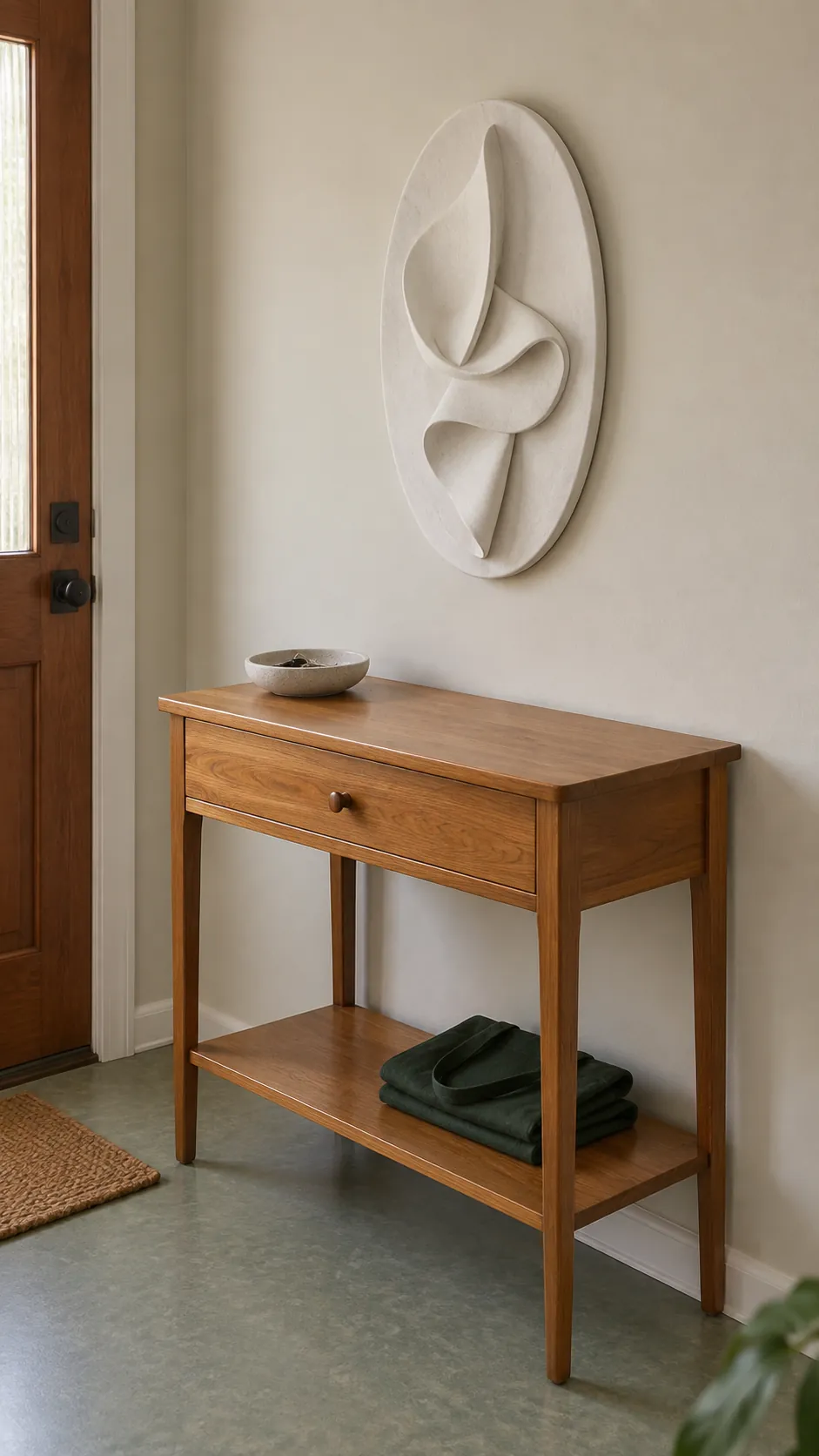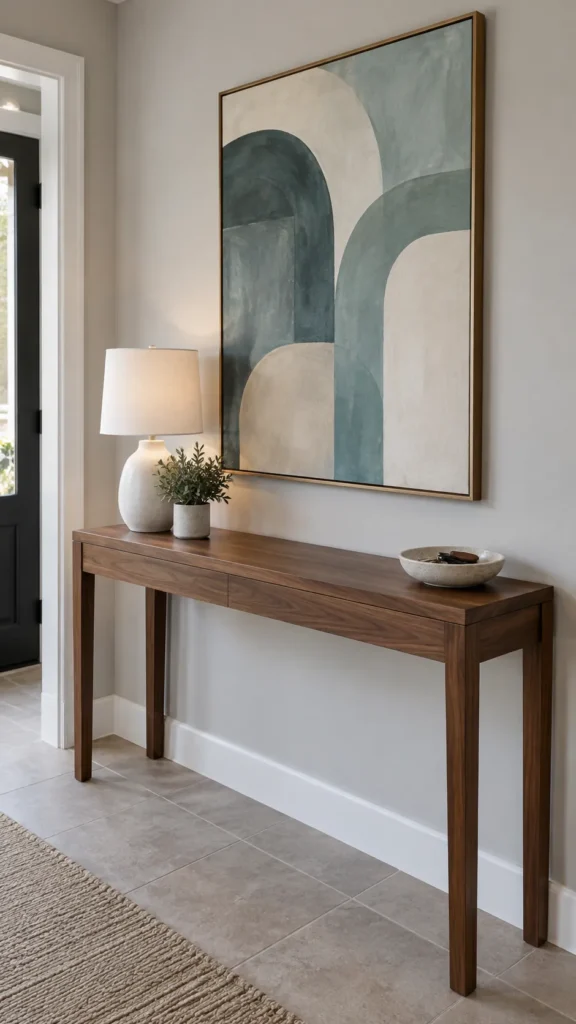
How to Decorate the Wall Above an Entryway Table
A console can look crowded even when the wall above it feels empty. The problem is often the relationship between the two: a picture floating too high, a mirror too small or a lamp hiding the focal point. Treat the wall and tabletop as one arrangement, with space left for the things you actually set down.
Use the table as the center of the arrangement
First put the table where it works for arriving home. Open nearby doors and check that drawers can extend without blocking the route through the entrance. A table placed for a useful key drop may sit off center on a long wall, and that is fine.
Center the main wall piece over the table rather than automatically centering it between the room corners. This makes the furniture and decoration read as one group. If a switch or thermostat interrupts that position, shift the whole arrangement or choose a smaller group; do not hide equipment you need to reach.
For an initial size test, try wall decor around two thirds to three quarters of the table width. Over a 48 inch console, a 32 to 36 inch overall frame width is a reasonable paper mockup. Count the frame and any gaps between multiple pieces, and adjust the trial for the actual wall and furniture proportions.
Choose between a useful mirror and a meaningful picture
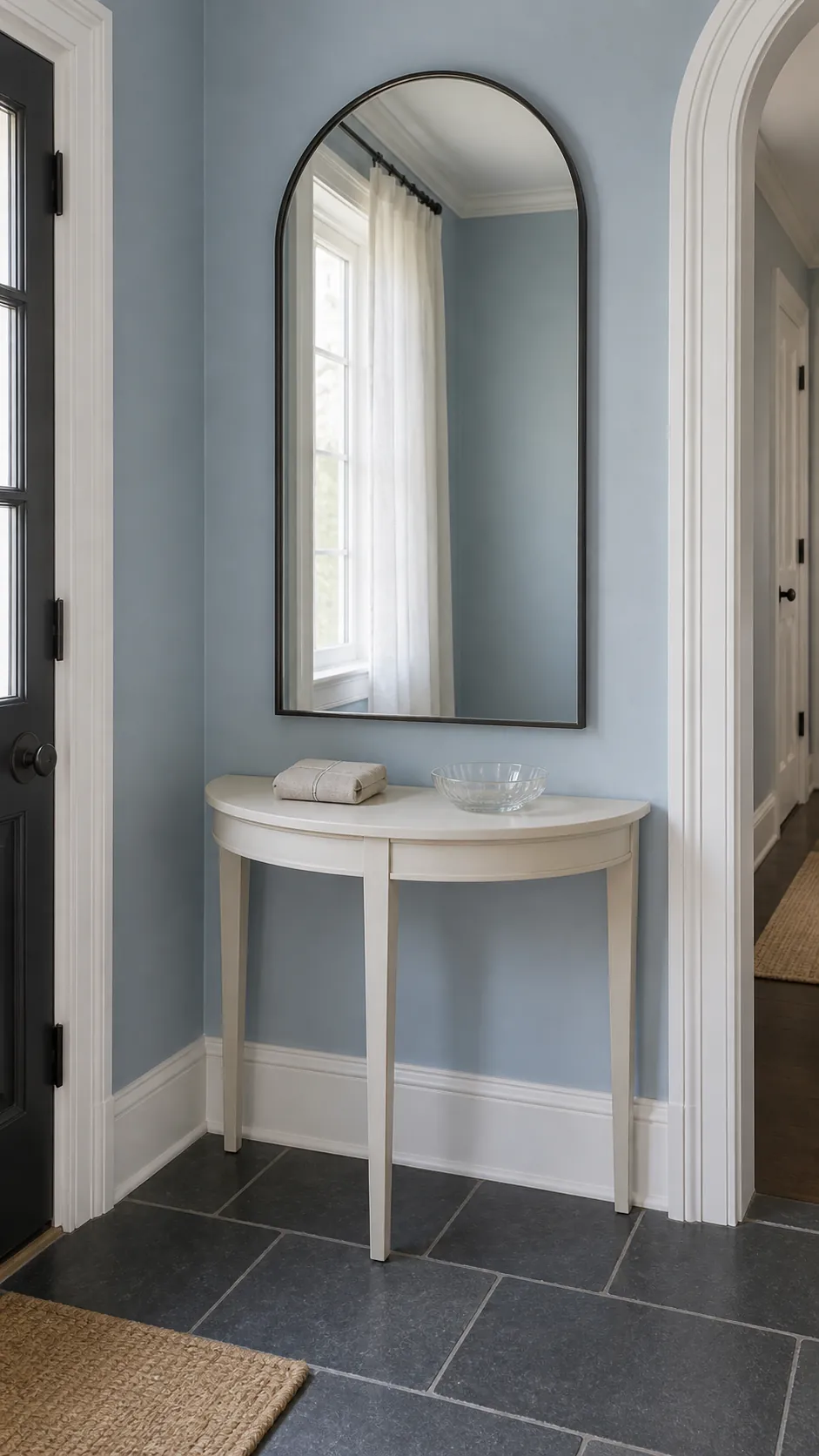
Entry table mirror ideas work best when the reflection adds something you want: daylight, a pleasant opposite wall or a practical view before leaving. Stand where you will use the mirror and check the view at your own height. A mirror facing coats and delivery boxes can make the entrance feel busier.
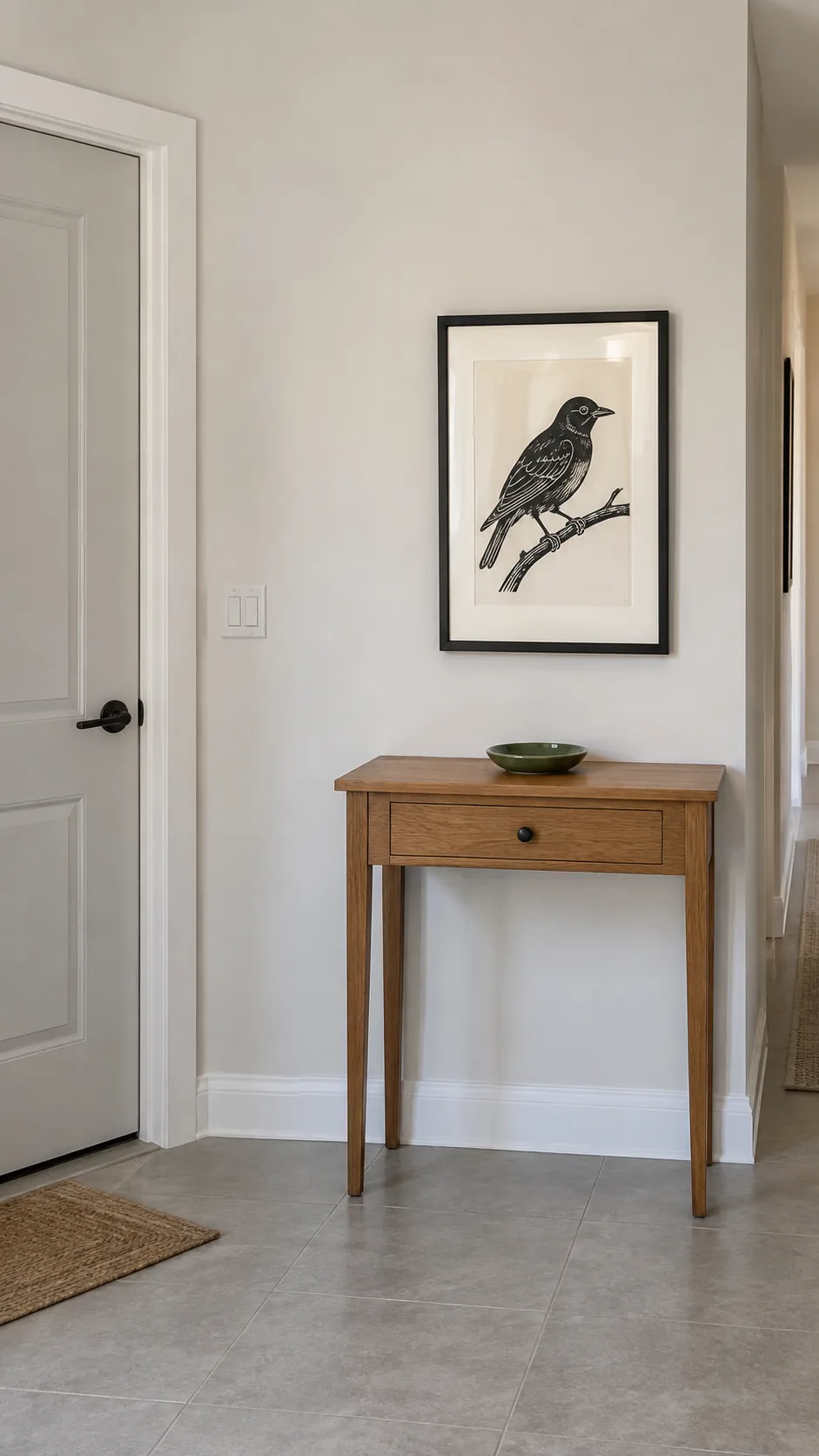
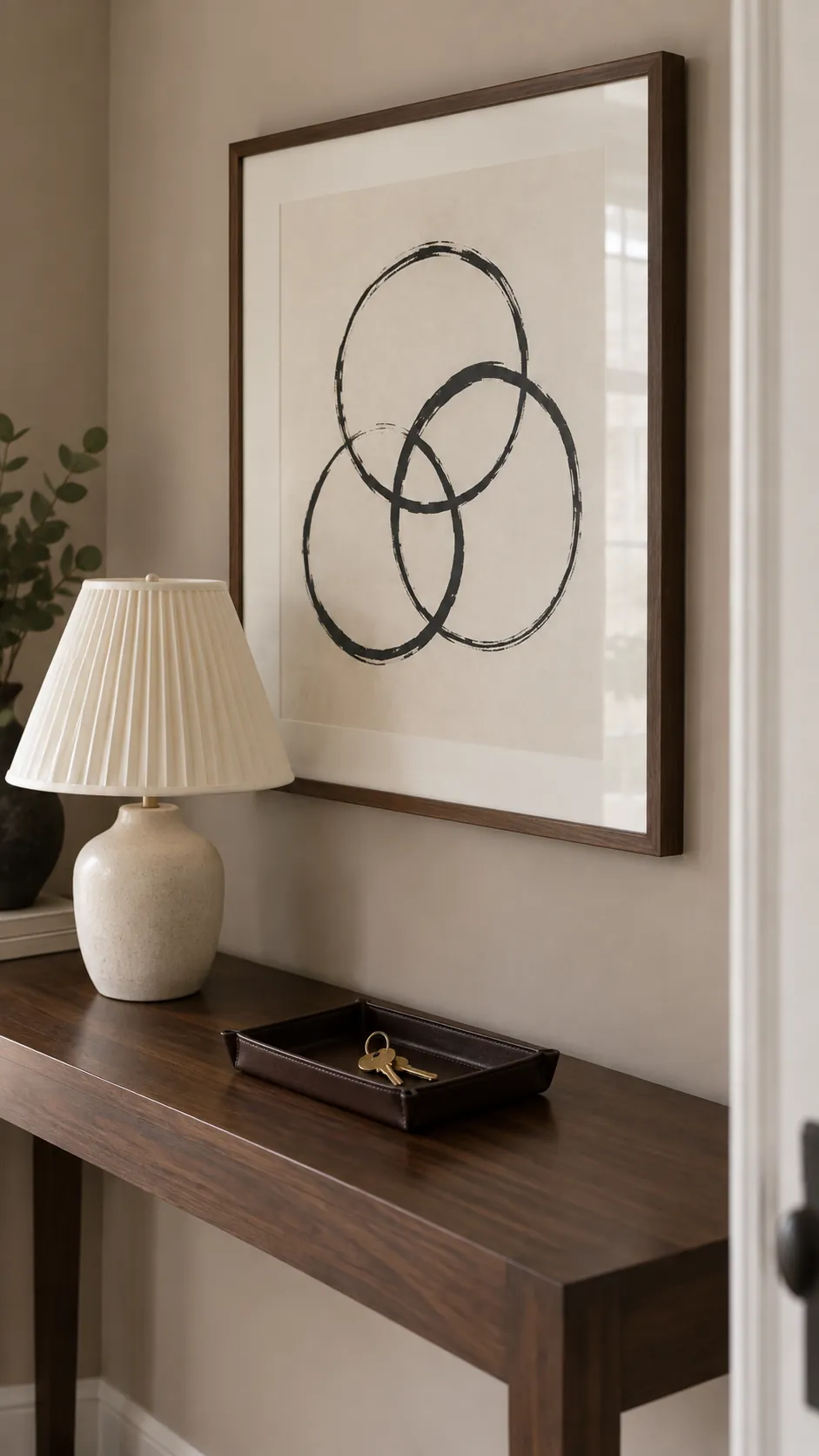
Art above a foyer table gives you control over the focal point. Choose a subject you enjoy seeing each day and a scale that holds its own over the furniture. A photograph, abstract print or textile can all work; the frame and subject should connect with the room without needing to match every finish.
Choose one as the main feature before adding smaller things. A large mirror surrounded by several unrelated prints may leave the eye with no clear place to settle. If you already own a small piece you love, consider a generous mount or a deliberate pair instead of buying filler solely to occupy the wall.
Set the height with the tabletop in view
A picture can look disconnected when it hangs high above a low console. Try its bottom edge roughly 6 to 10 inches above the tabletop as a first paper placement, then look from the front door. This is a styling starting point, not a fixed installation rule, and it may need to change for a tall frame or a useful mirror sightline.
Put your planned lamp or vase on the table during the test. A little overlap can connect the layers, but a lampshade should not hide the important part of a picture or the usable middle of a mirror. Move the tabletop object before raising the wall piece so far that the whole group separates.
Use the hanging system specified for the weight and the wall material. Secure heavy mirrors to suitable fixings, and follow any furniture anchoring instructions for the console. A leaning arrangement needs proper restraint where a passing bag, child or pet could knock it over.
Build a small gallery as one shape
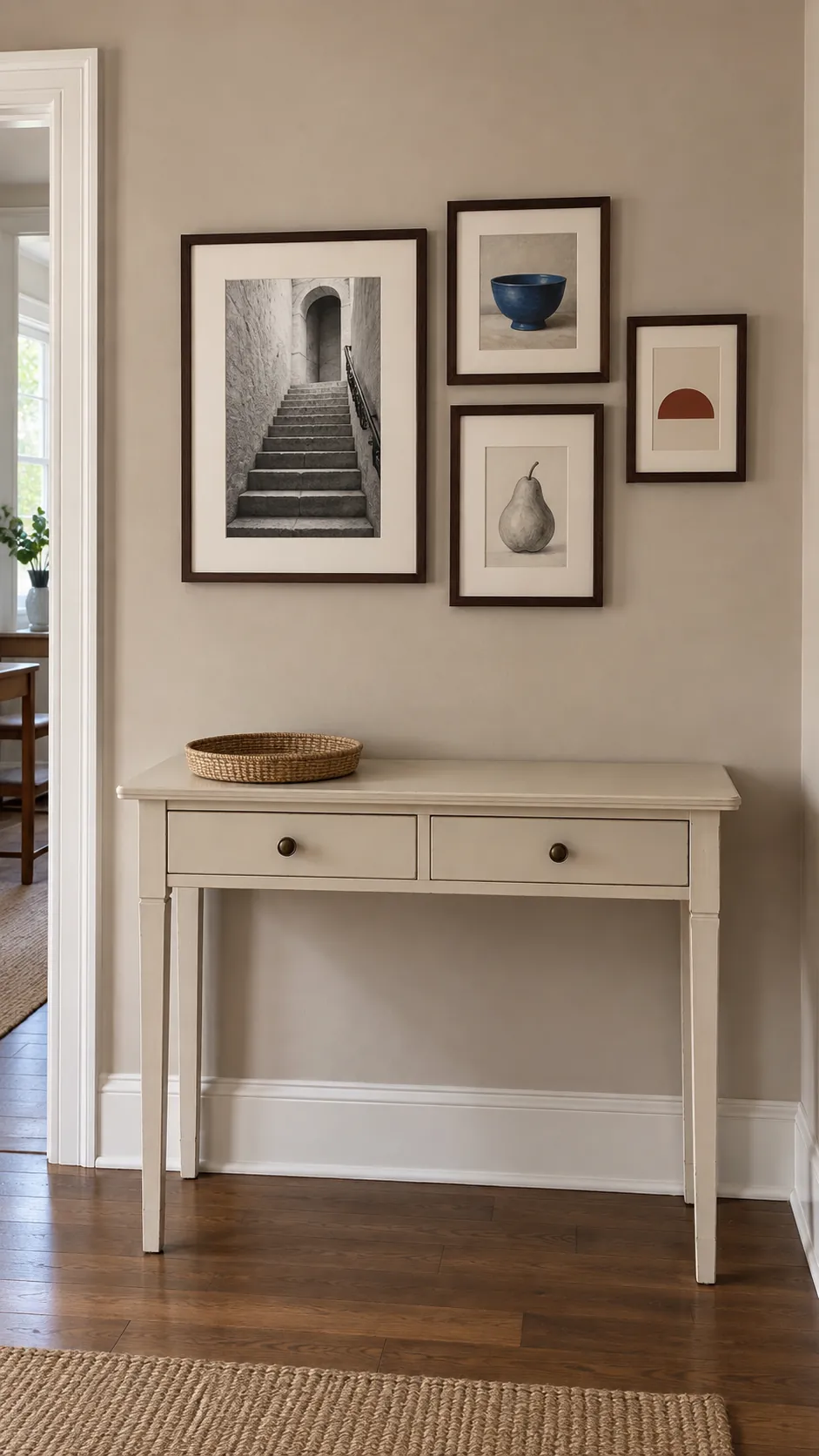
An entryway table gallery wall is easier to organize when you define its outside boundary first. Lay the frames out on the floor, or use paper templates, and consider the group width in relation to the console. Three or four meaningful pieces can create a complete arrangement without covering the entire wall.
Repeat one feature, such as a dark timber frame finish or a similar mount color, and let the subjects vary. Keep gaps deliberate so the collection reads together from across the entrance. A larger anchor piece with smaller companions usually needs less adjustment than several equally small frames scattered around a large blank area.
Check the arrangement from the angle you see when opening the door. A composition that looks balanced straight on may feel crowded at the near end of a narrow hall. Leave the table surface simpler when the wall has several pieces.
Give light and everyday objects room to work
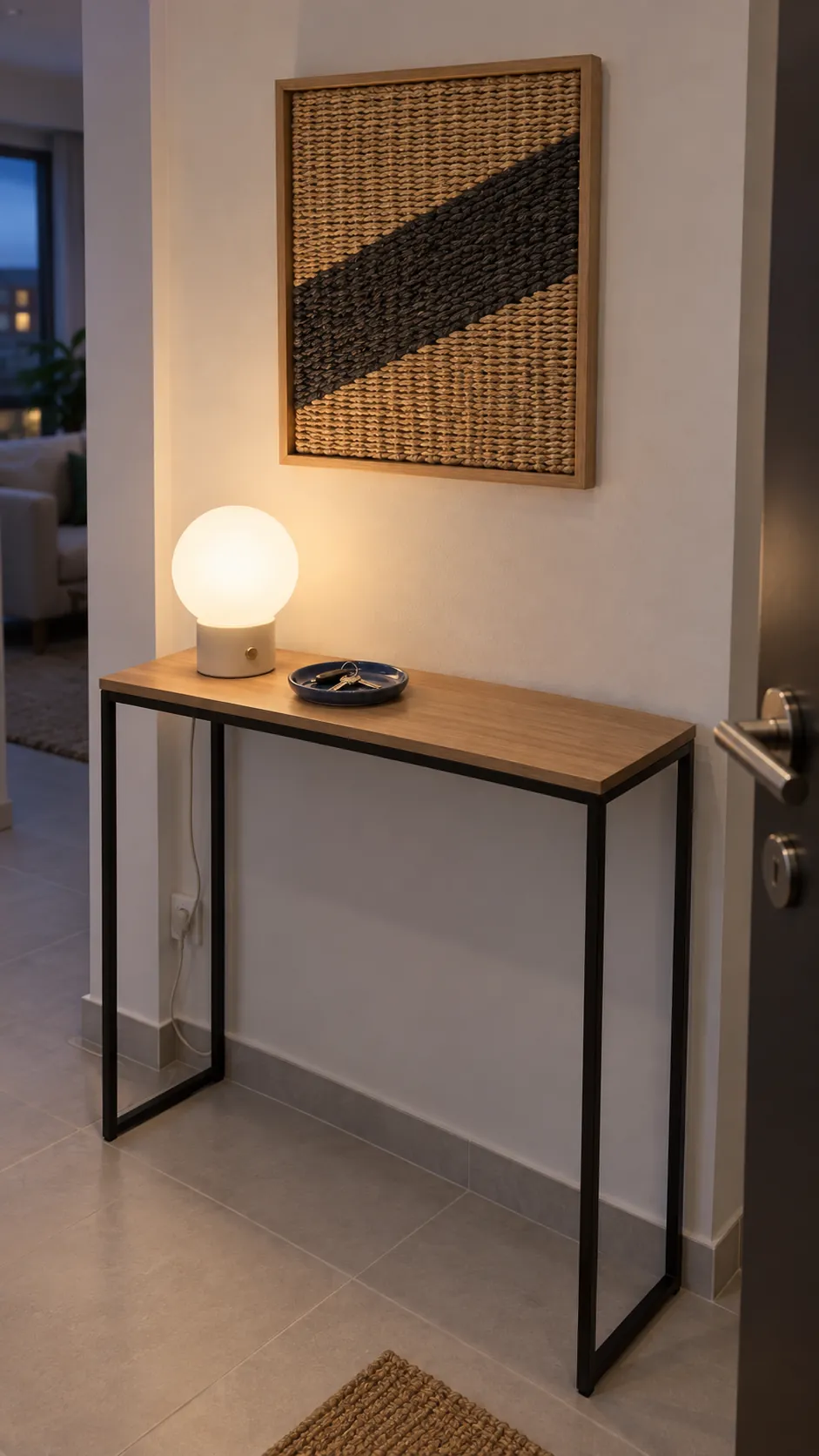
A table lamp can make the entry welcoming after dark, but the base, shade and cable all need to fit the real table. Check that the shade stays within a comfortable passing zone and the cable reaches a socket without trailing across the floor. Use a bulb compatible with the fixture and test for glare in any mirror.
Keep a small tray where your hand naturally drops the keys. Place a taller object toward one side only if the remaining surface still accommodates the things you bring home. You do not need an odd number of objects or a stack of decorative books if those rules make the key drop inconvenient.
Wall decor above a console table and the objects below should share attention. A strongly patterned print needs less competition on the surface, while a plain mirror can support a modest sculptural lamp. Choose the balance from the actual arrival view, with the lamp switched on as well as off.
Finish by removing the least useful layer
Look for the item that repeats a job already done well. It may be a second small mirror beside the main one, a vase blocking a print or a row of ornaments leaving no place for mail. Remove that item first and see whether the arrangement becomes easier to read.
In a small entrance, one securely hung focal piece, a useful light and a clear landing spot can be enough. If the console has storage, give keys, gloves and paperwork a defined home so the display does not have to absorb everything. Keep any seasonal change limited to one or two objects that fit the existing space.
The wall and table are finished when you can come in, put something down and still see the detail you chose because you loved it. Leave room for that ordinary moment.