How to Style a Shelf Above a Bed
A shelf can fill the blank wall behind your pillows, but it also puts a hard edge and loose objects near your head. Start with what happens when you sit up, change the bedding, and reach for a book. Once that space works, a few lightweight pieces can give the room more character than a crowded display.
The most useful approach is to treat the shelf as a small display, with everyday storage beside the bed. Choose a secure mounting system, test the height with a paper outline, and leave enough empty space for each object to read clearly.
Decide whether the shelf belongs above the pillows
A floating shelf above a bed is only a good starting point when the wall and mounting system can support its intended load. Follow the shelf manufacturer’s instructions for your wall construction, including the specified fixings and bracket spacing; a load rating is not a guarantee that loose objects cannot fall. If you cannot verify the installation, ask a qualified installer before putting anything overhead. Adhesive strips are not a substitute for the structural fixings a shelf requires.
Keep heavy books, glass, ceramics, water filled vessels, and lit candles away from the sleeping area. In an earthquake prone home, or a room where children climb or jump on the bed, move storage to a side wall and use a suitable lightweight wall treatment above the headboard. A shelf should solve a decorating problem without creating a daily obstacle.
Test height with the bed in everyday use
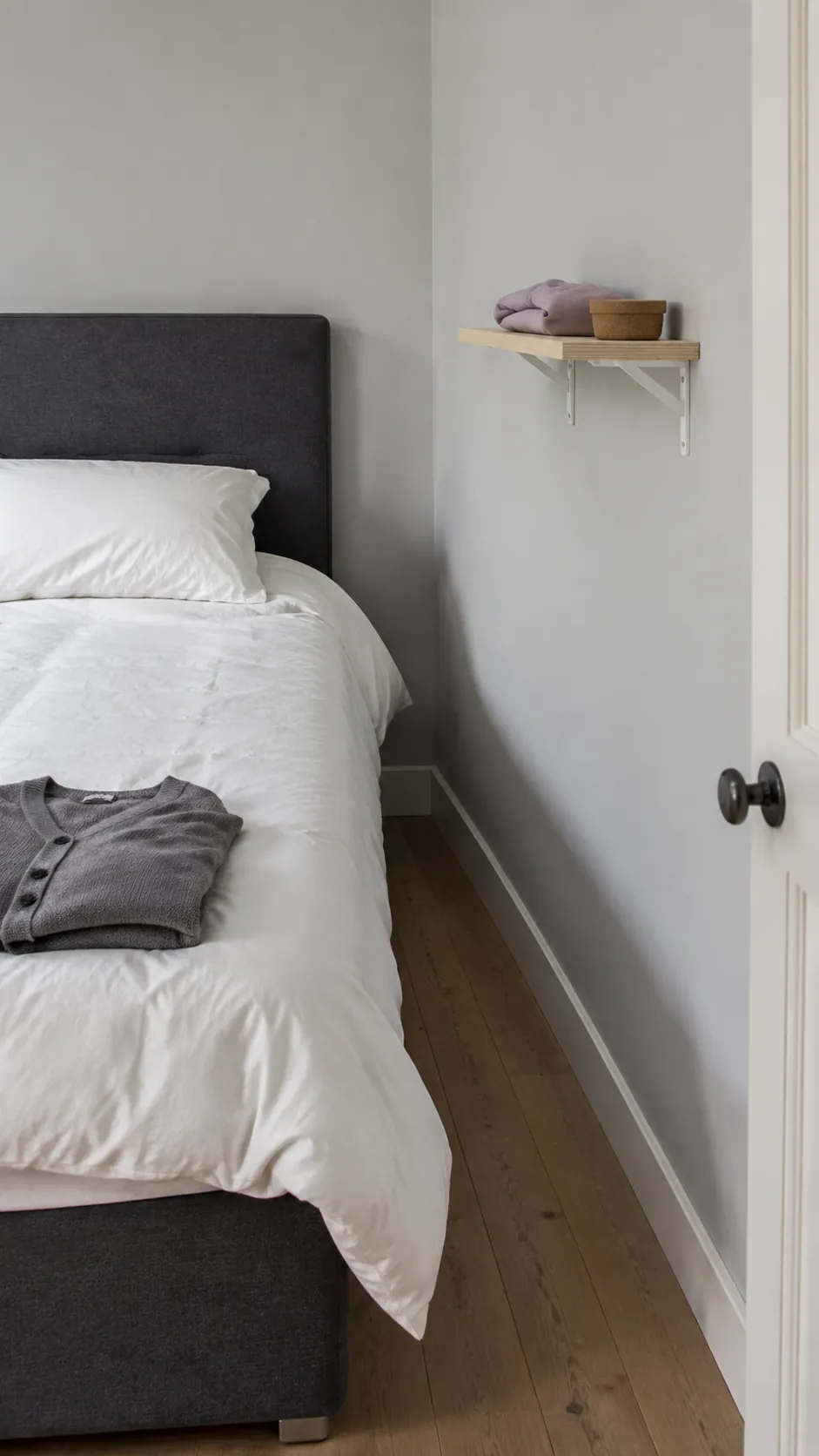
There is no single shelf height that works with every mattress, headboard, and person. Mark the proposed underside with removable tape, then sit upright against your normal pillows and check the full path of your head as you move. Account for a thick mattress topper, upright reading posture, and the forward projection of the shelf, rather than measuring from the floor alone. Leave generous clearance above the tallest regular sleeper’s movement zone.
Test the proposed depth with a cardboard profile held safely beside the bed before installation. A shallow picture ledge over a bed usually intrudes less than a deep storage shelf, but it still needs secure mounting and restrained contents. If the only comfortable position pushes the display awkwardly against the ceiling, choose another form of above bed wall decor.
Size the shelf against the headboard
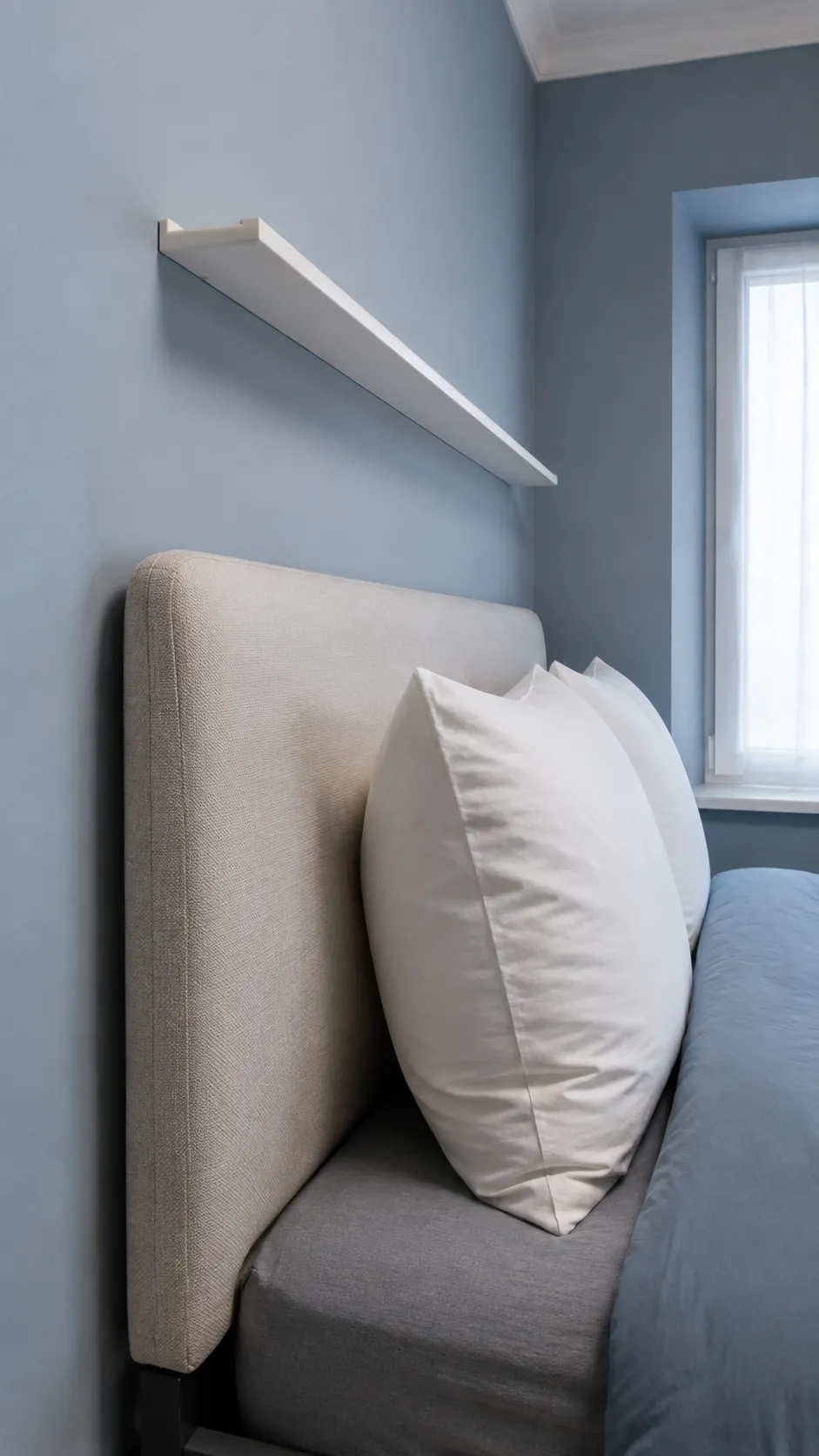
Use the headboard as your visual reference rather than the entire wall. A shelf around two thirds to three quarters of the headboard width is a useful styling trial, not a safety specification or a rule you must follow. For a 60 inch headboard, that suggests testing a paper strip about 40 to 45 inches wide. Photograph the outline from the bedroom doorway to see whether it feels connected to the bed.
A broad upholstered headboard can handle a quieter, narrower ledge because it already has visual weight. A low open metal frame may need a slightly wider display to anchor the wall. Keep the arrangement centered on the bed even when one bedside table is larger, unless an architectural feature calls for a deliberately offset composition.
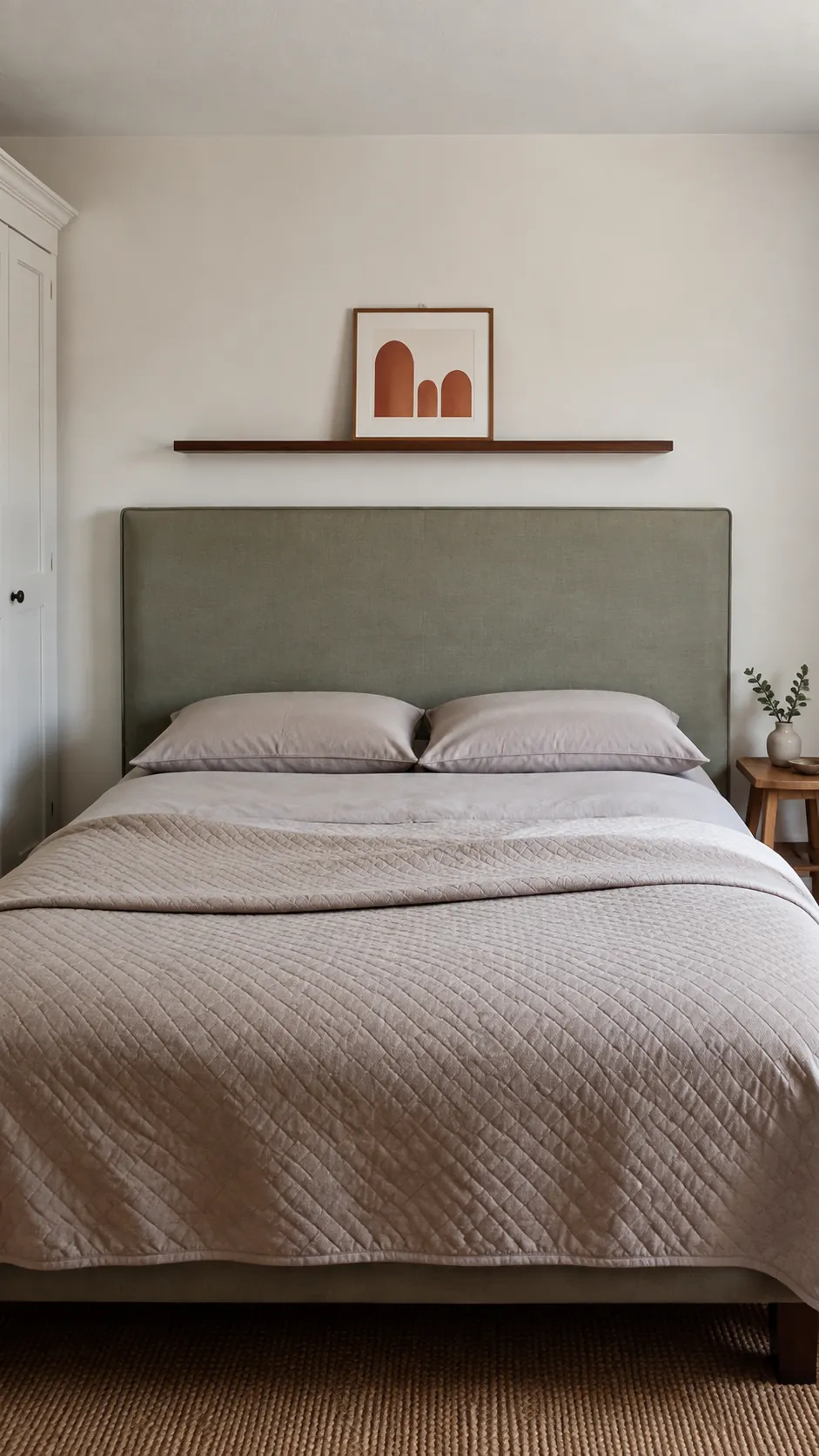
Give one lightweight piece the lead
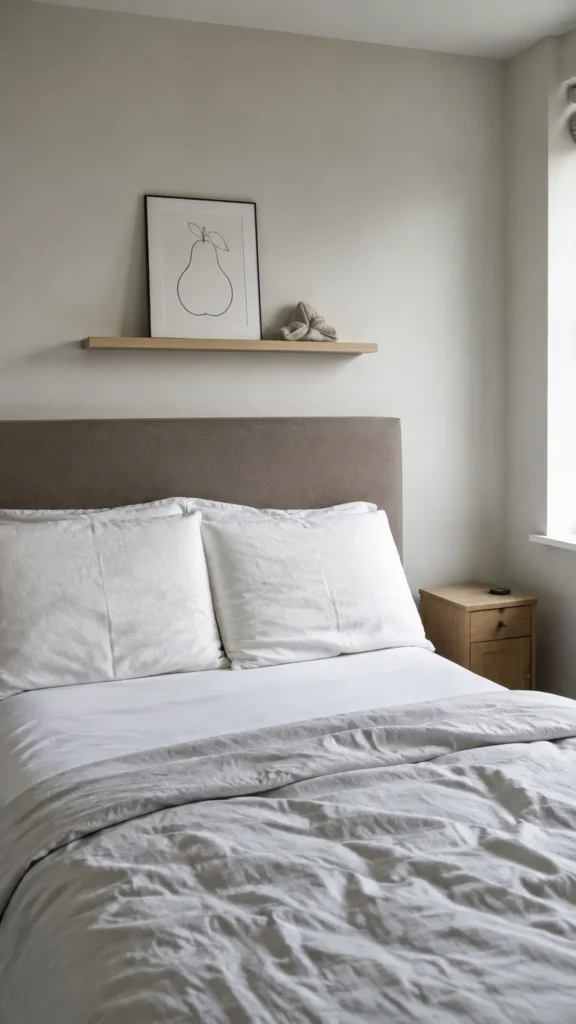
Start shelf decor behind a headboard with one clear focal point, such as a small botanical print in a lightweight frame with acrylic glazing. Secure displayed pieces appropriately so they cannot simply slide or tip toward the bed; the lip of a picture ledge alone is not a complete restraint. Add a shorter second print only if the first leaves room for it. Overlap a small portion of their edges while keeping the main subject visible.
Keep the tallest object away from ceiling trim and let its shape contrast with the shelf’s horizontal line. Skip the urge to add a vase just to complete a familiar decorating formula. One restrained pair of prints can provide art above a headboard without turning the shelf into an overhead collection.
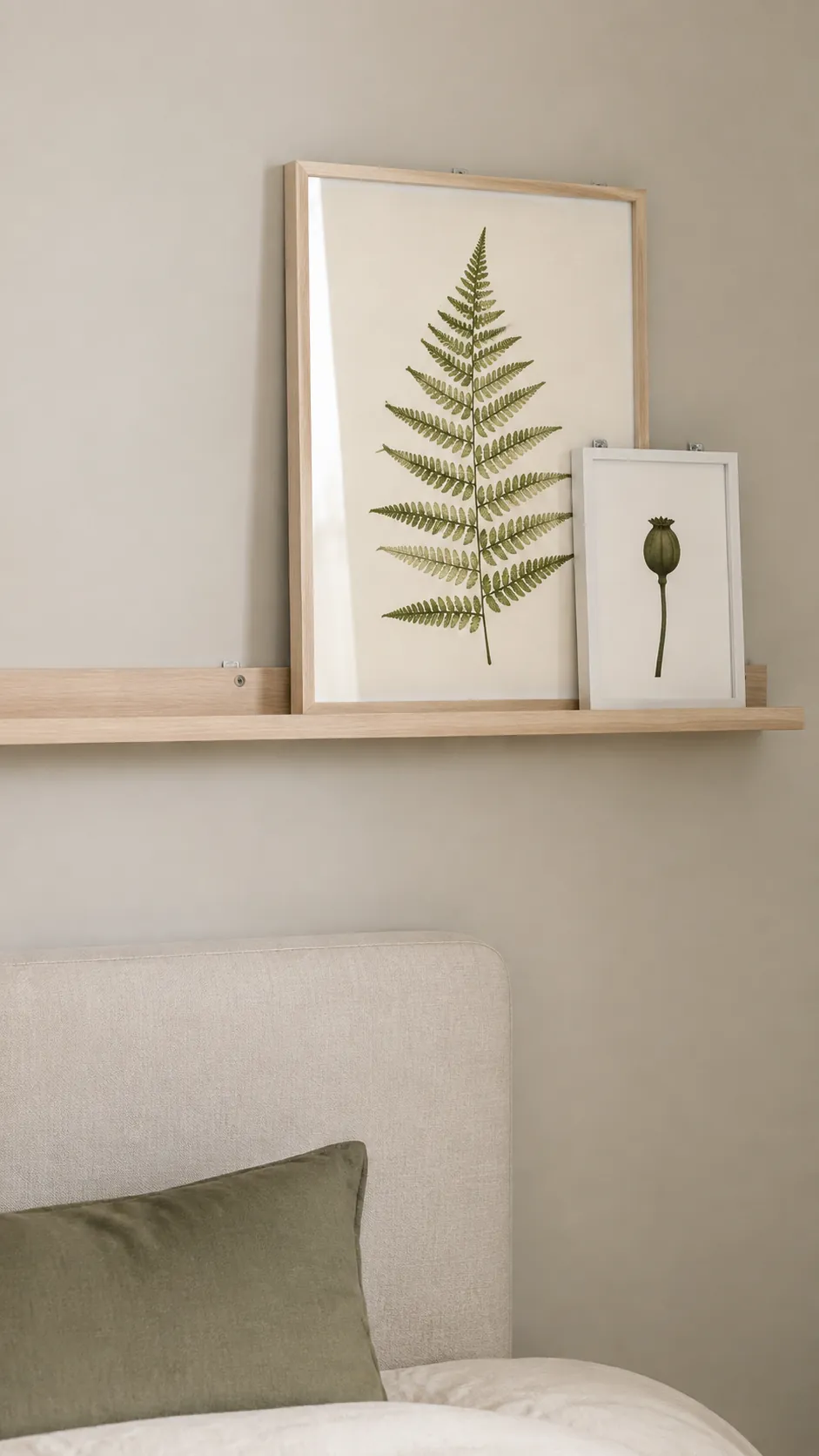
Repeat a bedroom color and leave a gap
Bedroom wall shelf styling feels more connected when one small color repeats something already in the room. Pull a dusty blue from the quilt, a muted green from a cushion, or a soft red from a rug, then use that accent in the printed image. Let the wall, shelf, and most bedding stay quieter so the accent remains legible. Matching every frame and fabric exactly can make an otherwise personal room feel overly coordinated.
Arrange the display as one loose group with a visible stretch of empty shelf beside it. Look for different heights within the group instead of spacing five small objects at identical intervals. If your eye jumps from object to object without resting, remove the smallest item and check the view again from the doorway.
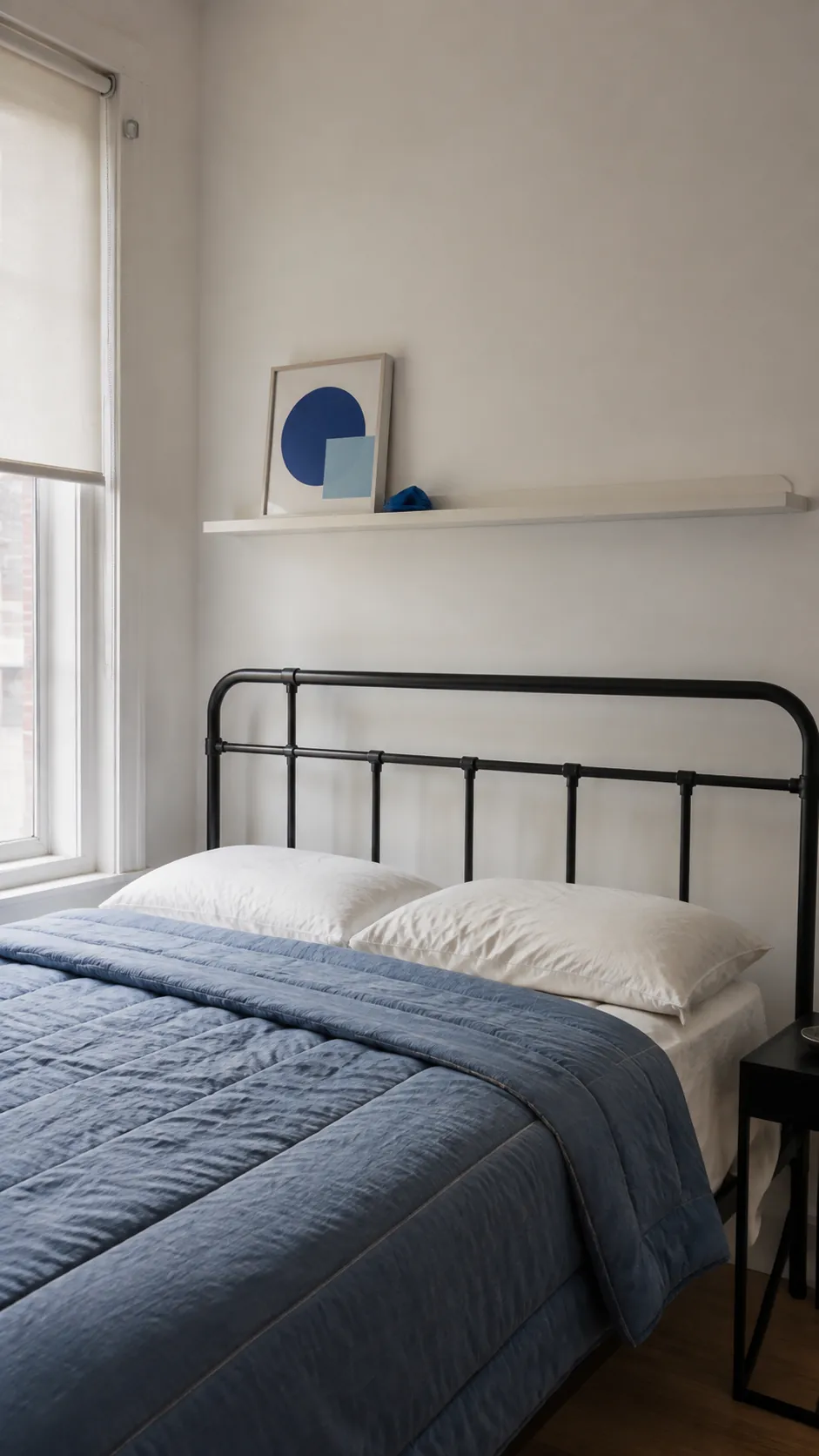
Keep the finished display easy to live with
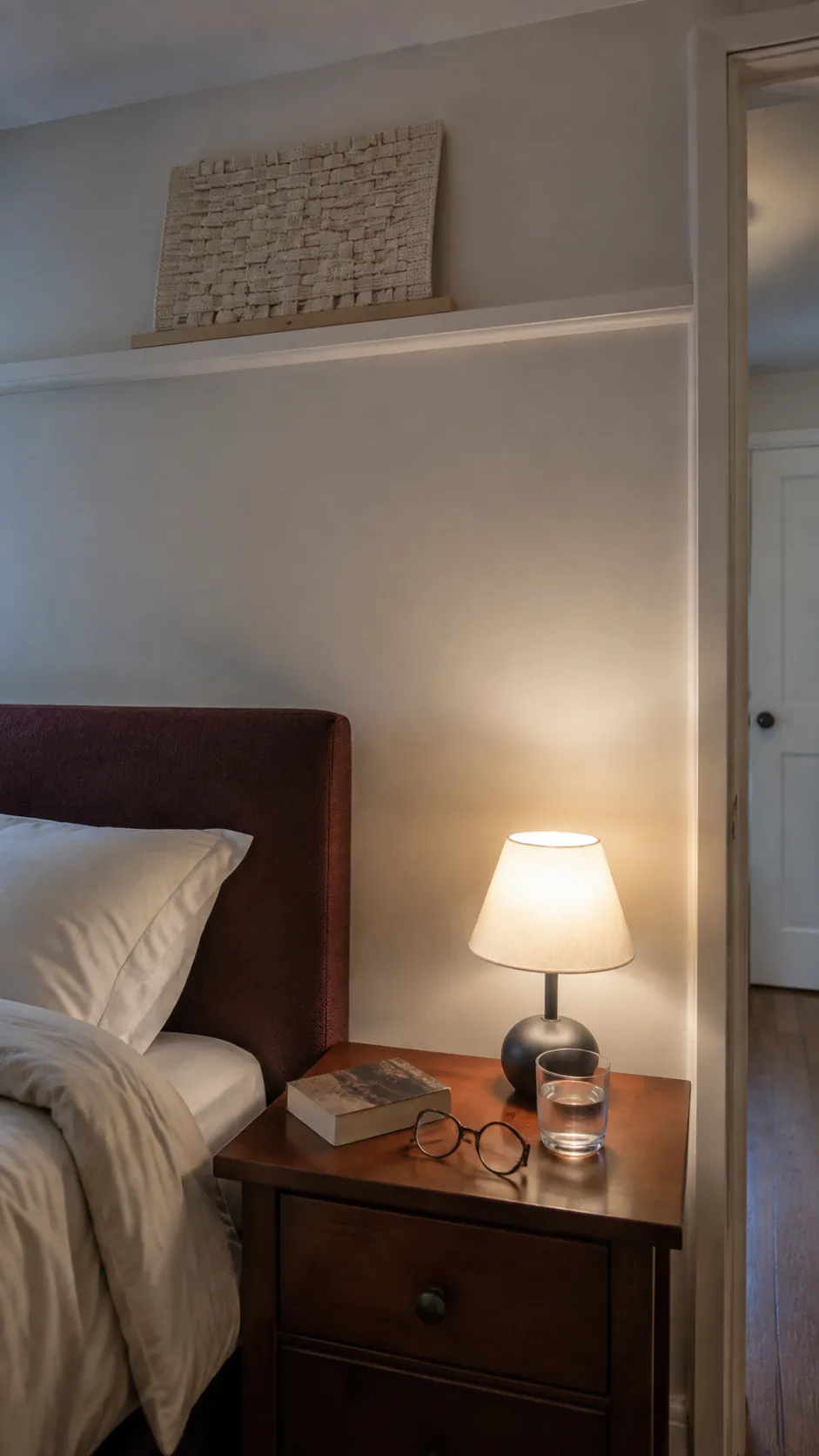
Place your reading book, phone, and water on the bedside table so you do not reach behind your head at night. Put living plants where you can water them without carrying a pot over the pillows, and keep trailing stems clear of the sleeping area. A shelf that needs frequent rearranging or awkward cleaning is doing too much. Leave the overhead display sparse enough to dust from a stable step stool without standing on the mattress.
Check the fixings and object restraints according to their manufacturer’s guidance, especially after moving the bed or noticing movement. Before buying another accessory, make the bed, switch on the usual evening lights, and view the wall as you actually use it. The finished arrangement should look calm from the doorway and feel completely unobtrusive when you sit down beneath it.