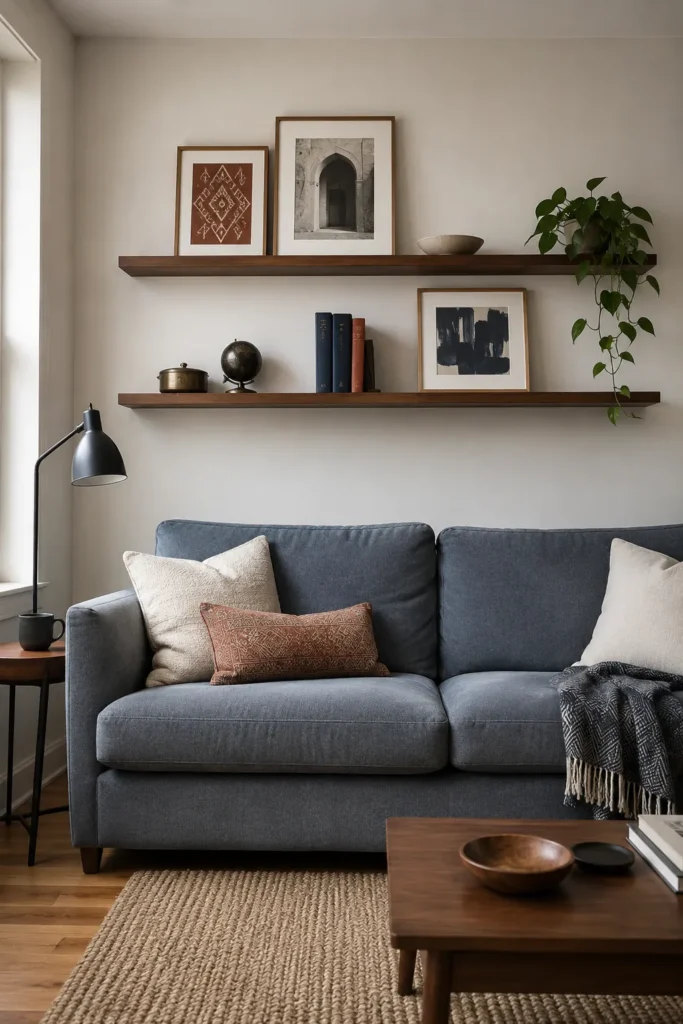
How to Style Shelves Above a Couch Safely
Shelves above a couch can add depth and storage to a difficult wall, yet they sit over a place where people lean, stretch, and drop into their seats. That changes the order of decisions. Secure mounting, safe depth, and clear headroom come before the objects you want to display. Once those limits are right, the styling can look relaxed without becoming risky or crowded.
Decide whether the wall needs shelves at all
A wall shelf over a couch earns its place when you want to rotate art, display a small collection, or add dimension that a single canvas cannot provide. It is less useful when the room already has busy pillows, baskets, lamps, and side tables competing for attention. In that case, one substantial artwork may make the room calmer and safer.
Mock up the shelf shapes with paper before purchasing anything. View the wall from the doorway and the main chair, then count the decorative elements already visible around the sofa. Choose shelves only if they solve a real display need rather than filling space for its own sake.
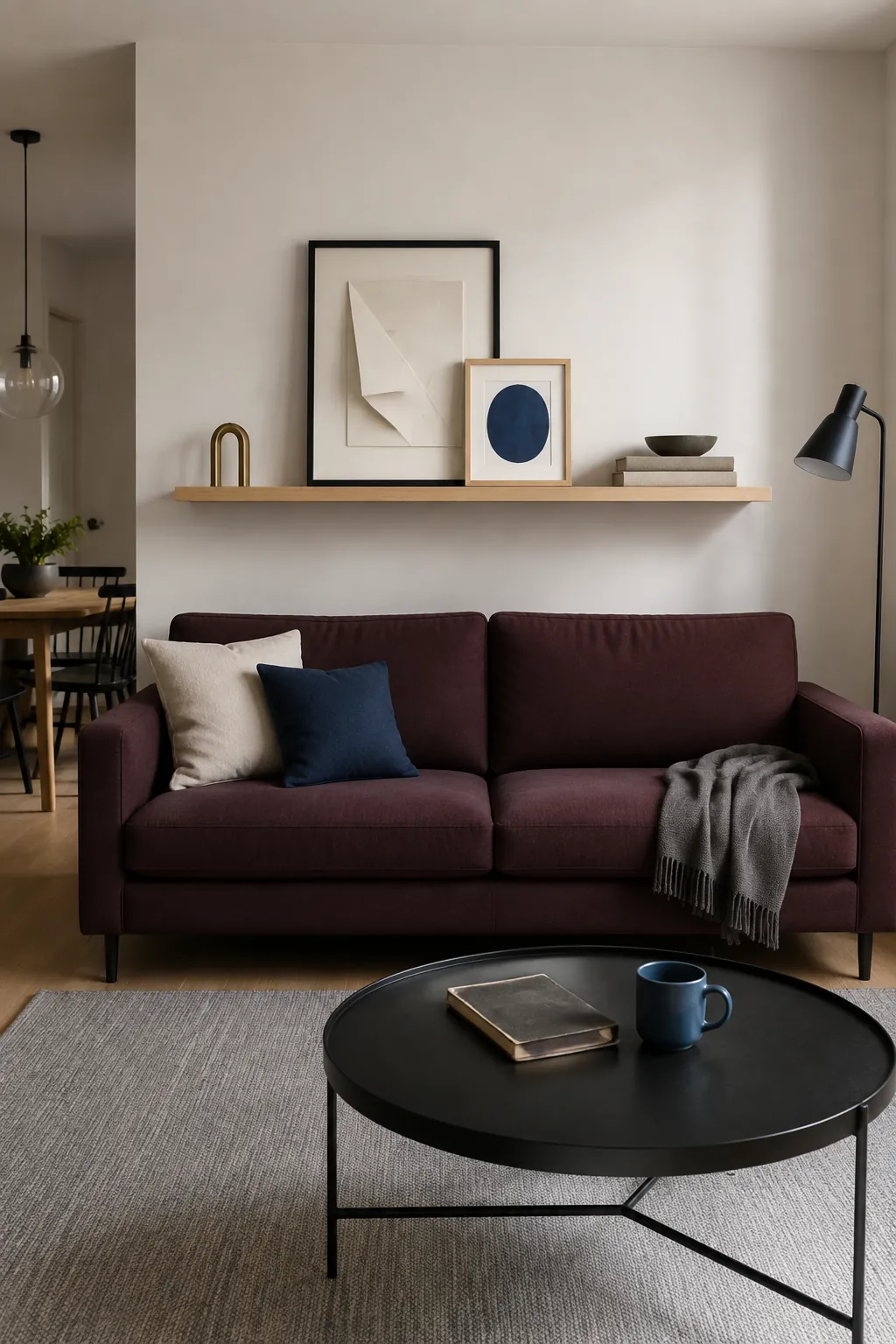
Mount into structure and test movement
Do not rely on styling to disguise uncertain installation. Use fasteners appropriate for the wall and the expected load, follow the shelf maker guidance, and locate framing or suitable anchors before decorating. After mounting, press gently at each end and confirm that the shelf does not rock or pull away.
Then test the room as it is actually used. Sit down firmly, lean against the sofa back, and watch whether the wall or shelf vibrates. If ordinary movement shifts displayed objects, move the shelf, change the mounting, or choose a flat wall treatment instead.
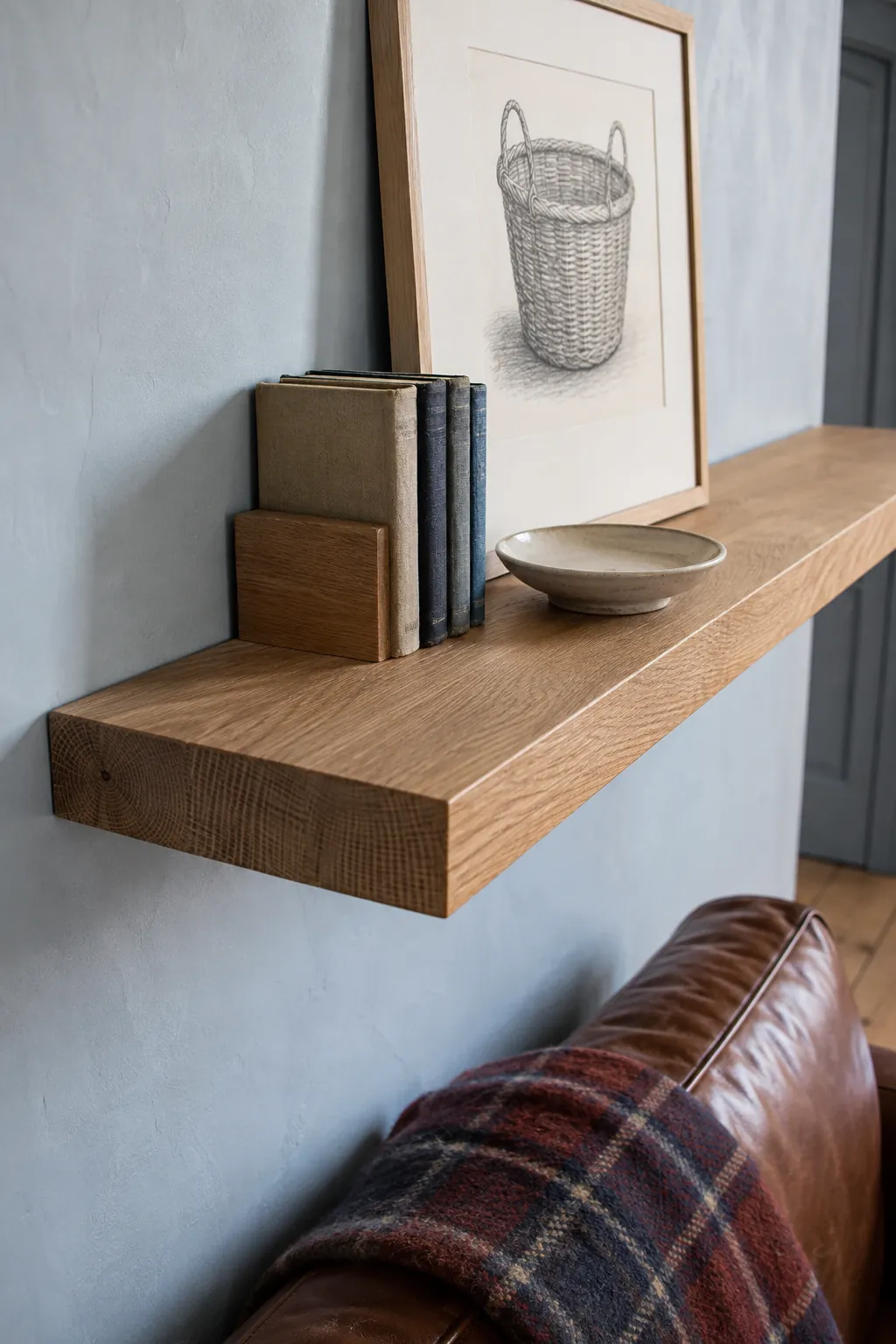
Set the lowest shelf from the seated position
The lowest shelf should clear the tallest regular sitter even when that person leans back or stretches. Sofa depth and cushion height matter more than a universal measurement, so test bodies and habits before drilling. A deep floating shelf behind a sofa needs more clearance than a narrow picture rail because its front edge projects farther into the seating zone.
Judge the complete height with decor in place, not the bare shelf alone. Tall objects can push the visual center upward and make a correctly mounted shelf appear disconnected from the couch. Use paper outlines for the largest planned object so the full arrangement can be evaluated from across the room.
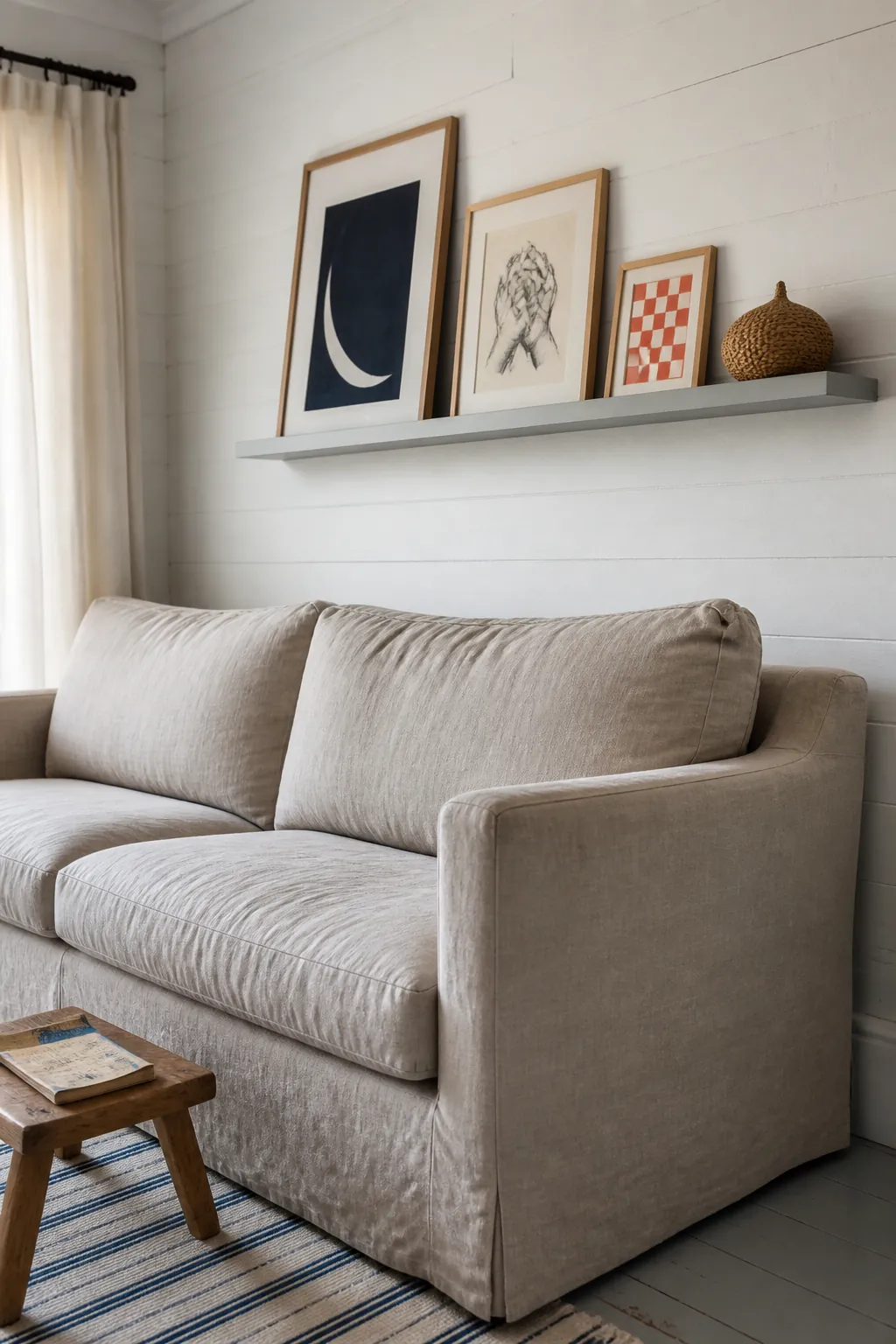
Keep the total span related to the sofa
Shelves above couch living room arrangements feel grounded when their combined width is visibly related to the furniture below. A useful starting point is roughly two thirds to four fifths of the sofa width. Staggered shelves still need to be judged by their full outside span, since the eye reads the entire group as one shape.
Center that complete shape over the sofa unless a window, fireplace, or built in feature clearly controls the composition. Avoid extending one small shelf far beyond an arm merely to create asymmetry. Purposeful staggering uses modest offsets and repeated alignment points rather than random placement.
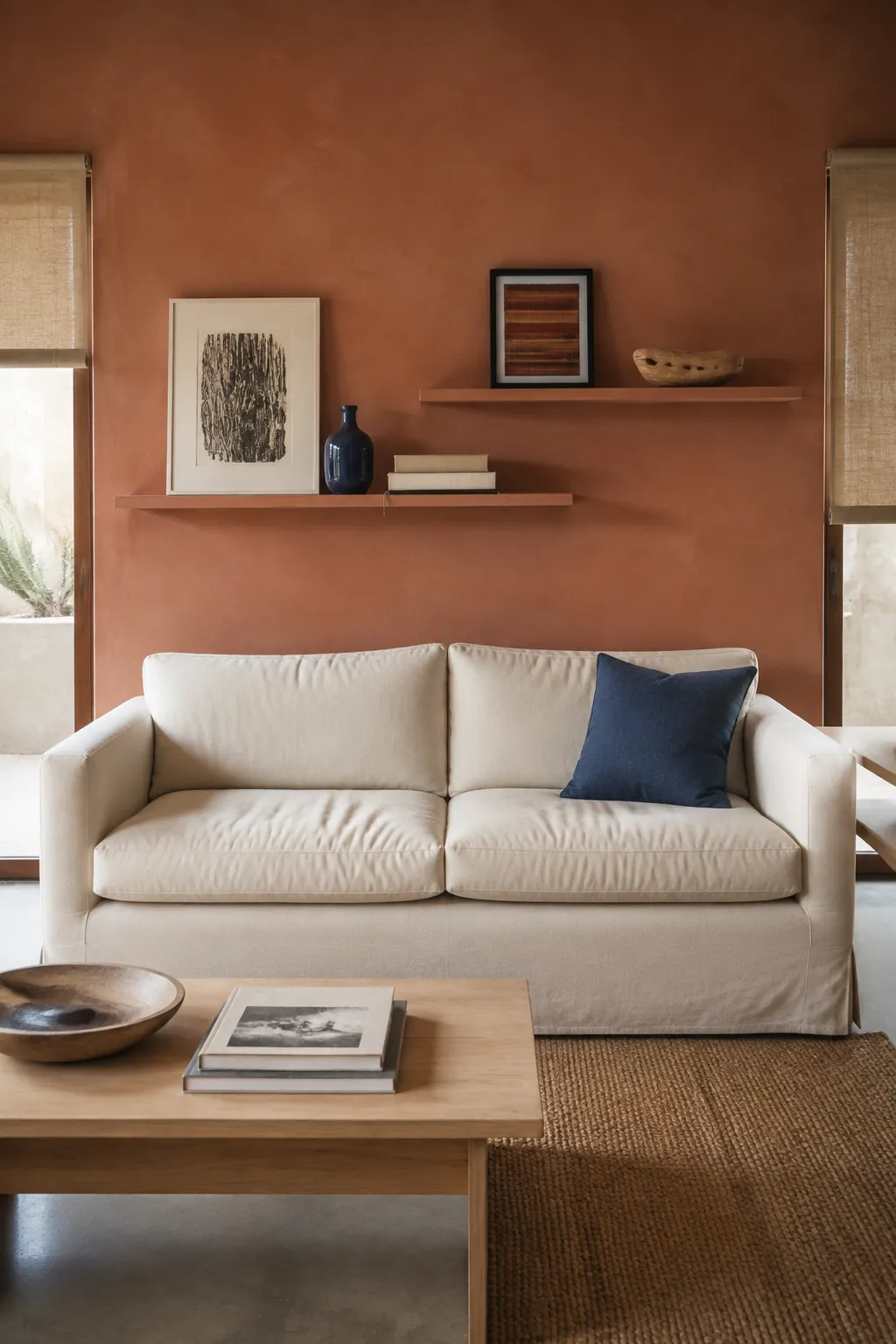
Build small groups instead of a continuous row
Shelf styling above a sofa needs pauses. Create two or three compact groups and leave visible surface between them rather than lining every object from end to end. Within each group, vary height and shape while repeating one color or material elsewhere on the shelf.
Place the visually heaviest group closer to the sofa center, then balance it with a smaller but darker object on the opposite side. Keep collections edited so individual souvenirs remain recognizable. If an object has no connection to the room or the story of the display, it is occupying valuable safety space.
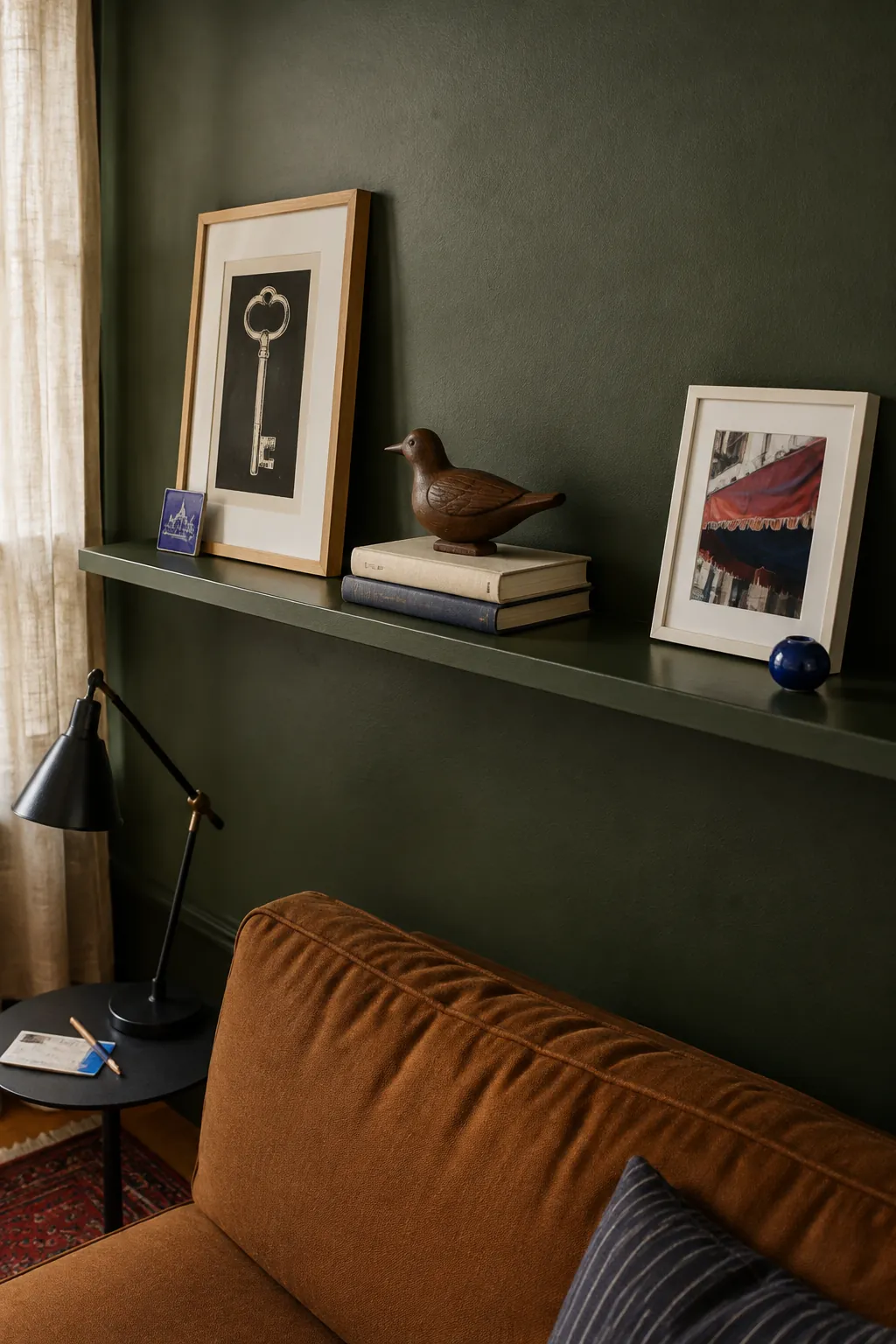
Choose shallow light objects for the head zone
Framed prints, small unbreakable vessels, and lightweight books are better choices than stone sculptures, glass bottles, or heavy electronics directly over seating. Use bookends where books could slide and museum putty where appropriate for small objects. Keep trailing plants at shelf ends so watering and falling leaves do not affect the sofa.
A projector or valuable travel collection may need a different wall or enclosed cabinet. Storage pressure is a poor reason to place weight above people. The most successful above sofa wall decor looks generous because it contains fewer, safer pieces with clear space around them.
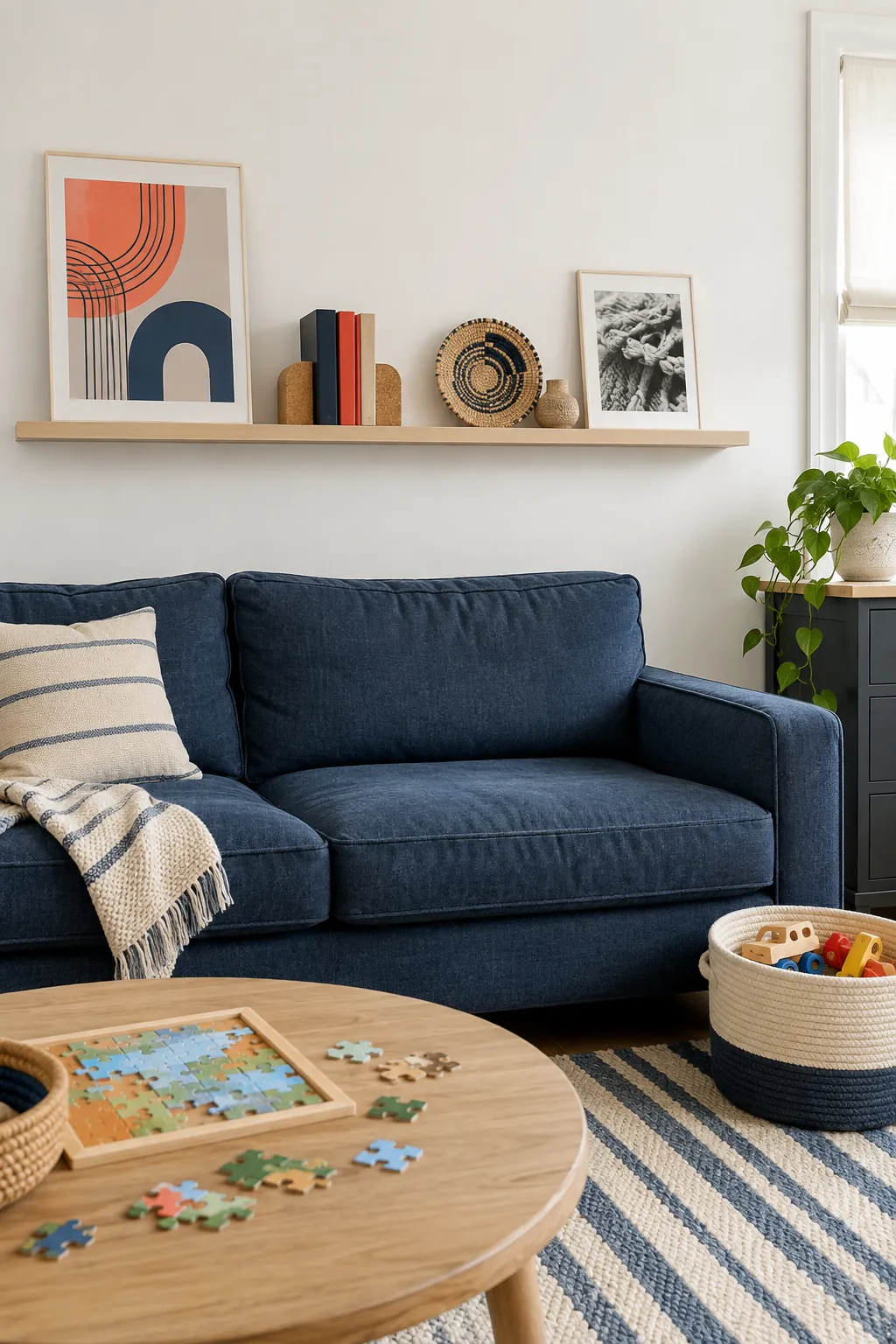
Repeat color below the shelves
Connect the display to the couch by repeating two or three colors in cushions, throws, frames, or nearby furniture. A black frame can answer a dark lamp, while a clay vessel can echo one cushion without matching it exactly. This vertical repetition makes the floating shelves feel attached to the room rather than pasted onto the wall.
Edit from every regular seat
Finish by viewing the shelves from the doorway, across the room, and from the sofa itself. Confirm that nothing feels threatening overhead, every object stays stable when the couch is used, and the full display remains narrower than the furniture anchor. Remove one item from any area that reads as a solid block. Good wall decor behind a couch should feel secure first, balanced second, and decorative third.