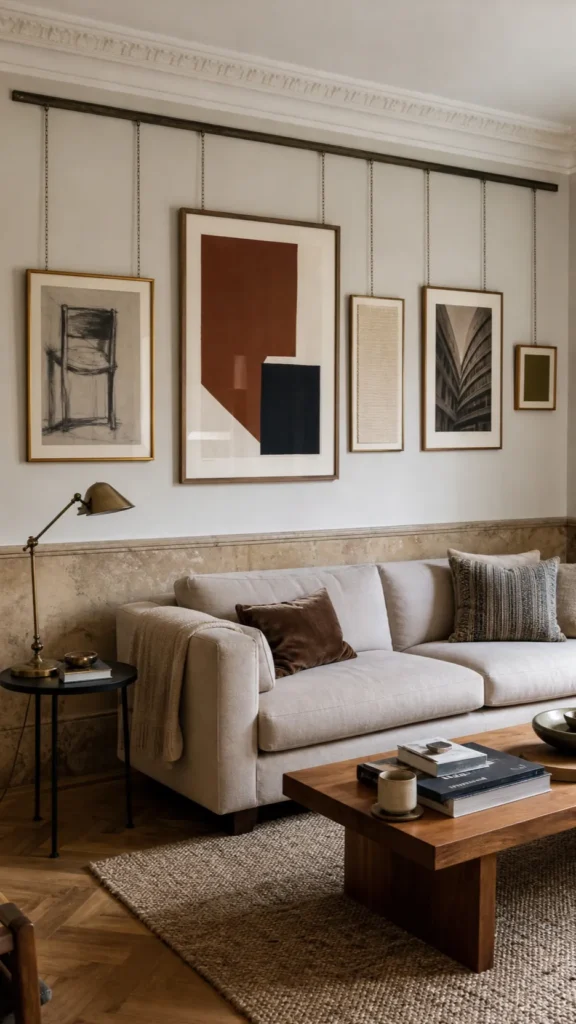
Picture Rail Living Room Ideas: 6 Ways to Style the Wall
A picture rail living room can feel tailored, flexible, and personal—or surprisingly busy. The difference is rarely the moulding itself. It is the relationship between art scale, cord visibility, paint boundaries, furniture width, and negative space. Treat those elements as one composition and the rail becomes part of the room rather than hardware floating above it.
First confirm the rail is functional and firmly fixed, then use hooks, cords, and frame hardware rated for the intended load. A decorative strip is not automatically safe hanging support. Once the practical side is sound, these six living-room approaches offer very different moods without sacrificing flexibility.
Anchor the sofa wall with one dominant piece
Start with a frame large enough to relate to the sofa, then add two or three smaller works instead of filling the whole rail. The dominant piece gives the eye a clear entry point and prevents a mixed collection from becoming confetti. Keep the overall grouping comfortably narrower than the sofa and leave a purposeful gap above the back cushions.
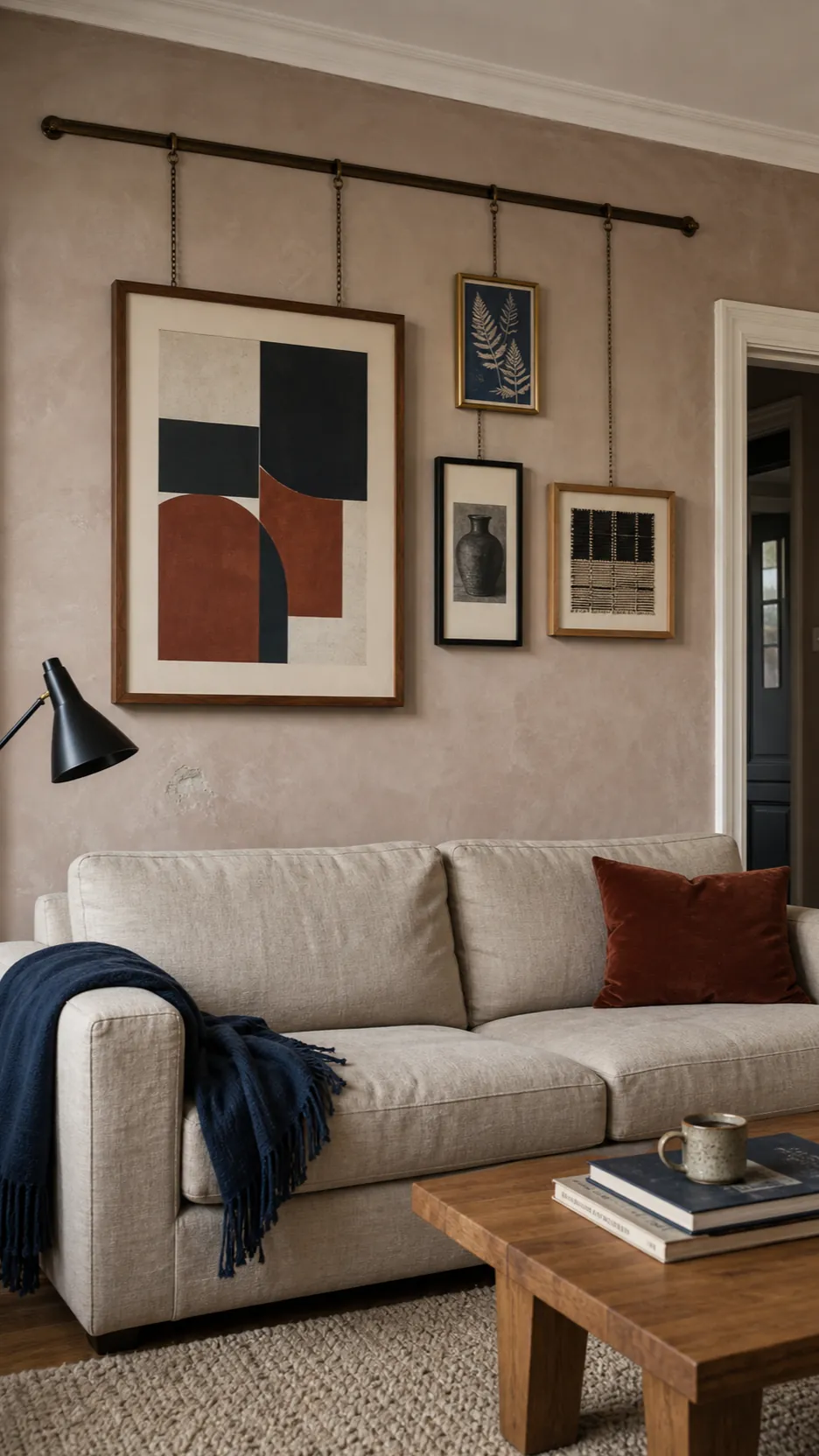
Wide frames look steadier on two drops. Repeat one finish—perhaps walnut or black metal—while allowing the others to vary. This creates family resemblance without making the wall look like a boxed set.
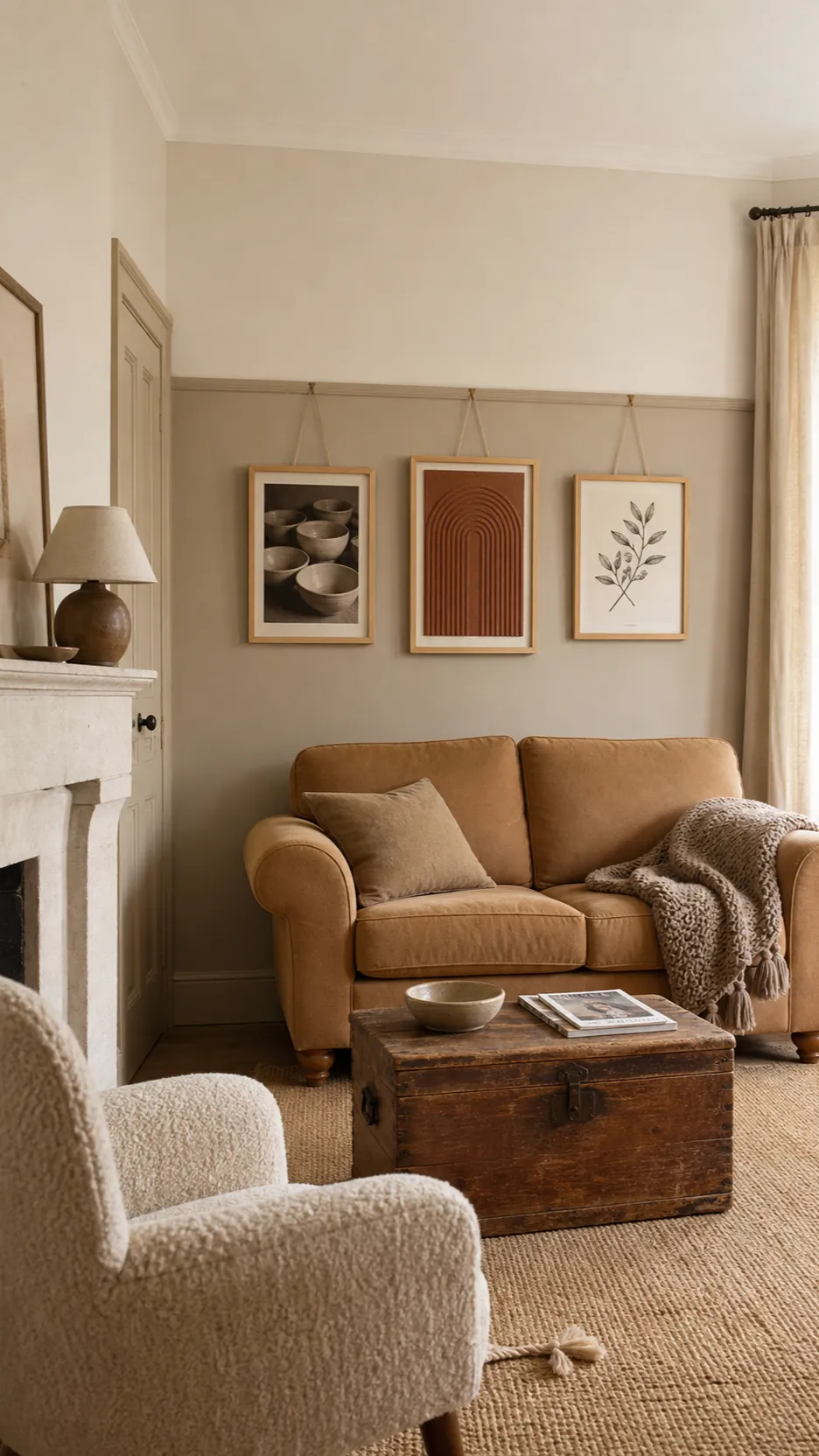
Warm the room with a quiet two-tone scheme
Paint below the rail a warm stone, mushroom, or muted clay and keep the upper wall a lighter relative. This preserves brightness while giving the seating zone more weight. Painting the rail with the lower wall makes the line feel integrated; matching it to pale trim makes it more architectural. Test large samples beside flooring, upholstery, and the fireplace at different times of day.
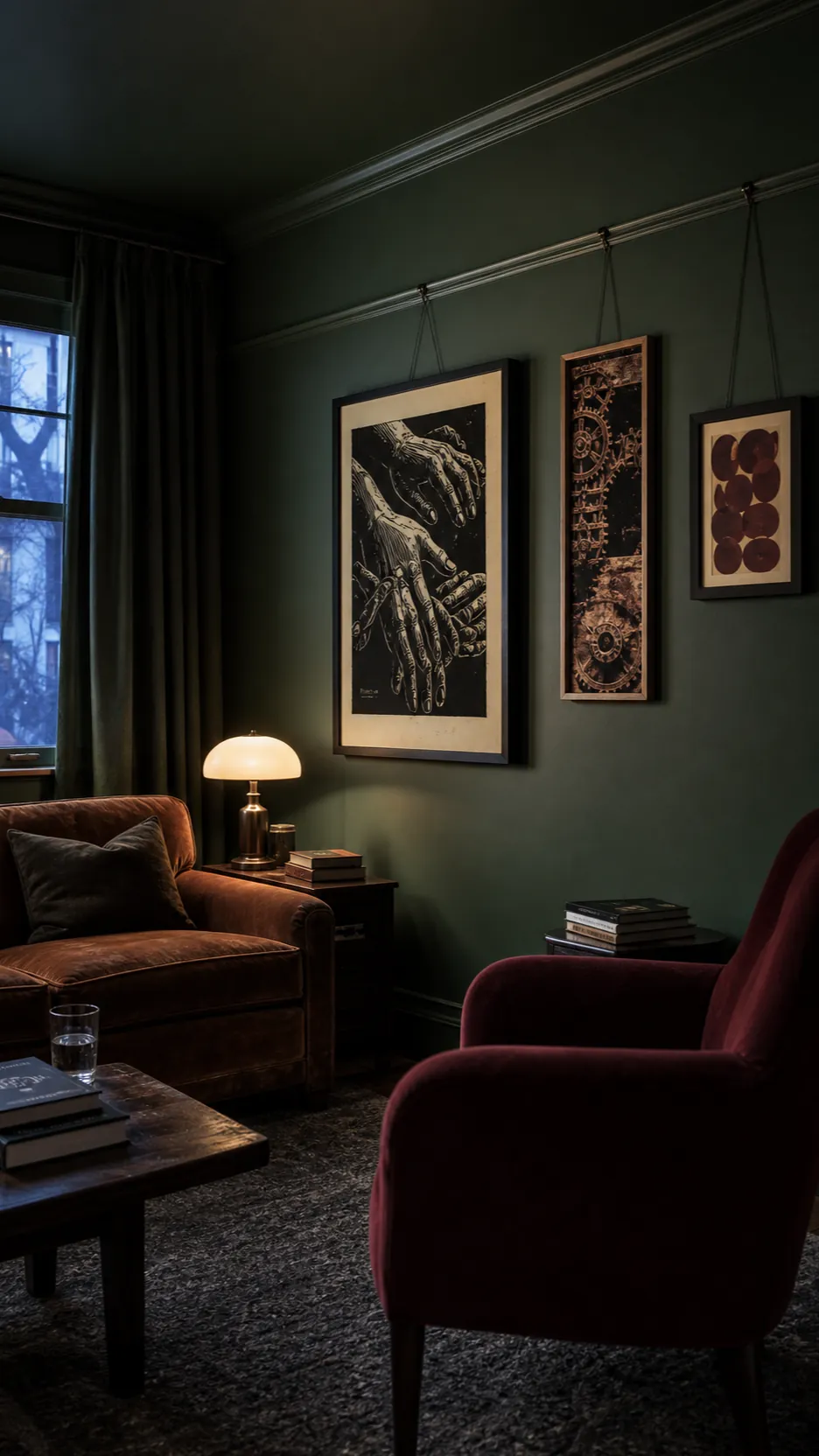
Color-drench a moody sitting room
For a cocooning room, carry one deep color across the lower wall, rail, upper wall, trim, and even ceiling. The relief of the moulding remains visible through shadow instead of contrast. Choose cords close to the wall color so the art, not the hanging system, leads. Controlled pools of lamplight and reflective frame details stop the room from feeling flat.
Keep a Scandinavian living room spare
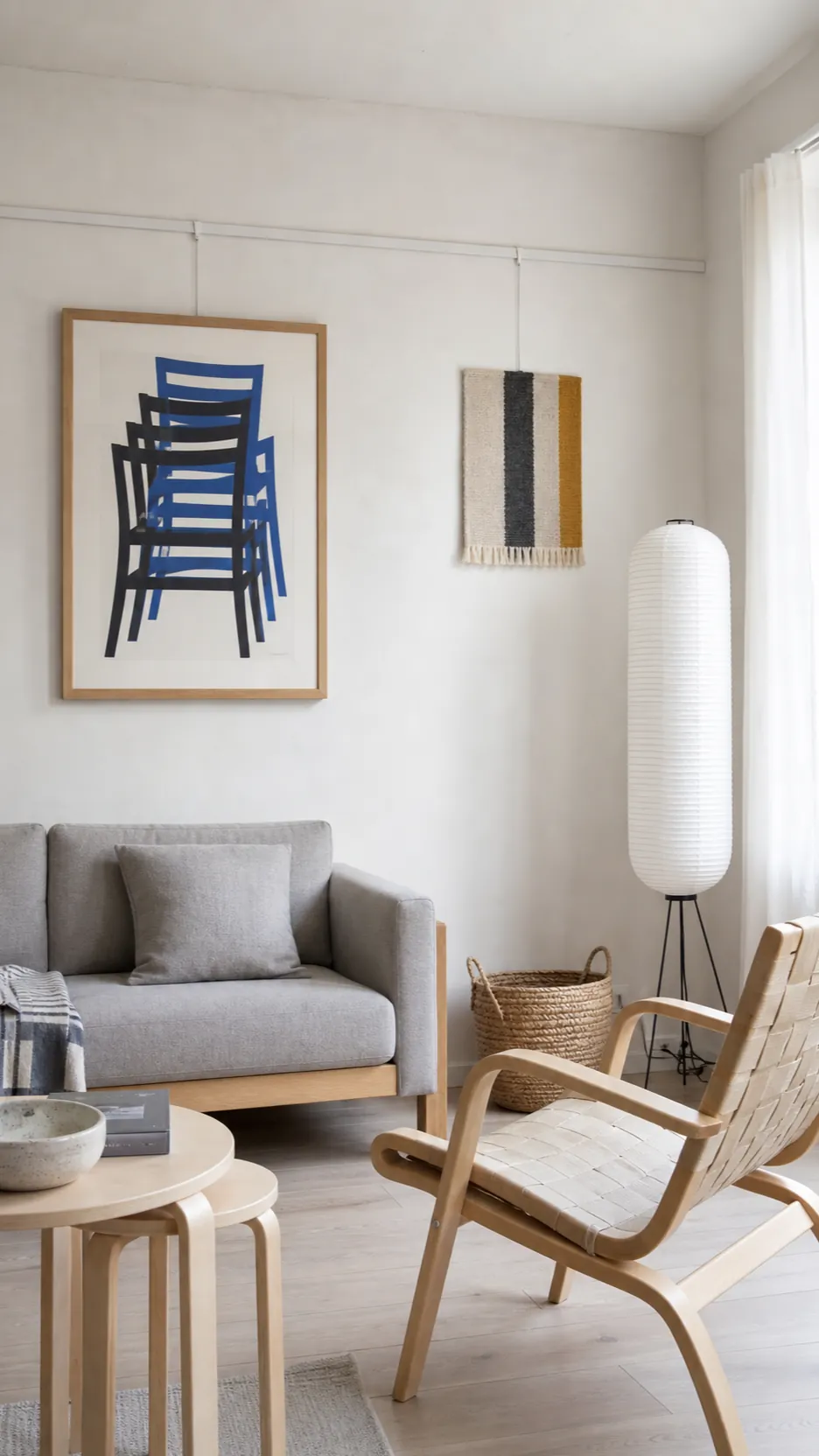
A rail does not require a gallery wall. In a Scandinavian living room, suspend one generous graphic print and one smaller textile work, then let pale plaster and light wood do the rest. Short drops reduce visual noise. The emptier rail also makes seasonal rotation easy without turning every change into a new layout problem.
Align the rail with built-in shelving
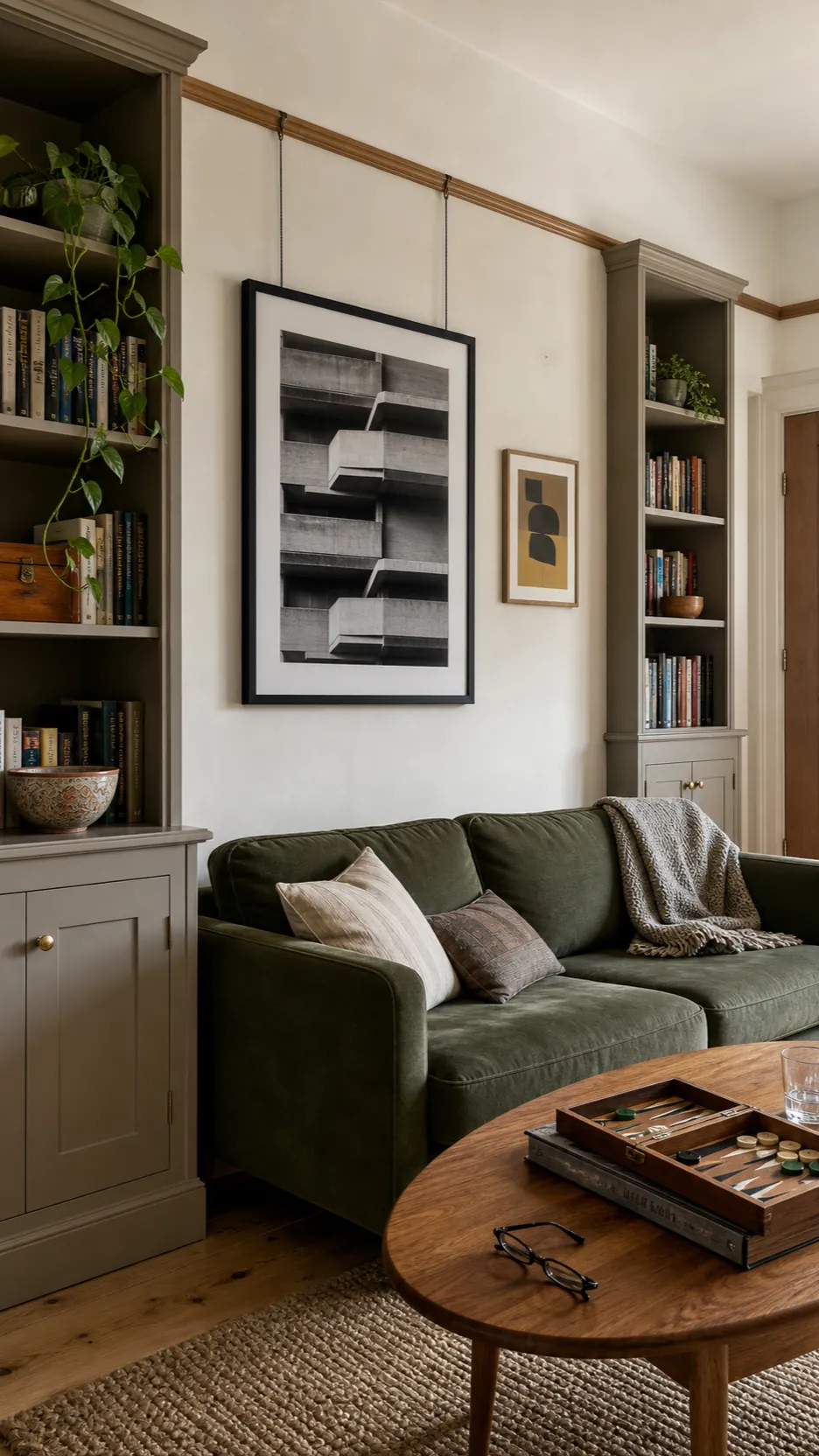
When bookcases or cabinetry already occupy a long wall, align the rail with a strong existing line such as the top of the units or nearby door casings. Painting built-ins and wall in the same family keeps the room from becoming striped. Use the open wall between shelves for one focused arrangement, and avoid running cords in front of cabinet doors or lights.
Create a flexible reading-corner display
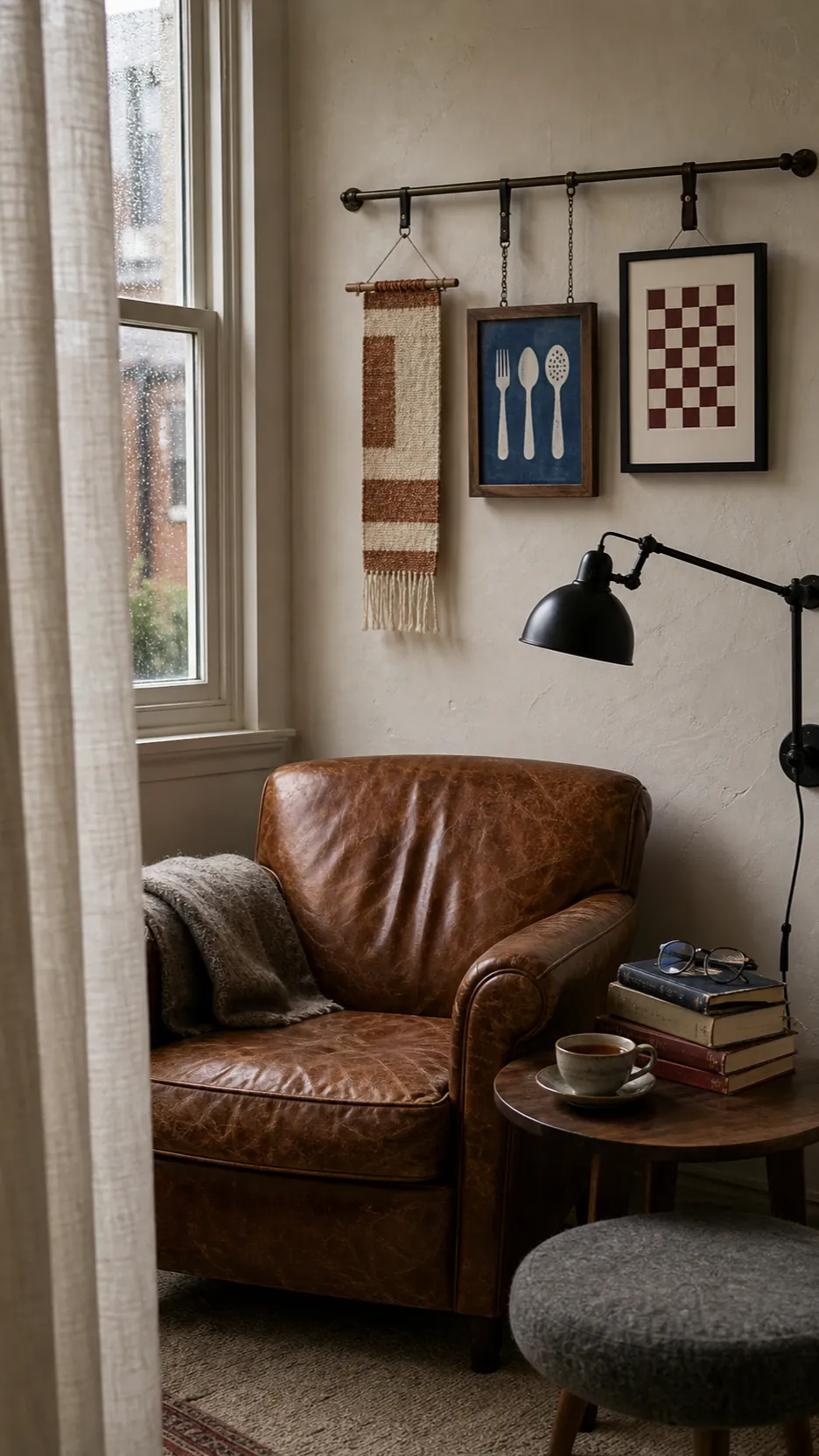
A small reading corner can carry the experimental pieces that would disappear on the main sofa wall. Hang a textile panel, small photograph, or work on paper over a low chair and side table, but keep cords and frames away from the lamp arm and head space. Because the grouping is compact, it can change with the books, seasons, or objects you are currently enjoying.
Edit the arrangement before adding more
Lay the whole grouping on the floor, then photograph it and view the image at thumbnail size. If no piece leads, enlarge one or remove several. If the cords dominate, shorten the drops, reduce their number, or match their color to the wall. If the art floats away from the furniture, lower the grouping while preserving safe clearance.
The best living-room wall does not show every picture you own. It gives the strongest pieces room to speak and makes future changes easy. A picture rail succeeds when the room looks settled even though the display never has to be permanent.