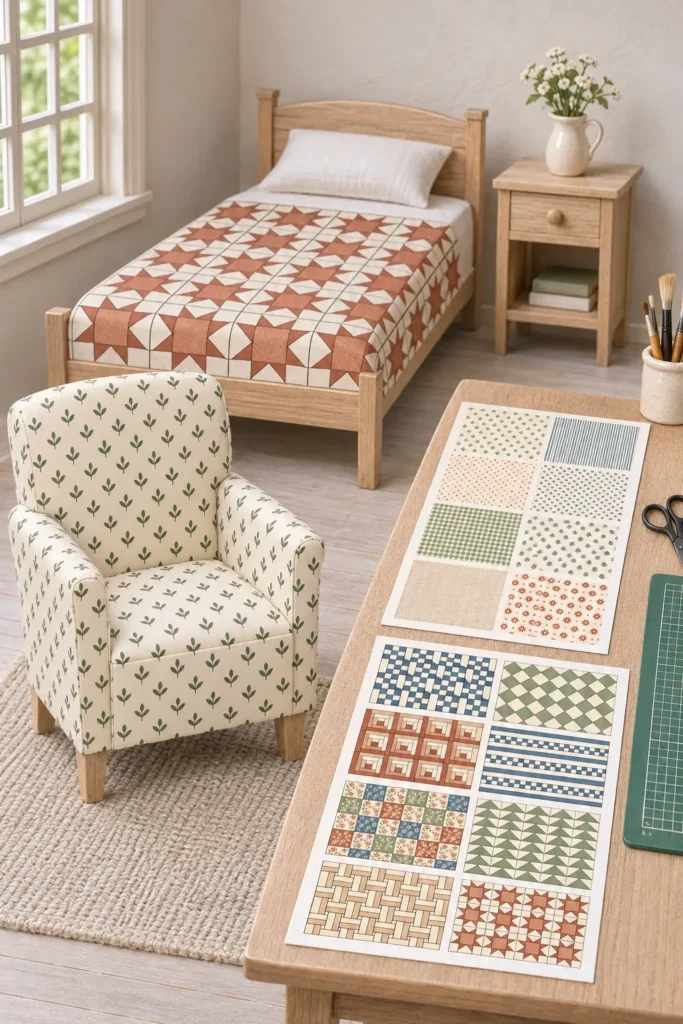
A tiny print can look convincing in a dollhouse even when the material is paper. The important question is not whether paper can imitate fabric in every situation. It is whether the finished object needs to drape, bend, or show a woven edge.
The two free pattern sheets below are designed for 1:12 scale. They give you small repeats for firm furniture surfaces, flat bedding details, screens, boxes, and other places where the pattern matters more than fabric movement.
Small prints for firm upholstery surfaces
This sheet contains eight coordinated prints with motifs small enough for miniature chairs, stools, headboards, and padded panels. The collection mixes tiny florals, narrow stripes, dots, and simple geometric repeats. Each panel is large enough to cover several small parts without an obvious jump in the repeat.
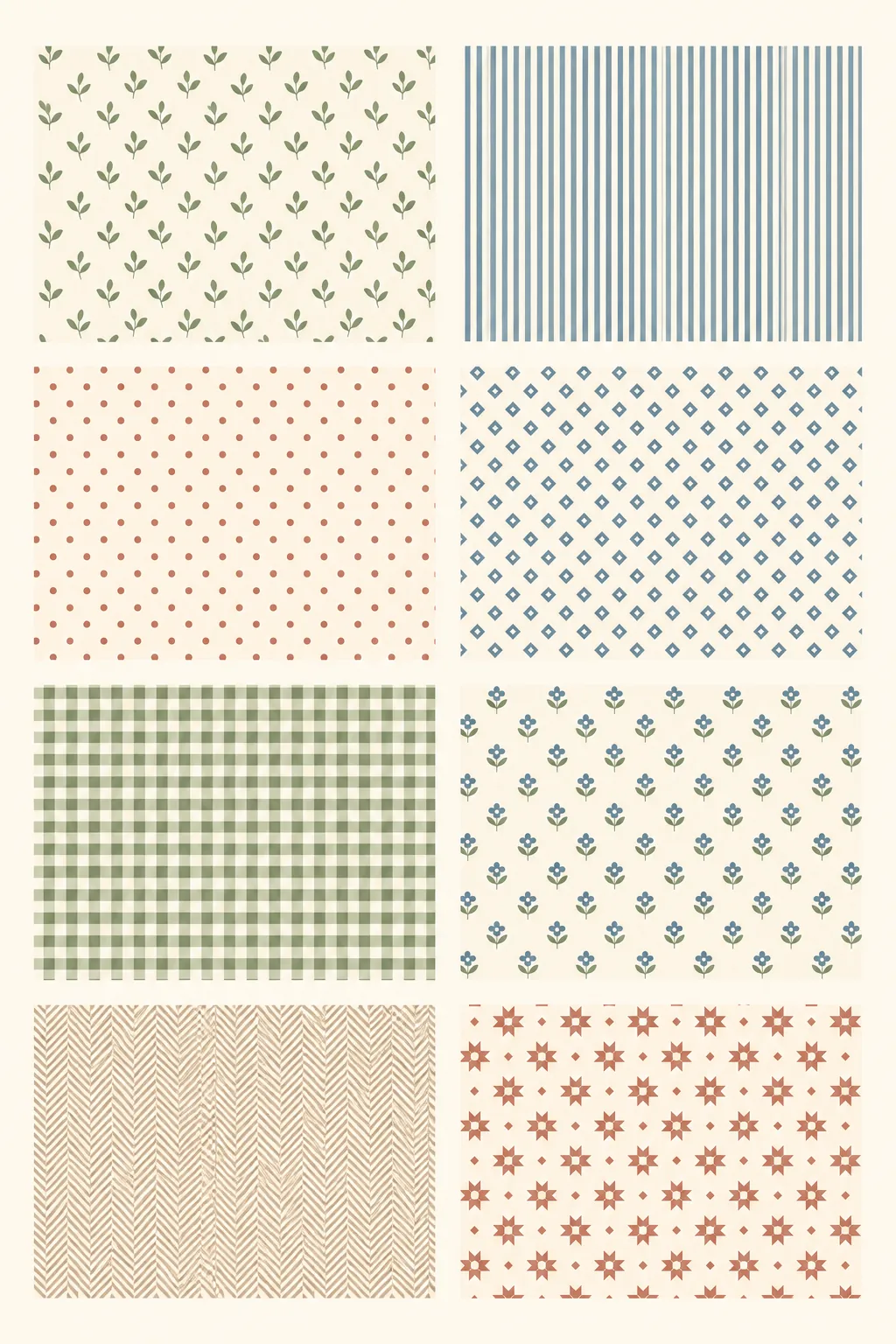
Download high-resolution printable
Paper works best when it wraps a firm base. Cut a seat or headboard shape from thin card, cover the face with the printed pattern, and fold a narrow margin around the back. A layer of craft foam beneath the paper can suggest padding without asking the paper to behave like loose cloth.
Quilt and bedding pattern panels
The second sheet contains eight larger quilt inspired panels. Use them for a flat coverlet, a folded blanket edge, a decorative bed runner, a trunk lining, or a framed textile sample. The designs include patchwork squares, simple diamonds, narrow bands, and restrained floral blocks.
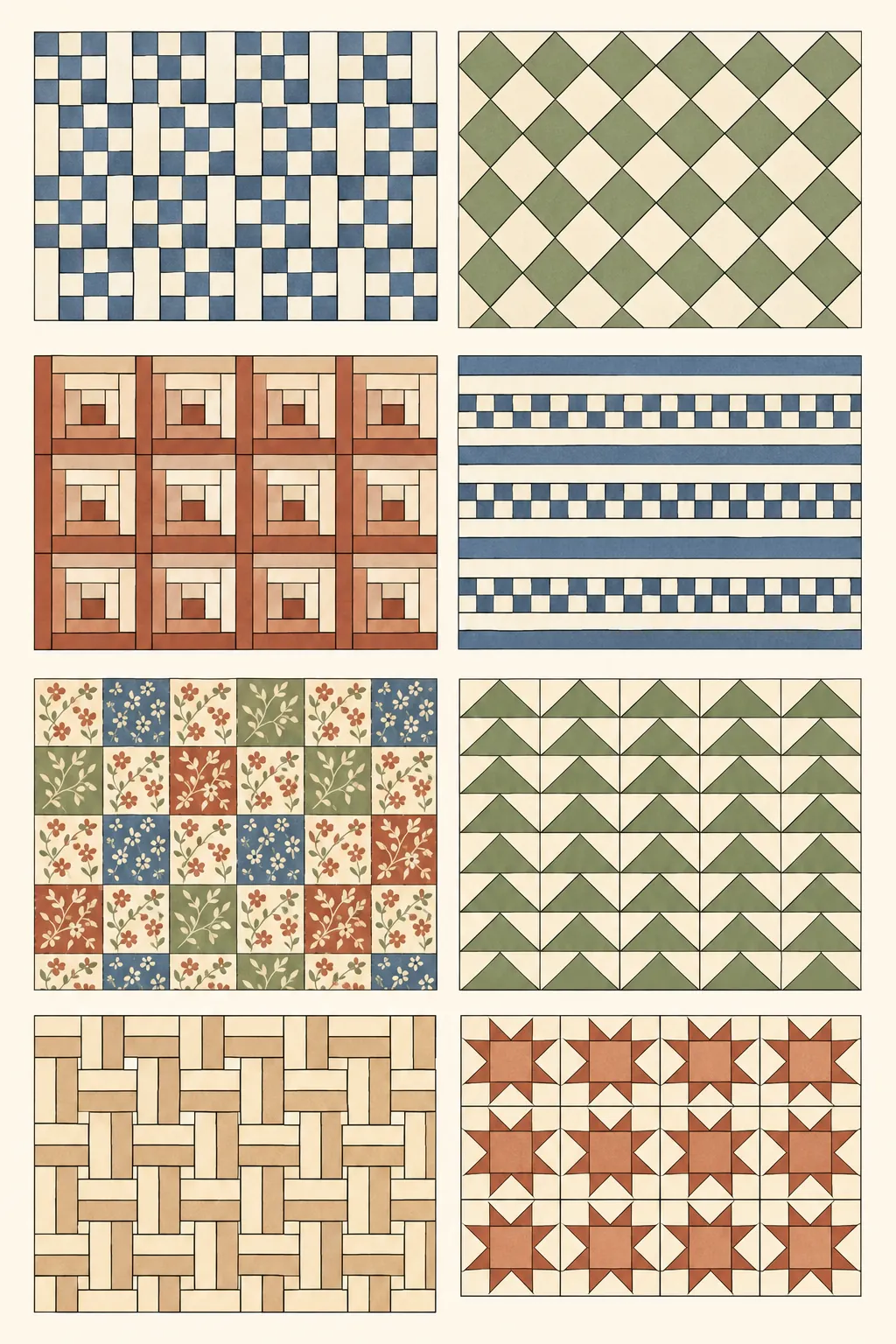
Download high-resolution printable
For a bed, paper looks most natural when the cover stays fairly flat. Score a gentle line where the cover turns over an edge, then shape it around a firm mattress base. A real fabric layer underneath can soften the profile while the printed paper supplies the fine pattern.
When to choose real fabric instead
Choose cloth when the object must hang in loose folds. Curtains, gathered skirts, rumpled blankets, cushions, and clothing depend on soft movement, so a paper fabric effect usually looks stiff. Fine cotton with a small print is easier to shape than heavy upholstery cloth.
Paper remains useful for testing color and scale before cutting valuable fabric. Hold a printed panel against the room and view it from normal display distance. If the motif dominates the furniture, choose a smaller repeat or use a quieter section of the sheet.
Print and apply the patterns cleanly
Click a preview to open the full size image, or use its download button to open it in a new tab. Save the image from there. Print at Actual Size or 100 percent, and turn off any Fit option so the tiny patterned textile print keeps its intended scale.
Use a high quality print setting on matte paper. Let the ink dry, then cut with a sharp blade and metal ruler. Apply a thin, even layer of glue to the firm base rather than soaking the printed piece, and smooth from the center toward the edges.
Start with a removable sample when you are unsure. Wrap the pattern around a spare piece of card and place it in the room for a day. This simple test shows whether the color, repeat size, and paper stiffness support the scene before you commit to the final furniture part.