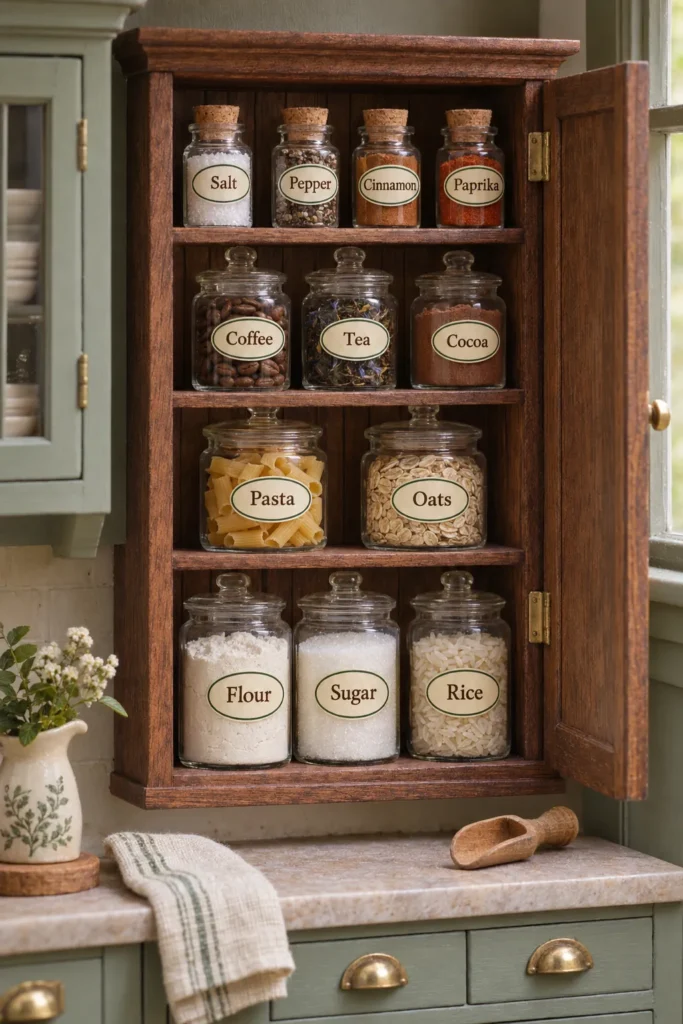
Tiny pantry jars look convincing only when the labels are clear, correctly scaled, and attached without bulky paper edges. This coordinated set uses short names and sturdy letterforms so the words remain readable in a miniature kitchen. Print a draft first, since printer software can quietly change the size.
Download the complete label sheet
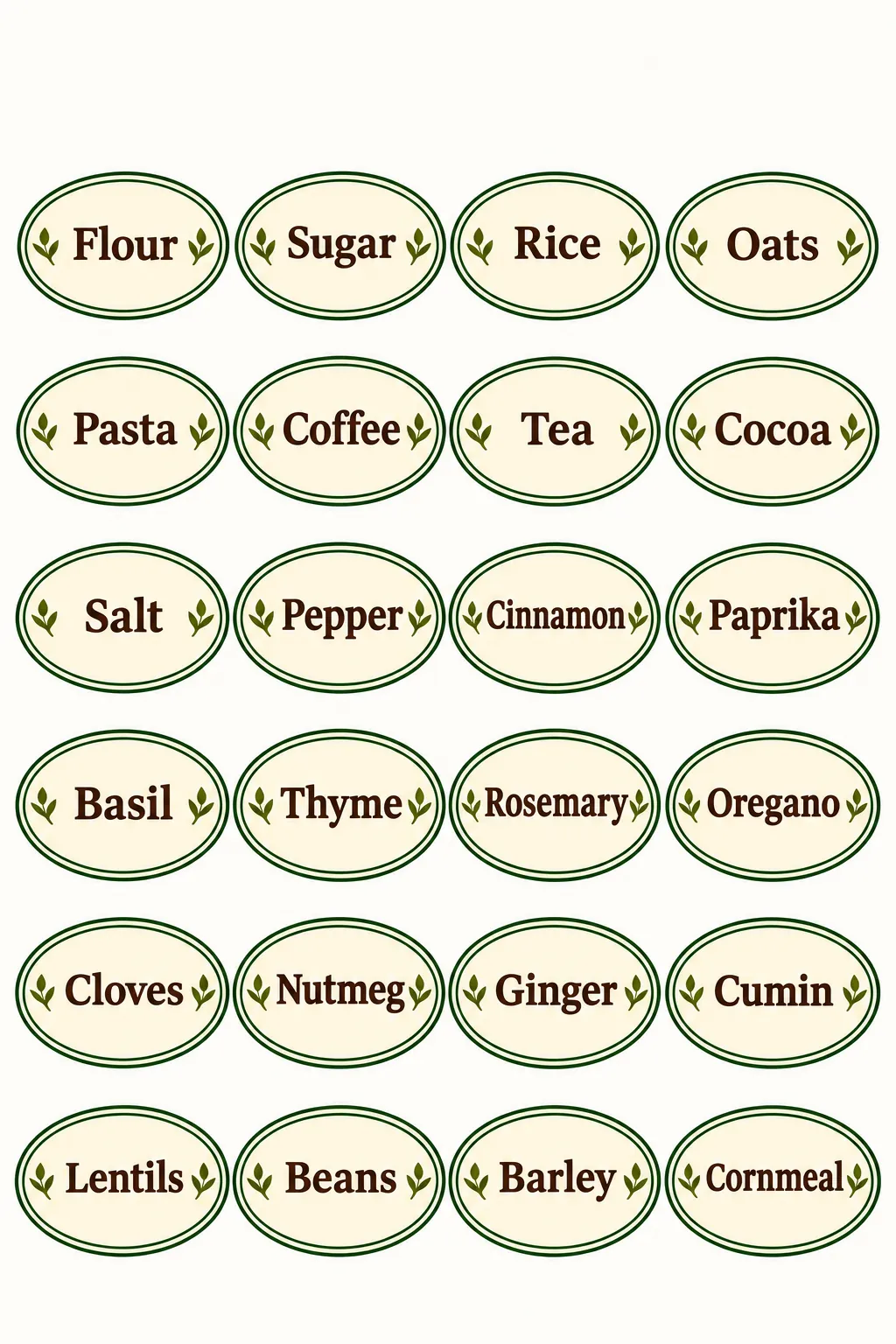
Download high-resolution printable
The sheet includes staples, drinks, spices, herbs, and dry goods. Every name appears once, so you can build an orderly pantry without repeated filler labels. Click the preview or use the button to open the full size image, then save it before printing.
Test the scale on your smallest jar
Measure the flat area on the smallest jar before you print. Use that width as the limit for the oval, then print a plain paper draft. Turn off settings that fill the page or fit the printable area because they can enlarge the labels without warning.
Cut one draft label and wrap it around the jar. The ends should not meet or overlap at the back. If the word looks crowded, make the whole sheet slightly larger rather than stretching only one direction.
Choose paper that wraps cleanly
Thin matte paper follows curved jars more easily than heavy card. Full sheet adhesive paper is convenient, but ordinary paper with a tiny amount of clear drying craft glue also works. Avoid glossy stock unless the kitchen style calls for shiny commercial packaging.
Let the ink dry before cutting. Use sharp fine scissors for the oval edge and turn the paper as you cut. A blunt blade can leave white fibers that appear thick at miniature scale.
Apply labels without glue marks
Hold the label with fine tweezers and align its center before pressing the sides down. Apply glue sparingly from the middle toward the edges. Remove any squeeze out at once with a clean dry tool rather than wiping it across the printed surface.
Fill clear jars with stable miniature materials such as fine sand, seed beads, or dried craft granules, and seal them if loose pieces could spill. Keep real food out of a closed display because it can attract pests. A few carefully labeled jars will usually look more believable than a shelf crowded with unreadable containers.