What to Put on a Blank Entryway Wall: Practical Ideas
A blank wall beside the front door can look like easy decorating territory, yet it has to survive bags, shoes, wet coats, tight turns, and the daily rush out of the house. The smartest choice is not the object that fills the most space. It is the arrangement that gives the entry a clear job while leaving the route through it calm and comfortable.
Before buying anything, open every nearby door fully and mark the clear floor path with removable tape. Notice where shoulders, handles, and carried groceries naturally pass. That quick test prevents the most common mistake: creating a beautiful wall that makes the entrance harder to use.
Start With One Useful Anchor
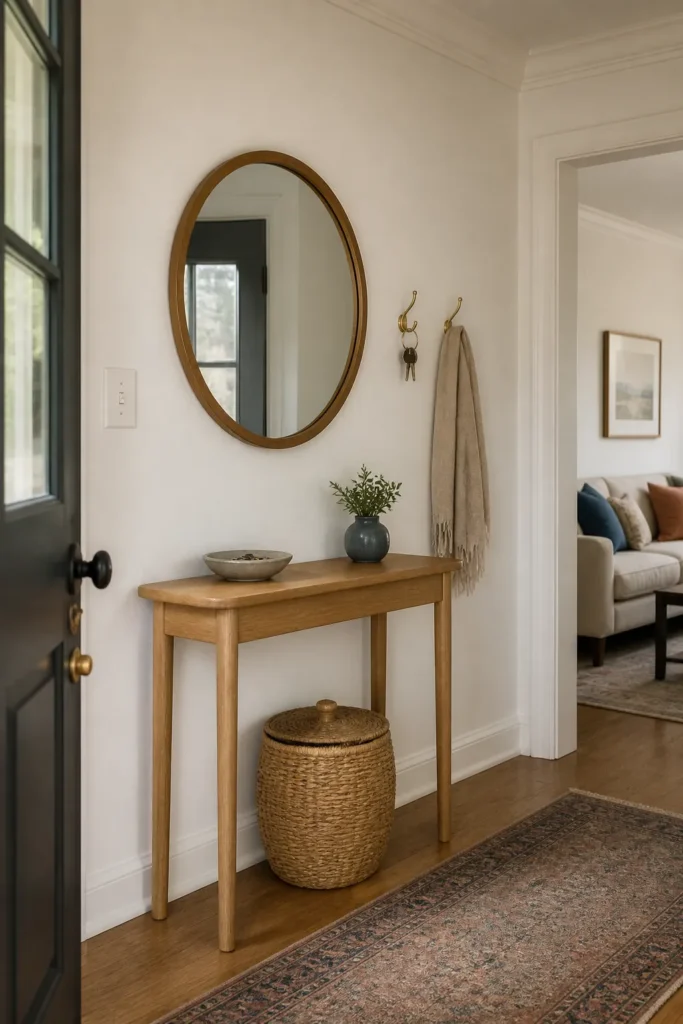
An entry wall feels resolved when one element establishes its purpose. A round mirror suits a quick final check, a shallow cabinet hides shoes, and a narrow console offers a landing place for keys. Choose the function your household lacks most, then let decoration support it instead of competing with it.
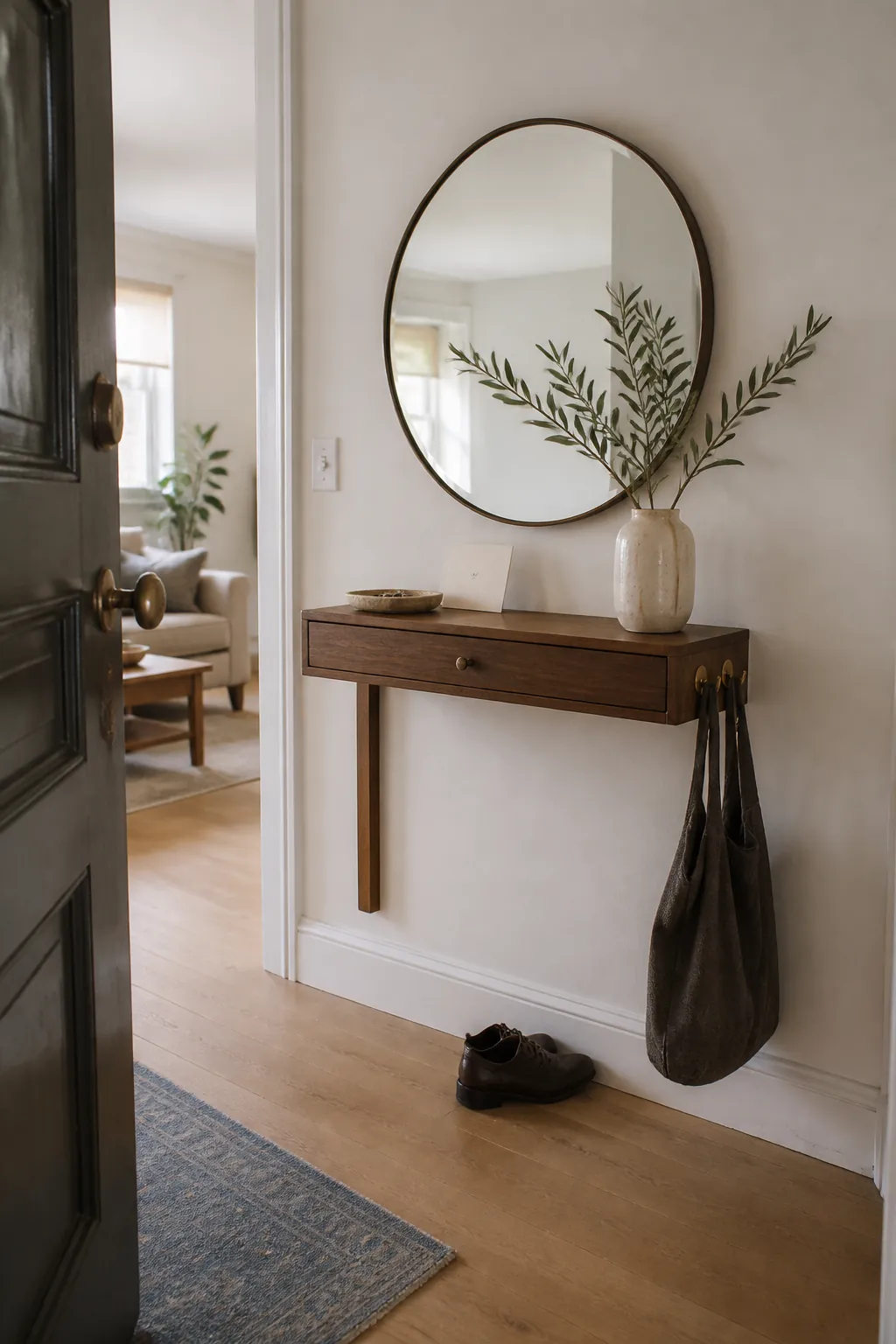
Scale the anchor to the open wall rather than to the furniture catalog photo. A mirror can be generous without reaching into the door swing, while a console should leave enough depth for two people to pass. In a very small foyer, a wall mounted ledge can replace a table and preserve precious floor space.
Turn Vertical Space Into a Drop Zone
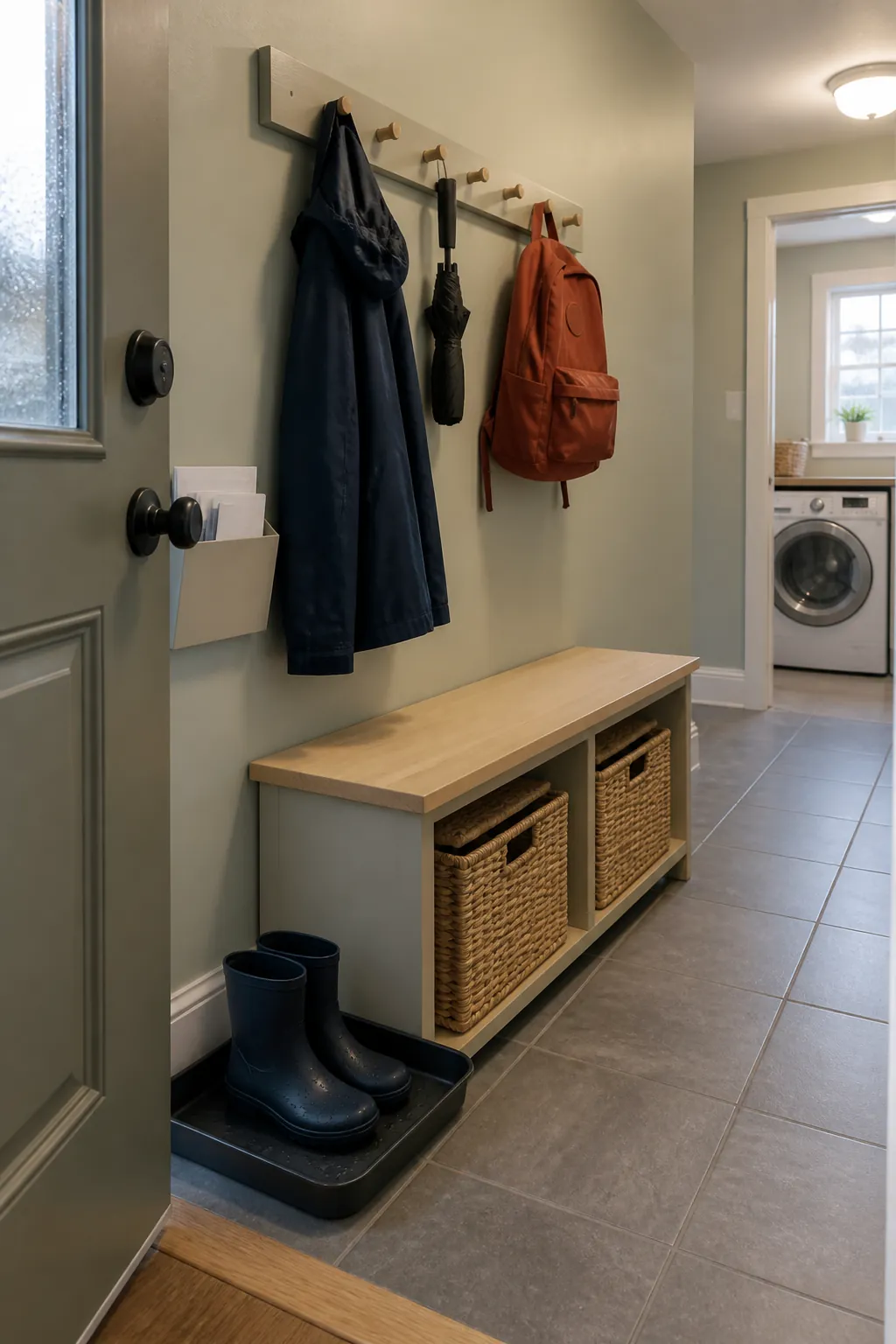
Hooks, a peg rail, and slim wall pockets make an empty wall work without crowding the floor. Give frequently used items an obvious home: one hook for each coat, a small tray for keys, and a pocket for outgoing mail. Keep the lowest hooks clear of the main walking line so bags do not brush against people passing.
The arrangement should look intentional even when it is partly empty. Align the top edge of the rail with nearby trim or the upper third of a mirror, and leave breathing room around each component. Closed baskets beneath a bench can absorb visual clutter, but only if opening them does not block the front door.
Use Art to Set the First Impression
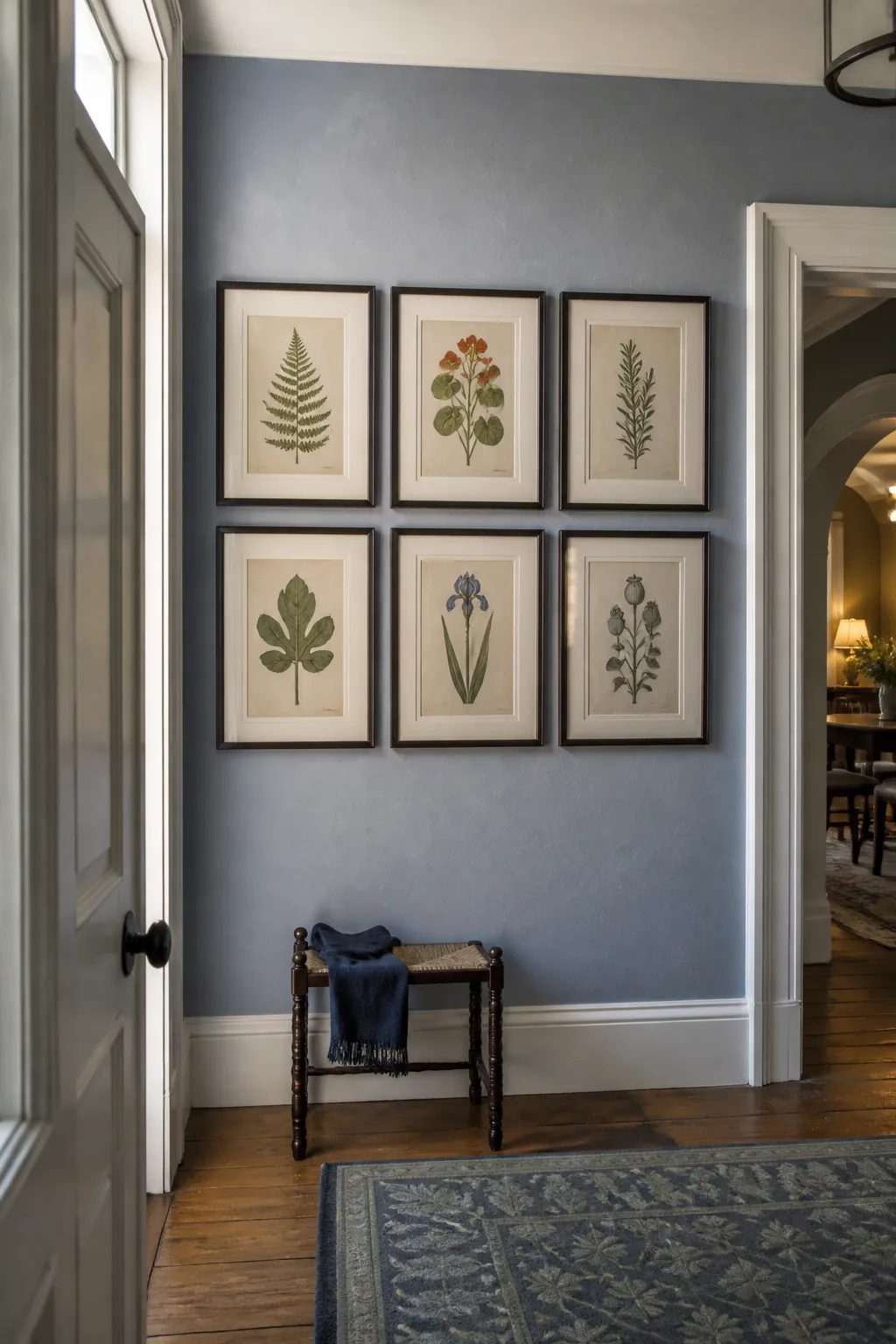
If storage is already handled, art can make the entrance feel deliberate rather than forgotten. One large print creates a quiet focal point, while a compact grid brings rhythm to a wider blank area. Choose imagery with enough contrast to register from the doorway, but repeat colors already present in the runner, door, or nearby room.
For a gallery arrangement, trace every frame on paper and tape the shapes to the wall first. Keep the gaps consistent and treat the group as one visual object. The center of the composition should relate to standing eye level, unless a console below it requires the whole group to sit slightly lower.
Add Depth Without Adding Bulk
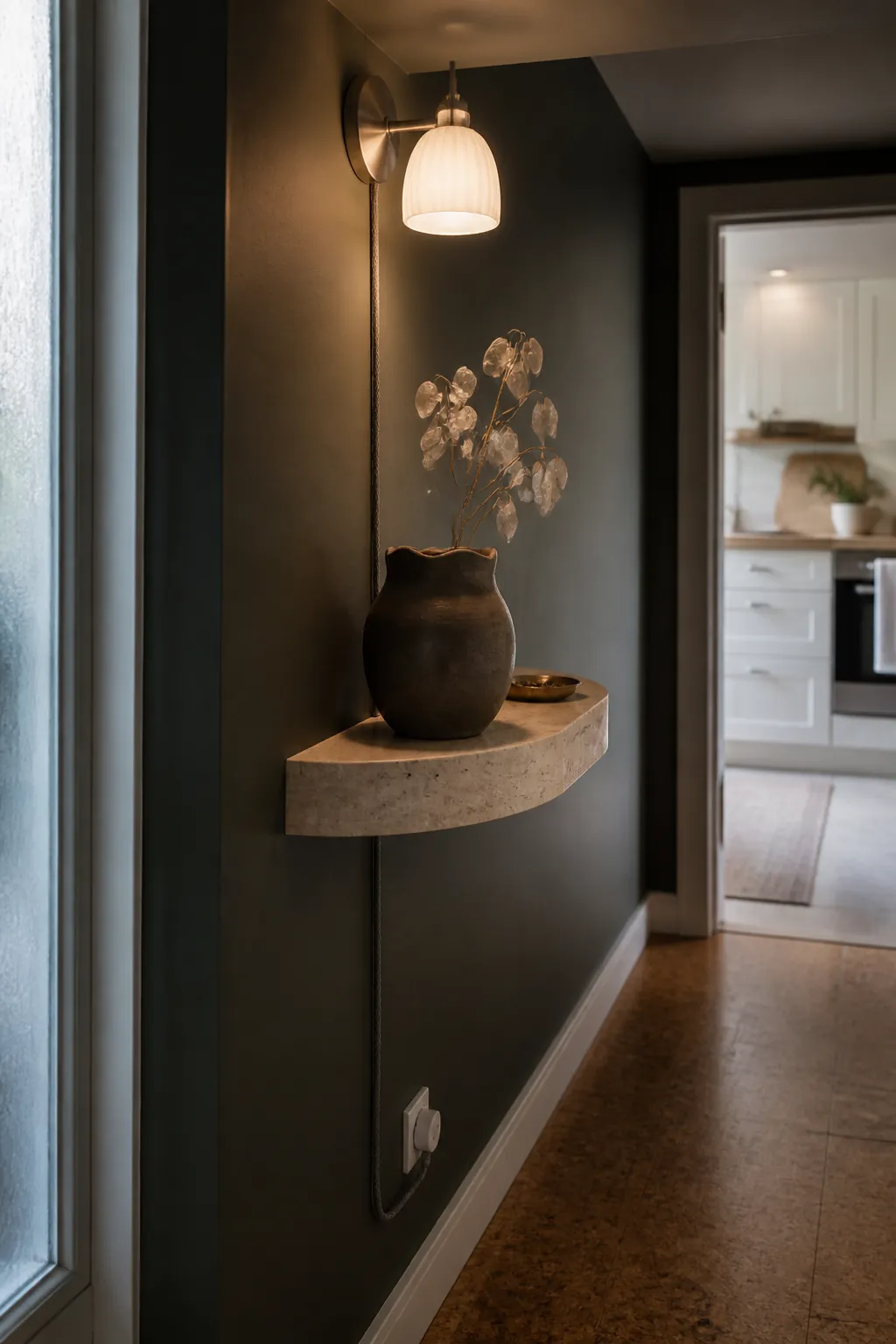
A narrow entry benefits from pieces that catch light and cast gentle shadows. A sculptural wall shelf, fluted sconce, or textured fiber panel gives the surface dimension while keeping the floor open. Measure the projection of every piece, not just its width, because depth is what affects shoulder room.
Lighting deserves special attention in an entrance that feels dim during the day. A plug in sconce can create a warm pool of light without electrical work, provided the cord can be routed safely. Pair it with one tactile object rather than several tiny accessories, since small scattered pieces quickly read as clutter from the door.
Create Character With a Surface Treatment
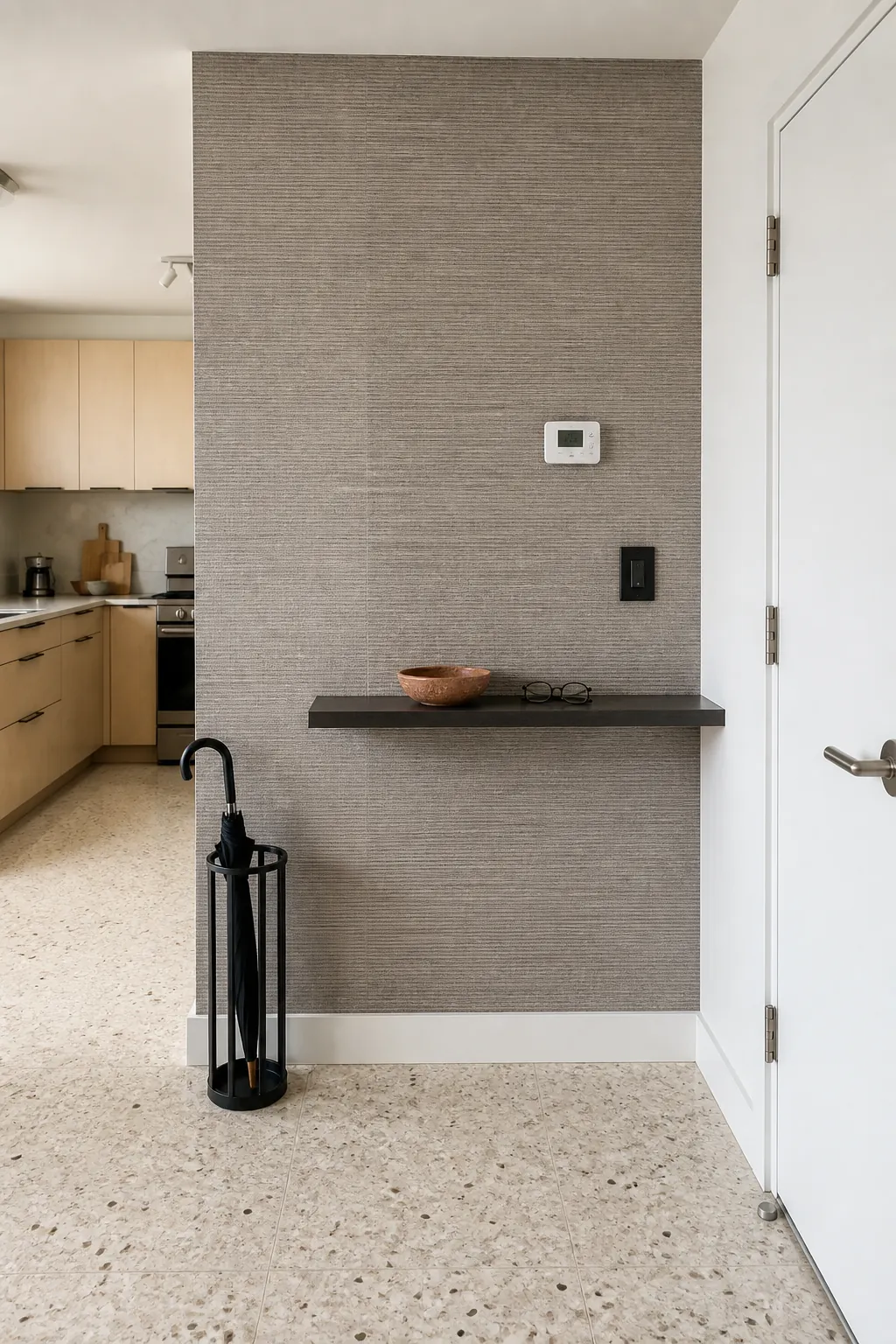
Paint, removable wallpaper, or applied molding can solve a blank wall when there is no need for more objects. A restrained grasscloth pattern adds warmth and texture, while a painted arch can frame a ledge or mirror. Extending the treatment across the whole entry zone makes the space feel planned, even when the architecture is simple.
Renters should test removable materials in a hidden spot and follow the stated removal method. Homeowners can use molding to correct awkward proportions, but the panel layout should respond to switches, outlets, and trim. The finish will look more convincing when those practical interruptions are included in the design from the start.
Build a Command Center That Stays Calm
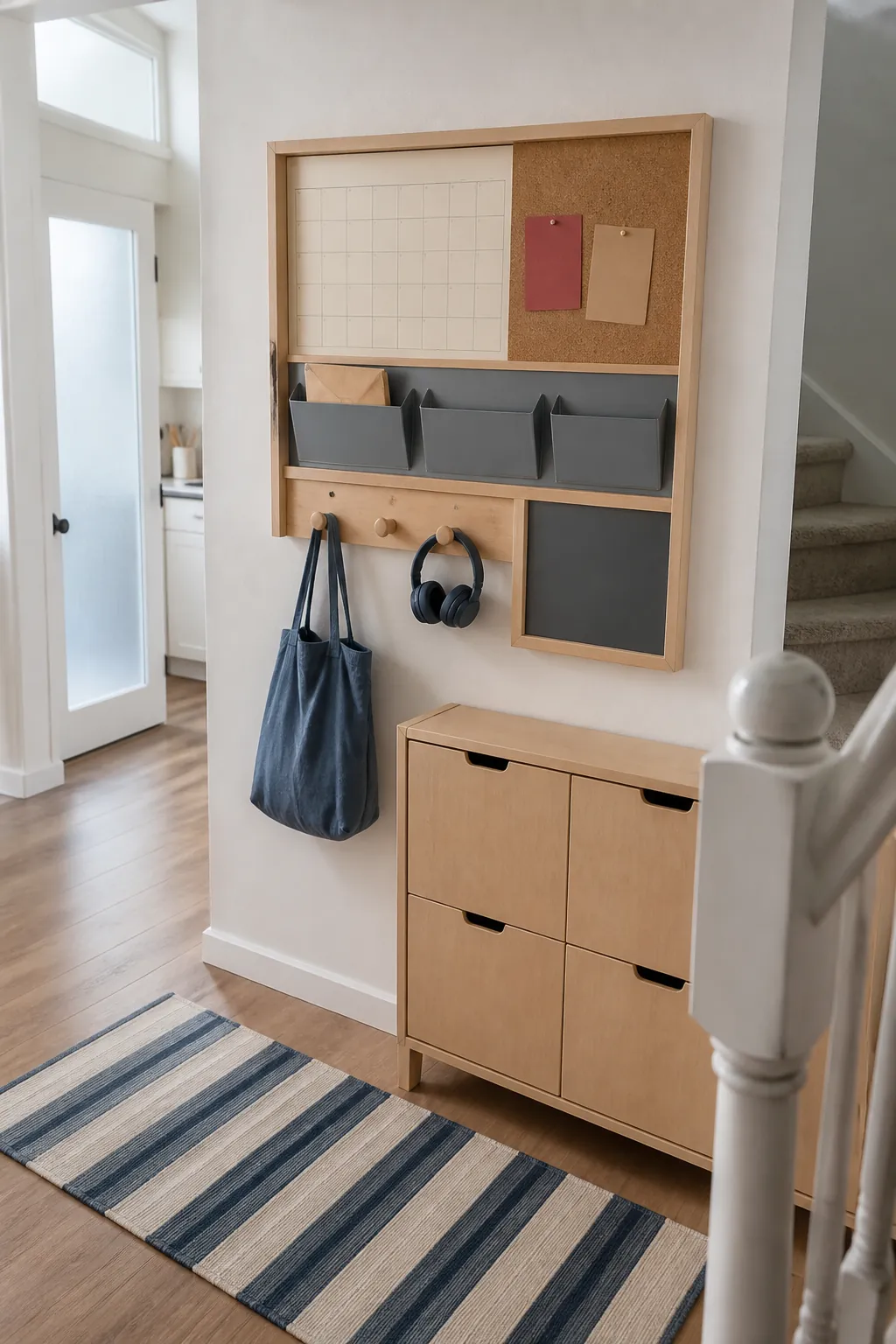
For busy households, the best blank wall decor may be a compact command center. Combine a calendar, a cork section, and a few labeled pockets inside one controlled rectangle. Limit the visible paper capacity so the system signals when it needs attention instead of becoming permanent storage.
Place adult information above curious hands and reserve the lowest section for items children can manage themselves. A narrow wood frame or a repeated finish can connect the practical pieces to the rest of the room. When every object has a specific role and the circulation remains clear, the entry wall stops feeling empty and starts making the first minutes at home easier.