13 Gallery Wall Around TV Ideas That Keep the Room Balanced
The screen is often the biggest dark shape in the room, so adding more frames can make the wall feel busier instead of better. Set the television height for comfortable viewing first, then treat its outline as one part of the composition. The most useful art around a wall mounted TV gives your eye somewhere to rest while leaving the screen easy to watch and access.
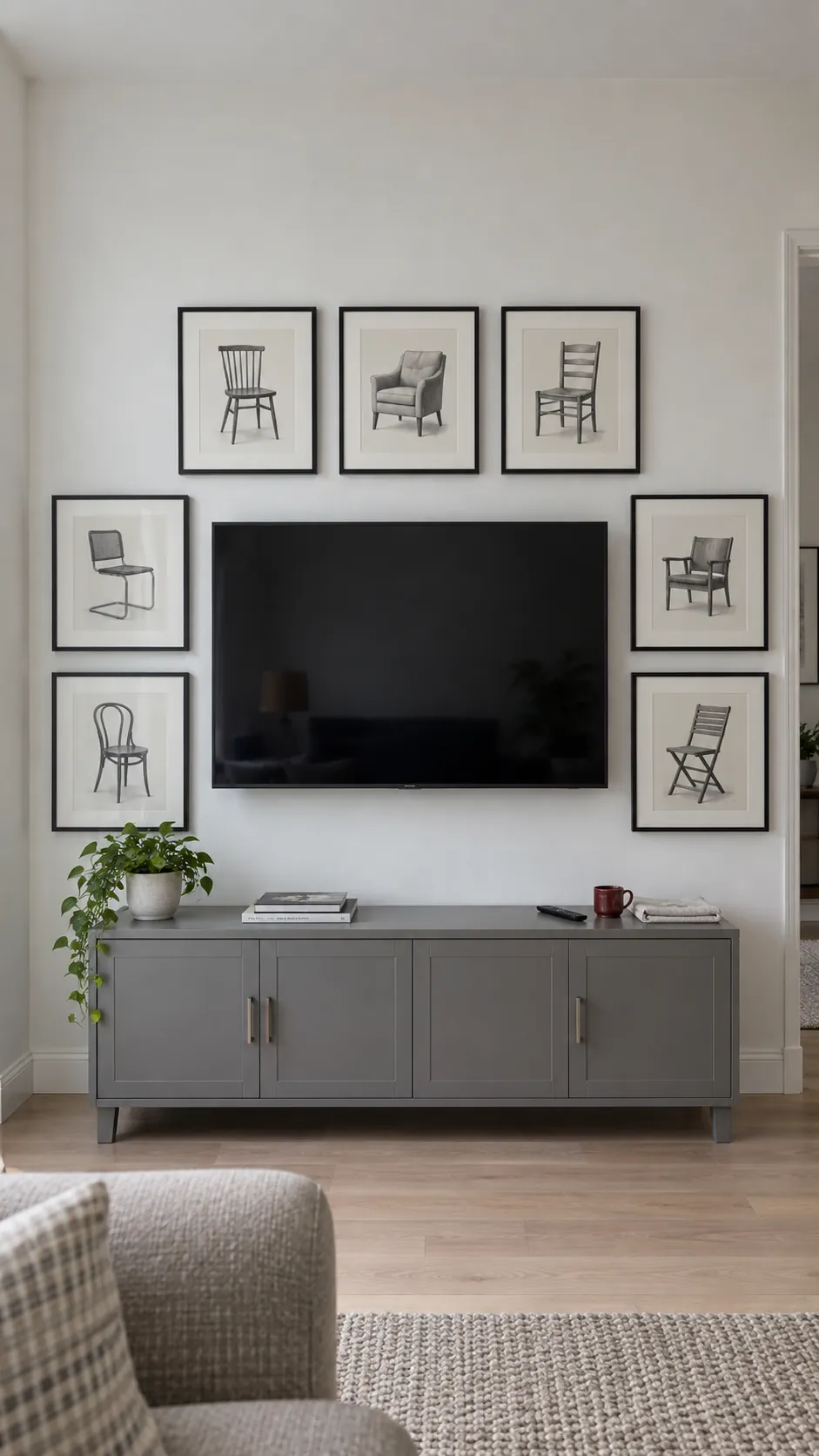
Start with a quiet black frame grid
A regular grid gives the screen a visual family, especially when its bezel is black. Choose matching picture frames around TV edges, then use pale mats so the wall does not become one heavy rectangle. Lay out paper templates with a consistent gap between frames, allowing more clearance around the television wherever its controls or ventilation require it. Check the arrangement from your usual seat before making holes.
Let a loose cluster balance an off center screen
An off center television does not require an off balance room. Build a denser group of prints on the wider side of the screen and place one smaller piece on the narrow side. Keep the largest print close enough to the TV to read as part of the same grouping. A console extending beyond both sides helps connect the unequal halves without forcing a fake center.
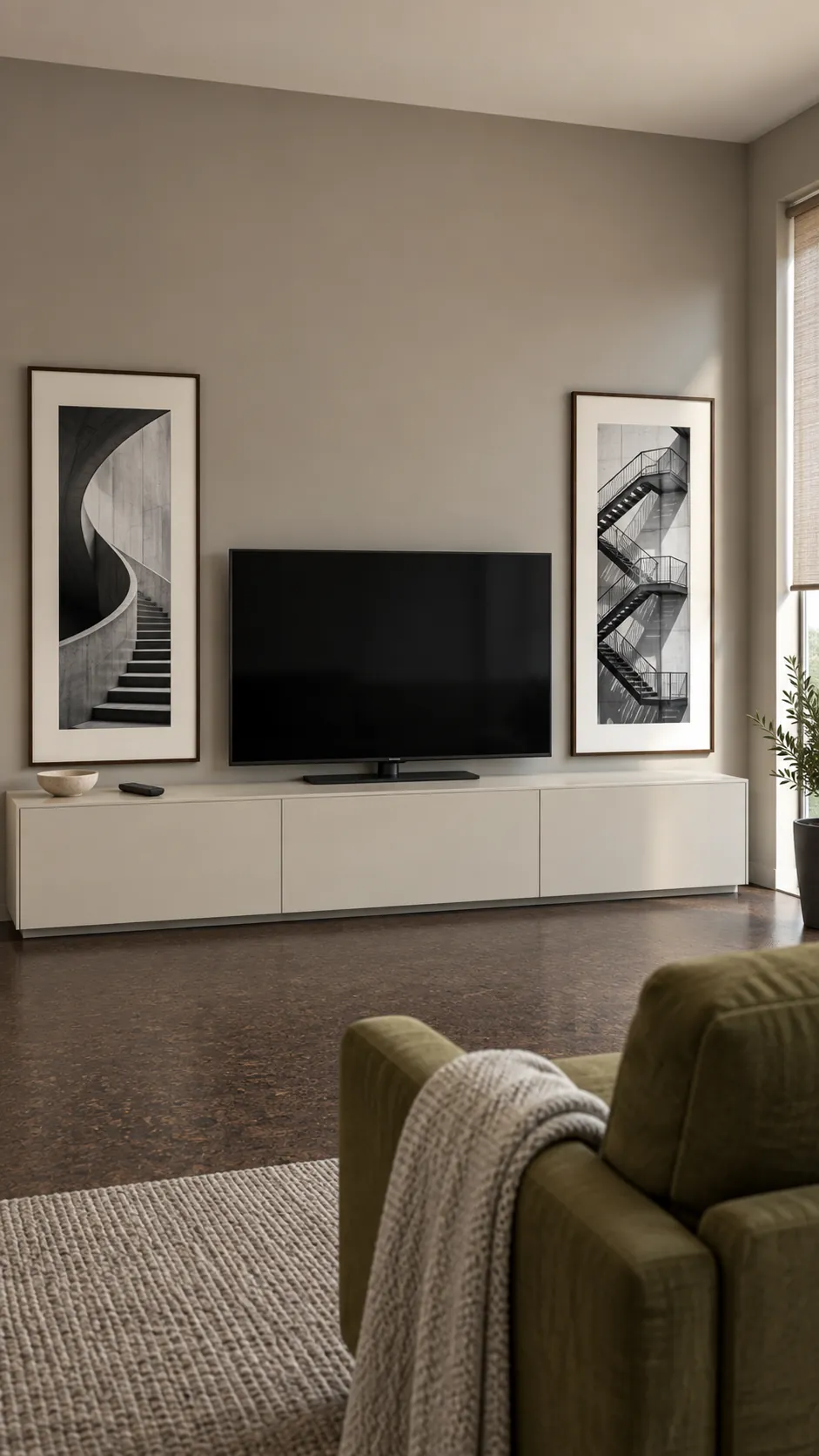
Pair tall prints beside a wide television
Two tall prints can make a broad screen feel less squat without adding a row of tiny frames overhead. Use one portrait format print on each side and let their center points sit close to the screen midpoint. Compare their visual weight as well as their dimensions, since a dark drawing can dominate a pale print of the same size. This TV gallery wall layout works best when the side walls leave enough room for comfortable spacing.
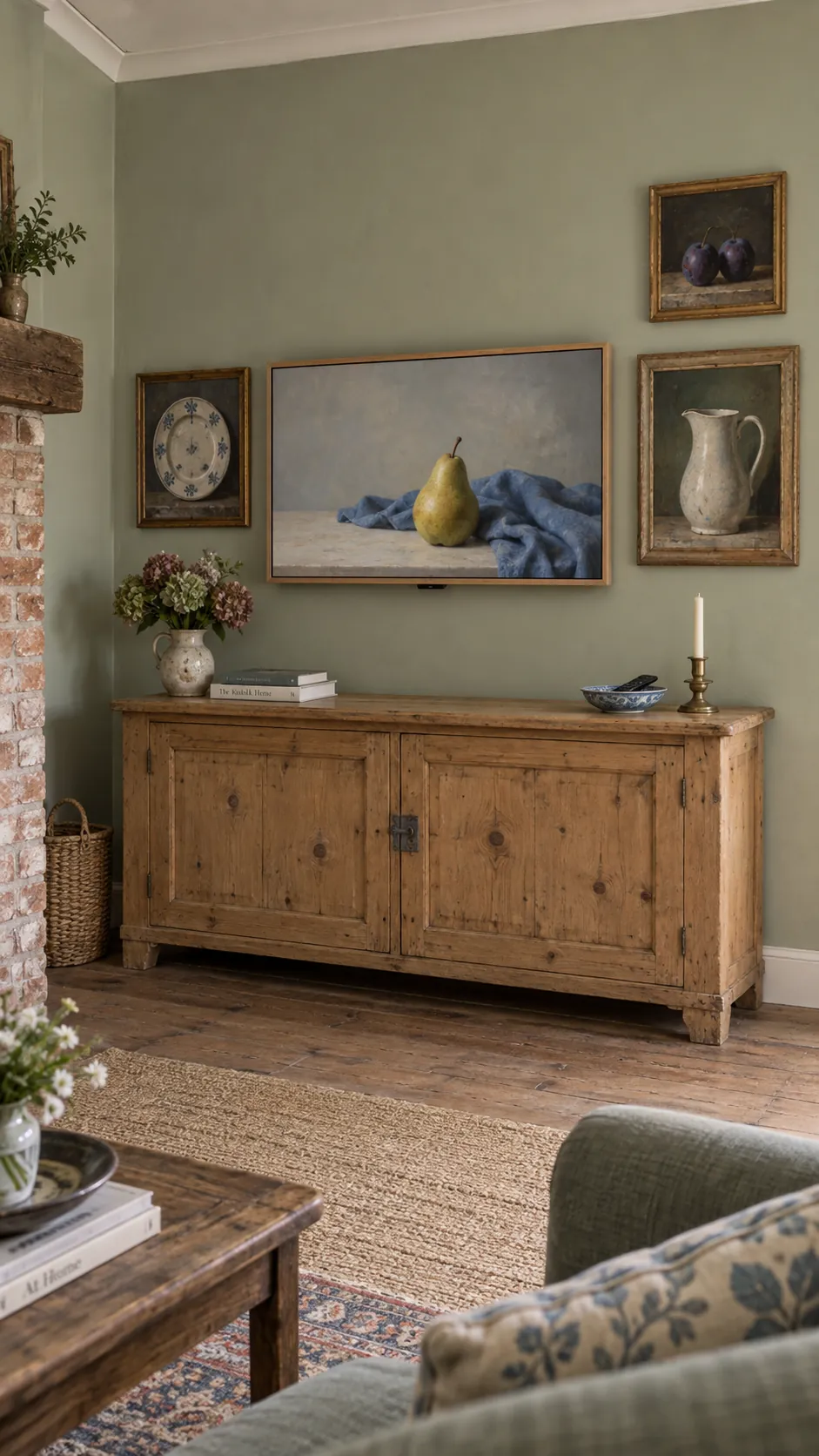
Blend an art display television with real paintings
Frame TV wall ideas work best when the digital image belongs to the surrounding collection. Choose a restrained still life on the screen and pair it with real paintings that repeat one color rather than copying the subject. Adjust the display brightness for the room so it does not glow like a lightbox beside matte paper. Keep the television at a comfortable viewing height, even if a higher position would make the gallery look more formal.
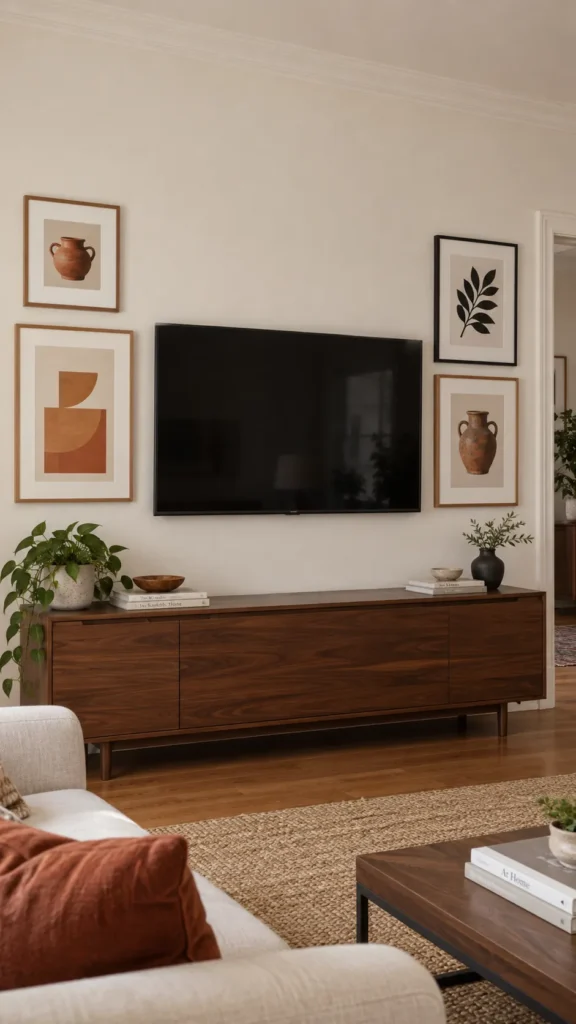
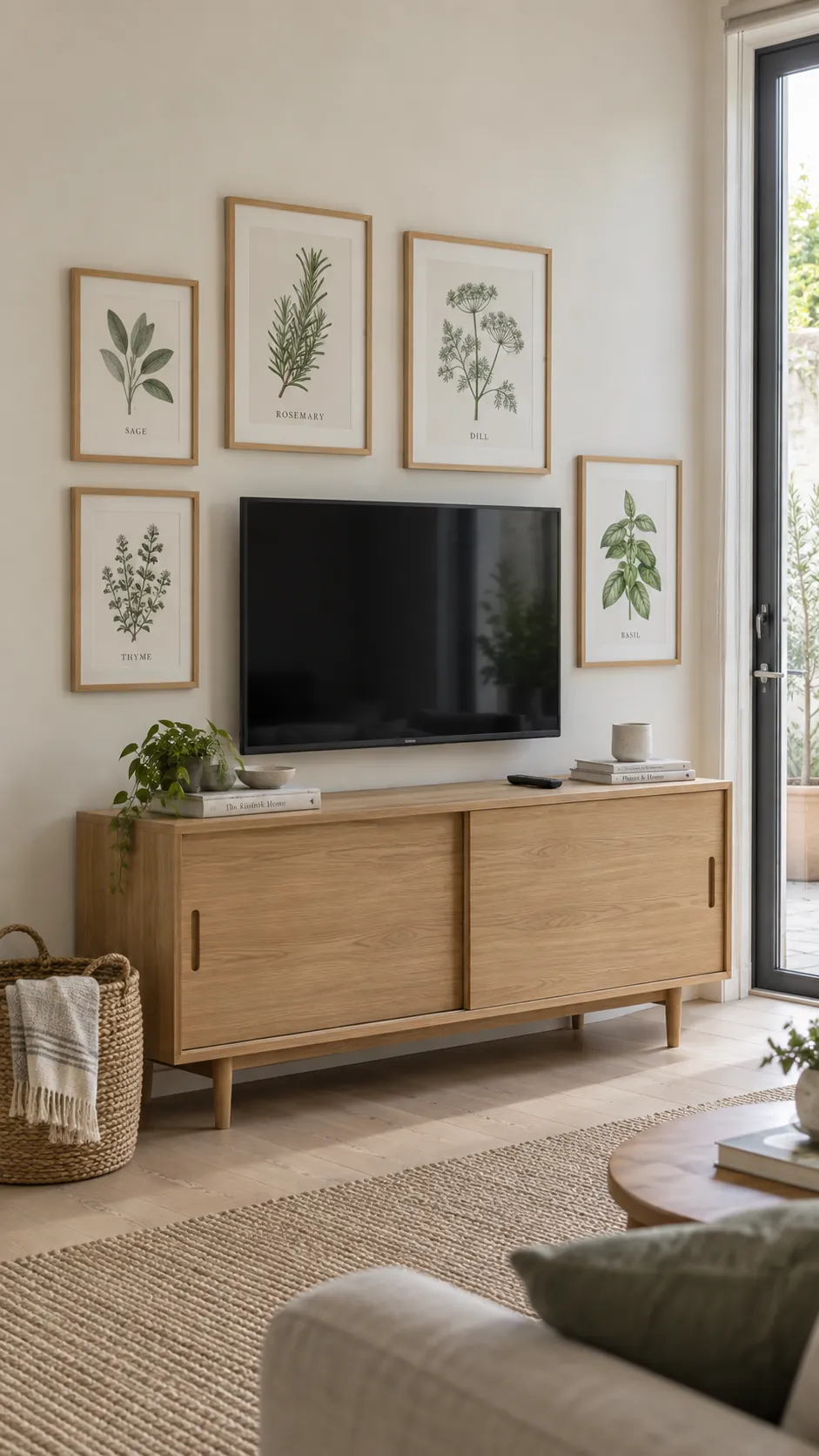
Use warm wood frames for a softer outline
Natural wood frames soften the transition between a black screen and a light wall. Repeat a similar wood tone in the console, but allow a little variation in grain so the collection feels gathered. Botanical prints with generous margins keep the effect airy and prevent the wood from becoming visually bulky. A woven basket below the console adds texture without putting more detail directly beside the moving picture.
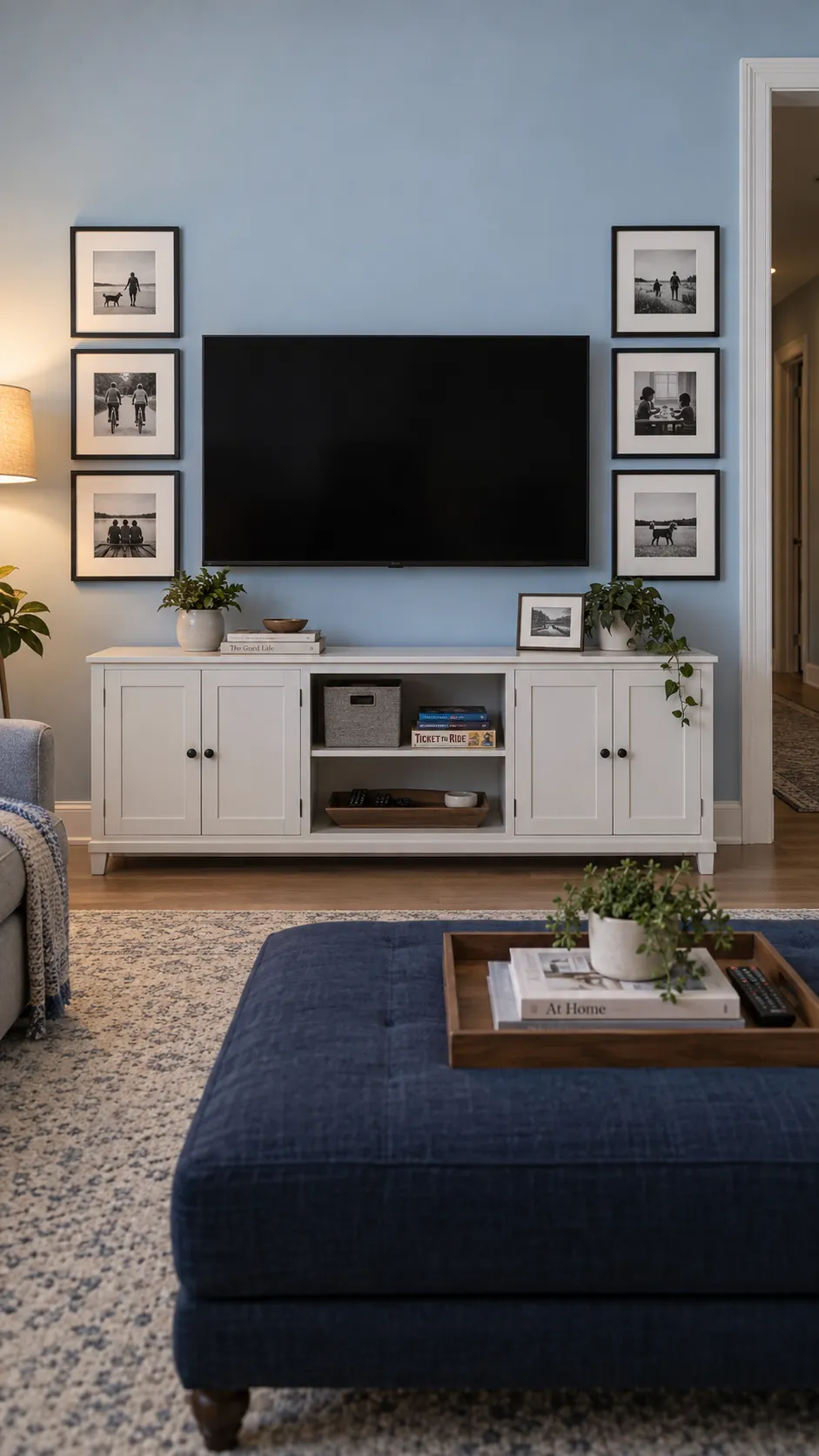
Make family photographs feel intentional
Family photographs look more cohesive when you edit the presentation before buying extra frames. Convert a selected group to black and white or choose photos with a similar color mood, then use matching mats. Give each photograph enough size to be appreciated from the sofa instead of filling every gap with miniature frames. Keep irreplaceable originals out of strong sun and display copies where afternoon light reaches the wall.
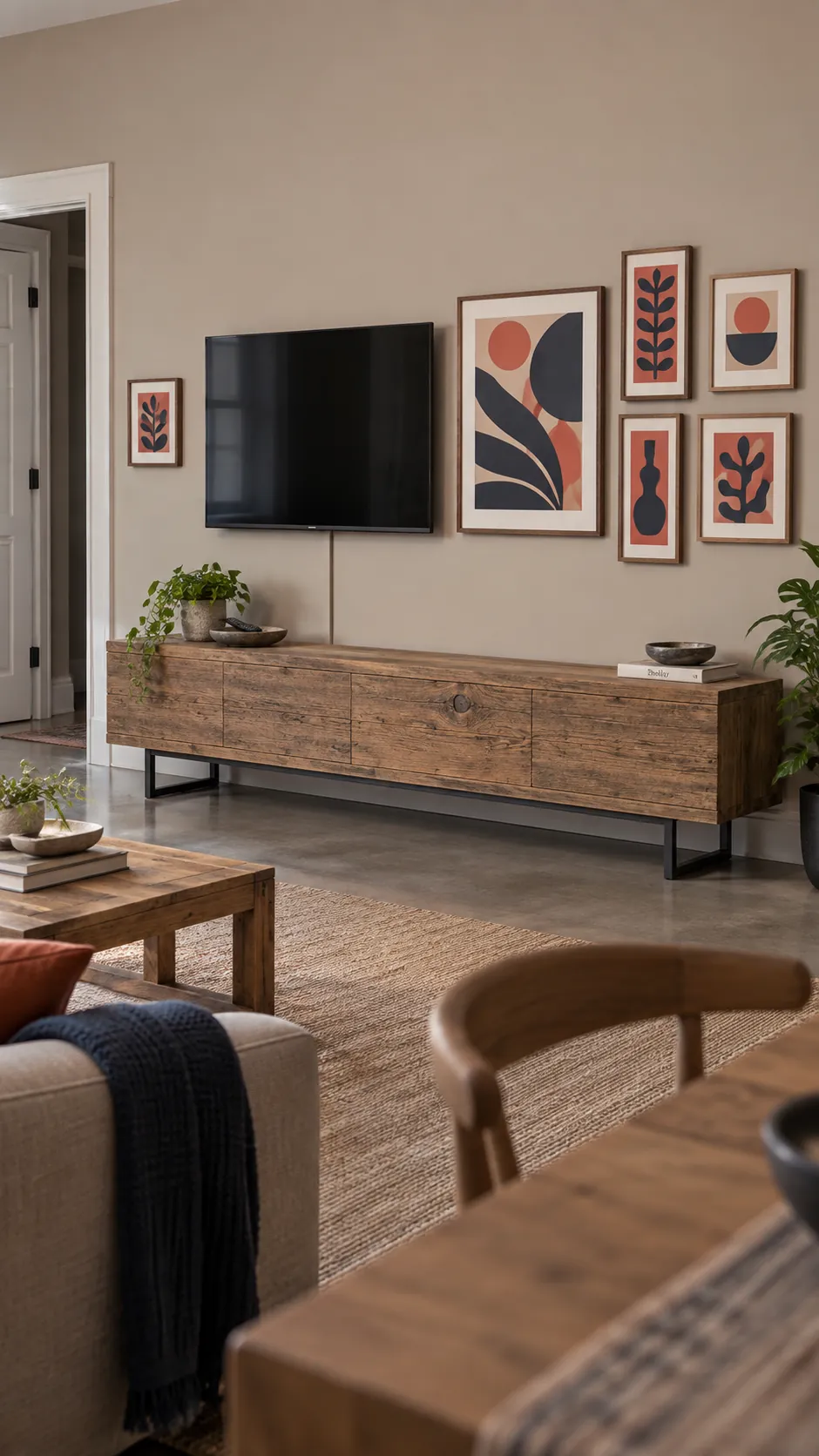
Build a collected wall with a limited color story
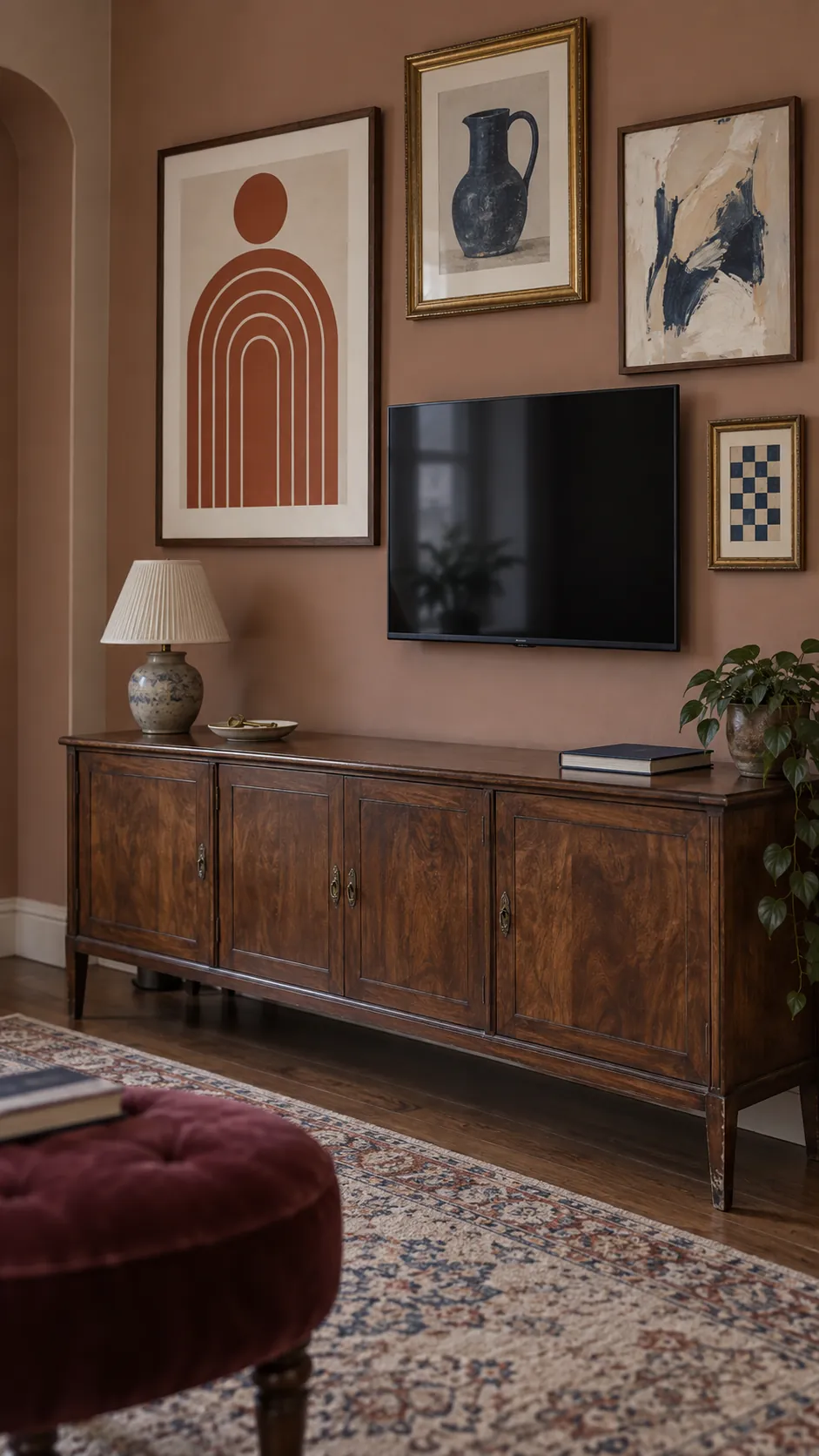
Mixed frames can work around a TV when the pictures share a small set of colors. Try rust, cream, and ink blue across a geometric print, a ceramic study, and a small abstract painting. Repeat each frame finish somewhere else so a single ornate frame does not look accidental. Leave a clear band around the screen to separate the collection from the viewing area.
Carry the gallery across a picture ledge
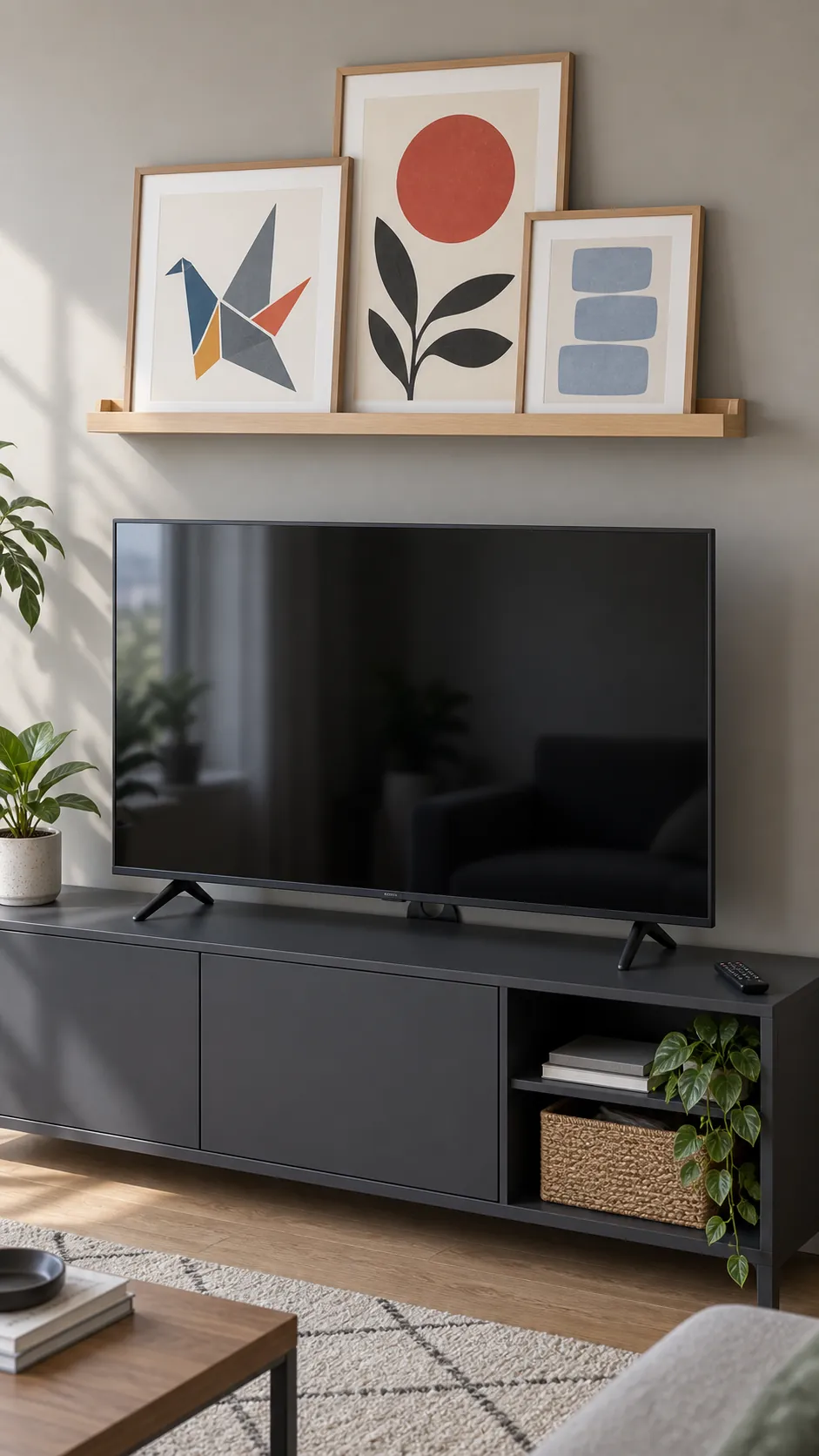
A properly installed picture ledge makes it easier to change a collection without adding holes for every frame. Position it above the television with enough room to access the screen and follow the ledge manufacturer’s fixing and load instructions. Keep taller pieces behind shorter ones while making sure each frame sits securely within the retaining lip. Avoid loose leaning objects where vibration, children, or pets could knock them toward the television.
Let a dark wall absorb the screen
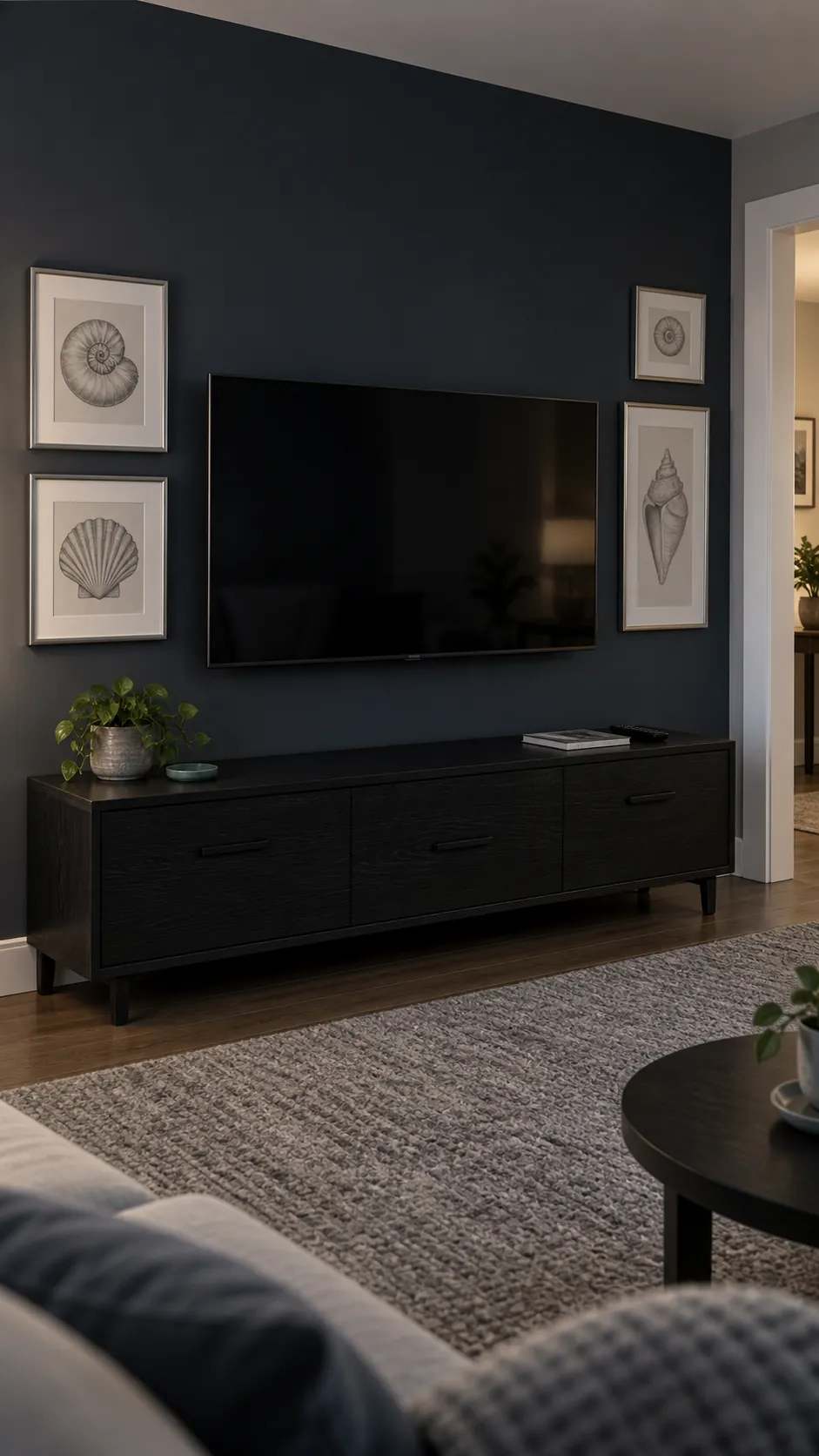
A deep wall color can reduce the contrast around an idle television. Use pale drawings and slim frames so the art remains legible against the dark surface. Test a paint sample with the screen both on and off, since reflected light and daylight can change how the color reads. A matte finish usually gives a quieter background than a glossy wall full of reflections.
Keep a small room to a compact trio
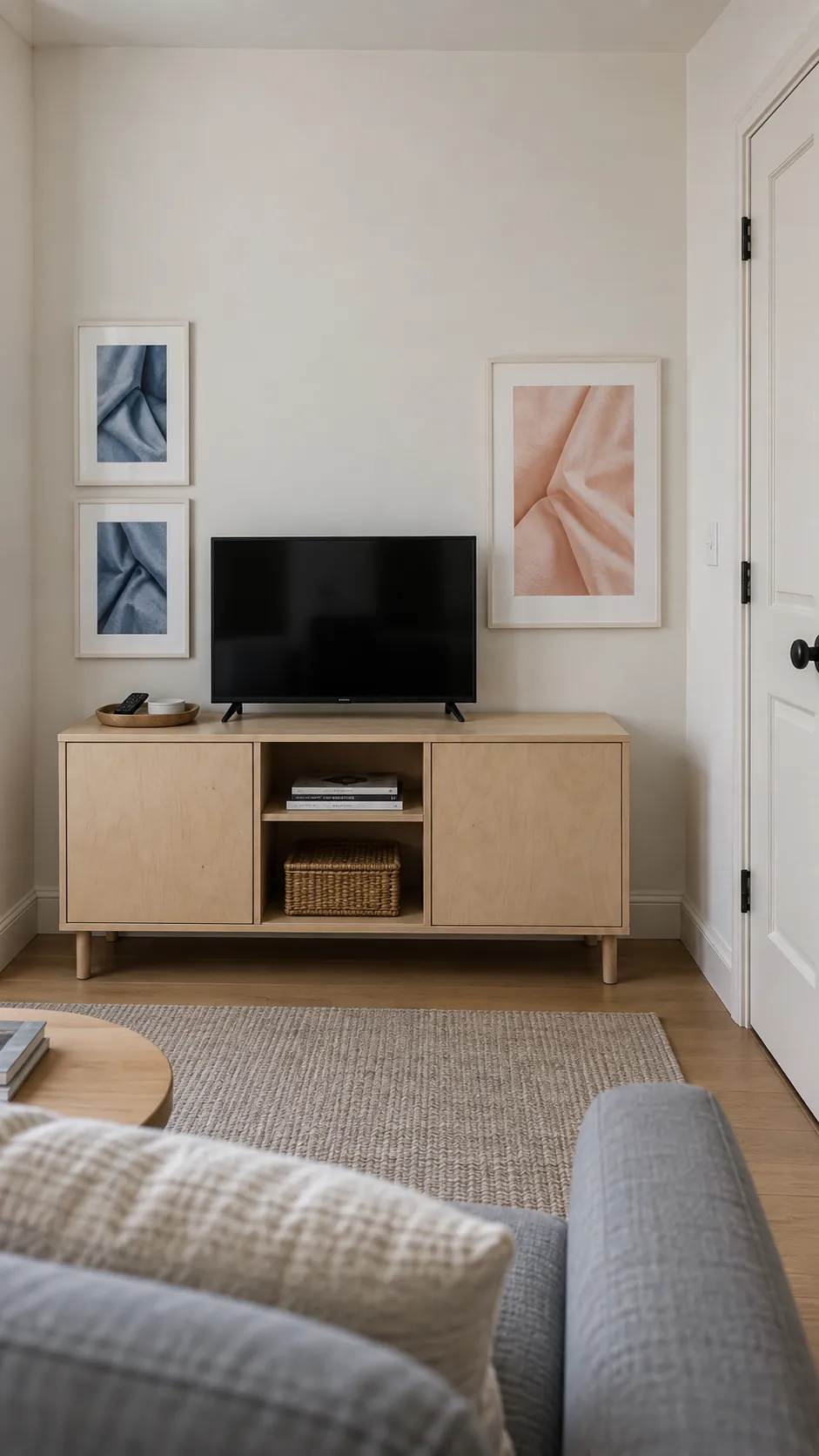
In a narrow living room, a television and three carefully sized prints may be enough. Place two prints vertically on one side and a single larger print on the other, keeping the whole group within the console’s visual width. This leaves surrounding wall space open and stops the gallery from spreading into doorways. A small collection also lets you spend more on readable art instead of accumulating tiny fillers.
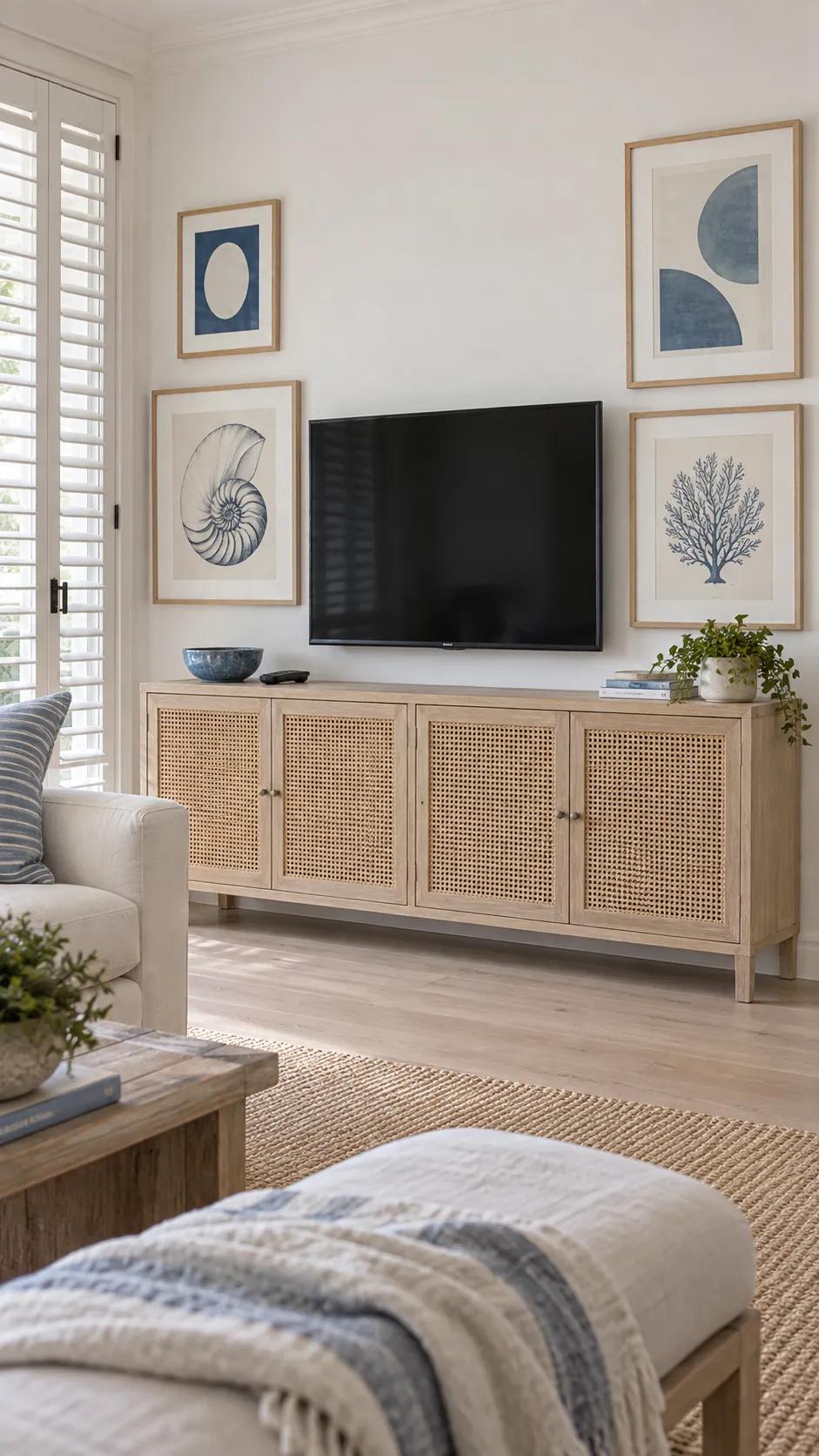
Echo a coastal room without repeating seascapes
A coastal palette can come from shell studies, blue forms, and pale timber rather than another ocean photograph. Choose a different shape or scale for each print so the gallery has rhythm. Carry a small blue accent onto the console to connect the wall with the furniture. Avoid placing reflective glass directly opposite a bright window if glare makes either the art or television difficult to see.
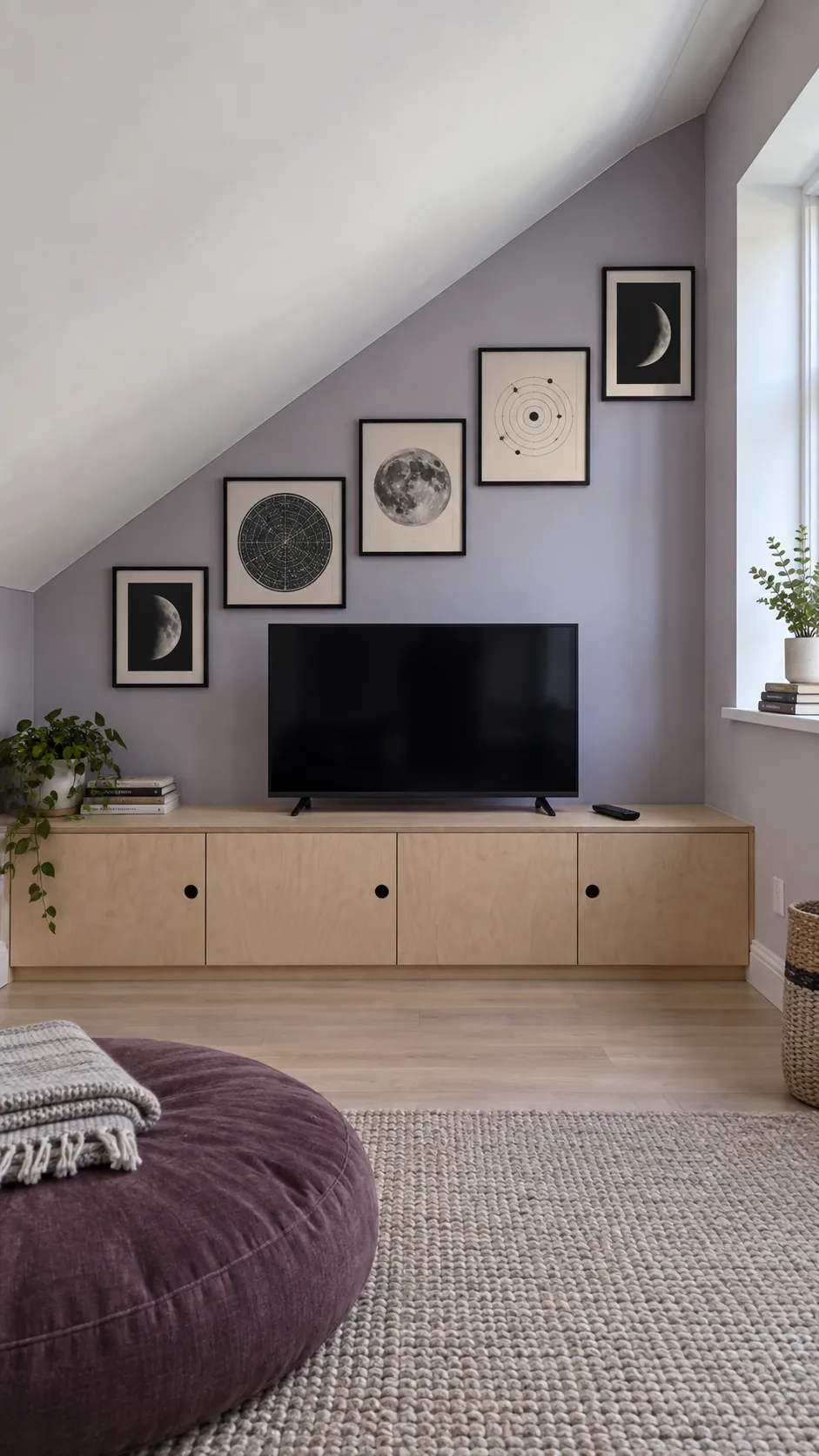
Follow a sloped ceiling with a stepped arrangement
An attic living room needs a gallery that respects the roofline instead of pretending the wall is rectangular. Step smaller frames upward along the taller side while leaving a visible strip of wall beneath the slope. Keep the screen level and set its height for seated viewing before fitting art into the remaining space. Paper templates are especially useful here because an arrangement that fits on the floor may crowd the angled ceiling.
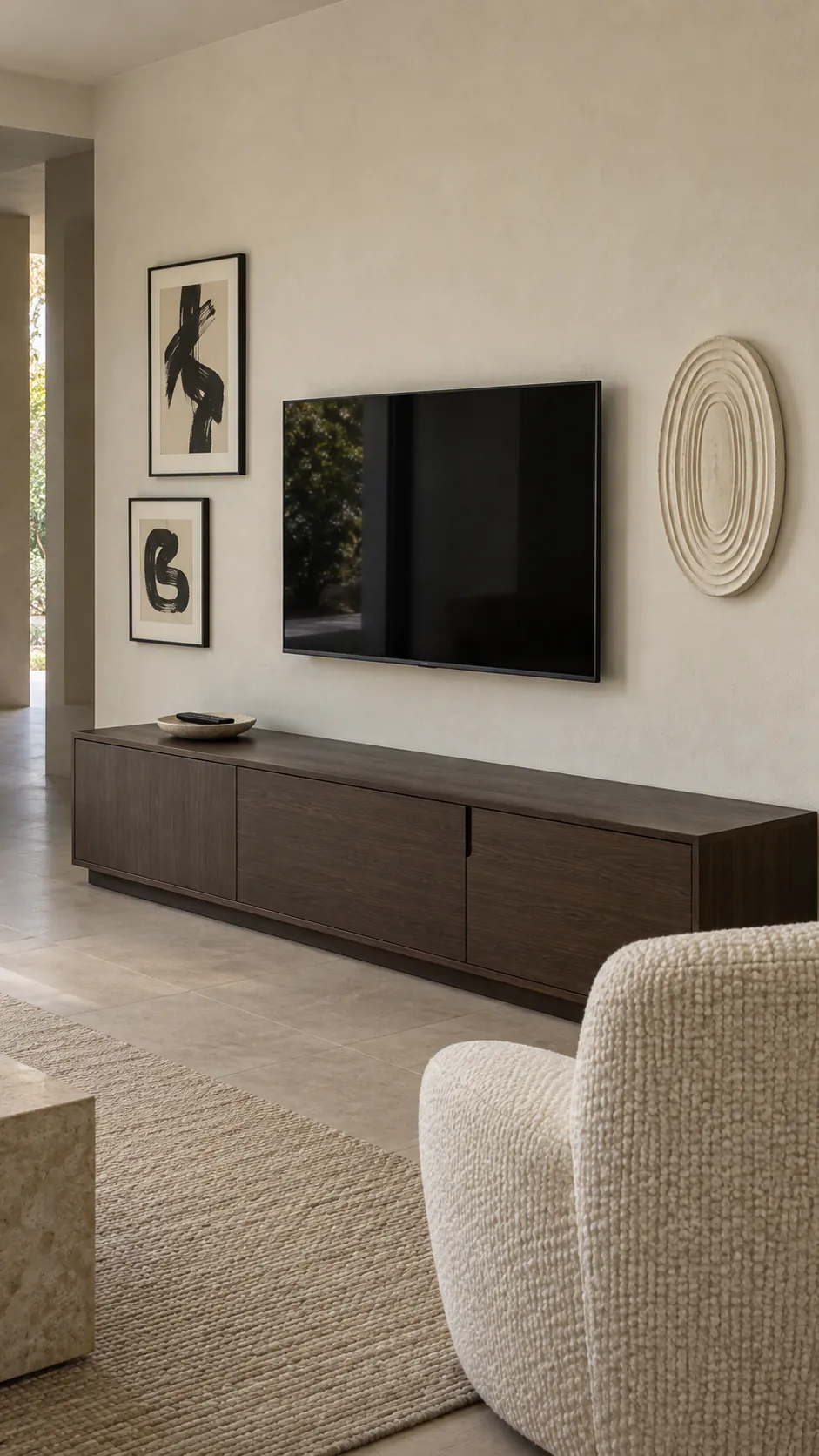
Leave breathing room for a single sculptural accent
A shallow sculptural piece can break up the rectangles in a living room TV wall without demanding a larger collection. Pair a small ceramic relief with two simple prints and give the relief its own clear patch of wall. Use a fixing suitable for its weight and wall construction, and keep it outside the television’s movement and service area. Turn the screen on before calling the arrangement finished: if your eye keeps chasing the objects beside it, remove one piece.