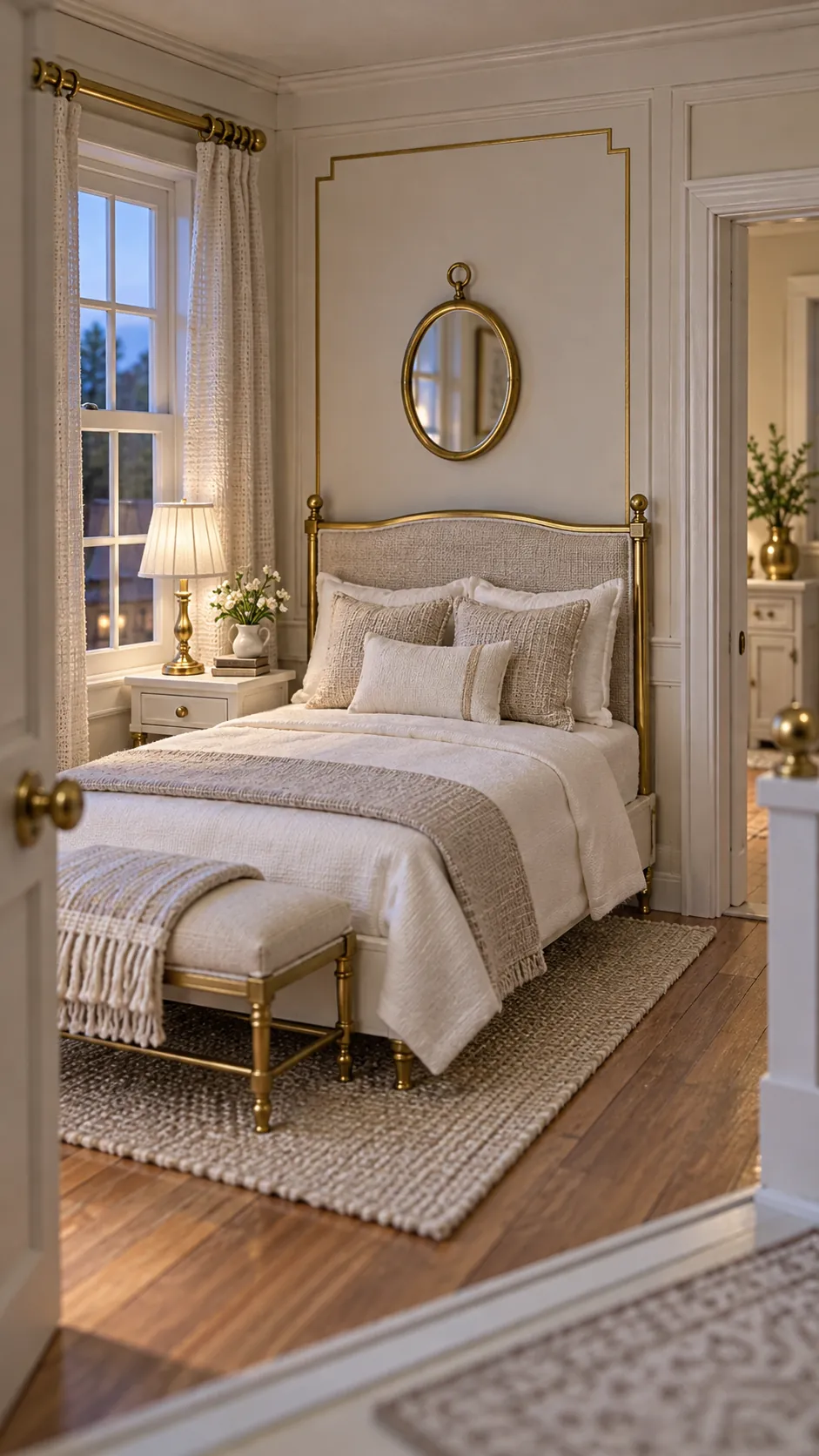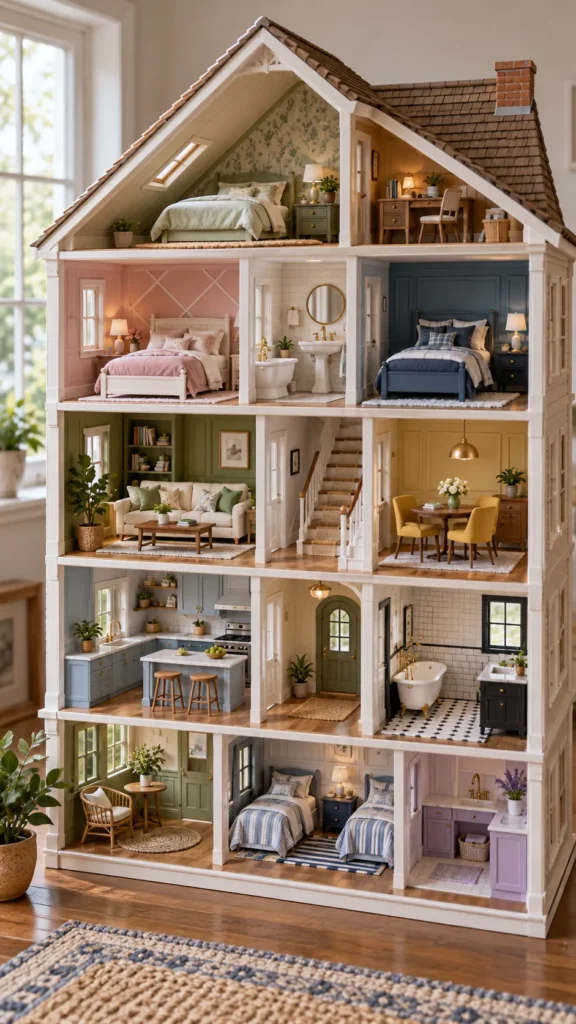
A dollhouse can contain several distinct rooms and still feel like one home. The connection usually comes from repeating one quiet base color, one wood tone, and one small accent rather than painting every space alike.
Tiny rooms intensify color, pattern, and contrast. Sample each palette on scraps, view it under the installed lighting, and decide where the eye should rest before painting walls or miniature furniture.
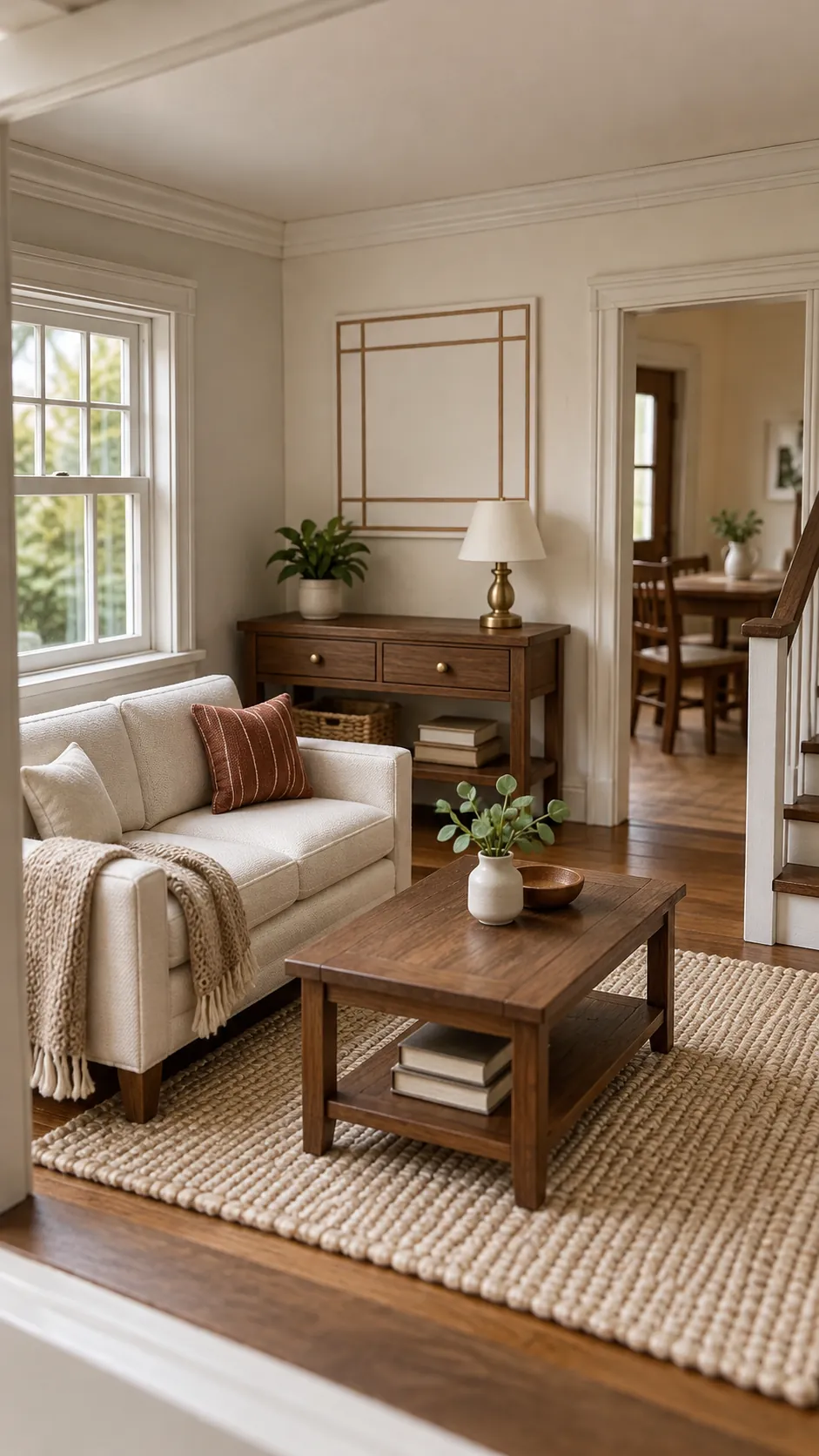
Warm White and Walnut
Warm White and Walnut begins with warm white rooms connected by medium walnut furniture. To build this version, repeat walnut on one substantial piece in each room and use warm white on the largest surfaces. For a convincing warm white and walnut, add texture through linen and woven rugs instead of introducing another strong color.
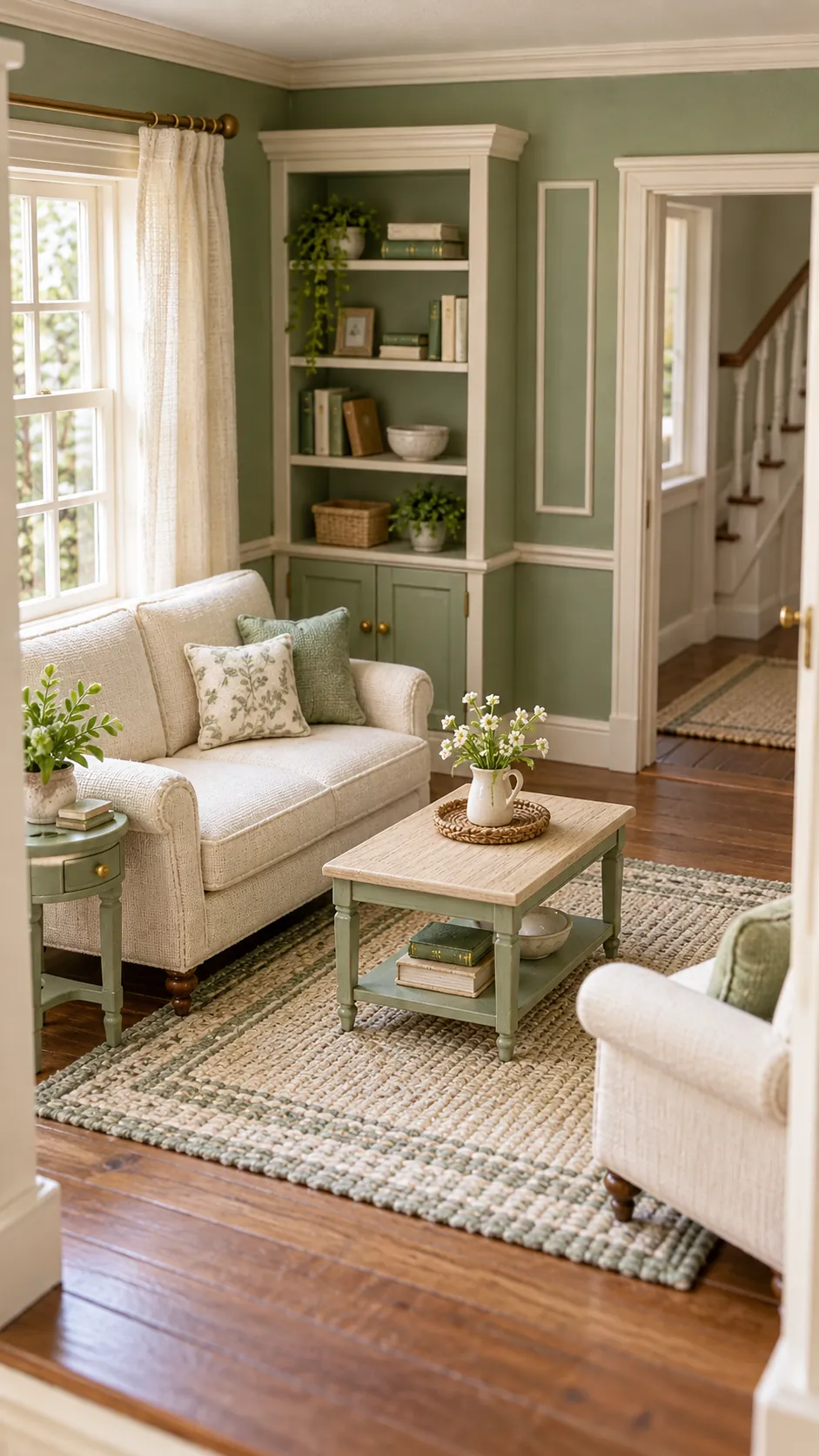
Sage Green and Cream
Sage Green and Cream begins with soft sage walls balanced by cream trim and pale upholstery. To build this version, carry sage through adjoining rooms in different proportions while keeping cream consistent. For a convincing sage green and cream, use aged brass in small doses to warm the gentle green.
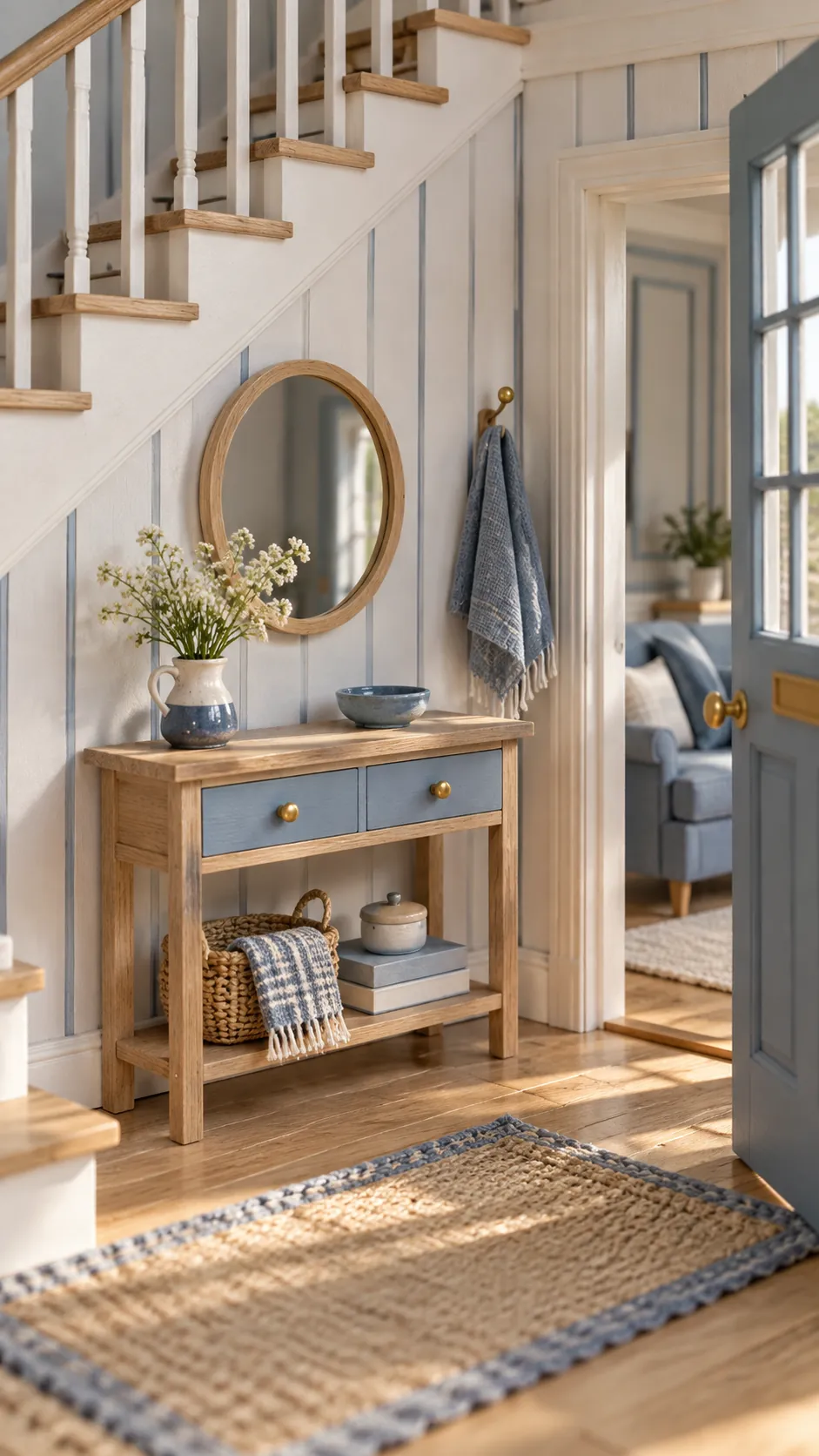
Dusty Blue and Natural Oak
Dusty Blue and Natural Oak begins with dusty blue accents paired with light natural oak. To build this version, place blue on cabinets or textiles and let oak provide the continuous material thread. For a convincing dusty blue and natural oak, choose muted blue gray rather than a bright nursery tone.
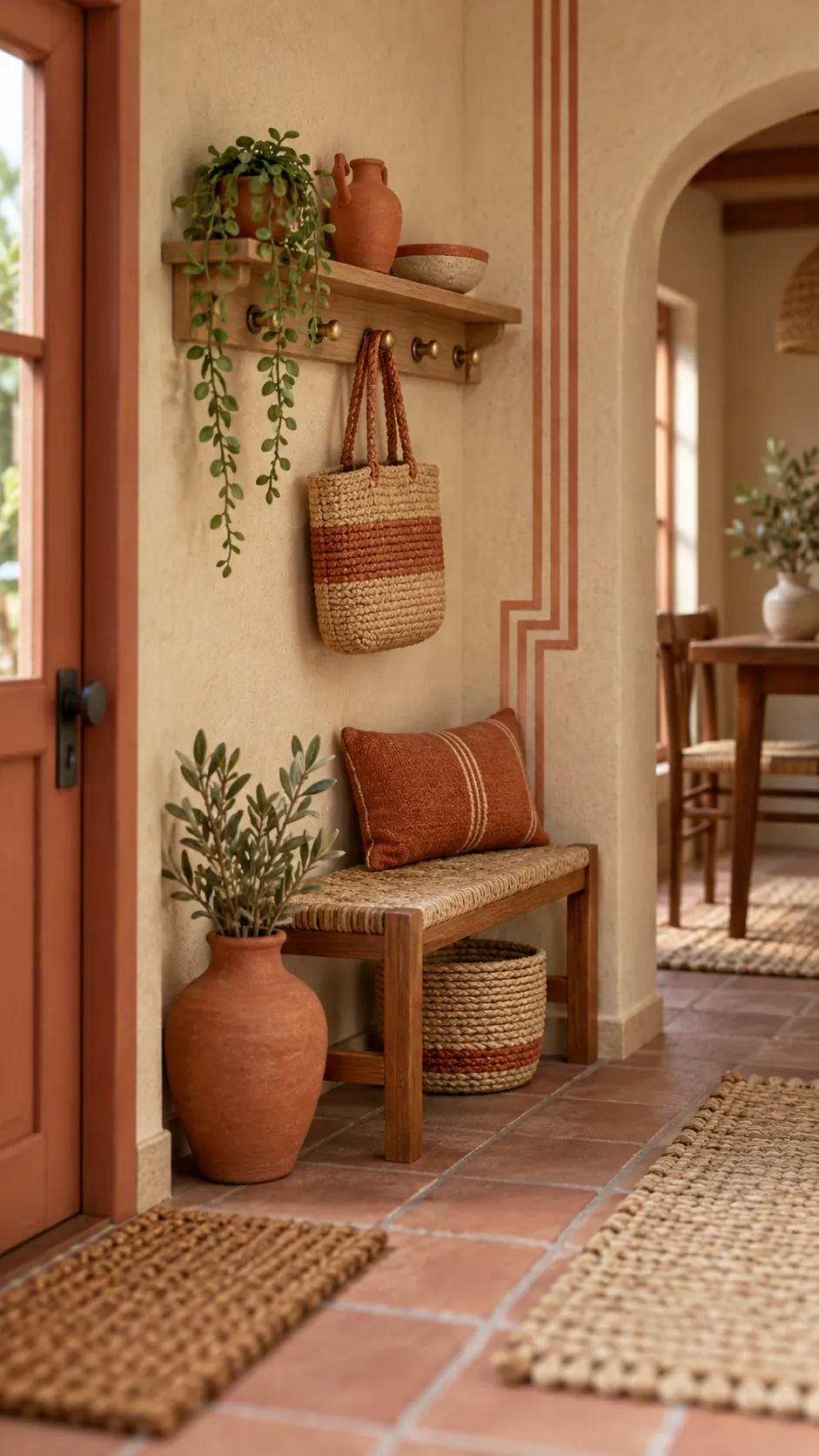
Terracotta and Sand
Terracotta and Sand begins with earthy terracotta details against sandy neutral walls. To build this version, concentrate terracotta on tile, pottery, and one textile in each room. For a convincing terracotta and sand, keep the sand color light enough to prevent miniature spaces from closing in.
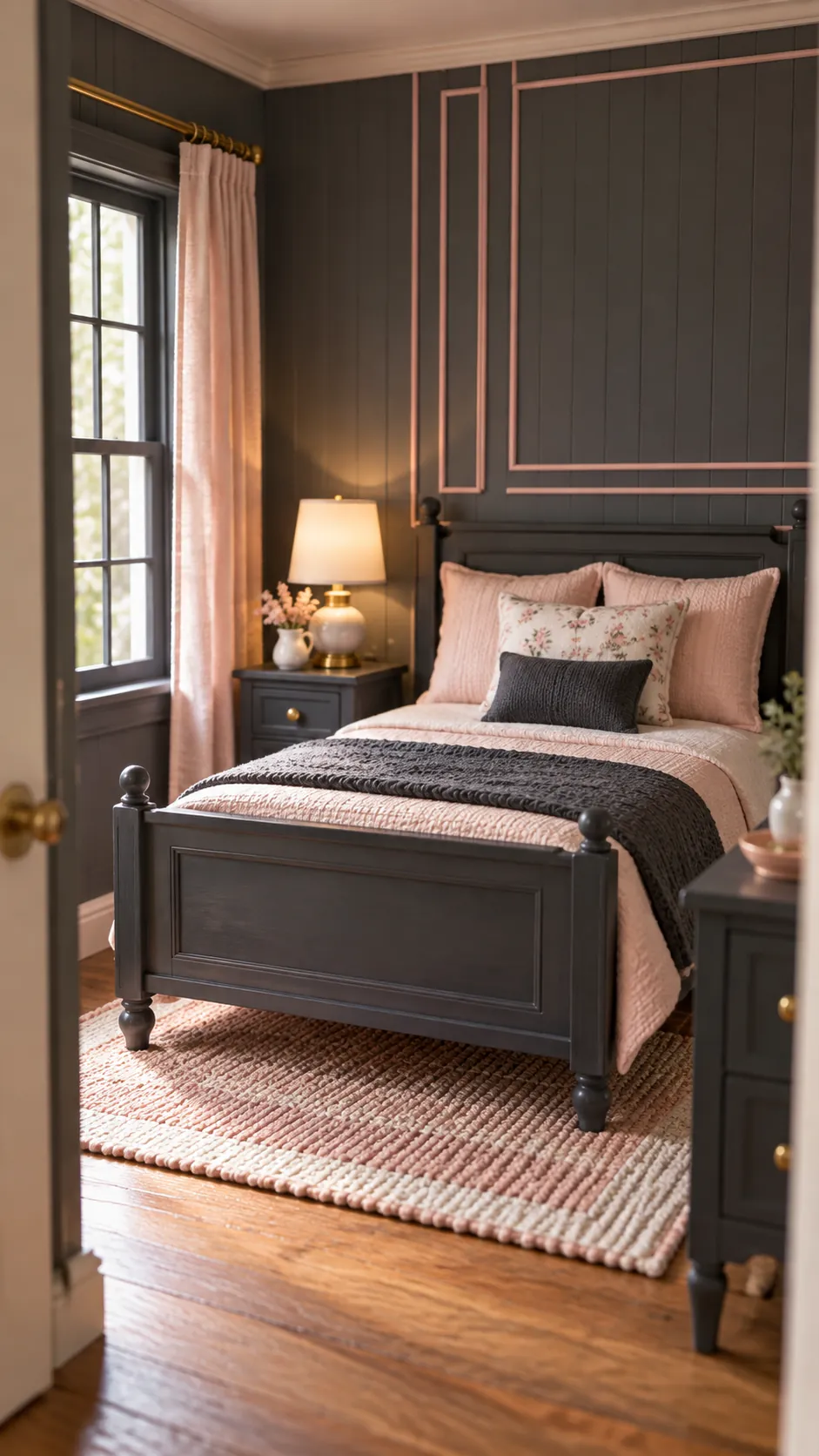
Charcoal and Soft Blush
Charcoal and Soft Blush begins with charcoal structure softened by small blush details. To build this version, use charcoal on narrow frames or one feature wall and reserve blush for fabric. For a convincing charcoal and soft blush, add plenty of warm white so the contrast remains livable.
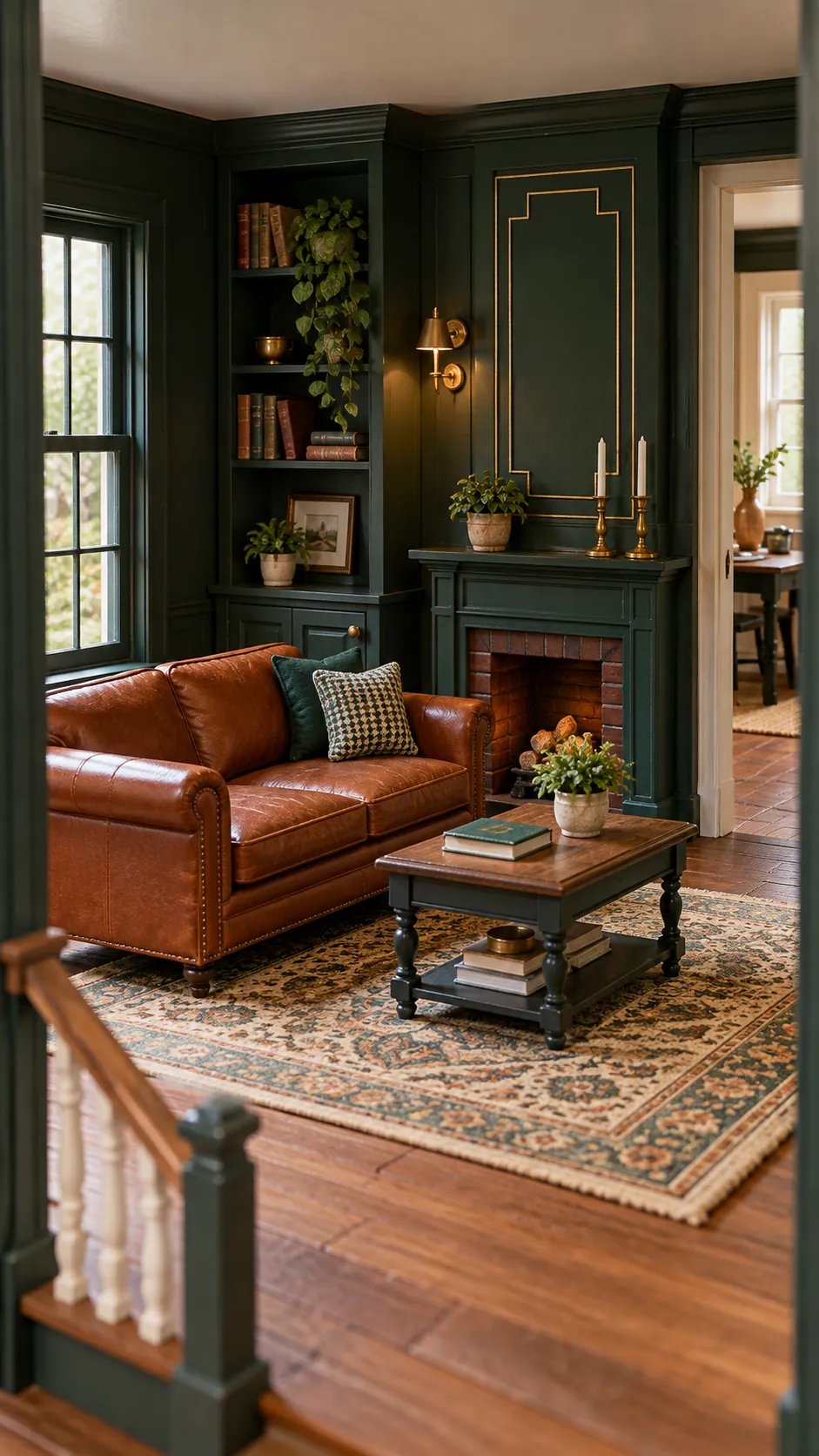
Forest Green and Cognac
Forest Green and Cognac begins with deep forest green rooms anchored by cognac leather. To build this version, repeat the leather tone in wood and small accessories across the house. For a convincing forest green and cognac, protect natural light with pale ceilings and simple window treatments.
Navy and Warm White
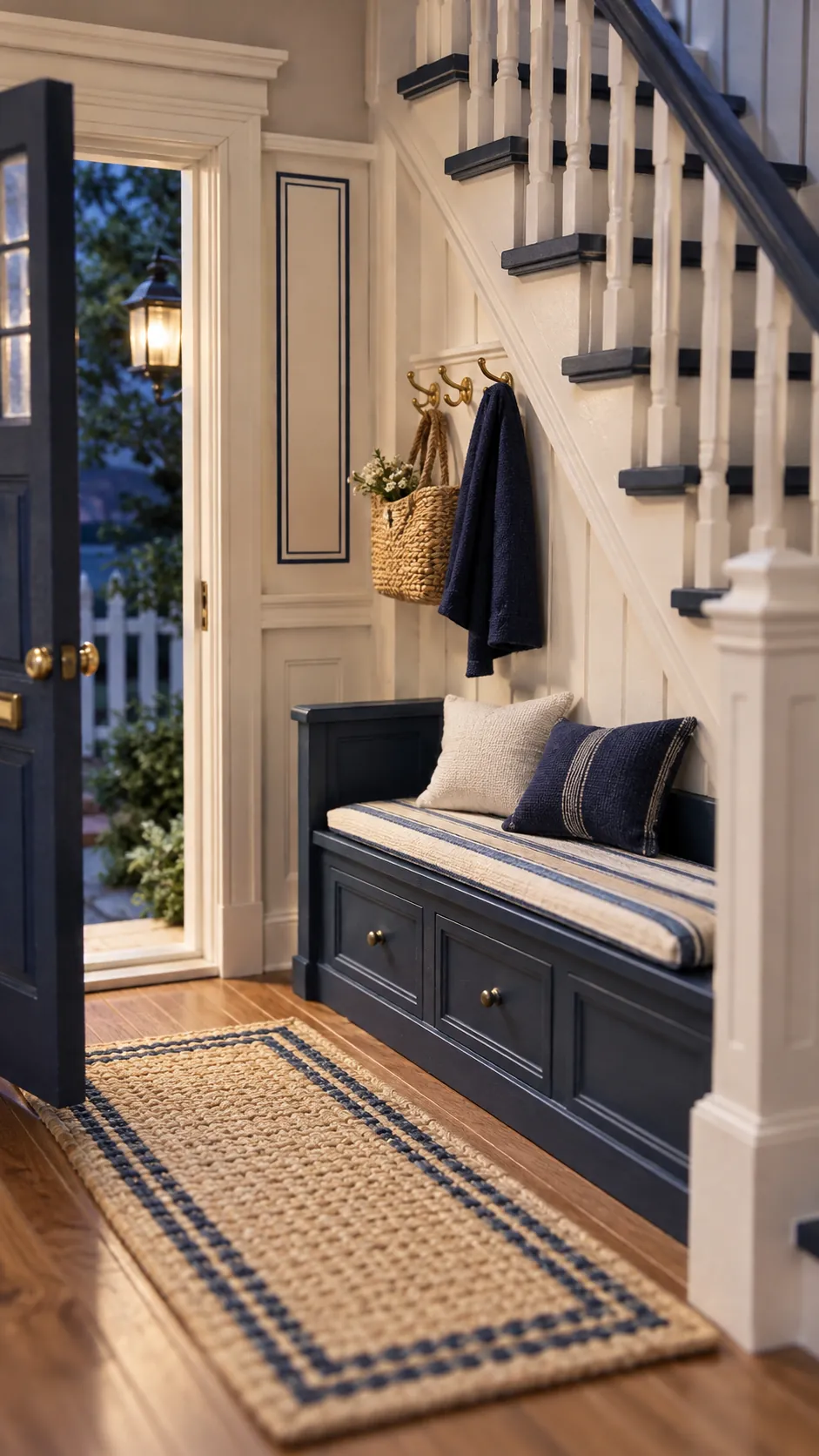
Navy and Warm White begins with navy focal pieces set within warm white architecture. To build this version, limit navy to one major element per room and echo it with tiny book spines. For a convincing navy and warm white, choose a creamy white that avoids harsh nautical contrast.
Lavender and Mushroom
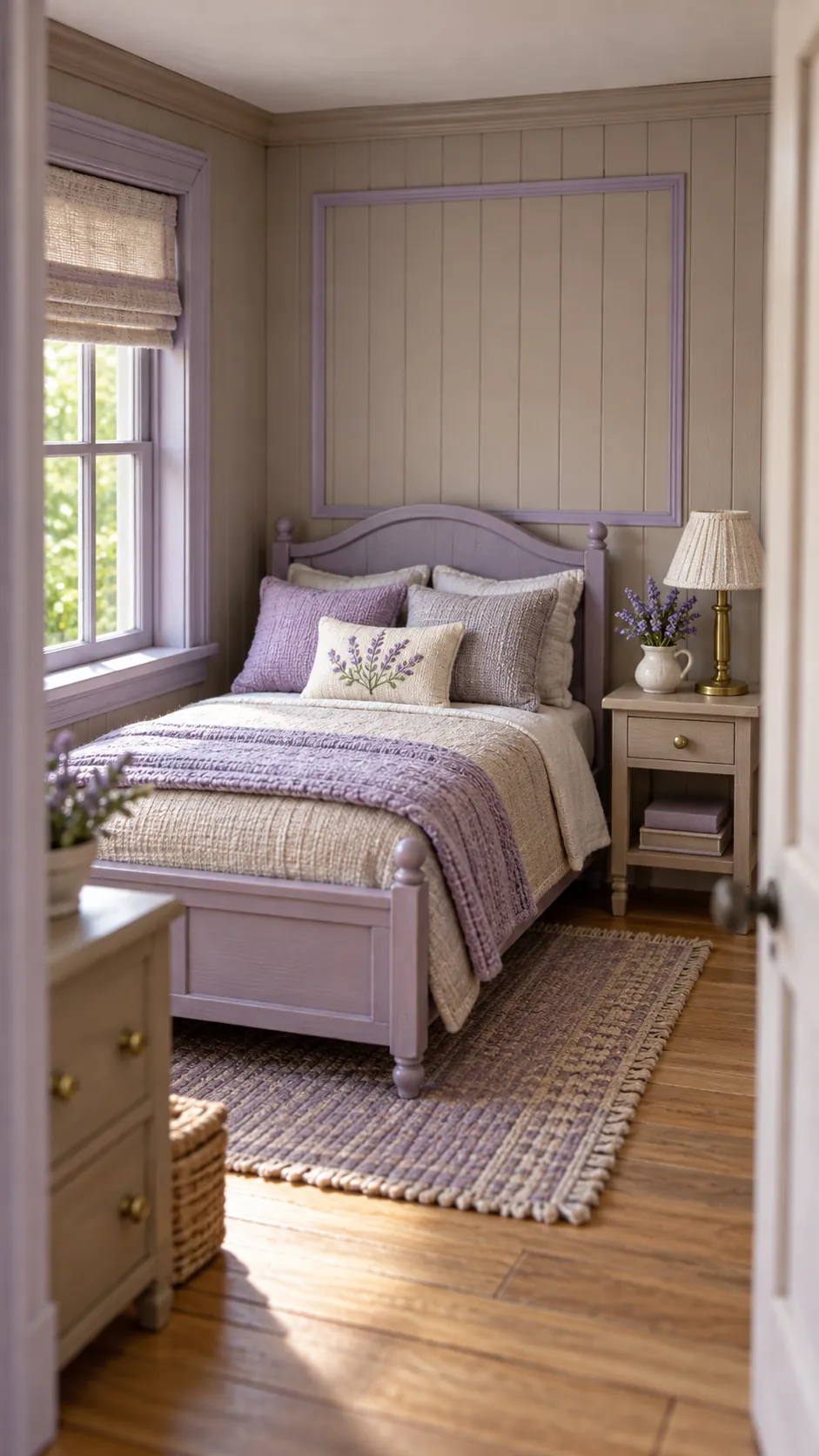
Lavender and Mushroom begins with dusty lavender paired with a calm mushroom neutral. To build this version, use lavender on soft furnishings and mushroom on walls or cabinetry. For a convincing lavender and mushroom, keep both colors gray enough to support several miniature room functions.
Mustard and Deep Teal
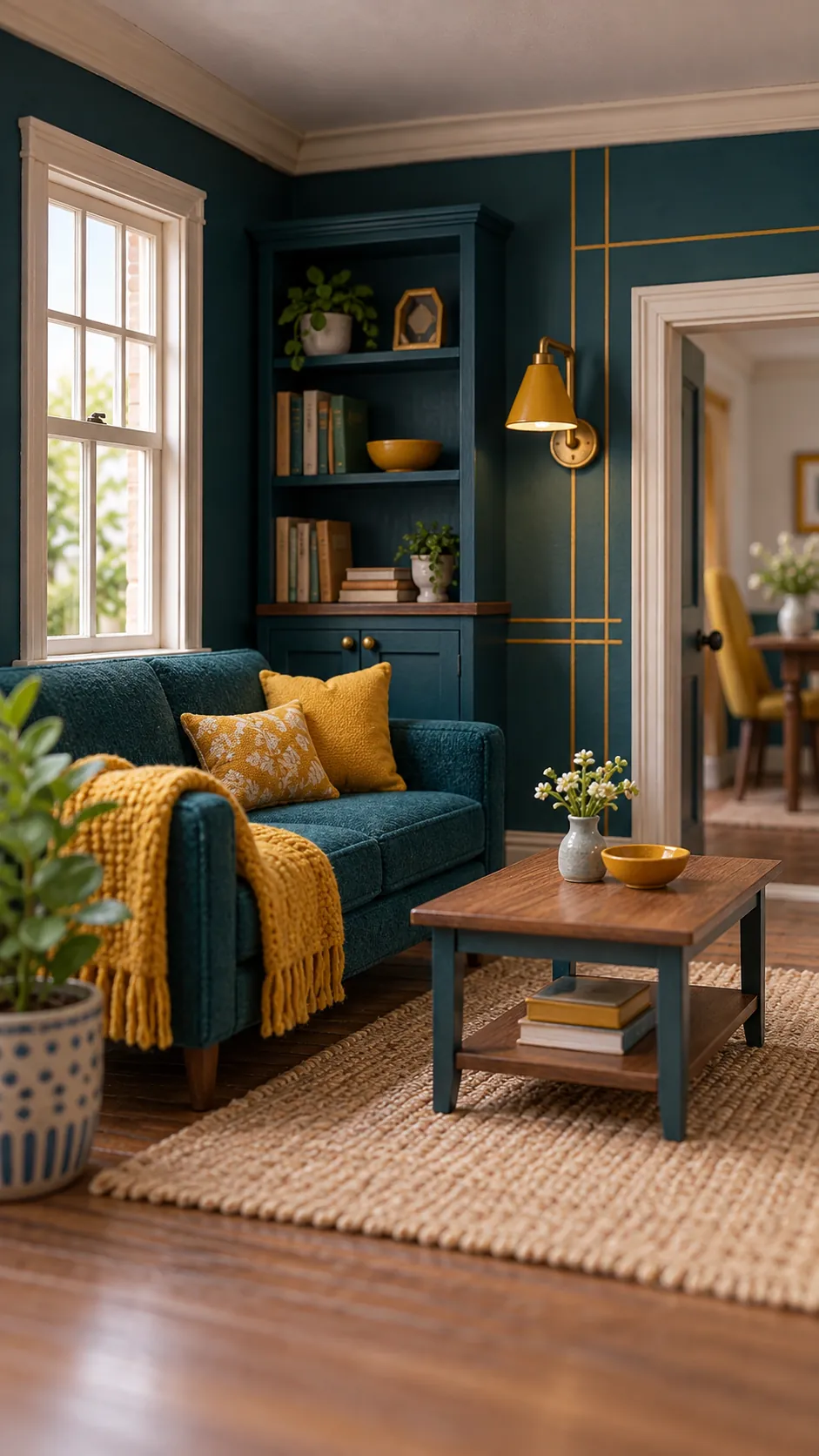
Mustard and Deep Teal begins with small mustard accents energizing deep teal rooms. To build this version, place teal on one contained surface and use mustard on movable objects. For a convincing mustard and deep teal, balance both saturated tones with plain wood and off white.
Black White and Birch
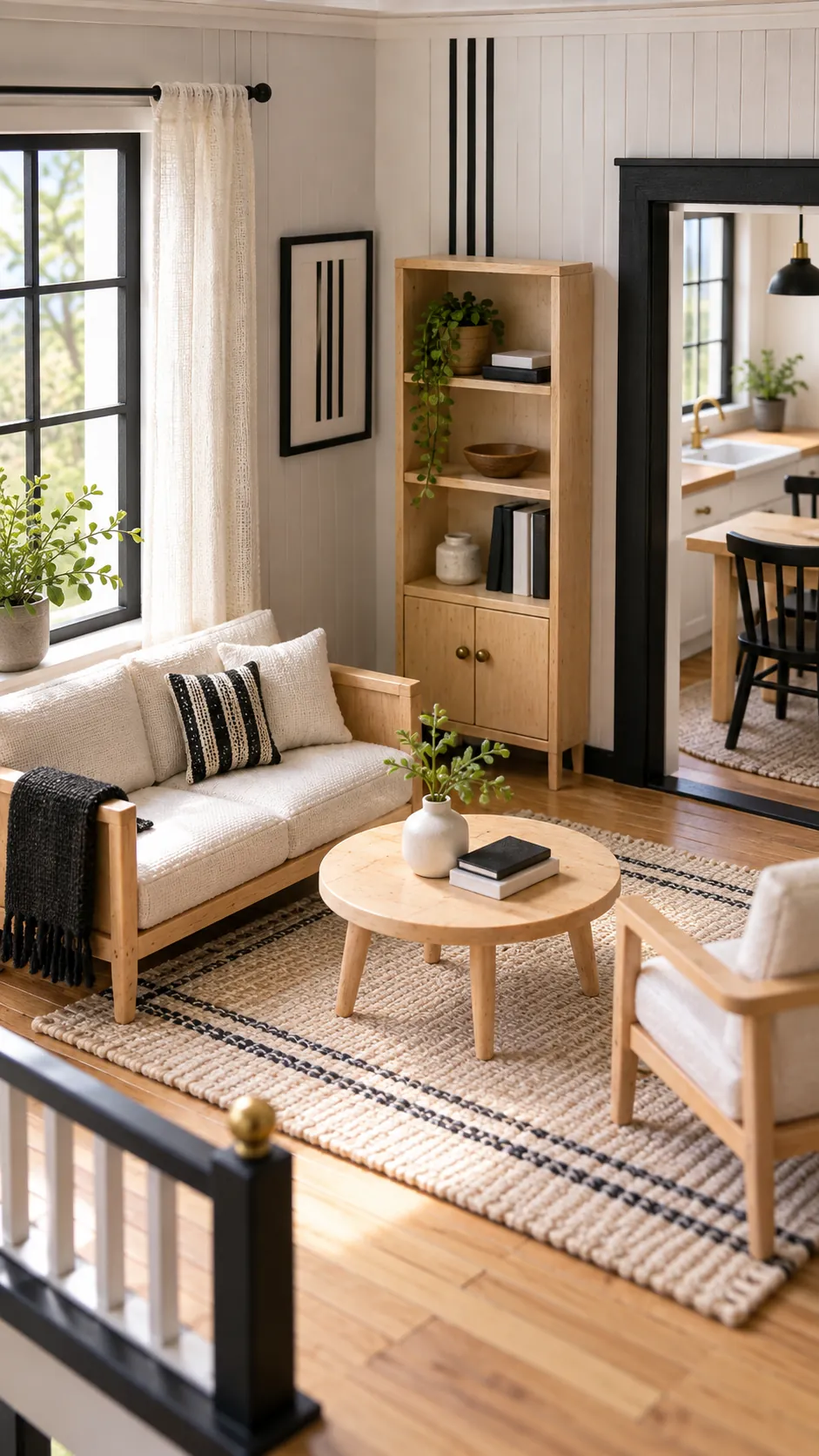
Black White and Birch begins with graphic black details joining white rooms with birch furniture. To build this version, repeat slim black lines in frames, lamps, and hardware rather than broad areas. For a convincing black white and birch, let birch grain soften the crisp contrast and show handmade warmth.
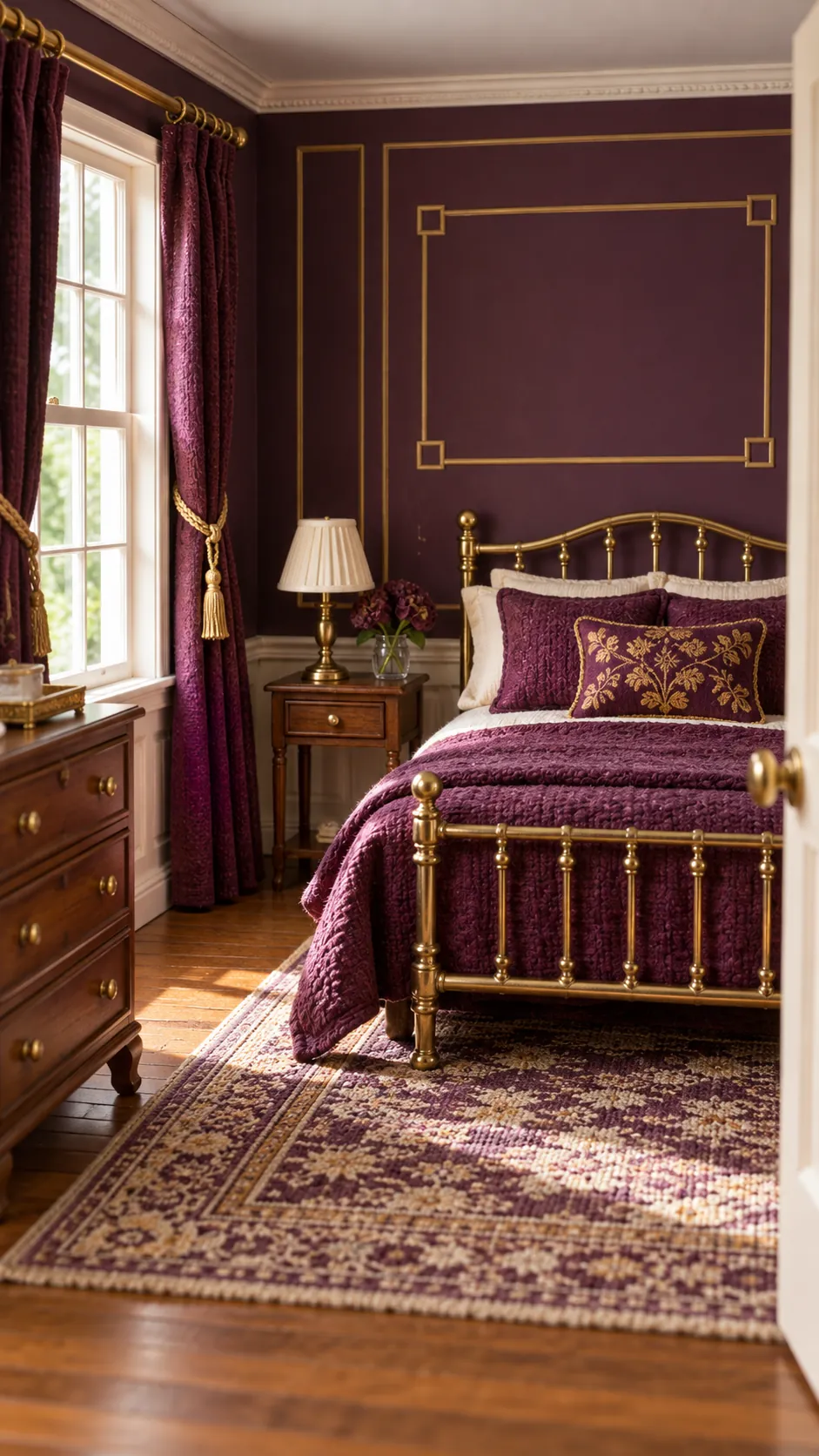
Plum and Antique Gold
Plum and Antique Gold begins with rich plum textiles paired with restrained antique gold. To build this version, apply plum to velvet or one painted cabinet and keep metal details delicate. For a convincing plum and antique gold, use pale stone walls so the jewel tones remain accents.
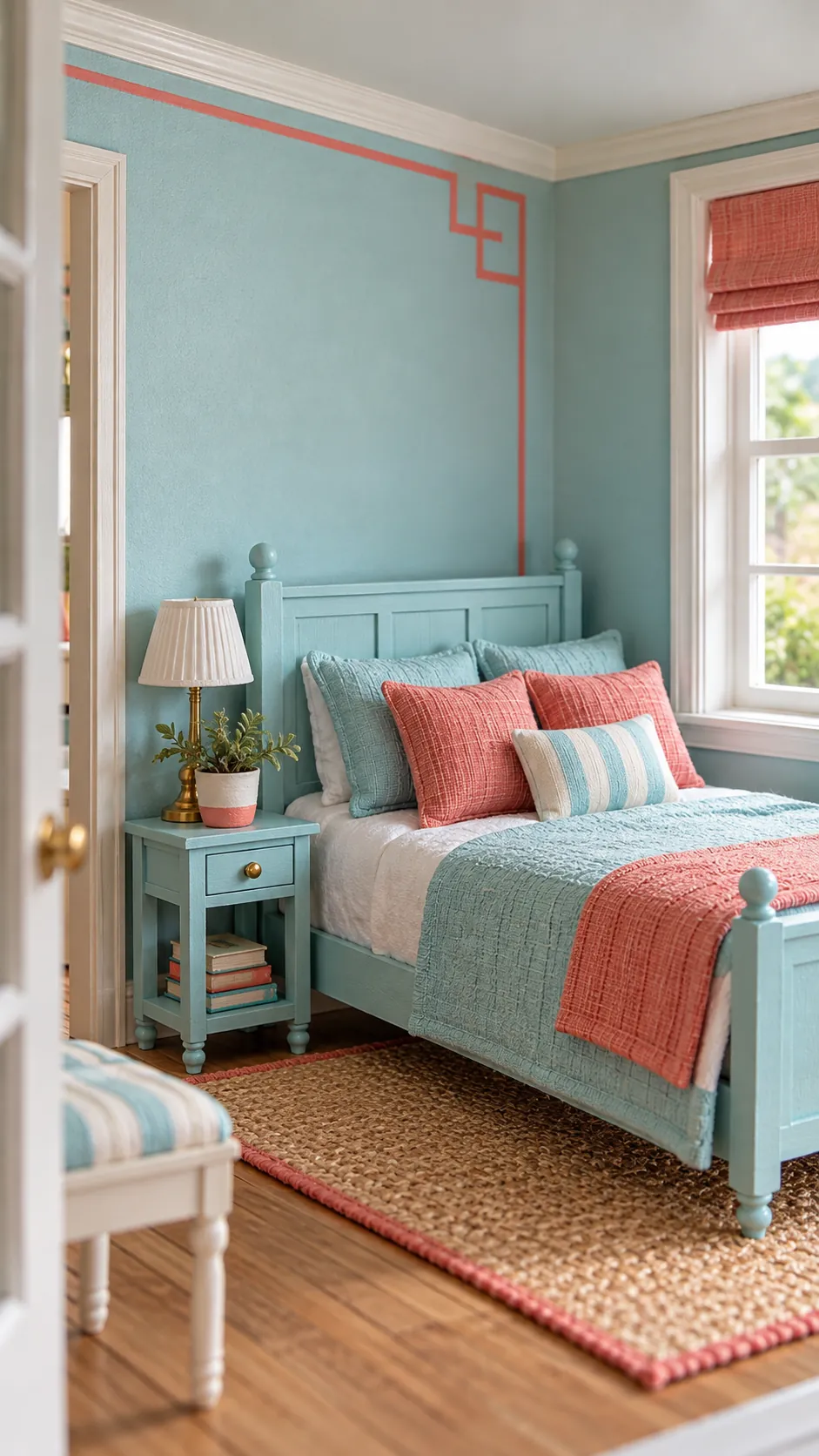
Aqua and Coral
Aqua and Coral begins with soft aqua spaces lifted by controlled coral details. To build this version, repeat aqua across walls and tile while using coral only on small fabrics and pottery. For a convincing aqua and coral, choose softened hues that remain believable in connected rooms.
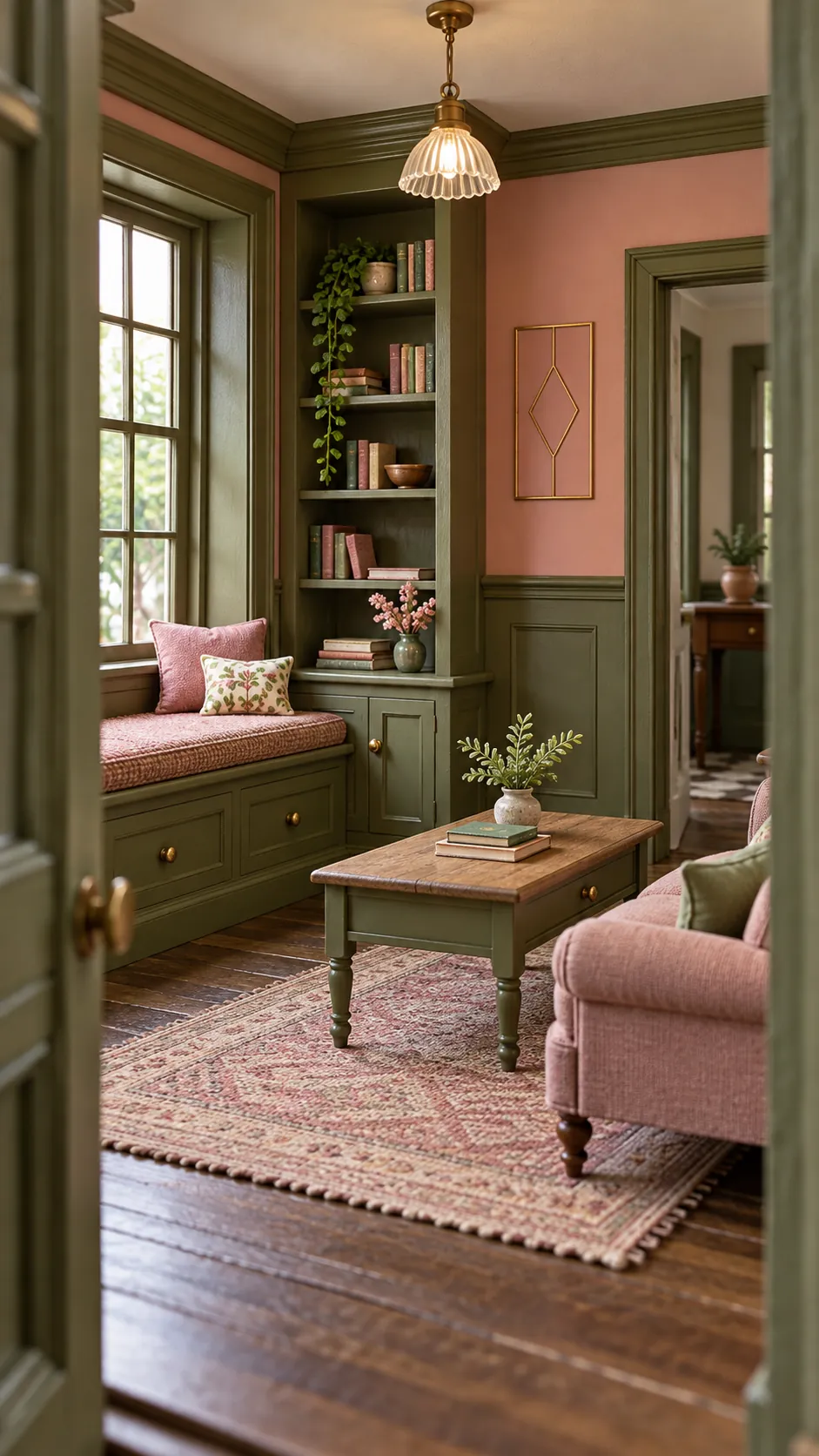
Olive and Clay Pink
Olive and Clay Pink begins with olive woodwork balanced by muted clay pink walls. To build this version, use olive to frame doors and shelves and clay pink on broad matte surfaces. For a convincing olive and clay pink, add unbleached cotton to bridge the two earthy colors.
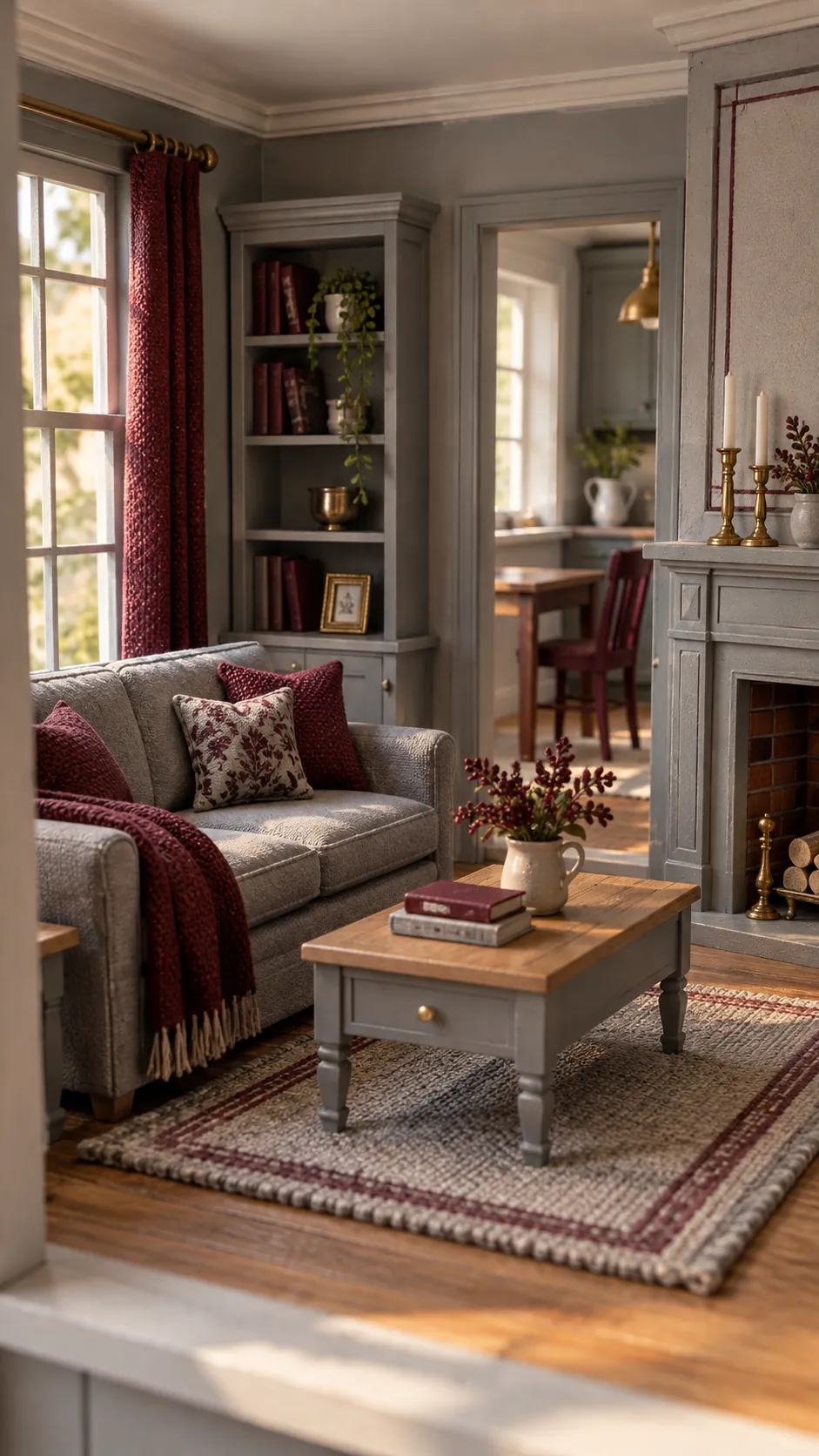
Stone Gray and Burgundy
Stone Gray and Burgundy begins with quiet stone gray rooms with selective burgundy depth. To build this version, carry gray across architecture and reserve burgundy for leather, books, and rugs. For a convincing stone gray and burgundy, keep the red tone dark and brown enough to avoid a holiday effect.
Ivory Linen and Brass
Ivory Linen and Brass begins with layered ivory and linen rooms finished with warm brass. To build this version, vary cream textures between plaster, cloth, paper, and painted wood. For a convincing ivory linen and brass, use brass as tiny points of light and stop before the scheme feels formal.