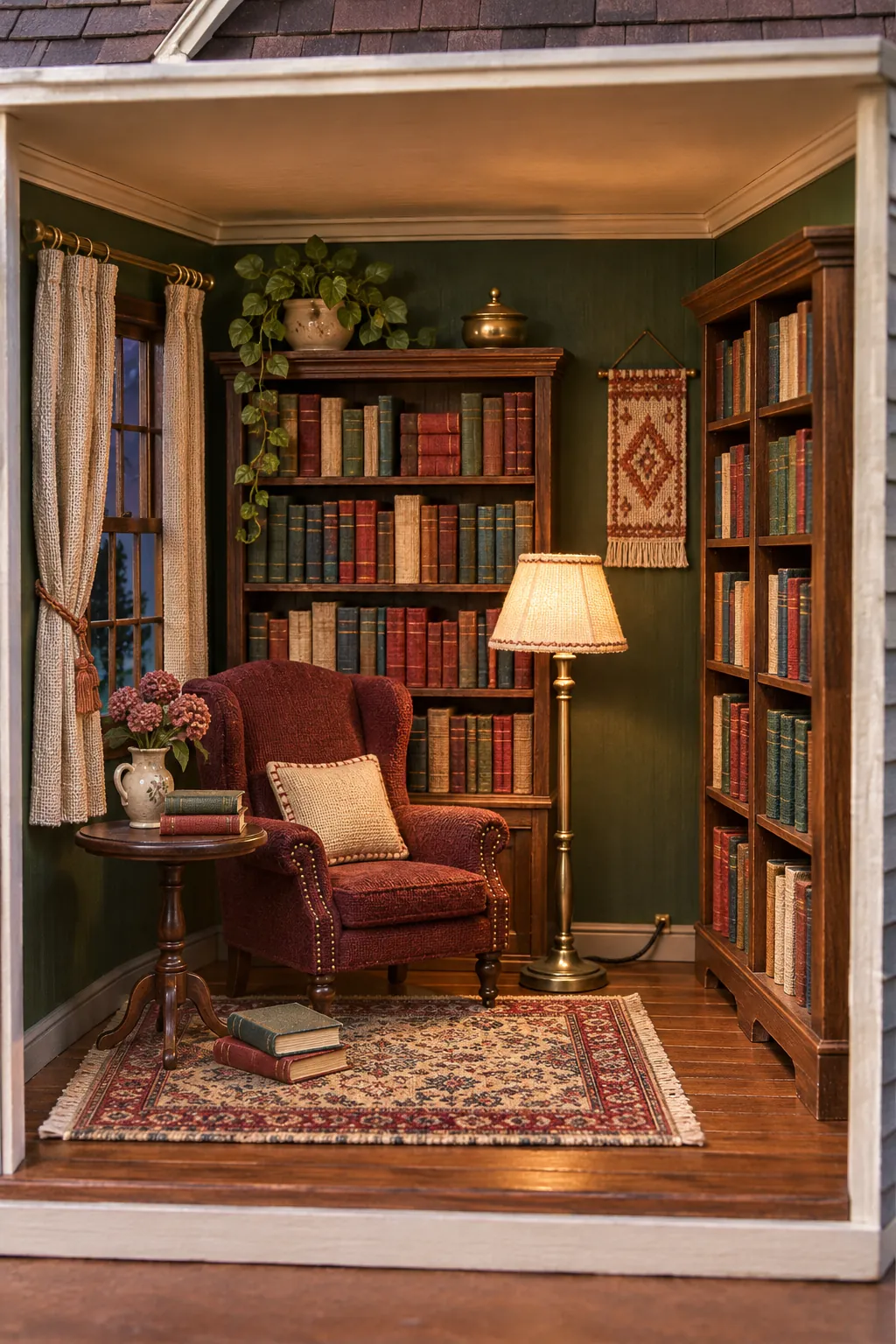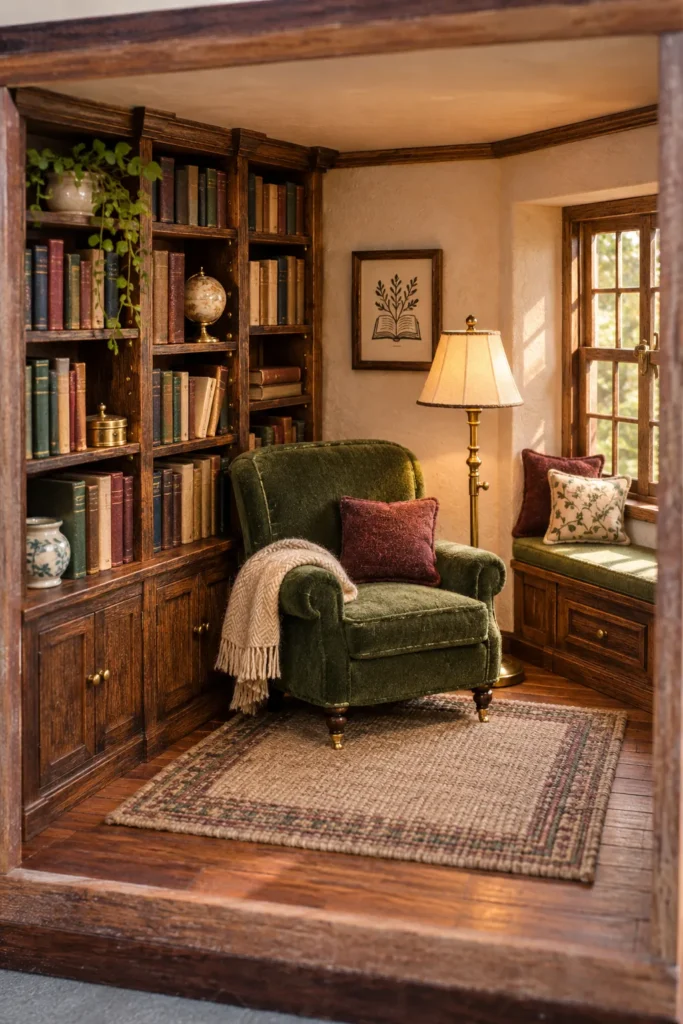
A tiny library can become one of the most convincing rooms in a dollhouse, but the small details compete for space very quickly. Shelves need believable depth, the chair needs a clear approach, and any lamp wiring must disappear without becoming impossible to repair. A careful plan lets the books create richness while the room still feels calm and usable.
Plan the Room Around One Comfortable Seat
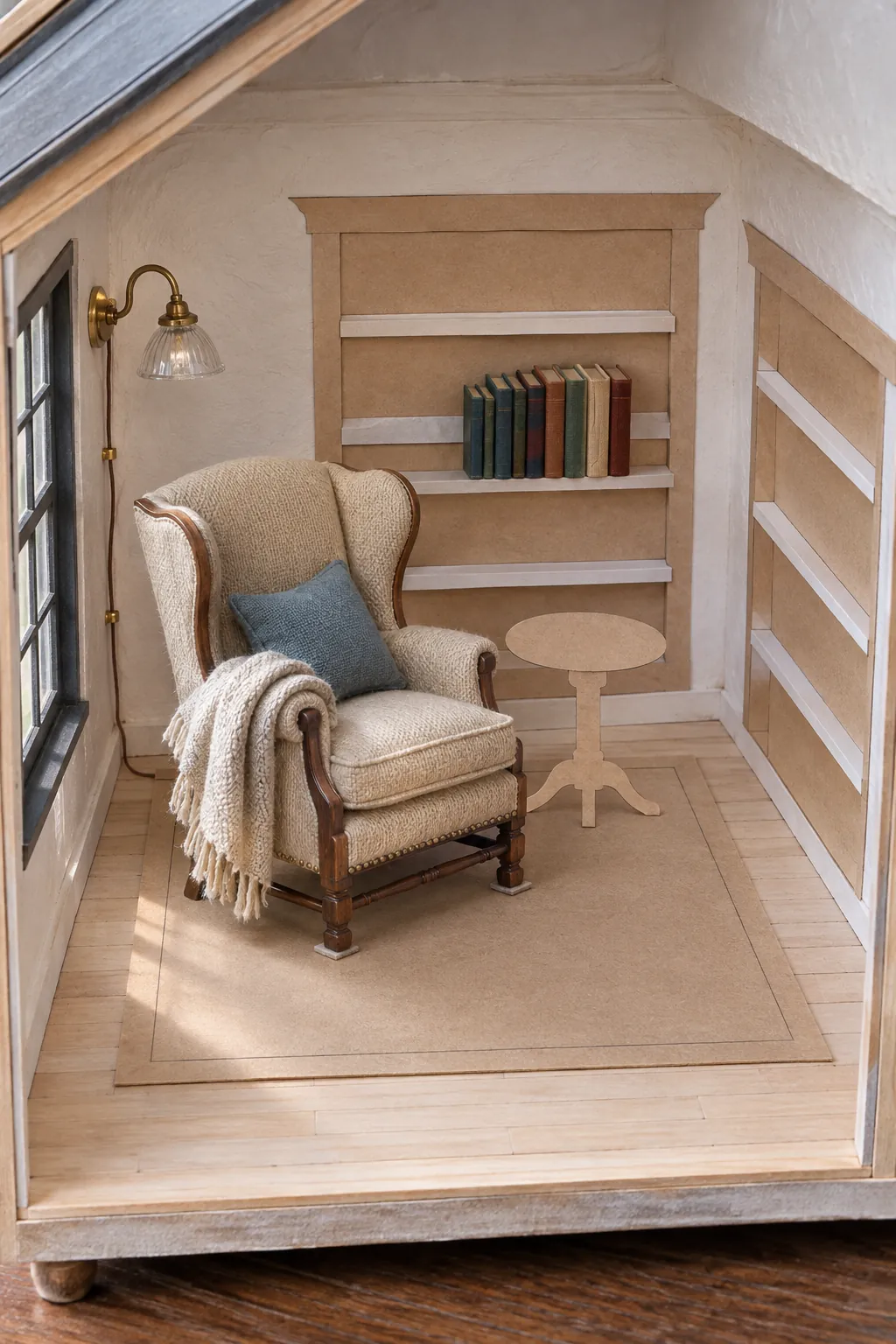
Start with the chair because it establishes the scale and determines how much floor remains for shelves. Turn it slightly toward the center rather than pressing it flat against a wall, then leave enough room for a small table or lamp beside the arm. A paper floor template helps you test the arrangement before glue fixes anything in place.
Keep the path from the open dollhouse front to the chair clear. The reader should appear able to enter, sit, reach a book, and set down a cup without stepping over furniture. This simple movement test prevents a cozy scene from becoming an attractive but unusable display.
Build Shallow Bookcases That Fit the Wall
Measure the tallest miniature book before choosing shelf depth and spacing. A shallow case looks more natural than a deep cabinet filled with one row of tiny books near the front. Add a thin back panel to keep the unit square, and check every shelf with a small guide while the glue dries.
Make Books with Varied but Controlled Detail
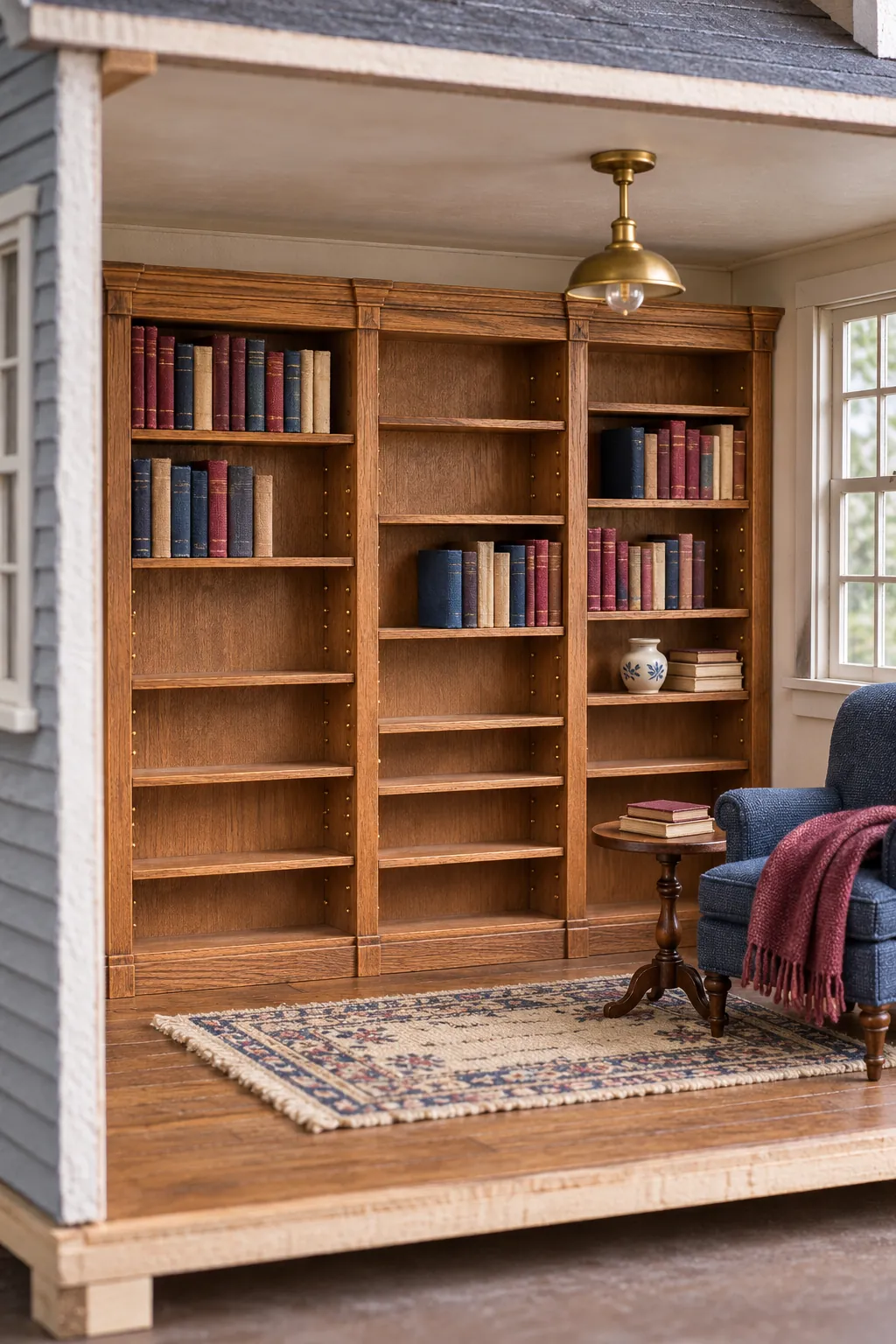
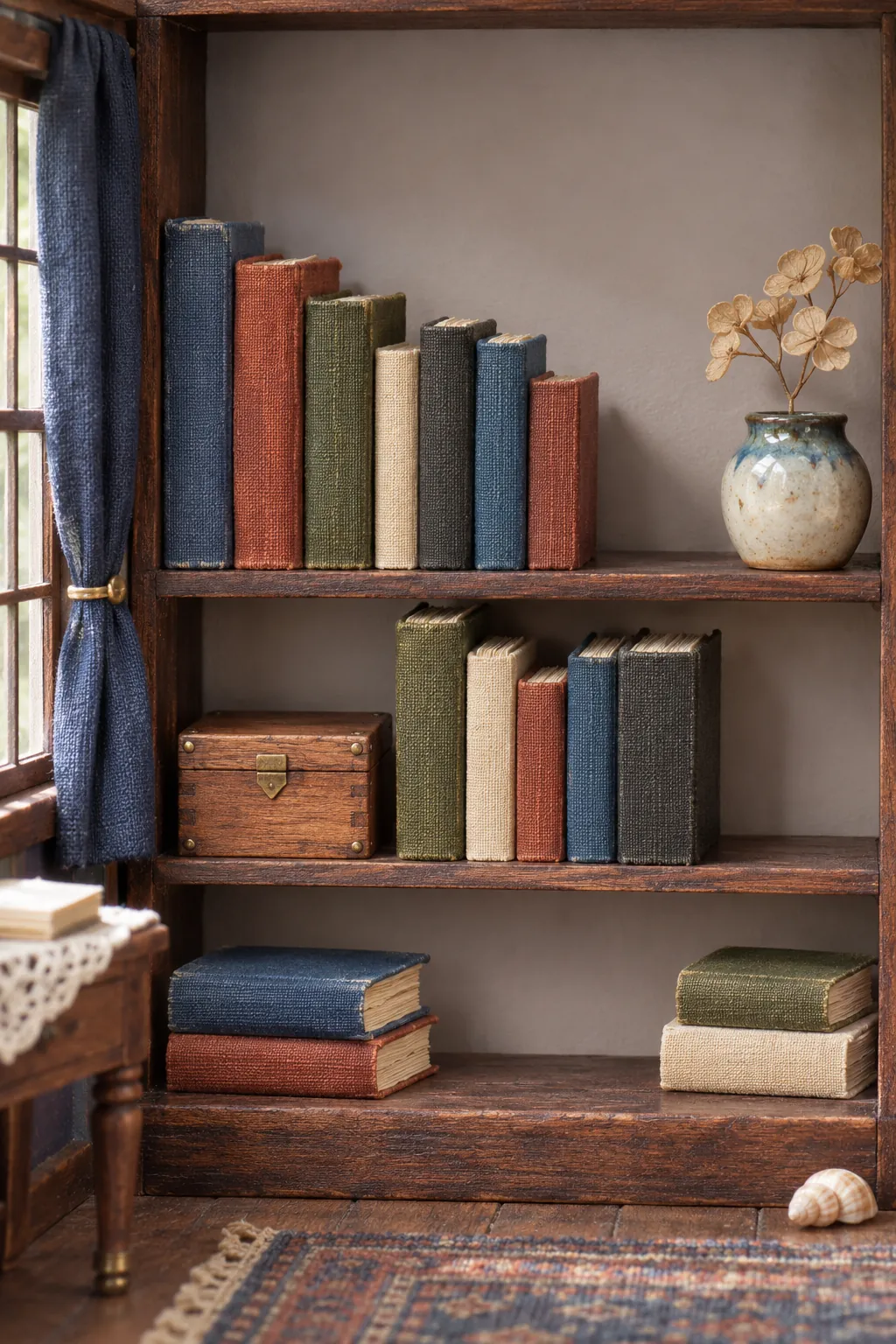
Books look convincing when their heights, thicknesses, and cover colors vary within a limited palette. Cut several page blocks at once, wrap them with plain paper covers, and leave a few slightly uneven edges to suggest use. Avoid filling every shelf because open space makes the collection easier to see.
Arrange some books upright and place one or two short stacks near a ceramic vessel or wooden box. Keep printed lettering optional since tiny marks can look messy at this scale. Blank cloth style spines often create a calmer and more realistic library wall.
Choose a Chair and Lamp with the Same Visual Weight
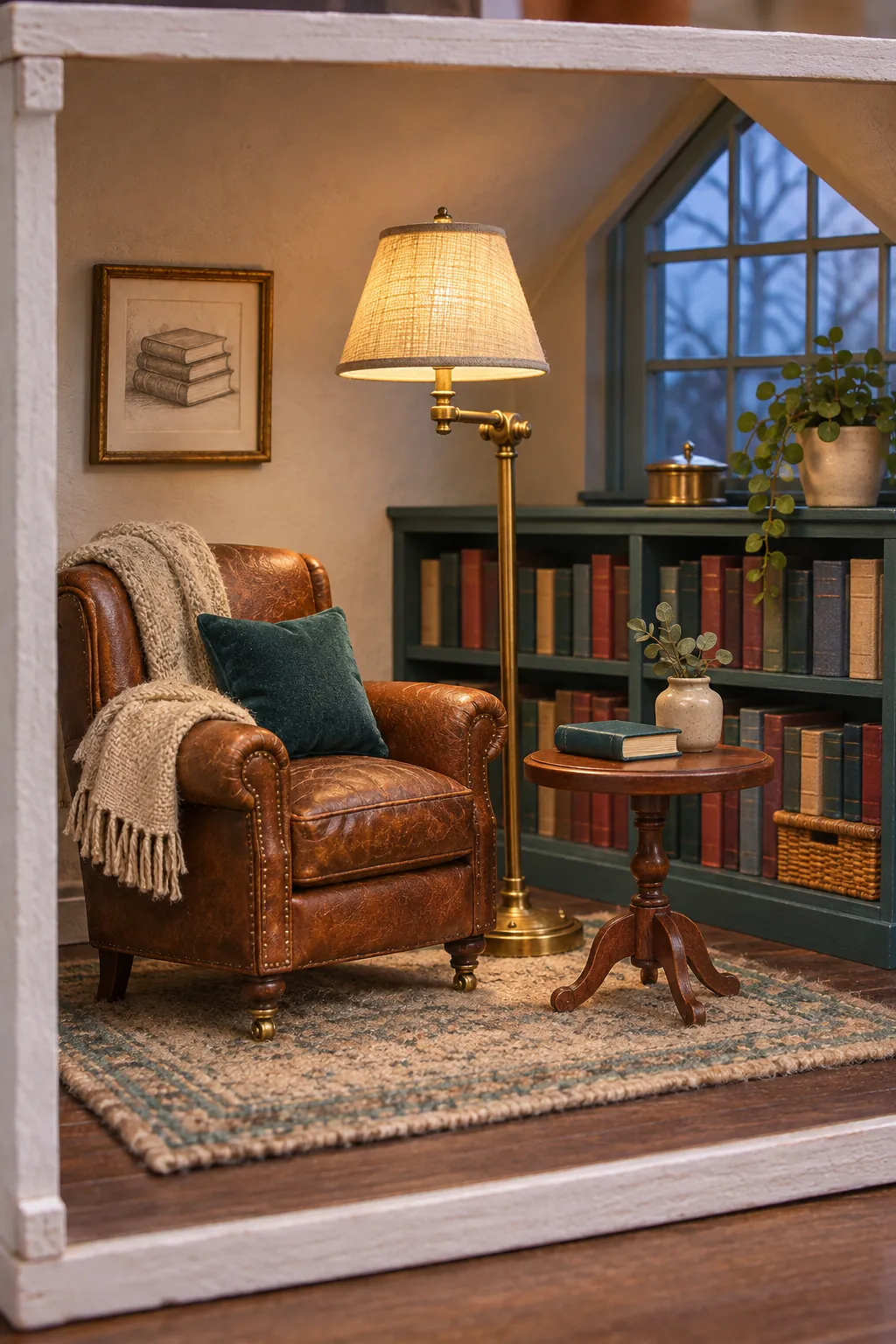
A broad chair needs a lamp with enough height to reach above its arm, while a delicate chair looks better beside a slim shaded lamp. Place both on a small rug so they read as one miniature cozy reading corner rather than separate objects. A folded throw can soften the chair, but keep its thickness and folds appropriate to the scale.
Test the Lighting Before Adding Wall Finishes
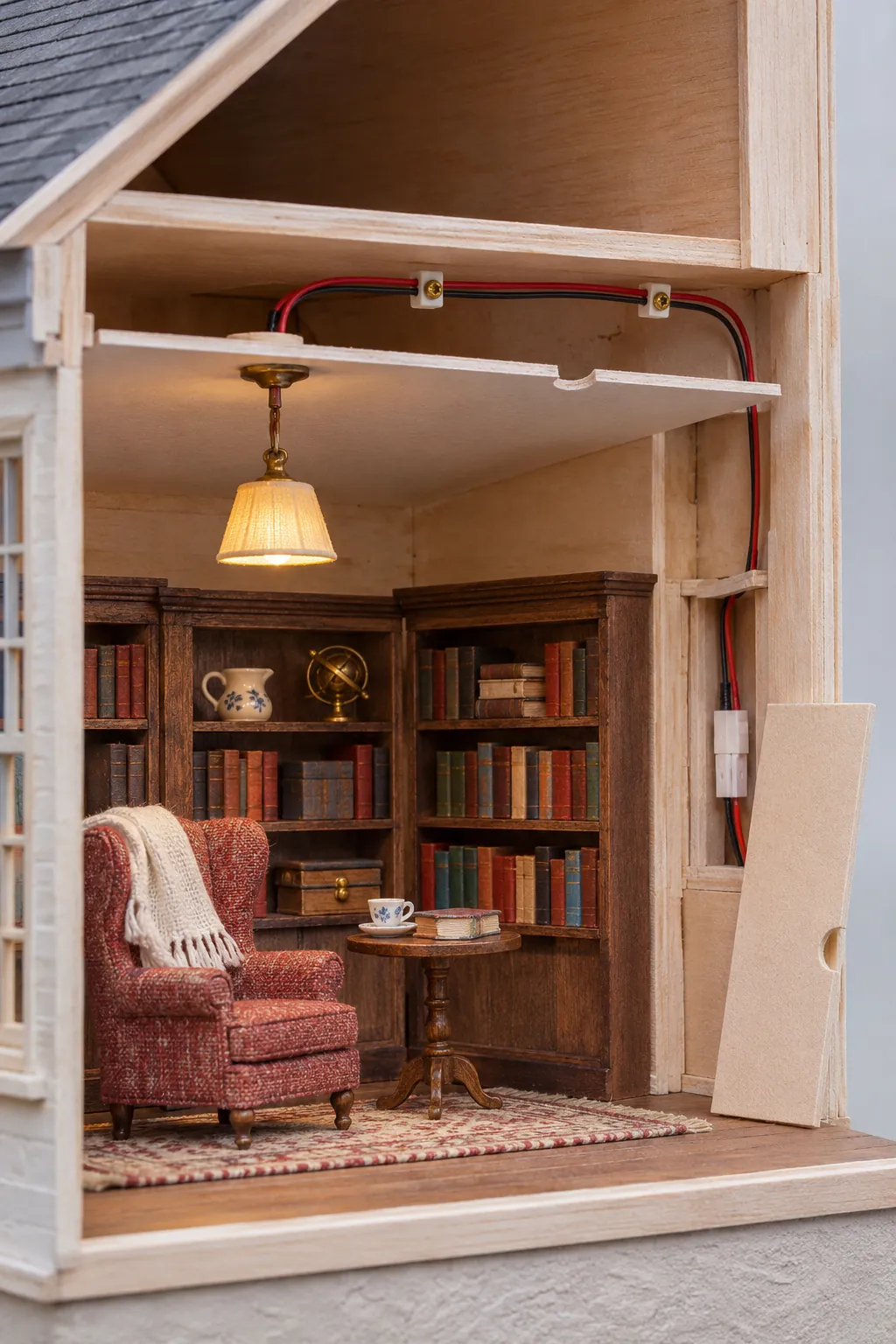
Install and test the light before wallpaper, flooring, trim, or full bookcases hide the route. A ceiling void, a removable wall panel, or a narrow chase behind the shelves can conceal the wire while preserving access. Run the light for several minutes, move the switch repeatedly, and confirm that every connection remains stable.
Keep the battery holder or connector reachable from the back or underside of the dollhouse. Do not seal a fragile joint behind permanent decoration, even when the exposed test layout looks untidy. A repairable system is more useful than a perfect wall that must be damaged when a lamp stops working.
Add a Quiet Wallpaper and Useful Accessories
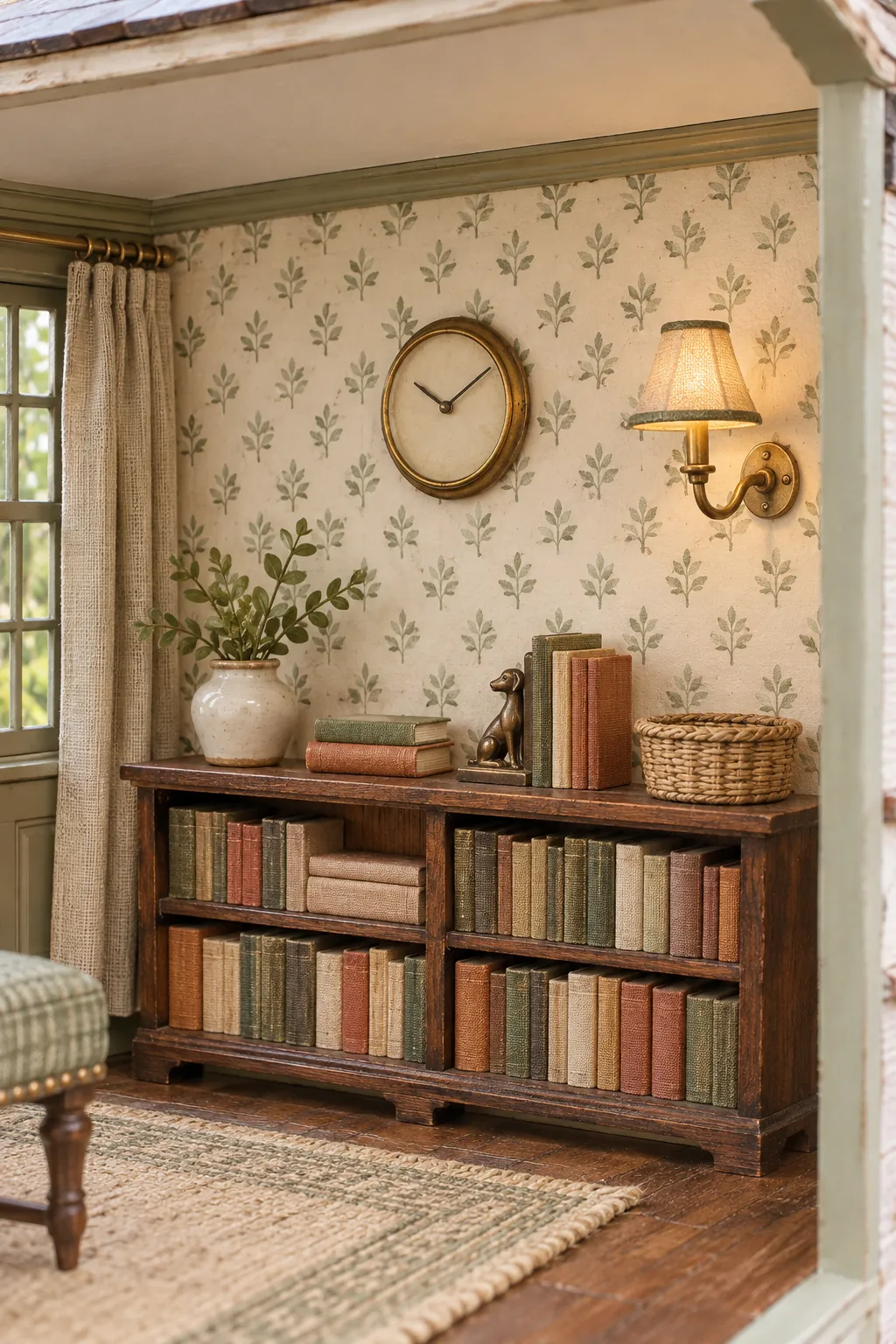
A small block print or narrow stripe can give the library depth without competing with the book spines. Apply it to one wall, then use plain paint on the remaining surfaces so the room retains visual breathing space. A clock, plant, basket, and cup are enough to suggest daily use.
Finish the Library in Removable Layers
Complete the room as a set of removable layers whenever the dollhouse opening allows it. Fit the floor and wall finishes first, place the tested light next, then add bookcases, chair, rug, and loose details in that order. This sequence keeps wiring accessible and makes later cleaning or restyling much easier.
Use strong glue where structural wood parts meet, but apply it sparingly near paper covers and fabric. Let each bookcase dry square before loading it, and keep loose books in small groups that can be lifted out together. The finished library will feel richly detailed because every object has a purpose and a stable place.