17 Playroom Printable Art Ideas That Invite Real Play
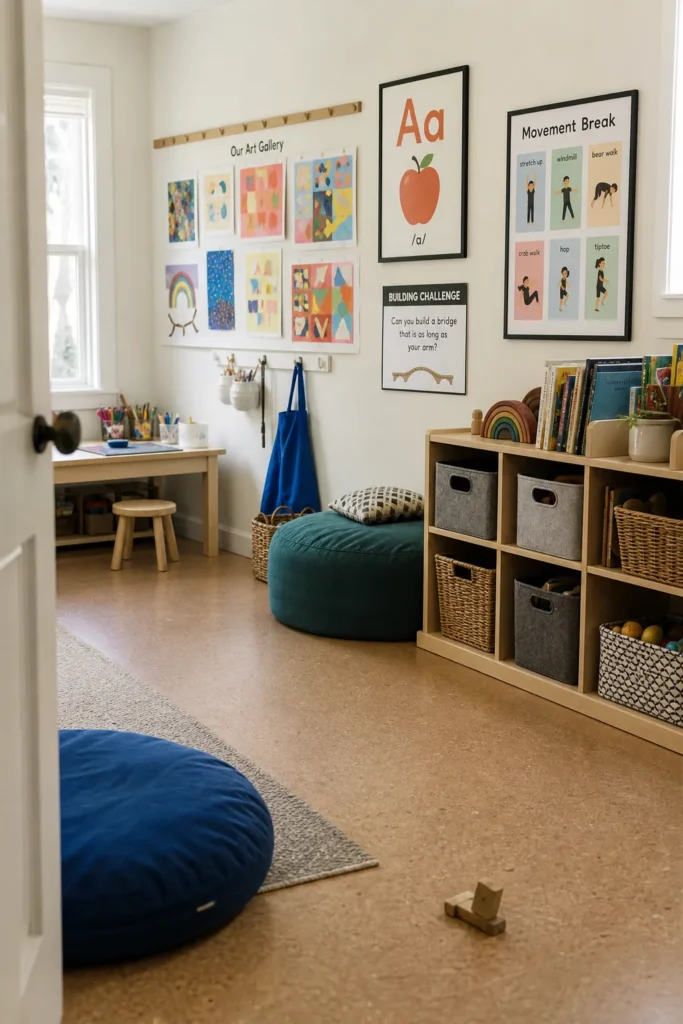
A playroom wall does not need to look calm to an adult standing in the doorway. It needs to make sense to the children using the room. The strongest playroom printable art gives them something to try, find, build, tell, or change—not another polished sign that says “play.”
Choose a few ideas that support the play already happening in your home, hang them at the children’s eye level, and leave generous blank wall and open floor between activity zones. Match the digital file ratio to an off-the-shelf frame before printing. In active areas, use lightweight frames with acrylic glazing, secure rails, or well-anchored clips instead of heavy glass.
A Front-Opening Art-of-the-Week Frame
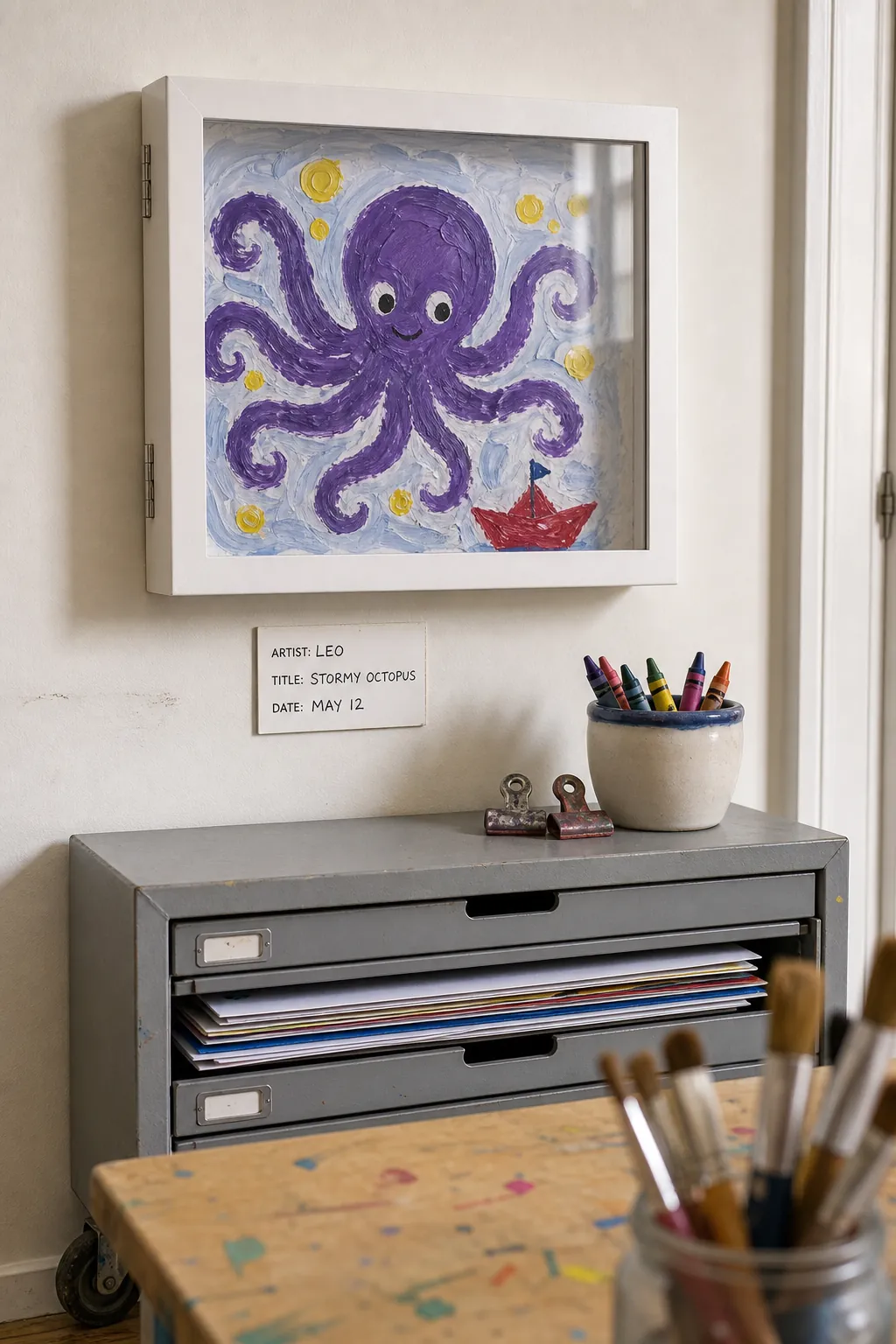
Give one new painting the visual importance of a gallery piece. A front-opening frame lets a child replace the display without dismantling the wall, while a tiny printable label records the artist, title, and date. Store older work flat instead of crowding every sheet onto one surface. The wall stays readable, and children see that their choices matter.
A Loose-Parts Shape Recipe
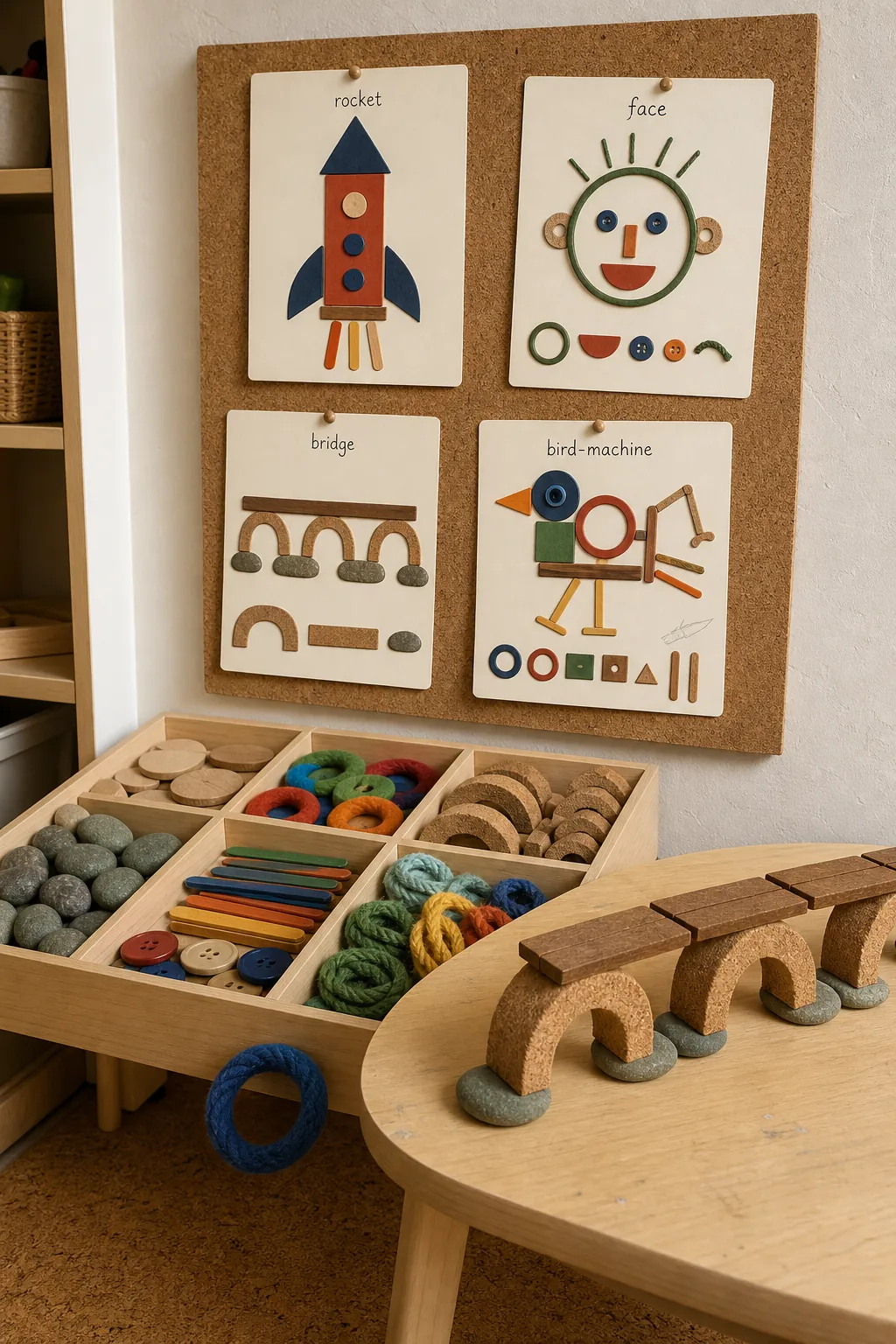
Print a set of picture “recipes” made from circles, arches, triangles, and sticks: a rocket, a face, a bridge, or something deliberately strange. Children can copy one with blocks and counters, then invent the next card. This is one of the rare educational prints that can sit beside construction toys without prescribing a single correct result.
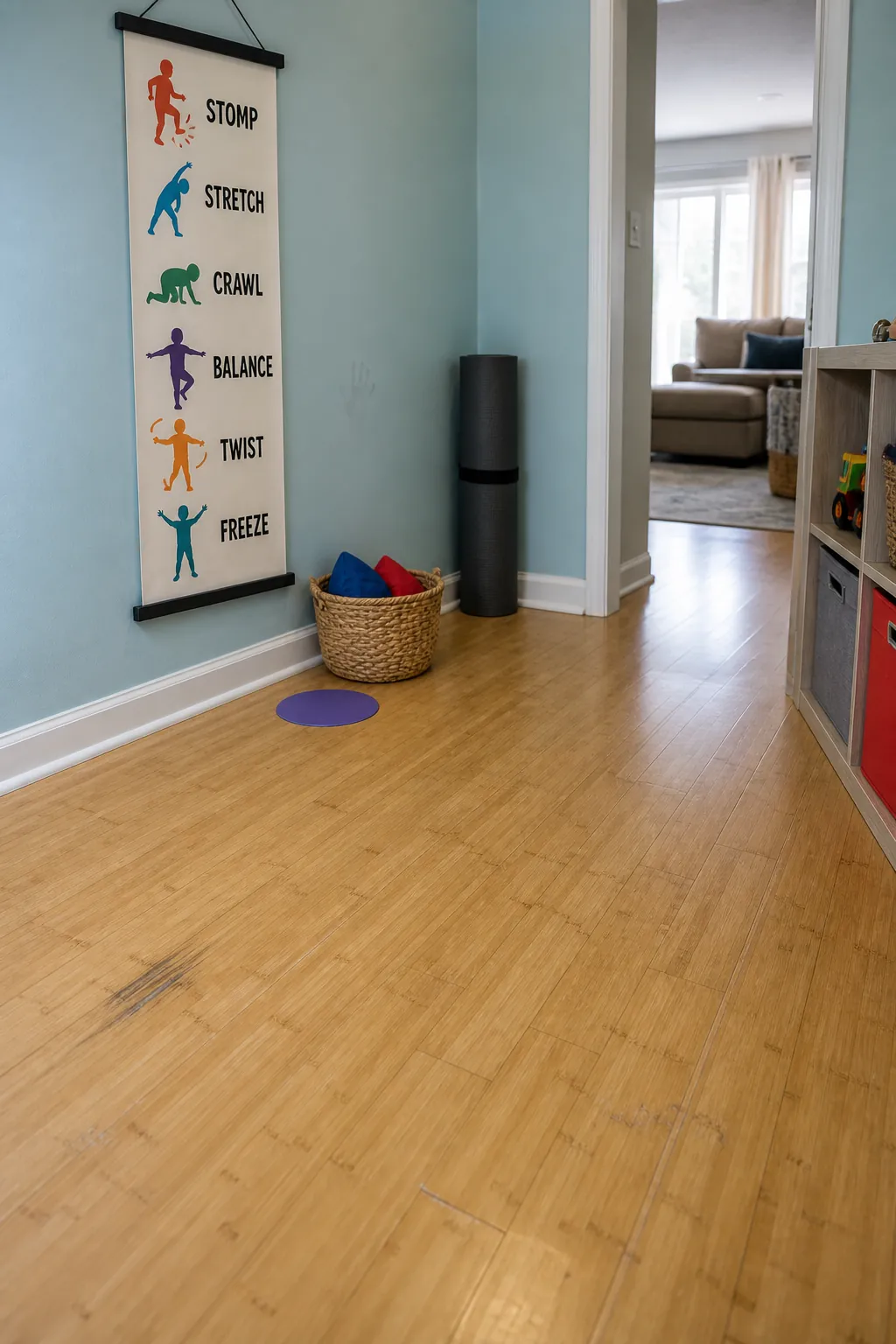
An Action-Verb Movement Strip
Skip the long exercise chart. Use six vigorous words—stomp, stretch, crawl, balance, twist, freeze—with one clear silhouette for each. Hang the strip beside uncluttered floor, not behind a shelf. A child can point, perform, and call the next move, turning a narrow printable into a quick rainy-day game.
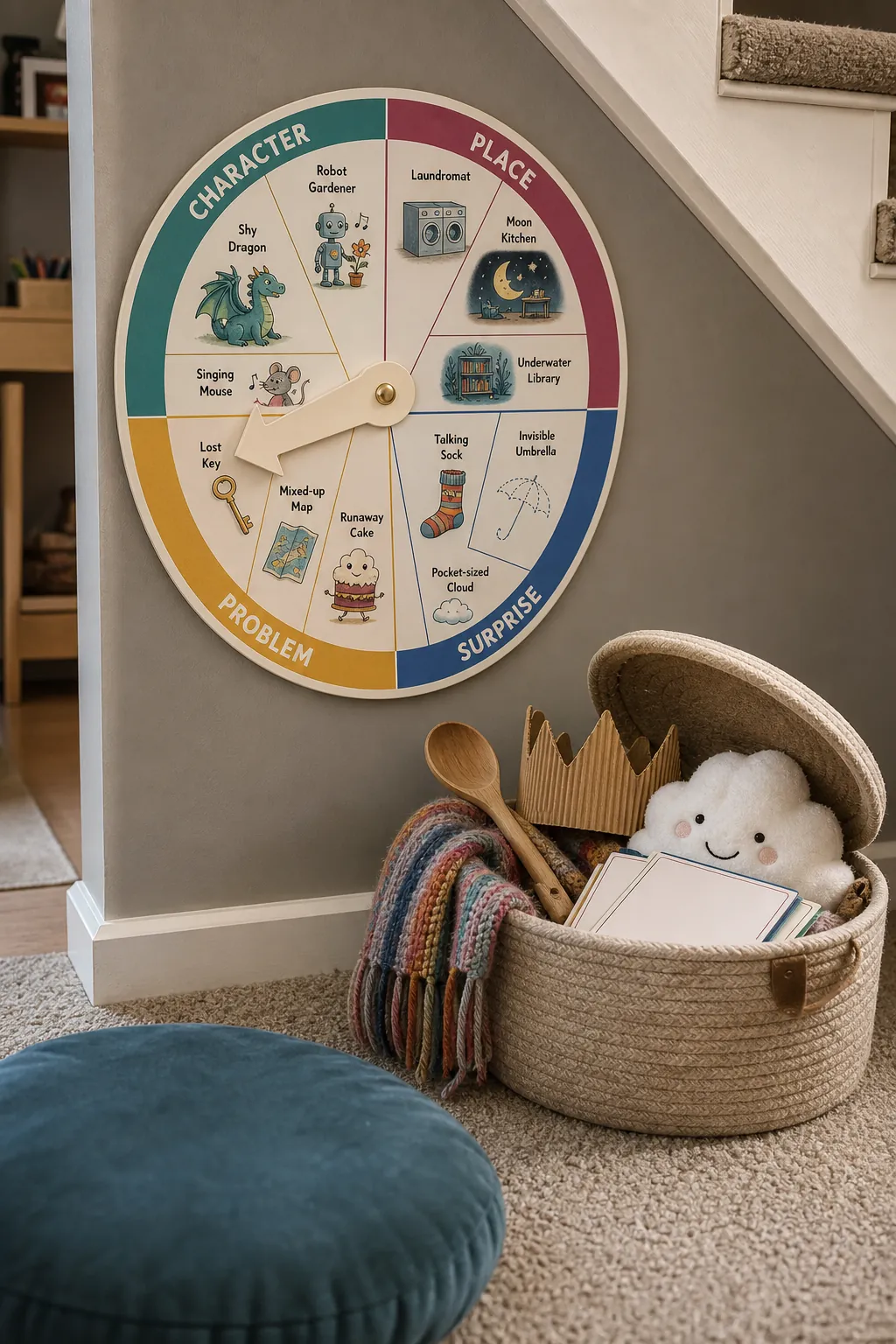
A Story-Starter Spinner
Divide a printable wheel into character, place, problem, and surprising object. Add a simple paper arrow with a safe brass fastener, or let children close their eyes and point. “A shy dragon, at a laundromat, loses a key, with a talking sock” is more useful than a generic imagination quote because it starts the story for them.
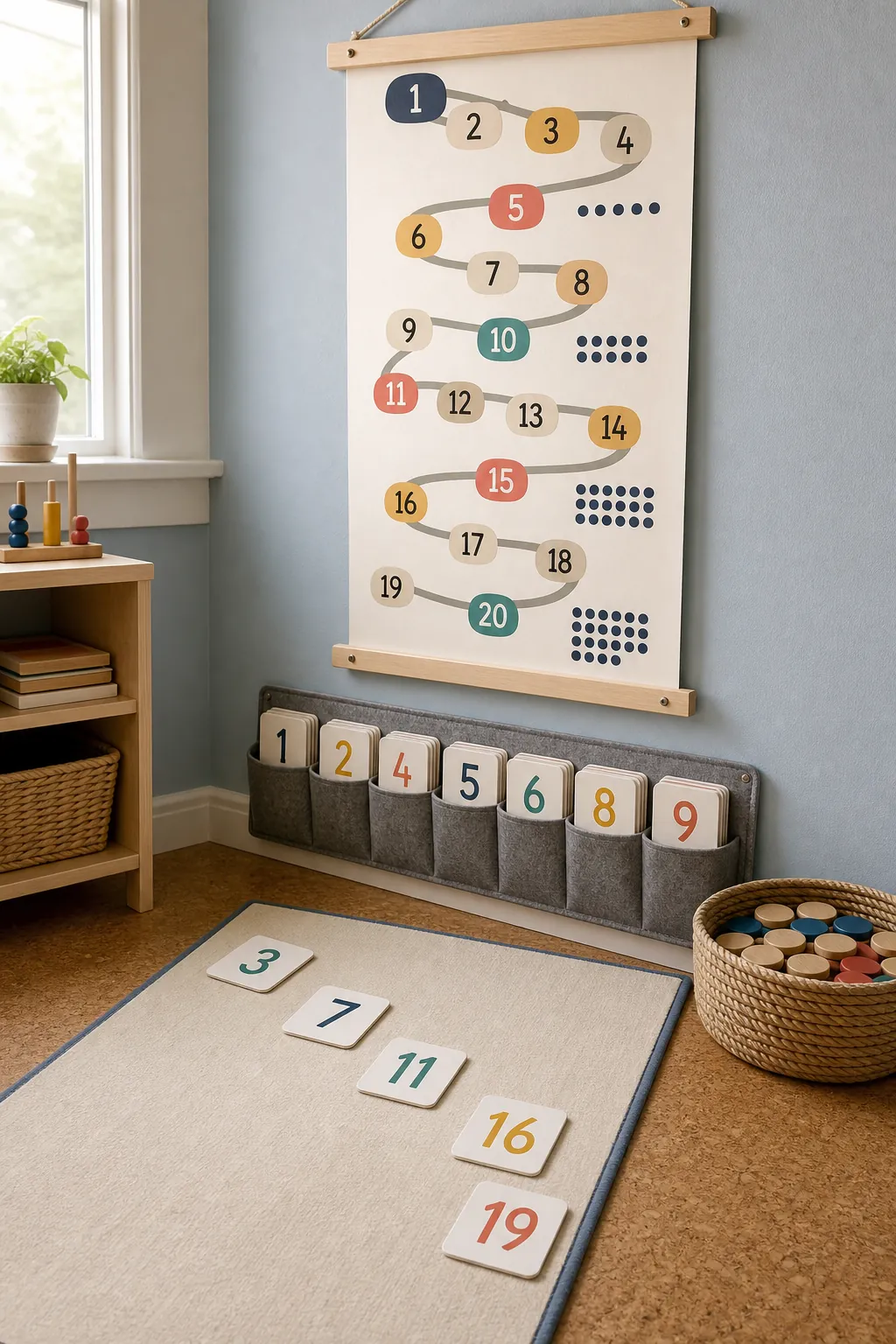
A Floor-to-Wall Number Trail
Create a printable number path from one to twenty using footprints, stepping stones, or train cars. Mount the main chart low and keep separate laminated number cards in a basket for sequencing games. Children can rebuild the line, hide one number, or match small object groups to the correct card.
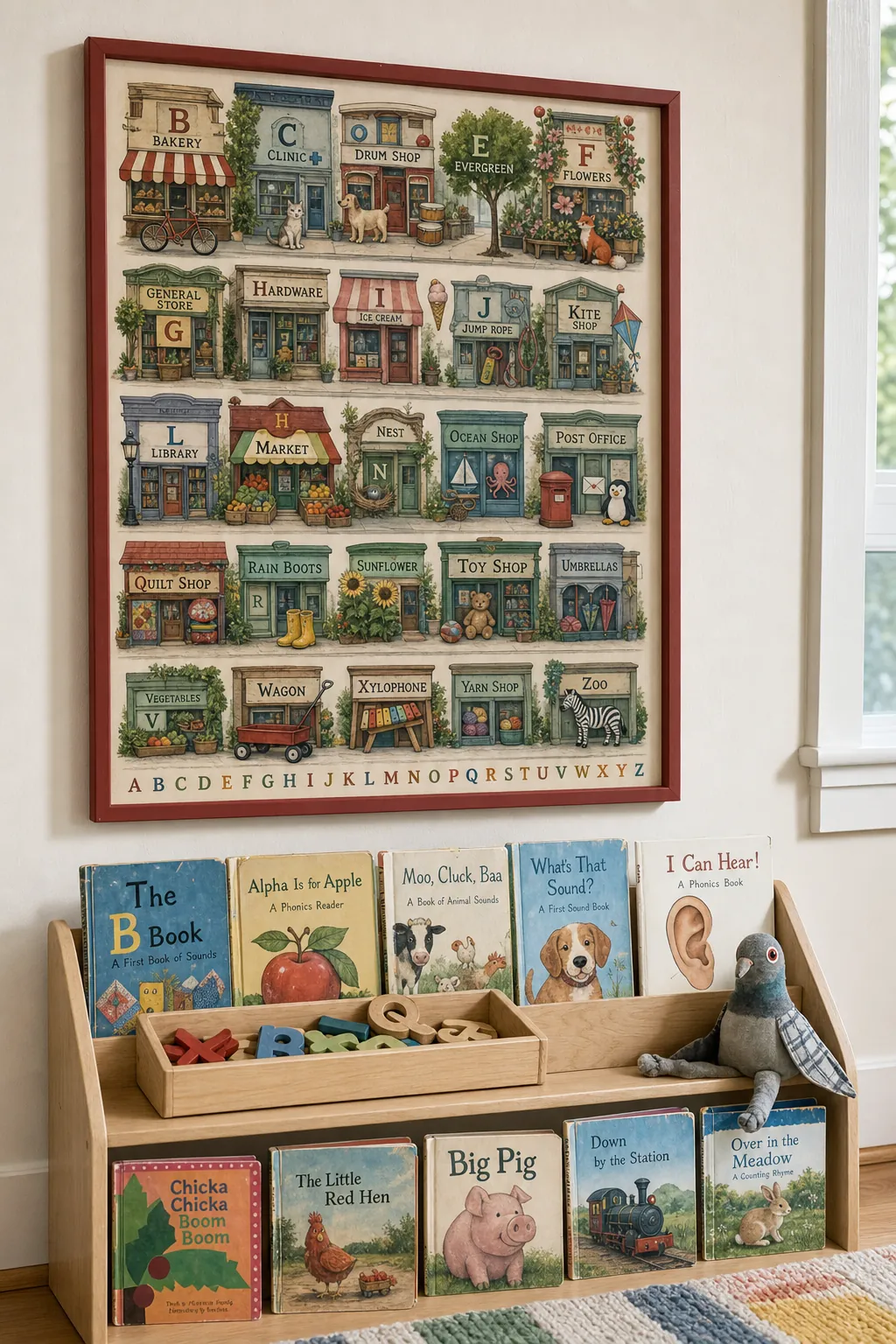
An Alphabet Sound Neighborhood
Rework alphabet wall art as a lively street where each storefront begins with a different sound: bakery, clinic, drum shop, flower stand, and so on. The scene encourages searching and conversation instead of reciting a rigid row. Keep letters large, objects recognizable, and the visual field organized enough that a child can succeed.
A Find-the-Color Scavenger Chart
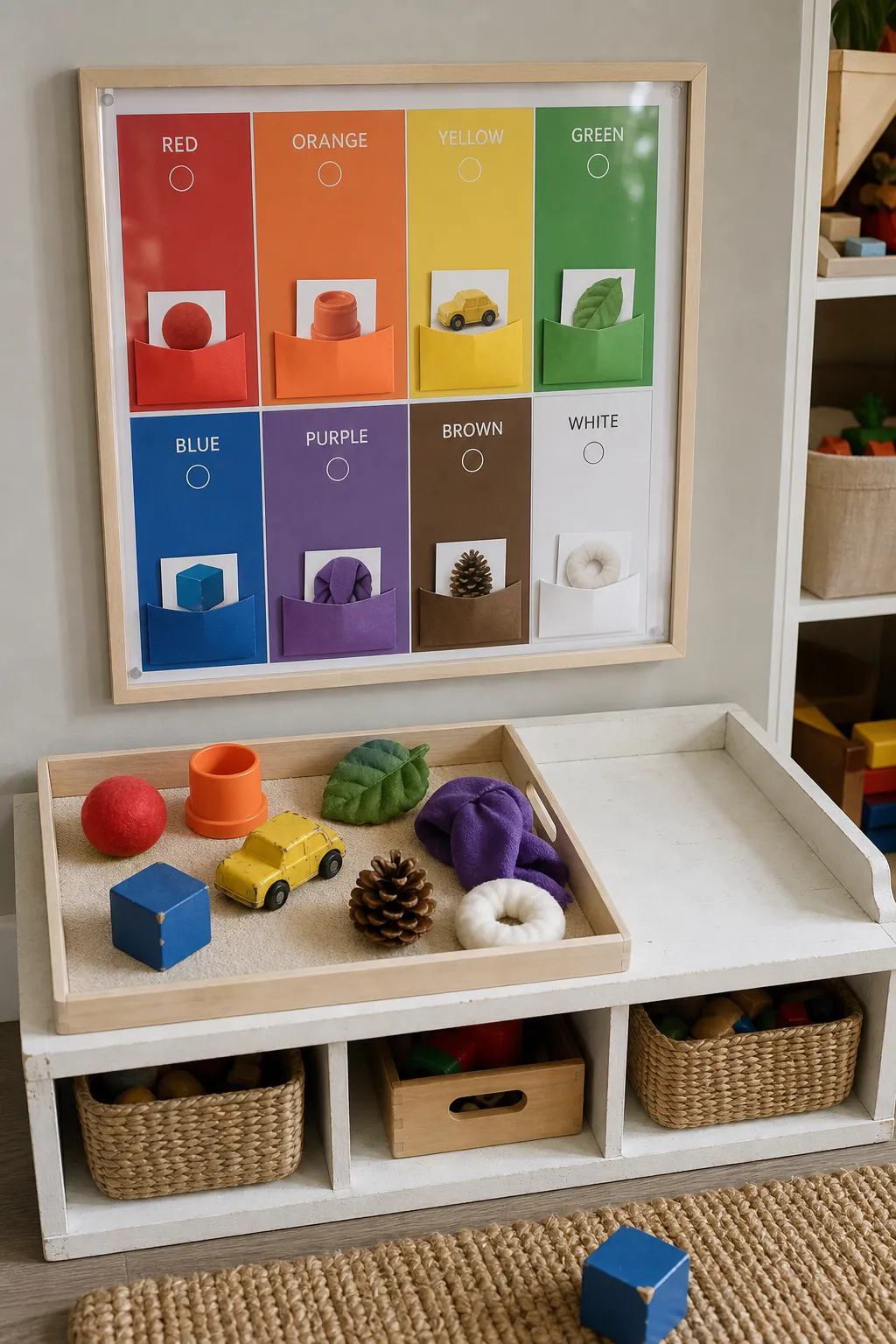
A good color chart sends children back into the room. Give each color a pocket or reusable check space and ask them to find one safe object that matches. Change the challenge to warm colors, cool colors, or light and dark versions. The print becomes observation practice, and ordinary toys supply the answers.
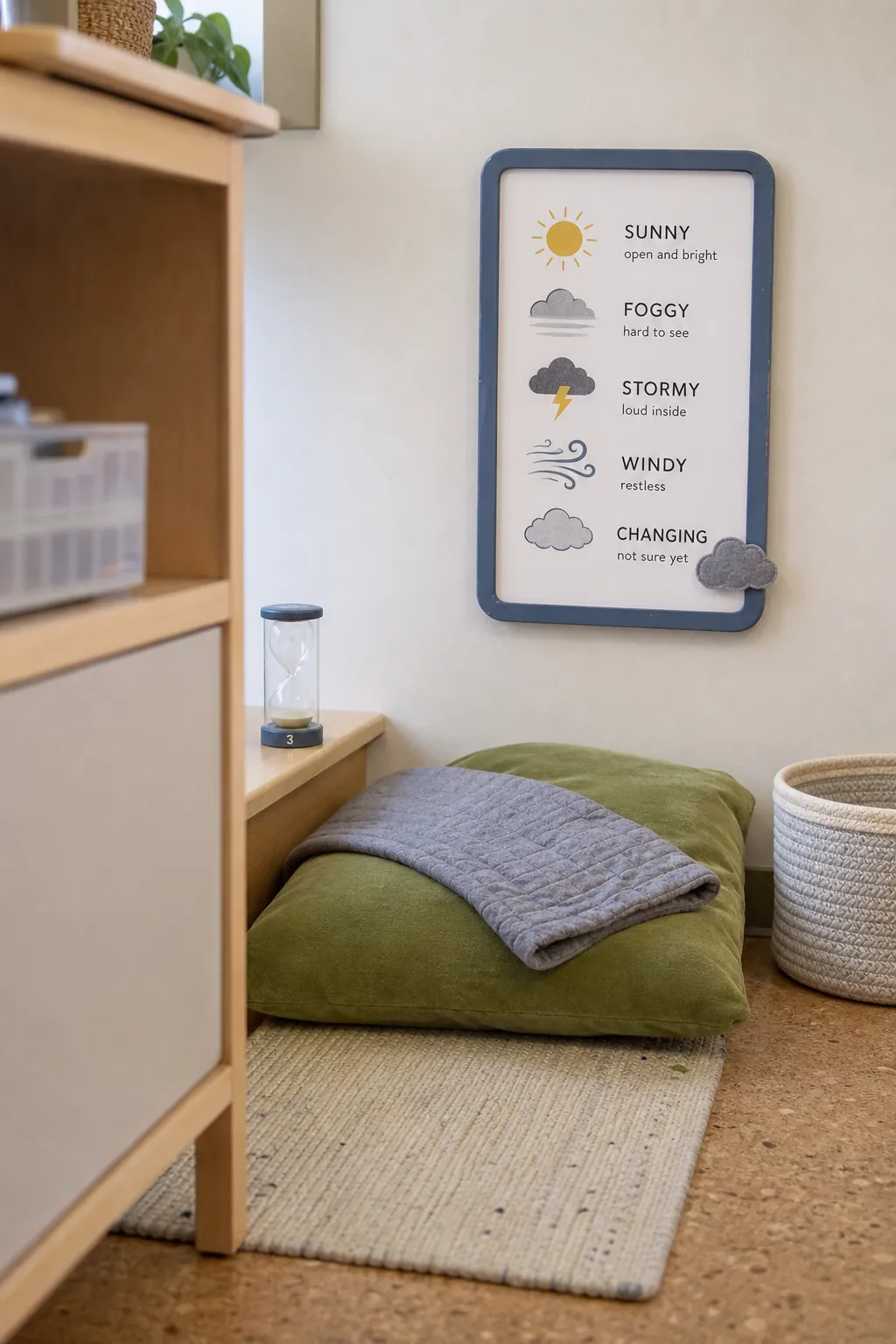
A Feelings Weather Station
Let children move a small marker among sunny, foggy, stormy, windy, and changing. Weather gives them useful distance from a feeling without requiring a perfect emotional vocabulary. Keep the chart optional and matter-of-fact; it should invite a check-in, not demand that a child perform happiness for the room.
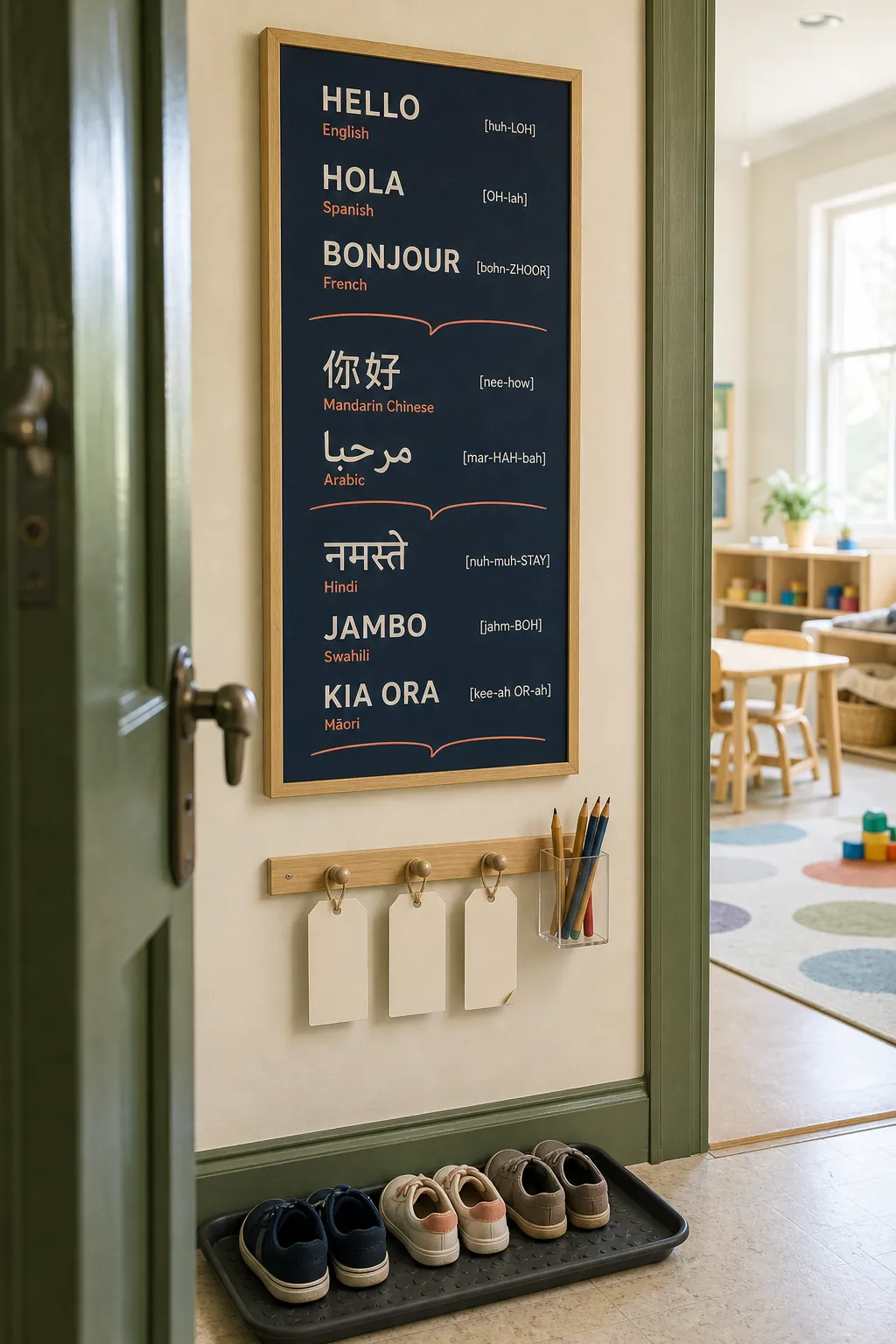
A Hello-in-Many-Languages Door Print
Choose greetings connected to your family, friends, school, and neighborhood rather than filling the page with languages no one can identify. Pair each written greeting with a simple pronunciation guide verified by a fluent source. Place the print at the playroom entrance, where the message—everyone is welcome—has a real spatial purpose.
A Shadow-Puppet Character Set
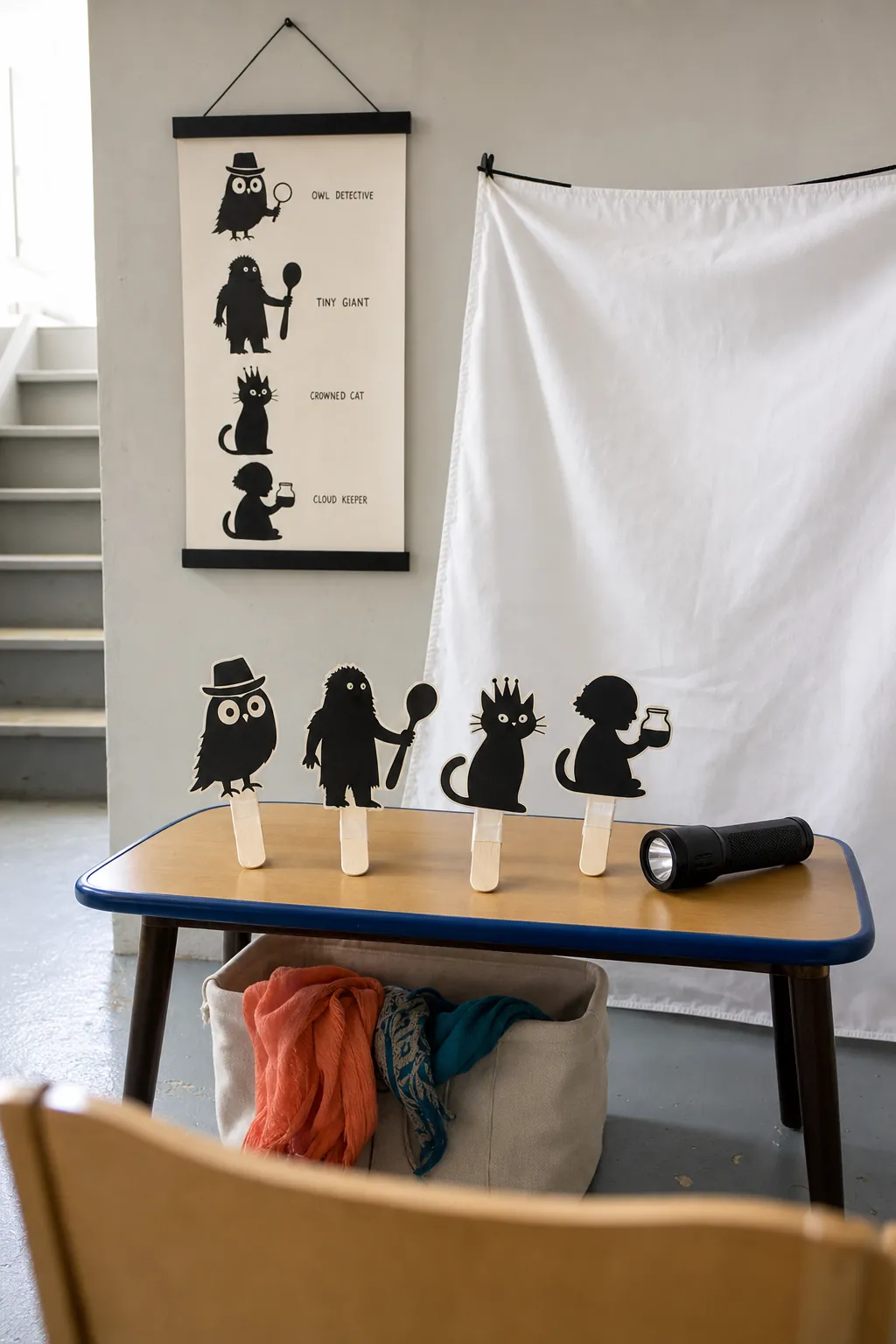
Print high-contrast character silhouettes—an owl detective, a tiny giant, a crowned cat, a cloud keeper—and include cutout versions on a second sheet. Tape the paper puppets to craft sticks and shine a flashlight across a blank wall. Here, the framed example stores the cast while the duplicate page drives the play.
A Build-a-Town Planning Map
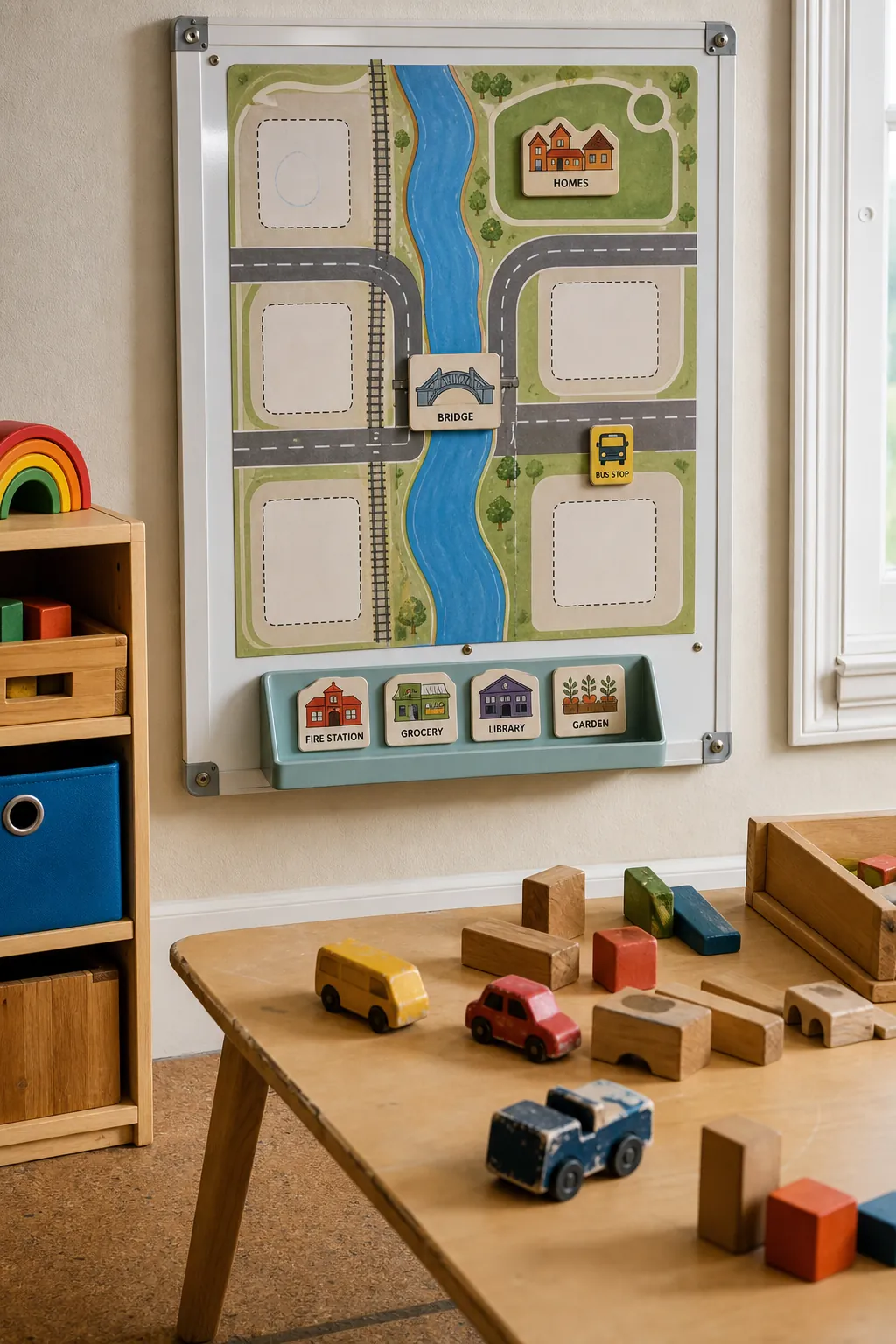
Use a simple overhead map with a river, two roads, a park, and several empty lots. Children decide where to add a fire station, homes, a grocery shop, or a bridge using removable paper tokens. The blank spaces are the point: unlike a finished decorative map, this one makes room for negotiation and rebuilding.
A Clap-and-Tap Rhythm Pattern
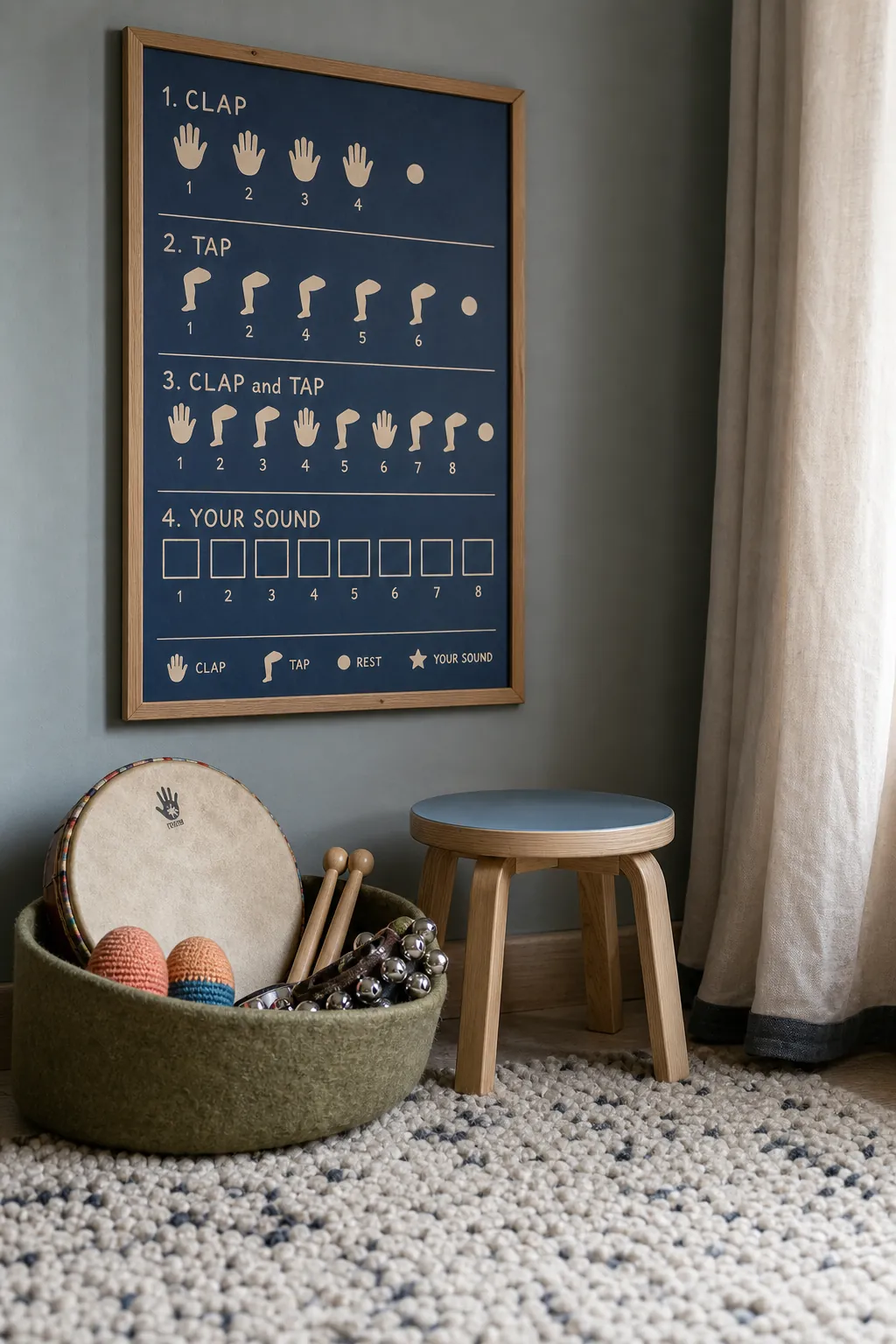
Translate rhythm into big readable symbols: hands for clap, knees for tap, a dot for rest, and a star for make-your-own sound. Start with short sequences that children can master, then leave an empty strip for their composition. Hang it near instruments, but keep the direct sightline above the table visually quiet.
A Life-Size Animal Comparison
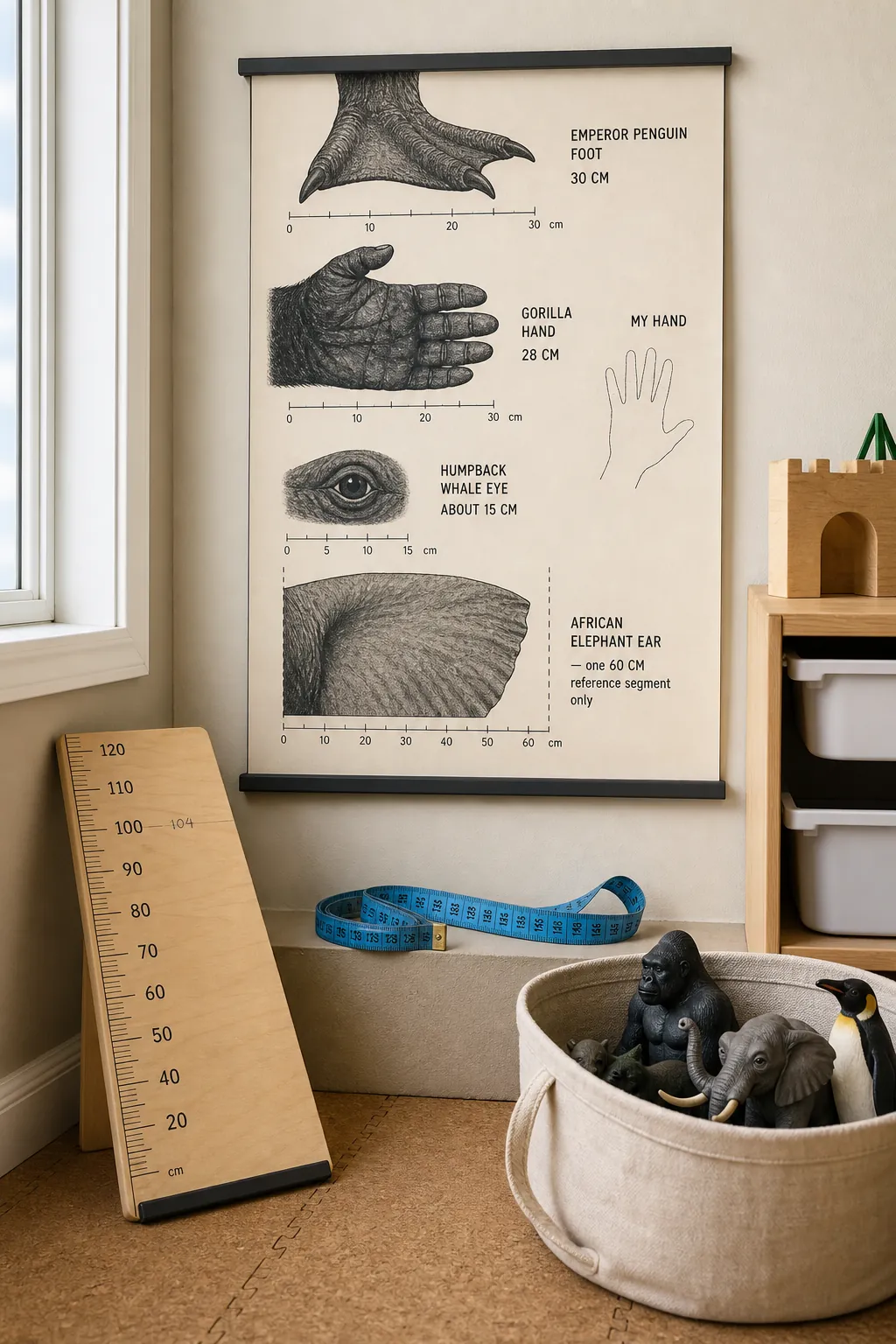
Some animal facts are best understood at actual scale. Print a life-size emperor-penguin foot, elephant ear segment, whale eye, or gorilla hand beside a child’s hand outline. Label dimensions clearly and avoid implying the whole animal fits on the page. The comparison delivers wonder without a busy wildlife collage.
A Nature-Table Identification Sheet
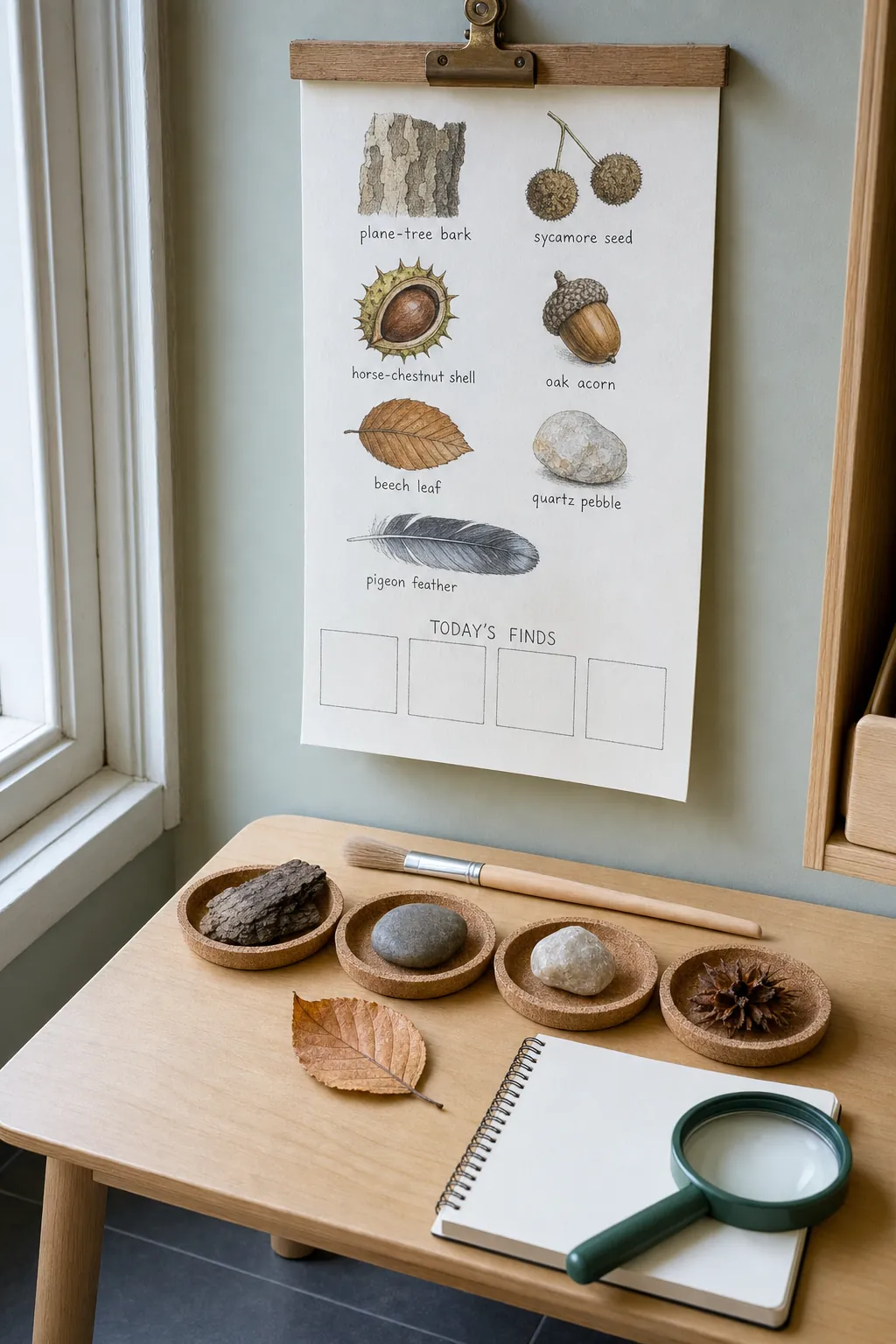
Place a local specimen sheet behind a nature table with spaces for bark, seedpods, safe stones, and fallen leaves. Photograph or draw only things children might genuinely find nearby. A few rotating objects plus one precise reference sheet feel more purposeful than filling the wall with generic woodland imagery.
A Cooperative-Play Picture Guide
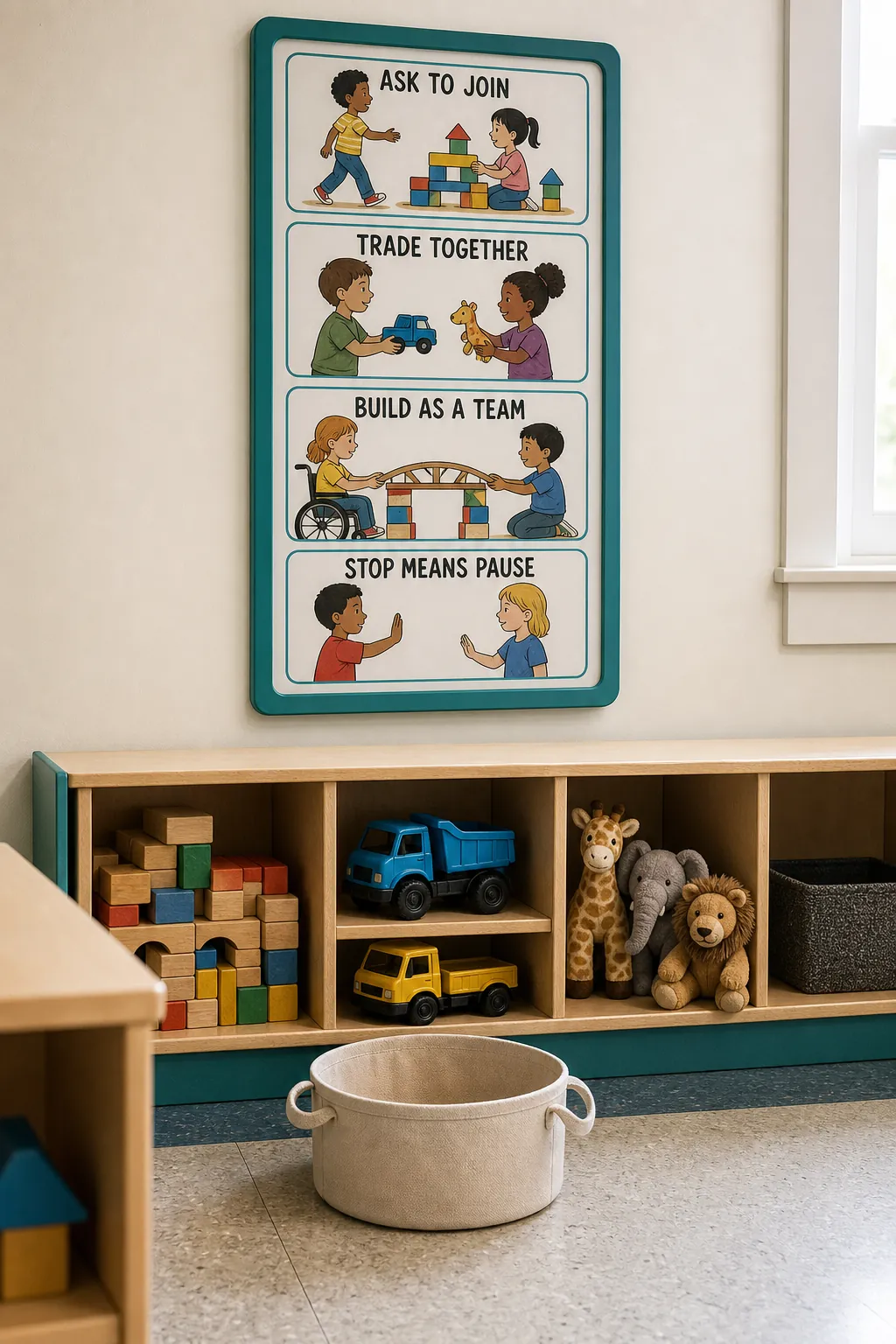
Replace a wall of prohibitions with four concrete illustrations: ask to join, trade with agreement, build together, and pause when someone says stop. Use few words and show children solving ordinary block and pretend-play conflicts. The guide works best near shared toys, where adults can point to a specific option in the moment.
A Family Play Timeline
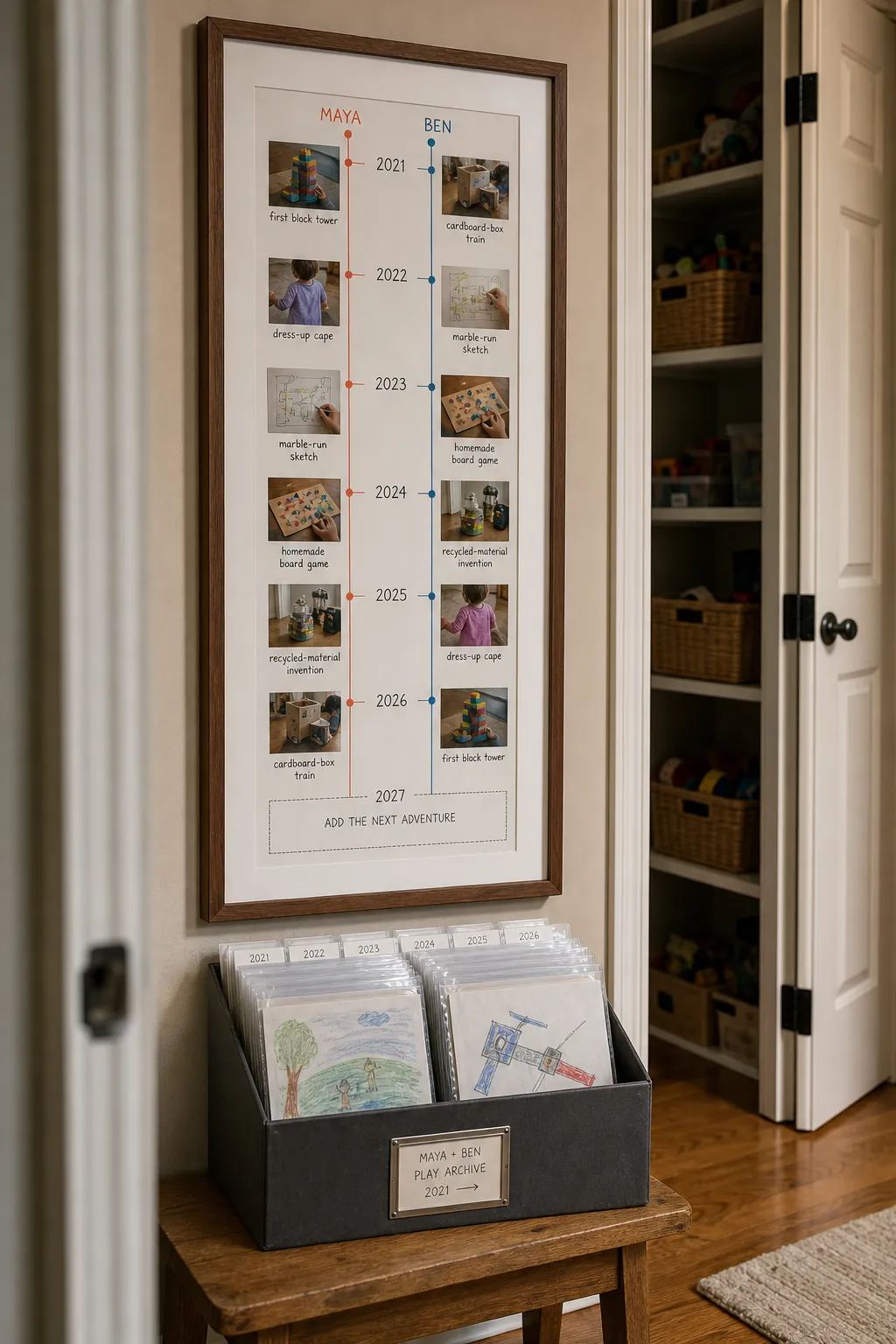
Build a horizontal printable timeline with one photo or drawing from each year: first blocks, first costume, favorite game, latest invention. Let siblings contribute parallel rows rather than competing for one “best” moment. A clear date and short caption matter more than decorative embellishment, and the timeline can expand annually.
A Rotating Weekly Challenge Poster
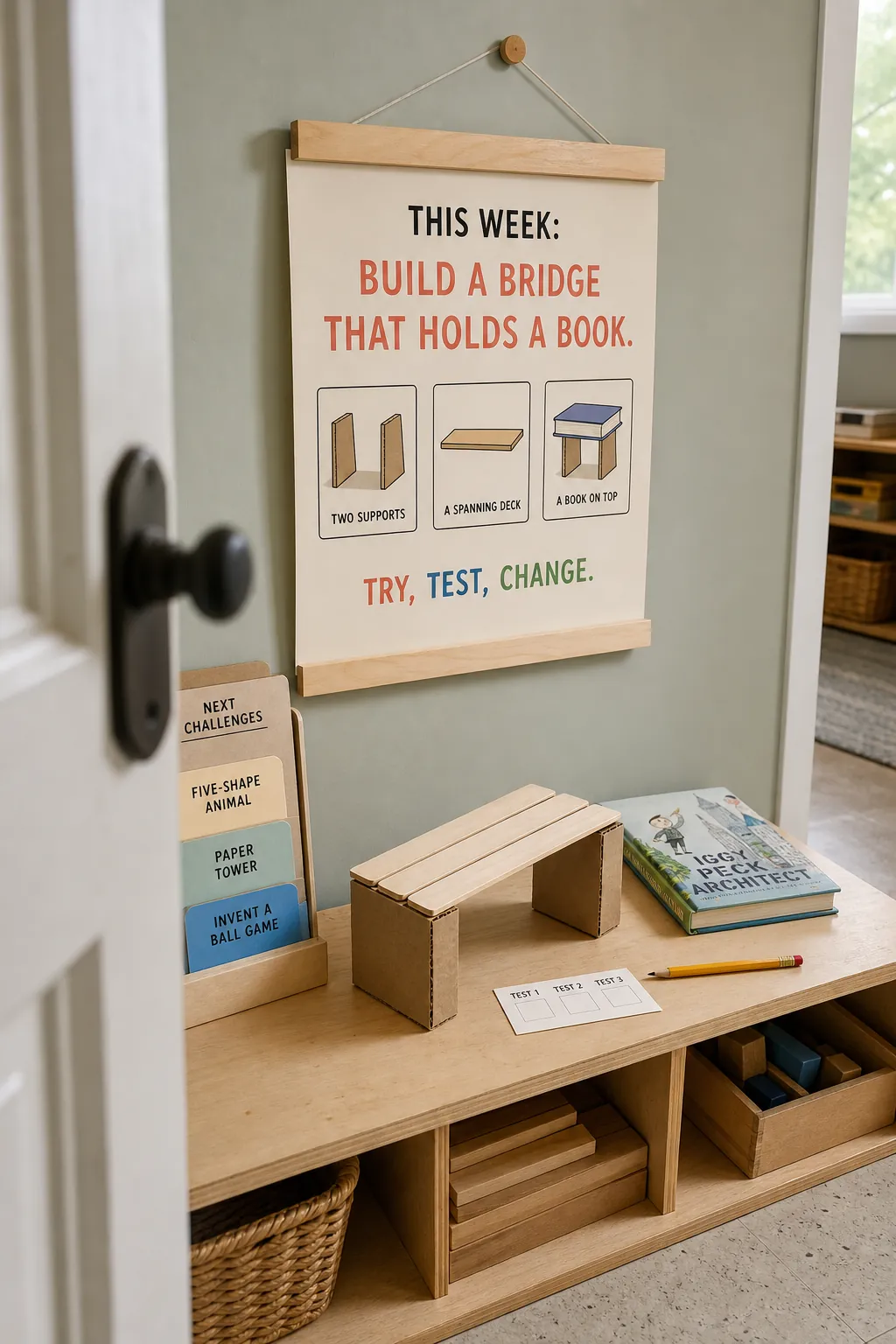
End with a display that changes more often than the toys: build the tallest paper tower, create an animal from five shapes, make a bridge for a book, or invent a game with one ball. Slide one challenge into a magnetic hanger and store the rest in a folder. The best children art prints do not finish the playroom; they keep giving children a reason to begin.