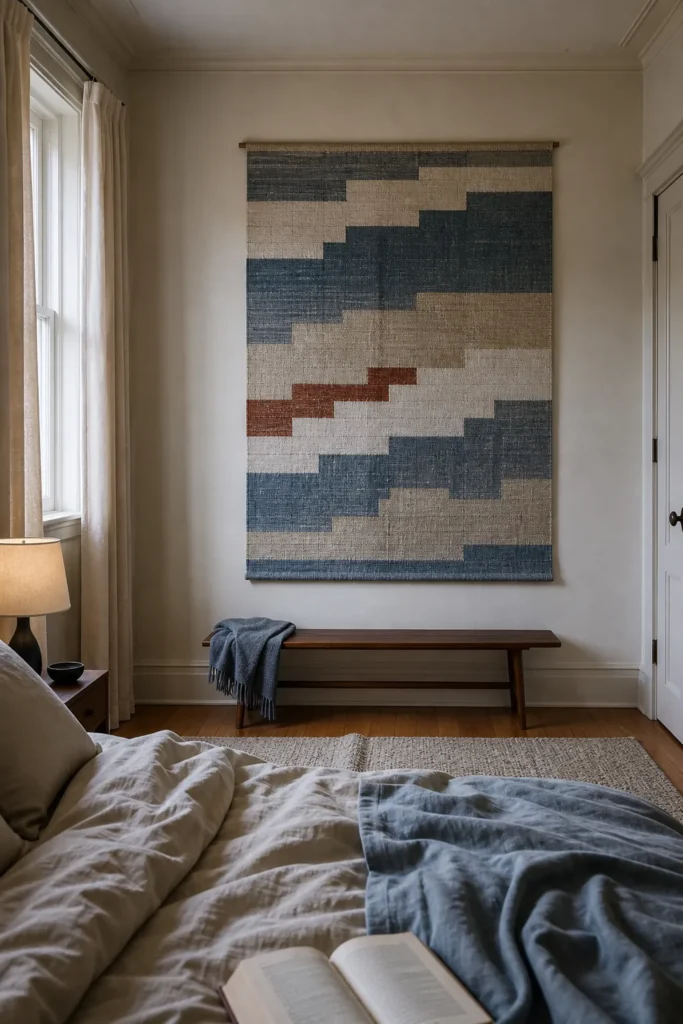
Bedroom Wall Decor Ideas for a Blank Wall Opposite the Bed
The blank wall opposite your bed is not just leftover space. It is the first large surface you see in the morning and the visual endpoint of the room at night. That makes it more influential than a side wall—and easier to overdecorate.
The best solution is rarely “add as much as possible.” It is to decide whether this wall should calm the room, add useful storage, reflect more light, or show something personal. Once it has one clear job, choosing the right bedroom wall decor becomes much simpler.
Decide What the Wall Needs to Do
Before shopping, sit against your pillows and look straight ahead. What bothers you: emptiness, poor proportion, clutter elsewhere, low light, or a lack of personality? The answer should determine the treatment.
- If the room feels visually unfinished: choose one large piece of art or a controlled gallery grid.
- If storage is the real problem: use a low dresser or shallow console, then anchor it with art.
- If the room feels dark or narrow: try an offset mirror that reflects a window or an attractive corner.
- If you already have enough furniture: add texture with paint or removable wallcovering instead of another object.
- If the bed wall is already dramatic: leave the opposite wall quiet. Negative space can be the correct design choice.
Use painter’s tape to mark the proposed footprint before buying anything. View the outline from the doorway, from the bed, and while walking between the bed and wall. This catches undersized art and oversized furniture faster than guessing from a product photo.
Anchor the View With One Oversized Artwork
A single substantial artwork is the safest answer when you want the wall to feel finished but not busy. It creates one calm focal point, avoids the visual noise of many small frames, and works even when you do not need furniture below it.
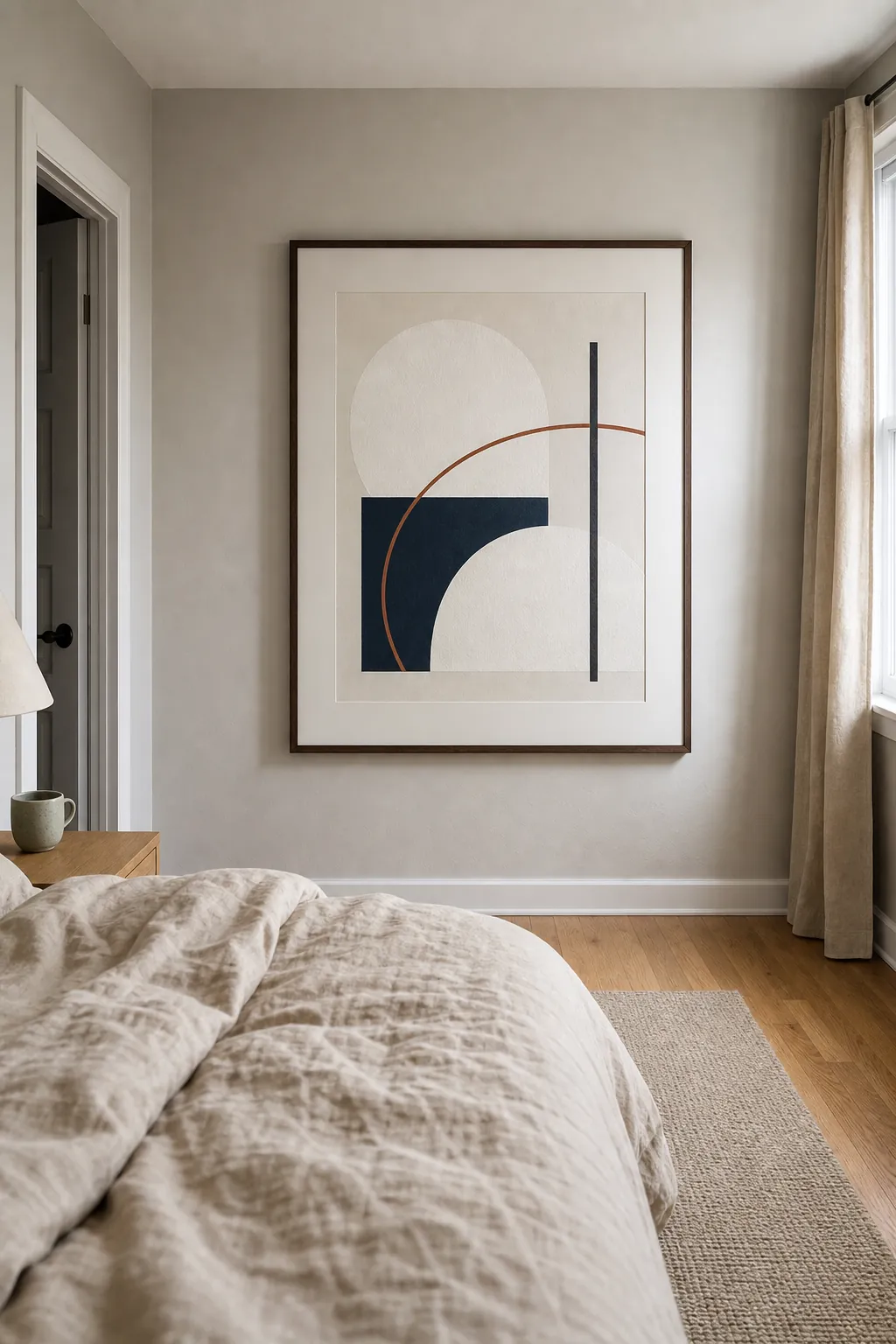
Scale matters more than the subject. For a completely open wall, a useful starting point is to let the artwork occupy roughly 60 to 75 percent of the usable wall width. If it hangs above a dresser or console, make the art or art grouping about two-thirds the width of that furniture. The exact number can flex, but the piece should look connected to the wall beneath it—not like a small frame floating in empty space.
Choose imagery you are comfortable seeing at the start and end of every day. Soft geometric forms, a restrained botanical study, a charcoal line drawing, or a tactile abstract can add interest without energizing the room too much. Repeat one color already present in the bedding or rug so the artwork feels intentional.
Hang it at normal viewing height rather than pushing it toward the ceiling. A center point near eye level is a sensible starting place, but test the composition from bed: a low bed and a close opposite wall may call for a slightly lower placement than a spacious primary bedroom.
Build a Low Dresser-and-Art Composition
If clothes, linens, or charging cables are causing clutter elsewhere, the wall can earn its footprint with a low dresser. The key word is low. A wide, grounded piece preserves open space above it and keeps the wall from feeling like a second wardrobe.
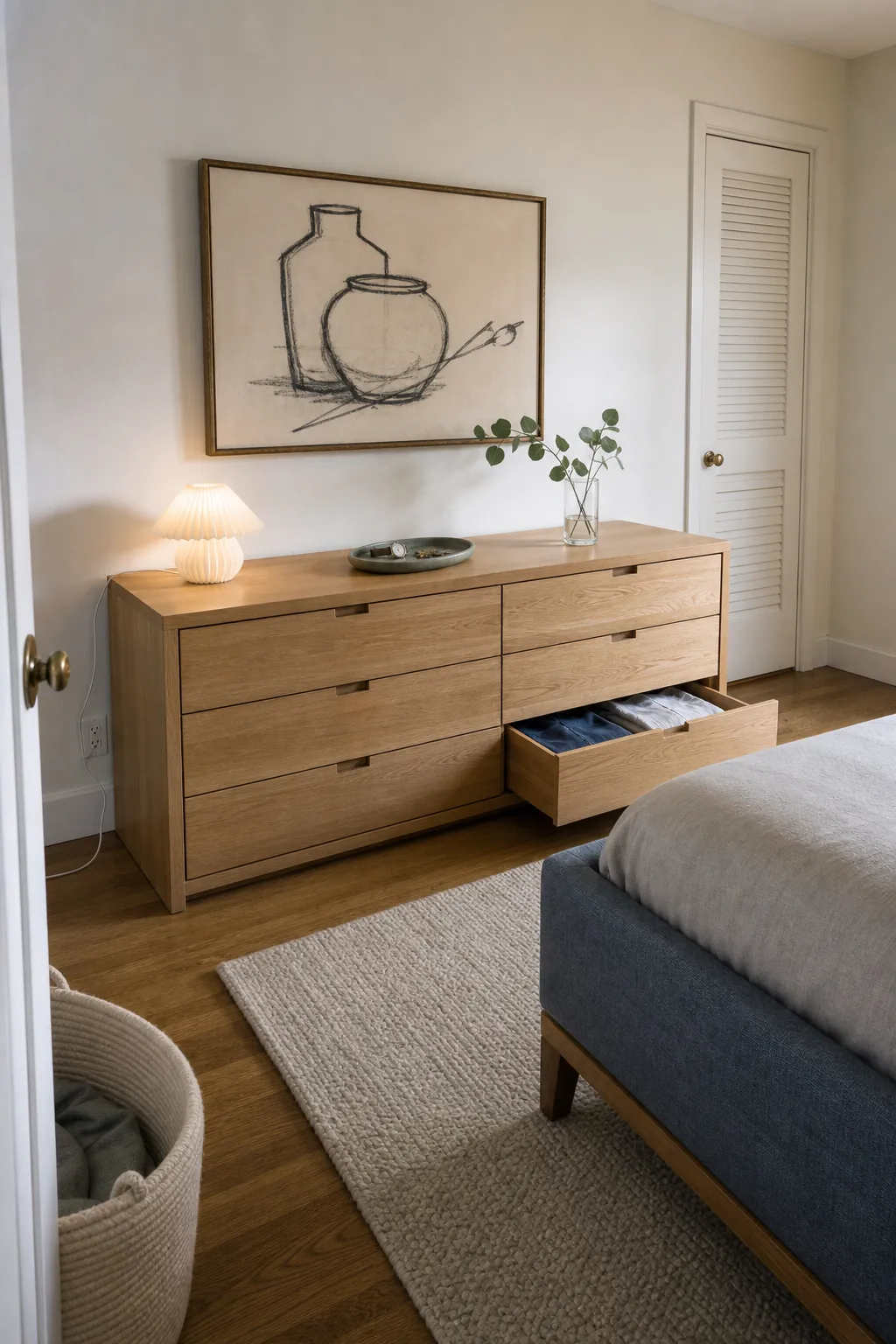
Measure the circulation zone before committing. Aim for about 30 to 36 inches of clear passage between the foot of the bed and the closed dresser when the room allows. Then open the deepest drawer and stand where you would naturally use it. A dresser that technically fits but forces you sideways every morning is not a good solution.
Keep the styling edited: one artwork or pair of prints, a small lamp, and one low object such as a tray or ceramic bowl. Let at least a third of the dresser top remain empty. If a television is necessary, treat it as one dark rectangle in the composition rather than surrounding it with many tiny accessories; if you do not want a bedroom TV, do not add one merely because the wall faces the bed.
Use a Restrained Gallery Grid for Personal Art
A gallery wall works best here when it reads as one shape from across the room. Random frame sizes can feel restless from bed, so give the collection a structure: a two-by-three grid, a centered row of four, or matching frames with consistent mats.
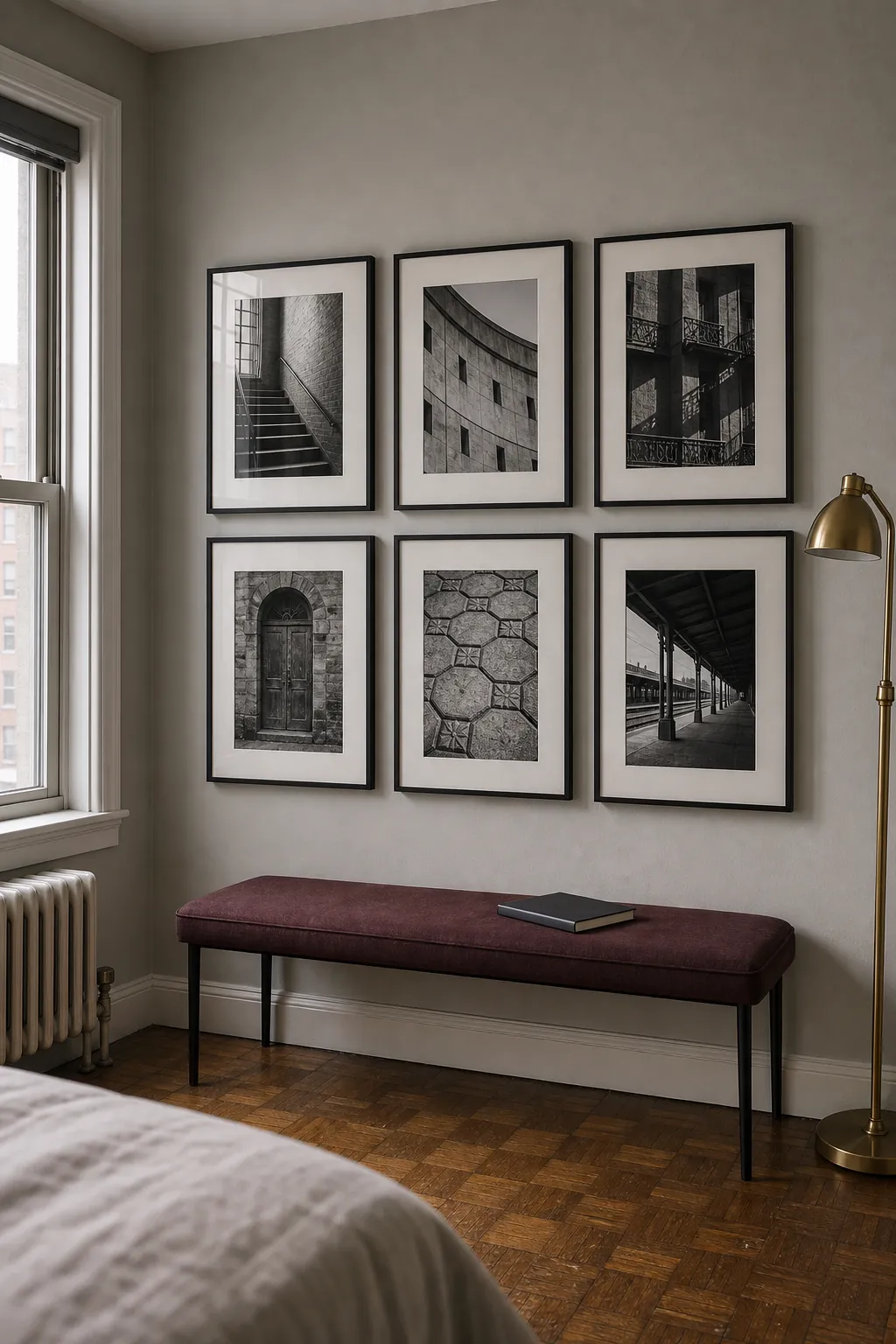
The content can still be personal—travel photographs, family moments, small block prints, or collected sketches—but limit the visual variables. Use one frame finish, one mat color, and a narrow palette across the images. A consistent gap of roughly two to three inches helps separate the frames while preserving a unified outline.
Arrange the full grid on the floor first and photograph it. Then tape a paper template for each frame to the wall. This lets you correct the overall scale and spacing before making holes. For renters, lightweight frames may work with rated removable strips, but follow the strip manufacturer’s surface, weight, and removal instructions rather than assuming every painted wall is compatible.
Create a Flexible Display With a Slim Picture Ledge
A picture ledge suits anyone who likes to rotate prints but dislikes rehanging a full gallery. One long ledge can visually widen the wall; two short offset ledges create a looser composition. Because the frames overlap slightly, a small collection feels fuller without covering every inch of wall.
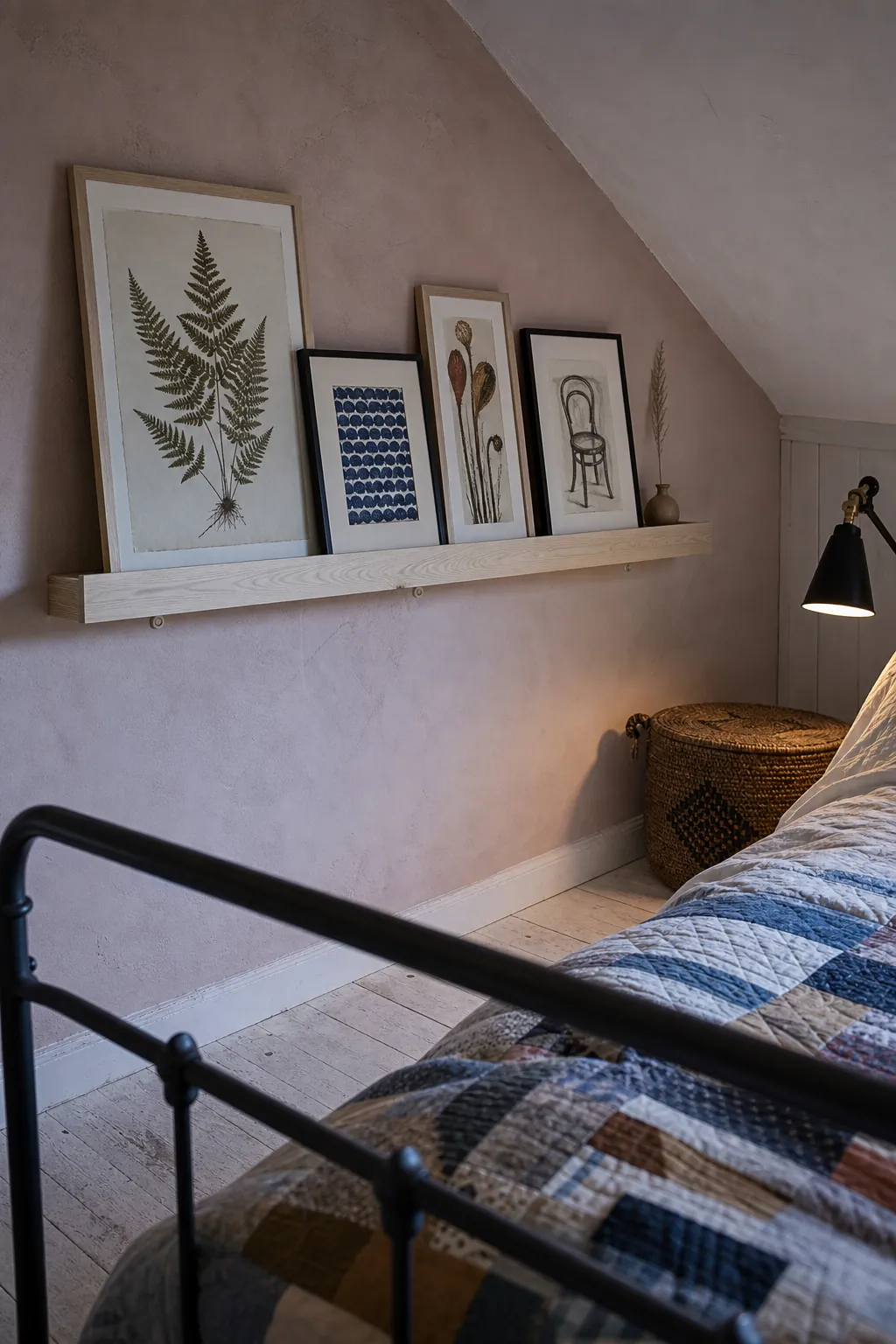
Keep the shelf shallow and mount it where nobody can brush against a corner while walking around the bed. Use frame retainers or the ledge’s front lip, and avoid heavy objects that could fall. This is a display surface, not an excuse to store books, candles, trailing cords, and unrelated decor at eye level.
For a quiet bedroom focal wall, combine one larger print with two smaller pieces and repeat a material from the room—perhaps pale oak from the nightstands or matte black from the curtain rod. The asymmetry adds character while the shared frame finish keeps it controlled.
Offset a Full-Length Mirror to Avoid Glare
A mirror can make a dark bedroom feel brighter and gives the wall a practical purpose, but centered directly opposite the pillows it may reflect your movement, the doorway, a television, or early sunlight back at you. If that feels distracting, place a tall mirror to one side instead of treating it like centered artwork.
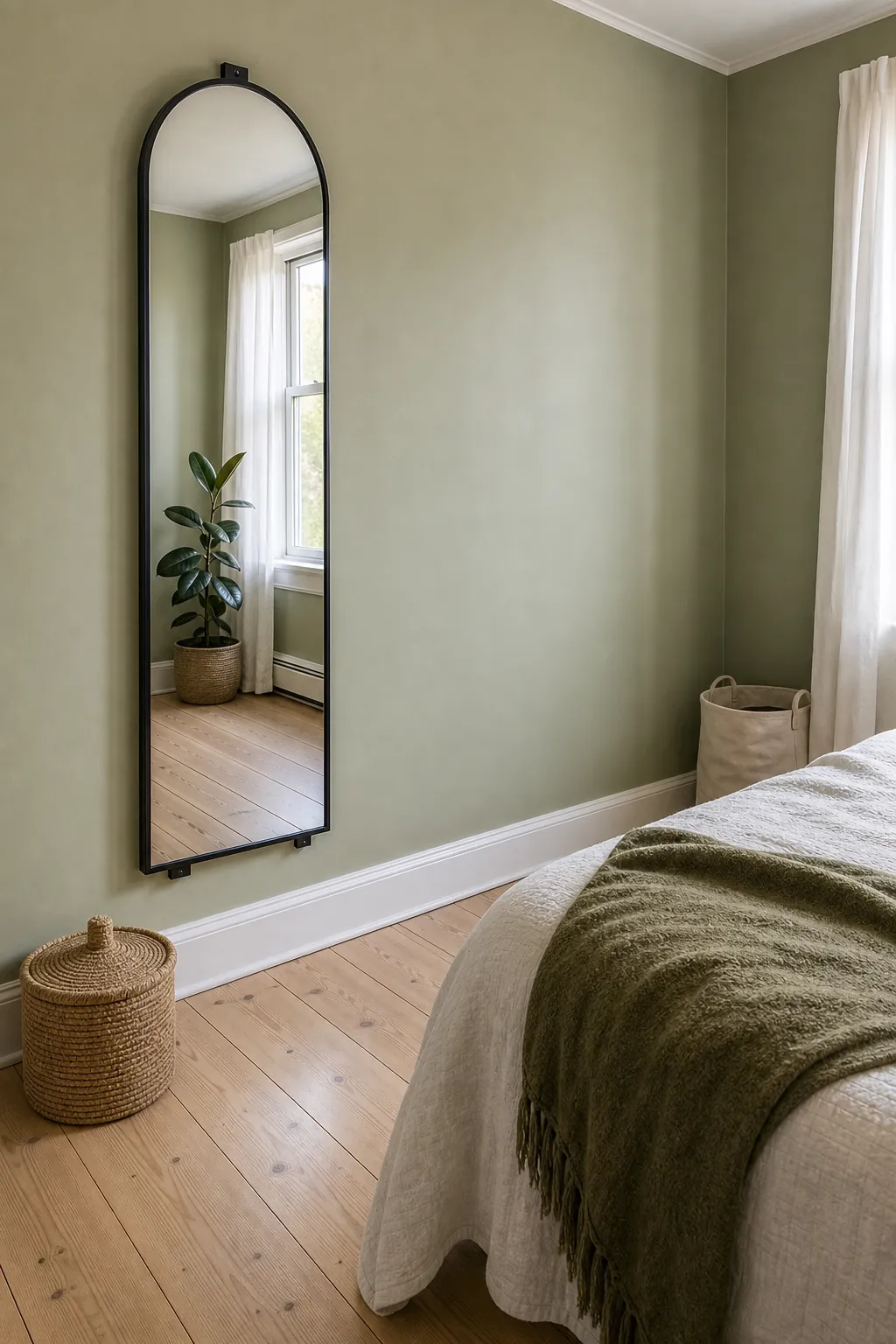
Test the reflection before mounting. Lean a temporary mirror in the proposed spot, lie down, and check it during daylight and after dark with bedside lamps on. The best angle reflects a window, plant, artwork, or softly lit corner—not an open bathroom door, a cluttered closet, or a bright light source.
A floor mirror needs proper anti-tip hardware, especially in a home with children or pets. A wall-mounted version should use fixings suitable for the wall construction and mirror weight. Choose a simple wood, black metal, or antiqued brass frame that relates to other finishes in the room so the reflective surface does not feel cold.
Add Depth With Paint or a Textured Wallcovering
When the room already has enough objects, change the surface instead. A muted color block, limewash-style finish, narrow molding, or grasscloth-look wallcovering can give a large bedroom wall presence without reducing floor space.
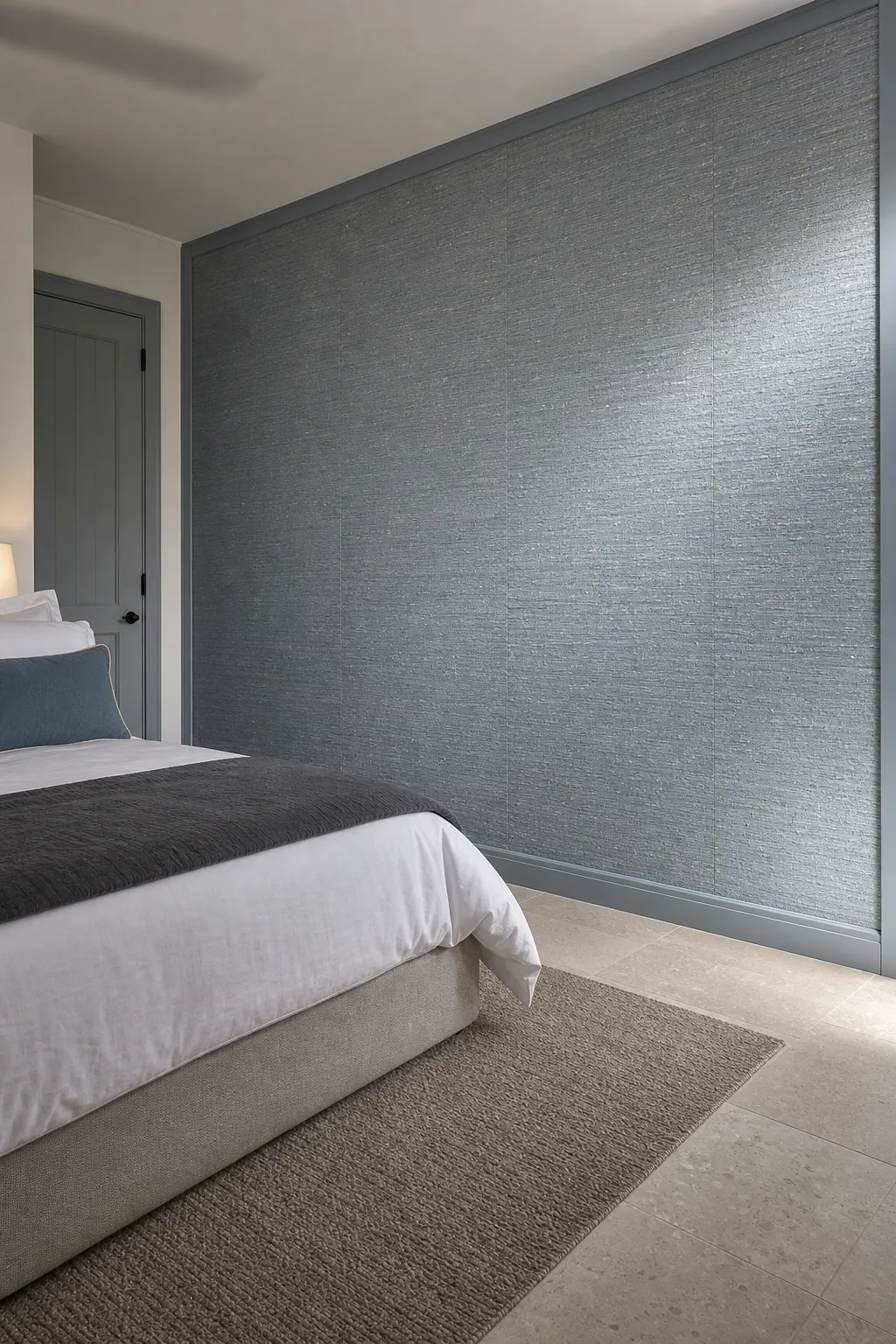
This approach is especially useful when the wall is wide but the walkway is shallow. Use a restrained pattern or texture because you will see it from bed at close range. Low-contrast stripes can visually stretch a narrow room; a soft woven texture brings warmth; a darker painted rectangle can frame a dresser without covering the entire wall.
Renters can look for removable products approved for their wall finish, but “peel and stick” does not mean risk-free. Test a sample in an inconspicuous area, check it after several days, and follow the removal directions. Humidity, fresh paint, textured drywall, and weak paint adhesion can all change the result.
Know When an Empty Wall Is the Better Choice
You do not have to fill every bedroom wall. Leave this one mostly blank if the headboard wall already carries wallpaper, large art, sculptural lighting, or a strong architectural feature. Two competing focal walls can make a room feel smaller and less restful.
Blank space also helps when the passage at the foot of the bed is tight. Instead of forcing in a console or leaning mirror, paint the wall the same color as the trim for a finished envelope, or add one small, deliberate object off-center near the doorway. Intentional emptiness looks calm; undersized filler looks accidental.
Make the Final Choice in Ten Minutes
- Photograph the wall straight on from the bed.
- Measure the wall, the distance from the bed, and any dresser with its drawers open.
- Choose one job: calm focal point, storage, reflection, personality, or texture.
- Tape the full outer dimensions of the idea on the wall.
- Remove one element from the plan before buying. The wall should support rest, not become another display you have to manage.
For most blank walls opposite the bed, the strongest answer is one large artwork, a low and useful dresser composition, or a quiet surface treatment. Pick the option that solves a real problem in your room, get the scale right, and let the remaining space breathe.