Small Bedroom Wall Decor Ideas That Make the Room Feel Bigger
Wall decor can make a small bedroom feel bigger, but only when it reduces visual friction. Filling every empty patch with a frame, shelf, basket, or hanging plant usually has the opposite effect: your eye stops at each object, and the room feels chopped into smaller pieces.
The most effective small bedroom wall decor creates long sightlines, stronger verticals, more reflected light, and fewer separate edges. That may mean one large artwork instead of six small ones, a mirror placed for its reflection rather than symmetry, or a wall-mounted nightstand that reveals more floor.
Edit the Room Before Adding Anything
Start by photographing the bedroom from the doorway. In the photo, count the small visual interruptions: scattered frames, hooks, cords, objects on top of furniture, short curtains, storage boxes, and contrasting furniture edges. A compact room feels calmer when the eye can travel across larger uninterrupted areas.
Remove three wall or surface items before buying one new piece. Group necessary objects into a single zone rather than spreading them around the room. If you need storage, conceal it behind a drawer or door; open wall shelves full of tiny items may free a tabletop, but they do not reduce visual clutter.
Then identify the room’s strongest asset: a window, a high ceiling, a long wall, or a clear view from the door. Your wall treatment should extend that advantage. Decor cannot increase the square footage, but it can change how quickly your eye encounters a boundary.
Choose One Large Artwork Instead of Many Small Frames
Small rooms do not require tiny art. In fact, one generous piece often makes the wall—and therefore the room—feel more substantial. A cluster of undersized frames produces many borders and gaps, while a single large composition reads as one calm plane.
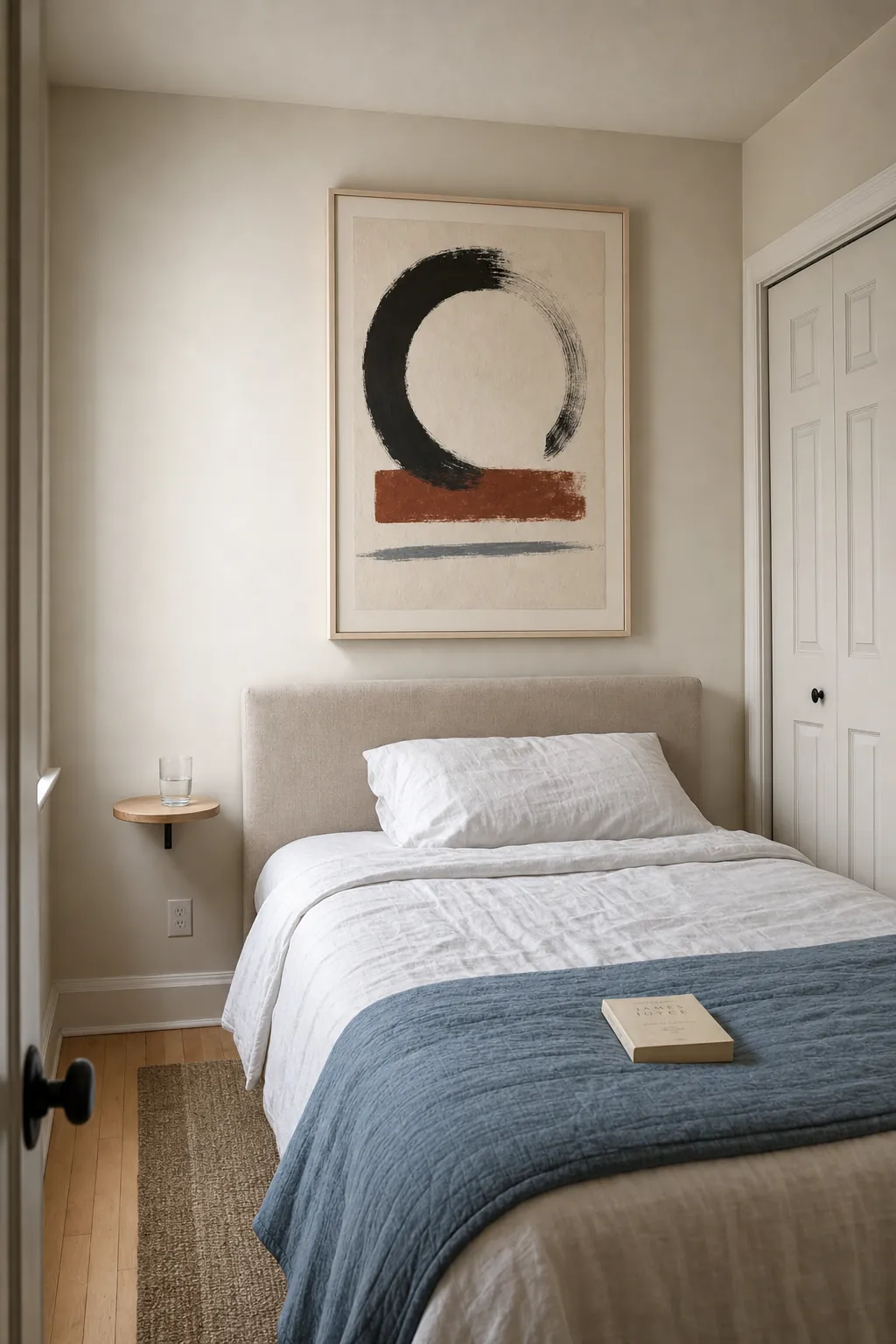
Above a bed or dresser, aim for art that spans roughly two-thirds of the furniture width as a starting point. On a narrow free wall, use one tall work that leaves a deliberate border of blank wall around it. The frame should be visually light—slim wood or metal, with a mat that relates to the wall color—so it does not create a heavy dark box.
Minimal does not have to mean bland. A bold brushstroke, color-block print, textile, or simple architectural photograph can carry enough contrast to feel intentional. Repeat one color from the bedding so the piece connects the room without adding another unrelated palette.
Place a Mirror to Reflect Light or a Long View
A mirror makes a small bedroom feel larger only when it reflects something useful. A mirror facing a cluttered clothing rail simply doubles the clutter; one facing a blank wall adds brightness but little depth. The strongest placements reflect a window, an open doorway, a clean stretch of room, or one well-chosen artwork.
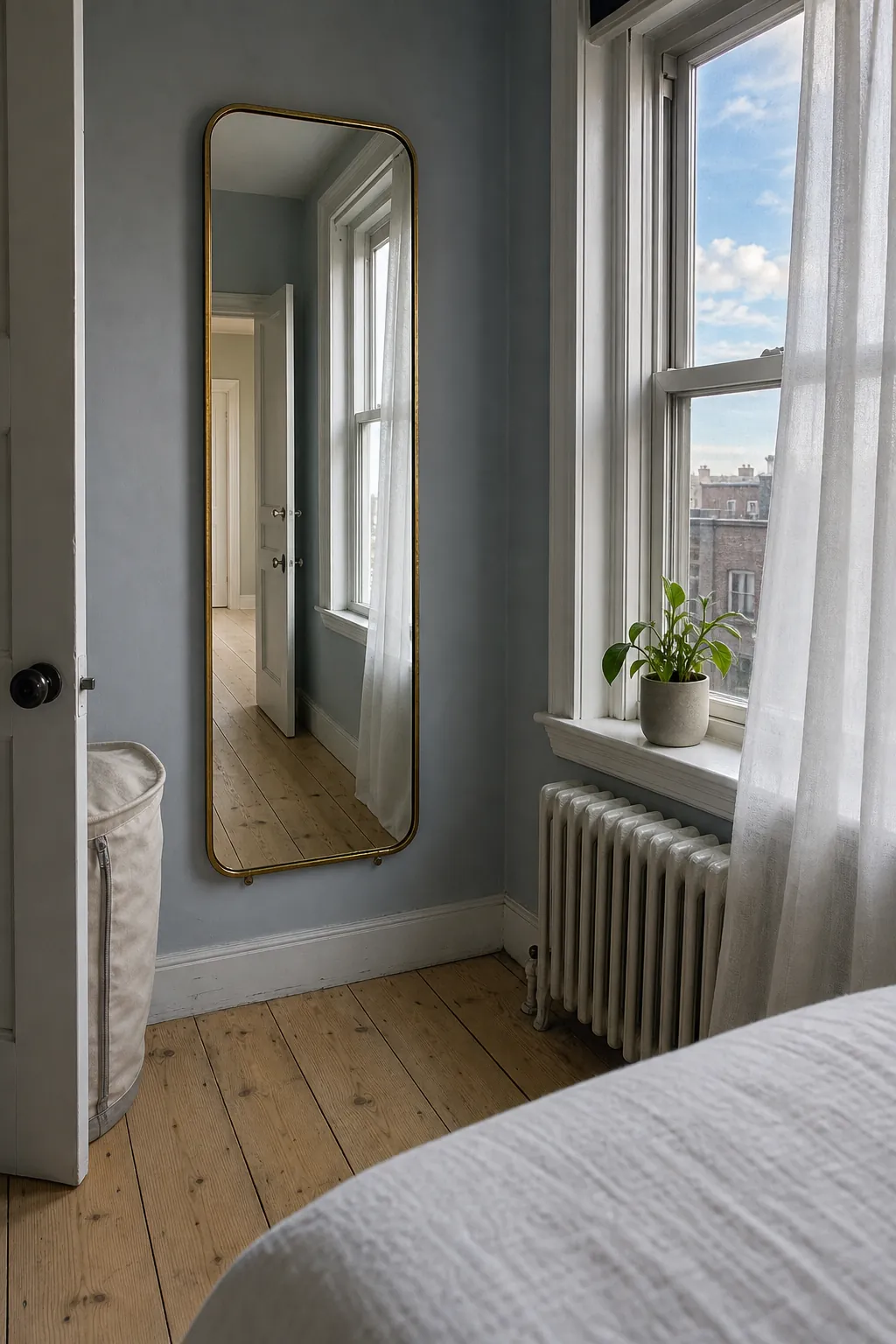
Try a tall mirror adjacent to the window and angle it slightly so it catches sky and daylight. If it hangs opposite the window, check for direct glare at the times you use the room. Also lie down and look at the nighttime reflection with the lamps on; if seeing movement in the mirror is distracting, shift it away from the bed’s centerline.
Choose one mirror large enough to influence the room rather than several small decorative mirrors. A narrow frame close to the wall keeps the profile light. Secure leaning and full-length mirrors with appropriate anti-tip or wall-mount hardware, particularly in homes with children or pets.
Run Curtains High and Wide to Extend the Wall
Short curtains draw a horizontal line across the wall and make the ceiling feel lower. Hang the rod close to the ceiling when the architecture allows, and use panels that reach the floor without bunching. The uninterrupted vertical folds lead the eye upward.
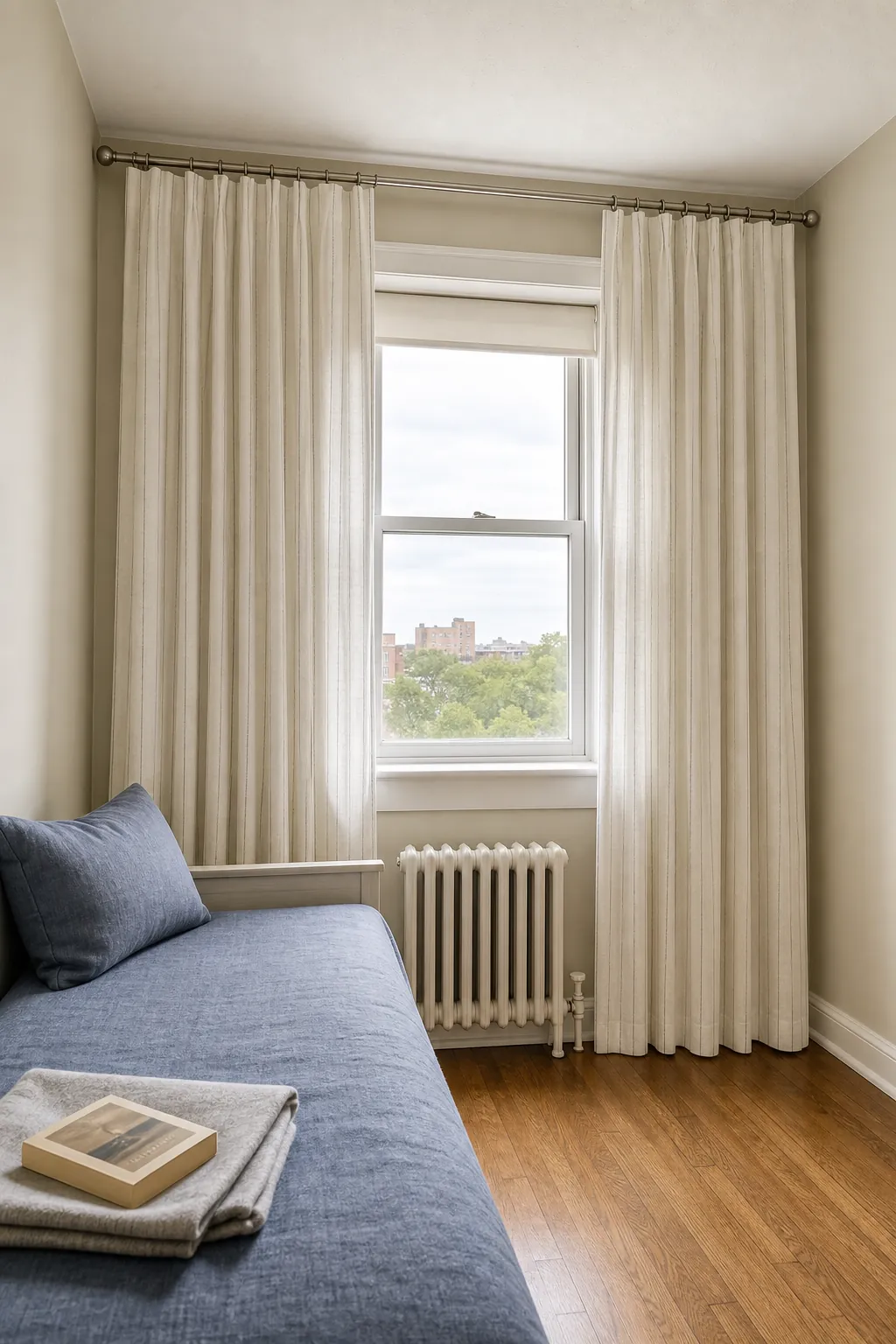
Extend the rod beyond the window frame so open panels sit mostly over the wall rather than covering the glass. More exposed glass means more daylight, and the wider fabric treatment makes the window appear broader. Lightweight panels in a color close to the wall create the least visual interruption; a subtle vertical woven stripe can reinforce height without becoming a loud pattern.
Before drilling, check for radiators, electric heaters, air-conditioning units, and furniture that could interfere with full-length fabric. Keep curtains the safe distance specified by the appliance manufacturer, and avoid forcing a floor-length treatment where heat or moisture makes it impractical.
Lift Bedside Functions Off the Floor
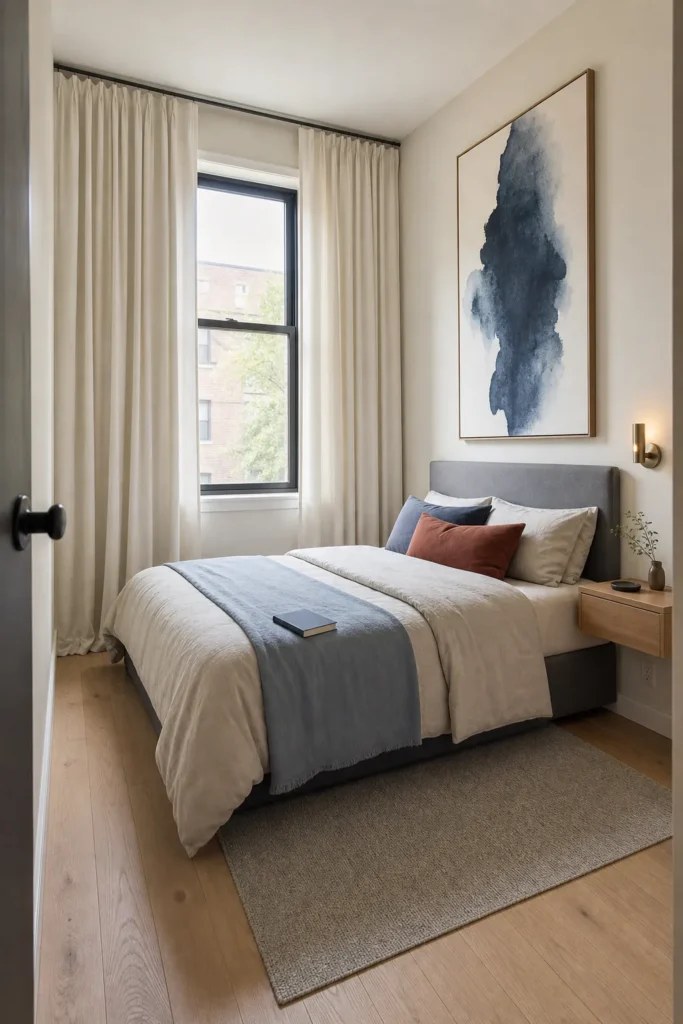
Visible floor area is one of the clearest signals of space. Replacing a bulky nightstand and table lamp with a small wall-mounted drawer and a plug-in sconce can reveal the baseboard and flooring beneath them. The room is not physically wider, but the floor line continues farther.
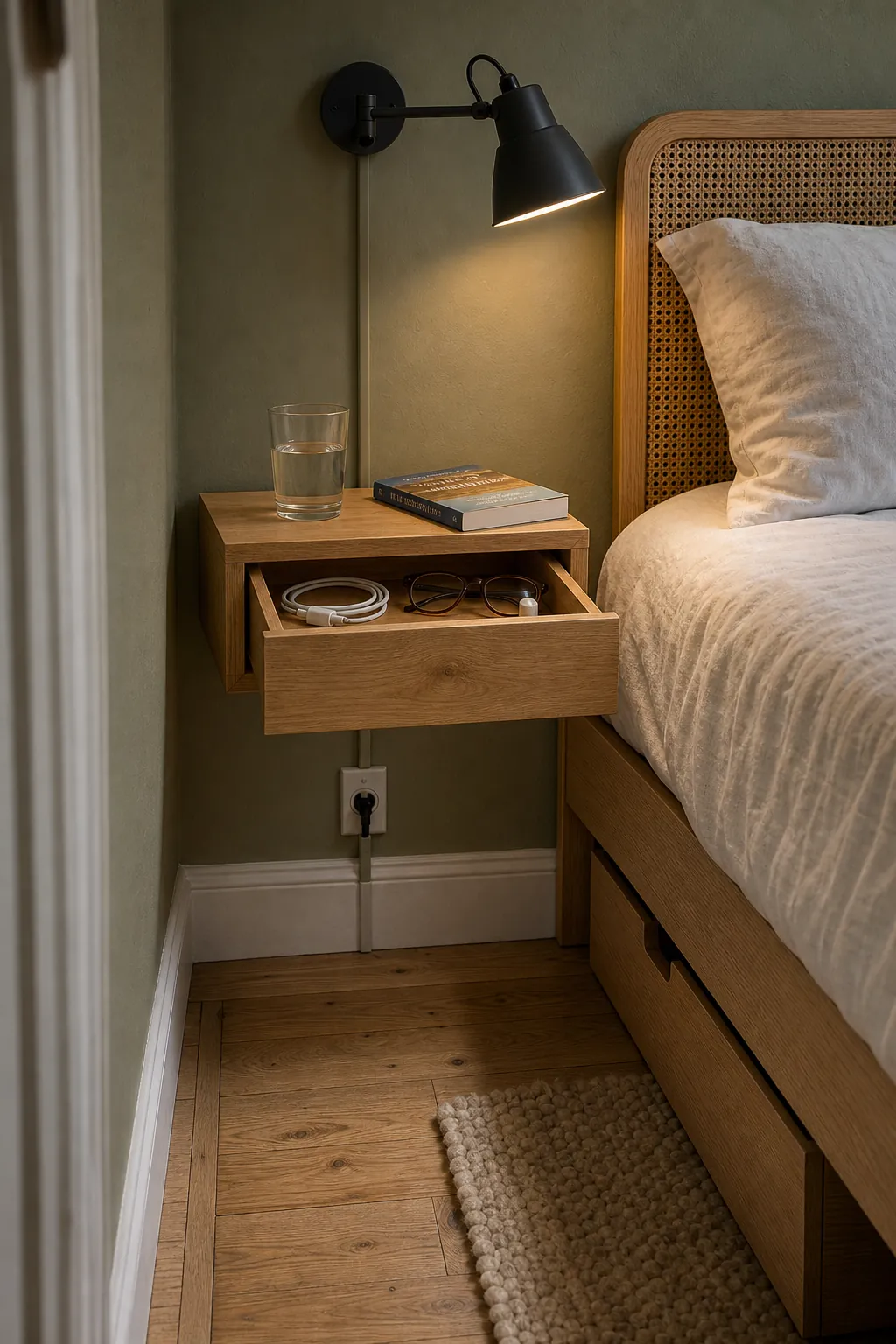
Keep the floating piece deep enough for a glass and phone but shallow enough that it does not squeeze the bedside passage. A drawer is worth prioritizing: it hides chargers, medication, and reading glasses that would otherwise make a tiny surface look crowded. Route the sconce cord straight down in a paintable cover, or have a qualified electrician install hardwiring where permitted.
Mounting height should follow the mattress, not an arbitrary rule. Test the proposed surface with a cardboard box taped safely in place, then sit in bed and reach for it. Wall-mounted furniture must be fastened to suitable structure or anchors for the expected load.
Use a Narrow Vertical Series on Awkward Wall Strips
The slim wall between a door and wardrobe or beside a window often attracts a random hook or tiny frame. Treat that strip as a vertical composition instead. Three related works stacked with consistent spacing pull attention upward and turn an awkward leftover into a deliberate feature.
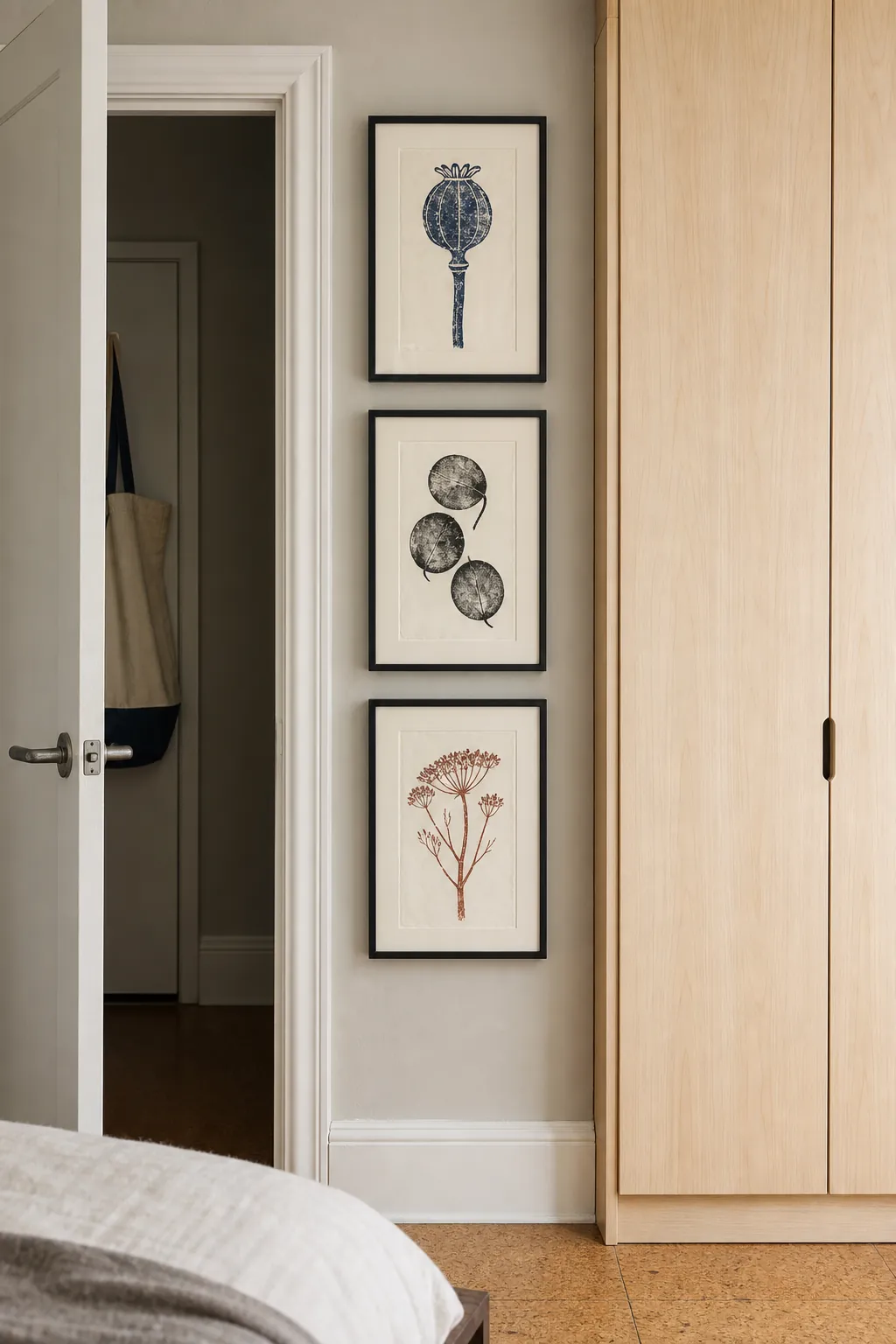
Use identical frames and one subject family—three abstract forms, seed studies, or black-and-white architectural details—so the set reads as a single column. Keep the outer width narrower than the wall strip and align the visual center near eye level. Do not run the lowest frame into the path of a door handle or chair back.
This is also a good apartment bedroom wall decor option because lightweight frames can be easier to manage than one oversized piece. If using removable hanging products, follow their weight and surface directions and confirm that your lease permits them; some low-adhesion paint still tears during removal.
Soften Boundaries With Continuous Color
High contrast makes edges easy to see. White walls with dark trim, a different ceiling color, and several accent rectangles can visually outline every boundary of a small room. Painting the walls, trim, and even the ceiling in closely related tones reduces those stops and creates a more continuous envelope.
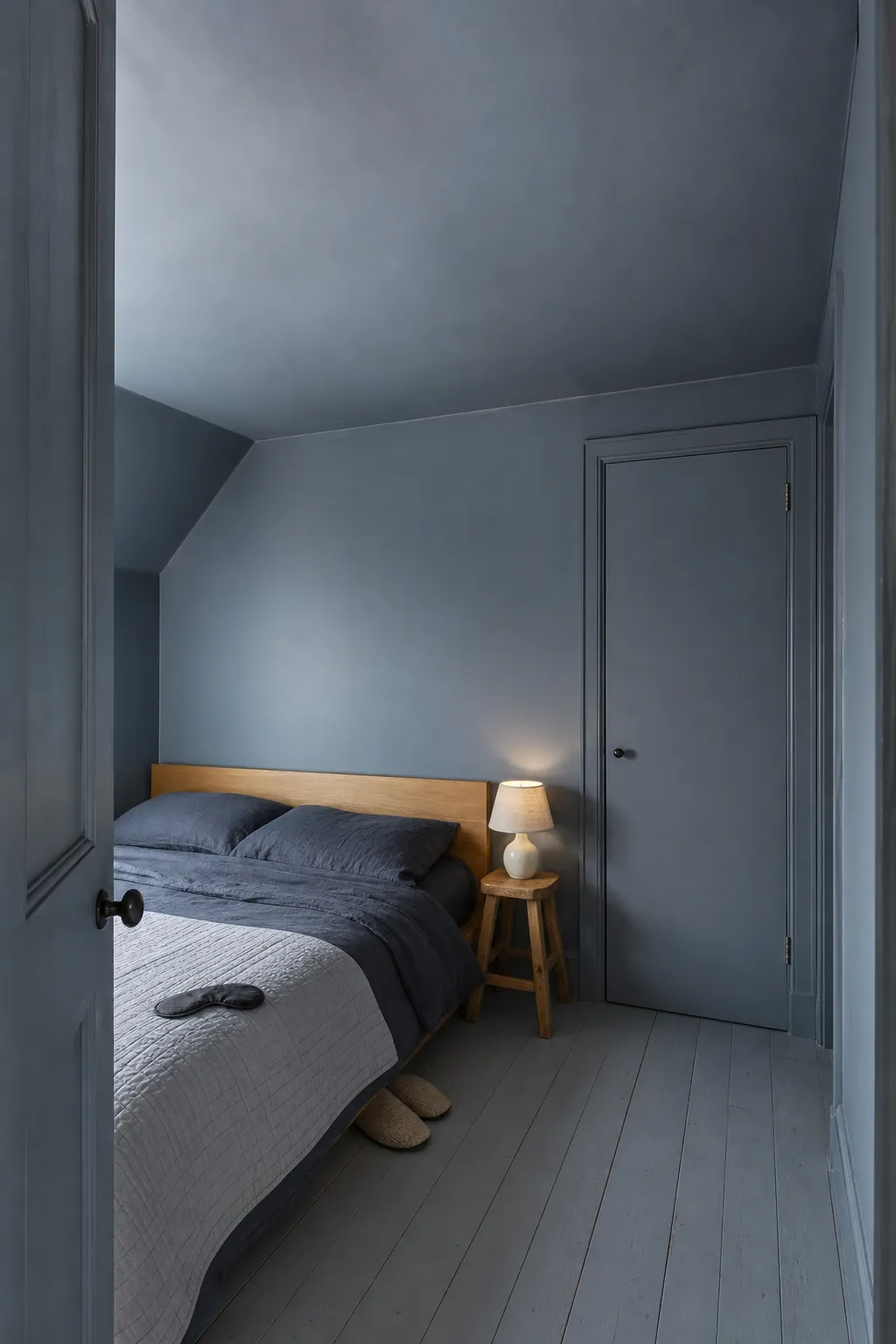
Light colors reflect more light, but all-white is not the only answer. A soft blue-gray, muted warm green, or dusty off-white used consistently can feel more expansive than stark white broken by many dark lines. In a room with good daylight, a deeper color carried over the ceiling may also blur corners and create depth.
Test large samples on more than one wall and observe them in morning, afternoon, and lamplight. If a single-color room feels flat, add texture through linen, wool, and wood rather than covering every wall with contrasting decor.
Avoid Decor That Steals Visual Space
- Tiny frames scattered across several walls: group favorites into one clear composition or choose one large work.
- Deep shelves above walkways: they cast shadows, project into the room, and tend to collect small objects.
- Mirrors that reflect storage clutter: move the mirror or clear the reflected zone before mounting.
- Several unrelated accent walls: choose one visual move and let the other surfaces remain quiet.
- Decor that blocks light or floor: never sacrifice the window, door swing, heater clearance, or safe walking route for a styling trick.
The quickest improvement is often subtraction: clear one surface, expose more of the window, and consolidate small wall objects. Then add one strong move—a generous artwork, a useful mirror, taller curtains, a floating bedside unit, a vertical series, or continuous color. When the eye can move farther without interruption, the whole bedroom feels larger.