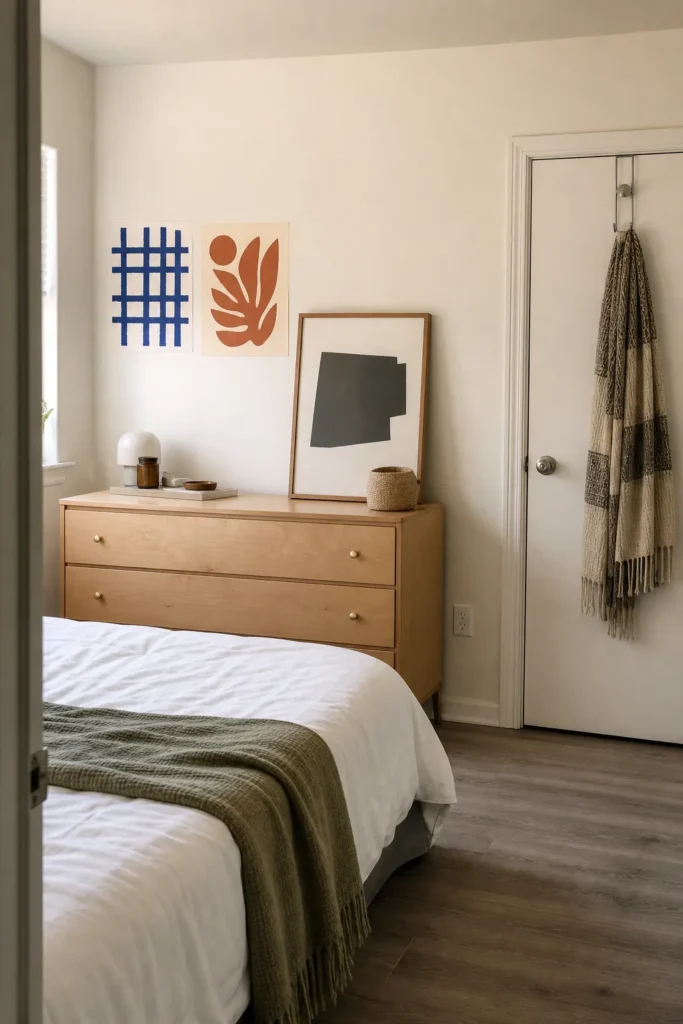
Renter Friendly Wall Decor Ideas That Protect Paint
The phrase “damage-free wall decor” sounds reassuring, but it hides the part renters actually need to know: no removable product can guarantee that weak, fresh, flat, or poorly bonded paint will stay perfect. The safer goal is to reduce risk—use lighter decor, test the exact wall, follow the product directions, and keep a no-adhesive fallback.
Before decorating, read the lease and photograph the wall condition. Ask the property manager what is allowed, especially if the lease prohibits both holes and adhesive. A tiny approved nail hole can sometimes be easier to repair than a large peeled paint patch, but rules and local standards vary. Do not make that choice without checking.
Test the wall, not just the adhesive label
Removable strips depend on the surface beneath them. Paint that has not cured, paint without a sound primer layer, chalky flat paint, textured walls, wallpaper, and damp areas may all behave differently. Check the manufacturer’s compatible-surface and wait-time guidance, then test in a spot that the final piece will hide.
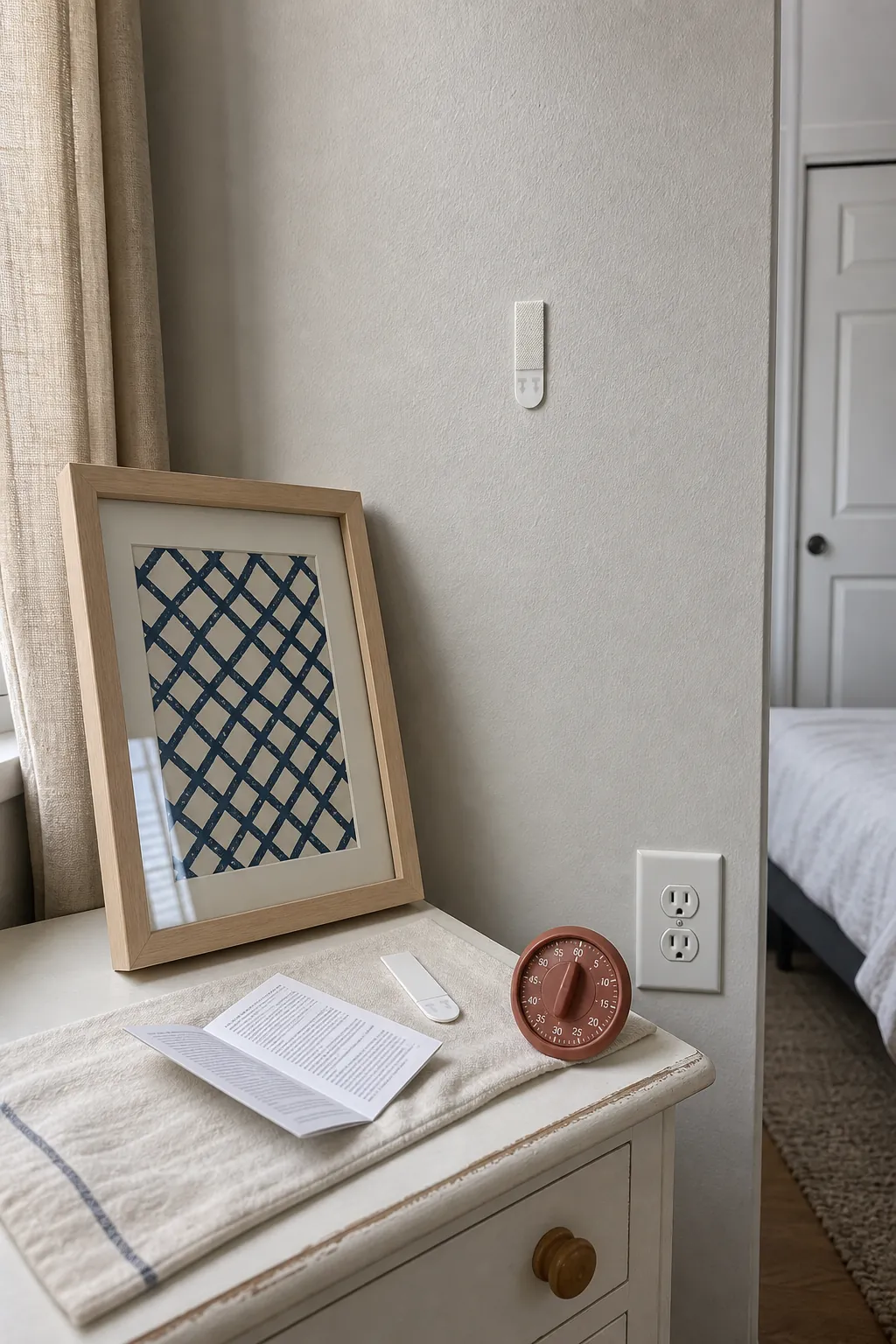
Clean and prepare only as the instructions specify. Do not improvise with stronger cleaners or extra tape. When removal day comes, support the mounted item, expose the release tab, and follow the stated pull direction slowly—many stretch-release products must be drawn straight down, parallel to the wall, rather than yanked outward. Save the package instructions now instead of guessing during move-out.
Create scale with paper instead of weight
Unframed prints, postcards, fabric samples, and lightweight photo paper can cover a useful visual area without asking adhesive to hold glass and wood. One large paper piece often looks calmer than twelve tiny cards. If the product is compatible with the wall and paper, conceal removable poster tabs behind the work so the arrangement feels finished.
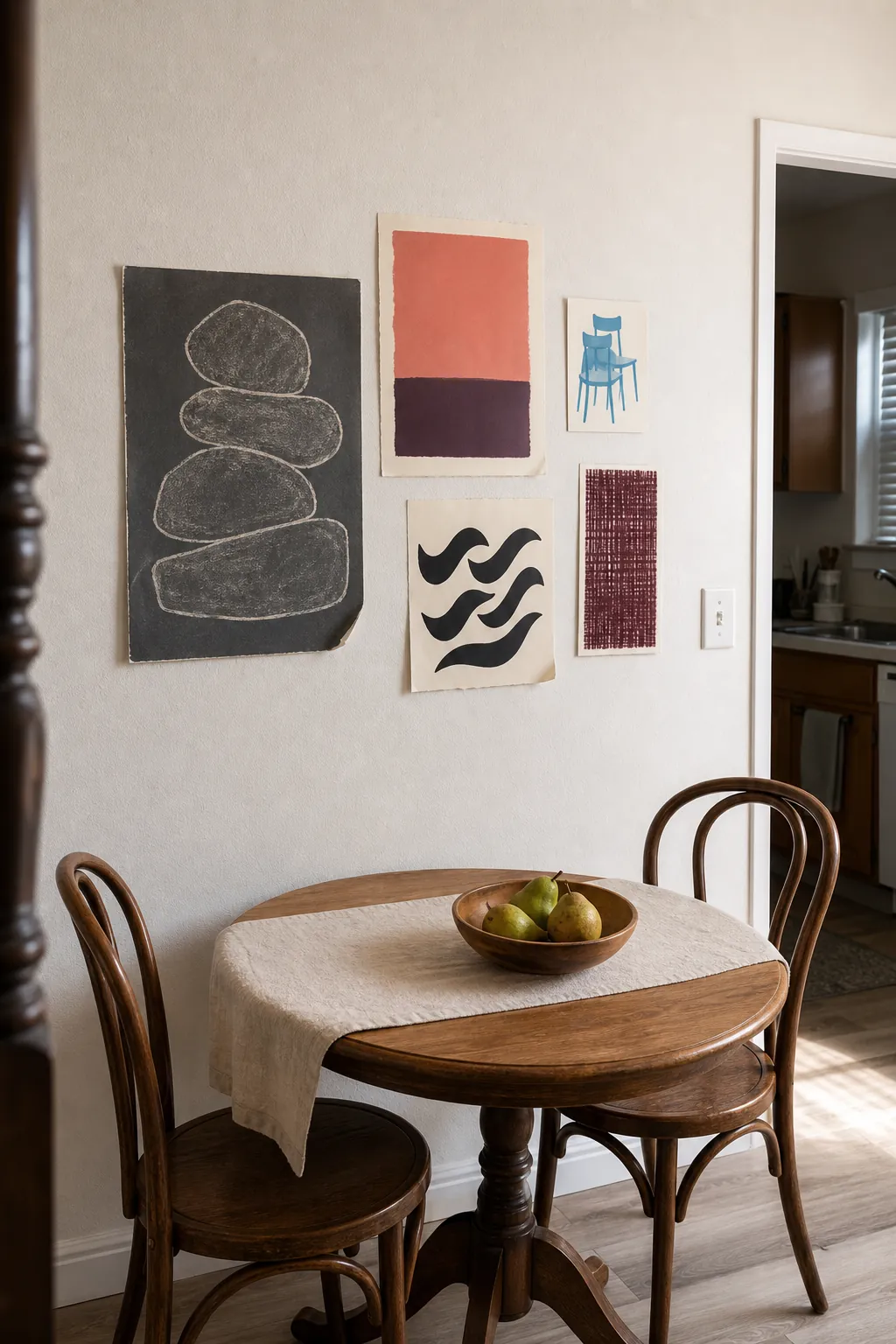
Build the layout on the floor first. Start with one anchor sheet, add two medium pieces, then stop and look at the empty wall around them. Keep paper away from cooking steam, bathroom humidity, radiators, and chair backs. This is temporary wall decor, not a substitute for secure mounting where an object could fall and break.
Use removable decals as accents, not armor
Small removable decals can give an entry, desk nook, or plain corner a clear design idea with less adhesive coverage than a full peel-and-stick wall. Choose simple shapes that can be spaced apart—arches, dots, short stripes, or botanical silhouettes—and test the vinyl on the same painted surface first.
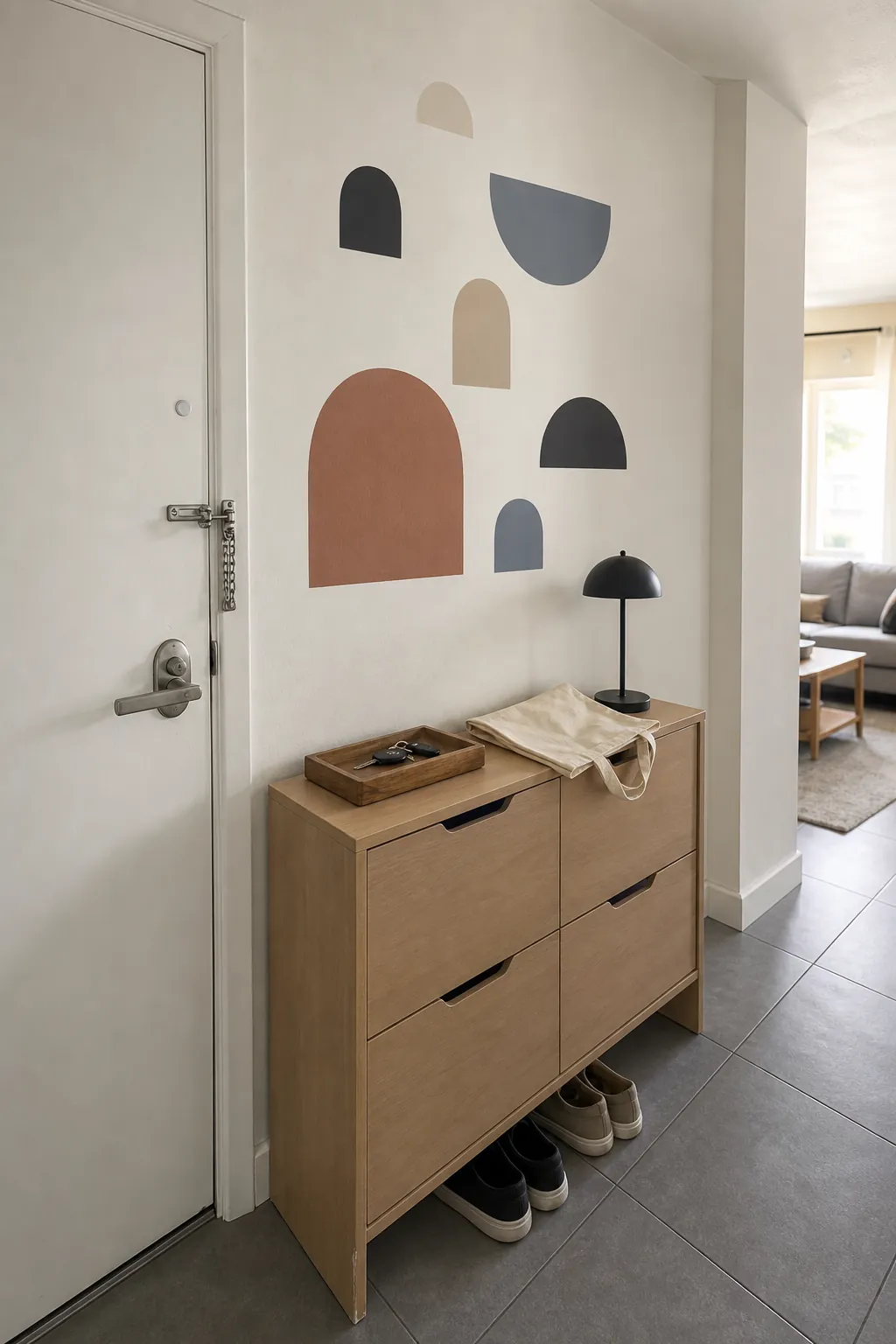
Avoid applying vinyl over fresh paint, failing paint, wallpaper, or a surface the maker excludes. Keep decals away from door edges and high-humidity zones. At removal, use the manufacturer’s procedure and work slowly; heat or tools should be used only when the product instructions specifically allow them. More coverage creates more contact area and more opportunities for the paint underneath to surprise you.
Hang a textile from architecture that can carry it
A tension rod inside a compatible shallow alcove can display a lightweight textile without adhesive touching the broad wall. The key is to keep the span short, use solid side surfaces, and stay well below the rod’s stated capacity. A cotton panel, scarf, or a few clipped paper swatches adds color while remaining easy to fold and move.
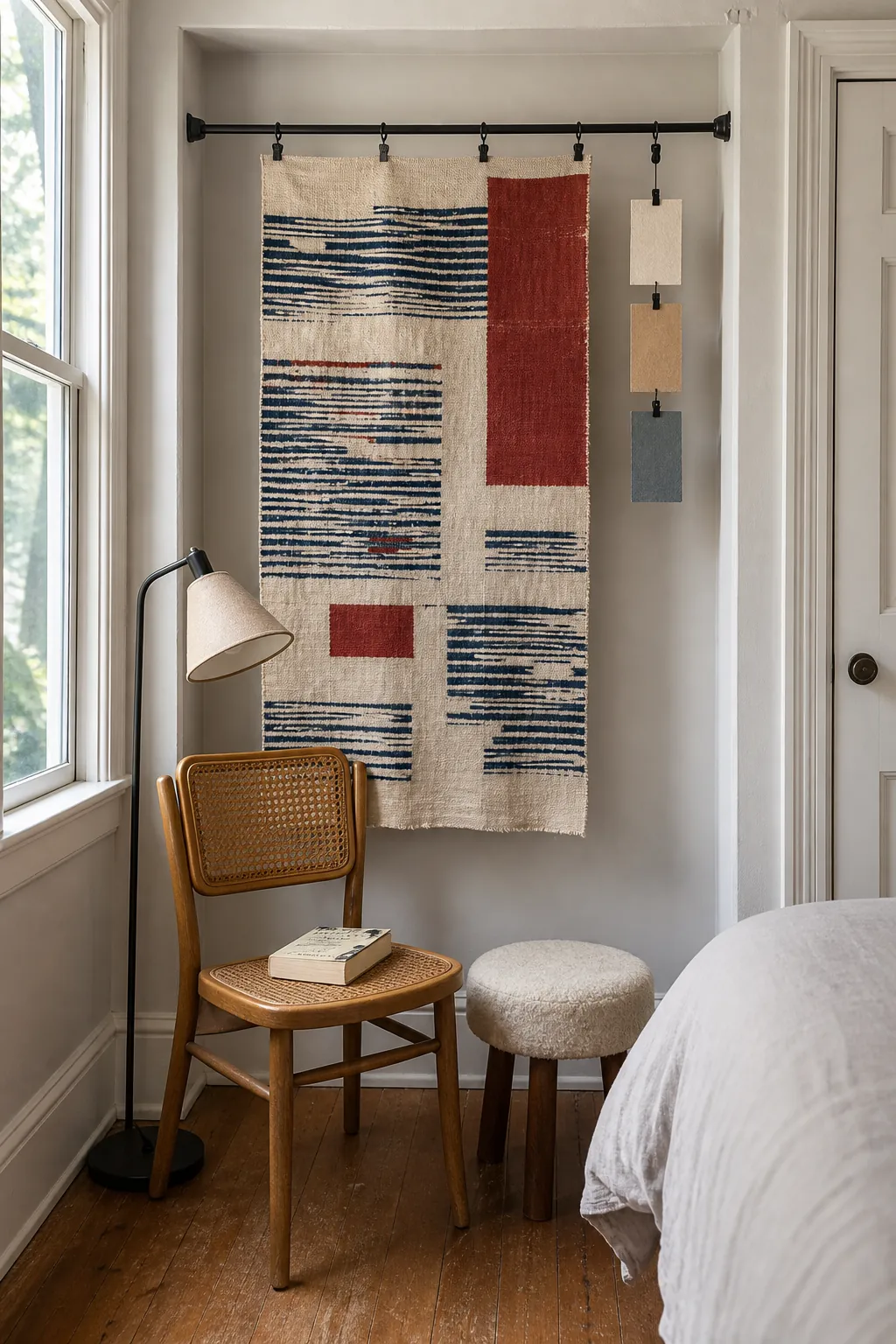
Do not assume every drywall return can take compression, and never use a tension setup for glass, heavy rugs, shelves, or anything over a bed. Check the rod regularly and keep fabric away from lamps, heaters, and moisture. The appeal is not that the method is magically universal; it is that the load can bypass the decorated wall in the right niche.
Let furniture support one large piece
A broad dresser or low console can support a large lightweight frame, giving rental home decor the scale of a statement wall without attaching the art to paint. Choose acrylic rather than glass, set the frame several inches inside the furniture edge, and lean it toward the wall with compatible soft bumpers at the contact points.
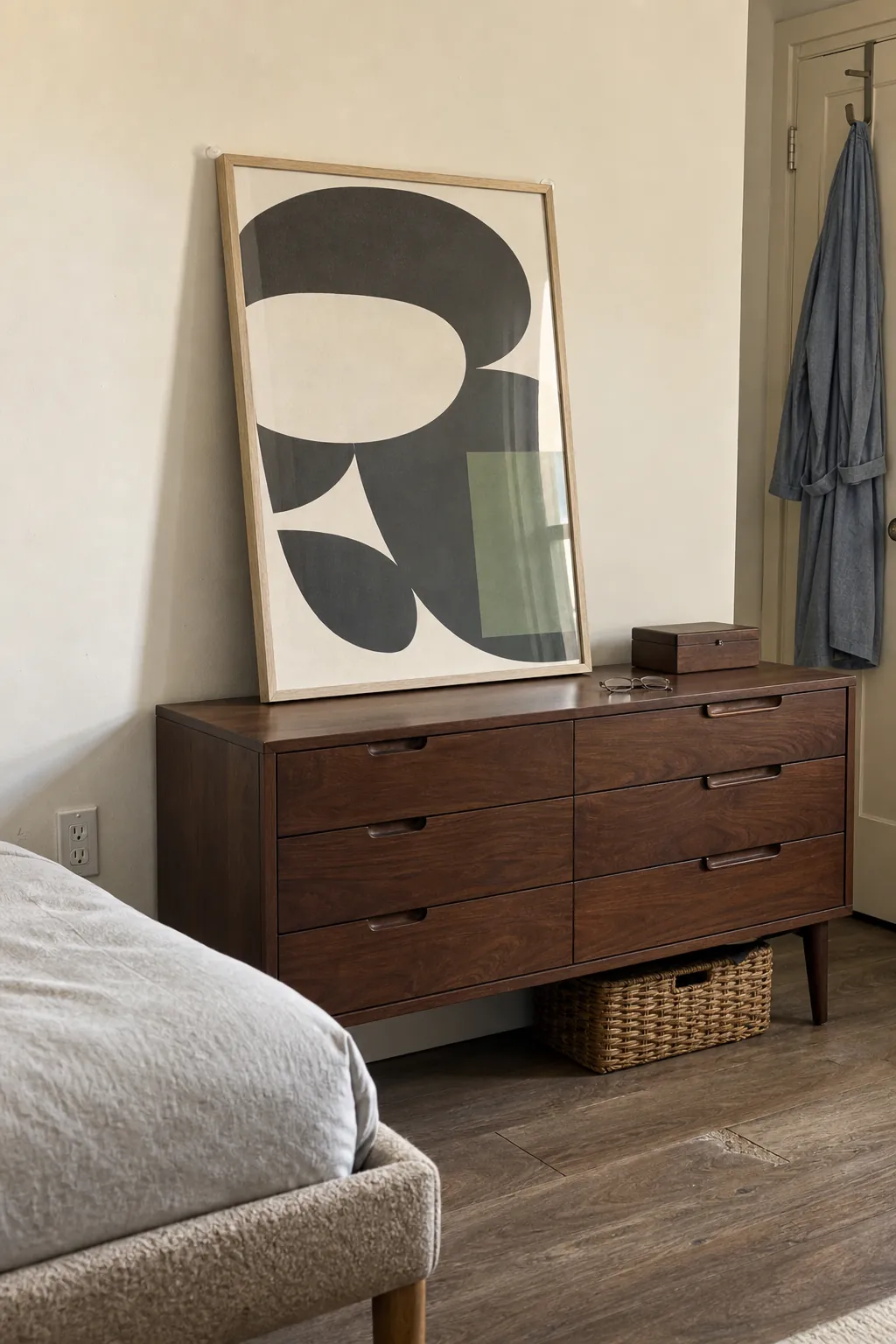
Keep drawers, outlets, door swings, and walkways clear. This approach is not appropriate where children, pets, vibration, or a narrow traffic path could tip the frame. In those homes, use a smaller piece or ask about approved secure mounting. Freestanding does not mean risk-free; it means the furniture, not the paint, carries the load.
Build a gallery that stands on the floor
When both holes and adhesive are off limits, a floor-supported photo grid or narrow display screen can turn an unused corner into a vertical gallery. Look for broad stable feet, keep the panel out of traffic, and clip only light paper or textile pieces. Leave open cells between groups so it reads as intentional wall decor rather than household storage.
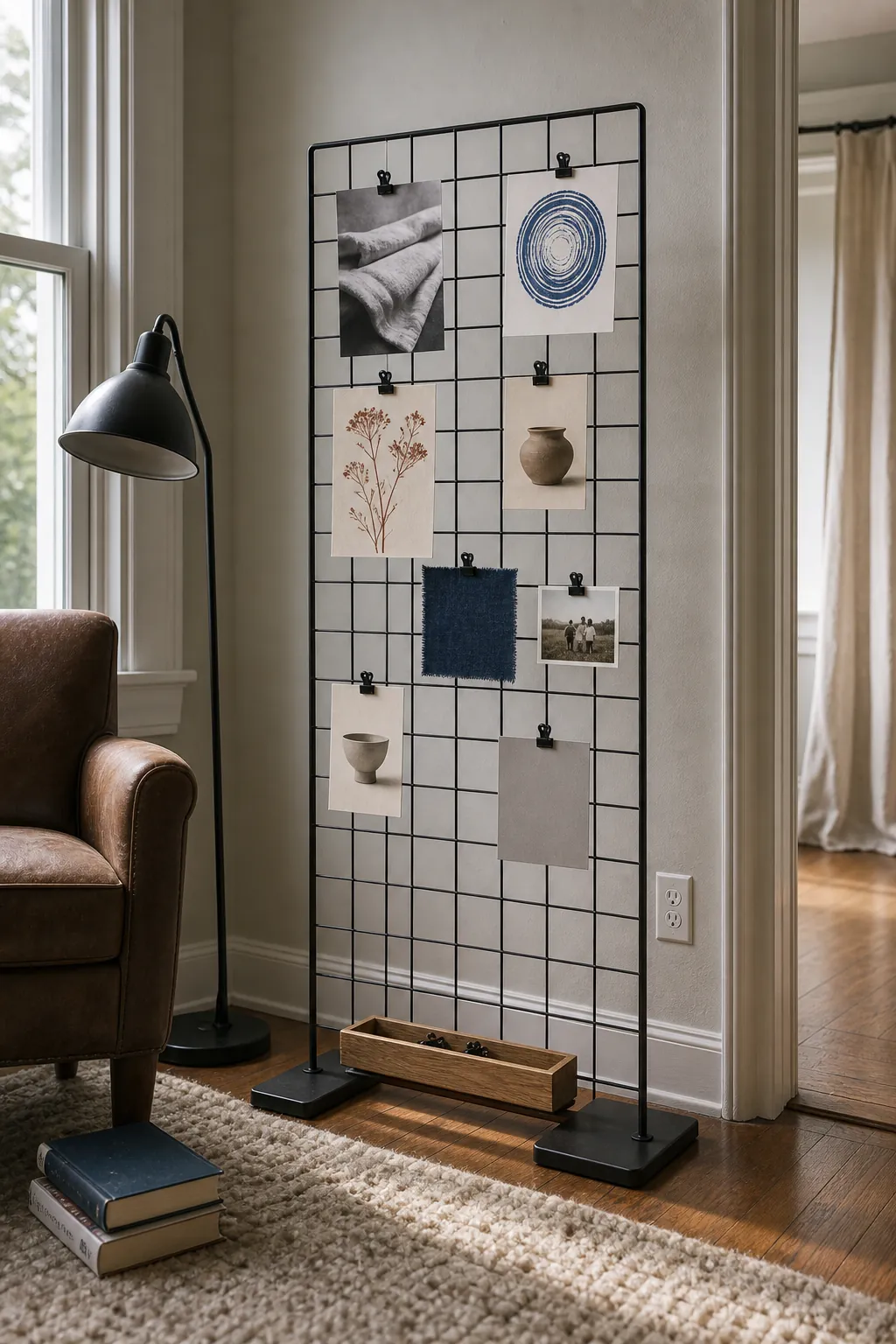
The safest damage-free decorating plan is a hierarchy: use the wall only when the lease, surface, product, load, and removal method all agree; otherwise move the display onto a door, tension point, furniture surface, or floor-supported structure. That approach may sound less glamorous than a “peel and reveal” promise, but it is far more useful when your paint and deposit are real.