21 Kids Room Printable Wall Art Ideas That Feel Personal
Kids’ rooms deserve more than decor chosen to look tidy in an adult’s photograph. The best kids printable art gives a child something to notice, name, laugh at, or claim as their own—while giving parents an affordable way to change the room as interests shift.
These ideas range from calm bedroom pieces to energetic playroom prints. Pick two or three that suit the child in front of you, repeat a small palette or frame finish, and let personality do the rest. Before printing, match the file ratio to the frame size so important details are not cropped. In active zones, favor lightweight frames with acrylic glazing and secure fixings, and avoid placing heavy frames directly above a bed.
A Personalized Name-and-Interests Portrait
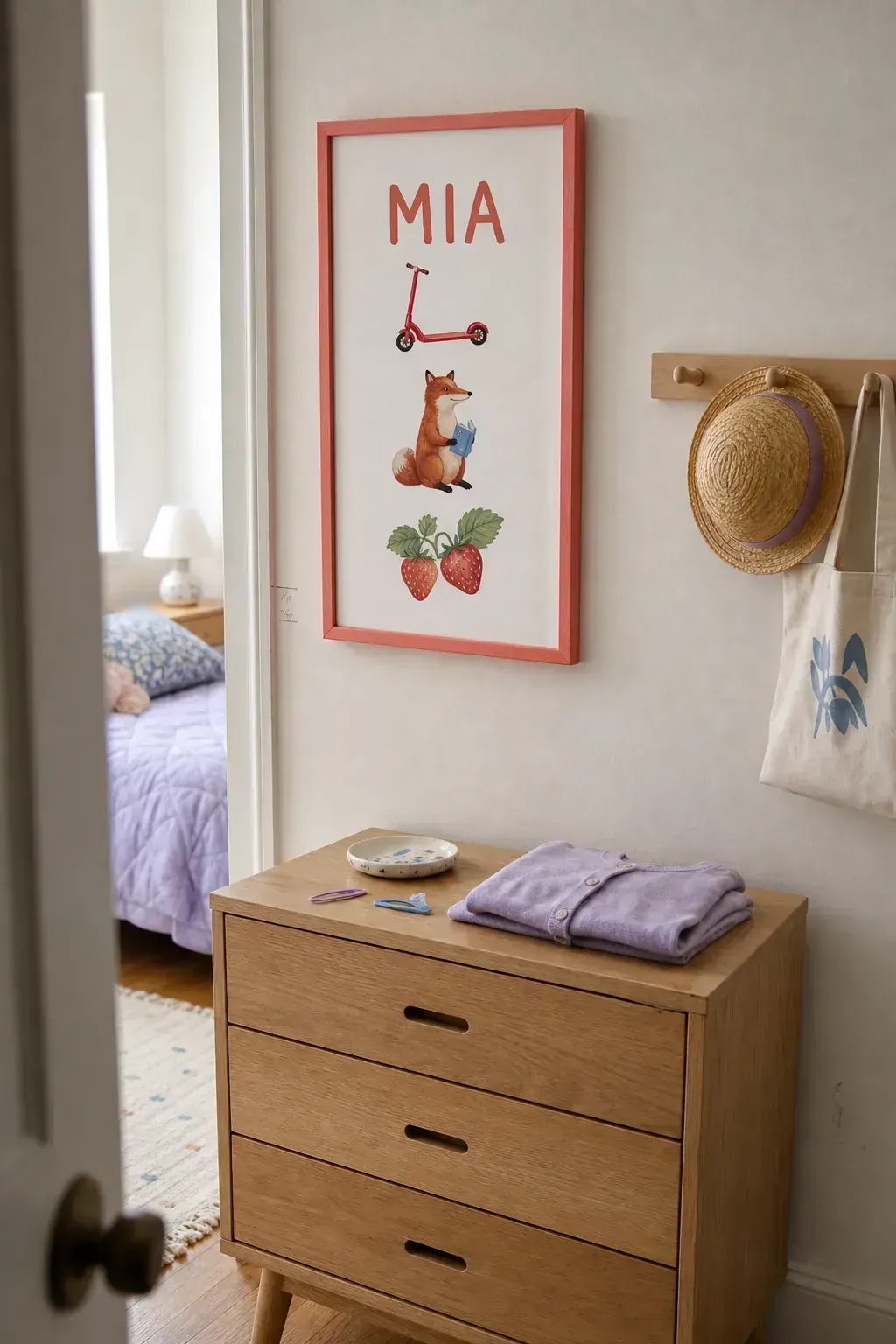
Start with the one subject that will never feel generic: the child. Build a name print around three current favorites—perhaps a scooter, a fox, and strawberries—instead of buying a design that matches only the bedding. A limited palette keeps the combination intentional. This kind of children wall print works especially well beside a reading nook or dresser, where it can sit at a child-friendly eye line.
A Bold Animal Alphabet
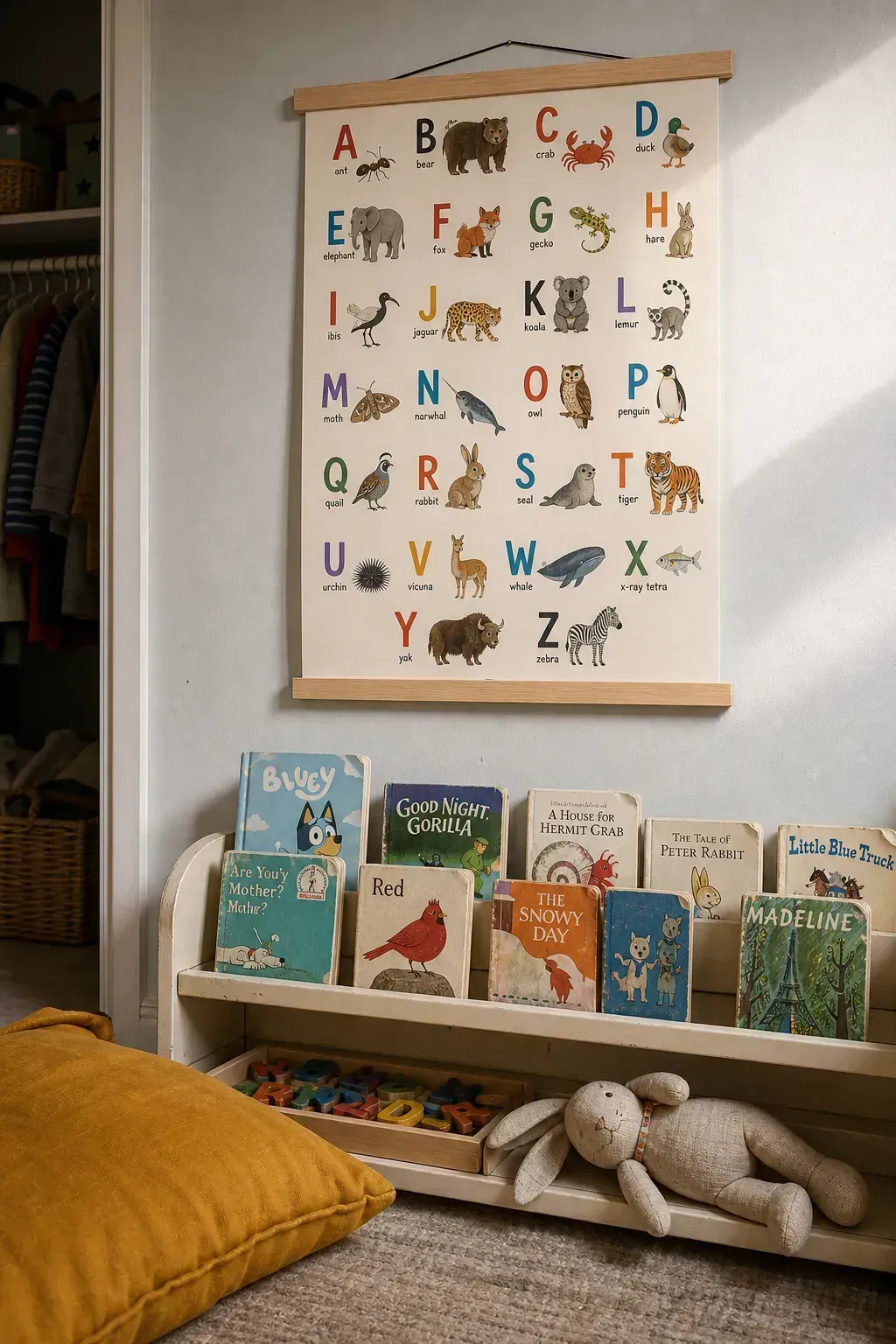
An alphabet print earns its wall space when it feels like art rather than a worksheet. Look for expressive animals, varied scale, and a few surprising choices that invite questions. Keep every letter legible, but skip the strict classroom grid if the room already has many square storage units. A tall composition creates a useful visual break above a low bookcase.
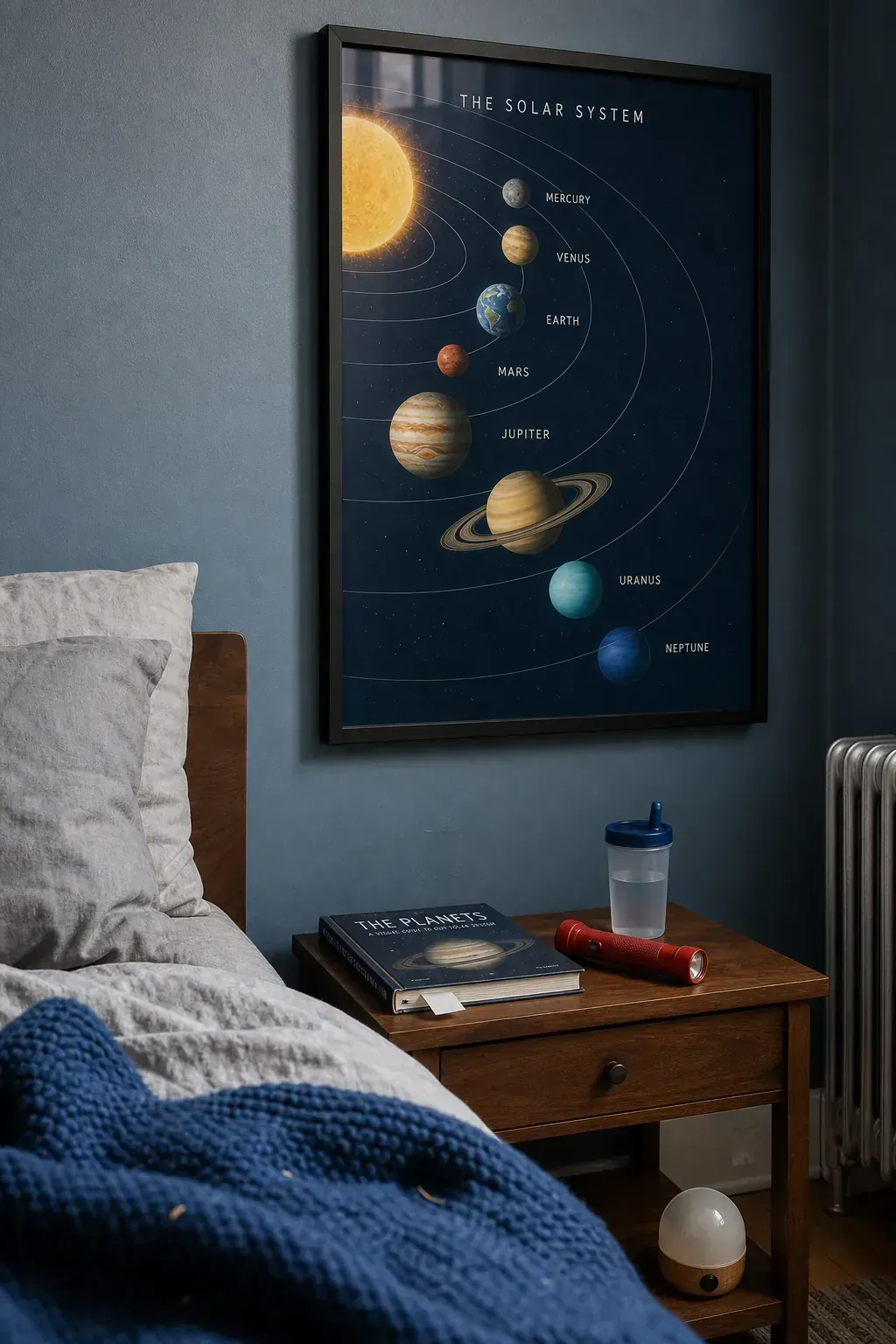
A Friendly Solar System Chart
Space art can feel adventurous without turning the bedroom into a theme park. Choose a deep blue field, warm planet tones, and labels large enough to read from the floor. The result bridges bedtime wonder and genuine curiosity. Pair it with plain bedding or natural wood so the print remains the focal point rather than competing with a room full of stars.
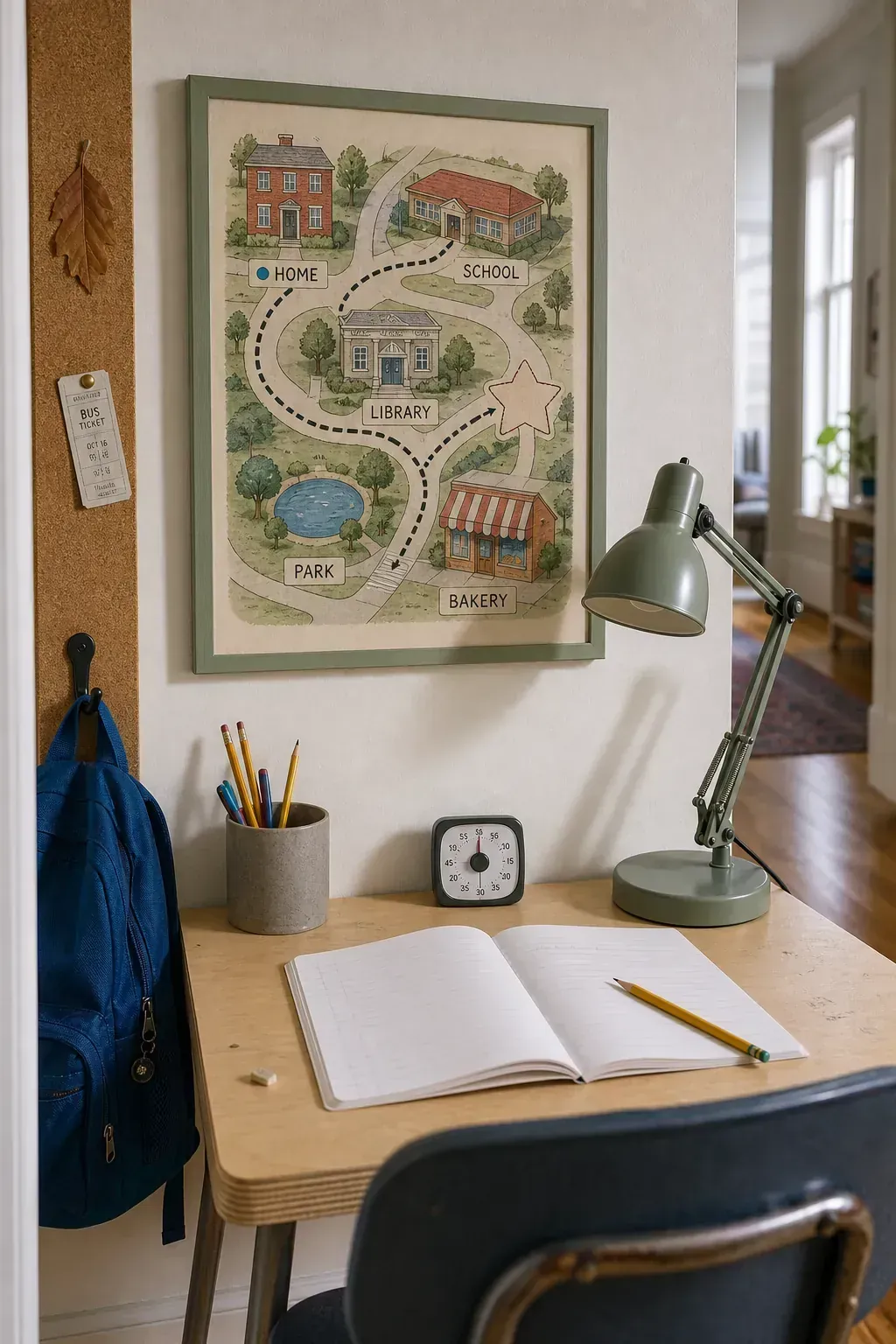
A Tiny Neighborhood Map
Turn familiar places into a simple illustrated map: home, school, the library, the park, and a favorite bakery. The value is not cartographic precision; it is the thrill of recognizing everyday life. Leave room to add a small hand-drawn landmark later. That blend of polished printable decor and family marks makes the piece feel lived in.
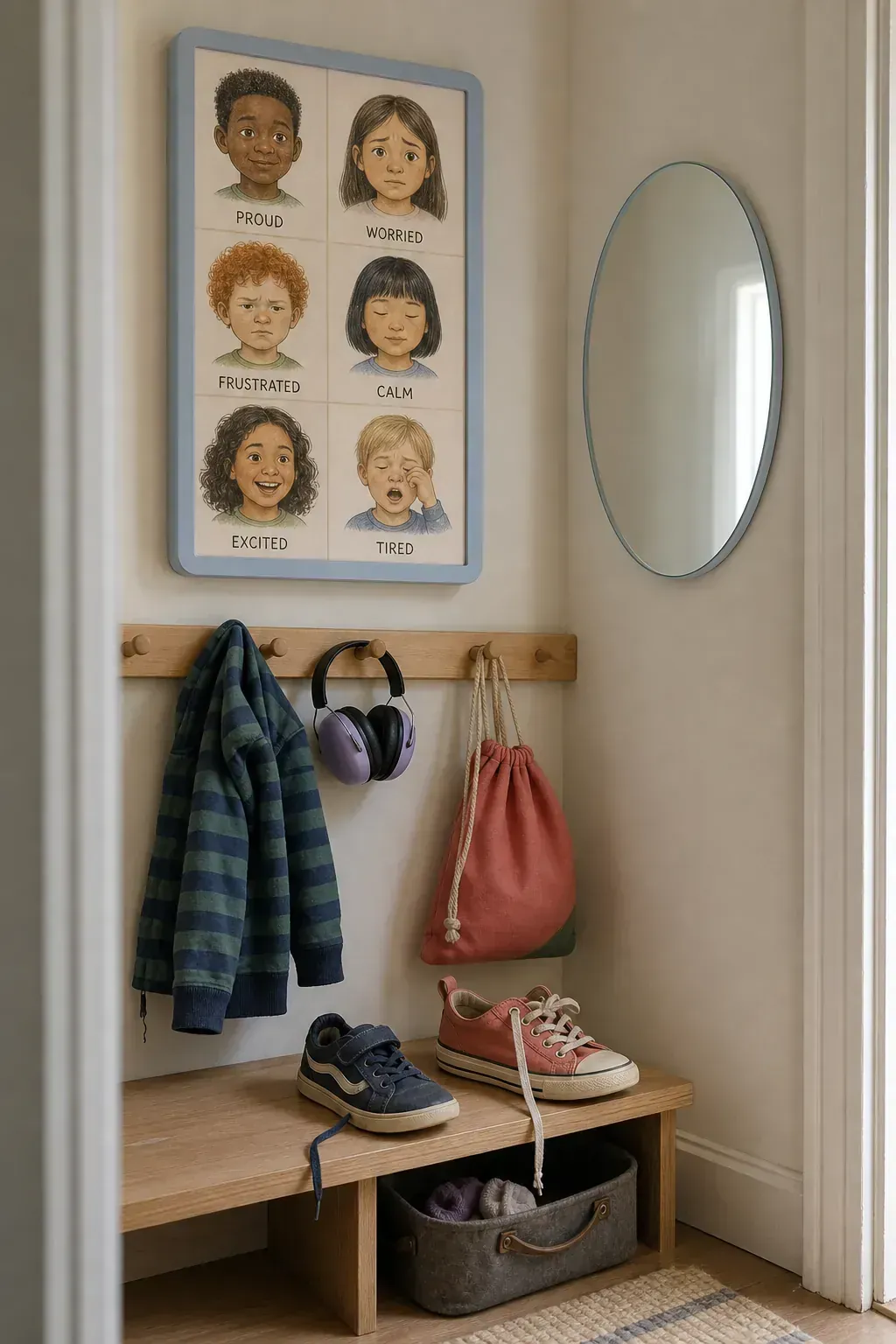
A Set of Emotions Faces
Emotions art is most helpful when faces feel human and varied, not like identical emojis with different mouths. A warm set showing proud, worried, frustrated, calm, excited, and tired can become a casual conversation tool. Hang it where routines happen—near clothing hooks or a getting-ready area—rather than treating it as formal instruction.
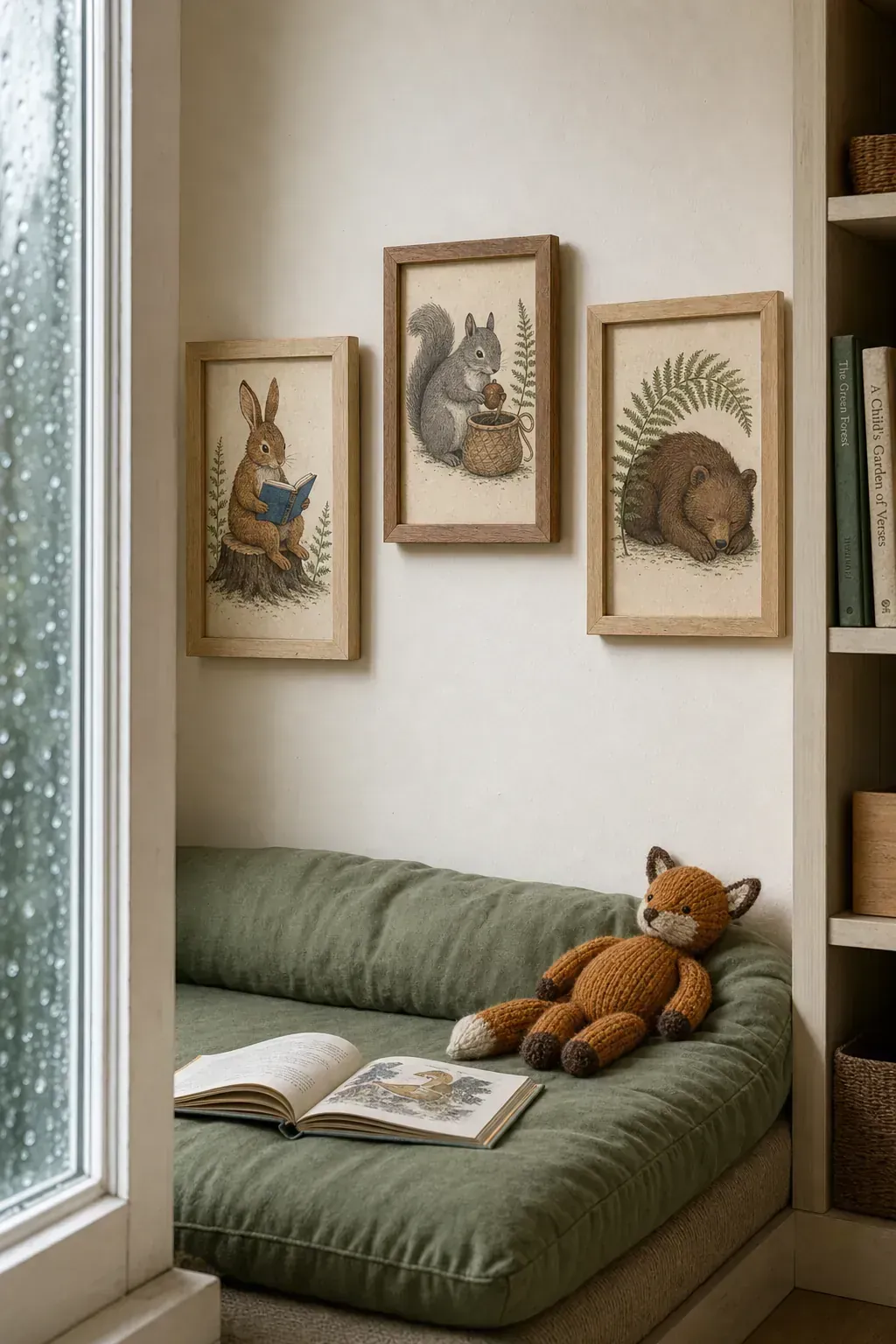
A Storybook Woodland Trio
Three related forest characters can create a gallery without demanding a huge wall. Give each print a different action—reading rabbit, gathering squirrel, sleeping bear—while repeating paper tone and line style. The story connection makes the trio richer than three near-duplicate animal portraits, and separate frames make it easy to replace one piece later.
A Color-Mixing Wheel
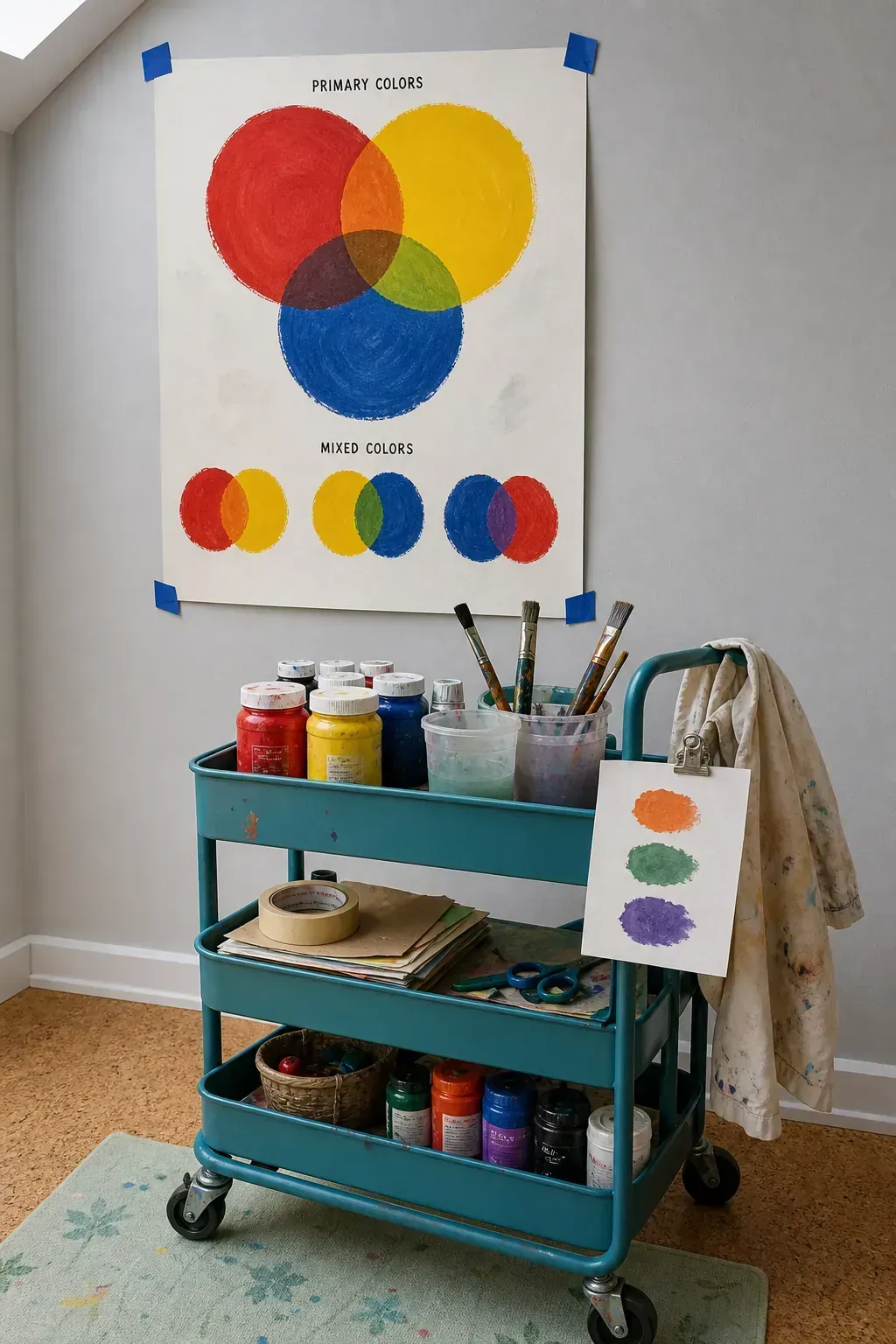
A color wheel belongs in an art corner when it shows mixing in a tactile way: overlapping translucent circles, paint dabs, or layered paper shapes. It should inspire experiments, not merely label primary and secondary colors. Echo two colors from the room and let the rest add controlled energy above the supply cart.
A Dinosaur Museum Poster
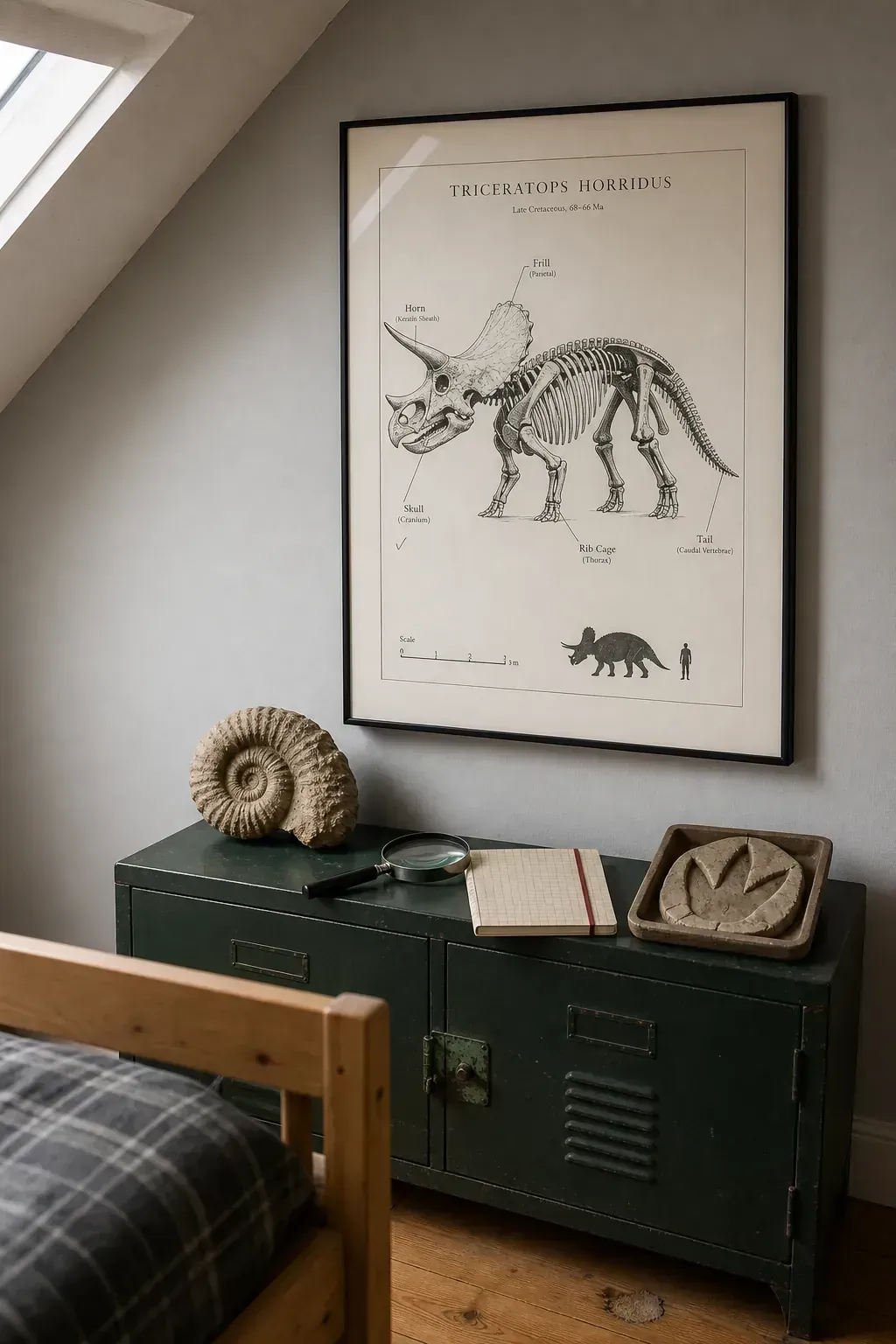
For a dinosaur fan, borrow the clarity of a natural-history poster: one dramatic skeleton silhouette, a handful of accurate labels, and plenty of breathing room. The museum approach feels substantial enough to grow with the child. Avoid filling every inch with cartoon footprints; curiosity is stronger when one excellent subject receives the attention.
A Botanical Treasure Hunt
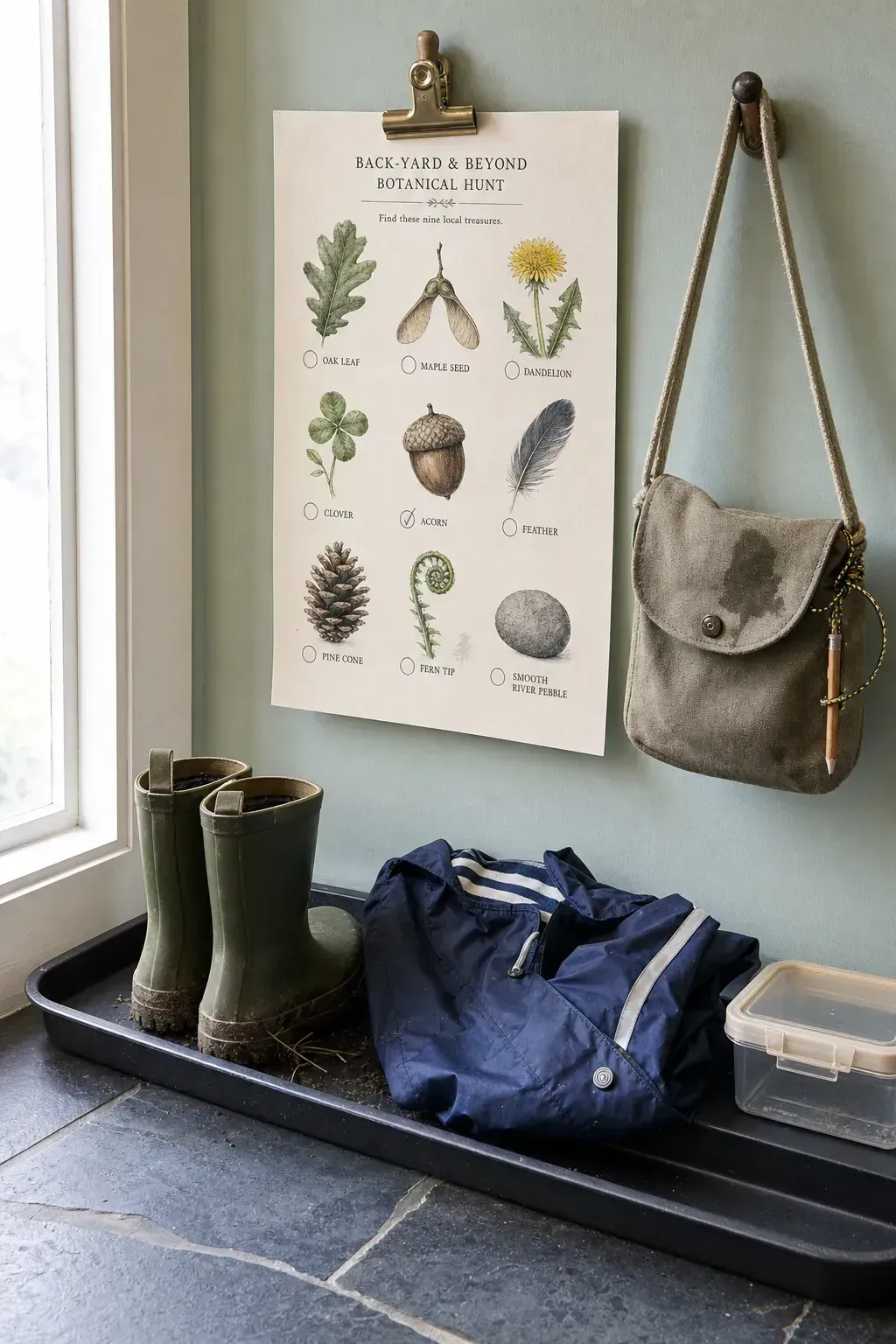
Illustrate local leaves, seeds, flowers, and feathers, then add tiny check circles beside each one. The print becomes a prompt for walks and a record of discoveries when the child marks what they have found. Choose species that plausibly occur nearby rather than defaulting to generic tropical foliage.
A Construction Vehicle Blueprint
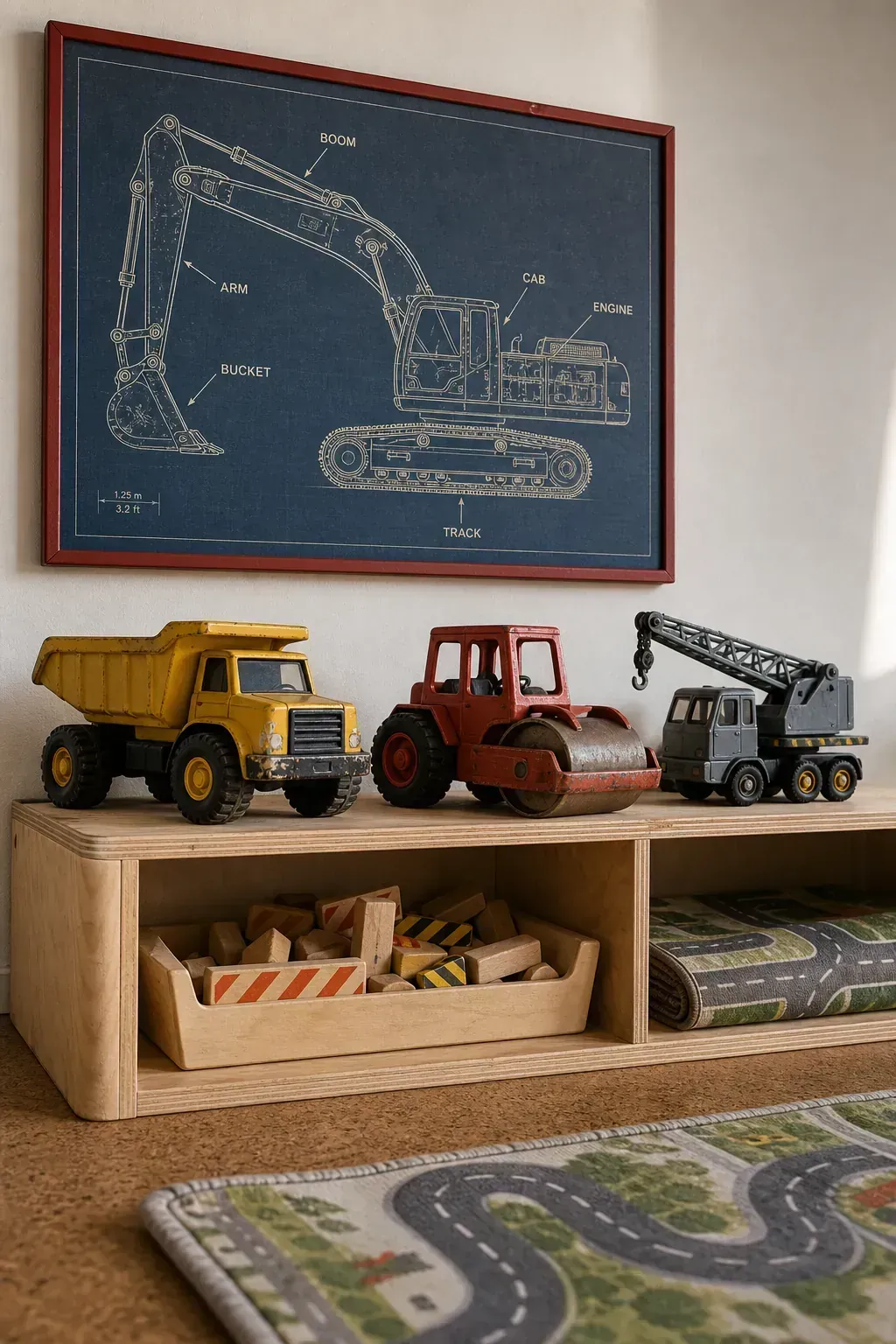
Trade a busy vehicle collage for one satisfying cutaway-style drawing of an excavator, crane, or fire engine. Crisp lines and a restrained blue, rust, and cream palette feel exciting without overwhelming a small bedroom. This is a strong choice above a toy garage because it connects the wall to play happening below.
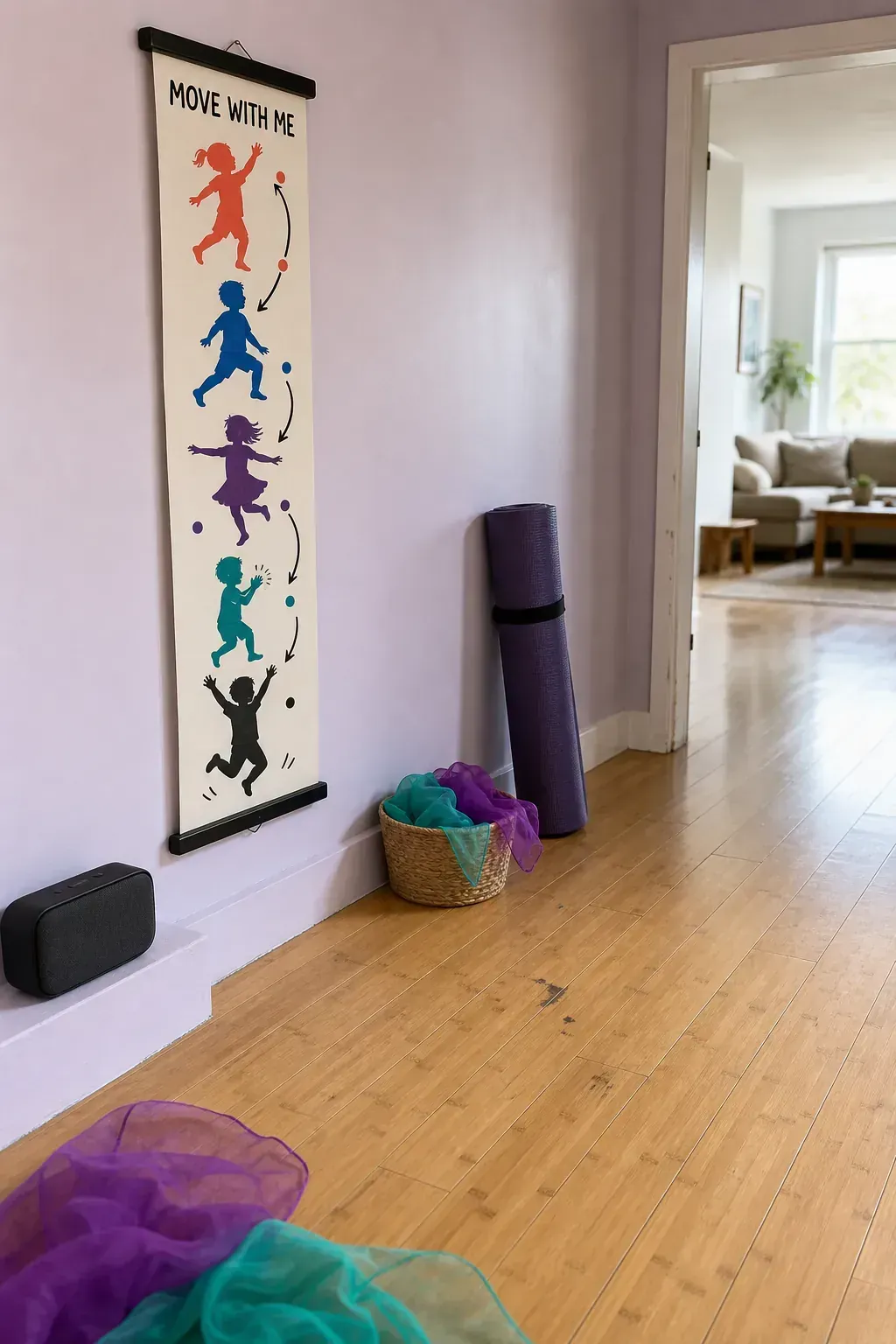
A Dance-Move Sequence
A row of joyful movement silhouettes can make an awkward narrow wall useful. Show a short sequence children can imitate, with arrows or rhythm marks rather than dense instructions. Place it by open floor space so the design becomes an invitation to move, not another object that simply coordinates with the rug.
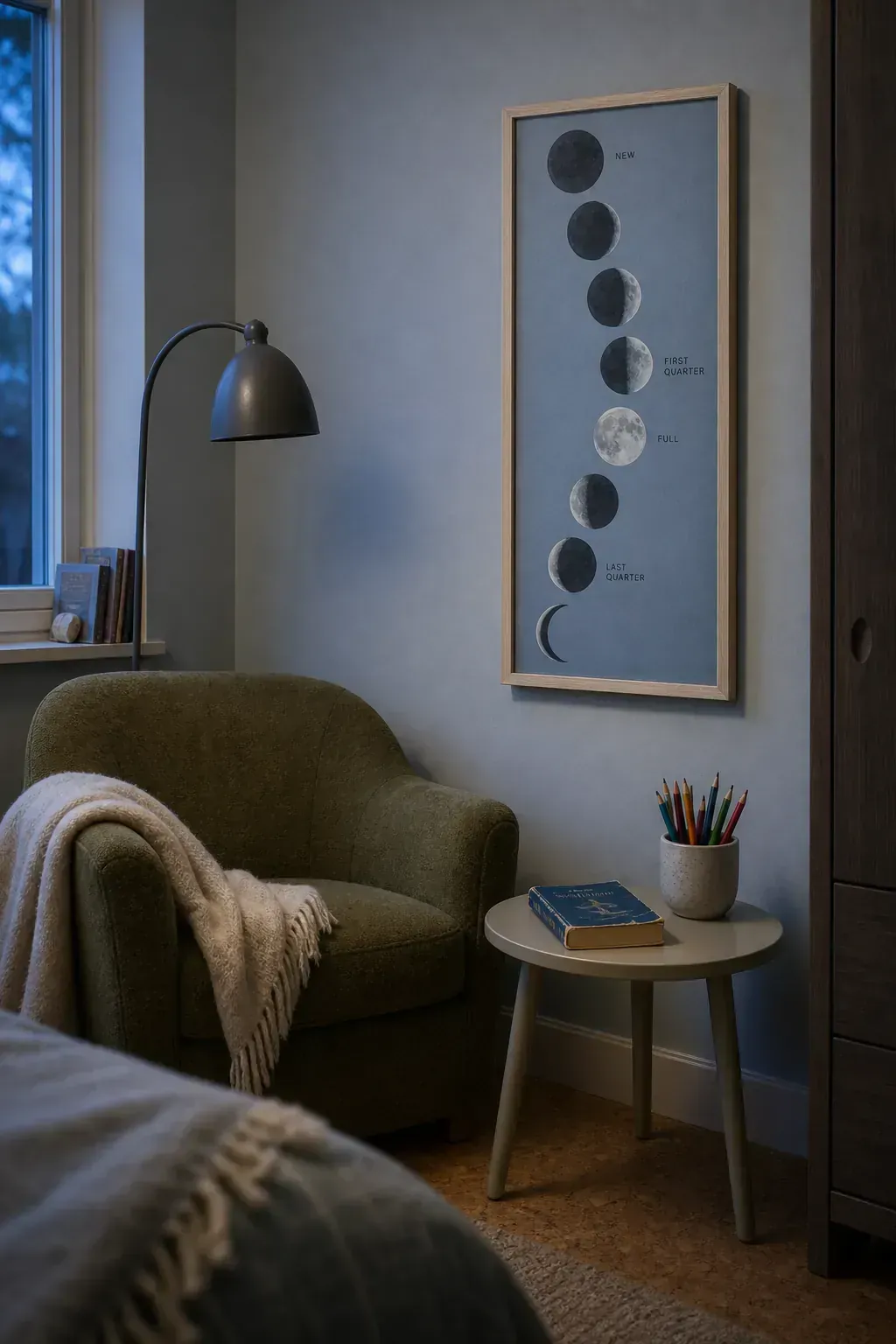
A Bedtime Moon-Phase Print
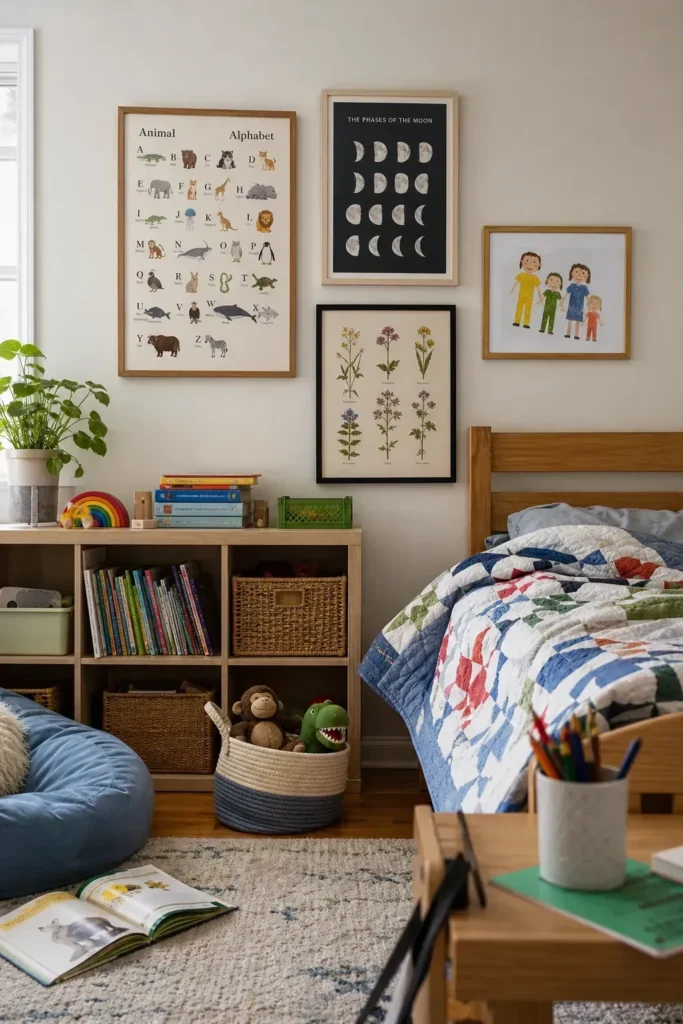
Moon phases bring a quiet rhythm to the sleep zone. Use soft charcoal, dusty blue, and warm white instead of high-contrast black and neon stars. A single vertical print fits beside a wardrobe or reading chair and can balance a busier gallery elsewhere in the room.
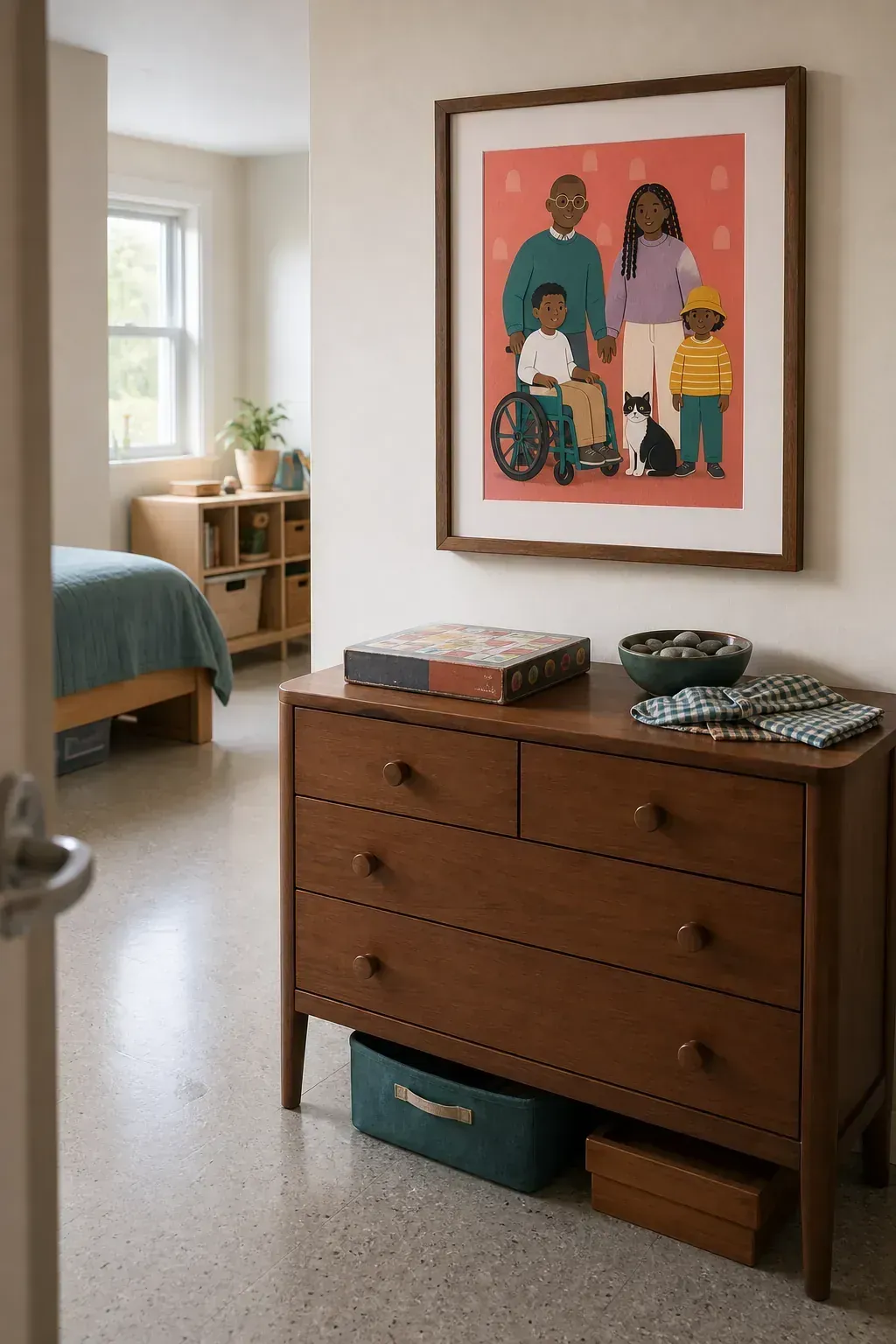
A Family Portrait in Simple Shapes
Create a family portrait from simple cut-paper-style shapes, including pets and the details children actually mention—glasses, curly hair, a wheelchair, or a favorite hat. Skip the pressure for perfect likeness. Recognition comes from thoughtful specifics, and that is what turns a downloadable design into meaningful kids room art.
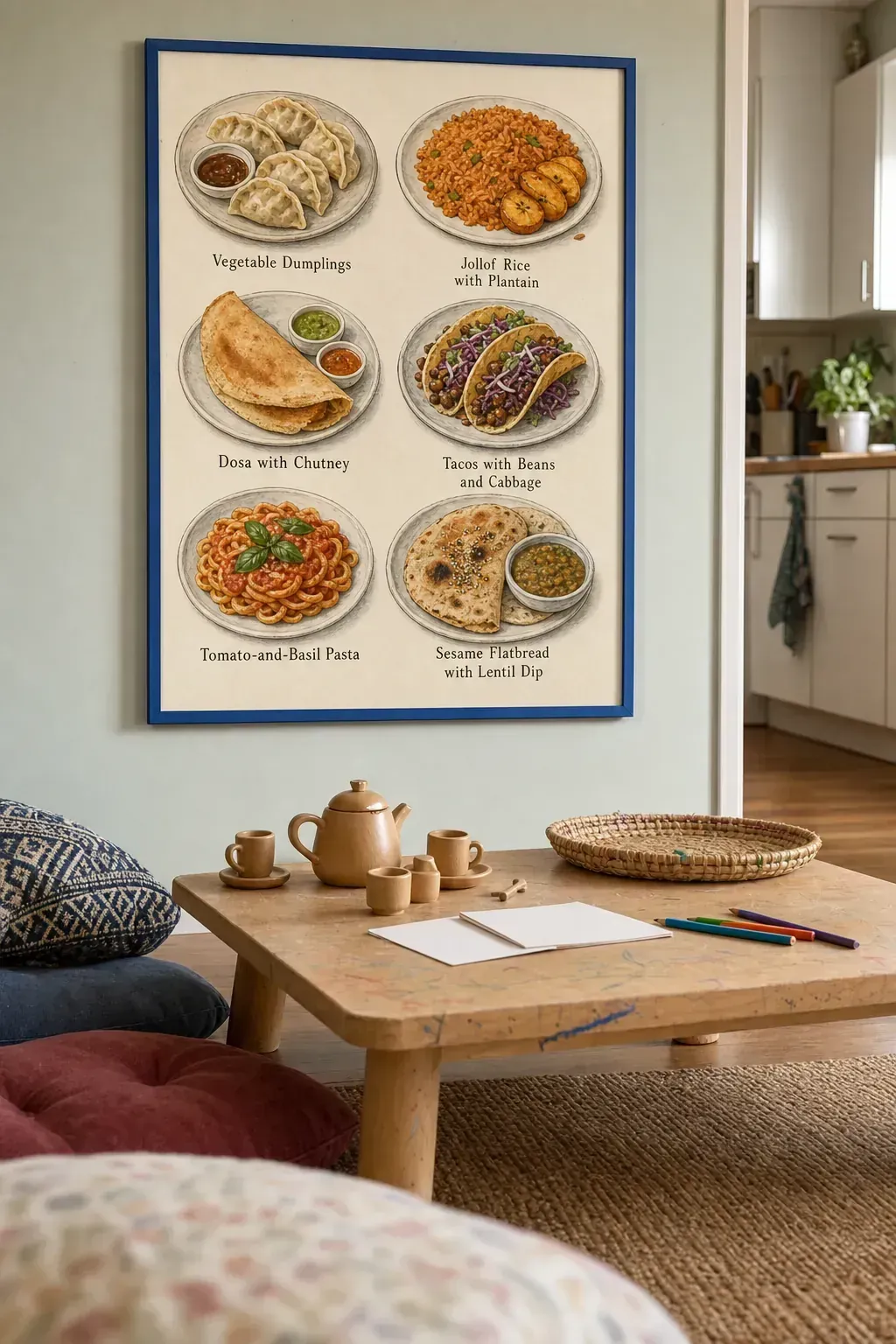
A World Foods Illustrated Menu
Food illustrations can celebrate family culture and curiosity at the same time. Arrange six recognizable dishes like a cheerful café menu, label them clearly, and include foods connected to the child’s home as well as something new to try. The result suits a shared family play area where conversation matters more than a strict theme.
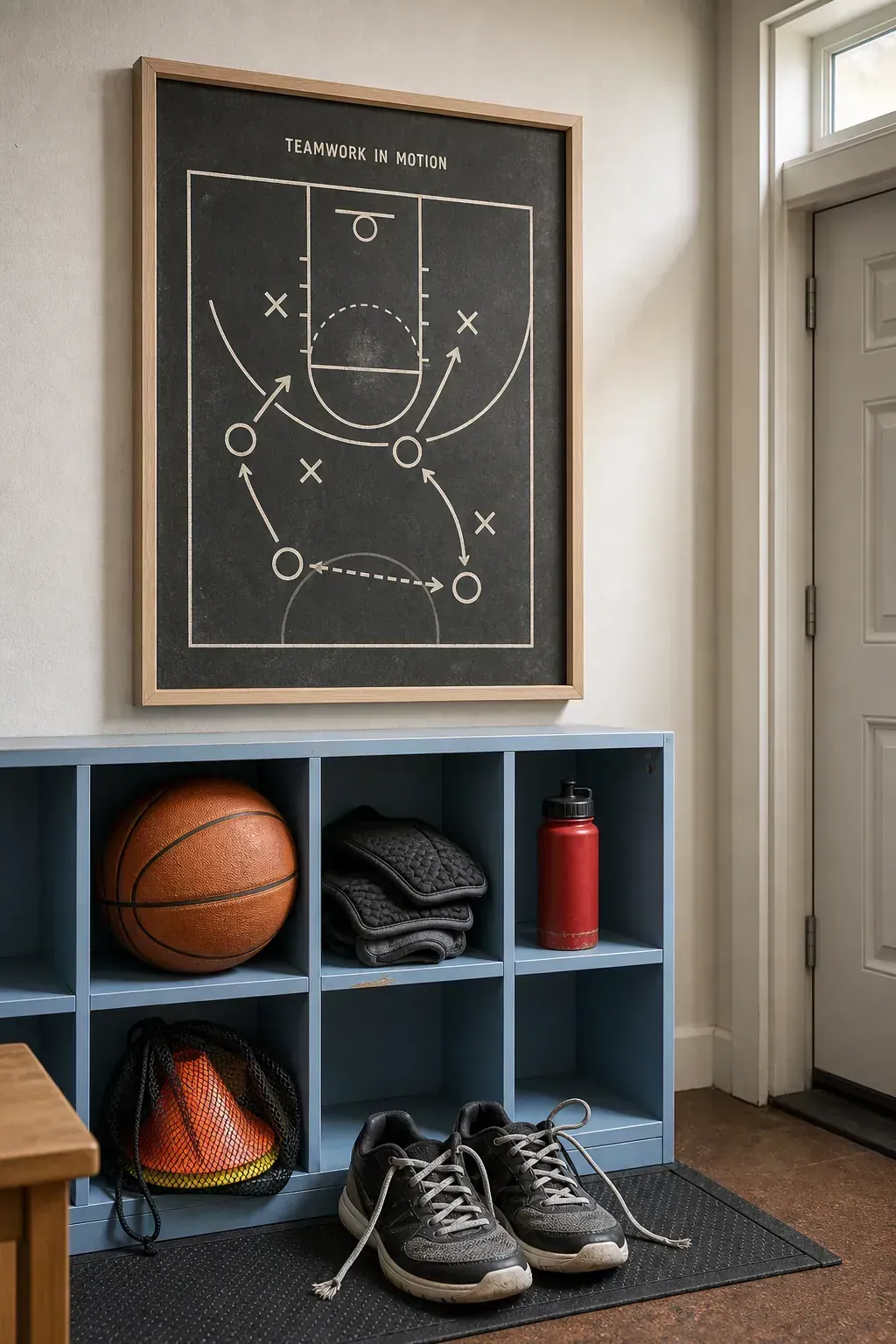
A Sports Strategy Sketch
Sports decor does not need a logo or a giant action photograph. A chalkboard-style strategy sketch can show motion, teamwork, and the beauty of a court or field. Personalize the accent color to a local team without copying trademarks. It will feel relevant longer than a poster of one current player.
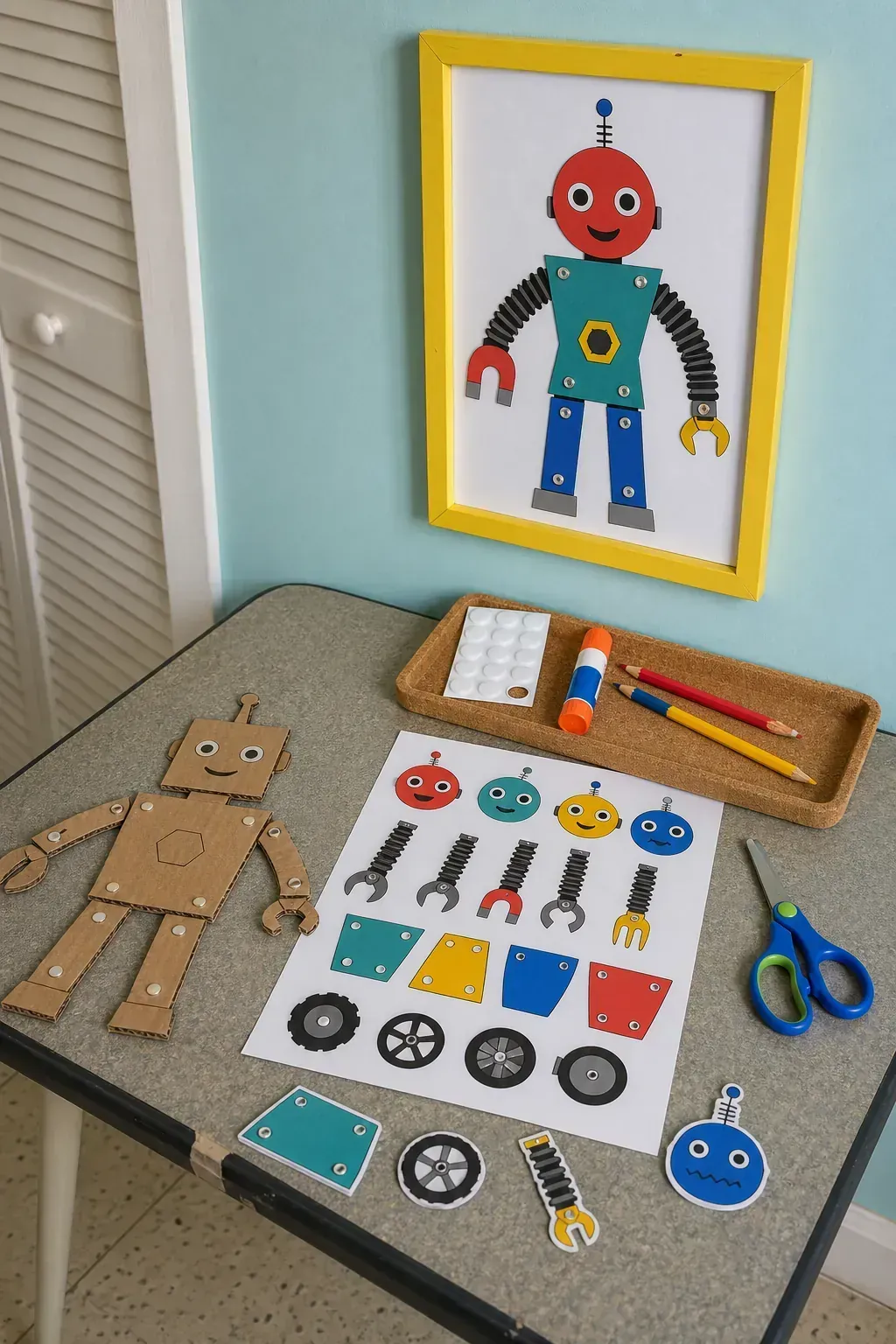
A Build-Your-Own Robot Print
Design a robot from mismatched geometric parts, then print a second page of alternate heads, arms, and tools for children to cut and rearrange at a table. Frame the finished example and keep the activity sheet accessible. One purchase becomes both decor and a low-pressure making prompt.
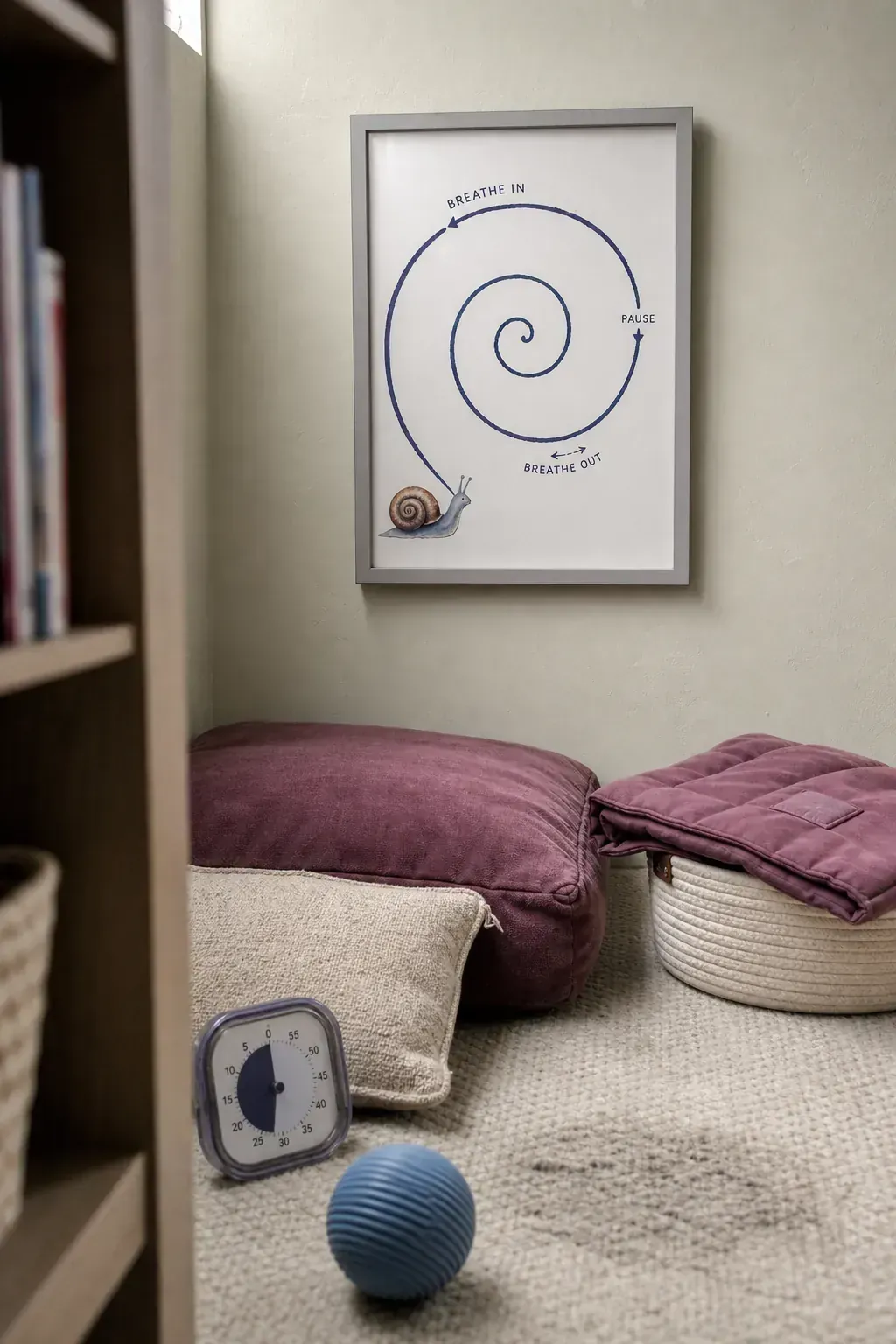
A Calm-Down Breathing Path
A breathing print should be simple enough to follow during an actual hard moment. Use one continuous path—a curling snail shell, slow wave, or rising balloon—with brief inhale and exhale cues. Keep the palette quiet and place it in a soft corner with a cushion, not in the room’s loudest activity zone.
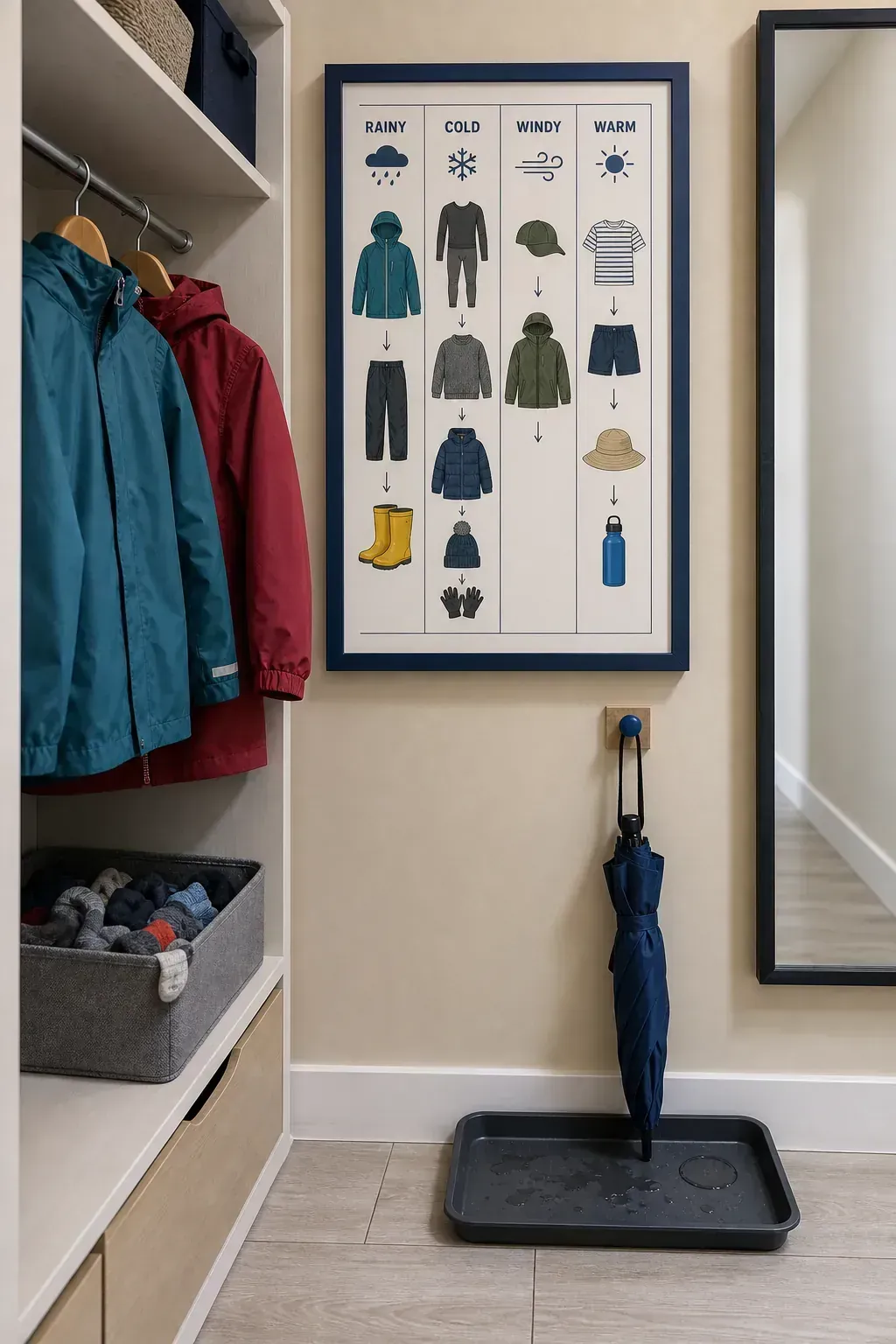
A Weather-Dressing Guide
Place a compact weather-and-clothing chart near the wardrobe to support morning independence. Illustrate real layers used in your climate rather than a fantasy set of four equal seasons. Hooks, a small mirror, and the print can form a practical getting-ready station that still reads as cheerful decor.
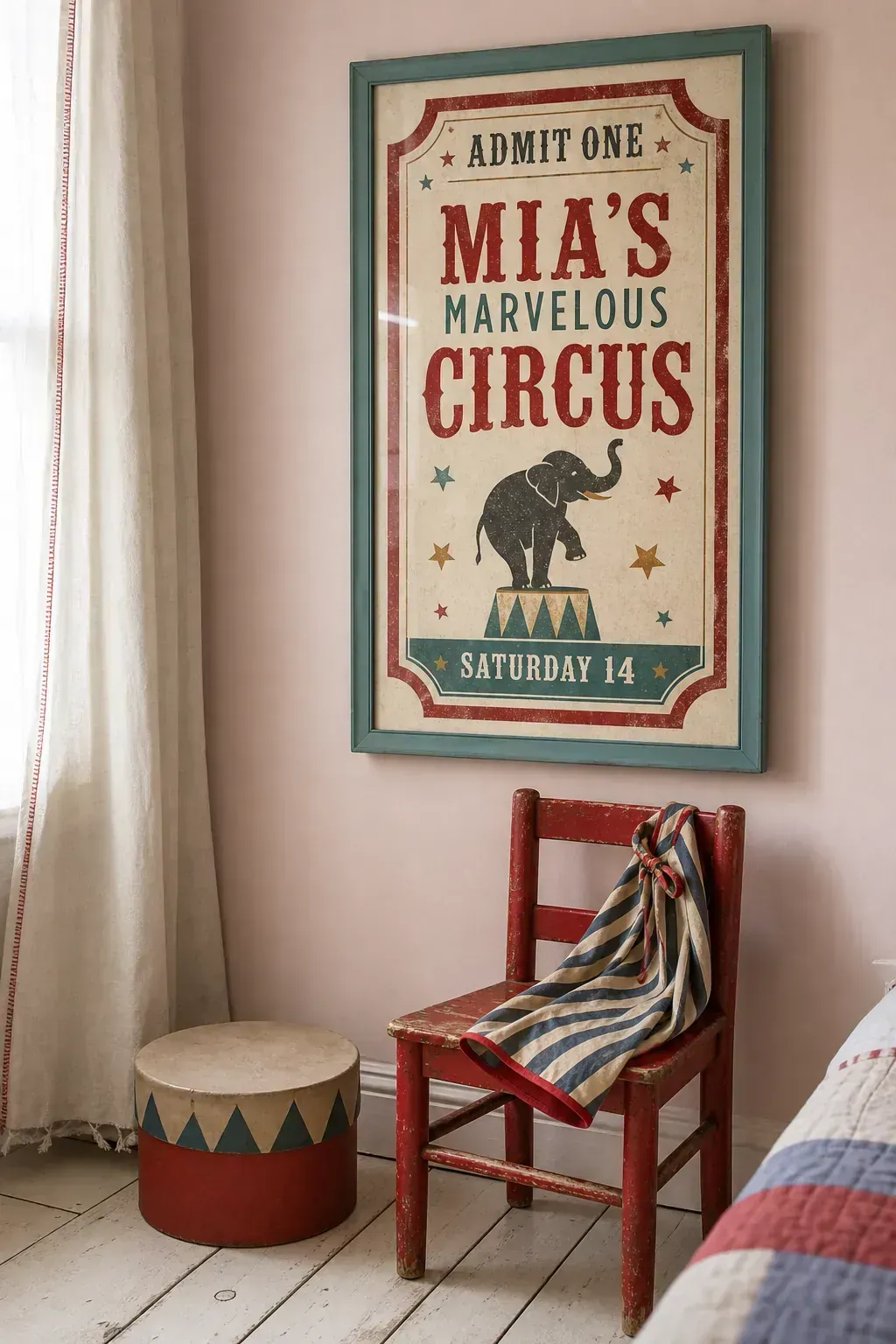
A Vintage-Inspired Circus Ticket
A circus idea can be exuberant without using a dozen characters. Enlarge one imaginary admission ticket with scalloped borders, hand-drawn stars, and a playful date connected to the child. Muted tomato red, faded teal, and cream deliver color with a collected, storybook quality.
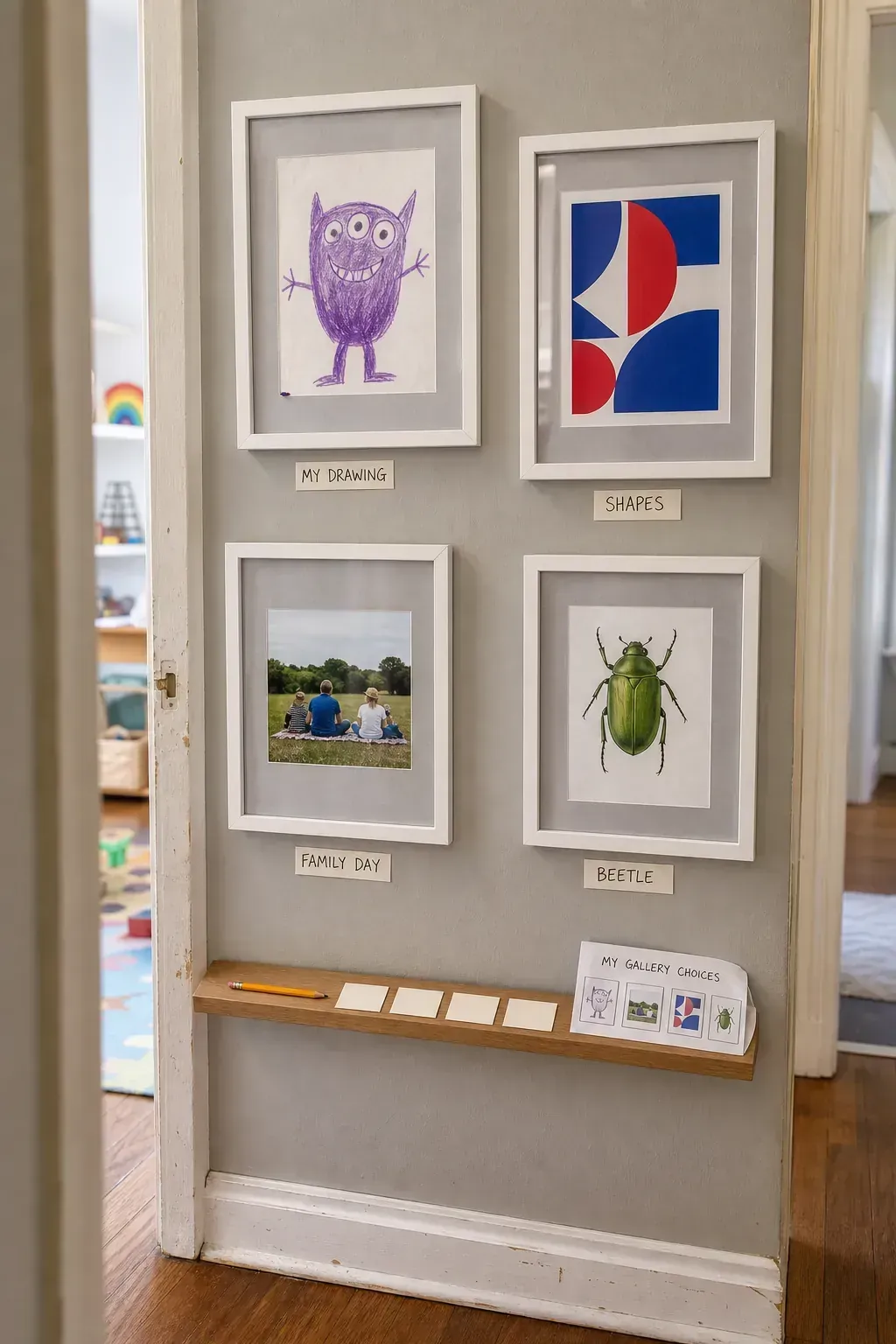
A Child-Curated Mini Gallery
Give the child a fixed limit—perhaps four images—and let them choose from family photos, public-domain art, their own drawing, and one new printable. Matching mats or one repeated frame color will hold the mixture together. The curating decision matters: children are more likely to look at a wall they helped build.
A Rotating Seasonal Display
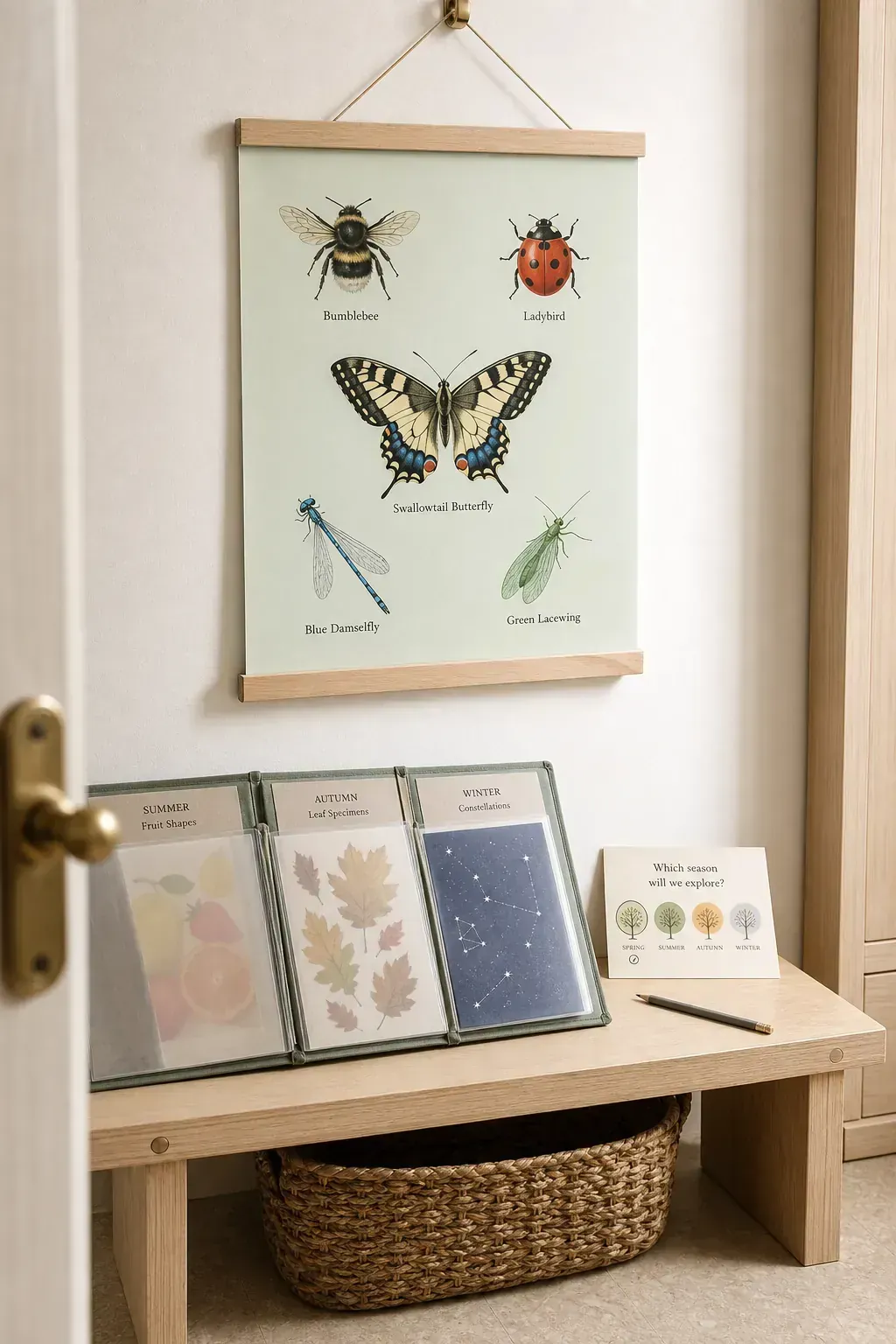
Finish with a display designed to change. A lightweight magnetic poster hanger, secure front-opening art frame, or clipped rail can hold one seasonal print at a time: spring insects, summer fruit, autumn leaves, or winter constellations. Store the flat prints in a labeled portfolio and invite the child to choose the next change. The smartest kids bedroom decor is not the piece that lasts unchanged for ten years; it is the simple system that keeps making room for who the child becomes.