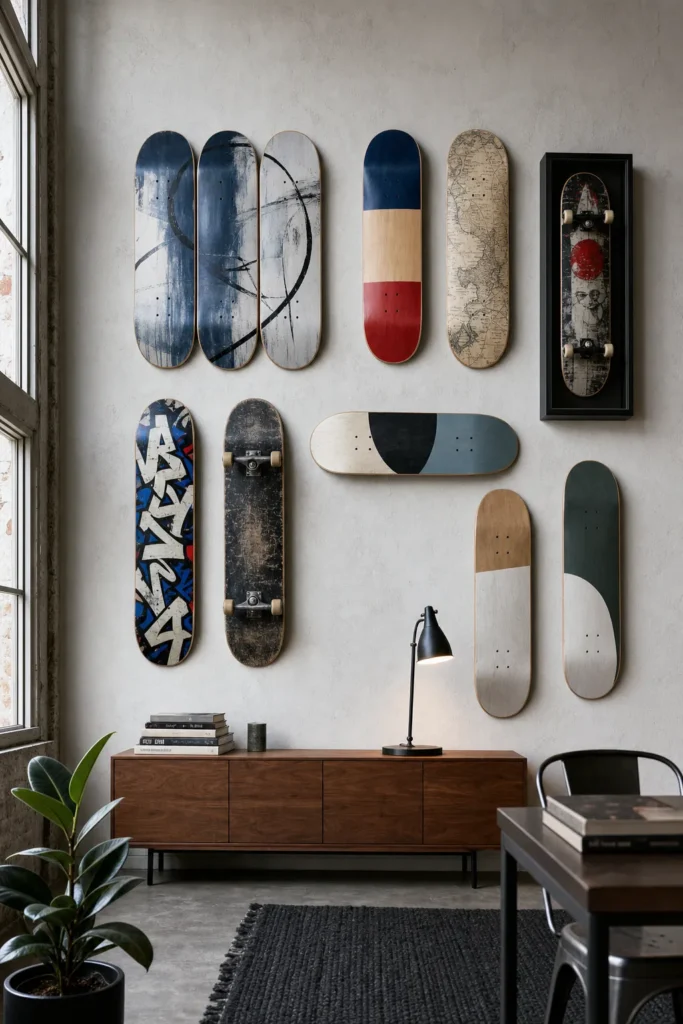
10 Skateboard Wall Art Ideas That Look Intentional
A skateboard deck already has what most wall decor lacks: a strong silhouette, real history, and just enough attitude to make a room feel personal. The hard part is not finding a board to hang. It is choosing a treatment that looks deliberate rather than like spare gear was moved off the floor. These 10 skateboard wall art ideas solve that problem with clear palettes, layouts, and mounting choices for bedrooms, studios, apartments, and grown-up living spaces.
Before you begin, decide whether the deck is display-only or may return to the street. For a collectible or rideable board, preserve the graphic and use its existing truck holes or a removable ledge. For a retired deck, sanding, painting, decoupage, and cutting become fair game. Lay multi-deck compositions on the floor first, trace a paper template, and test the whole arrangement at wall scale before drilling.
Build a clean three-deck graphic triptych
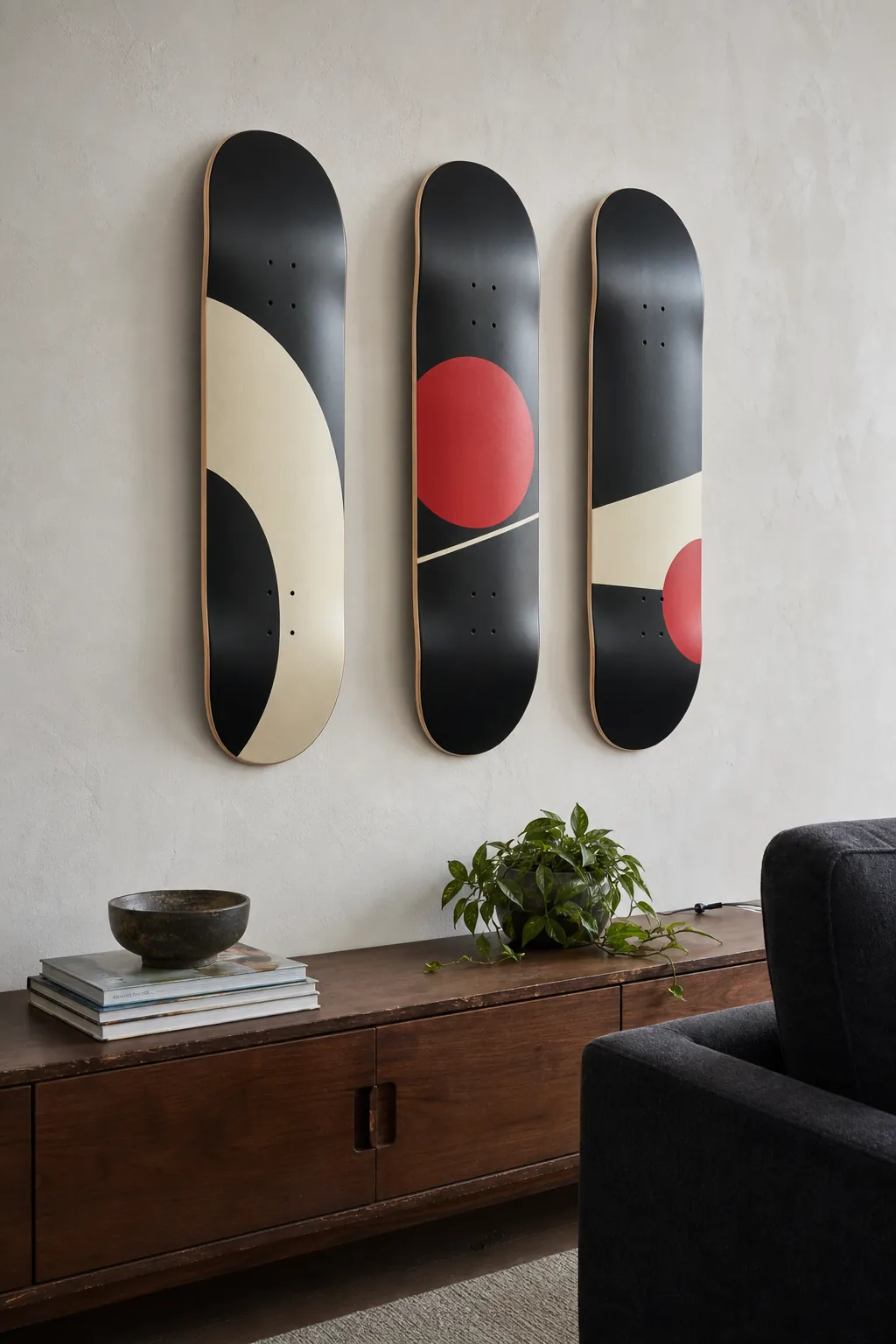
A triptych is the easiest route to high-impact skate board deck wall art because the narrow deck shape naturally creates rhythm. Choose three graphics that share one anchor color, then let the secondary colors vary. A black, cream, and red set feels cohesive without looking factory-matched.
Keep the decks vertical, align their centerlines, and leave roughly a palm-width between them. The group should read as one artwork, so center the complete set over the furniture rather than centering the middle board by instinct. Hidden mounts through the truck holes create a floating finish and make tiny spacing errors more obvious, which is why a level and paper template matter.
Turn a retired deck into bold color-block art
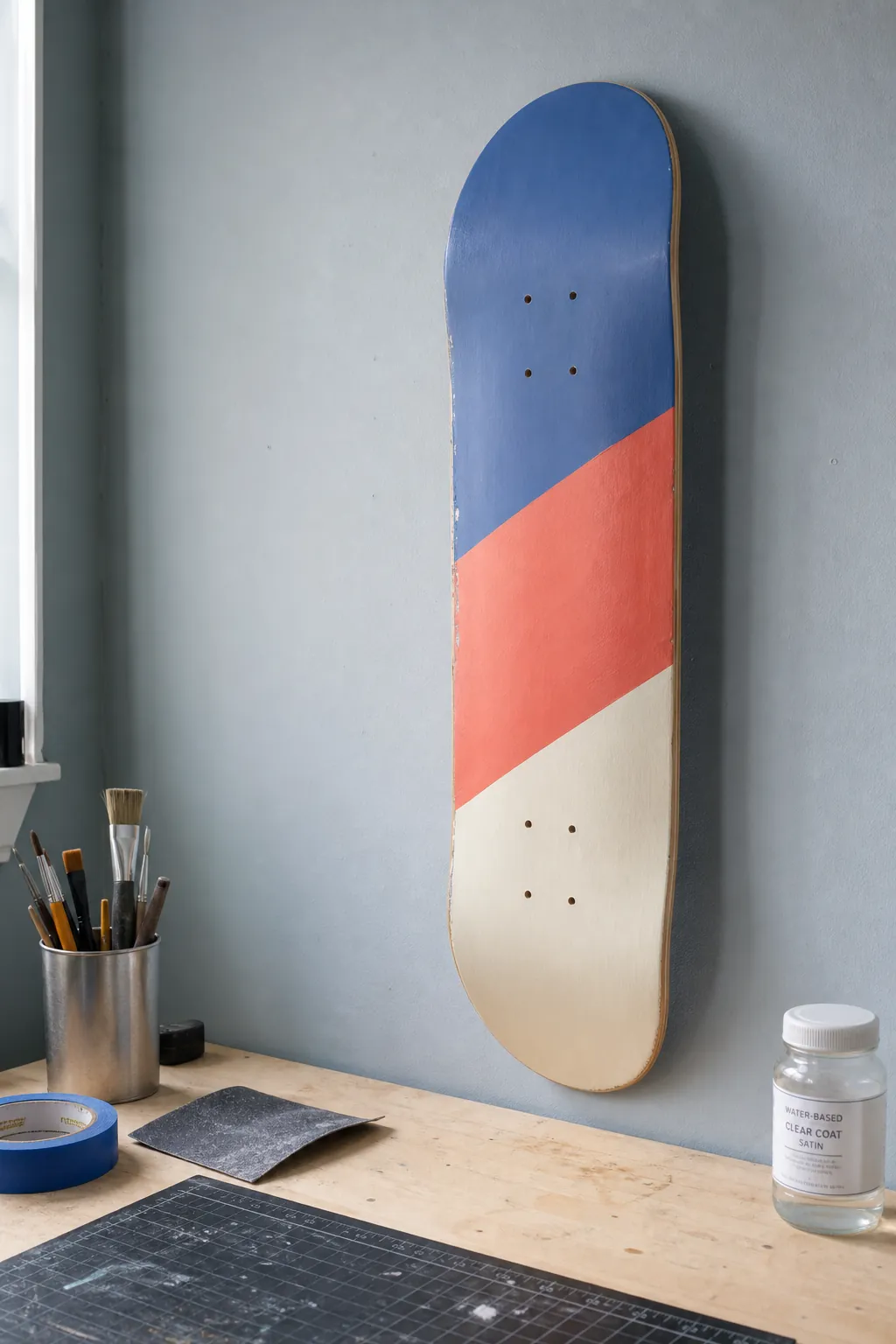
Simple geometry makes beginner DIY skateboard art look controlled. Remove the trucks, clean the surface, dull a glossy finish with fine sandpaper, and use painter’s tape to block out two or three oversized shapes. Restricting the palette is more important than perfect brushwork.
- Use a compatible primer if the original finish is slick.
- Press tape edges firmly and paint away from the edge to reduce bleed.
- Build several thin coats rather than one heavy coat.
- Protect the finished design with a clear coat suited to the paint.
Let the concave shape remain visible instead of trying to disguise it. Light grazing across the raised nose and tail gives even a basic skateboard art design idea a sculptural quality.
Create a continuous map across multiple decks
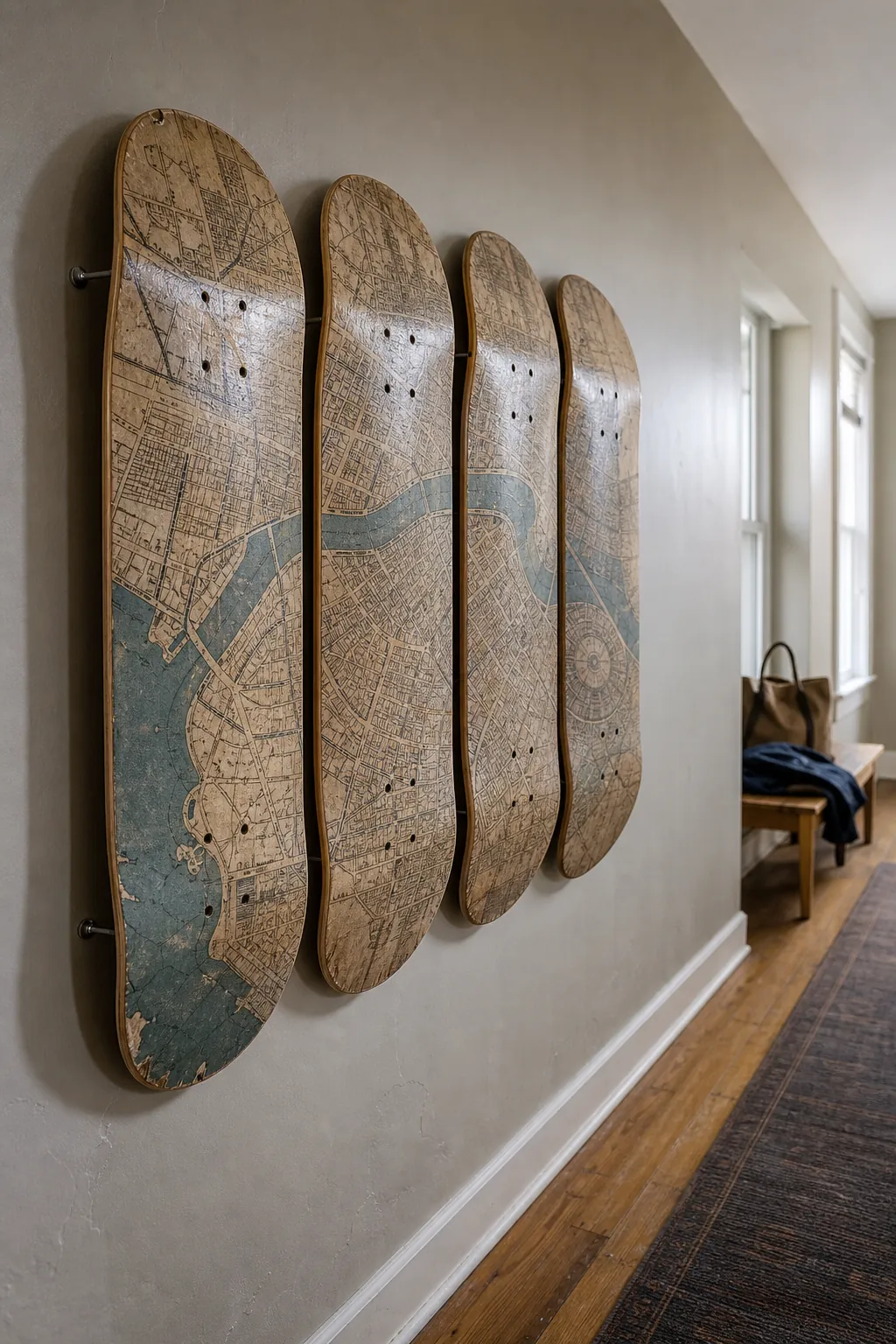
A continuous map turns four unrelated shapes into one story. It works especially well with a hometown street plan, a favorite skate destination, or a transit map. First enlarge the image to the full width of the proposed arrangement, mark the gaps between decks, and divide the print only after checking which landmarks land on each board.
Paper will conform to a deck’s curve if you work slowly. Apply decoupage medium in a thin, even layer, smooth from the center toward the edge, and make relief cuts where the paper fights the kicktail. A small paper mockup is the cheapest way to catch an awkward crop. Seal only after every bubble and lifted edge is resolved.
Frame one collectible deck like gallery art
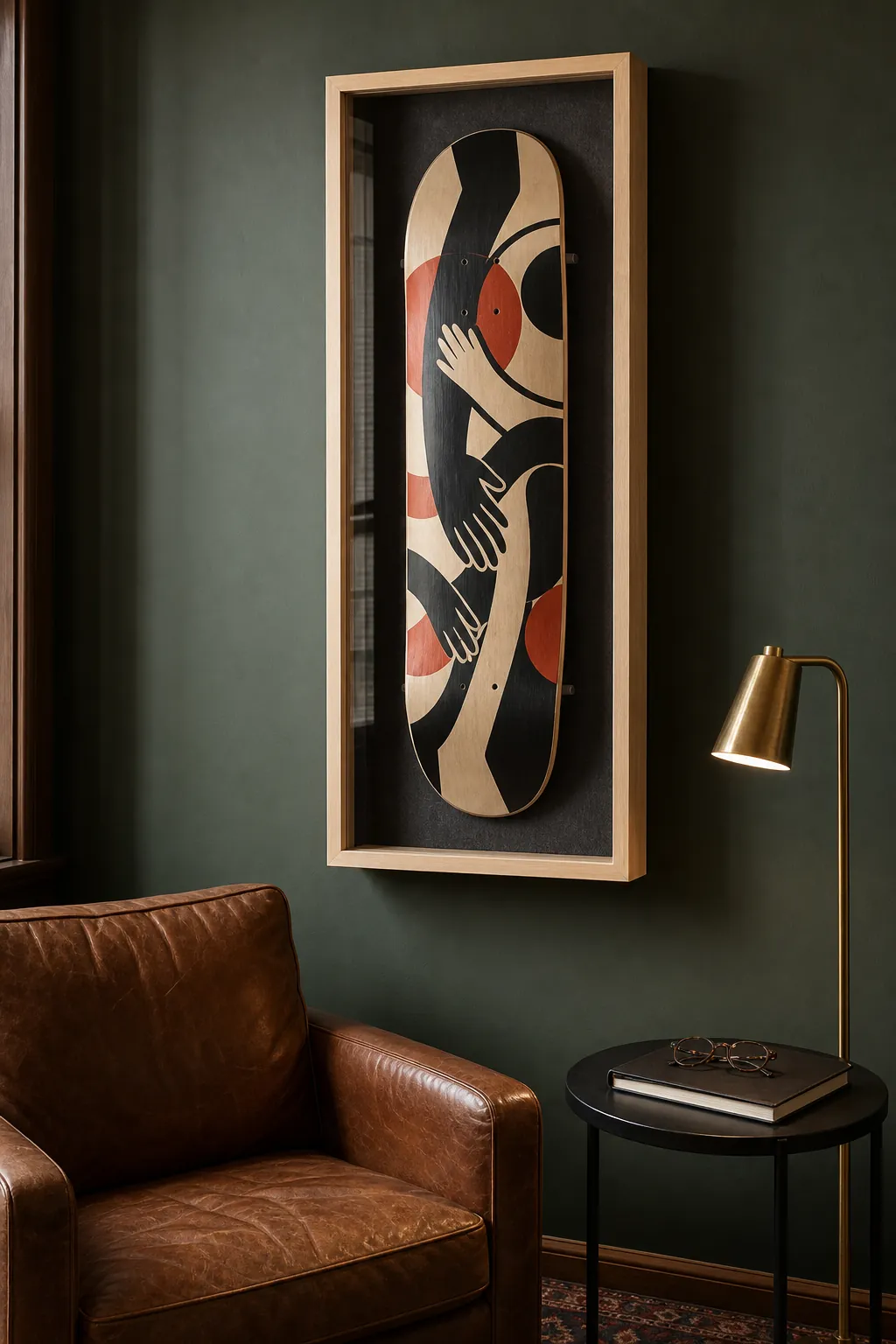
If the graphic, signature, or memory matters more than the DIY process, restraint wins. A deep shadow box protects the printed face from handling while turning the board into legitimate skateboard artwork. Choose a frame only slightly wider than the deck and a backing color that repeats a quiet tone in the graphic.
Mount the deck without adhesive touching the artwork. Supports can pass through existing truck holes or cradle the board from behind. Museum-grade UV-filtering glazing is worth considering for valuable pieces, but even ordinary glazing should sit far enough forward that it never rubs the curved nose or tail.
Arrange a mixed skate-room gallery wall
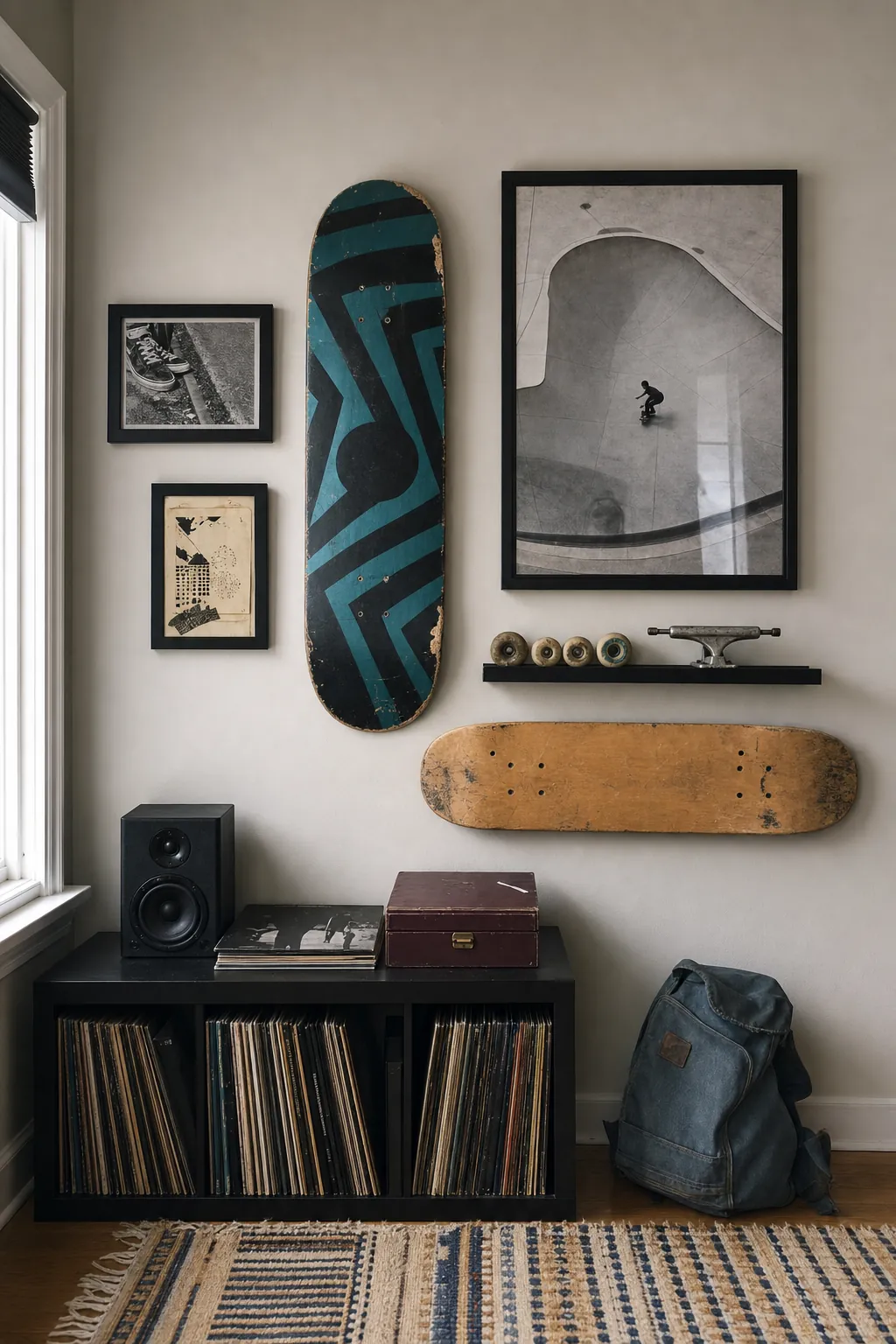
A good skate room should feel collected over time, not purchased as a set. Mix one or two decks with a framed skateboarding poster, a small contest flyer, a candid park photograph, and a shallow shelf for wheels or vintage hardware. Repeat one frame finish to keep the variety under control.
Start with the largest deck as the visual anchor. Build outward with smaller rectangles and leave an irregular outer edge; forcing every object into a perfect box can drain the energy from the wall. Keep the densest cluster near eye level and allow one quieter zone so the graphics have room to breathe.
Use a picture ledge for a renter-friendly rotation
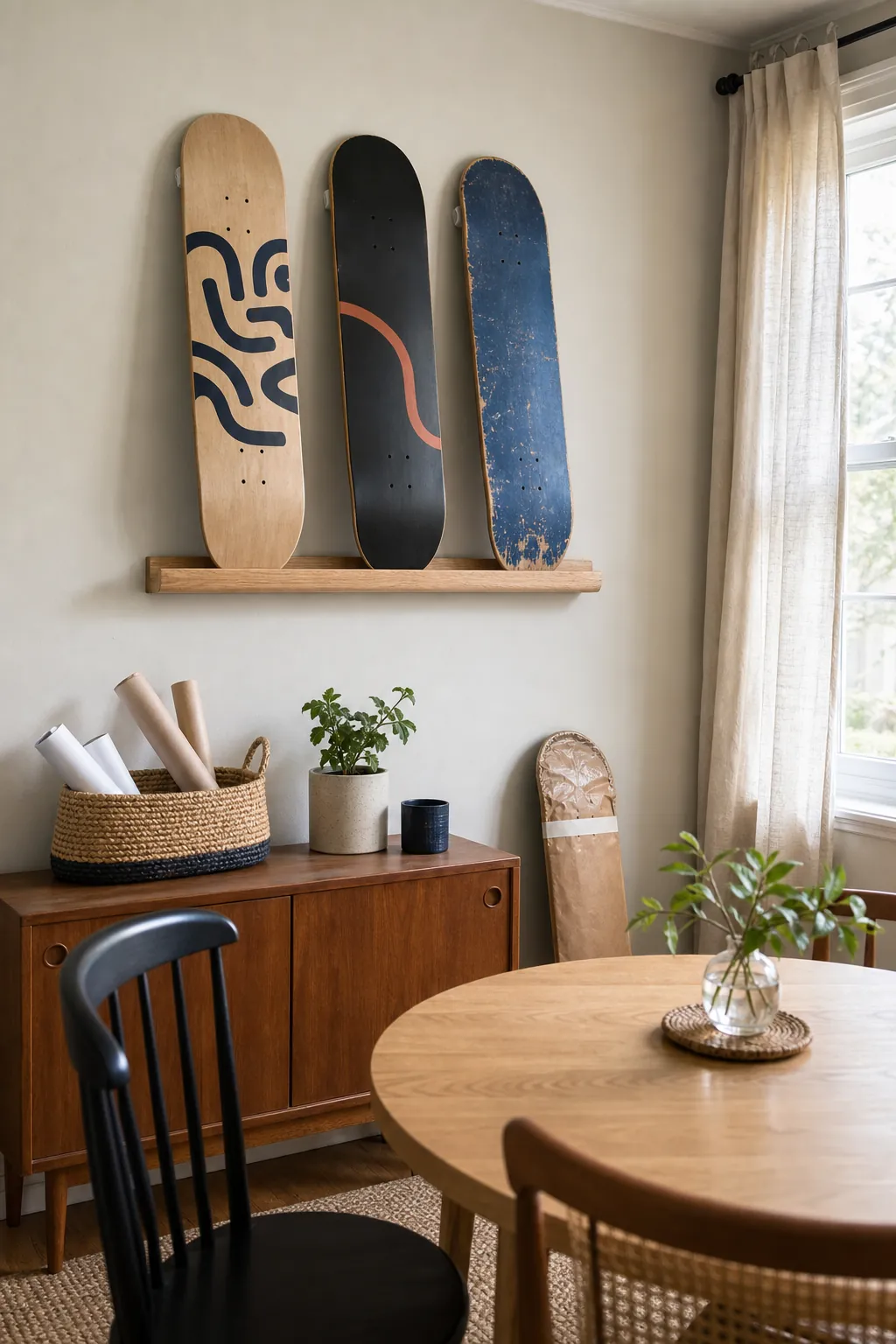
A shallow picture ledge is more dependable than improvising with undersized adhesive hooks. The lower lip supports the weight while small clear bumpers behind each deck stop the board from rocking or marking the paint. It also lets you swap graphics whenever the room changes.
Secure the ledge according to its manufacturer’s instructions and your wall type; do not assume a damage-free strip is suitable just because a deck feels light. If drilling is prohibited, use a freestanding console or low bookcase and lean the decks against the wall with nonslip pads below them. Renter-friendly should still mean stable.
Make graffiti lettering feel intentional
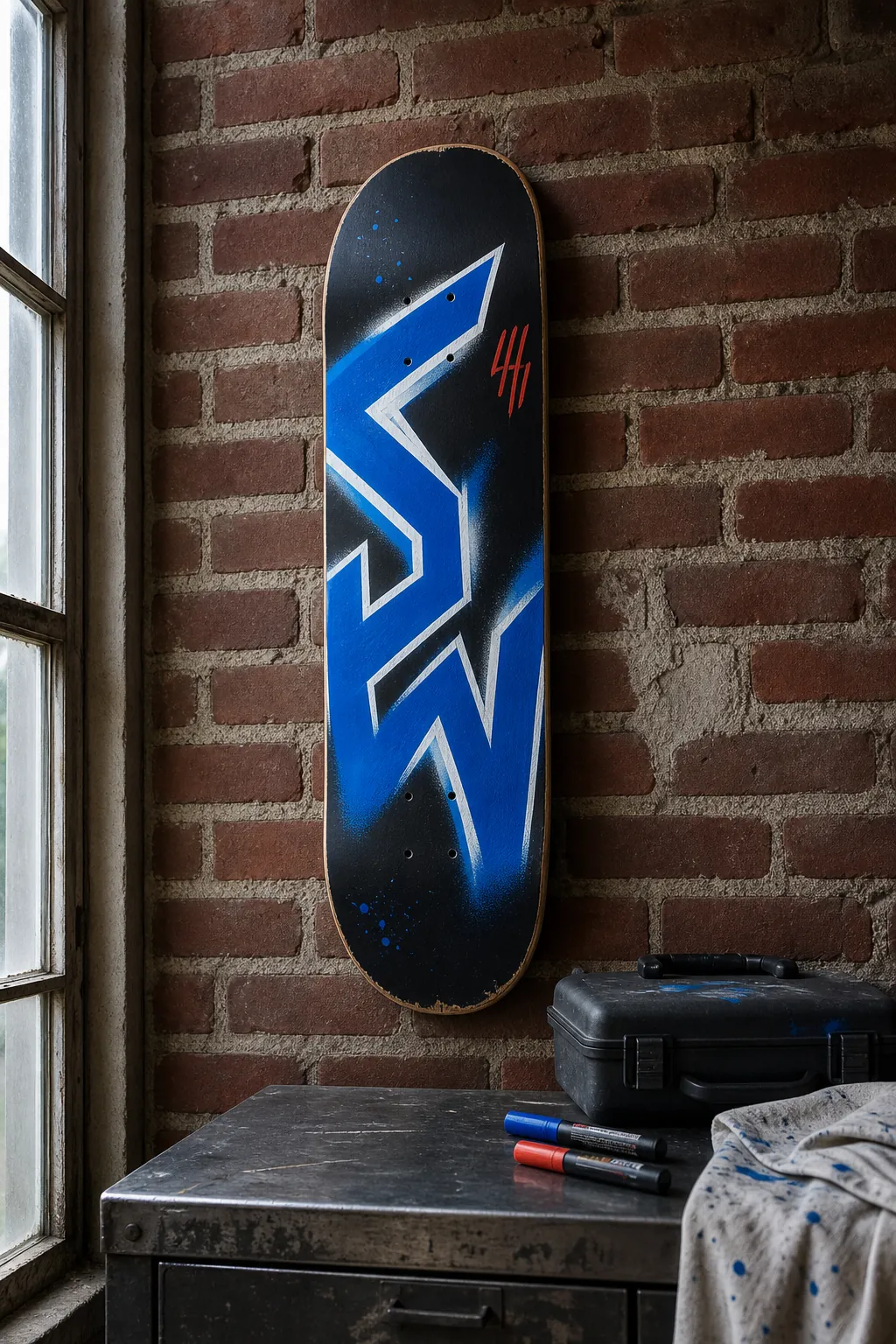
The difference between expressive skateboard graffiti and visual noise is hierarchy. Pick one short word or monogram, draw it large enough to cross the deck’s narrow waist, and keep secondary marks smaller. A limited palette—such as cobalt, white, and black—lets drips and overspray add texture without muddying the message.
Sketch the letter skeleton on paper before touching the board. Mask the truck holes from the back, build the background first, then add the main letterform and highlights. Mount the finished piece against a quieter wall so its edges stay legible from across the room.
Celebrate wear with a retired-deck memory wall
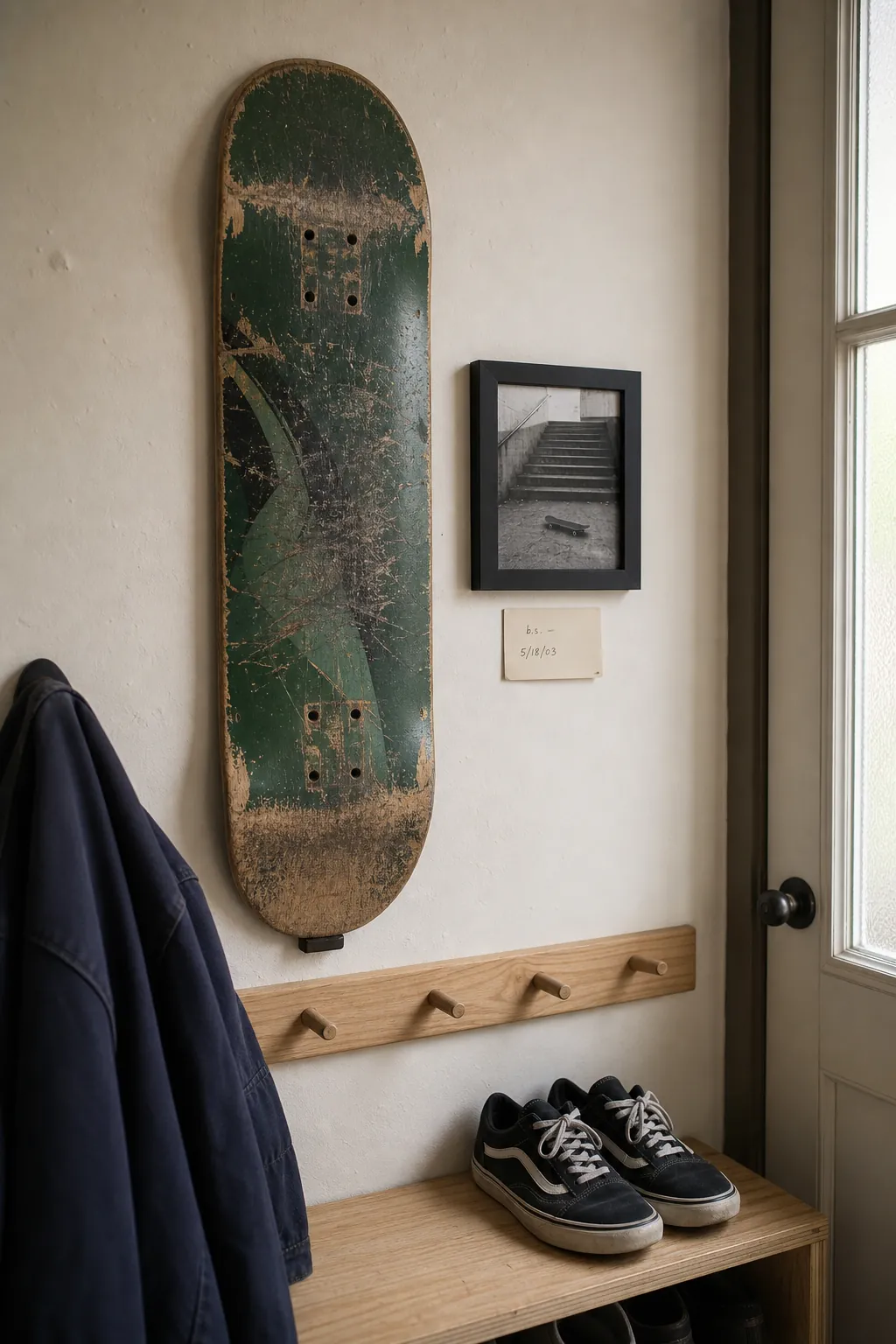
Scrapes, razor tail, and faded graphics are not defects when the board represents a chapter of your life. Clean off loose grime, but resist refinishing every mark. Pair the deck with one small photograph, a handwritten location and date, or a compact caption that explains why it earned a place on the wall.
This approach works best with generous negative space. One authentic board and one honest detail feel more personal than a crowded shrine. If wheels touch the wall, clean them first and add discreet felt bumpers so dirt and urethane do not transfer to the paint.
Mount a horizontal deck above a desk
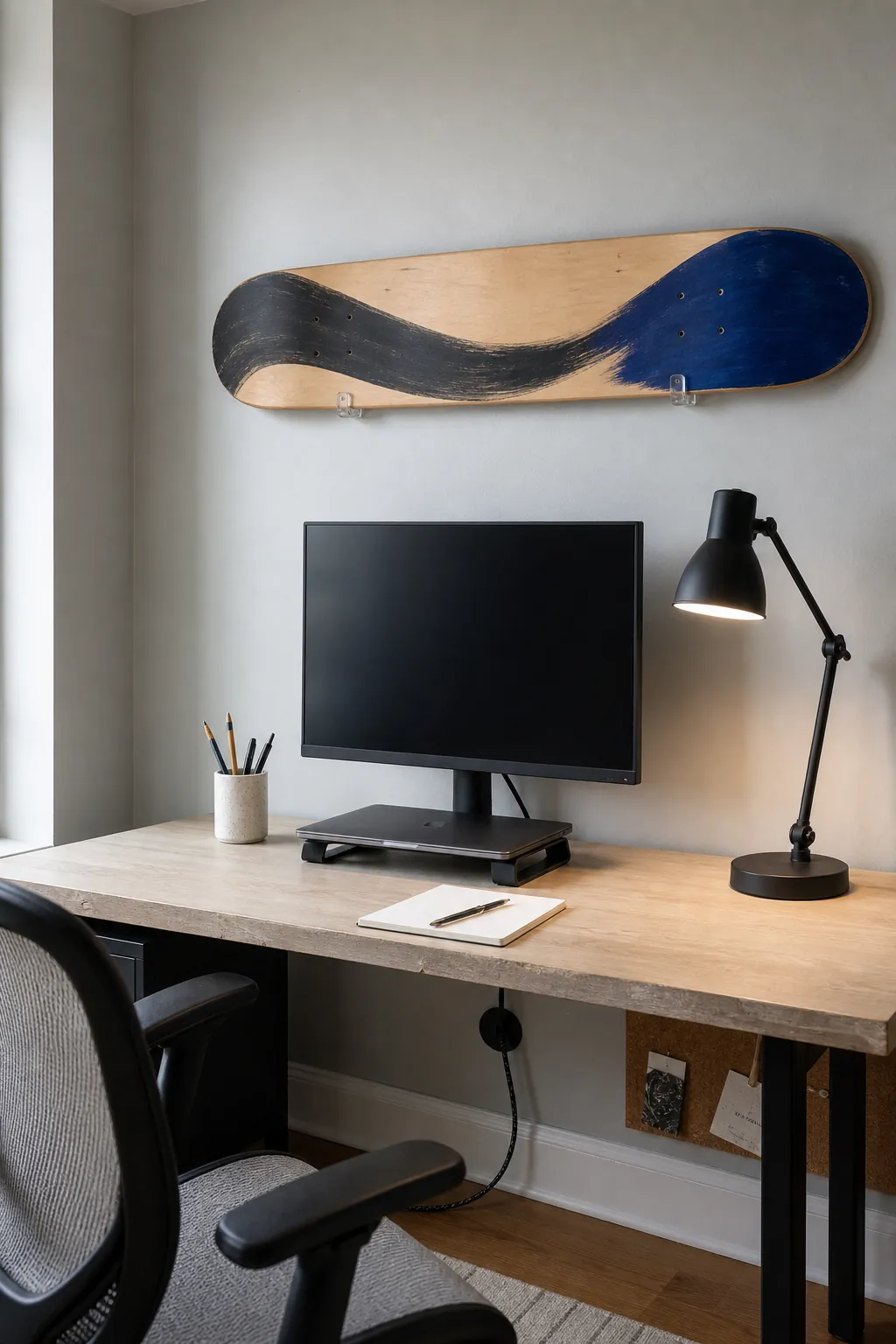
A horizontal deck fills the long, awkward strip above a desk or low headboard without the bulk of a wide frame. Use a two-point mount so the board cannot roll forward or slowly tilt. Center it over the working surface, not the wall, and leave enough clearance that standing up or moving a monitor cannot knock it.
Choose a graphic with a strong left-to-right flow, or create your own skateboard painting idea with a single sweeping line that follows the concave profile. A small task light below will rake across the maple edge and make the board read as an object, not a flat poster.
Design a monochrome deck for a calmer room
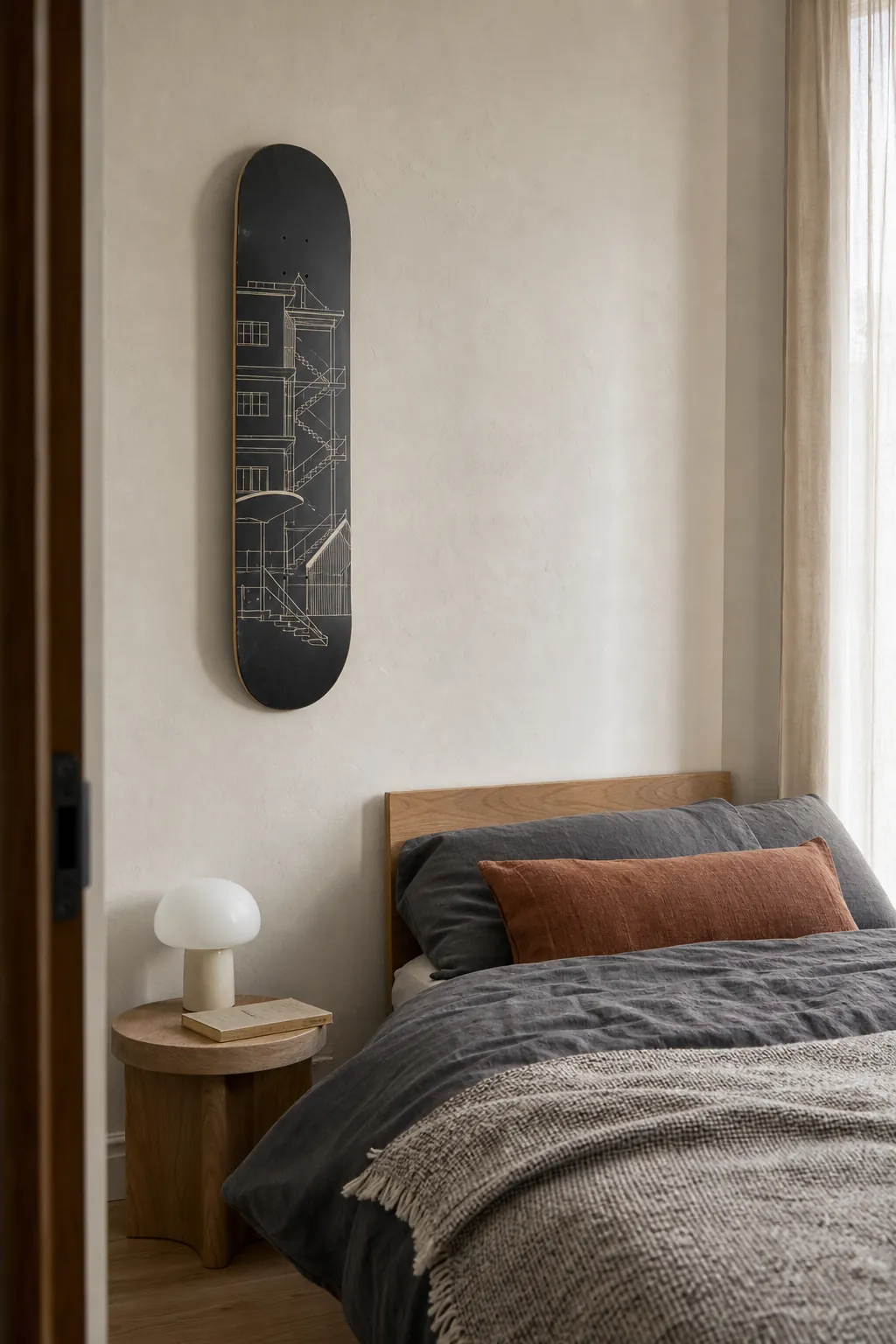
Skateboard decor does not have to shout. A matte black deck with warm-white architectural linework, or a natural maple deck with one charcoal drawing, can sit comfortably in a quiet bedroom or minimalist office. The familiar outline supplies the skate reference while the restrained finish connects it to the room.
Carry one tone from the deck into a nearby textile or lamp, then stop. The most convincing display leaves the board as the only overt skate object rather than surrounding it with themed accessories. Whichever idea you choose, mock up the scale, protect meaningful graphics, and use mounting hardware rated for the actual wall. The best skateboard wall art looks intentional because its story, spacing, and installation all support the same idea.