38 Kitchen Dining Wall Ideas for a Stylish, Welcoming Space
The best kitchen dining wall ideas make the eating area feel connected to the kitchen while giving it a distinct personality. These examples span gallery walls, wallpaper, paneling, natural textures, shelves, and oversized art for spaces of every size and style.
Use the wall behind your dining table to establish a focal point, reinforce your color palette, or add practical display space. Choose a treatment scaled to the table and surrounding architecture so the finished arrangement feels balanced rather than crowded.
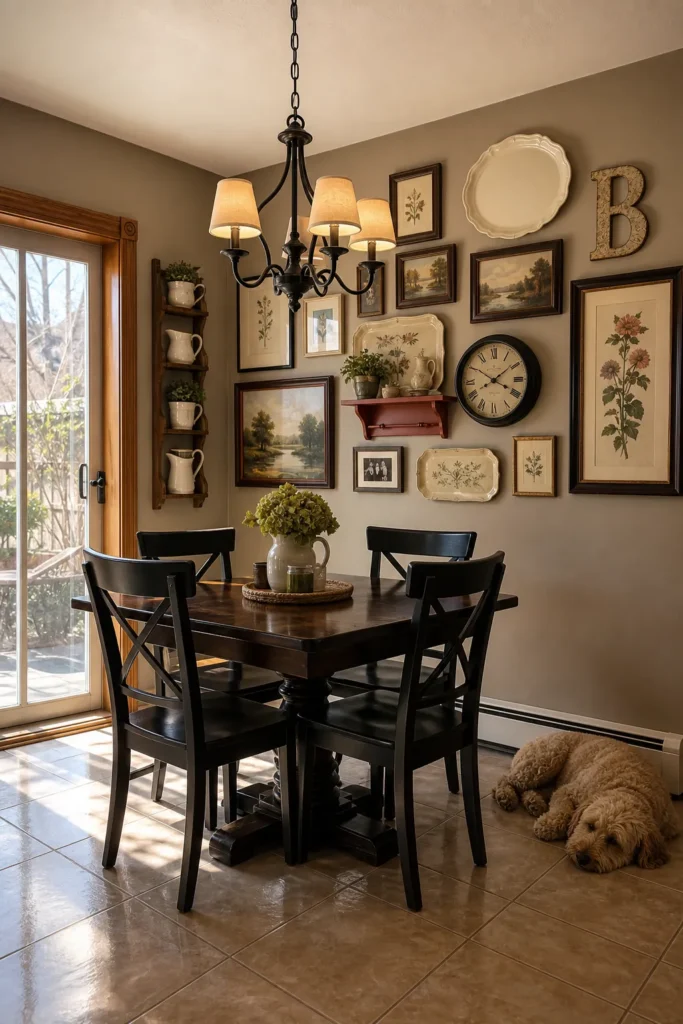
Create a Cozy Breakfast Nook With an Art-Filled Gallery Wall
Turn an empty wall into a personal focal point by grouping paintings, prints, and small photographs above the breakfast table. A mix of subjects and frame finishes creates an inviting, collected look.
Keep the arrangement visually connected by maintaining consistent spacing between pieces. Warm textiles, soft lighting, and comfortable seating complete the cozy atmosphere.
Introduce Subtle Elegance With Modern Damask Wallpaper
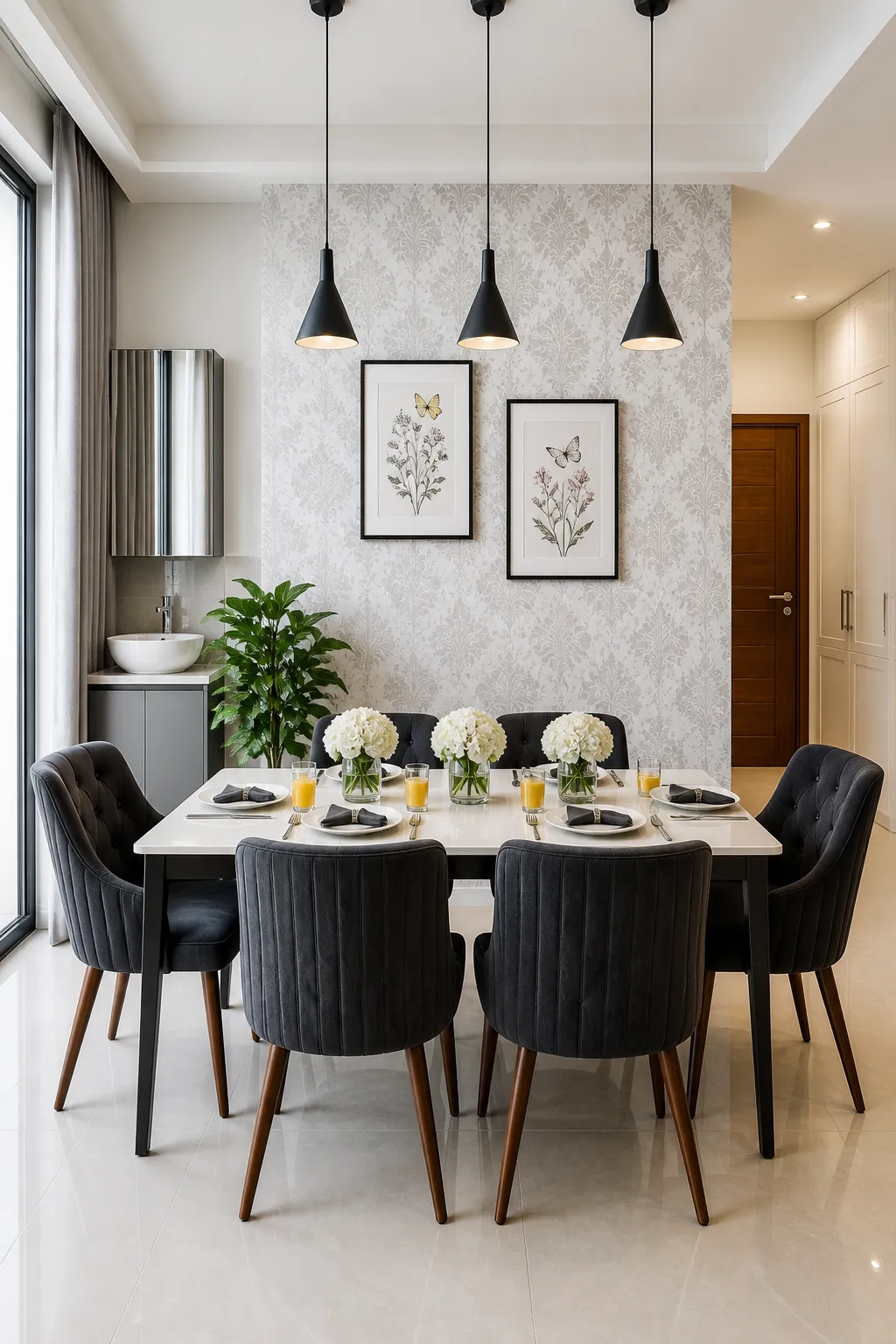
Choose damask wallpaper in a restrained palette to give the dining area pattern without overwhelming it. A simplified motif offers classic style with a modern edge.
Pair the wallpaper with streamlined furniture and understated accessories. Repeating one of its tones in the upholstery or curtains helps the space feel cohesive.
Add Warmth and Height With a Luxury Wood-Slat Wall
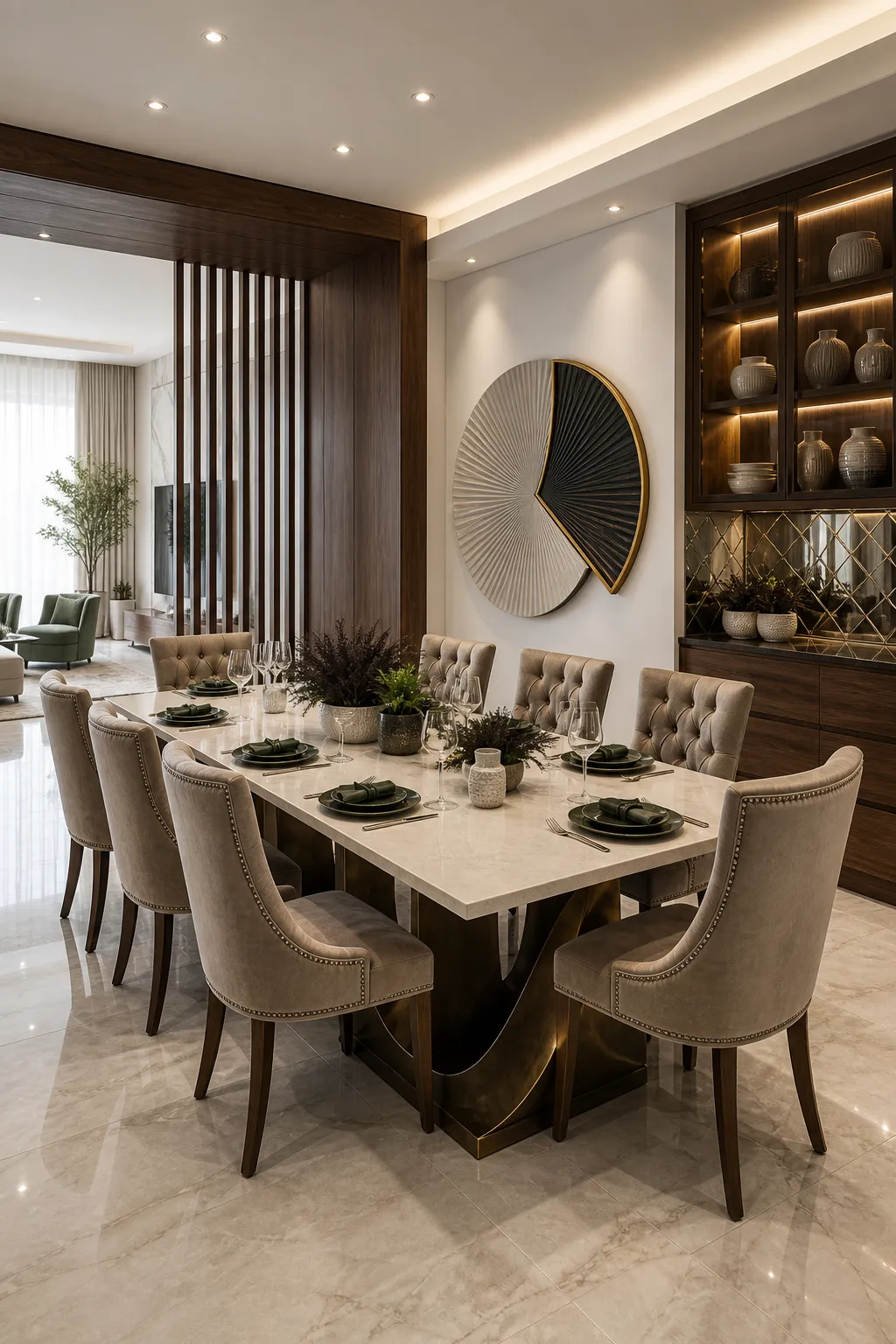
Floor-to-ceiling timber slats draw the eye upward while bringing natural warmth into the dining space. The vertical lines create a taller, more architectural feel.
Use evenly spaced slats and a rich wood tone for a polished finish. Concealed lighting can highlight the grain and add an intimate glow after dark.
Brighten a Minimal Breakfast Nook With Mosaic Texture
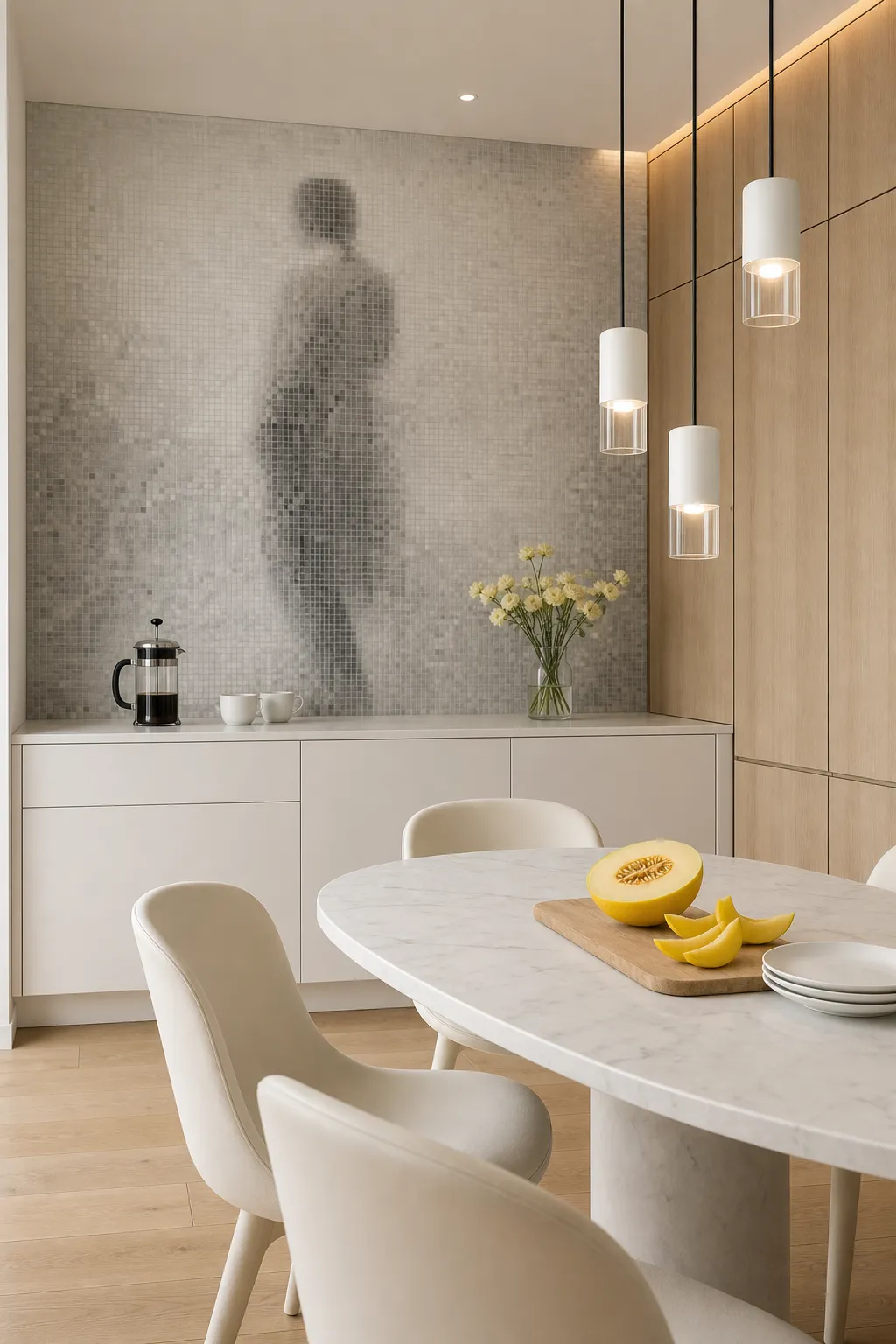
A pale mosaic surface adds gentle movement to a simple breakfast nook while reflecting natural light. Its small-scale pattern provides texture without visual clutter.
Keep the table, seating, and accessories streamlined so the tile remains the quiet focal point. Light grout creates a seamless effect, while contrasting grout makes the pattern more pronounced.
Give an Open Dining Space Industrial Character With Brick
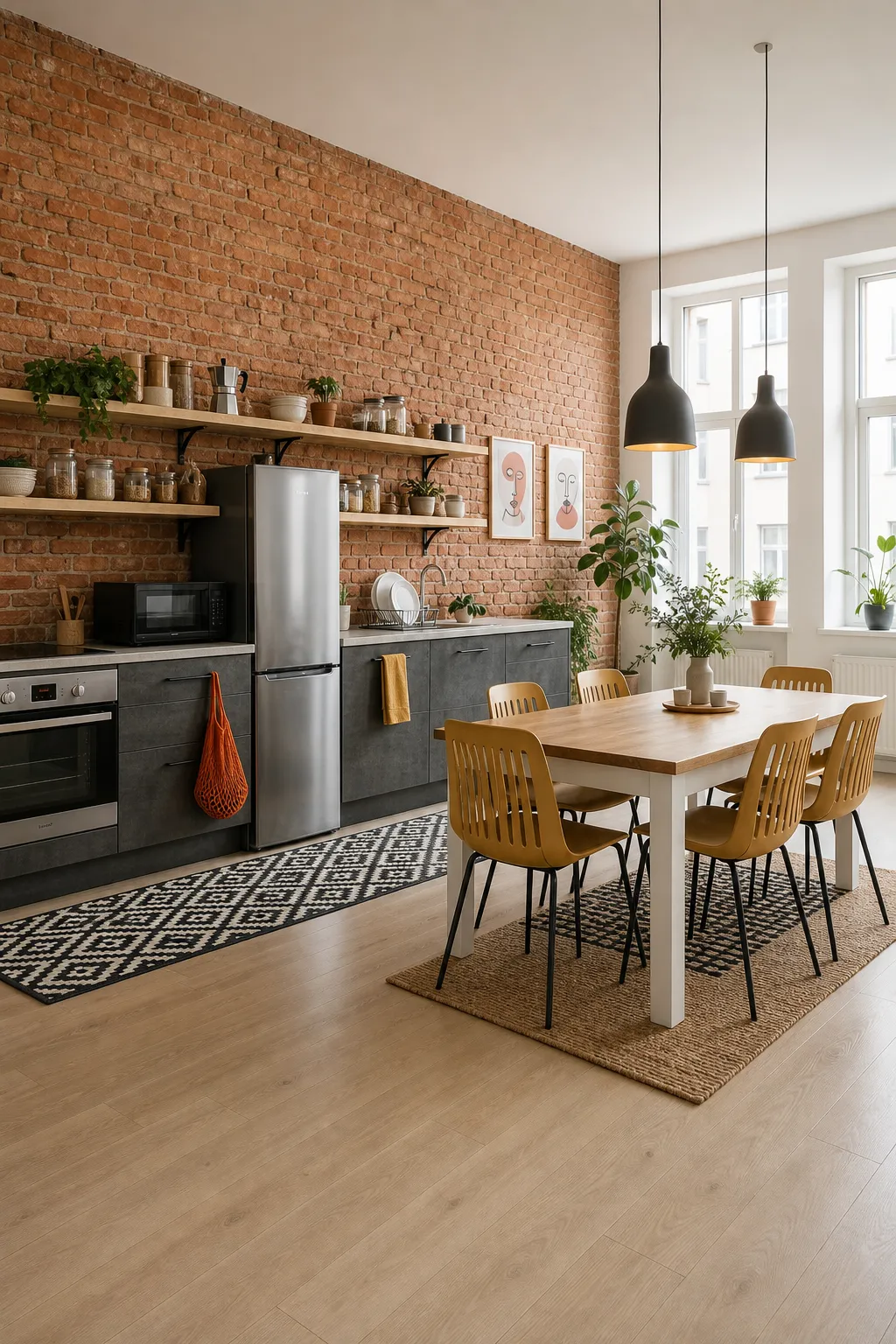
Exposed brick gives an open dining zone texture, history, and a clear sense of identity. Its rugged surface introduces instant industrial character beside sleek kitchen finishes.
Balance the brick with warm wood, black metal accents, and simple pendant lights. Limiting other decorative elements prevents the shared space from feeling busy.
Energize an Open-Plan Kitchen With Lime Floral Wallpaper
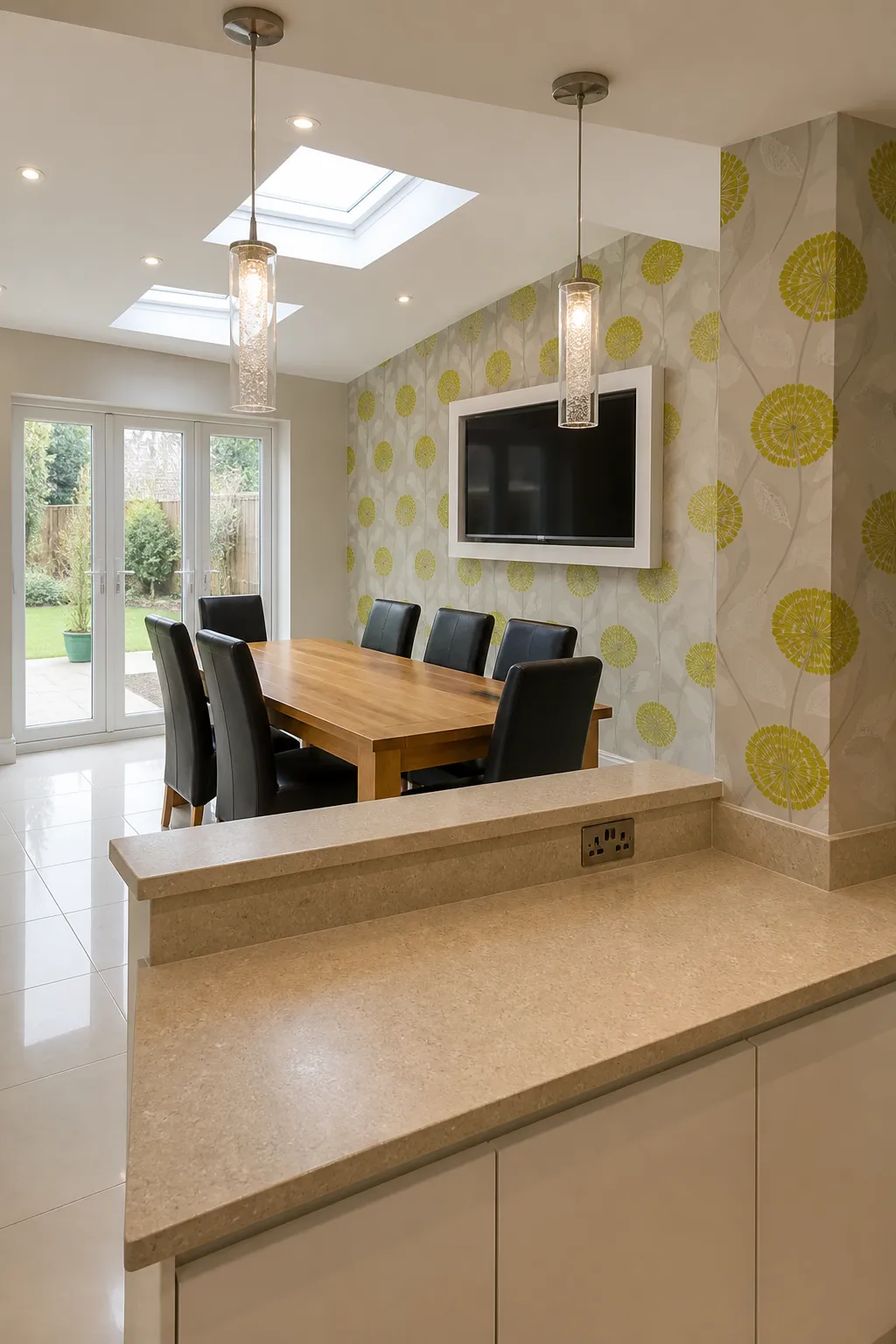
Lime floral wallpaper injects freshness and personality into an open-plan kitchen. Use it on one prominent wall to create an energetic dining focal point without saturating the entire room.
Ground the vivid pattern with white cabinetry, natural timber, or muted upholstery. Small green accents elsewhere will connect the feature wall to the wider layout.
Define a Dining Alcove With Moody Green Paint
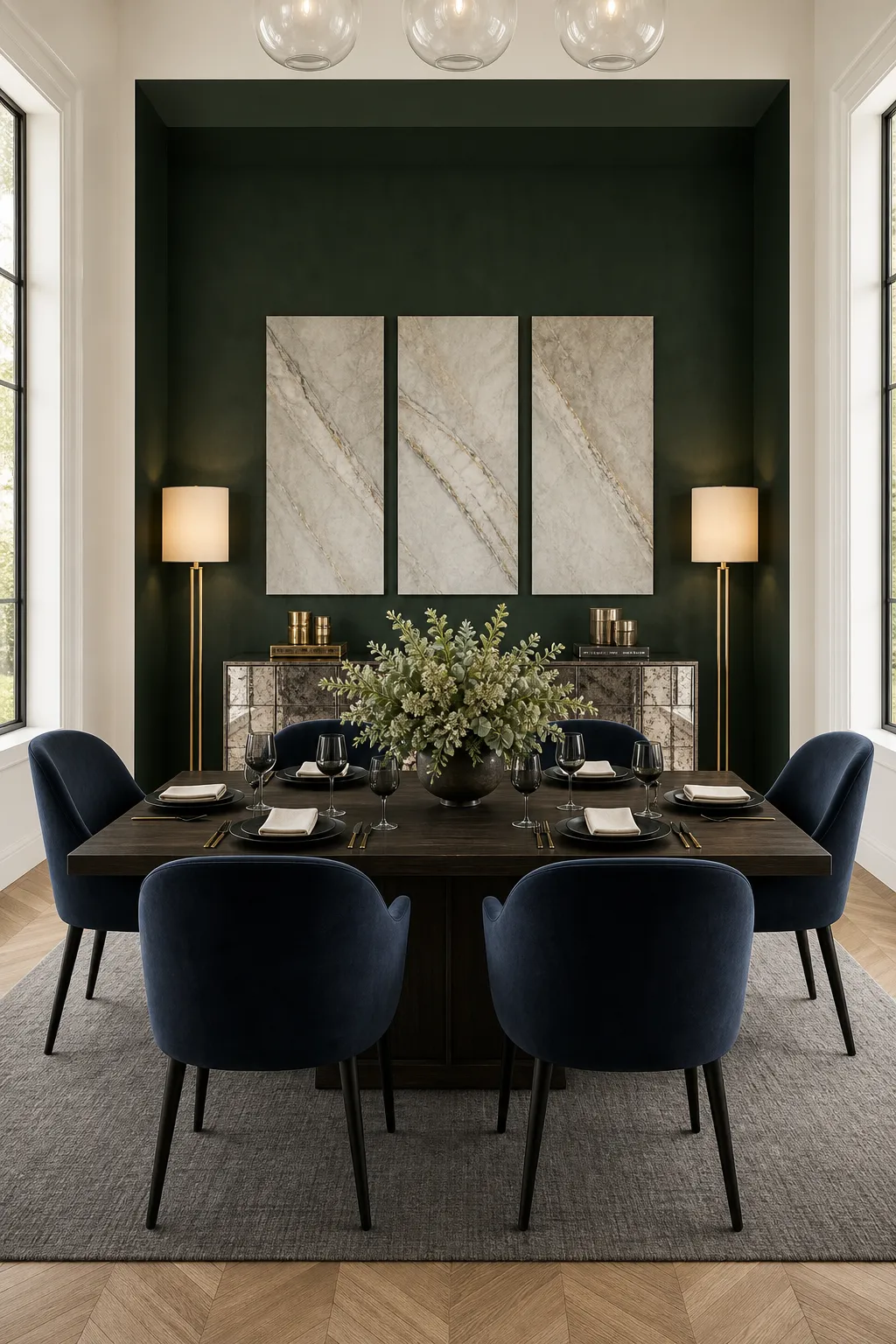
Wrap a recessed dining area in deep green paint to distinguish it from the adjoining room. The saturated color forms a cozy, enveloping zone around the table.
Carry the shade across the surrounding walls and trim for a unified effect. Warm brass lighting and pale upholstery provide contrast while preserving the intimate mood.
Layer Rustic Frames for a Collected Farmhouse Gallery
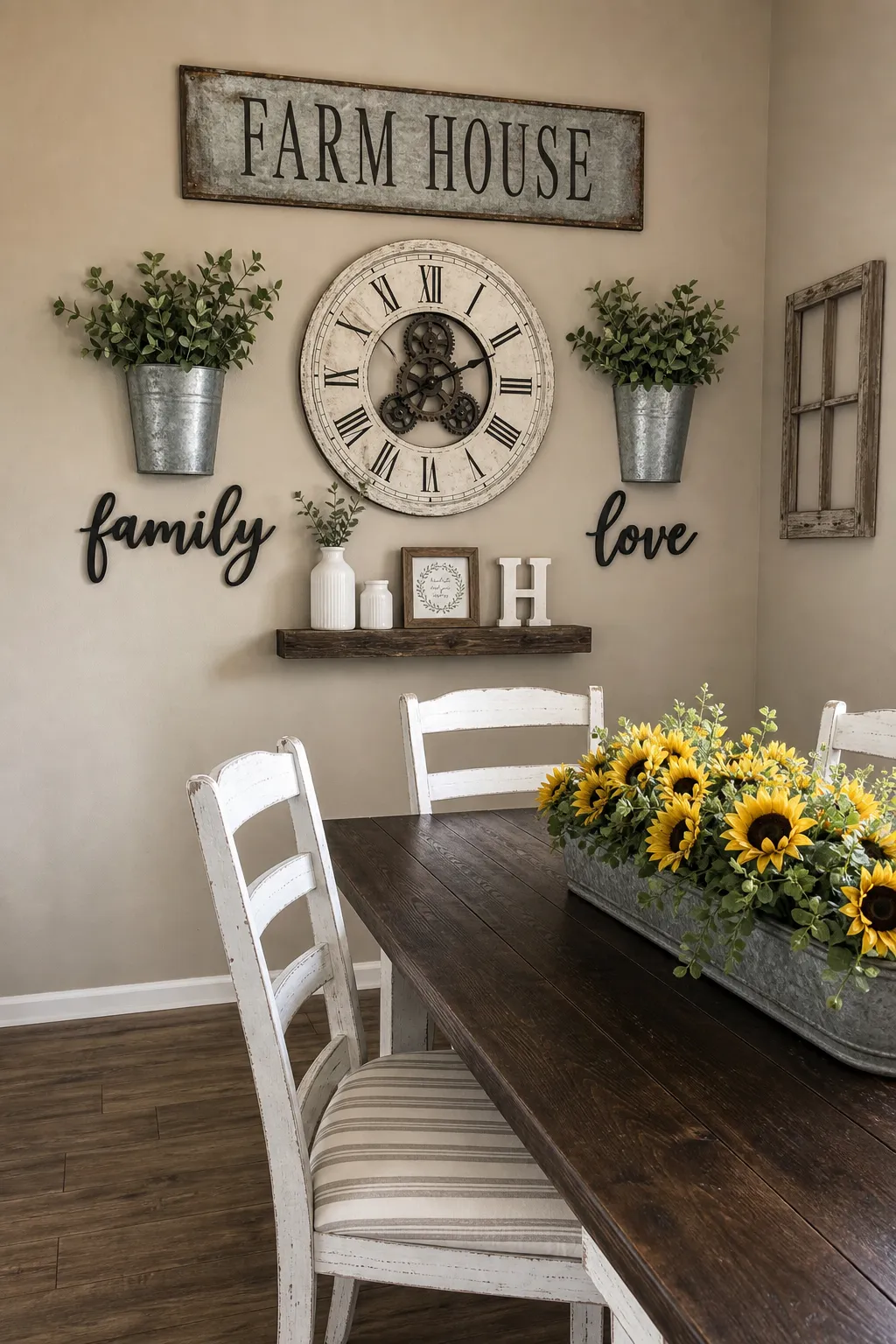
Combine weathered wood, aged metal, and painted frames to give a farmhouse dining room a sense of history. Varied finishes produce an authentically collected display.
Unify the arrangement through a shared color palette or recurring rural subject matter. Begin with the largest piece, then layer smaller frames around it for relaxed balance.
Turn Herringbone Wood Into a Striking Dining Backdrop
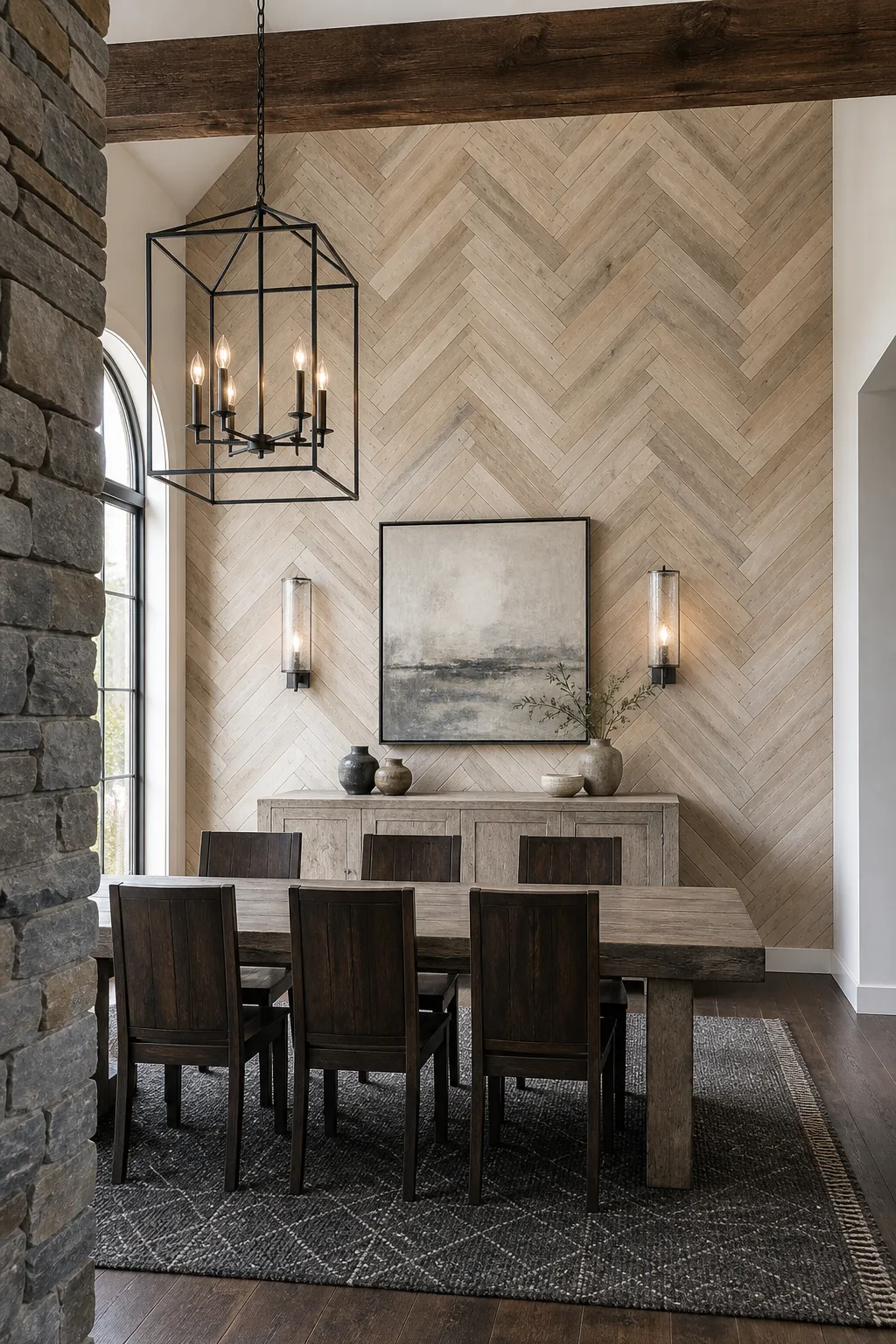
Herringbone planks transform natural wood into a graphic dining-room statement. Their directional pattern adds movement and handcrafted character behind a simple table.
Choose a consistent stain to emphasize the geometry, or blend nearby tones for greater depth. Minimal artwork allows the craftsmanship and grain to command attention.
Elevate a Formal Dining Area With Gray Wall Paneling
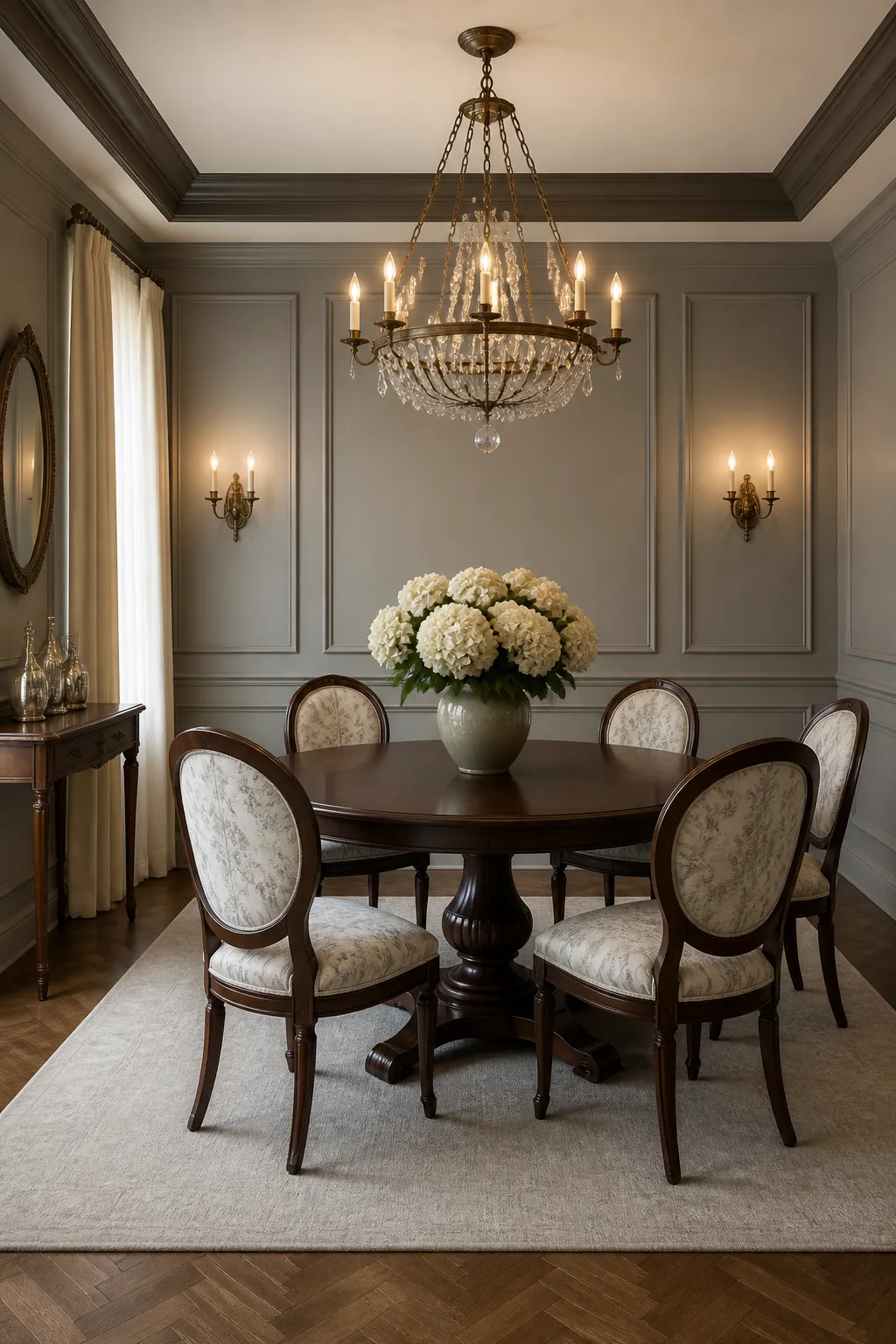
Gray paneling gives a formal dining area depth and structure while remaining versatile. A mid-tone finish creates refined architectural definition without making the room feel severe.
Paint the molding and wall sections in the same shade for a tailored look. Crystal, brass, or polished silver accents can introduce subtle brightness and sophistication.
Make a Compact Dining Nook Feel Taller With Stripes
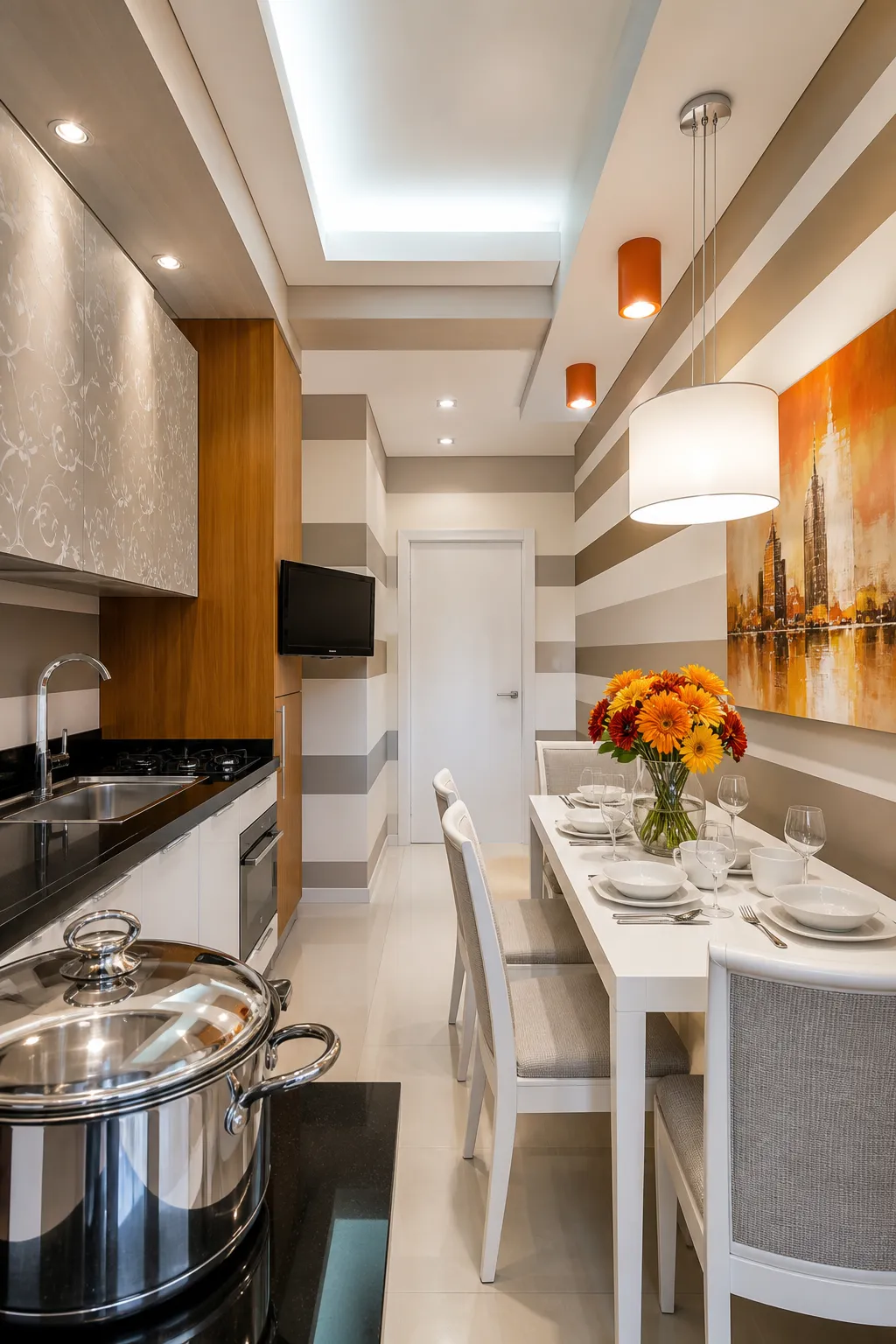
Vertical stripes guide the eye toward the ceiling, helping a small dining nook appear more spacious. Narrow bands in related tones provide height without heaviness.
Extend the pattern from baseboard to ceiling for the strongest effect. Compact furniture and uncluttered window treatments reinforce the room’s open, elongated appearance.
Build a Warm, Textural Focal Point With Natural Stone
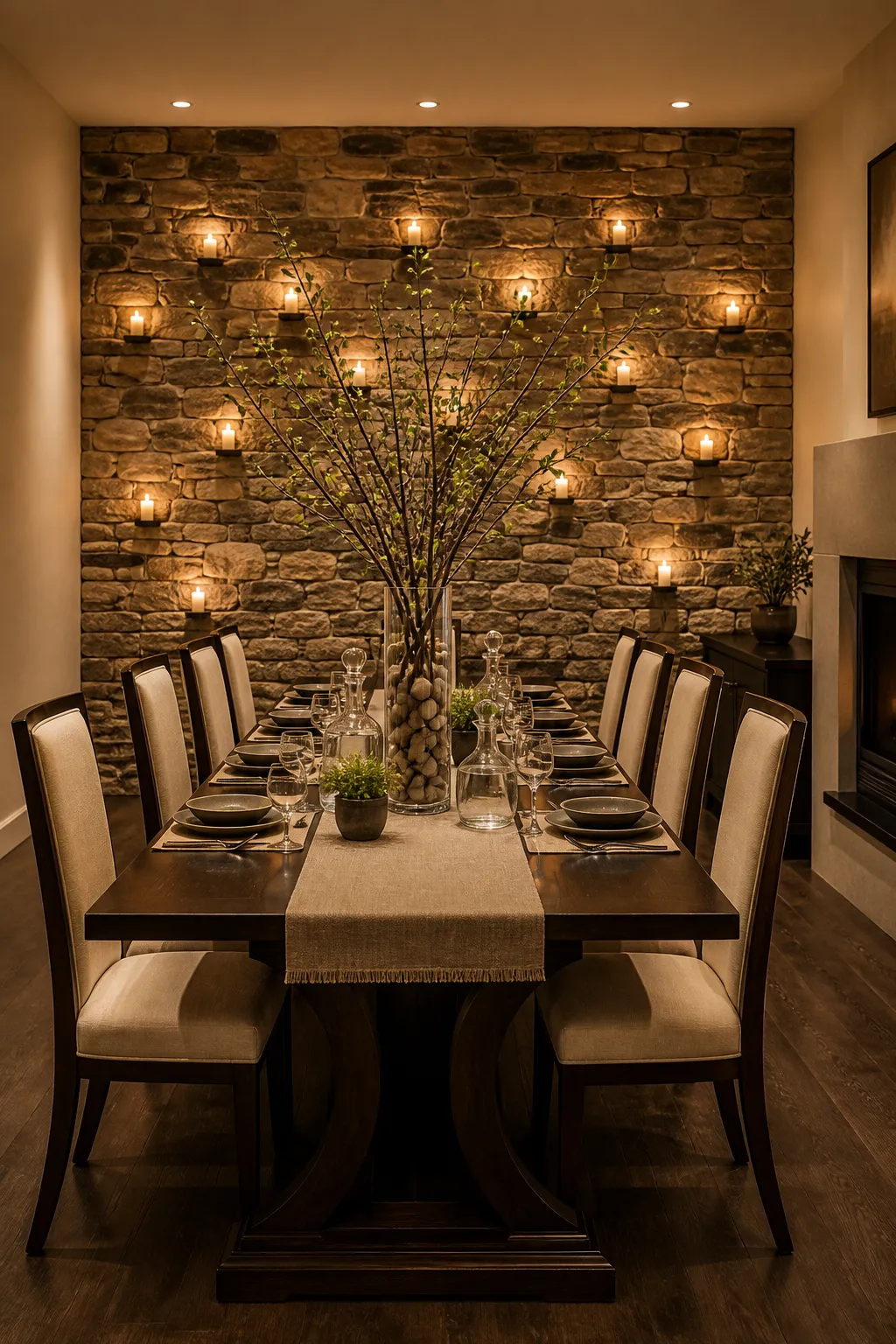
A natural-stone wall brings earthy color and tactile variation to the dining area. Irregular shapes and tonal shifts create a rich, organic focal point.
Pair the stone with timber furniture and warm, low-level lighting to accentuate its surface. Keeping nearby walls quiet ensures the material feels intentional rather than overpowering.
Mix Frame Sizes for an Eclectic Dining Gallery Wall
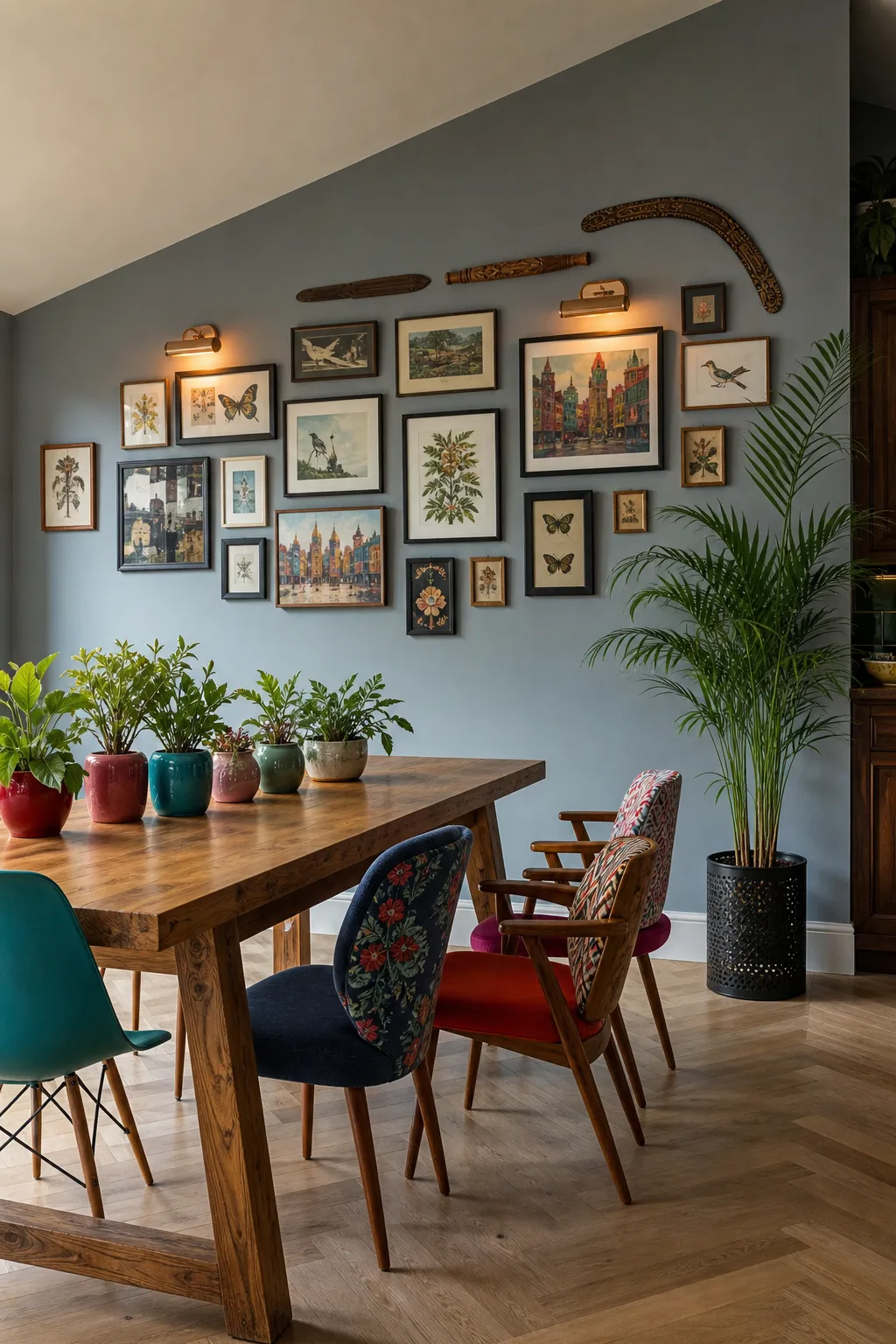
Mixing small, medium, and oversized frames gives a dining gallery wall lively visual rhythm. The varied scale creates an eclectic yet curated composition.
Anchor the display with one large artwork and distribute smaller pieces around it. Consistent spacing or a limited frame palette will keep the arrangement from looking chaotic.
Frame Botanical Wallpaper With Traditional Panel Molding
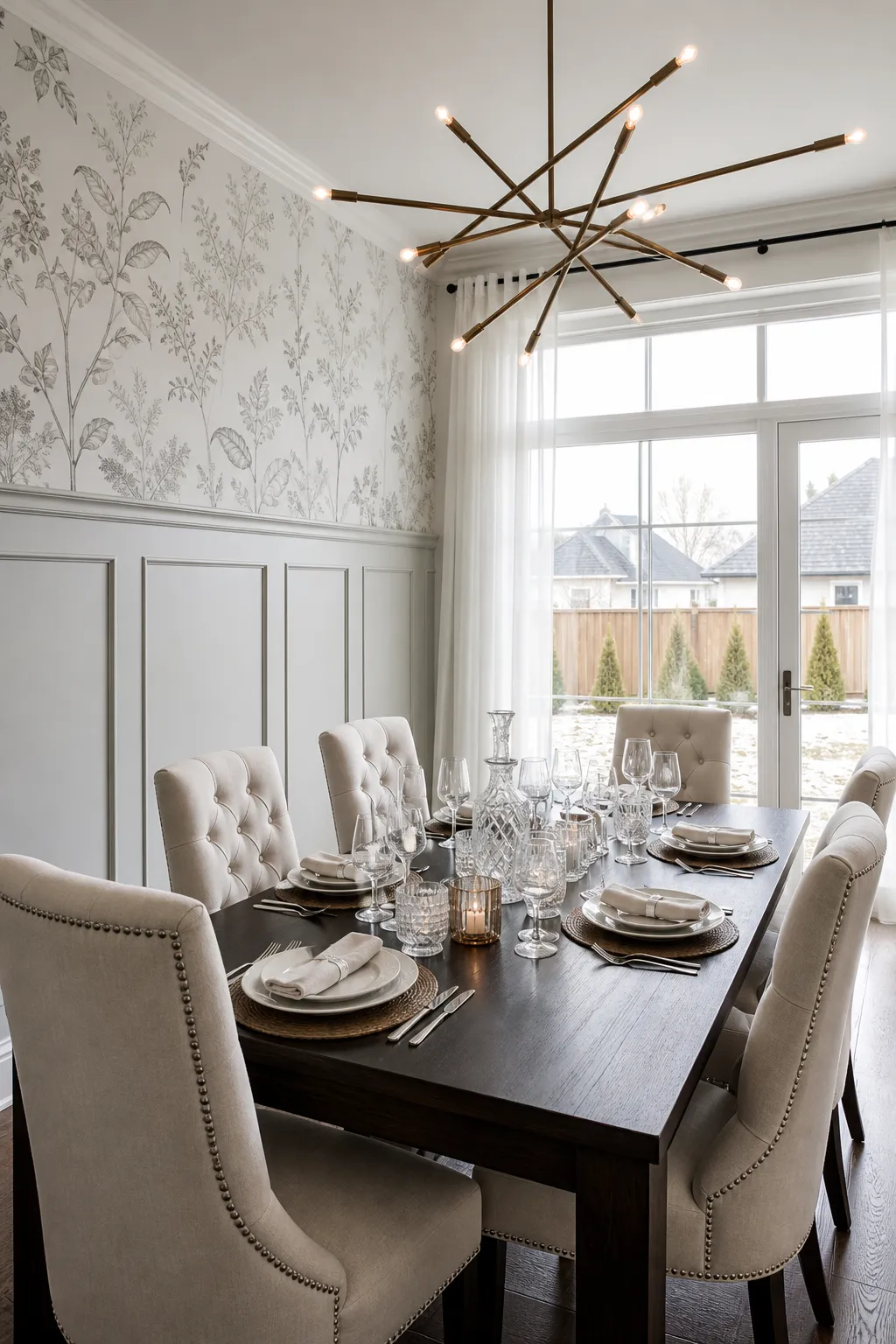
Place botanical wallpaper inside panel molding to combine expressive pattern with classic architecture. The trim turns each section into a garden-inspired framed feature.
Choose molding that complements the room’s doors and baseboards, then paint it in a wallpaper tone. This repetition gives the detailed design a polished, built-in appearance.
Arrange Black-and-White Photos in a Clean Gallery Grid
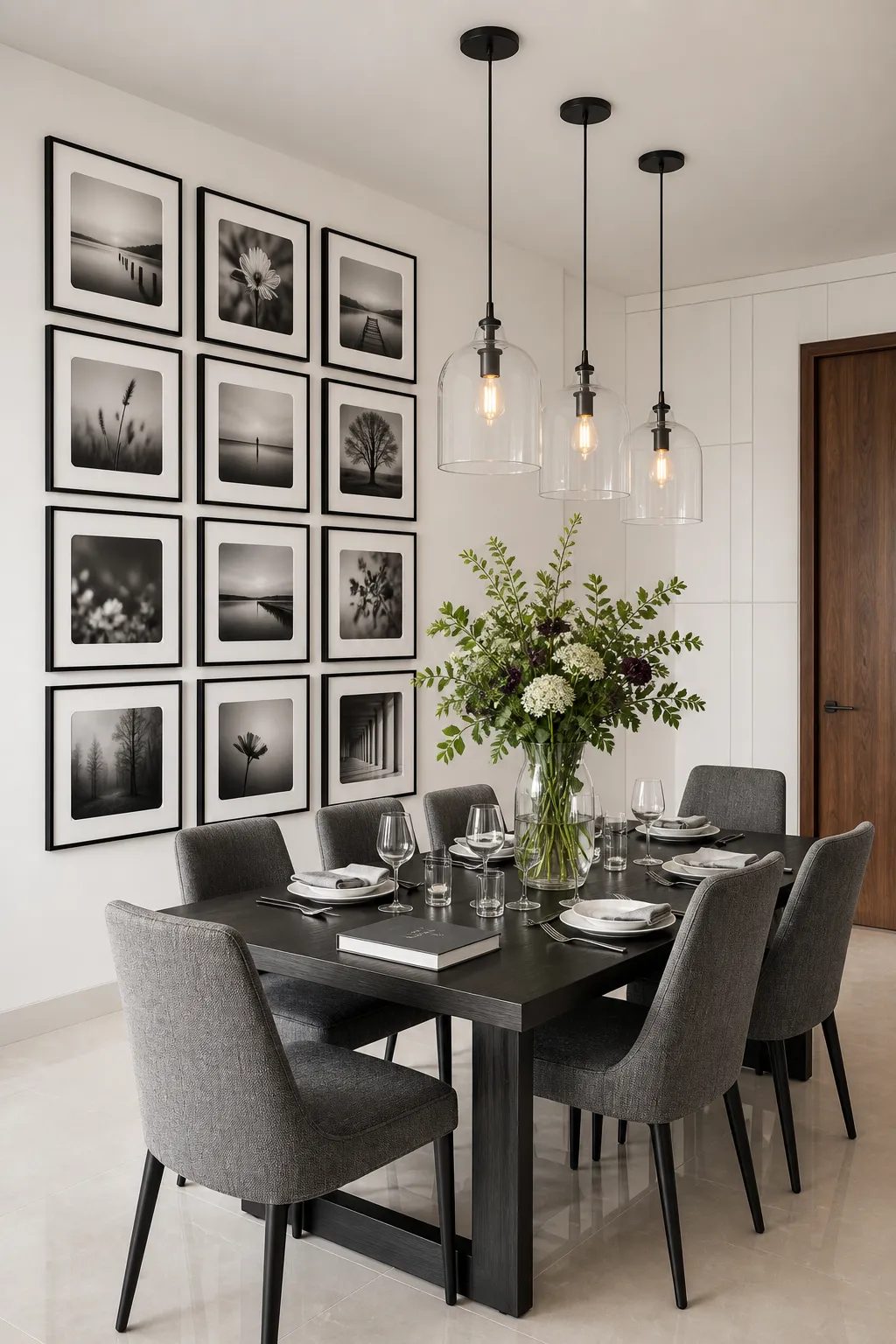
Display black-and-white photographs in matching frames to create a calm, orderly dining-room feature. Straight rows and equal spacing deliver a clean gallery-style finish.
Use identical mats to give images of different subjects a consistent scale. Center the complete grid over a sideboard or dining table so it relates clearly to the furniture below.
Soften a Rustic Dining Wall With Woven Basket Texture
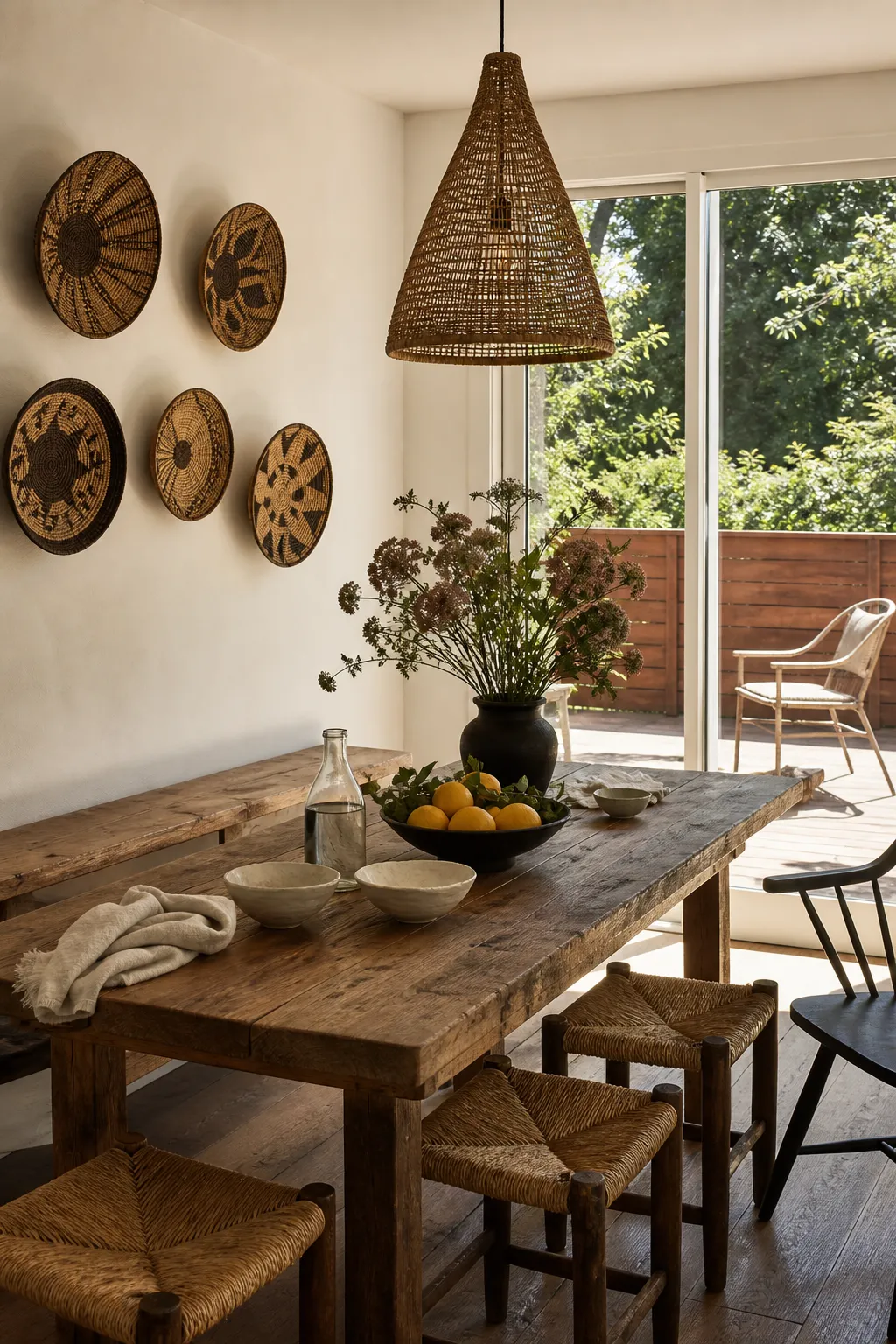
A cluster of woven baskets brings warm, tactile dimension to a plain dining wall. Mix shallow and deep designs to create an arrangement that feels collected rather than overly coordinated.
Keep the palette close to straw, honey, and soft brown so the display complements rustic wood furniture. An uneven layout adds relaxed movement while preserving the room’s casual character.
Display Blue-and-White Plates as Collected Wall Art
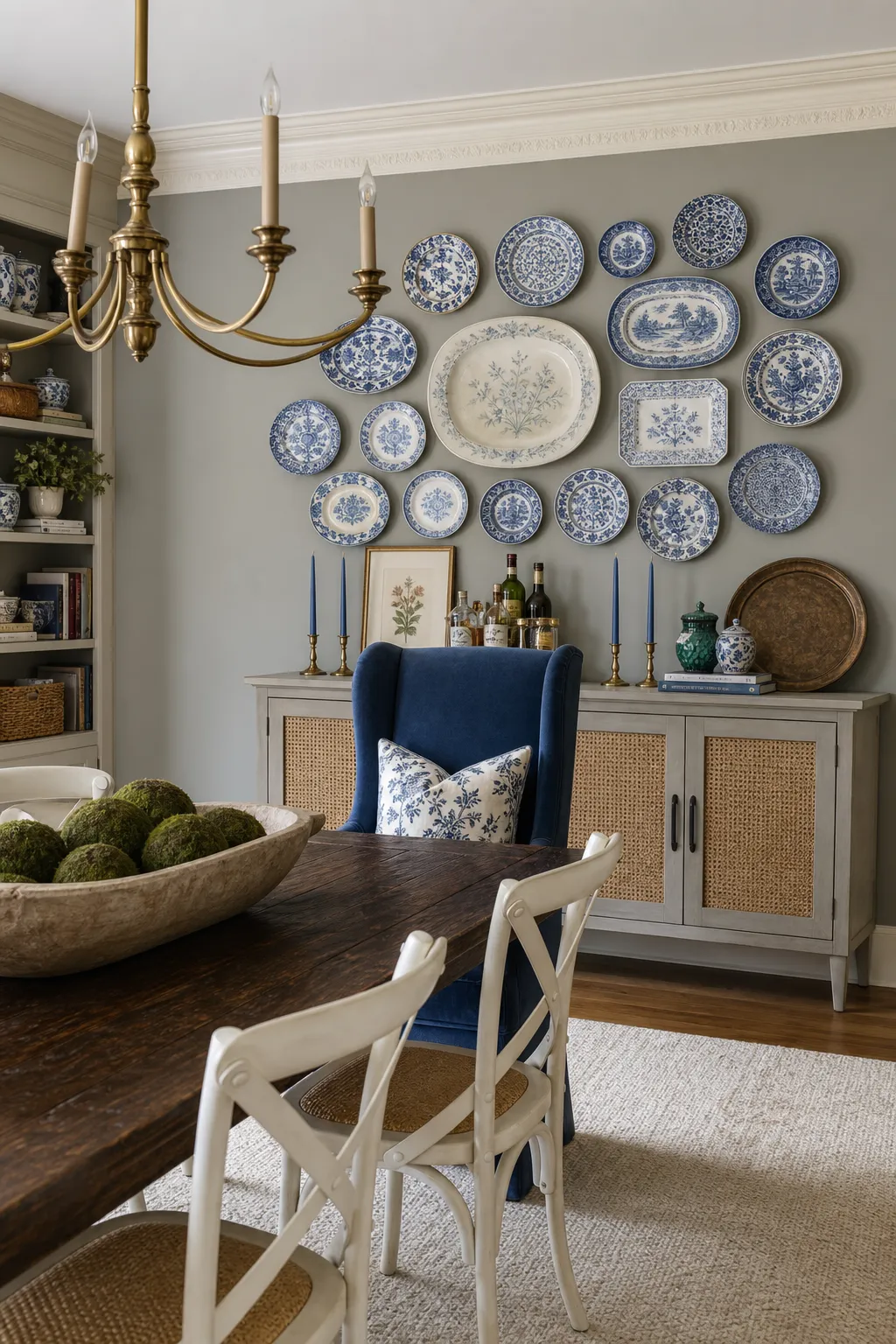
Turn patterned dishes into collected wall art by combining plates in different sizes and motifs. A consistent blue-and-white palette ties the varied pieces together.
Start with the largest plate near the center, then build outward with smaller designs. Leave enough space between pieces so each pattern remains visible and the arrangement feels airy.
Warm Up a Kitchen Dining Nook With Pale Brick
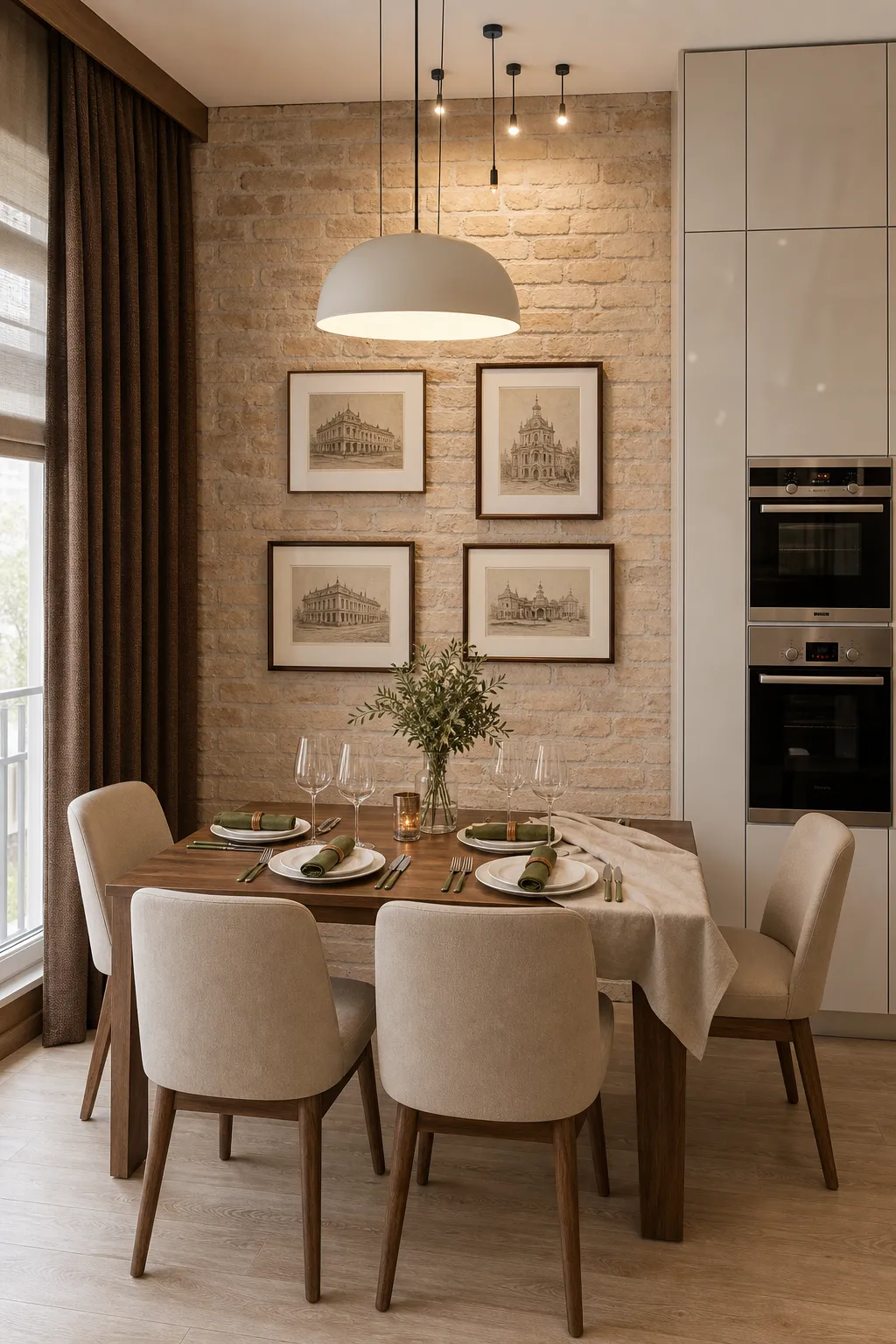
Pale brick gives a compact dining nook subtle warmth and texture without making it feel dark. Its softly varied surface creates an inviting backdrop for everyday meals.
Pair the masonry with light wood, creamy upholstery, and simple tableware. Keeping nearby finishes understated allows the brick’s natural character to lead the scheme.
Pair Graphic Pattern With Decorative Plates for Modern Contrast
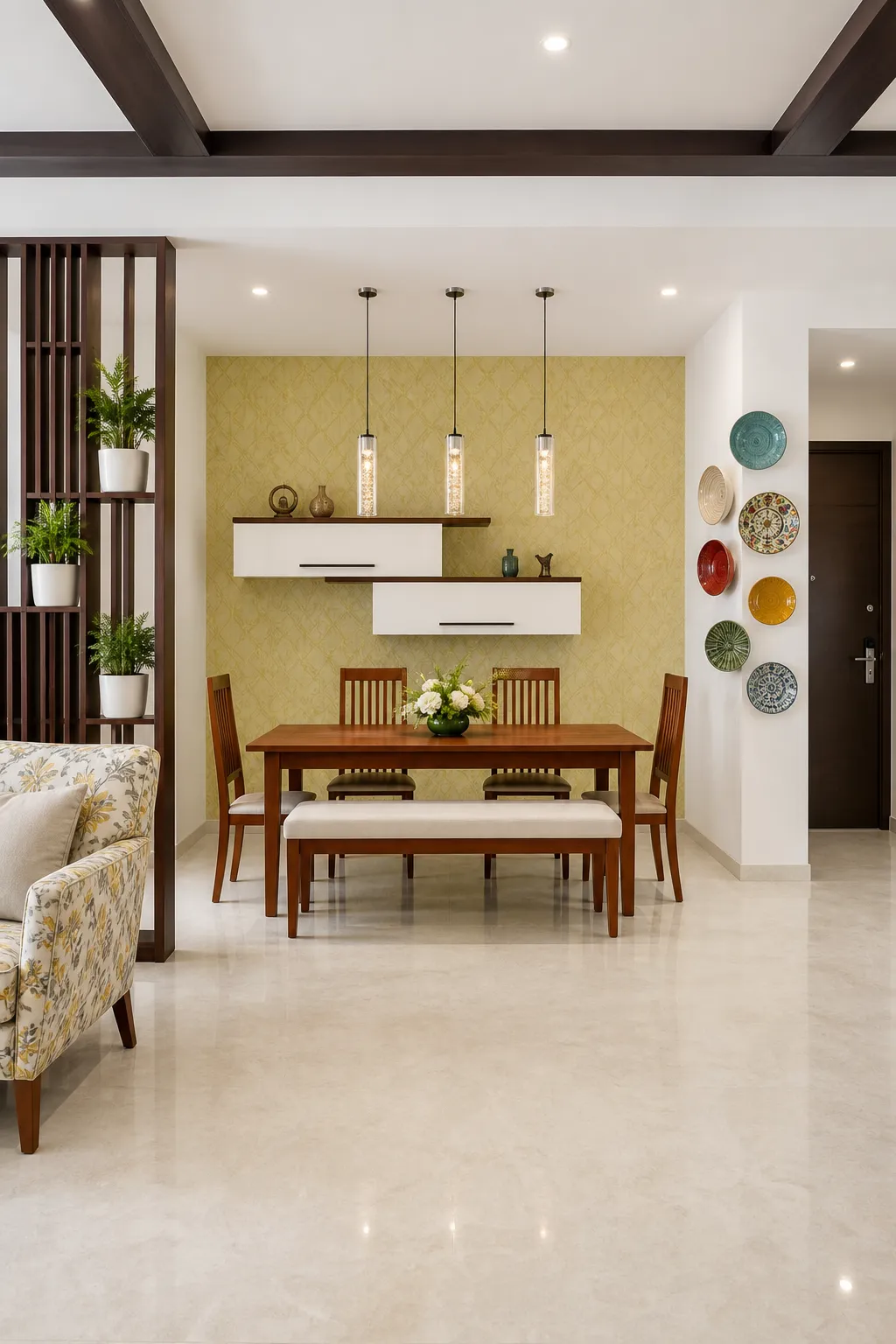
A bold patterned wall gains personality when layered with decorative plates. The mix of crisp graphics and rounded forms creates modern contrast with a playful edge.
Choose plates that repeat one or two colors from the background to keep the composition connected. A restrained arrangement prevents the competing patterns from becoming visually busy.
Bring Casual Character to the Dining Room With Gray Shiplap
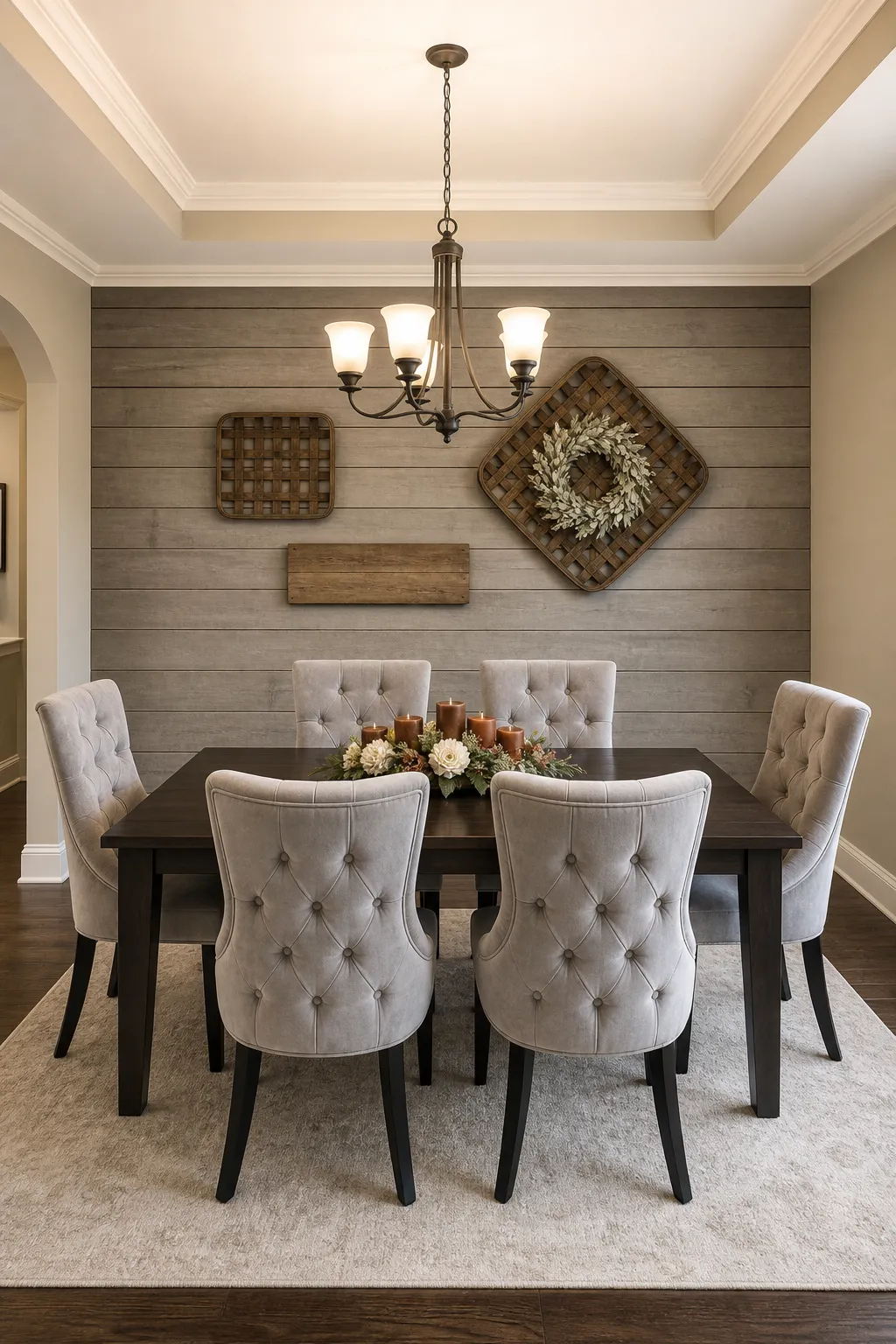
Gray shiplap introduces easygoing architectural character while giving the dining wall more depth. The muted finish feels softer than stark white and more relaxed than a formal wall treatment.
Balance the horizontal lines with warm wood furniture and simple artwork. Natural textiles and unfussy accessories help maintain the room’s welcoming, everyday mood.
Freshen the Dining Wall With Botanical Lemon Artwork
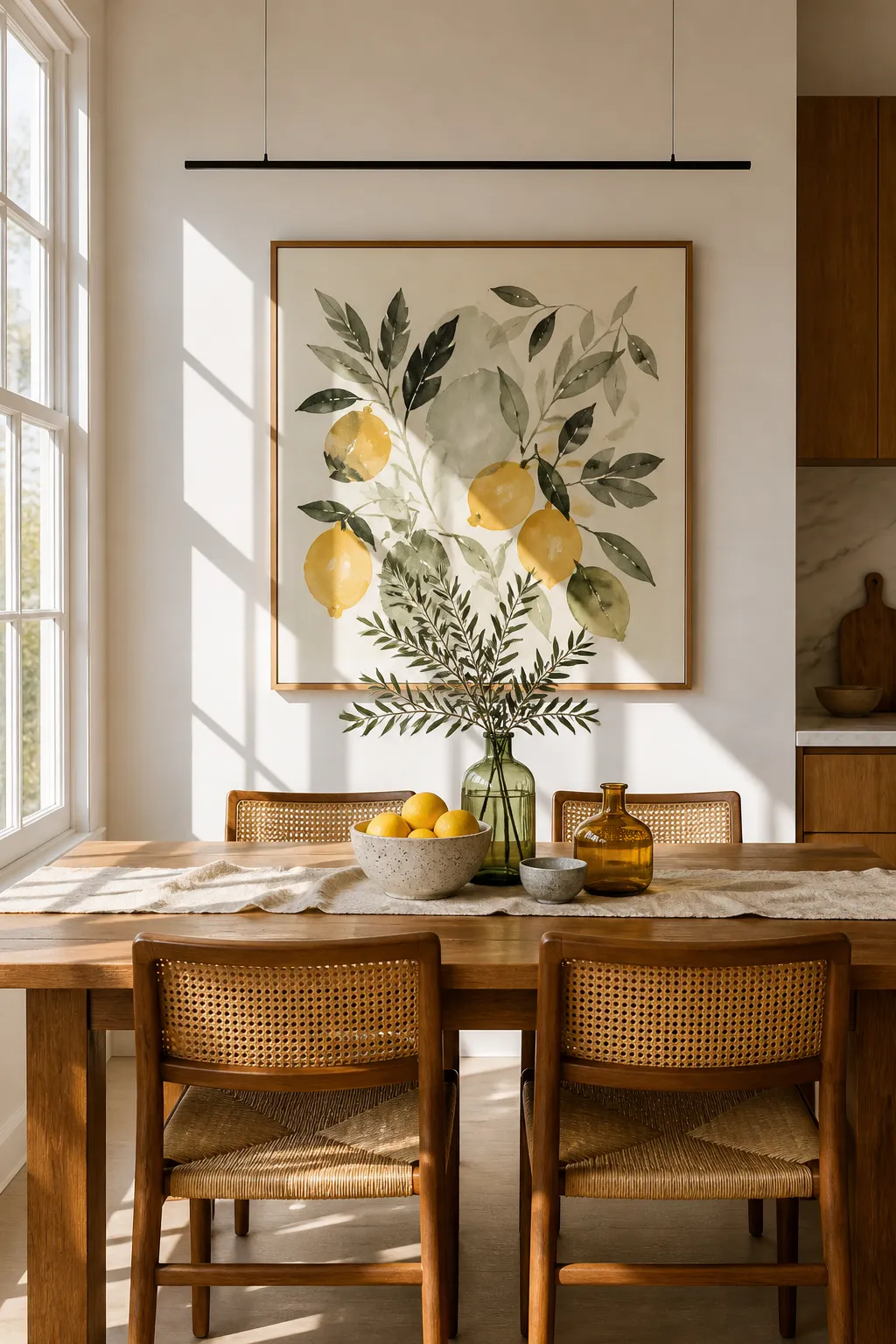
Botanical lemon artwork adds fresh color and energy to a neutral dining space. Yellow fruit and leafy greens bring a cheerful garden-inspired note to the wall.
Let the print stand out against a pale background, then echo its colors through small table accents or greenery. A simple frame keeps the effect polished rather than overly themed.
Build a Cozy Farmhouse Display Around Framed Herb Prints
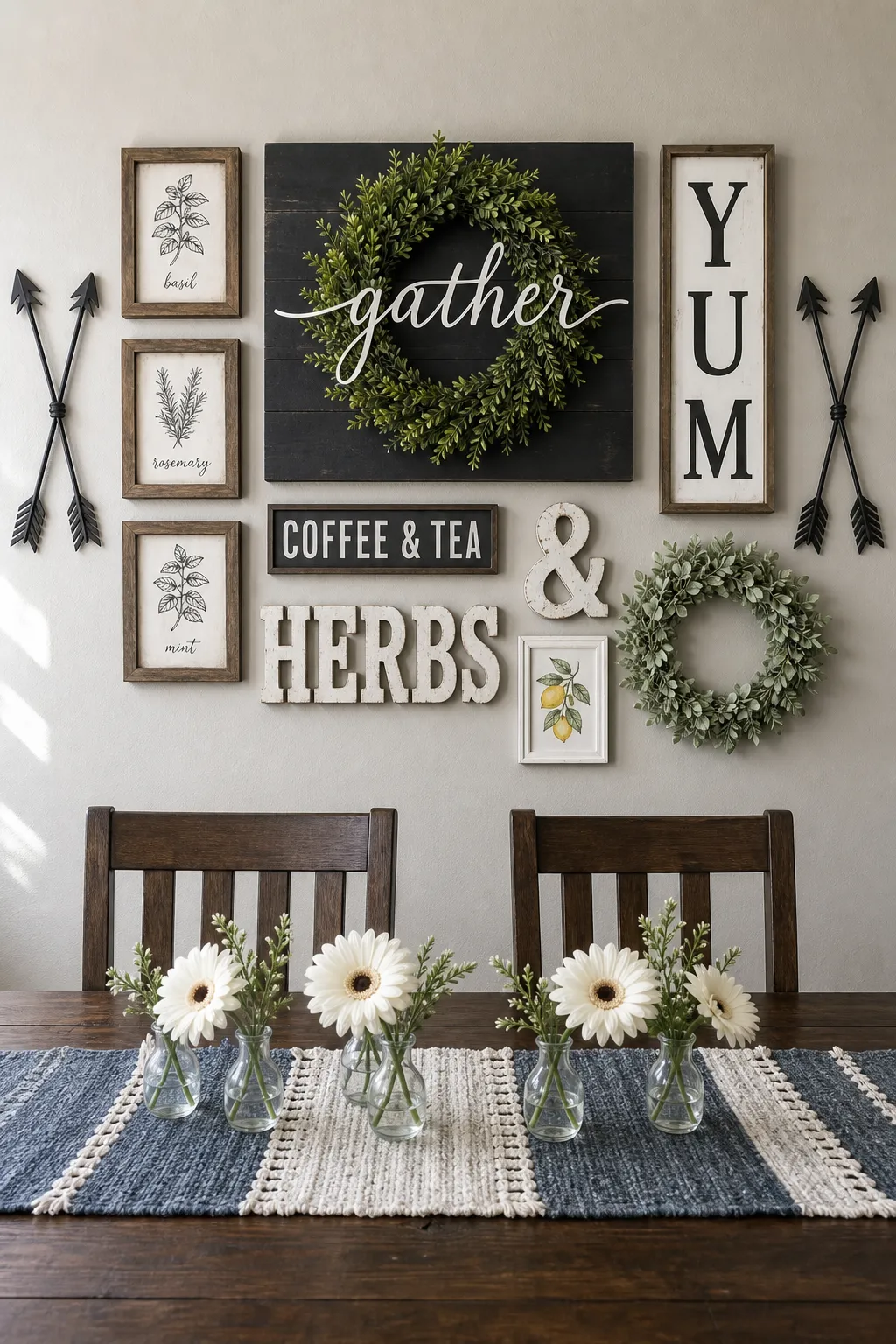
Framed herb prints provide a natural focal point for a cozy farmhouse display. Their soft greens and botanical details work especially well beside weathered wood and creamy finishes.
Arrange the prints as a tidy pair or grid, then add a few restrained rustic accents nearby. Repeating similar frame tones helps the wall feel curated and calm.
Combine Cursive Wall Decor With Rustic Wood Accents
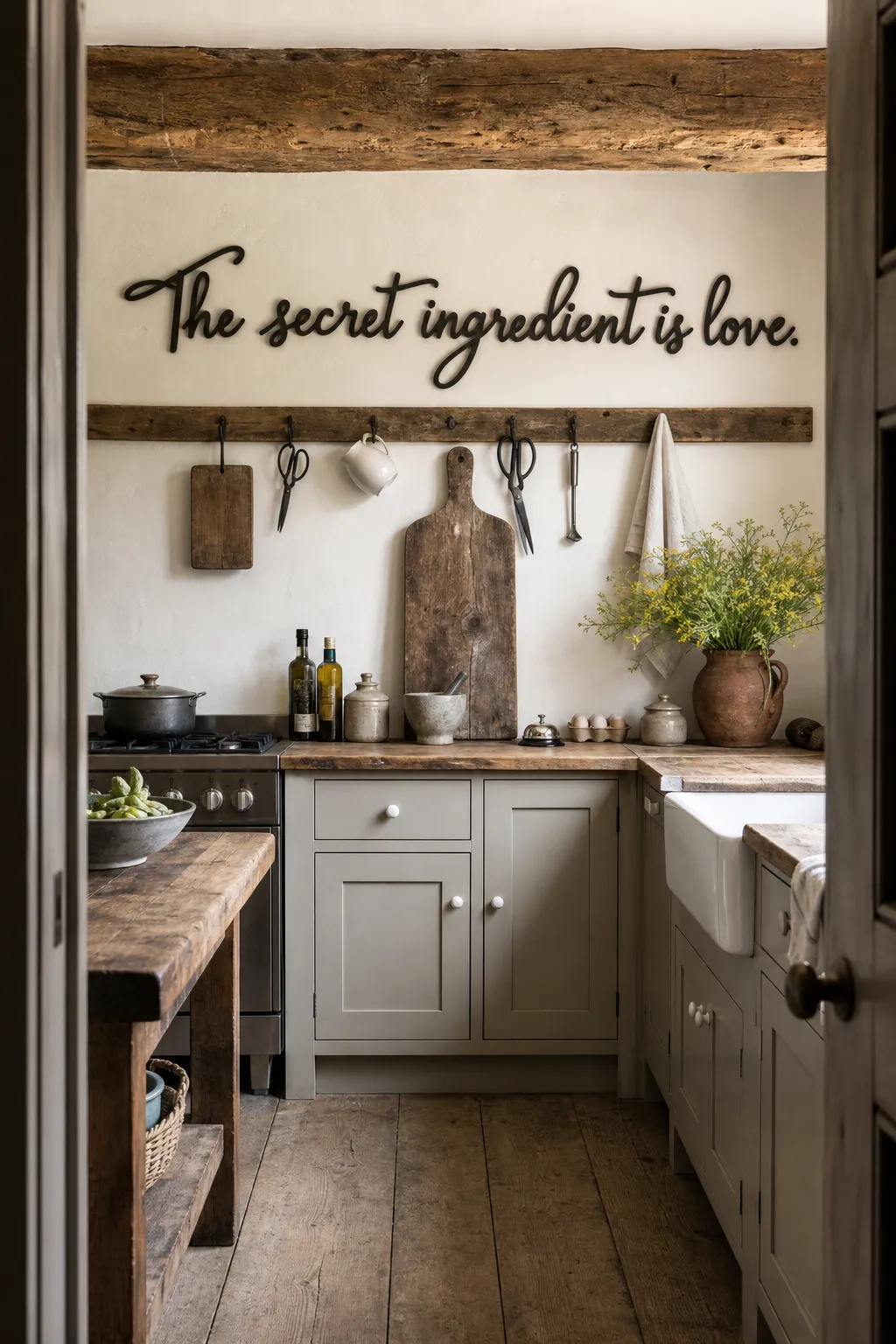
Cursive lettering adds a personal, informal touch to the dining wall, while rustic wood prevents it from feeling too delicate. Together, the elements create warm visual balance.
Choose one statement word or short phrase and surround it with only a few wooden accents. Limiting the composition keeps the message readable and the overall look intentional.
Create an Elegant Nook With a Balanced Plate Display
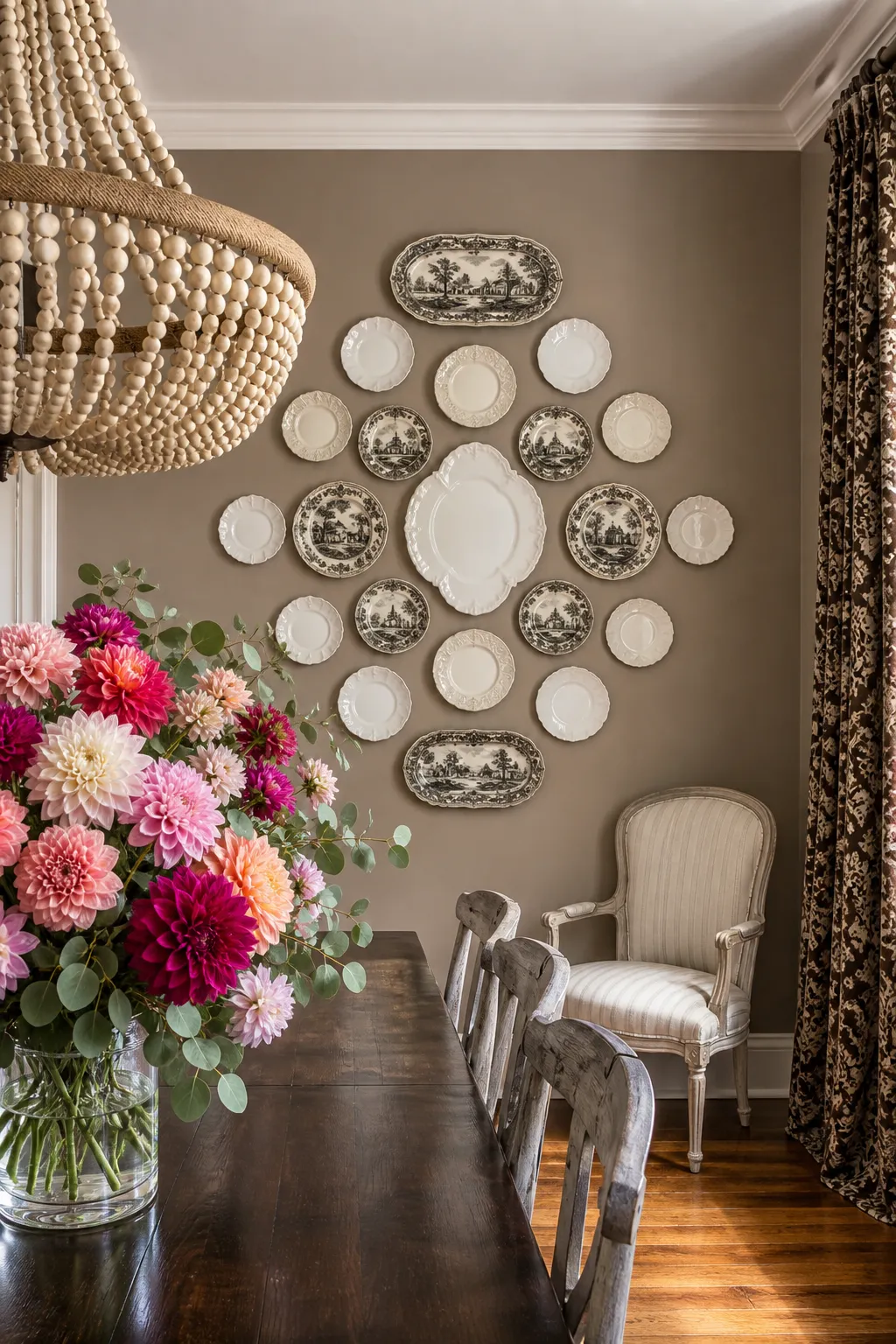
A carefully spaced plate display lends a dining nook quiet elegance without requiring large artwork. Repeated shapes bring rhythm and help define the eating area.
Use matching pairs or mirror the placement on either side of a central plate. Consistent spacing and a limited color palette give the arrangement its refined, balanced finish.
Give a Bright Breakfast Nook Coastal Charm With Sculptural Fish
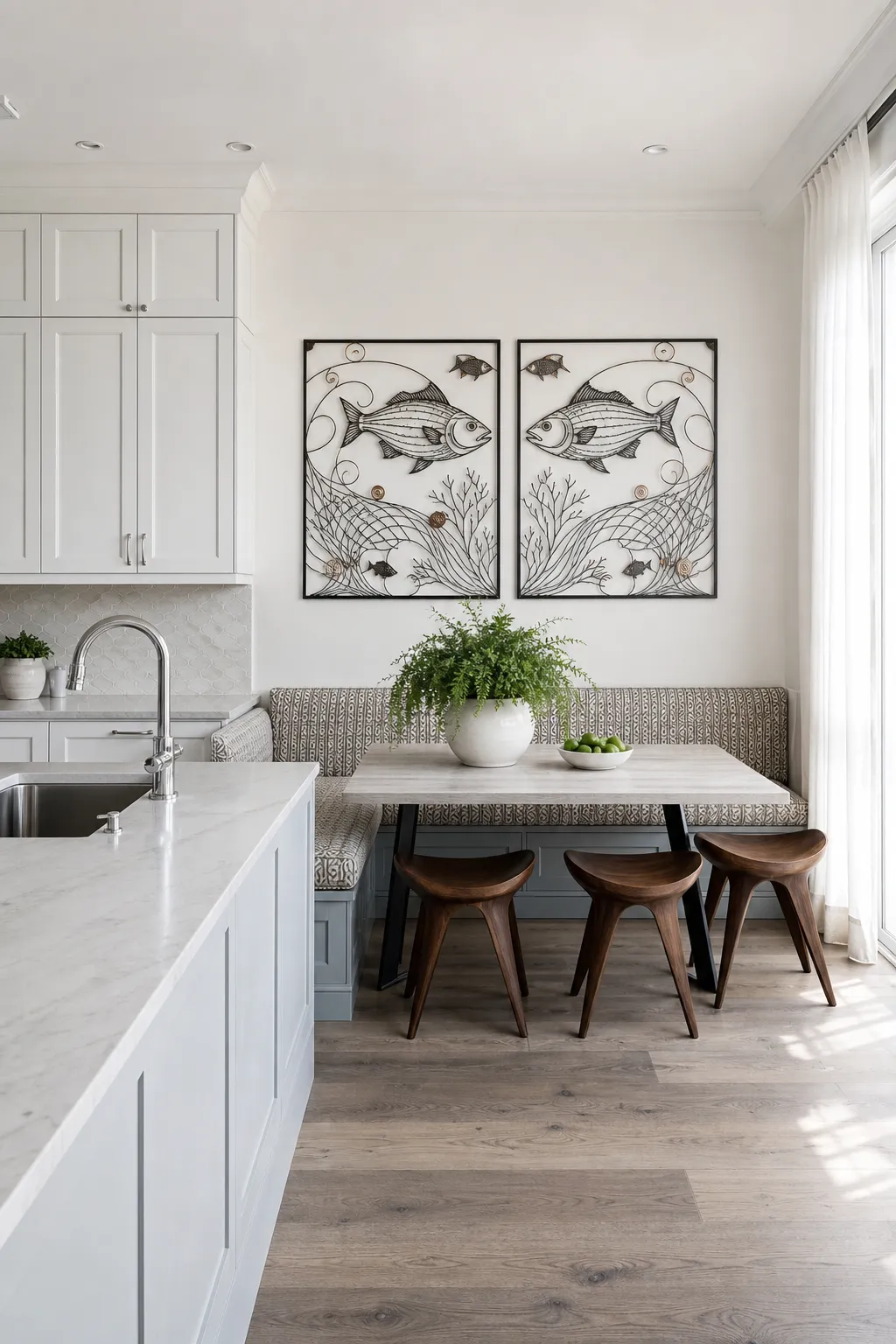
Sculptural fish bring coastal character to a sunny breakfast nook while adding more depth than a flat print. Their streamlined forms keep the theme light and contemporary.
Arrange the fish as if they are moving across the wall, varying their height slightly for a natural flow. Pale finishes and breezy textiles reinforce the relaxed seaside mood.
Let a Live-Edge Table Lead a Simple, Natural Dining Scheme
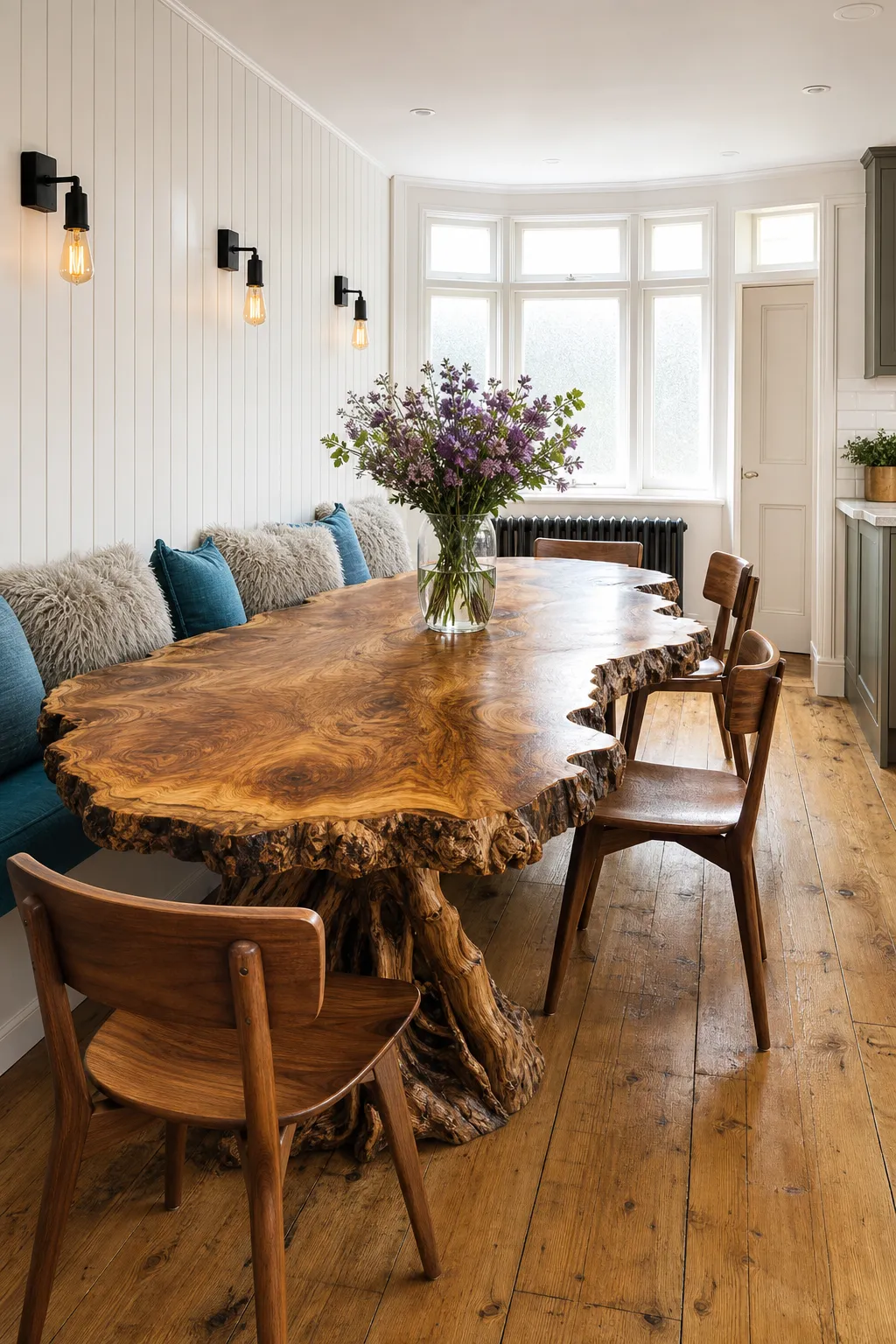
A live-edge table supplies enough organic detail to become the room’s main feature. Its irregular outline and visible grain establish a simple, natural foundation.
Keep wall decor minimal and select chairs with clean silhouettes so the table remains prominent. Earthy neutrals, soft greenery, and understated lighting complete the calm scheme.
Add Useful Display Space With Scandinavian Open Shelves
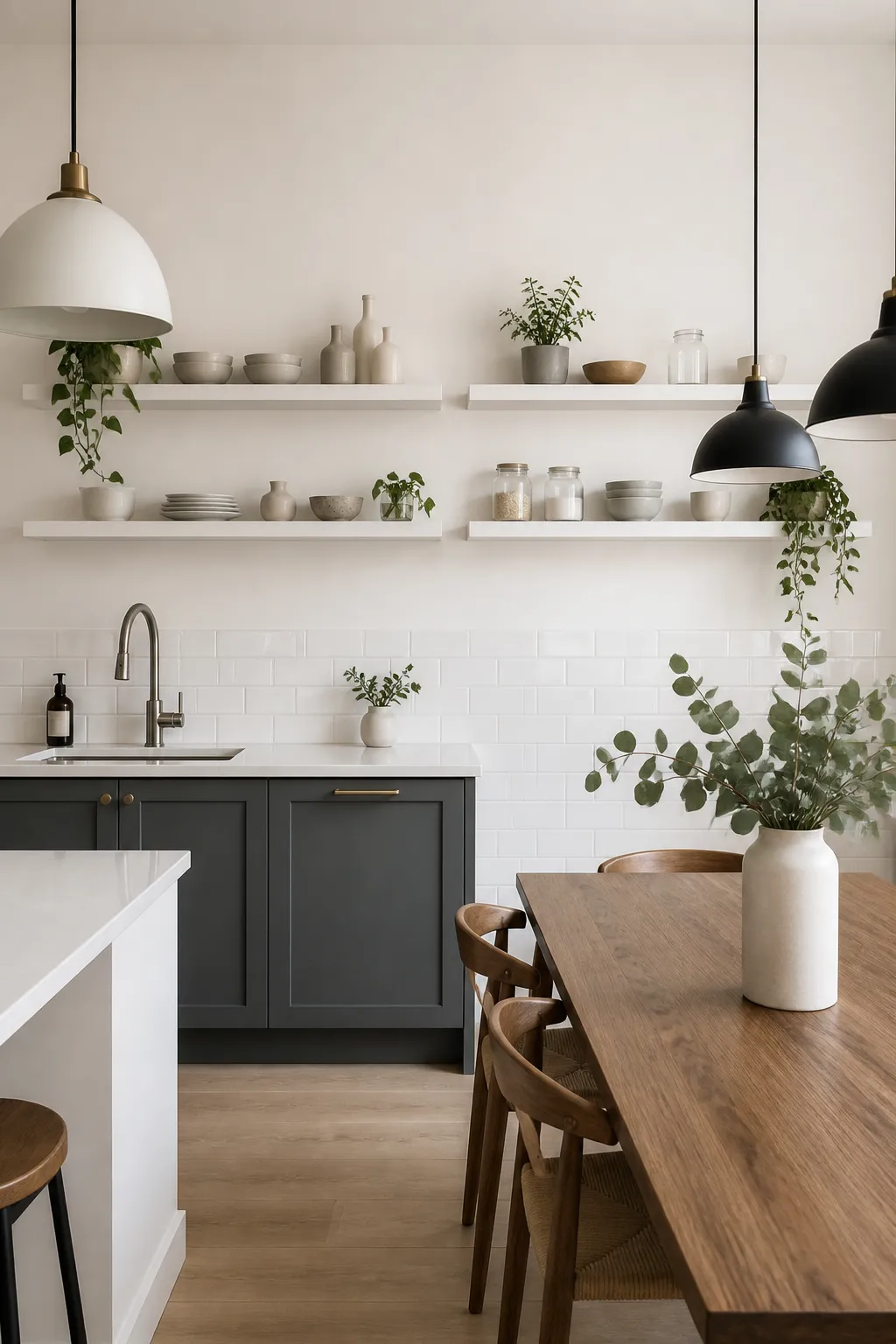
Slim open shelves turn an unused dining wall into practical display space without adding visual bulk. Their clean lines suit the light, functional character of Scandinavian interiors.
Style them sparingly with everyday ceramics, glassware, and a small plant. Leaving open space around each object keeps the wall useful, organized, and pleasantly uncluttered.
Style Vintage Plates for a Charming Cottage Breakfast Nook
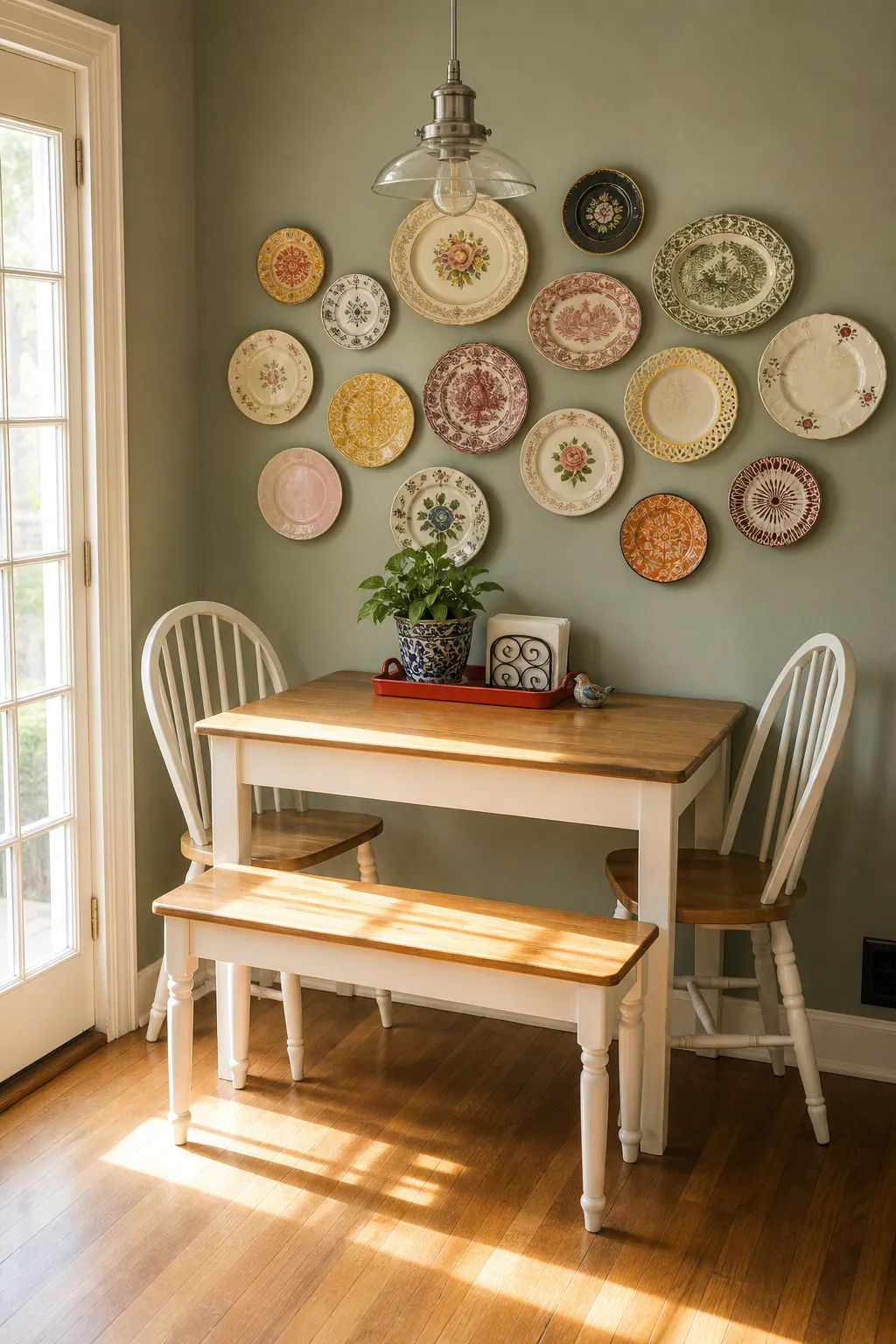
Vintage plates give a breakfast nook collected cottage charm through faded colors, floral motifs, and gently mismatched shapes. Each piece adds history without taking up valuable floor space.
Build the arrangement gradually around a favorite plate rather than forcing perfect symmetry. Repeating a few colors across the collection will keep the casual display cohesive.
Anchor Farmhouse Wall Shelves With an Oversized Clock
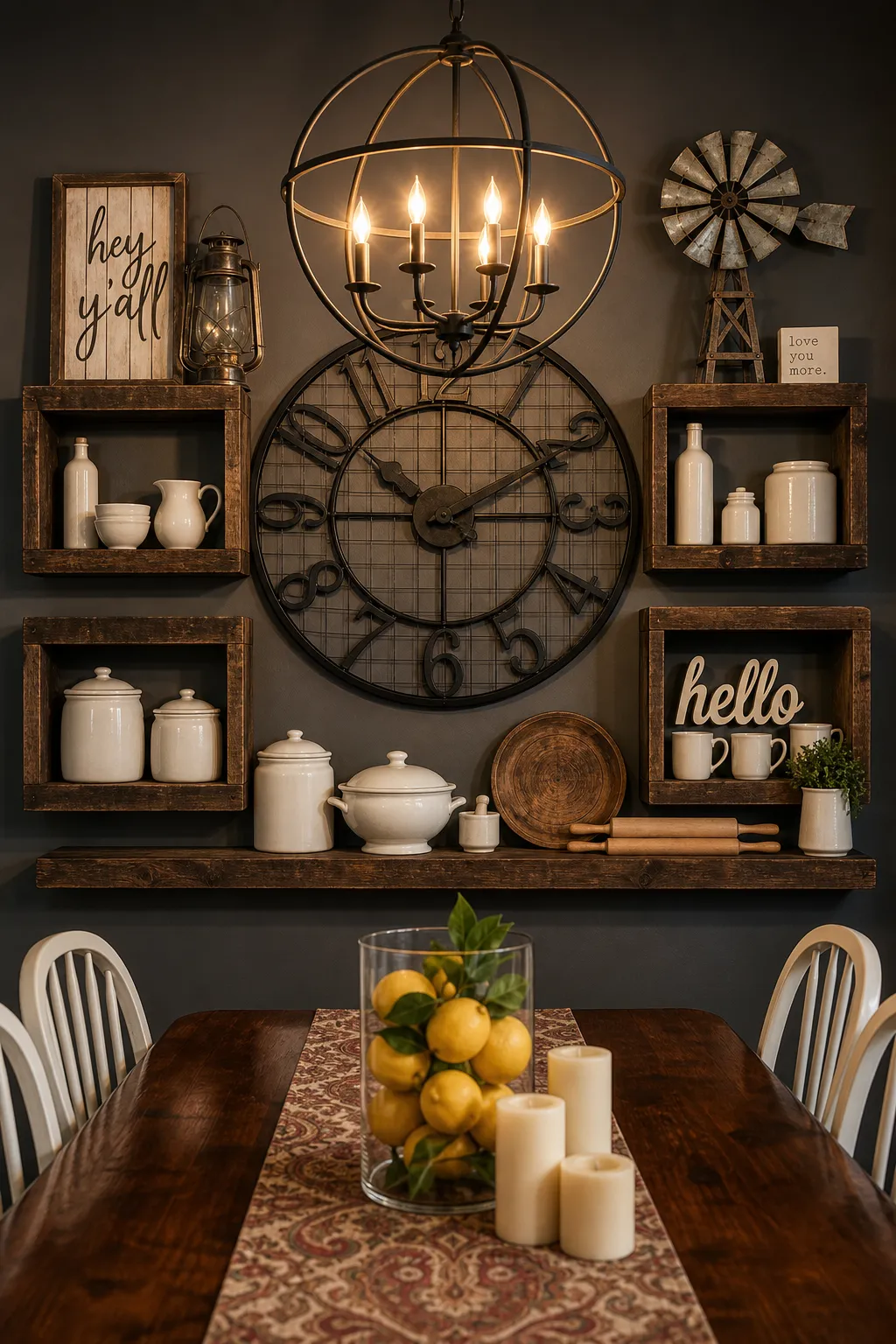
An oversized clock creates a strong central anchor for farmhouse wall shelves. Its scale fills the vertical space and gives smaller displayed objects a clear focal point.
Position the shelves to support the clock rather than compete with it, then add pottery, greenery, or wooden accents in balanced groups. A limited palette keeps the layered display orderly.
Use an Oversized Triptych to Match a Long Dining Table
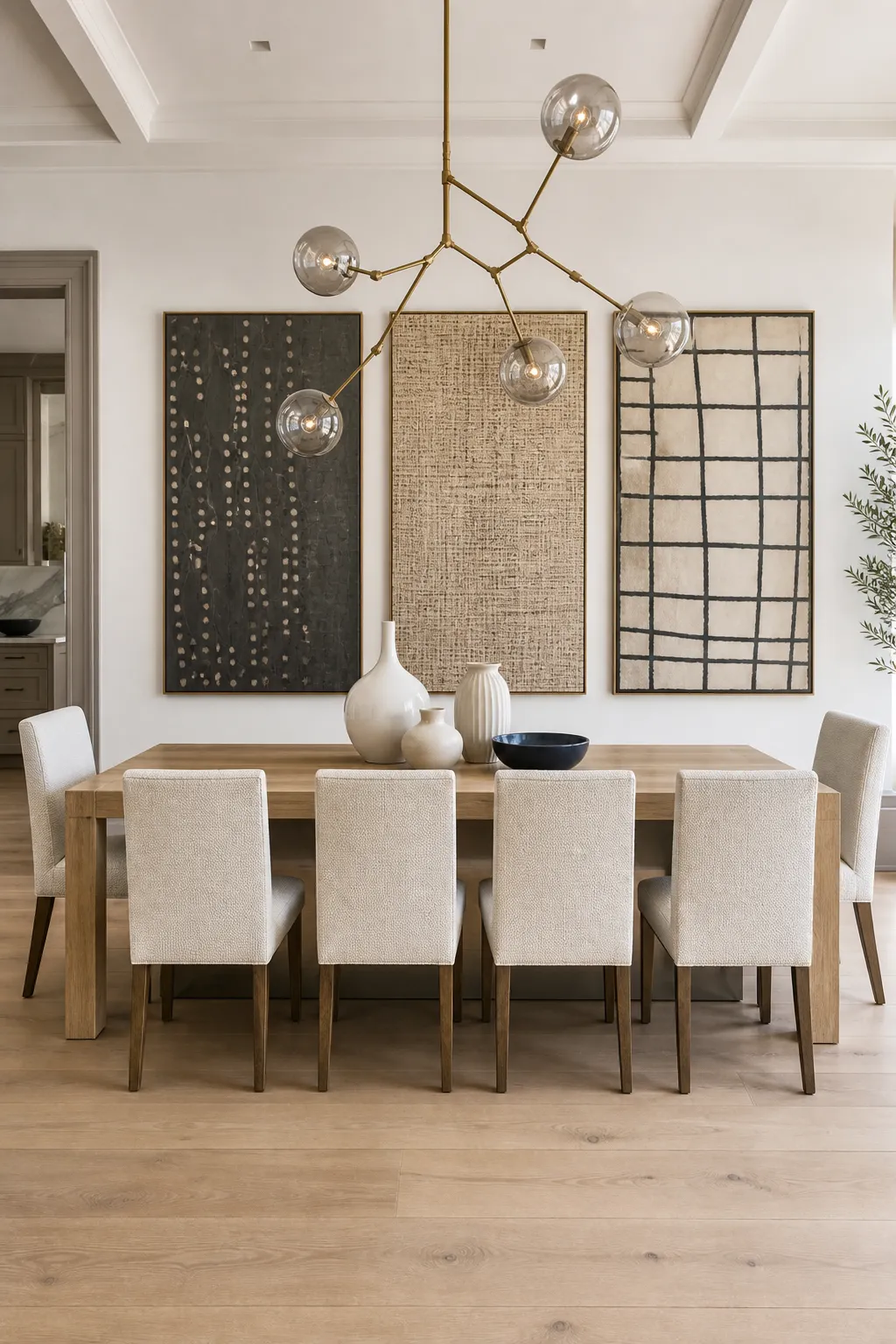
A large triptych mirrors the proportions of a long dining table and prevents an expansive wall from feeling empty. The three panels create artwork with architectural scale while retaining visual rhythm.
Center the complete composition over the table and keep the gaps between panels even. Artwork spanning roughly the table’s main seating area will feel connected without overwhelming the furniture.
Layer Plants and Pottery Across Floating Dining Shelves
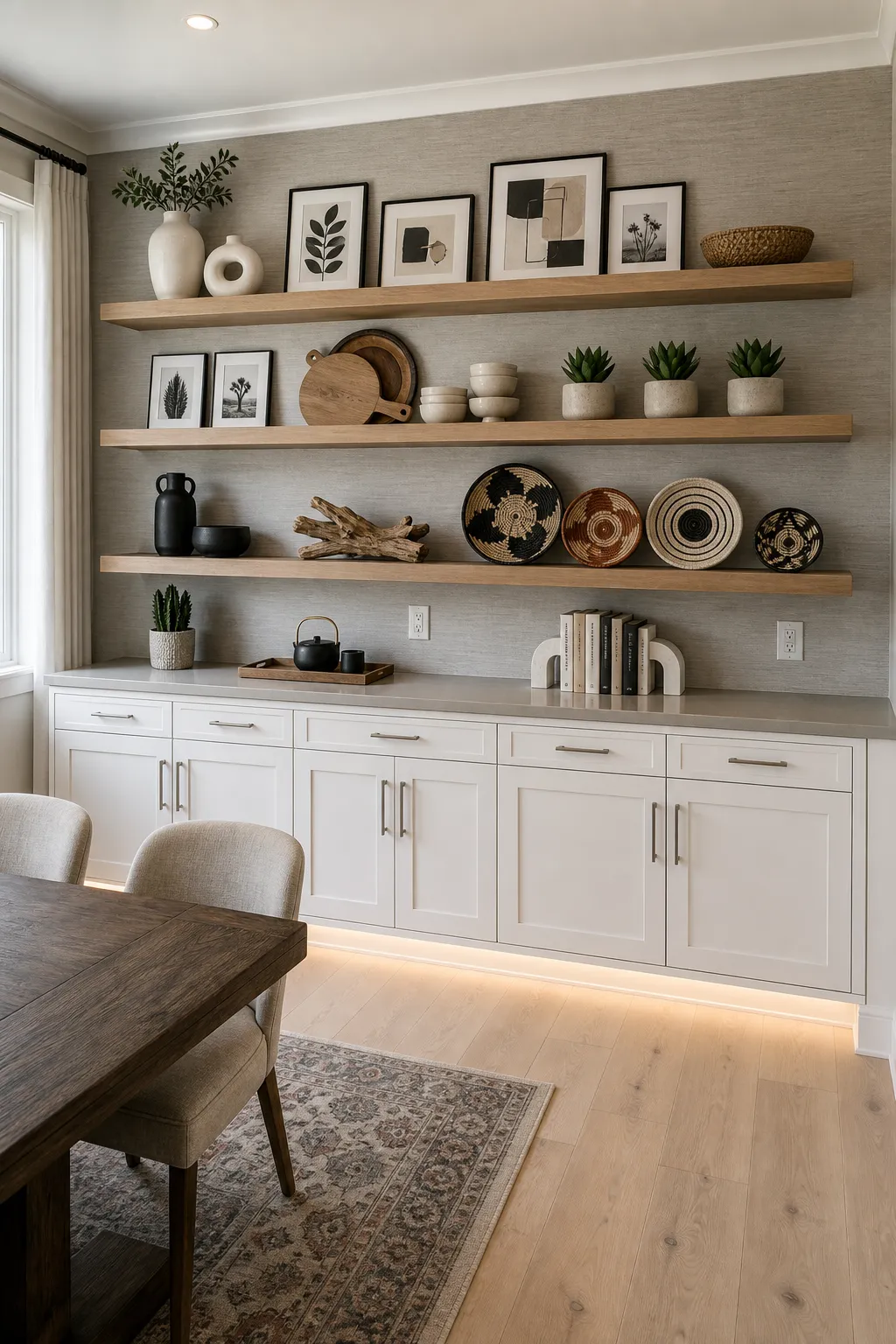
Floating shelves turn an empty dining wall into a flexible display without taking up floor space. Arrange pottery in varied heights, then weave in leafy or trailing plants for natural movement and texture.
Leave breathing room between clusters so the shelves feel collected rather than crowded. A restrained palette of clay, cream, and muted green keeps the arrangement cohesive while allowing individual pieces to stand out.
Add Architectural Depth With a White Geometric Feature Wall
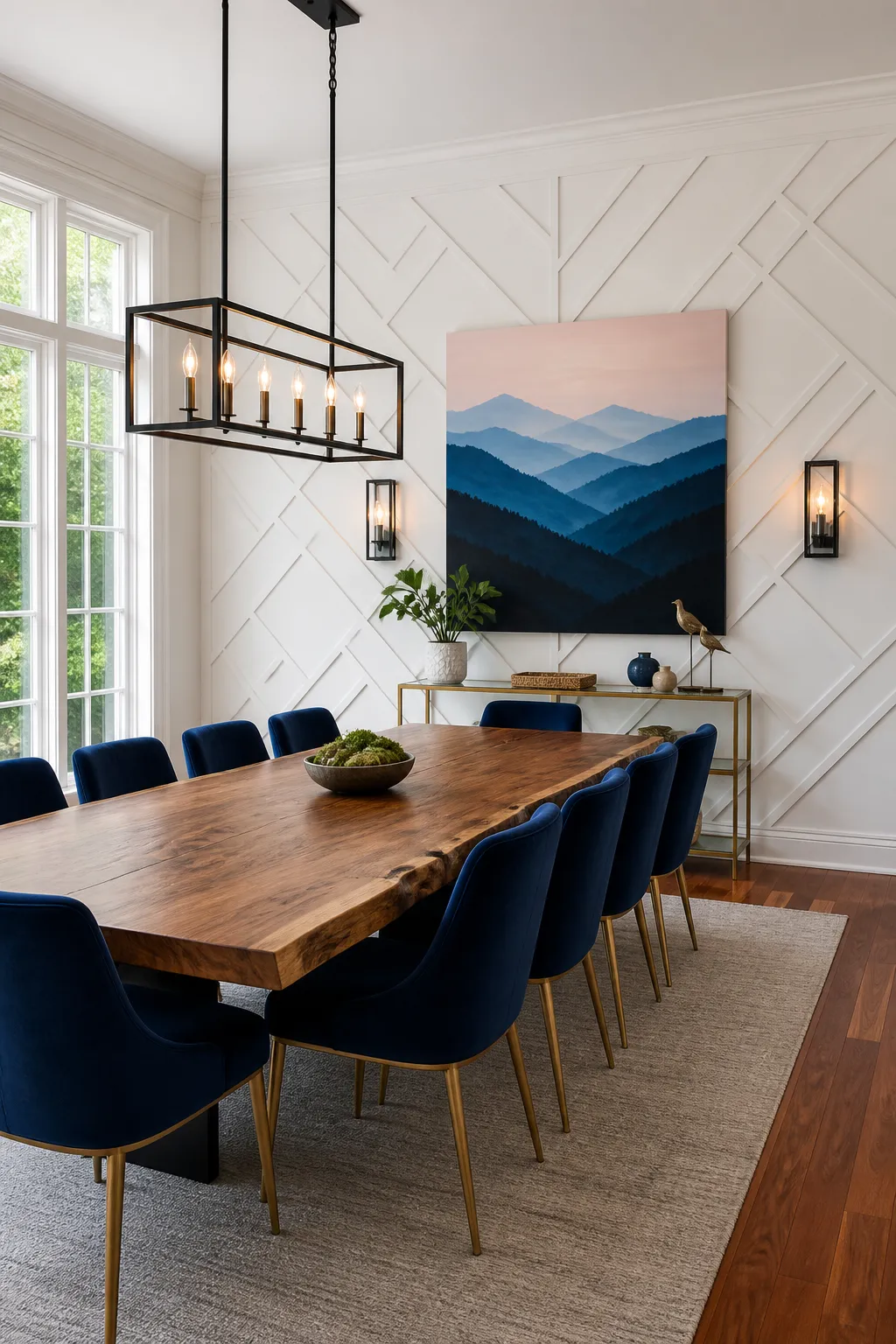
A white geometric feature wall introduces dimension while preserving a bright, understated dining room. Slim molding creates architectural depth through light and shadow instead of relying on bold color.
Repeat clean angles or balanced rectangular panels to complement a modern table and streamlined lighting. Painting the trim and wall in the same white finish keeps the effect polished and prevents the pattern from overwhelming the space.
Shape an Organic Gallery Wall With Woven Baskets
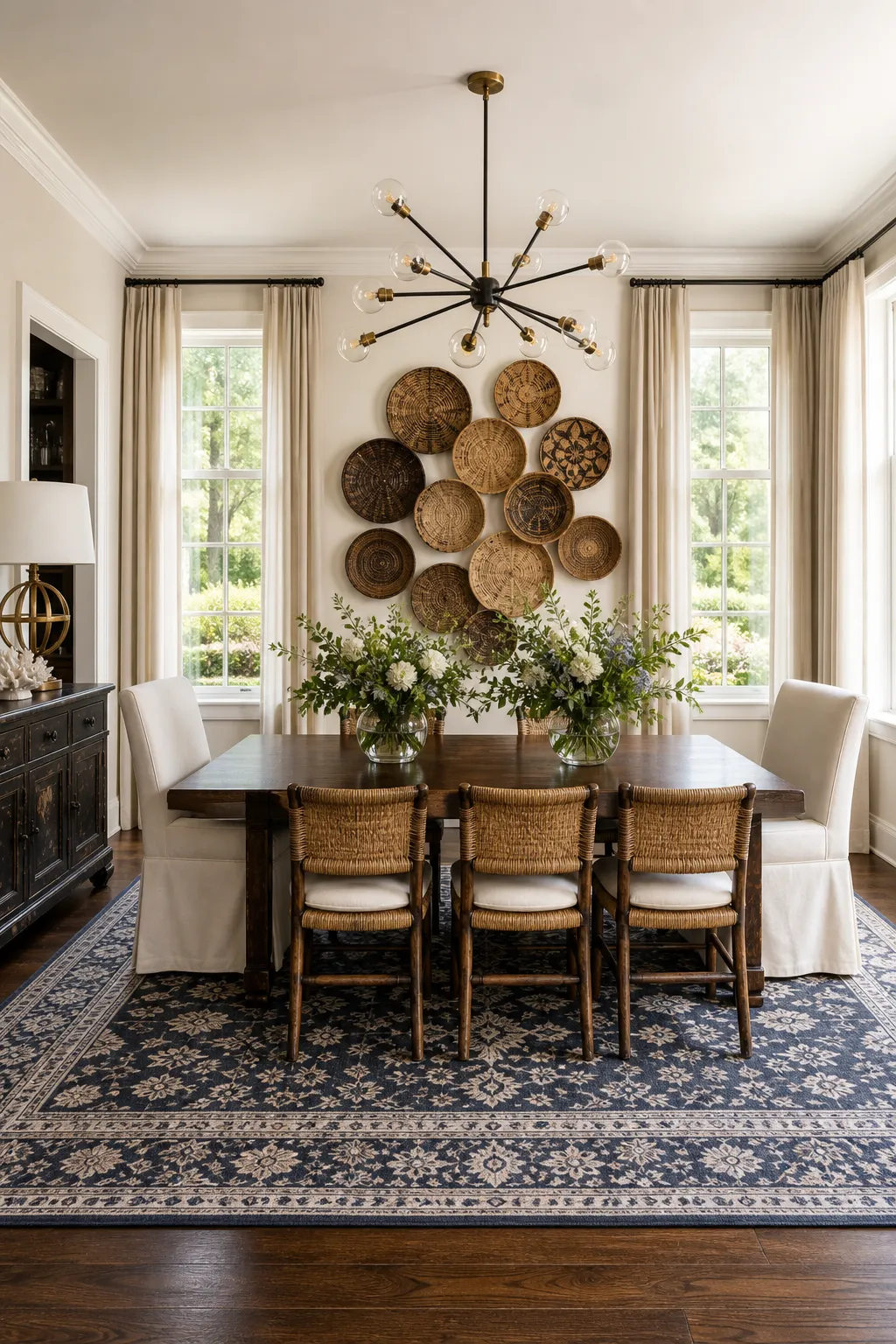
Woven baskets offer a warm, tactile alternative to framed artwork. Combine different sizes, weaves, and natural tones to create an organic gallery wall with plenty of visual character.
Begin with the largest basket slightly off-center, then build outward in a loose, flowing shape. Consistent spacing and a limited palette will unify the varied textures while maintaining a relaxed, handcrafted feel.
Bring Softness to a Neutral Dining Room With Canvas Art
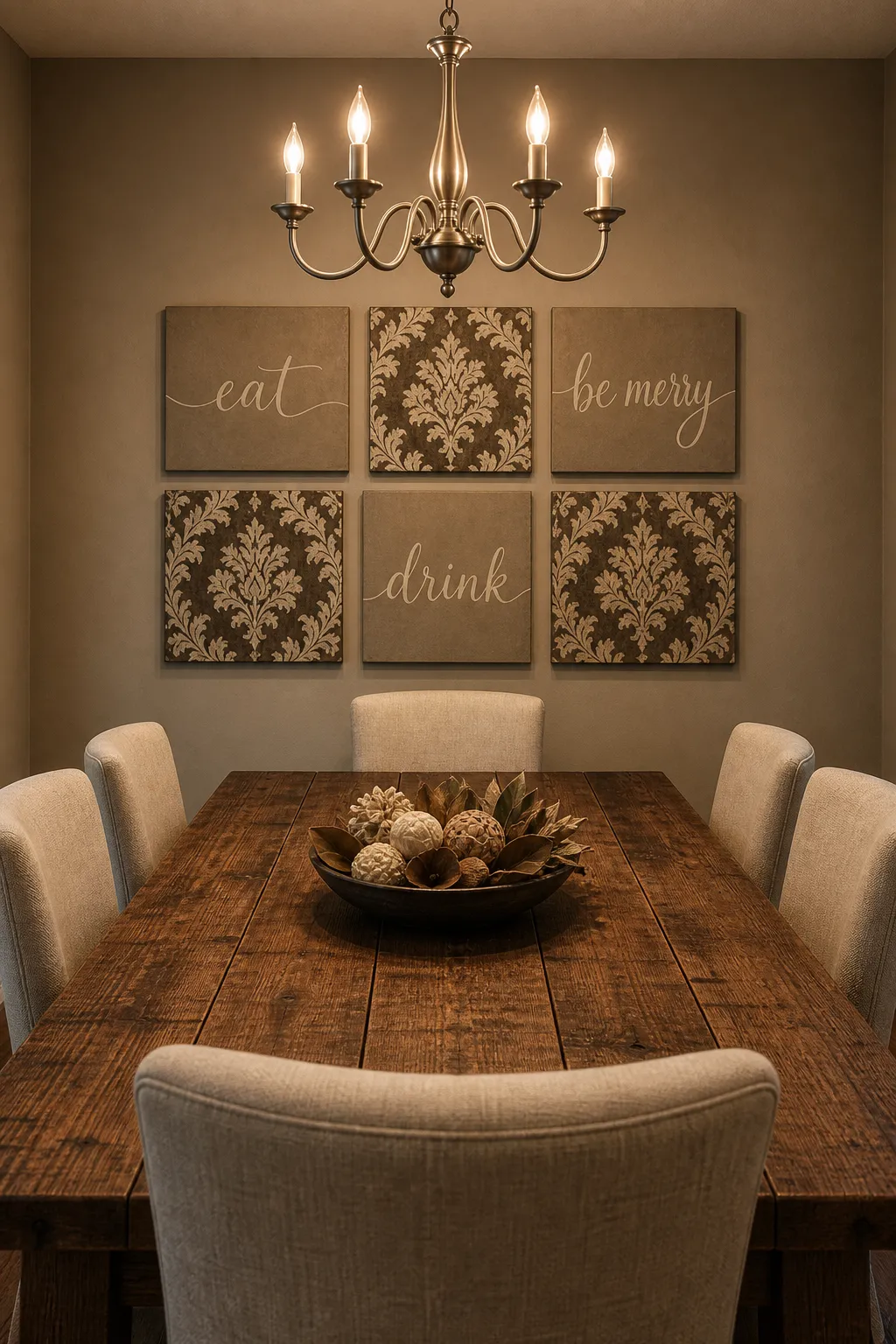
Canvas art softens a neutral dining room through subtle color, texture, and imperfect brushwork. Choose an oversized piece in warm whites, taupe, sand, or muted gray for a calm focal point above the table.
A slim frame or unframed edge maintains the quiet look, while gentle abstract forms keep the wall from feeling stark. Echo one or two shades from the artwork in the upholstery or table linens to connect the room.
Create Dramatic Contrast With a Modern Navy Accent Wall
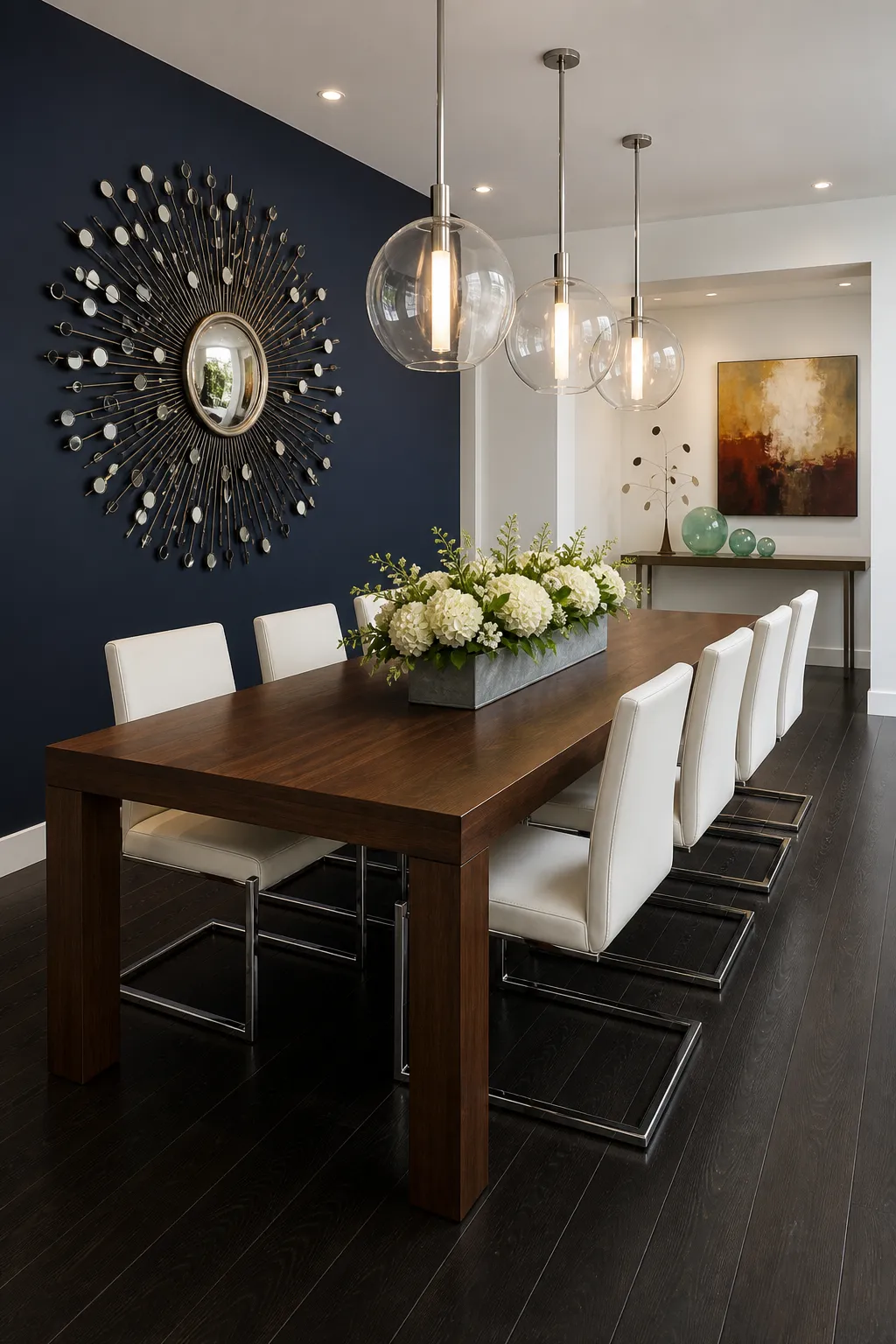
A deep navy wall gives a modern dining room instant definition and makes pale furniture, artwork, and lighting appear sharper. The saturated backdrop creates dramatic contrast without sacrificing sophistication.
Balance the dark color with warm wood, crisp white accents, and reflective finishes that distribute light. Keeping the remaining walls neutral allows the navy surface to command attention without making the entire room feel enclosed.
Keep a Scandinavian Dining Nook Calm With Neutral Wall Decor
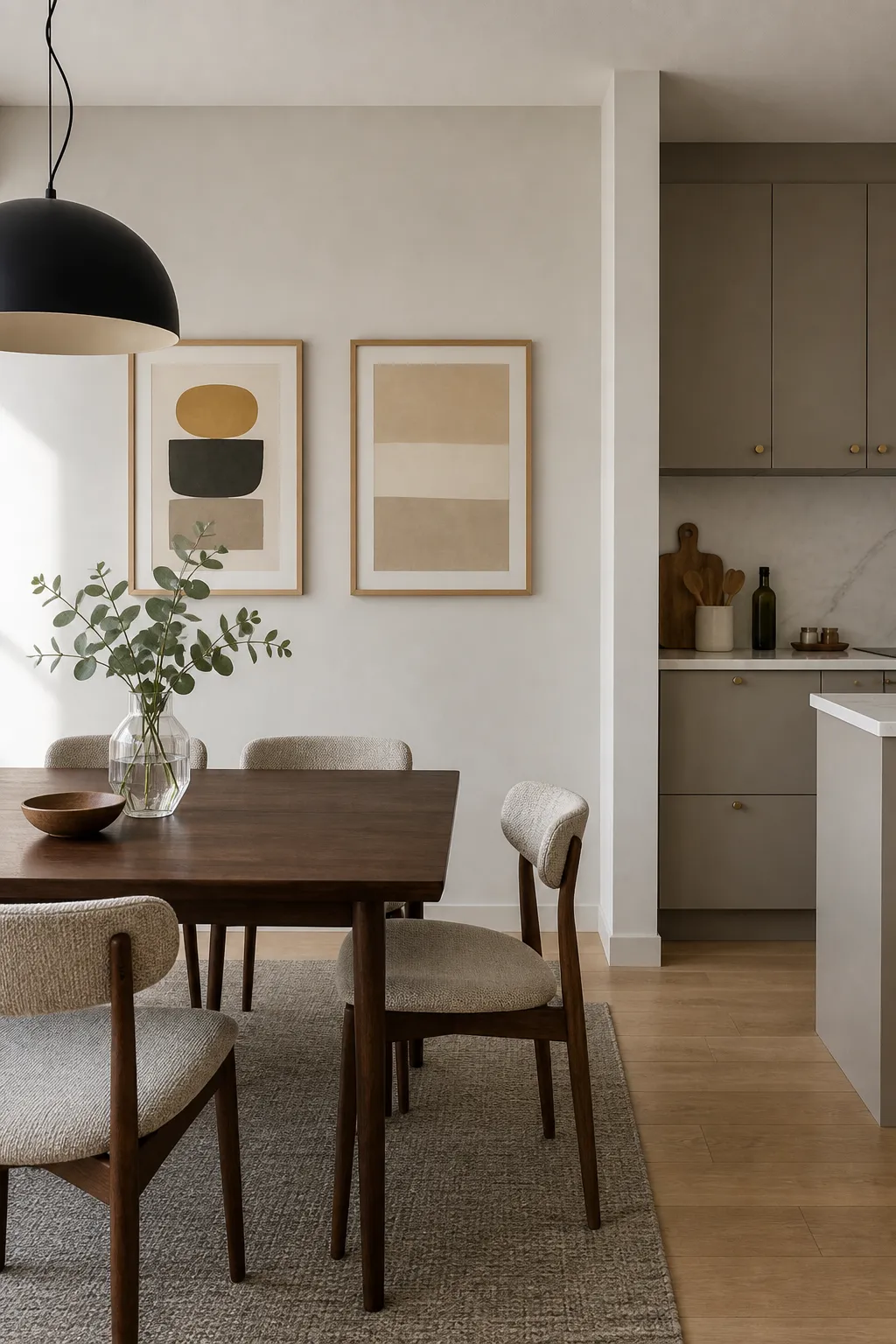
Neutral wall decor supports the airy restraint of a Scandinavian dining nook. Select simple line drawings, pale prints, or softly textured pieces that add interest while preserving a calm, uncluttered mood.
Light wood frames reinforce the natural palette and coordinate easily with a compact table or bench. Limit the display to a few intentional pieces so negative space remains part of the design.
Frame the Dining Zone With a Navy Arched Feature Wall
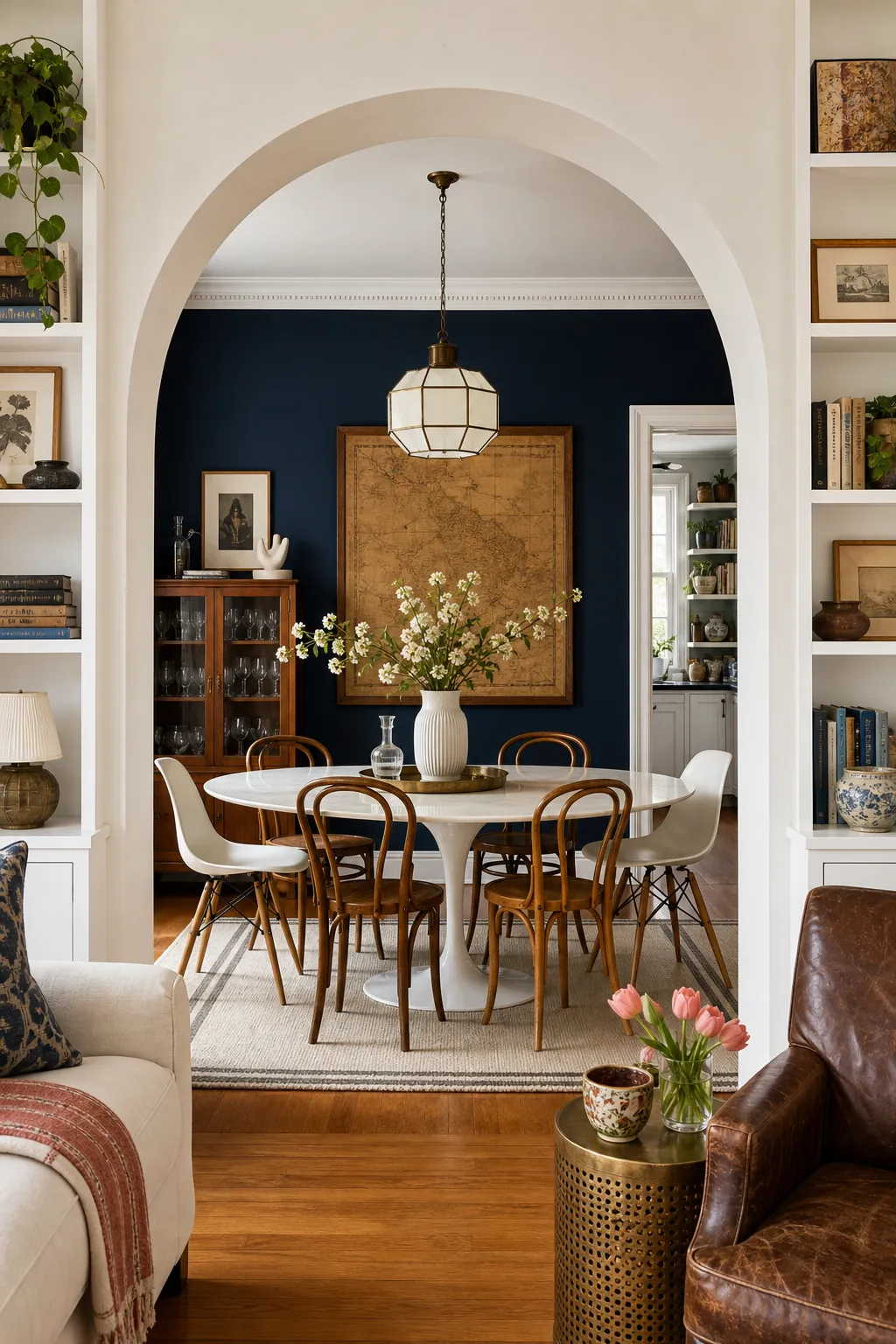
A painted navy arch visually anchors the table and defines the dining zone without adding physical partitions. Its curved outline introduces bold architectural framing while bringing softness to straight-edged furniture.
Size the arch slightly wider than the table or banquette for a balanced composition. Keep nearby decor minimal and use warm lighting or natural wood to offset the depth of the navy paint.
Make a Graphic Statement With Wide Neutral Stripes
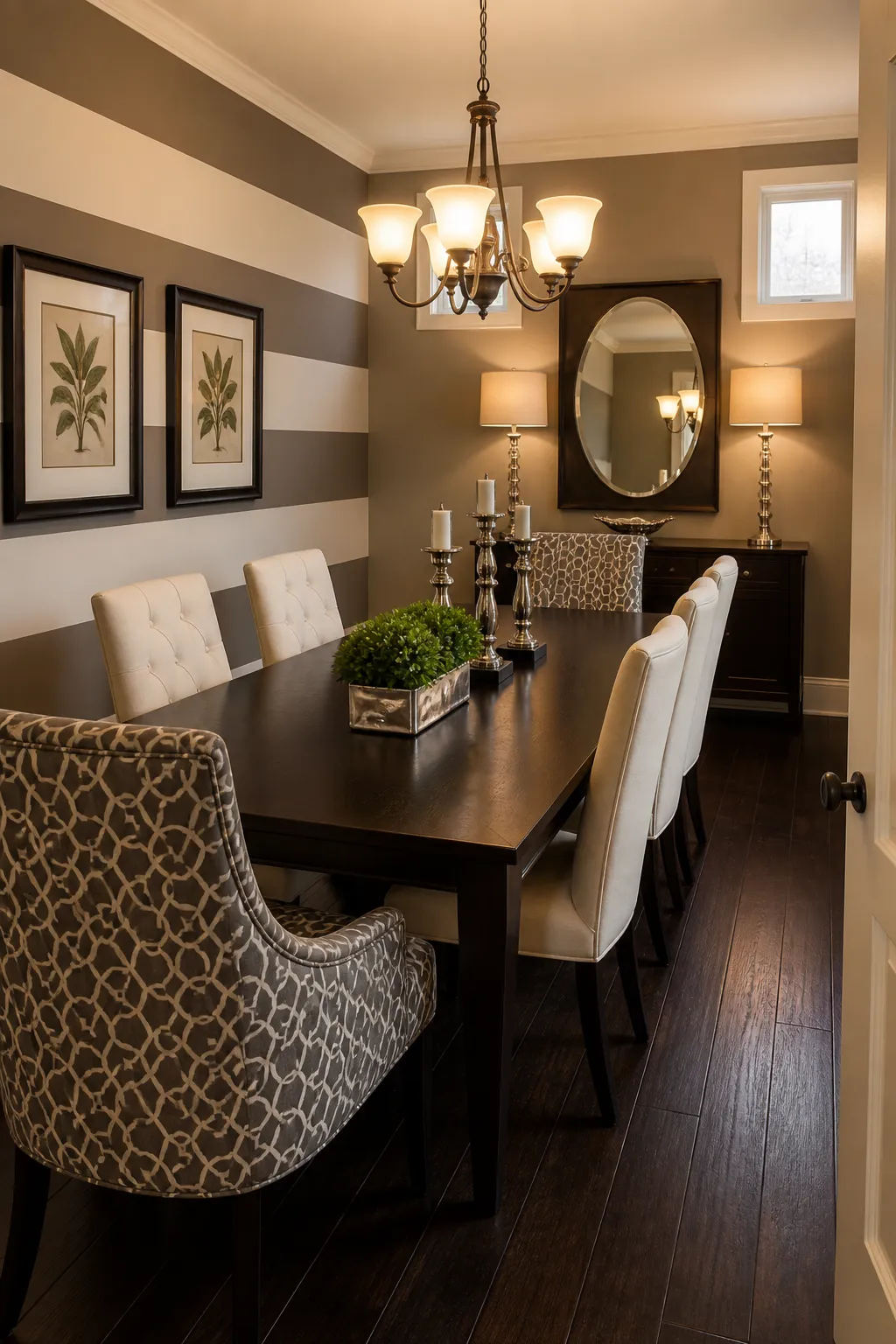
Wide neutral stripes add rhythm and scale to a dining wall without the intensity of high-contrast color. Pair warm white with beige, greige, or clay for a graphic yet livable statement.
Careful measuring and crisp edges are essential for a polished result. Horizontal bands can make the wall feel broader, while repeating their tones across chairs, rugs, or ceramics creates a cohesive finish.