21 Above Bed Wall Art Ideas That Fit Your Bedroom
A picture can be beautiful on its own and still feel wrong over the pillows. Usually the problem is scale, contrast, or the space left around it. Start with the shape of the available wall, then choose art you want to see every day.
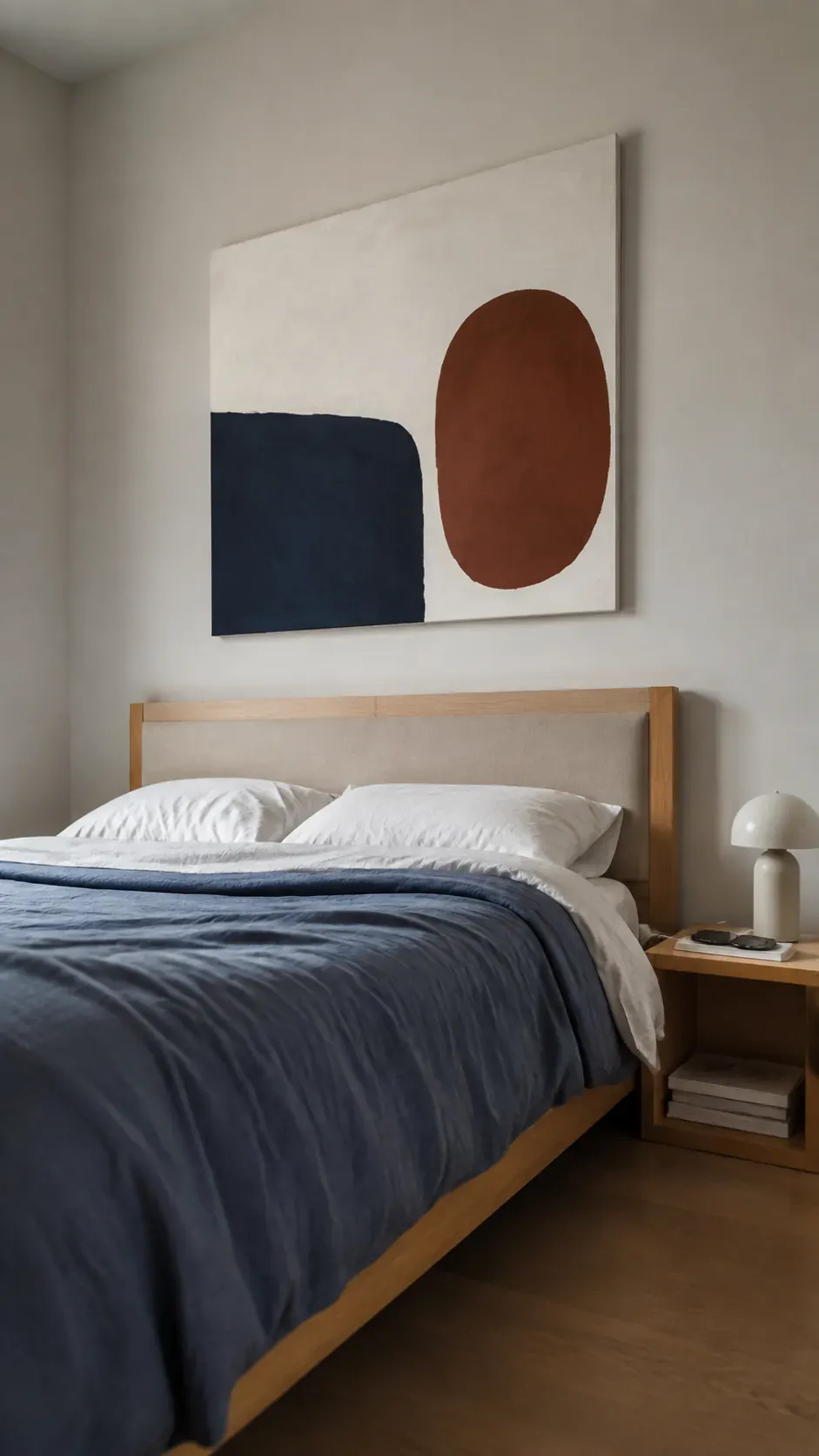
One generous abstract canvas
One substantial canvas gives the bed a clear focal point without adding a collection of small objects. Choose a composition with a few broad shapes so it remains readable from the doorway. Measure the outer canvas width against the headboard, then test that footprint with paper before ordering. A color already present in the bedding can connect the two surfaces without matching every shade. Keep the canvas securely mounted above the sitting zone rather than balancing it on the furniture.
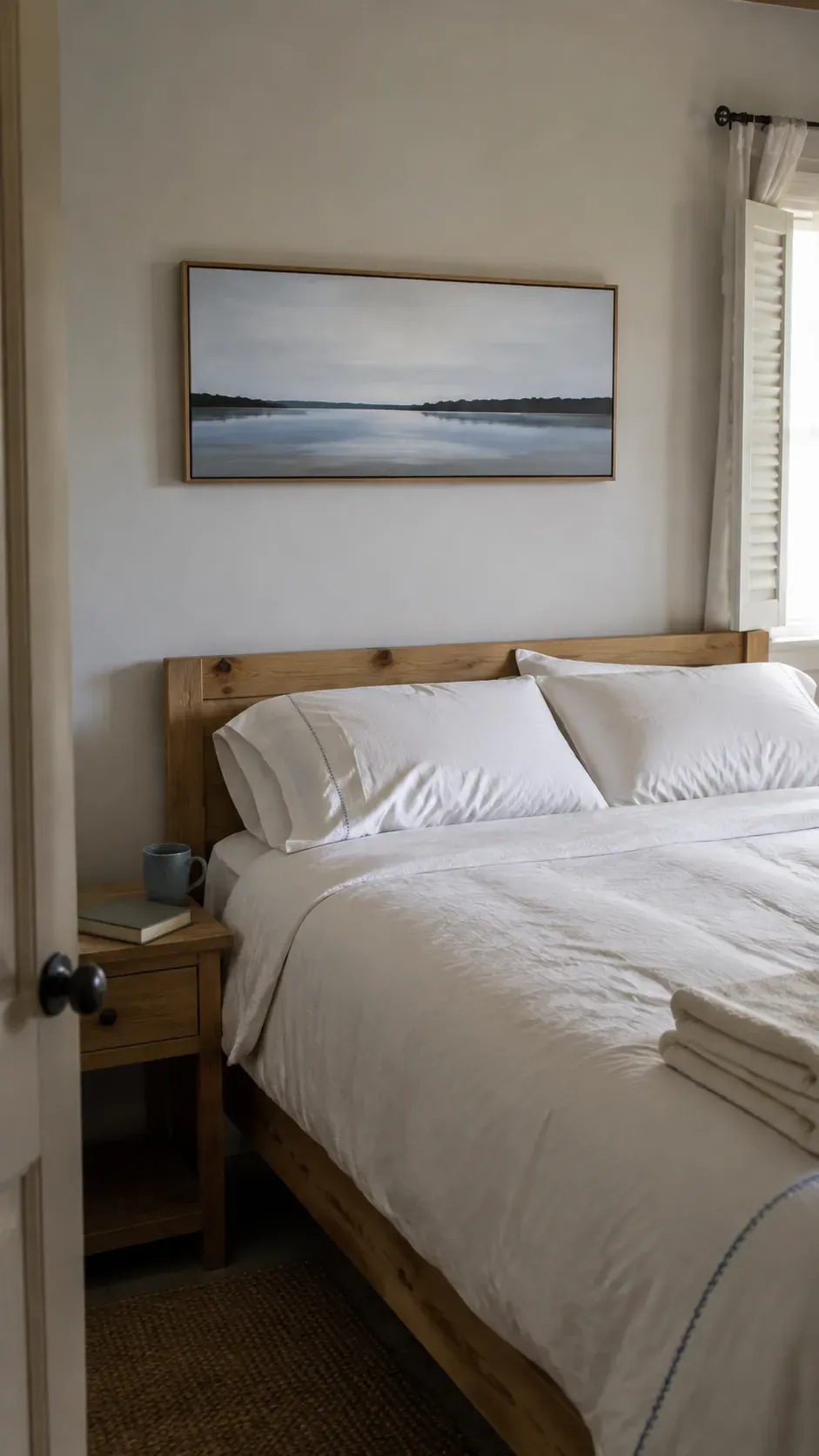
A quiet landscape with an open horizon
An open horizon can soften a bedroom that has strong vertical furniture lines. Look for a landscape with generous sky or water instead of a densely detailed scene that demands attention. A shallow horizontal frame often sits comfortably over a low headboard. Let the picture supply the room’s main blue or green note while the larger fabrics stay restrained. Position it where window reflections will not cover the horizon during the hours you use the room most.
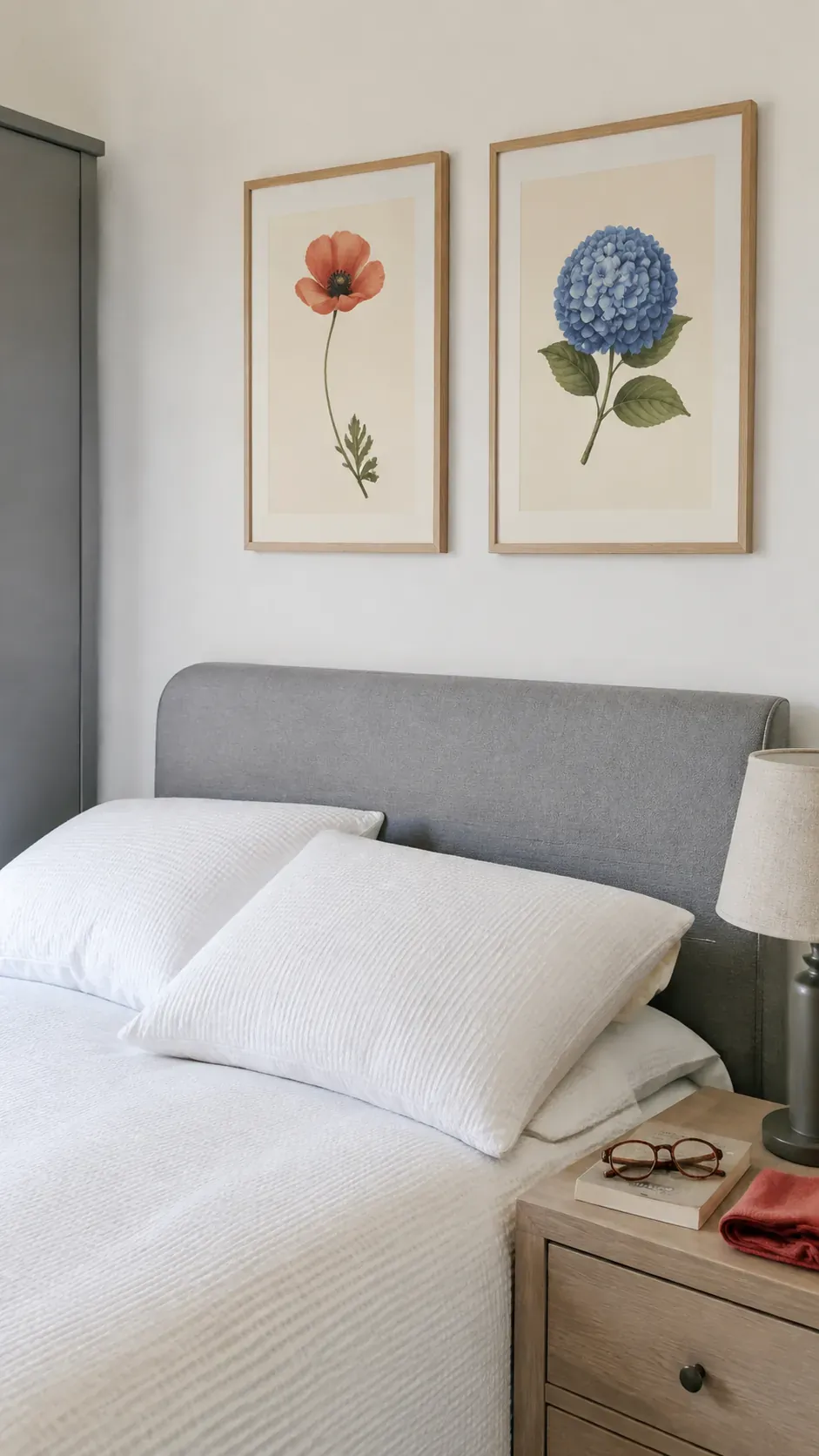
Two floral studies with different silhouettes
A pair of floral studies brings rhythm without the formality of identical images. Choose one branching flower and one rounded bloom, using the same frame size to hold the contrast together. This combination is useful when a single wide piece feels visually heavy. Include the gap between the frames when checking the total artwork width. Similar paper tones help the flowers feel related even when their colors differ.
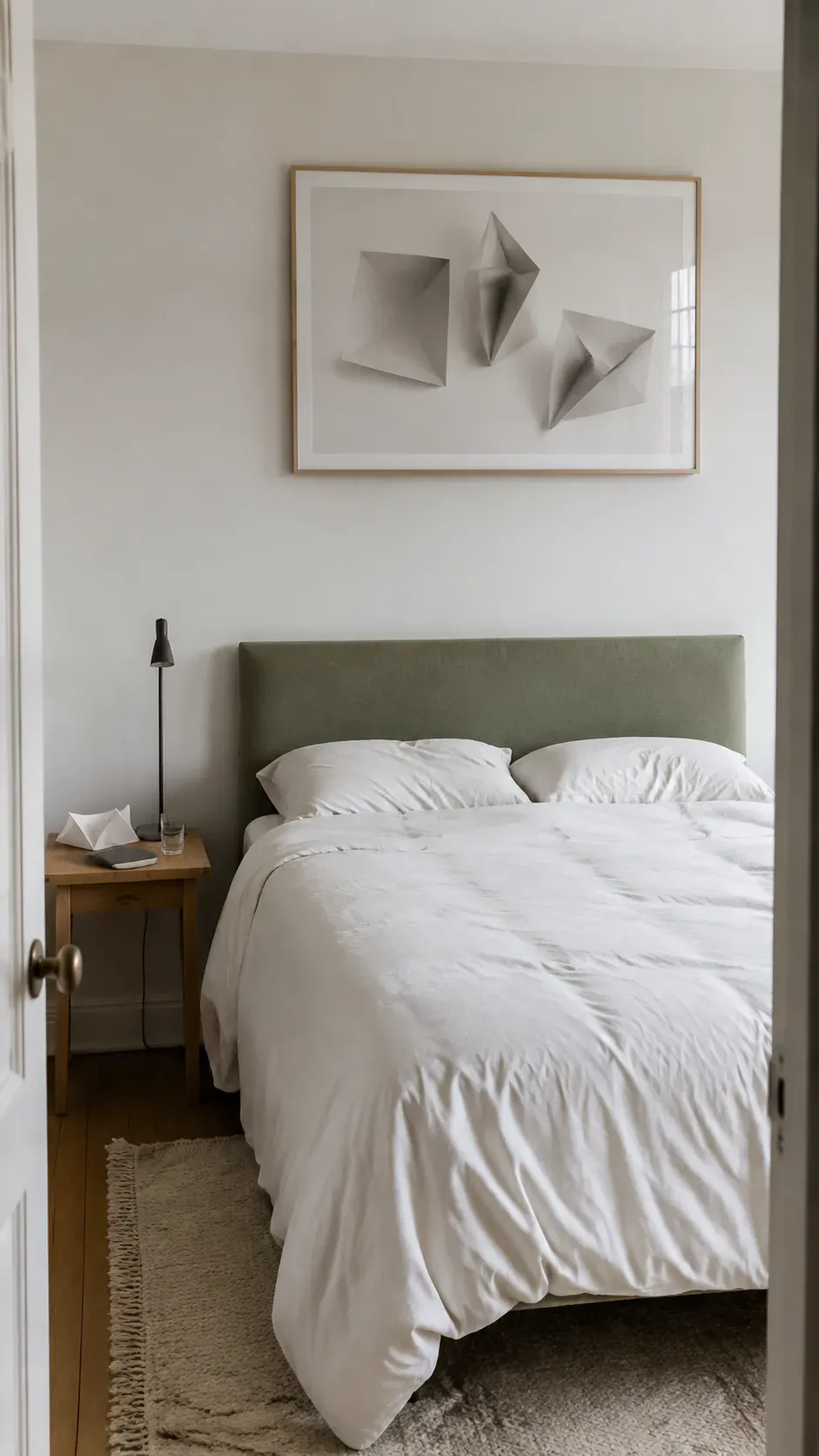
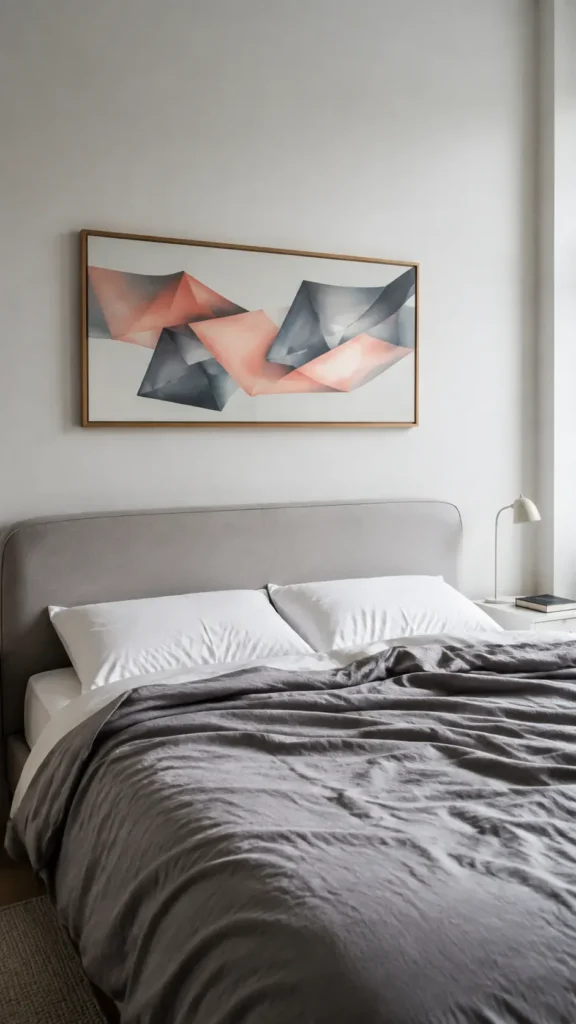
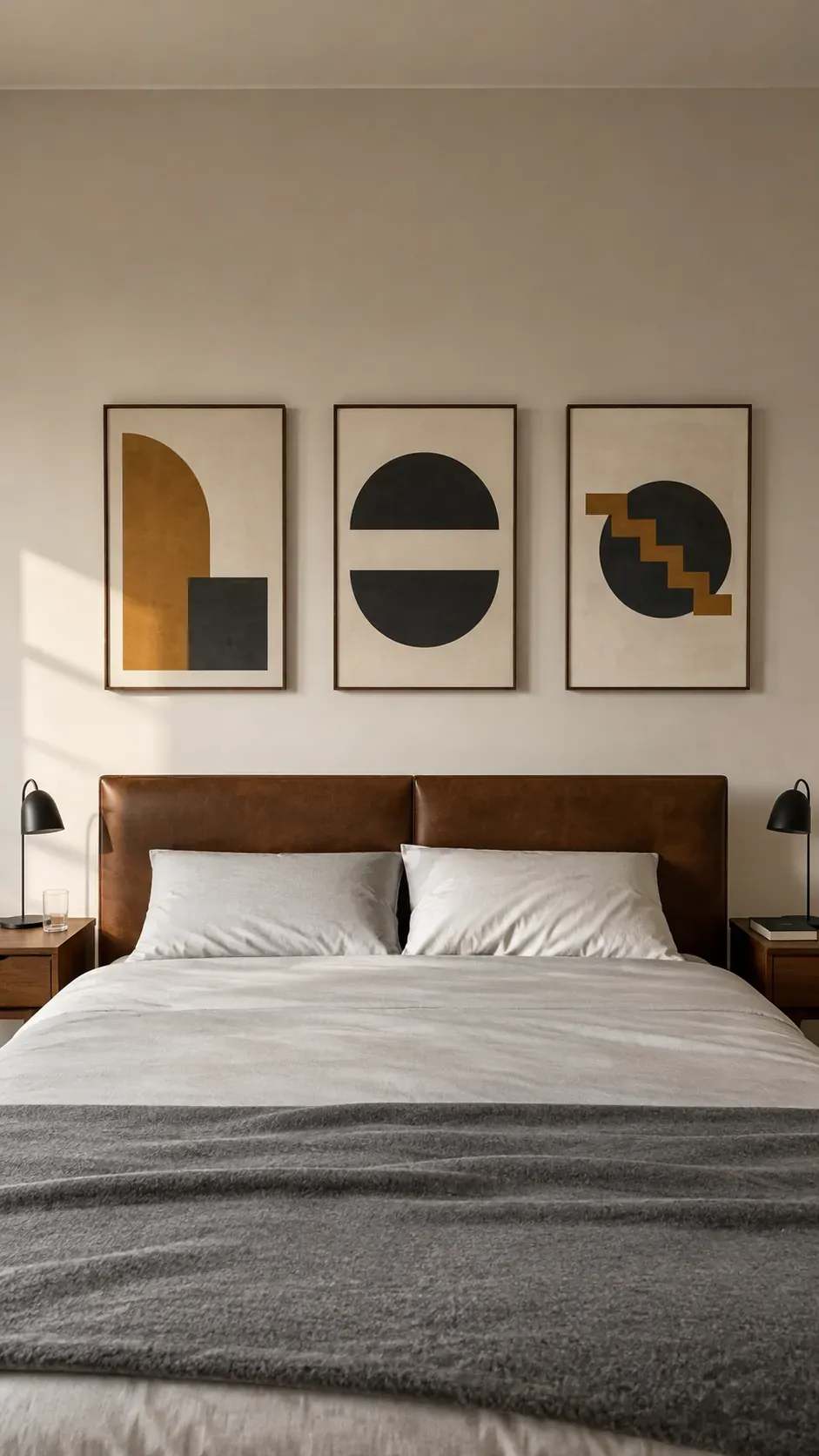
A geometric triptych with generous gaps
Three geometric panels can extend a composition across a wide bed. The panels should share a visual language, but each needs enough substance to stand on its own. Equal gaps make the arrangement easy to read, especially against a plain wall.
Account for the full group width before buying a set advertised only by individual panel size. Lay out paper rectangles and view them with the bedside lamps on. If the panels crowd the fixtures, reduce the overall scale before installation.
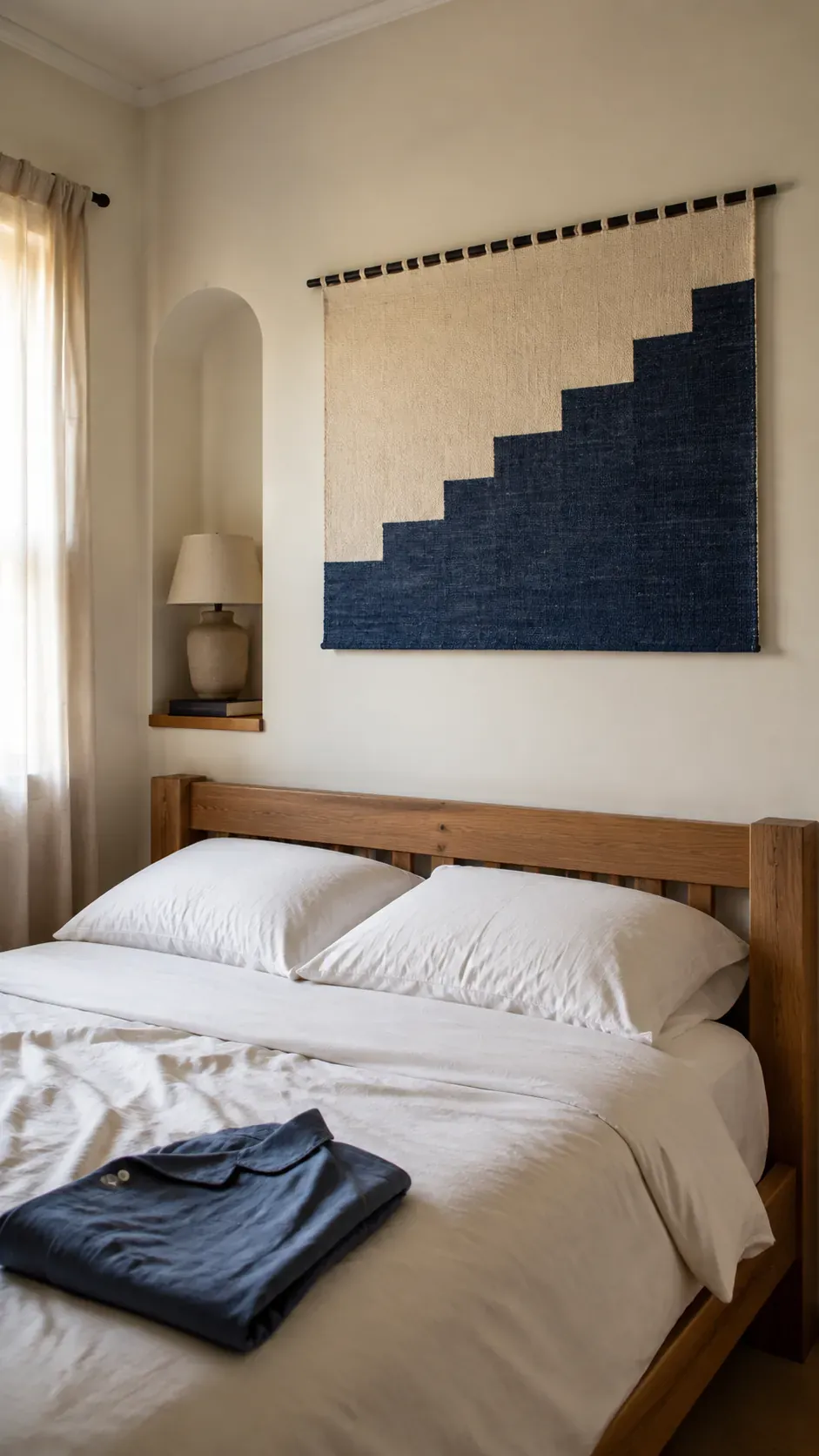
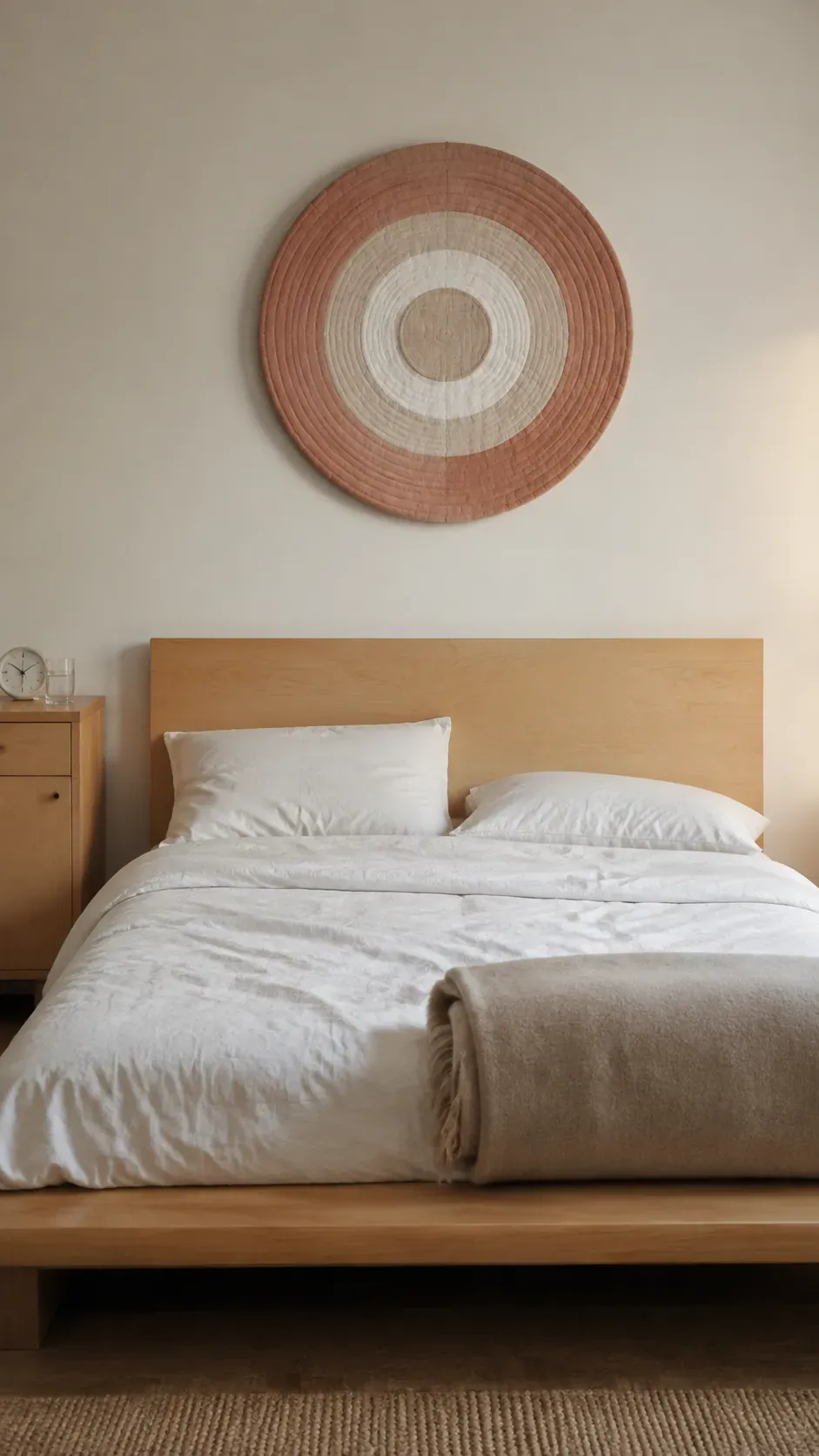
A woven hanging with a clean lower edge
A woven hanging introduces softness where a bedroom already contains plenty of hard edges. Broad bands or a simple stepped pattern read more calmly than a dense tangle of fringe. Keep the lower edge well above the pillows and use secure support appropriate to the textile and wall. Short, tidy attachments are easier to manage than long cords in the sleeping area. A plain cotton duvet gives the woven surface room to be the main texture.
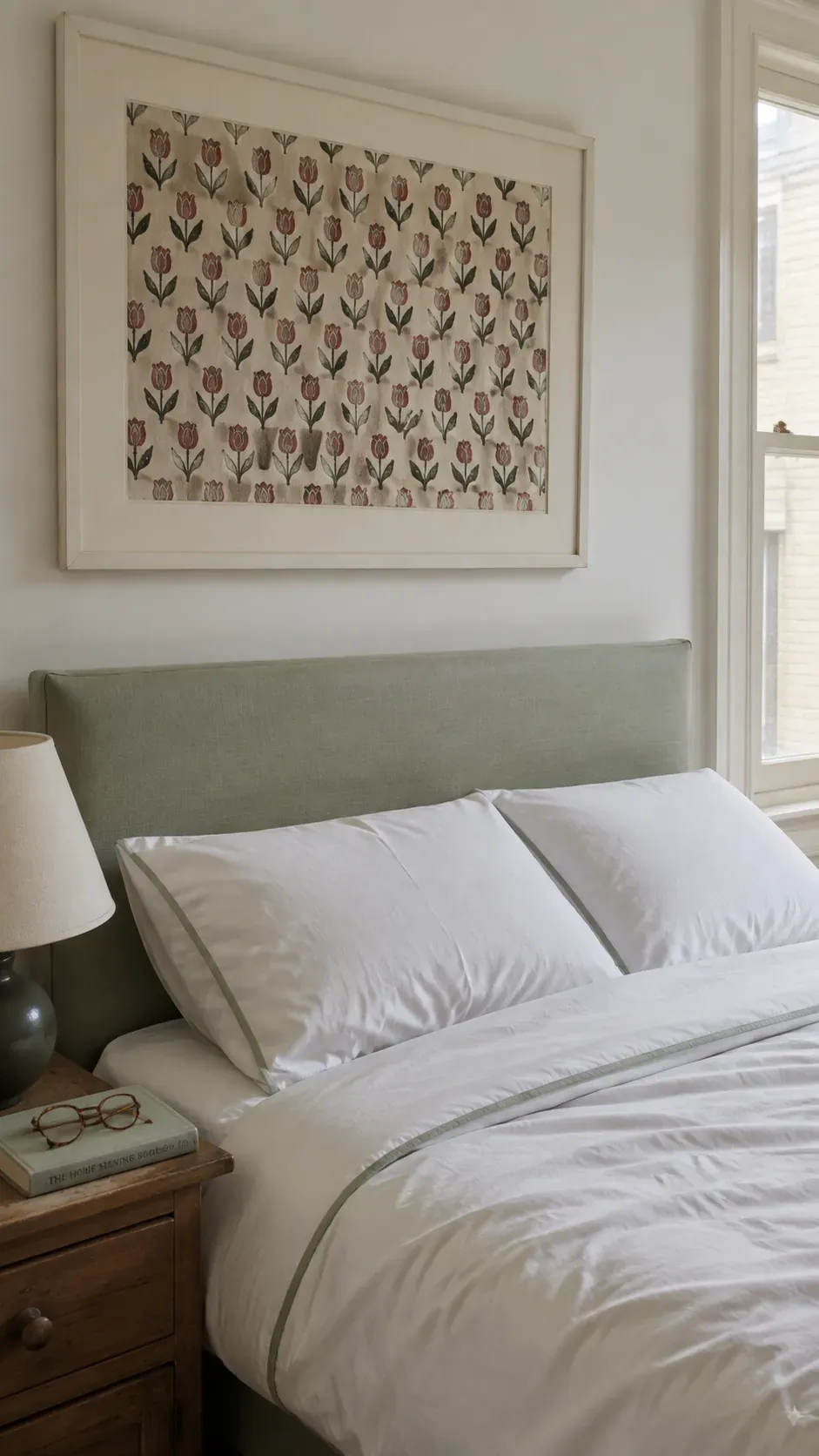
A favorite fabric displayed as art
A beautiful fabric remnant can become the room’s most personal picture. Stretch or mount it using a method suited to the cloth, preserving the motif rather than pulling it out of shape. A generous border helps a small repeat feel intentional instead of like leftover upholstery. Repeat the fabric’s quietest color elsewhere in the bedroom so the display belongs without becoming a matching suite. For valuable or fragile textiles, ask a framer about appropriate support and protection.
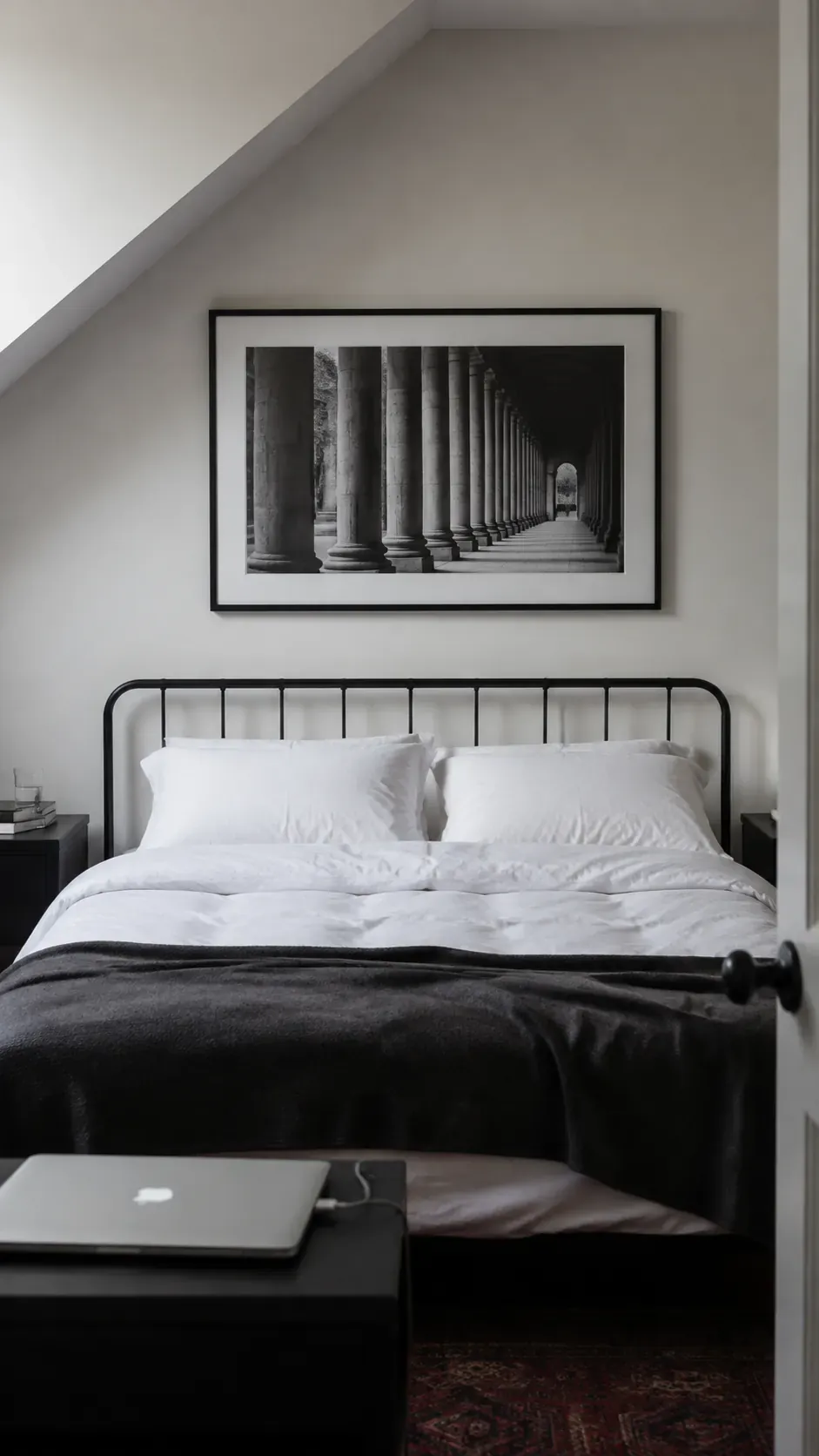
An architectural photograph with strong lines
An architectural photograph suits a bedroom that needs structure more than extra color. A staircase, facade, or colonnade can echo the headboard’s geometry without copying it. Select a crop with an obvious focal point, since intricate buildings can become visual clutter at a distance. Black and white is useful when the existing bedding already carries several colors. Wide matting separates the photograph from a dark frame and lets the smaller details breathe.
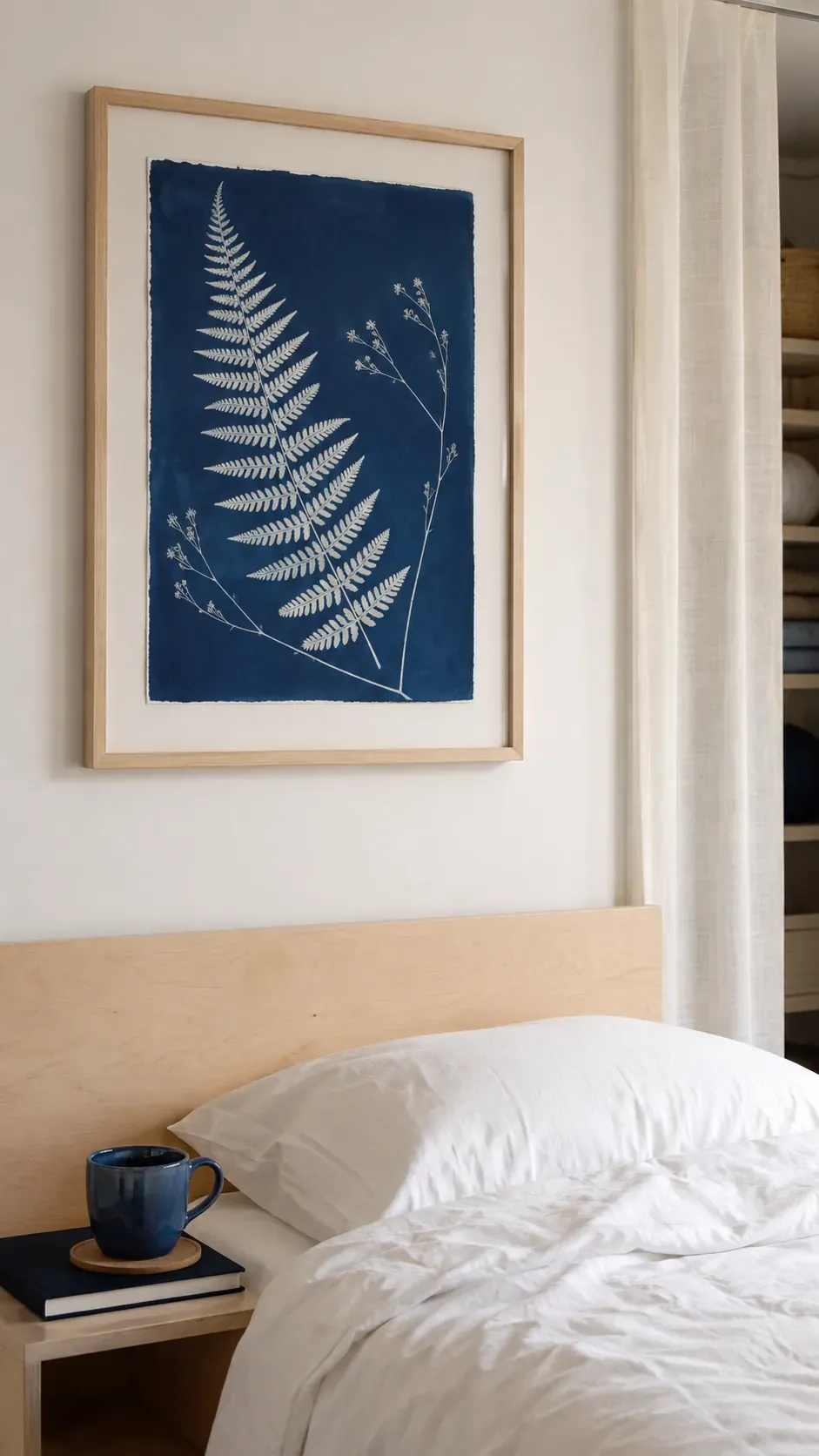
A deep blue cyanotype
A cyanotype brings a concentrated patch of blue into a pale room. Delicate plant silhouettes feel especially clear against the saturated paper field. Let that blue appear once more in a small bedside object or cushion rather than spreading it across every surface. Use a frame that keeps the paper flat and protects it appropriately. The result works best when neighboring patterns are quiet enough for the fine stems to remain visible.
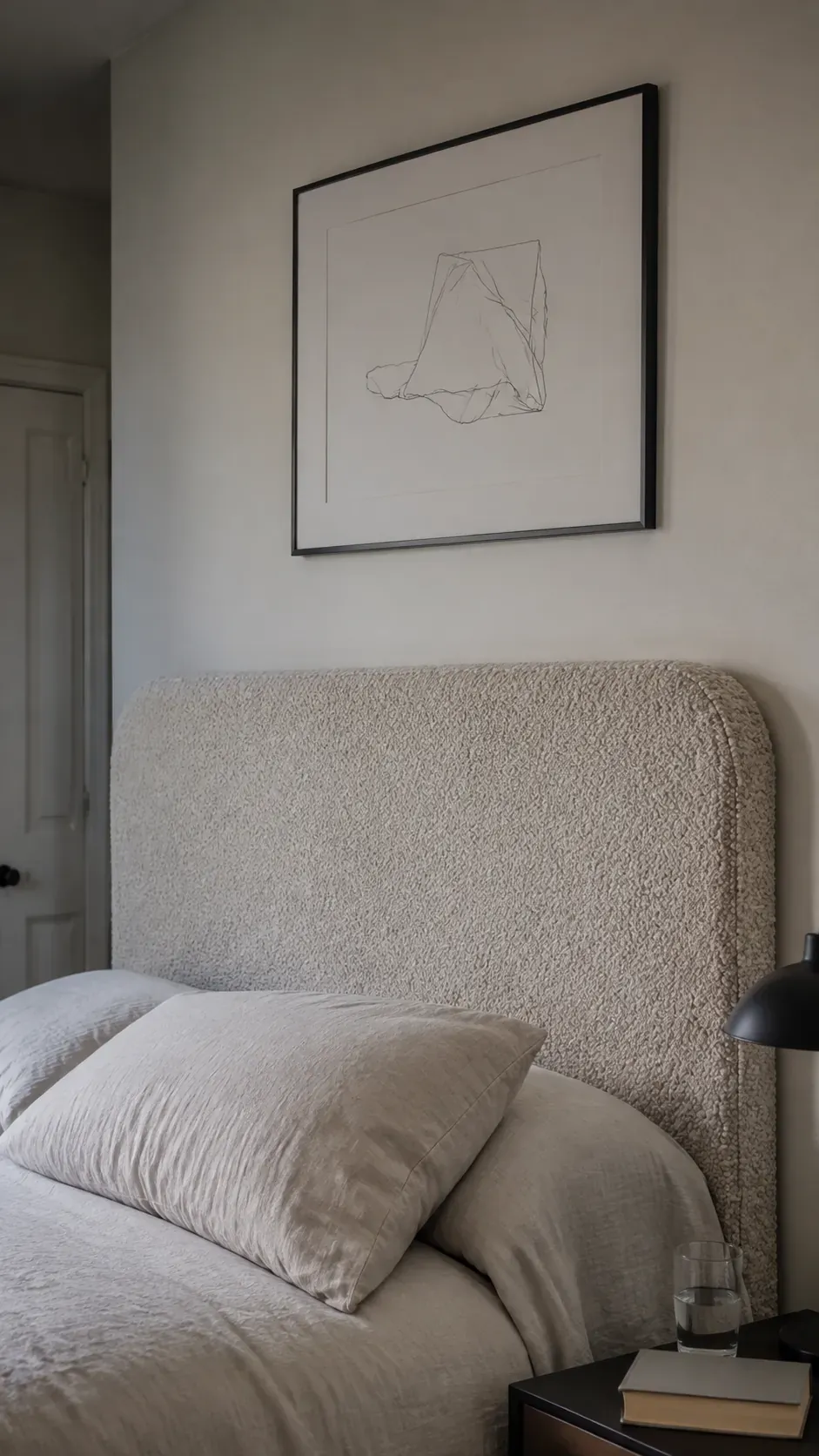
A single charcoal line drawing
A spare line drawing can be enough above a bed with a richly textured headboard. Choose a subject whose outline reads easily, such as a folded cloth or a simple seated figure. The empty paper is part of the composition, so avoid cropping it tightly just to fill the wall. A thin frame keeps the visual weight low. Check that the drawing remains visible from the bedroom entrance rather than disappearing into an oversized white field.
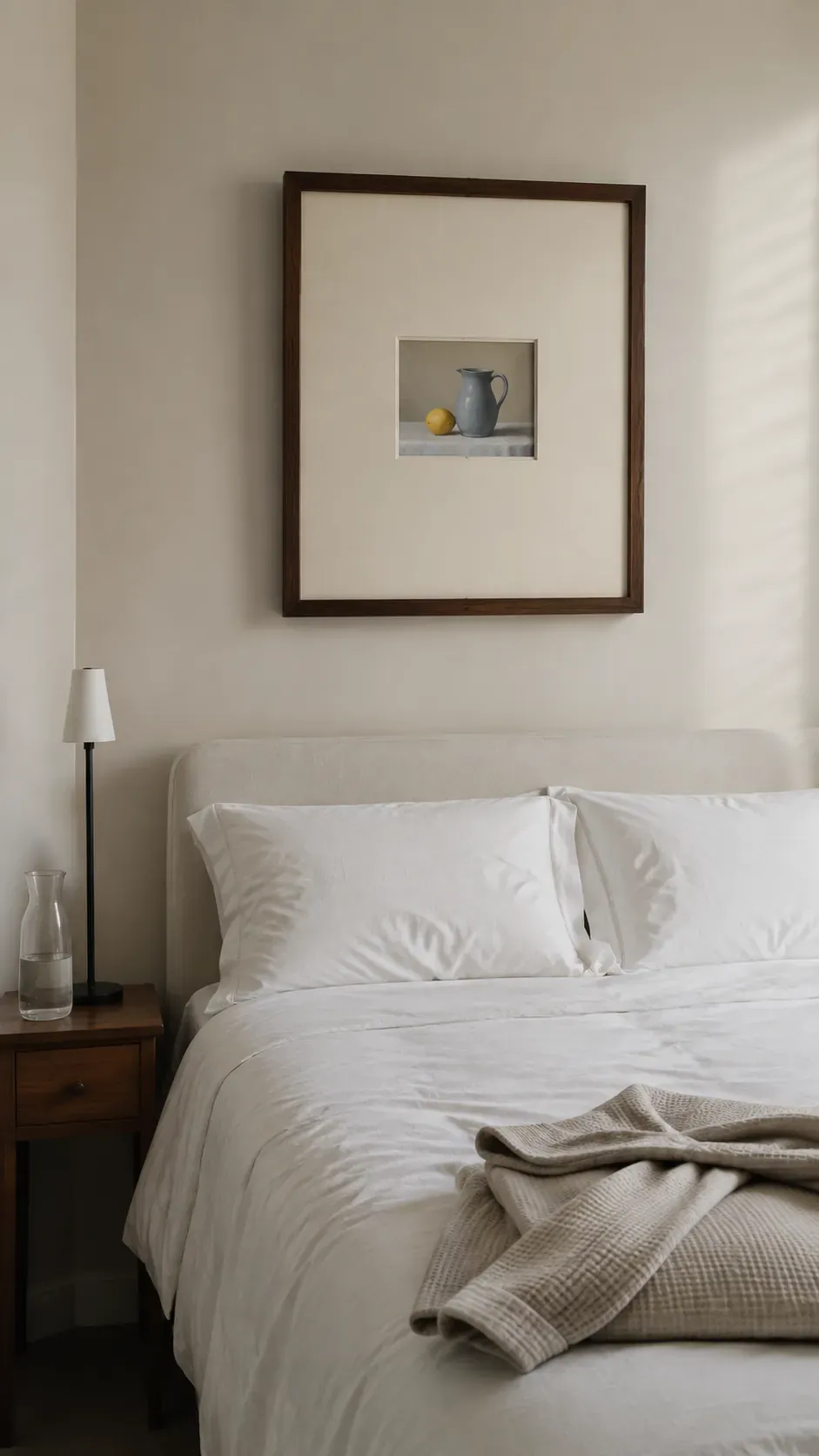
A small still life with a substantial mat
Small artwork does not always need replacing with a larger print. A substantial mat can give an intimate still life enough presence to sit above a compact bed. The outer frame should relate to the furniture, while the picture inside remains a rewarding detail at closer range. Choose mat proportions that support the image instead of treating every border as identical by default. This approach is particularly useful for a treasured piece that would lose its charm when enlarged.
A graphic poster with restrained typography
A graphic poster can add personality without turning the bedroom into an advertising wall. Pick one with a clear hierarchy and limited text, so it reads as an image from across the room. A strong shape or illustration should do more work than a long slogan. Frame it properly and allow the surrounding wall to stay open. If the poster is already bright, choose bedding that repeats a minor color rather than its loudest one.
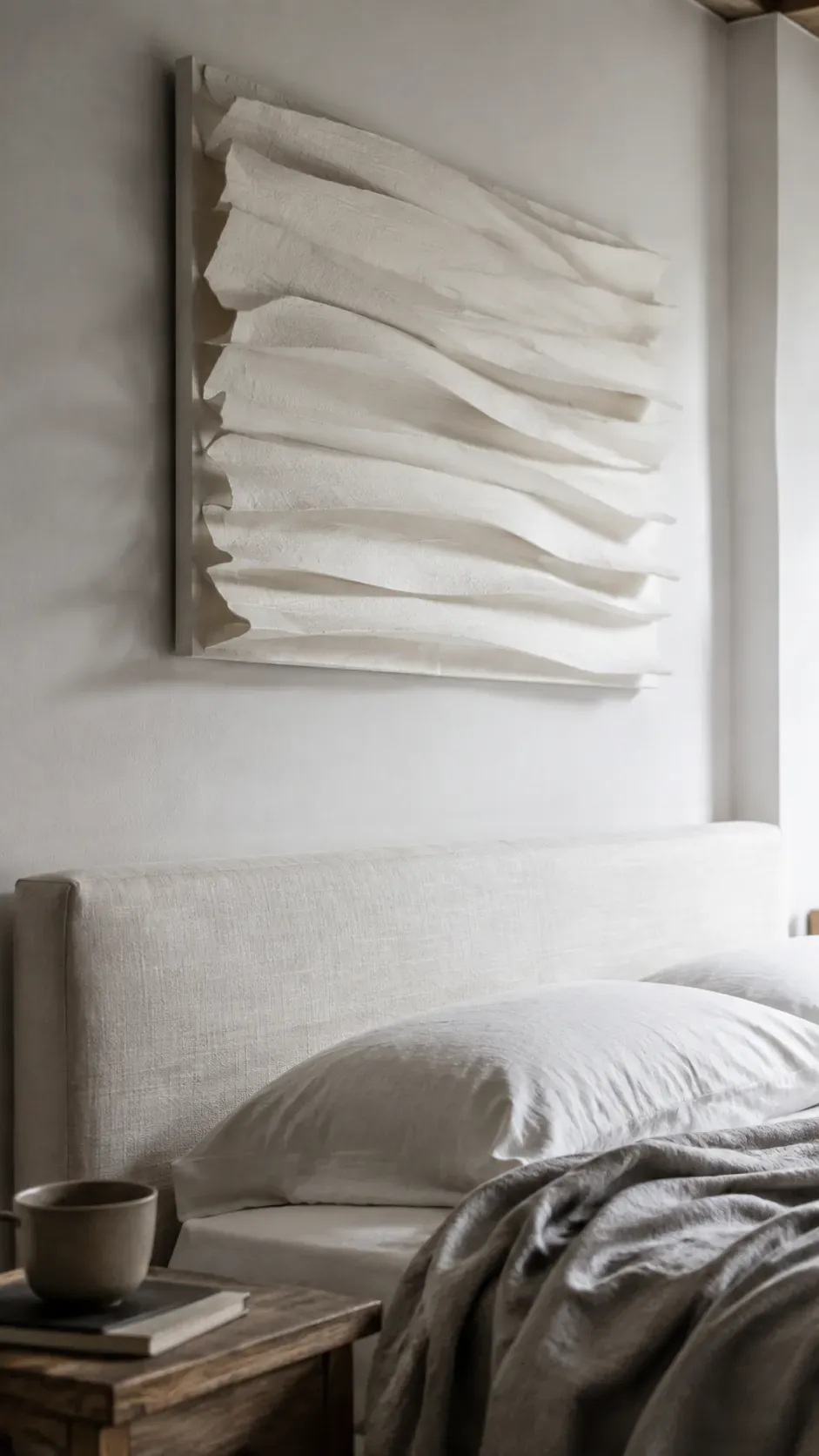
A shallow relief that catches side light
A shallow relief adds interest through shadow instead of printed color. Lightweight materials can be a more practical choice above a bed than substantial plaster or stone. Side light reveals the surface, so inspect a sample where it will actually hang before committing.
Confirm the piece’s weight, wall construction, and mounting requirements. Keep projecting or heavy sculptural objects away from the sleeping position. The appeal should come from a subtle surface change, not an object looming over the pillows.
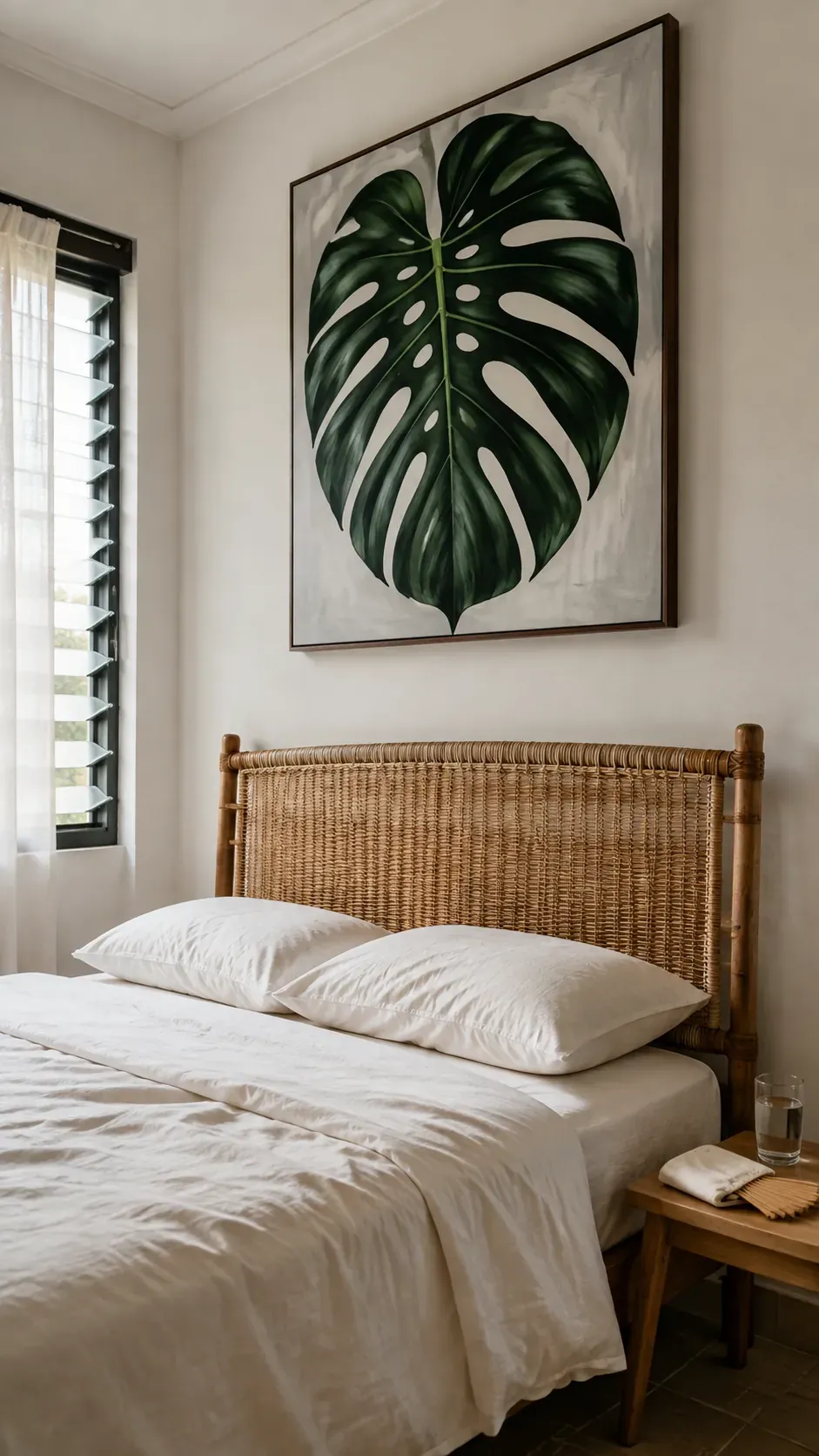
A bold botanical painting
A single botanical painting can feel more decisive than several small plant prints. Choose an enlarged leaf, branch, or flower with a clear silhouette and let it occupy most of the image. A dark green subject works well with pale wood and plain natural fabrics. Keep nearby plants or patterned cushions from competing with the painted foliage. The painting should look connected to the bed through scale even when its style is expressive.
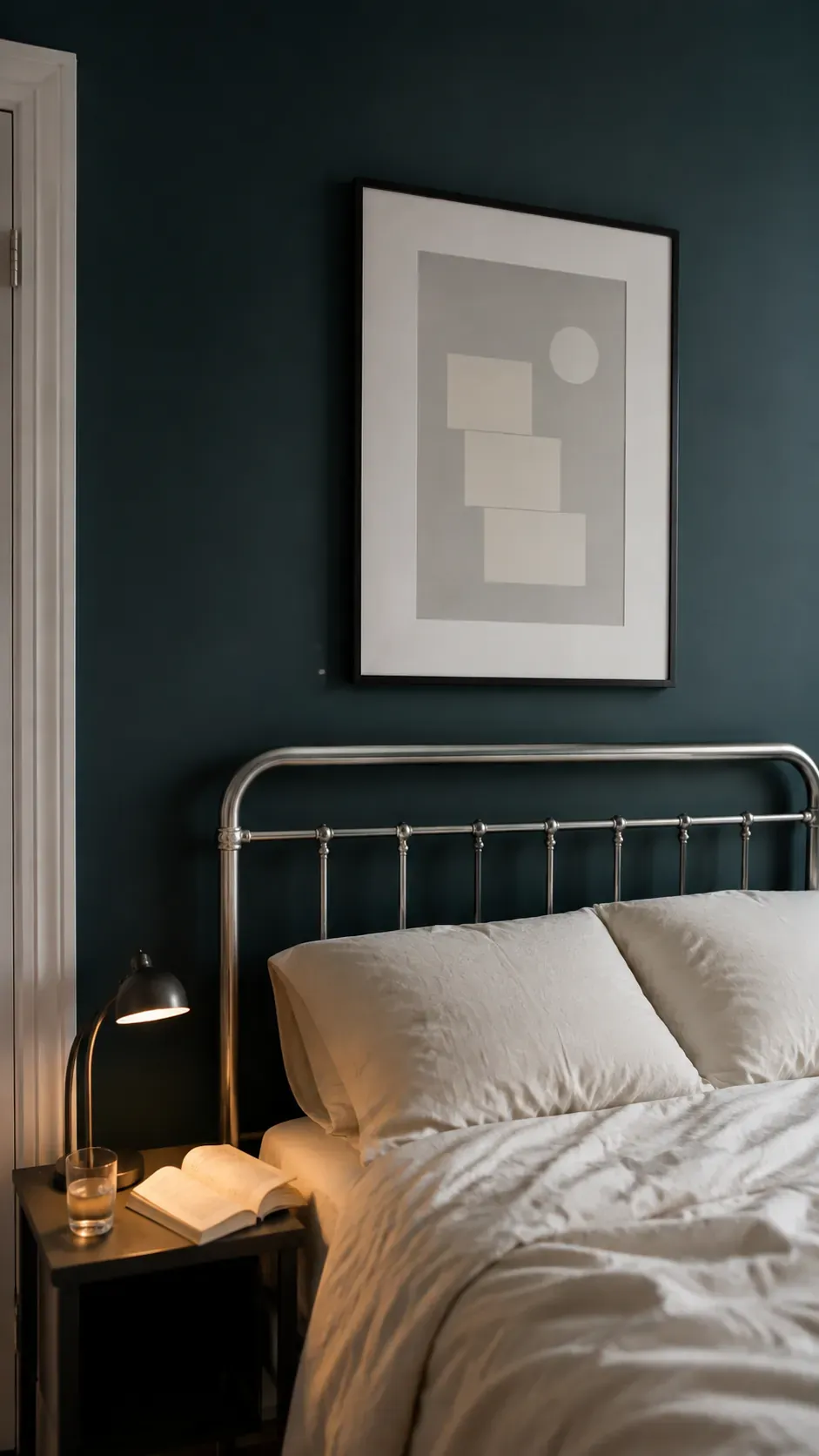
Pale artwork against a deep wall color
A deep wall color can make pale artwork feel luminous. White or cream image areas create separation, while a thin dark frame keeps the edge controlled. Test the paint beside the actual picture in daylight and evening light, because the paper tone may shift more than expected. This approach can give a modest print strong presence without increasing its size. Keep the rest of the wall simple so the contrast remains the main effect.
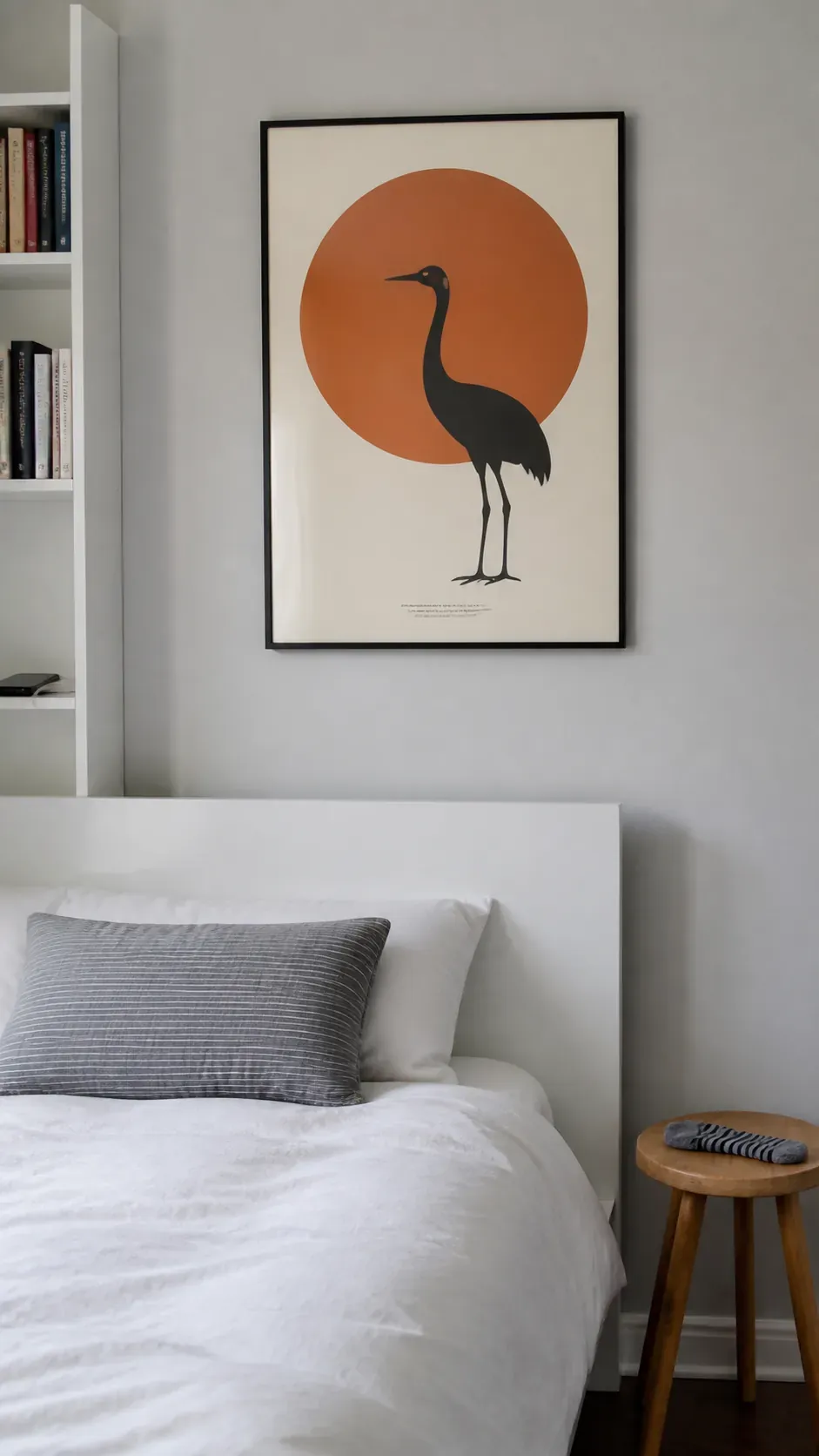
A round piece above a straight headboard
A round artwork breaks up a bedroom dominated by rectangles. Its curved outline works especially well above a simple horizontal headboard. Choose a diameter that reads clearly from the doorway without extending into bedside fixtures. A circular abstract or textile composition can provide this shape without the weight and reflection of a mirror. Check the mounting orientation before hanging, since an off center attachment can make the design rotate.
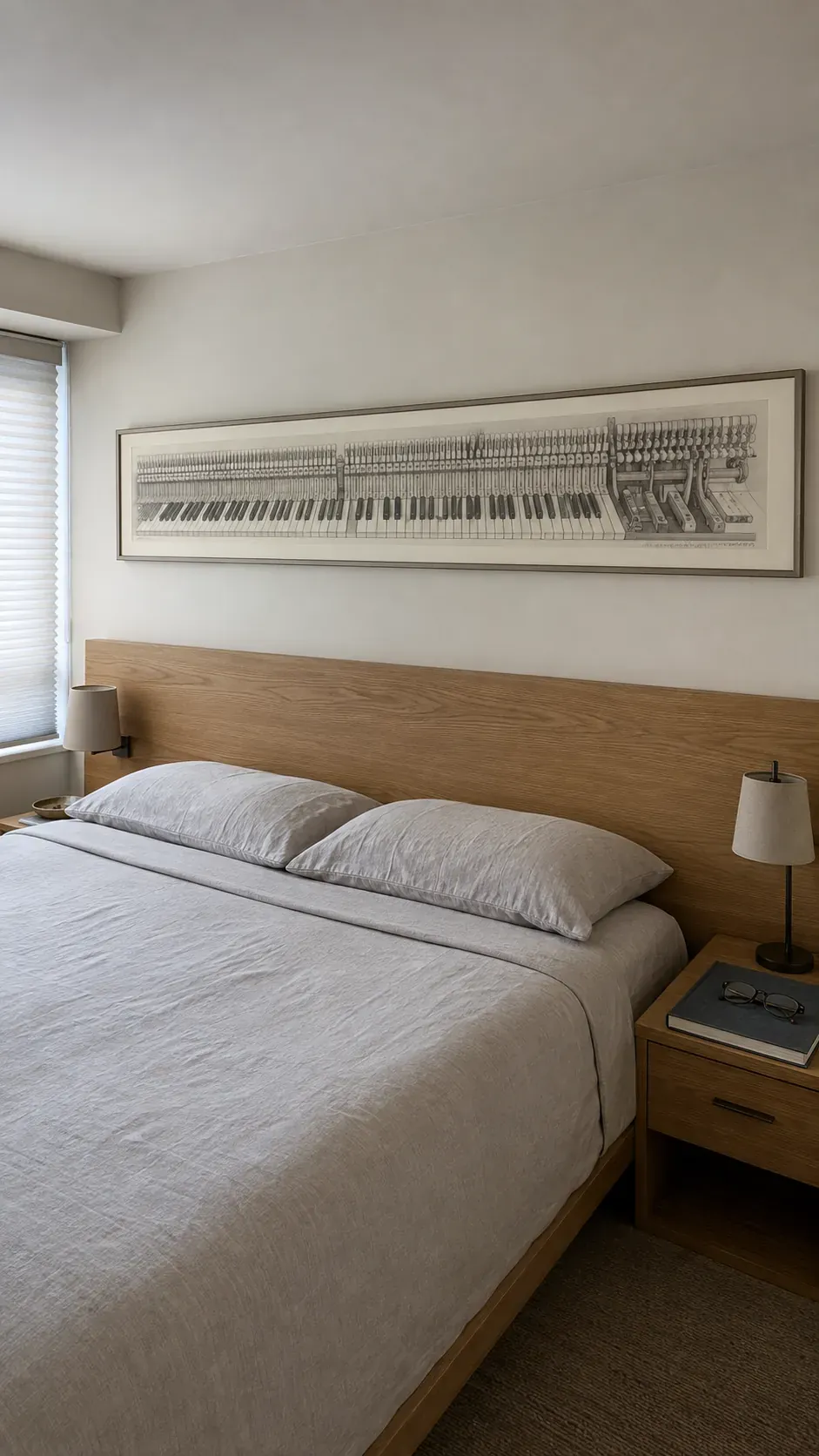
A wide panoramic drawing
A wide drawing can follow the headboard’s horizontal line while leaving plenty of wall above it. Long compositions of repeated marks or an extended architectural detail suit this format. Keep the image height modest when the ceiling is low, but avoid a strip so thin that it disappears. A narrow frame helps the drawing remain the focus. Measure the complete outside dimensions, including the frame, when checking the space between lamps.
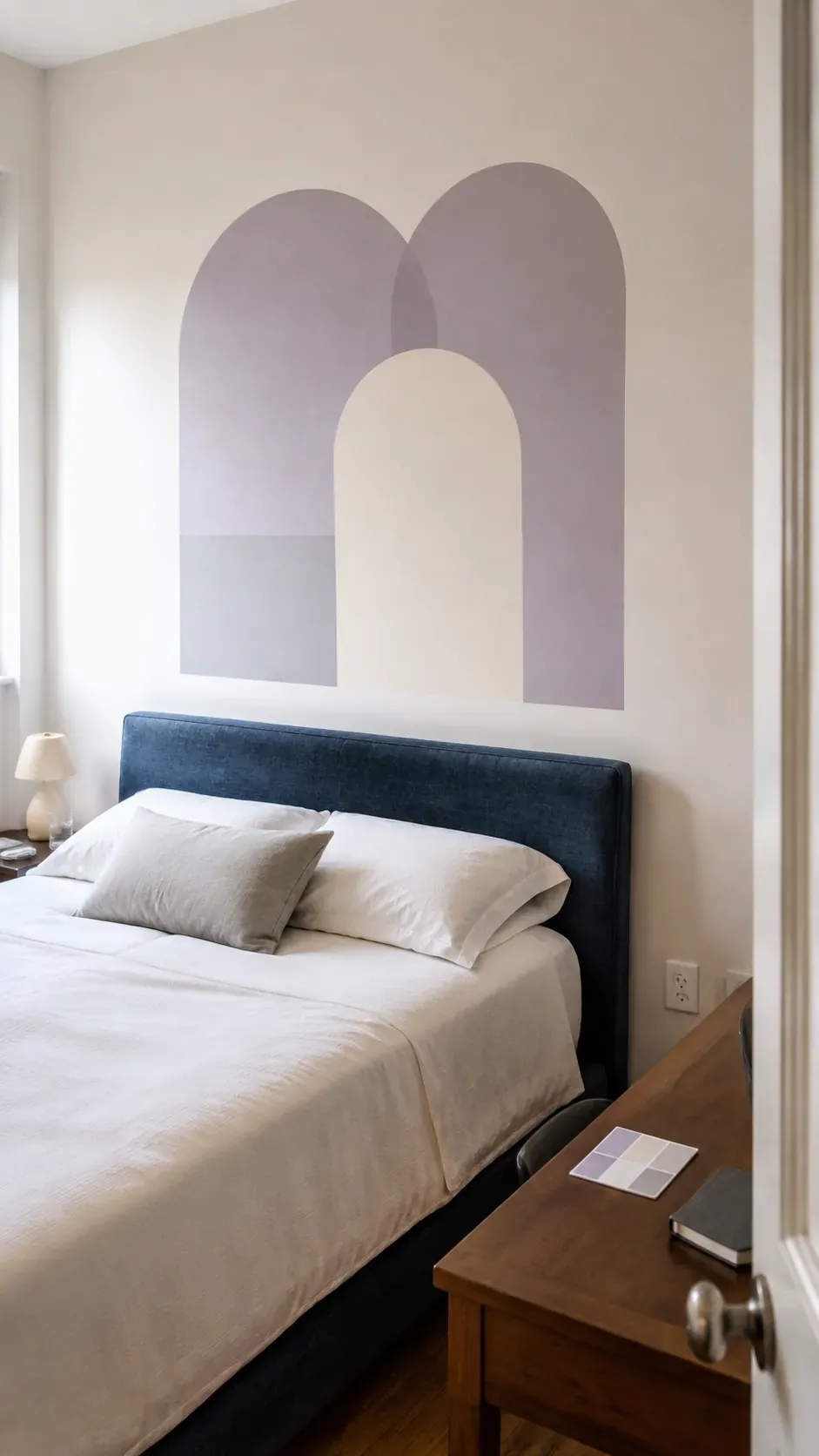
Art painted directly on the wall
A painted composition removes the need for a projecting frame. Simple overlapping arches or a restrained block pattern can turn the space above the headboard into a deliberate focal area. Test the colors on the actual wall and plan the edges with care before painting. Keep the composition connected to the bed width rather than spreading it across unrelated corners. Renters should confirm permission and any restoration requirements before choosing this approach.
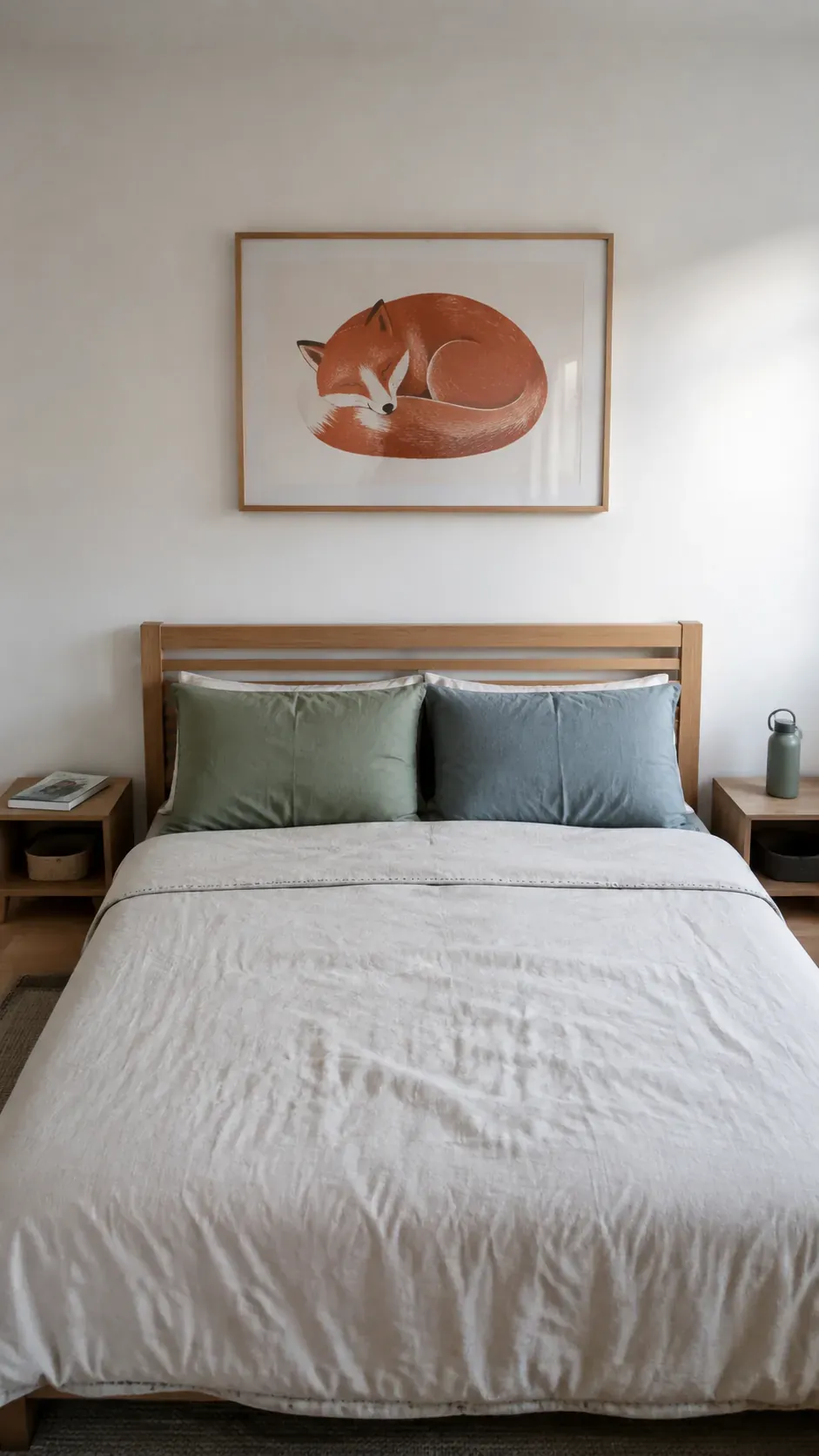
A playful animal print for a shared room
An animal print can bring warmth to a shared bedroom without relying on nursery motifs. A clear, expressive subject such as a fox or a sleeping cat works well when the rest of the room is simple. Choose colors that suit both occupants and a scale that belongs to the bed rather than the entire wall. Use secure mounting and suitable lightweight glazing, especially where children may reach the display. Avoid long hanging cords or loose decorative attachments near the sleeping area.
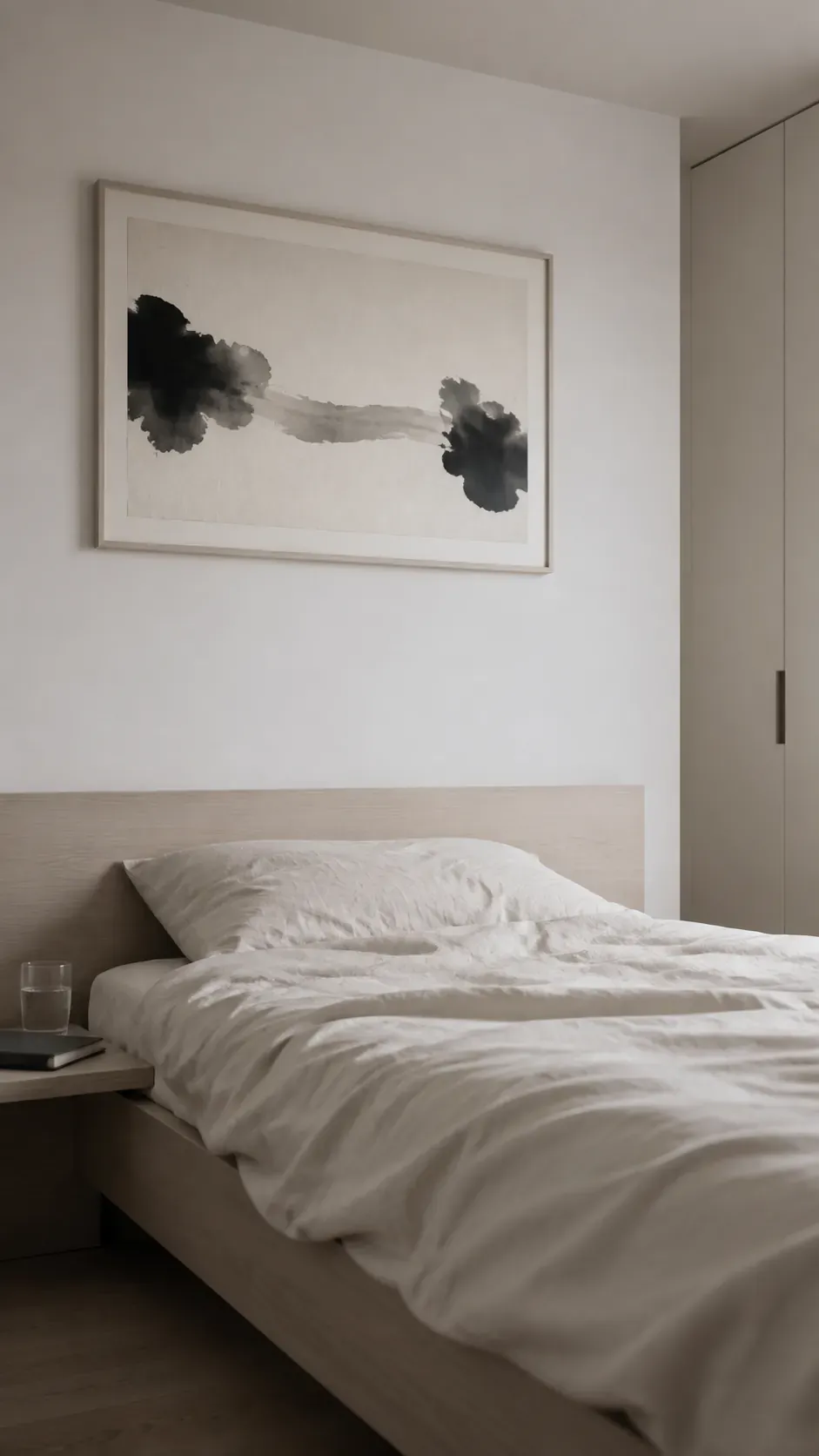
An ink wash with room to breathe
An ink wash offers movement without a crowded composition. Broad variations in tone can soften a room with crisp furniture and smooth bedding. Select a piece with enough blank paper to keep the darker marks from feeling heavy. A pale timber frame suits a gentle contrast, while black creates a more defined boundary. Let the actual paper and pigment do the work rather than adding several competing accessories beneath it.
A personal commission in an unexpected format
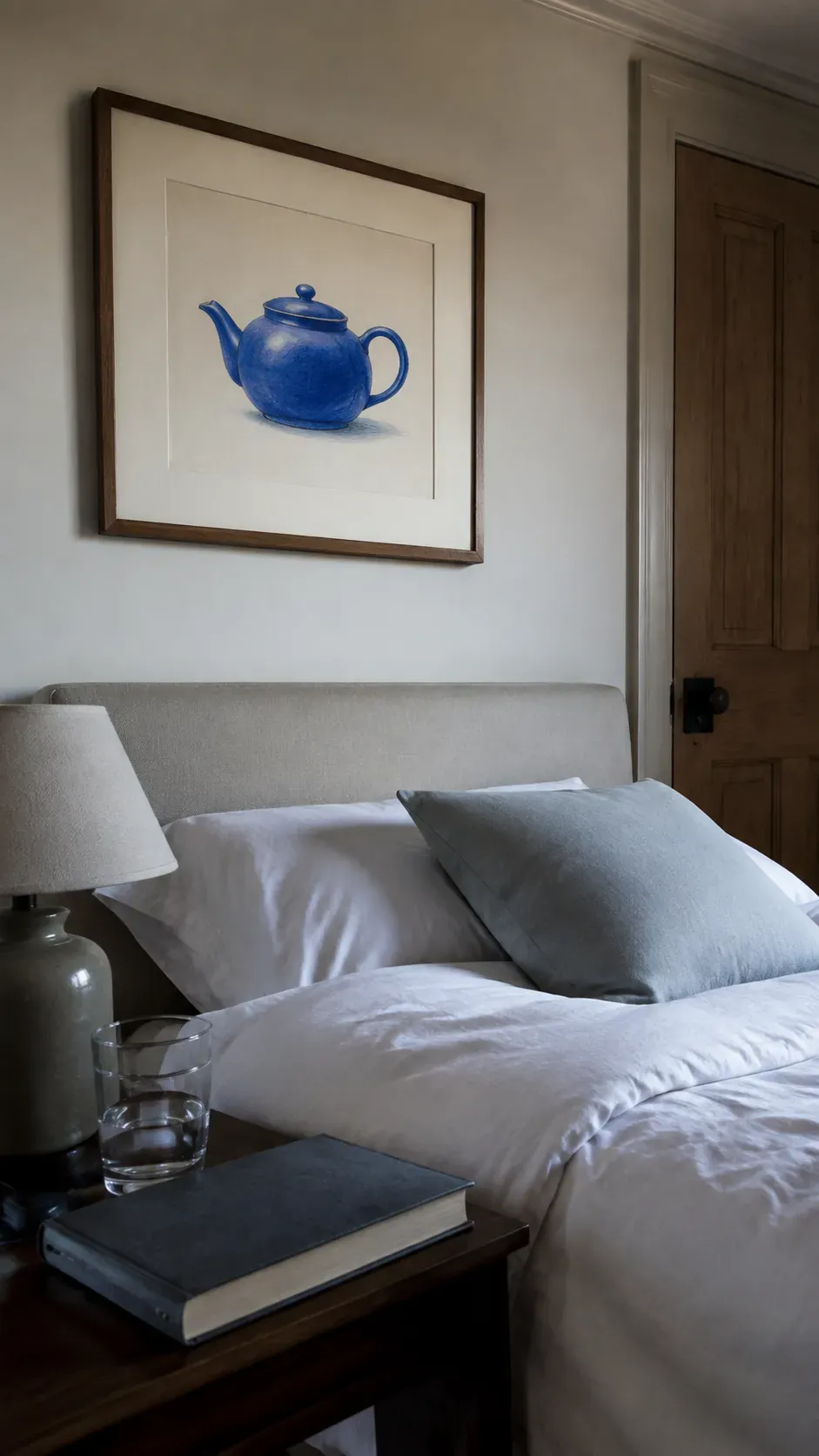
A personal commission does not have to be a formal portrait. A drawing of a meaningful object, a favorite building detail, or a family recipe vessel can carry the same emotional value in a quieter way. Agree on the finished size and framing needs before the artist starts. Share photographs of the room so the piece can be planned for its actual setting. A clear brief about palette and dimensions gives the artist useful boundaries without dictating every mark.
A lightweight piece sized with a paper trial
A paper trial is useful when the artwork looks right online but its scale is uncertain. Cut paper to the finished outer dimensions and place it temporarily using a method appropriate for the wall finish. View it from the doorway, beside the bed, and while sitting against the pillows.
Check clearance around lamps and normal movement before choosing the final position. Once the scale works, install the artwork with fixings rated for its weight and the wall construction. The best bedroom art placement is one you can live with comfortably, not just one that looks balanced in a cropped photograph.