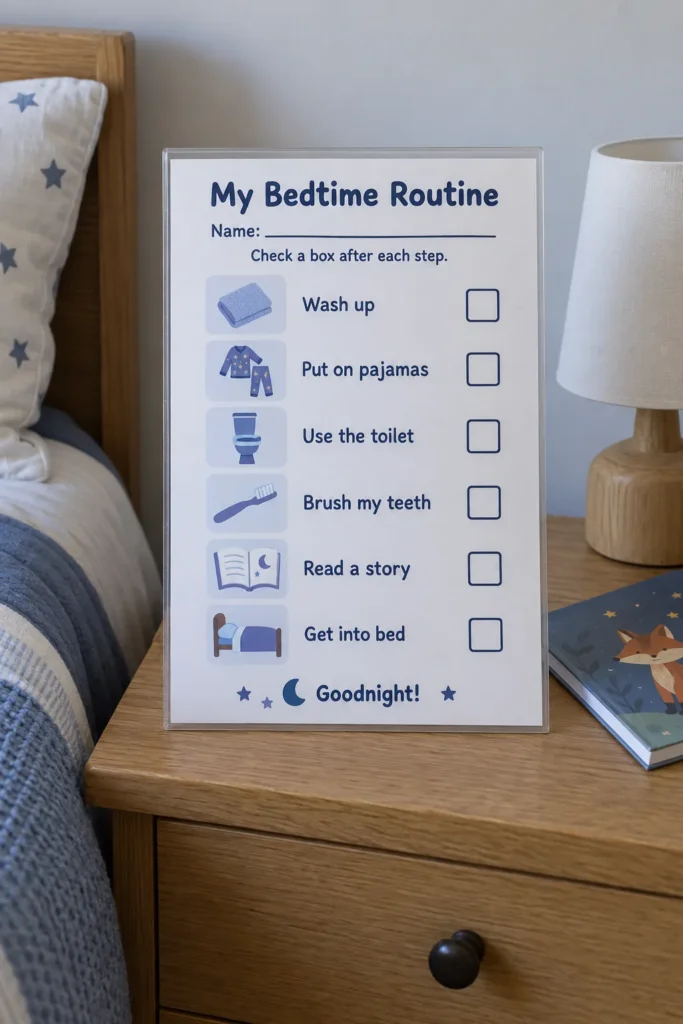
One more story, another trip to the bathroom, then a question about tomorrow: evenings can stretch when nobody knows where the routine ends. A visible sequence gives your child a way to see what comes next. It also helps the adults agree on the same gentle ending.
Download the evening picture chart
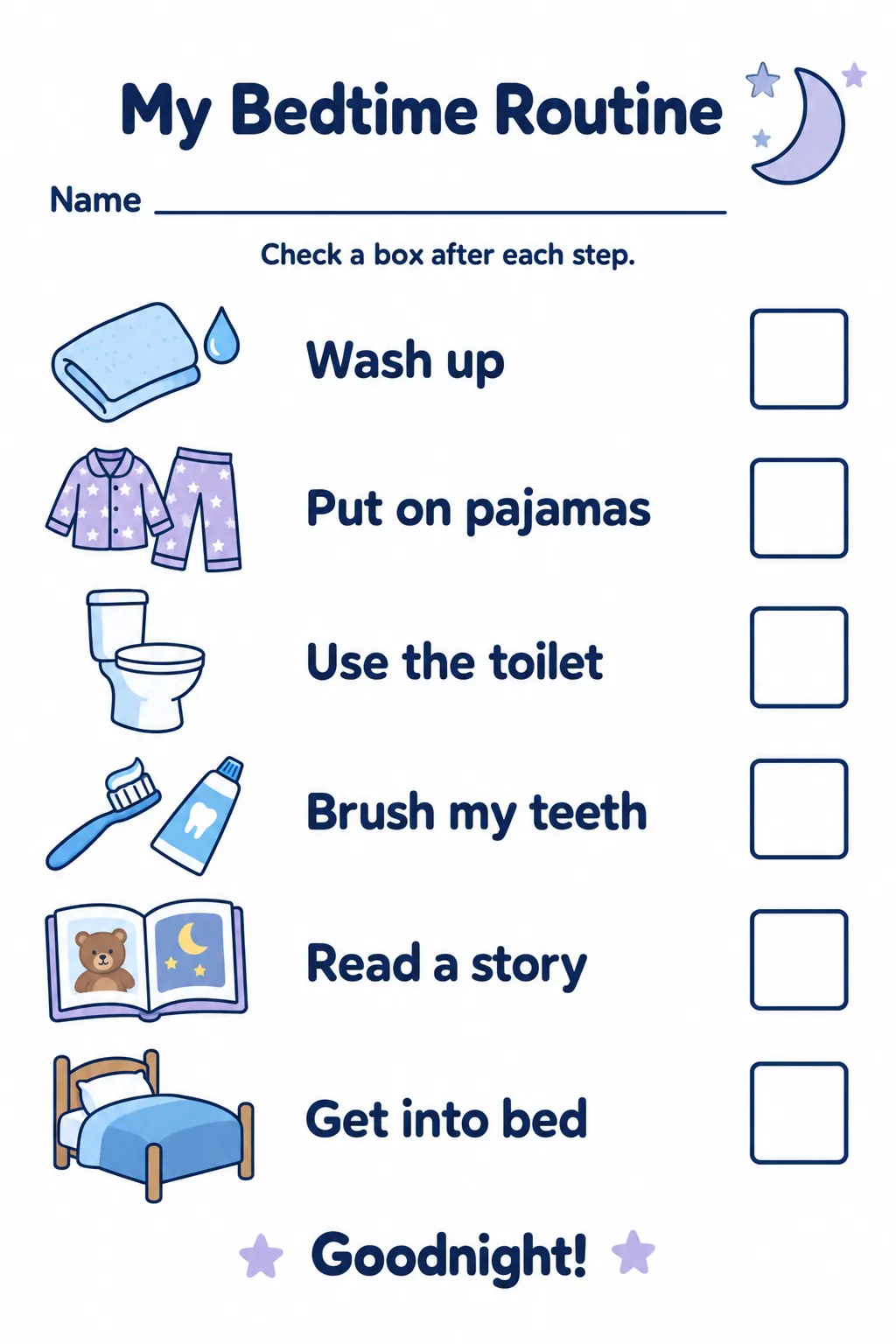
This printable is for preschool children and beginning readers, with an adult guiding each step. Six picture cues cover washing, pajamas, the toilet, teeth, a story, and settling in bed. Each cue has one empty checkbox, so the page shows today’s progress without tracking rewards or comparing siblings.
Download high-resolution printable
Select the preview for the full size image, or open it in a new tab with the download button. Save the file from there before printing. The page already contains the pictures and labels, so you do not need to assemble separate bedtime picture cards.
Explain the pictures before bedtime
Introduce the nighttime checklist during a calm part of the day, when your child can explore it without being rushed. Point to the washcloth, pajamas, toilet, toothbrush, book, and bed, naming each action. Ask your child to show where the toothbrush belongs or which picture comes before the story.
The first cue says wash up, so it can mean a bath on bath nights or the usual wash on other nights. Use the toilet step only in the way that fits your child’s stage; help with a diaper or toilet needs as appropriate. An adult still handles safety and assists with toothbrushing rather than treating a checked box as proof that the task was done well.
Choose small options within the routine
Let your child choose between two suitable pajama sets or pick the story from a small selection. These choices keep the sequence predictable while giving them something real to decide. Set the story limit before you start reading, rather than negotiate it after the last page.
Make the final step feel secure
The last picture means get into bed and say goodnight, not fall asleep instantly. Use a brief, familiar goodbye that you can repeat on ordinary nights. If your child needs reassurance, respond to that need without making the chart a punishment.
A toddler bedtime chart is a reminder, not a treatment for sleep difficulties. Pain, breathing concerns, persistent distress, or other health worries need advice from an appropriate clinician. If the routine regularly breaks down at one step, look at that step’s demands and timing before adding more instructions.
Coordinate caregivers without adding tasks
Tell everyone helping in the evening what each picture means in your home. Keep any prescribed care separate and follow the relevant professional instructions; this general page does not include medication prompts. Shared meanings matter more than asking every caregiver to use exactly the same words.
Print a clear page and use it again
Use portrait orientation and check the printer preview for complete edges. Select a fit setting that preserves the page proportions on your chosen paper. Dark labels and simple picture outlines should remain recognizable in grayscale; inspect a test copy before putting it on the wall.
Place the chart where you begin the routine, away from wet surfaces. Use pencil on paper or an appropriate wipeable sleeve, keeping markers under adult control. Clear the checkboxes the next day and leave the sequence visible, so tonight starts with a familiar plan.