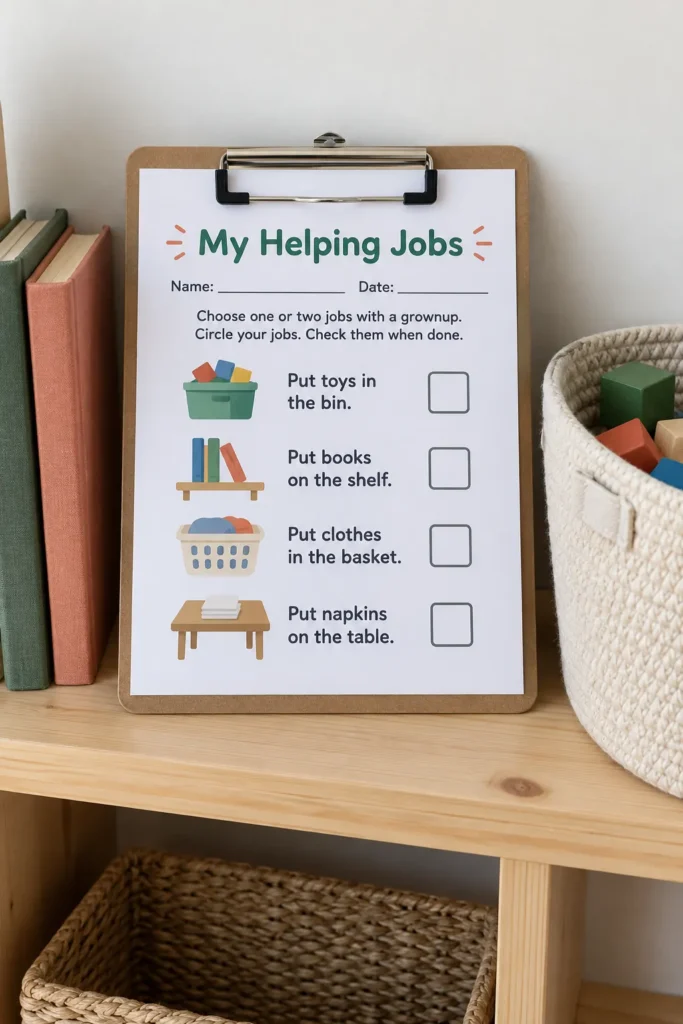
A child can be eager to help and still freeze when asked to tidy a whole room. Give them a small job with a visible finish. Pictures make the job easier to recognize, while an adult shows the actions that the picture cannot explain.
Save the picture chore choice chart
This page offers four household jobs for preschool children and beginning readers to practice with adult support. Choose one or two suitable jobs for today, then mark only those boxes when the work is finished. The unused rows can stay blank; the chart is a choice page, not a demand to do every task.
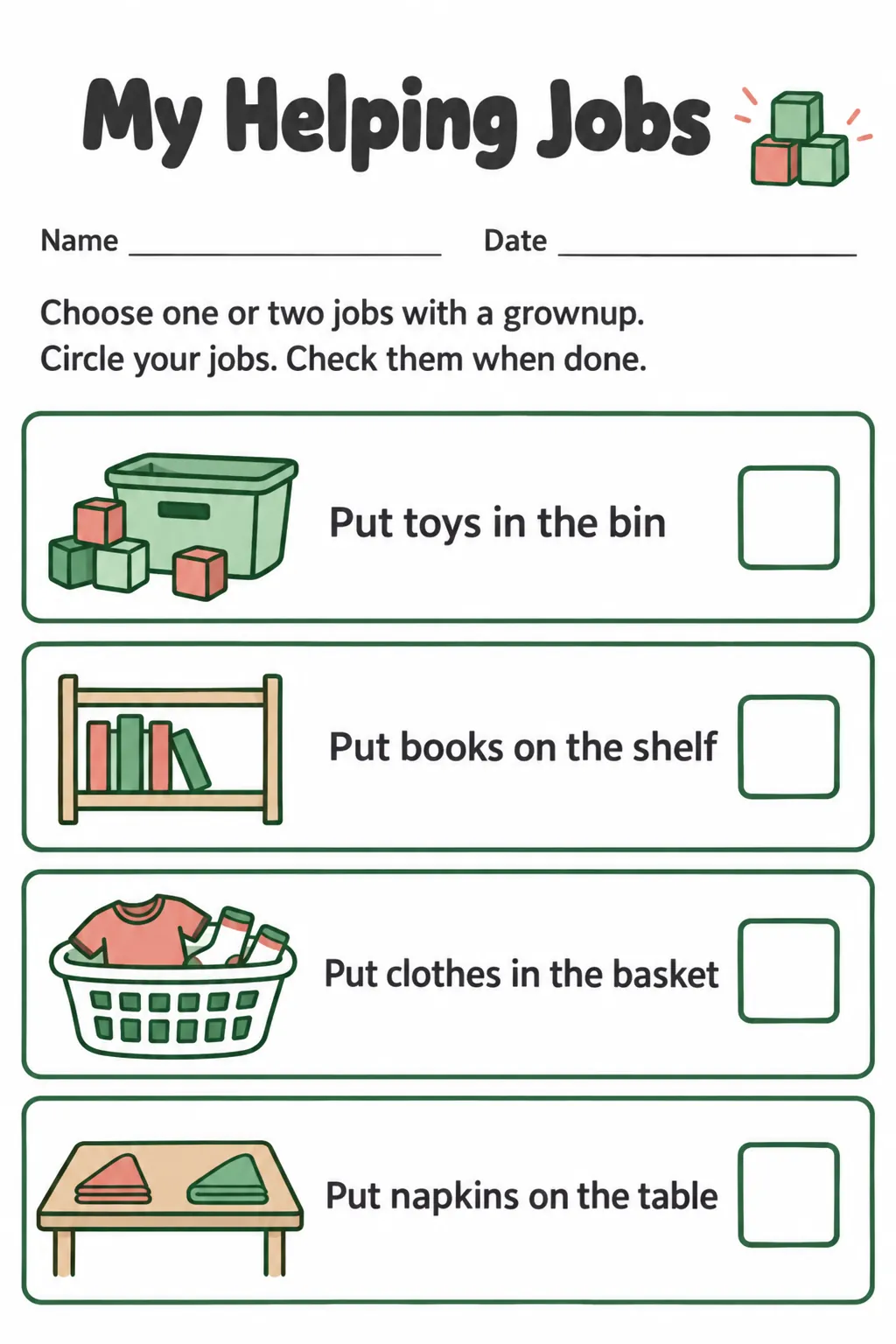
Download high-resolution printable
Click the preview to open the full size page, or open the file in a new tab with the download button. Save that image and print it for your child. The pictures and labels are already on the page, so making separate picture chore cards is optional rather than required.
Choose a job your child can finish
The four choices are putting toys in a bin, returning books to a shelf, putting clothes in a basket, and placing napkins on the table. Pick a task that matches your child’s current abilities and the space you have prepared. For a new helper, one small task may be enough.
Circle the chosen task label together before starting, so a blank checkbox on an unused row does not look like unfinished work. Define a small boundary, such as the blocks on one rug rather than all the toys in the house. Keep the destination within easy reach and remove objects that need adult handling.
Teach the action behind each picture
Show how one toy moves into the bin, then let your child repeat that action. For books, demonstrate placing a light book on a low shelf without climbing. With laundry, start with a few dry clothes on the floor and point out their basket.
Setting napkins means carrying lightweight napkins to the places you choose, not handling glassware, knives, or hot dishes. Do the task alongside your child when they need help. A picture chore checklist supports practice; it does not make supervision unnecessary.
Show what finished looks like
Point to the cleared rug, the books back on the shelf, or the napkins at the places before checking the box. This connects the mark to a visible action rather than to an adult’s changing standard. Describe the useful contribution with specific words, such as noticing that the walkway is clear.
Keep responsibility separate from perfection
Expect early attempts to take time and need reminders. If a job repeatedly leads to frustration, make it smaller or teach one part again instead of adding a penalty to the page. Avoid comparing children’s boxes when their tasks or support needs differ.
This kids responsibility chart has no payment amounts, points, or prize rules. You can explain your family’s own approach separately, but make any agreement clear before work begins. The page itself simply shows which chosen tasks were completed today.
Prepare a reusable daily page
Print in portrait orientation with the whole page visible in the preview. Fit the image to the printable area while keeping its proportions, and test the label size on one copy. The dark text and sturdy outlines should remain clear in grayscale without depending on the accent colors.
Write a name and date on the blank lines, and use a pencil to circle the chosen jobs. If you use a wipeable sleeve, choose a suitable marker and keep it under adult control. Reset the page after checking the finished work together, then choose tomorrow’s jobs based on what your child is ready to practice.