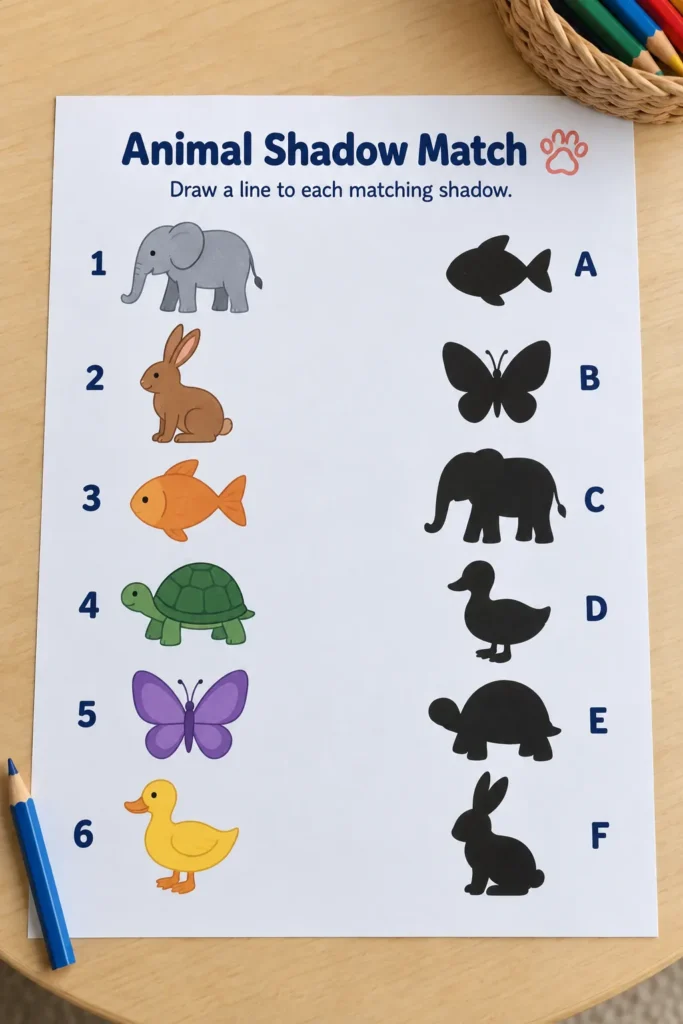
A child can recognize an animal’s color and still find its outline confusing. Remove the color and the useful clues become shape, ears, fins, wings, and the curve of a shell. This activity keeps the pictures simple so you can talk about those clues together rather than rushing for a score.
Save the matching activity
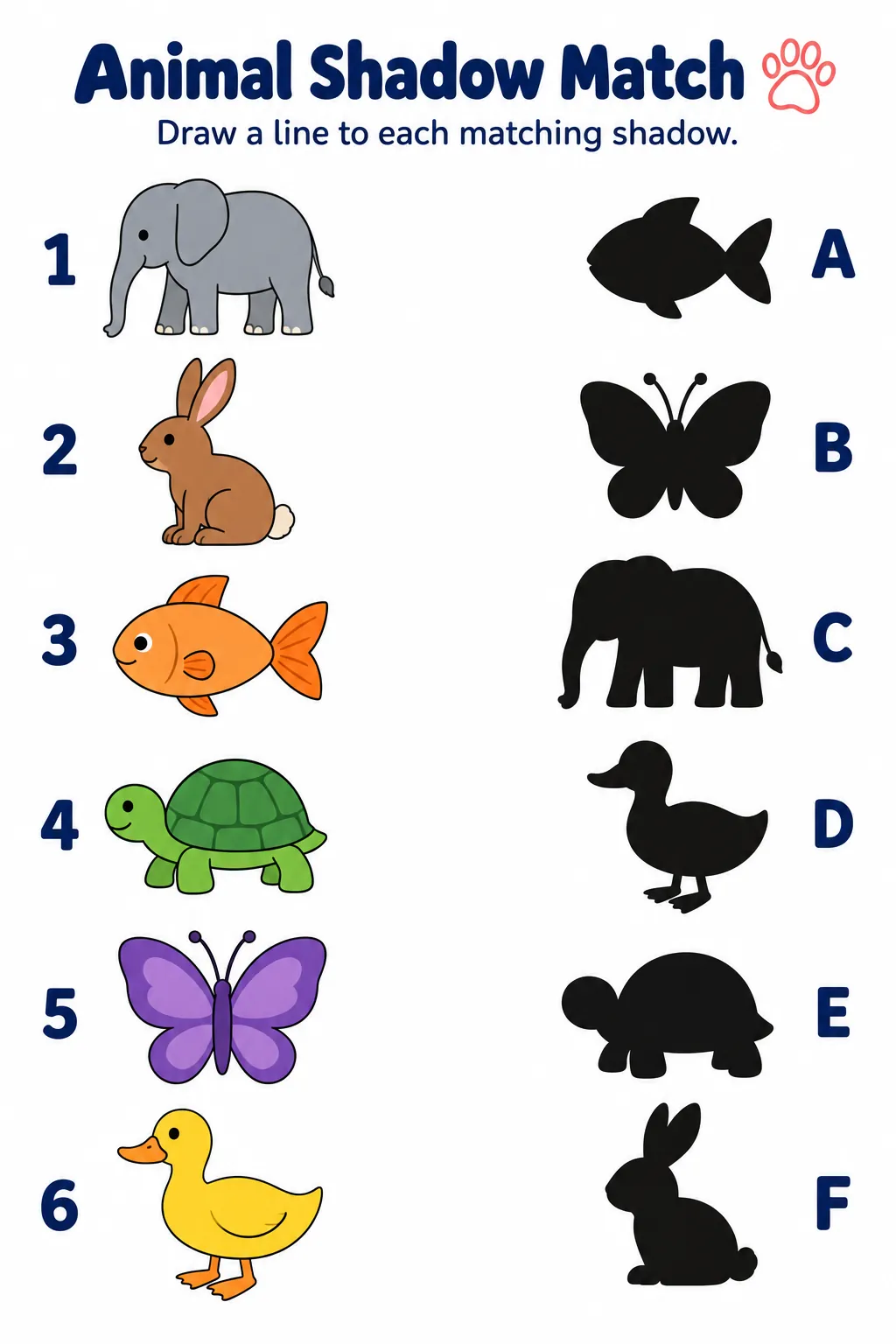
The printable below has six colorful animals on the left and six shuffled black silhouettes on the right. It is intended for preschool learners with an adult reading the instruction aloud. No animal names need to be read to play. Click the preview to open the full size image, or use the download button to open it in a new tab and save it.
Download high-resolution printable
Find the outline before drawing a line
Point to one animal on the left and look for the same outside shape on the right. Trace the outline in the air, then draw a pencil line between the pair. The matching silhouette uses the same pose and direction as its colorful animal. This is a shadow matching game with picture silhouettes, not a lesson about how real sunlight casts shadows.
Start with the fish or butterfly if the whole page feels busy. Cover part of the sheet with scrap paper and leave just two possible silhouettes visible. Once the child chooses, uncover the next pair. There is no timer, and pointing is a useful alternative when drawing lines is harder than recognizing the match.
Use shape clues rather than color clues
Ask what stays visible when the color disappears: the elephant’s trunk, the rabbit’s long ears, or the turtle’s domed shell. Keep the question specific to the animal being matched. If two choices seem alike, compare their edges together rather than simply naming the right letter. These visual matching activities can support a preschool animal theme without requiring a child to know letter names.
Check the pairs with the answer key
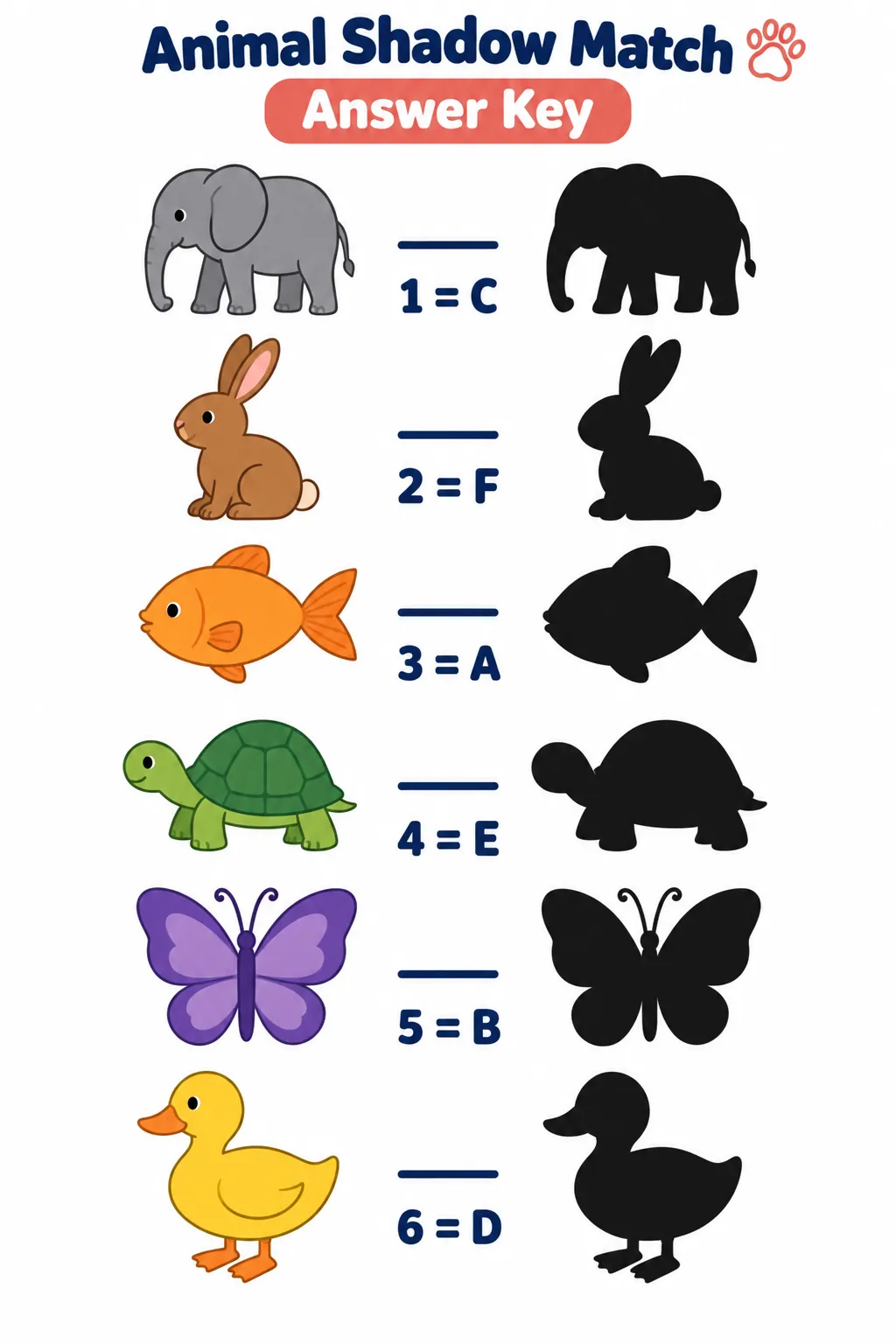
The correct pairs are 1 to C for elephant, 2 to F for rabbit, 3 to A for fish, 4 to E for turtle, 5 to B for butterfly, and 6 to D for duck. Each silhouette appears once, and each colorful animal has exactly one matching outline. Keep the key separate while the child plays, then use it to check the choices together.
Download high-resolution printable
Make another round a conversation
On a fresh copy, ask the child to explain one choice before drawing its line. A response such as “these both have long ears” identifies the feature used to match. If the activity is frustrating, reduce the choices again or stop and return another day. Matching games for kids work best here as a shared activity, not a test of reading or speed.
Print the complete page
Save the image and choose portrait orientation in the print dialog. Fit the whole page within the printable area on Letter or A4 paper and check that both columns remain visible. White space along the sides is expected because the artwork has a taller shape than the paper. Print the activity in color if possible; the distinct outlines still carry the matching task if you use grayscale.
Ordinary paper and a pencil are enough for the first round. If you later use a reusable sleeve, keep its marker and cap under adult supervision. Store the answer key away from the activity page so the next learner gets the same blank starting point. The next useful prompt is simply to point to the edge that made the match clear.