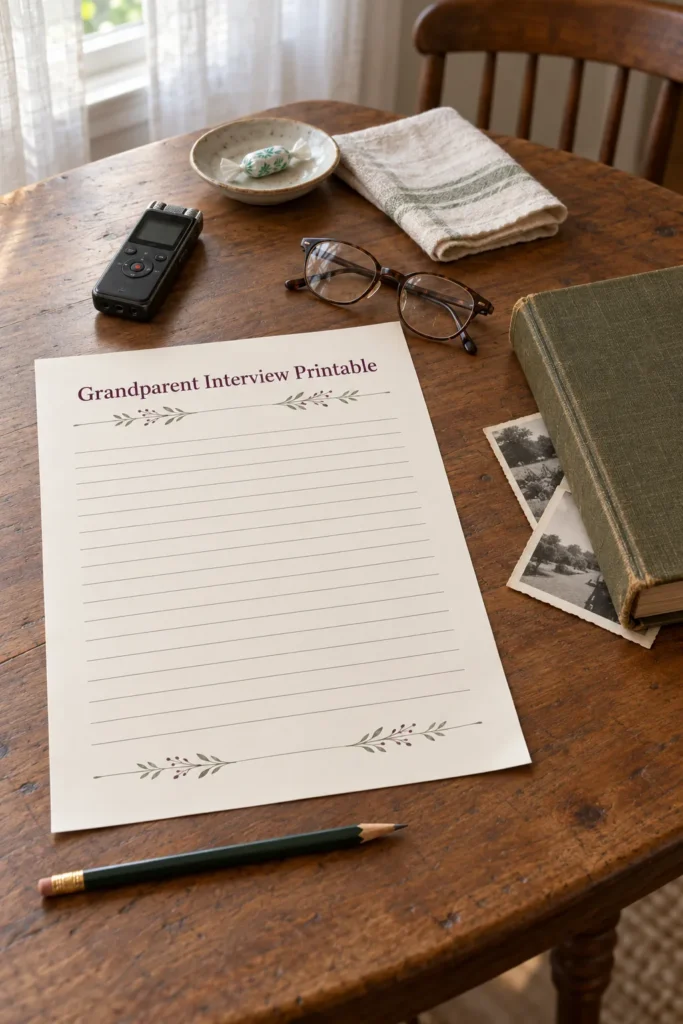
Family dates are useful, but they rarely explain how a home felt, why a tradition mattered, or which hard lesson shaped a life. A good memory interview gives a grandparent room to tell the story in their own way. This printable keeps the conversation focused without making it feel like a test.
Six questions that invite real stories
The page moves from childhood surroundings and family traditions into work, challenges, memorable family stories, and advice for later generations. Each question is broad enough for a personal answer, yet concrete enough to prevent the awkward pause that often follows a vague request such as tell me about your life. The small fields at the top help you record who conducted the interview and when it took place.
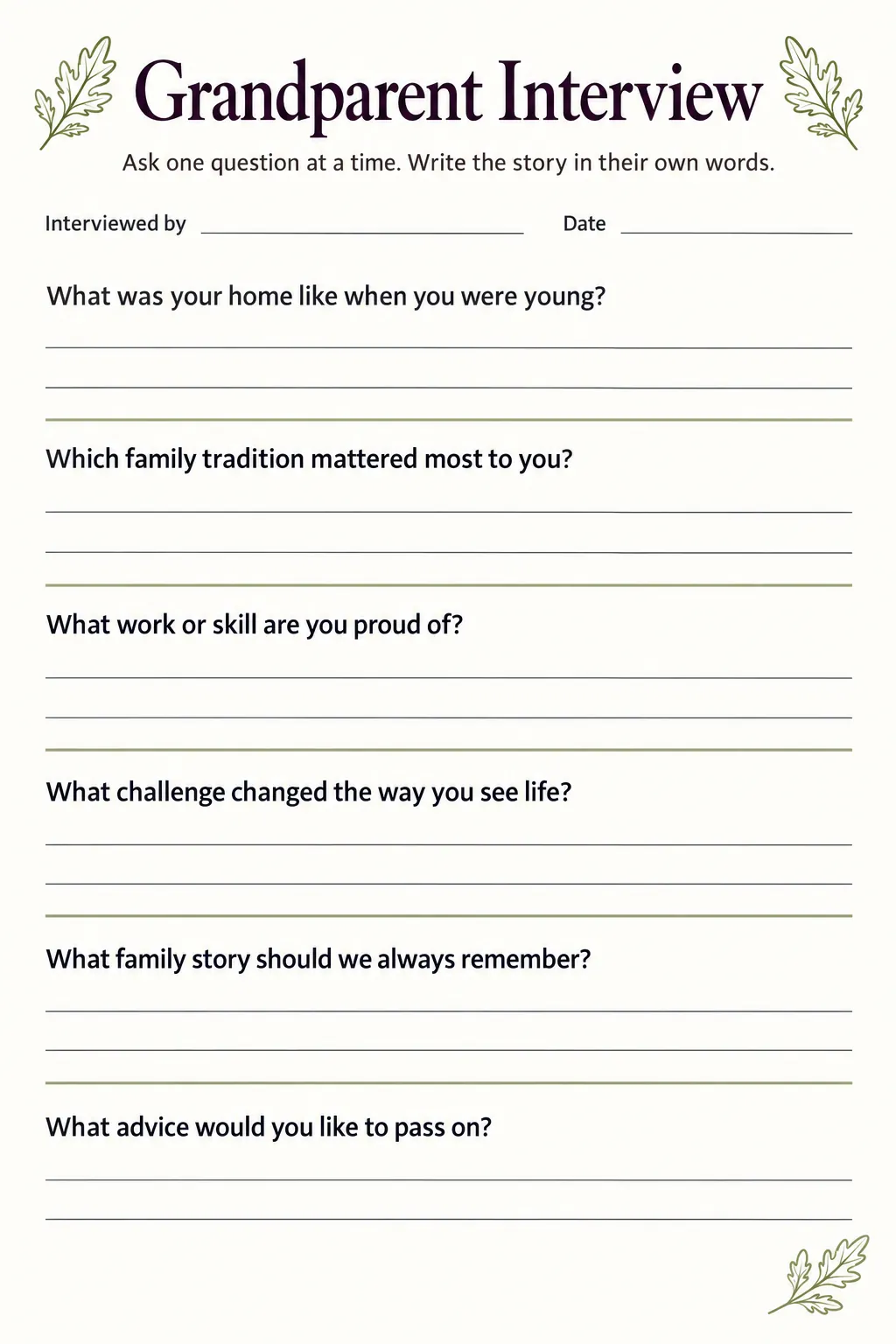
Download high-resolution printable
How to hold a respectful memory interview
Choose a quiet time and explain how you hope to preserve the stories before you begin. Ask one question, listen through the first answer, then follow a useful detail such as a place name, a relative, a smell, or a daily routine. If the speaker does not want to discuss a painful subject, move on without pressing for an explanation.
The writing lines are best for names, dates, and short phrases that will help you remember the fuller account. With permission, record the conversation so you can listen instead of trying to copy every sentence. Speak each name back for confirmation, especially when several relatives share similar names or nicknames.
Save the page with the story
Print the sheet on ordinary paper for note taking or on heavier matte paper for a family history journal. You can click the preview to open the full size image, or use the download button to open it in a new tab and save it from there. After the interview, add a photograph, label the people and place if known, and store the page with any recording or transcript so the context stays together.