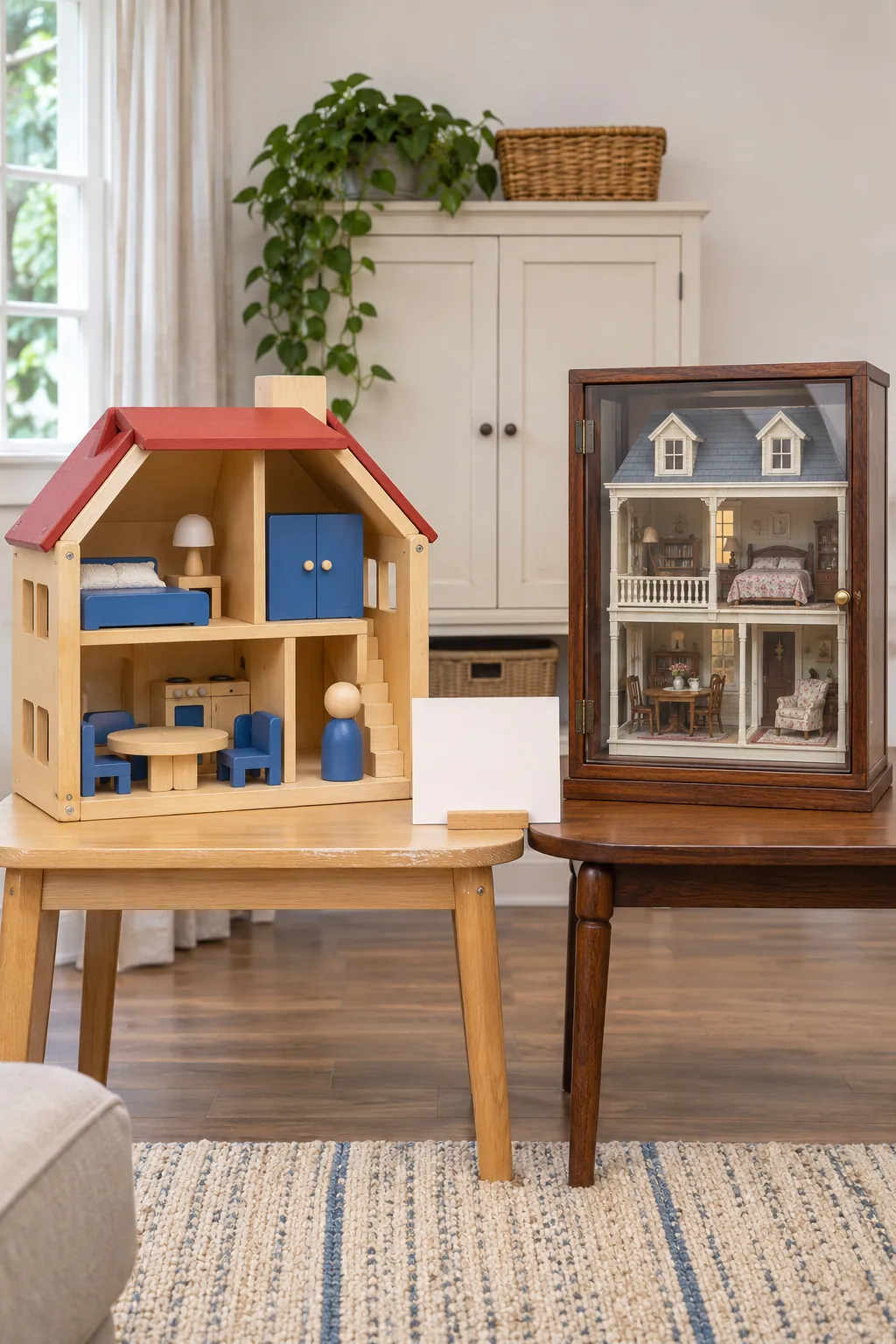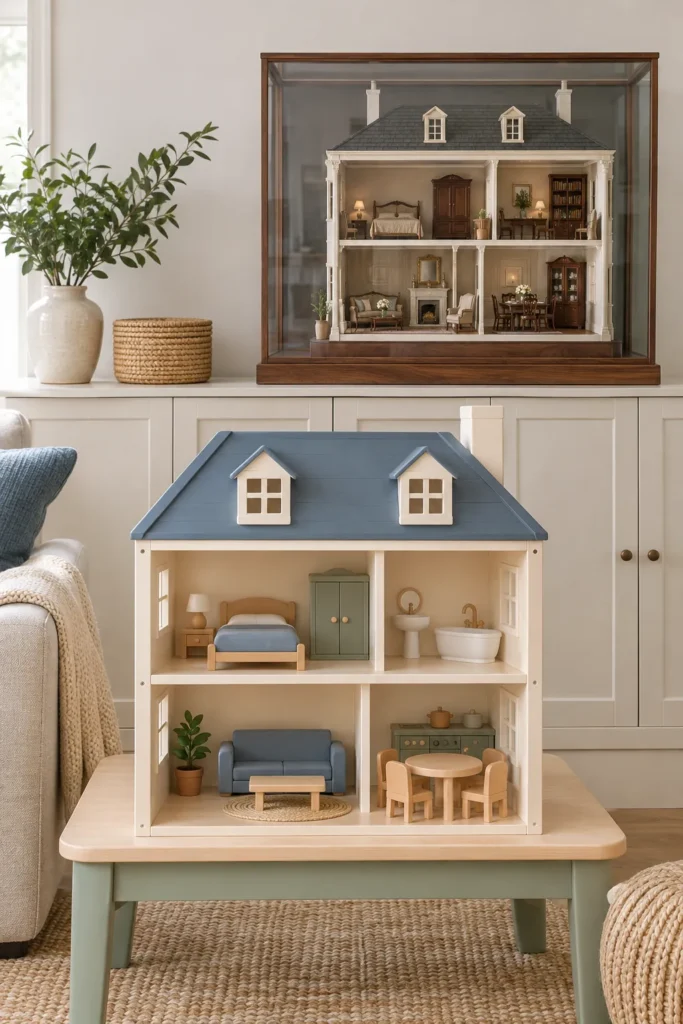
The most detailed house is not automatically the best gift, and the largest house is not automatically the safest. A good choice begins with what the owner will actually do: active pretend play, careful collecting, model building, or a mix that changes with age.
Use the maker’s current age guidance and warnings as the first filter. Then compare the real play habits, space, repair expectations, and size of every loose part. Scale describes proportion, not safety.
Choose for Play or Display First
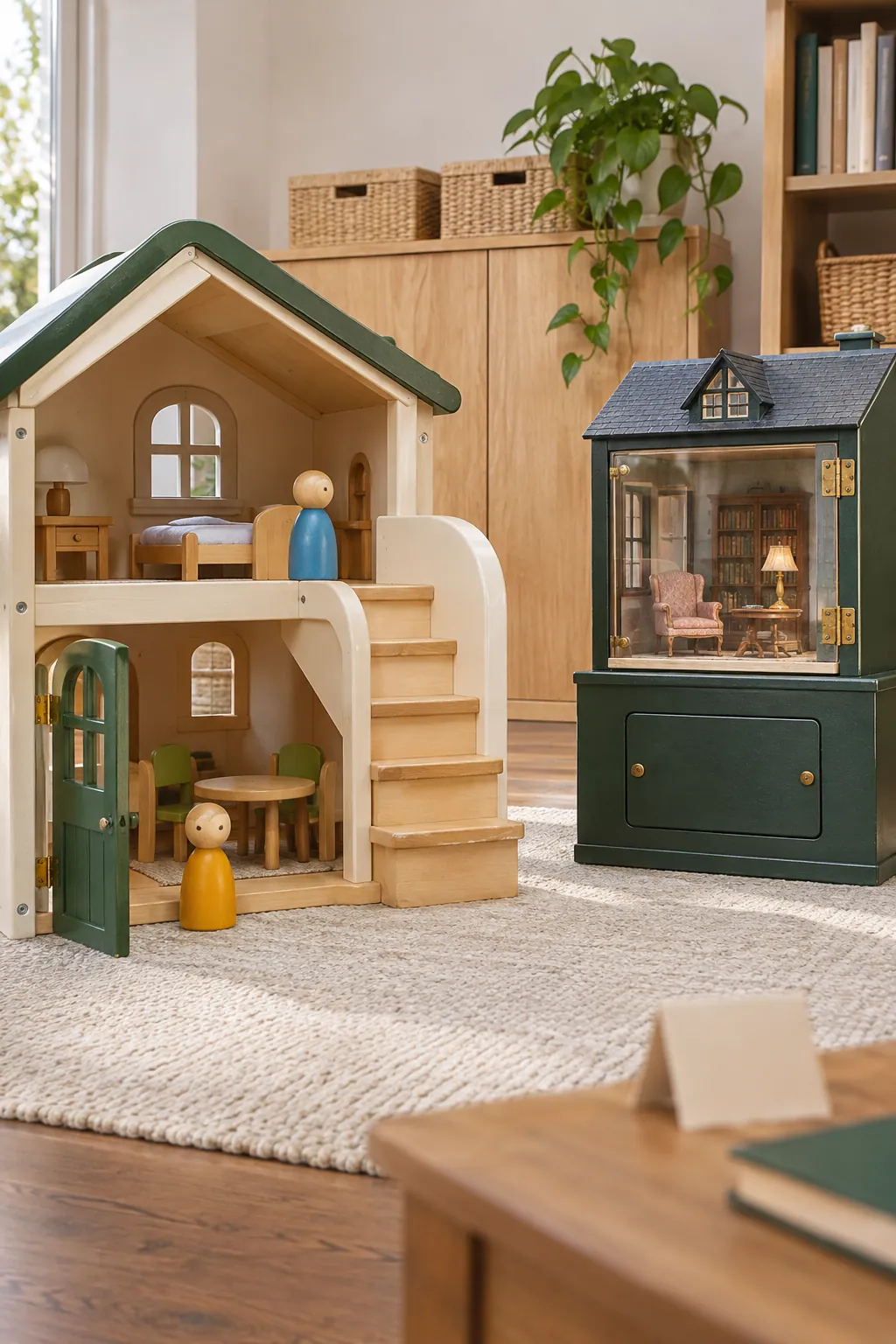
A play dollhouse should tolerate repeated opening, moving, dressing, and storytelling. It needs accessible rooms, furniture that is easy to grasp, and finishes that can handle ordinary cleaning. An adult display miniature can prioritize fine trim, realistic materials, fragile accessories, and a fixed viewing position because it is handled differently.
Neither purpose is better. Trouble begins when a delicate collector house is expected to survive energetic play, or when a child receives a house that is beautiful but too awkward to use. Decide which activity should feel easy every day.
Follow Age Guidance and Inspect Every Loose Part
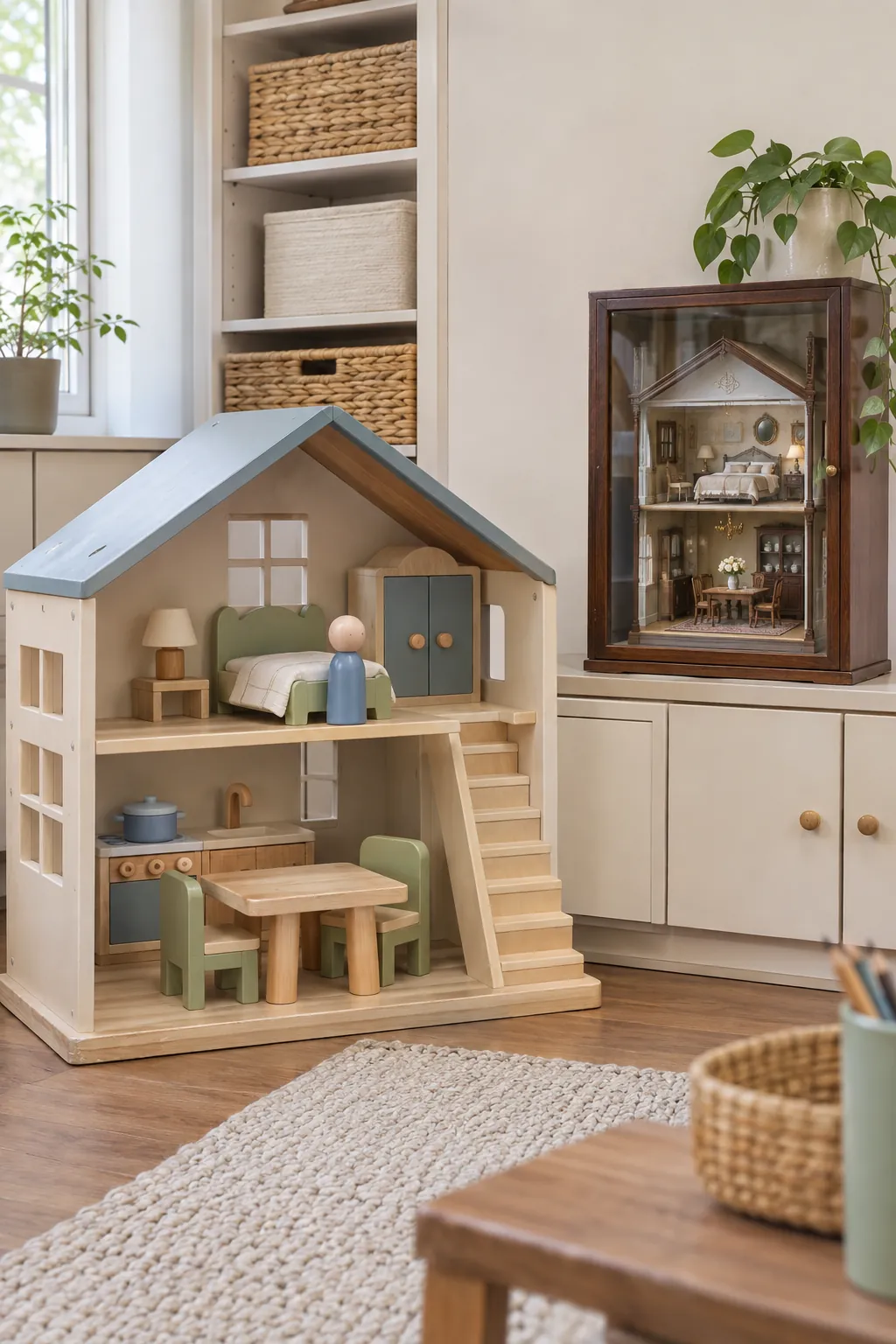
Small furniture, magnets, batteries, beads, lamps, dishes, and removable hardware can create serious risks for young children. Check the product age guidance and warnings for the house and each accessory set, not only the main box. Remove damaged parts from use and keep adult collector items outside a child’s reach.
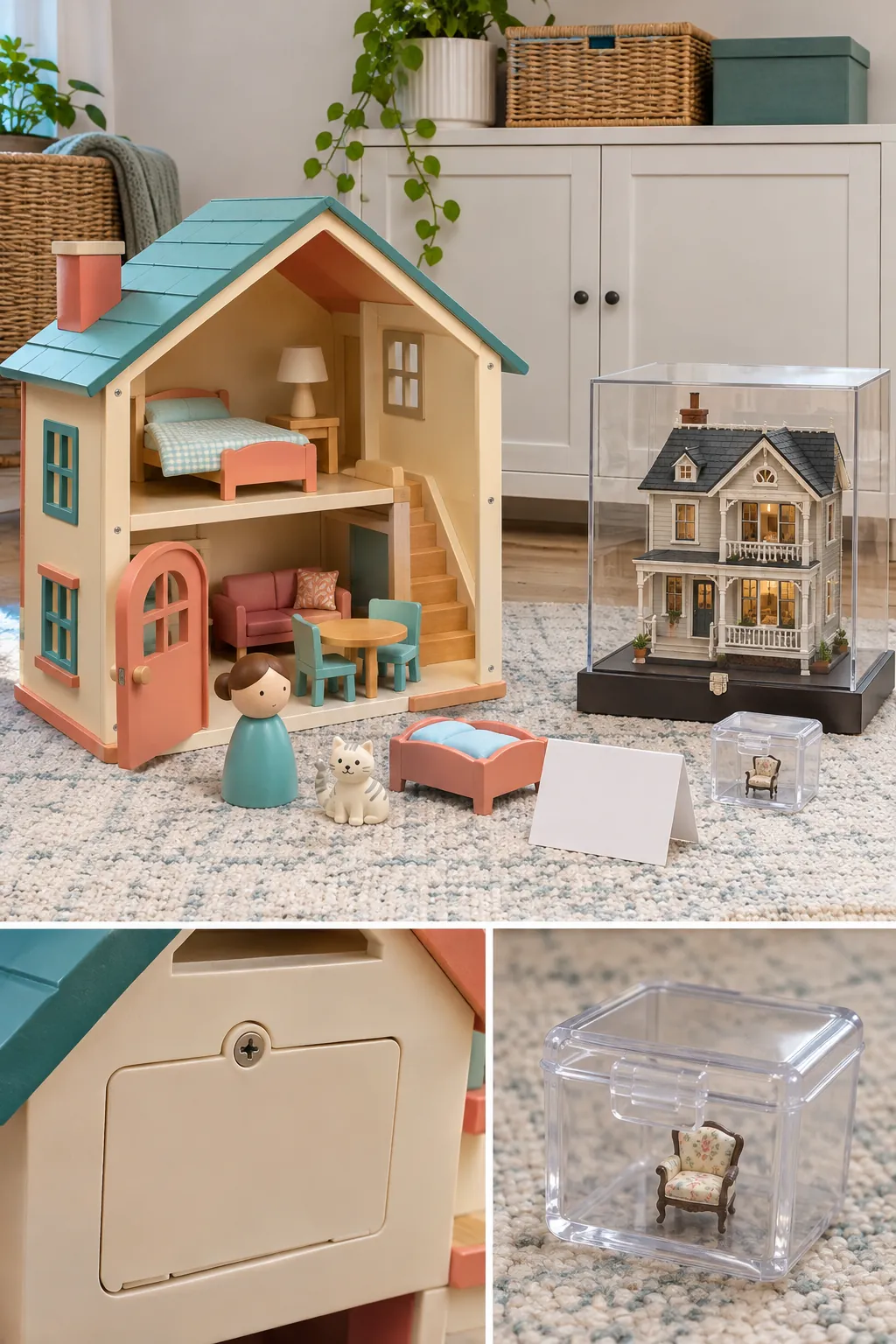
A larger scale may offer bigger accessories, but it does not guarantee that every component is suitable. Look at the smallest detachable piece, the strength of its attachment, and whether a battery compartment requires secure tool access. When the guidance and the child’s habits disagree, choose the more cautious option.
Compare Durability and Repairability
For active play, favor stable construction, rounded accessible edges, secure stairs and railings, and furniture that can be replaced without dismantling the house. Check whether the house rocks when doors open and whether an adult can reach every room for cleaning. A simple finish that stays attached is more useful than tiny trim that repeatedly breaks loose.
Adult miniatures may use thin moldings, paper finishes, delicate lighting, and handcrafted furniture because careful handling is part of the hobby. Repair access still matters. Removable panels and documented materials make future maintenance less destructive.
Match Scale to Hands Dolls and Space
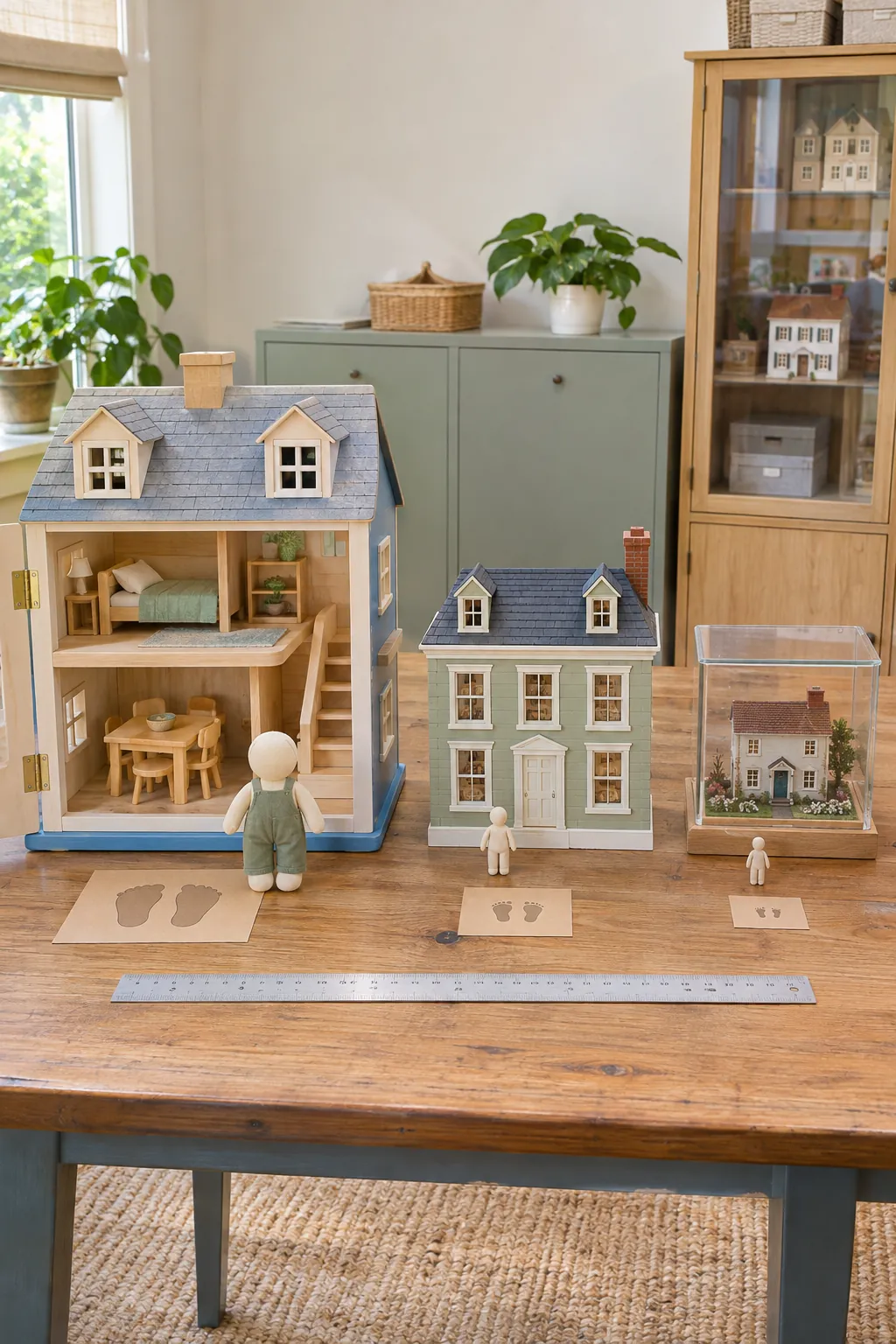
The right scale must fit the intended dolls and the available room. One twelfth scale is common in adult dollhouse collecting, while children’s play houses may be sized for many different doll families. Measure the doll height, the future house footprint, and the path through doors before buying.
Small scale saves display space but produces smaller furniture and details. Large play scale can be easier to handle but may dominate a bedroom or shared living area. Include storage for loose furniture in the footprint decision, because a house is only part of the collection.
Plan a Shared Hobby With Clear Boundaries
An adult and child can enjoy the same project when the responsibilities are separated. The adult can handle cutting, wiring, strong adhesives, and collector accessories, while the child chooses colors, stories, and age suitable furnishings. Supervision should match the tool, material, and child’s ability rather than a general idea of craft experience.
Store the adult work box separately and clear the play area before the house returns to use. Check for loose trim, sharp damage, uncured finishes, and forgotten small parts. A shared build works best when play pieces and workbench materials never become one mixed pile.
Use a Final Choice Check
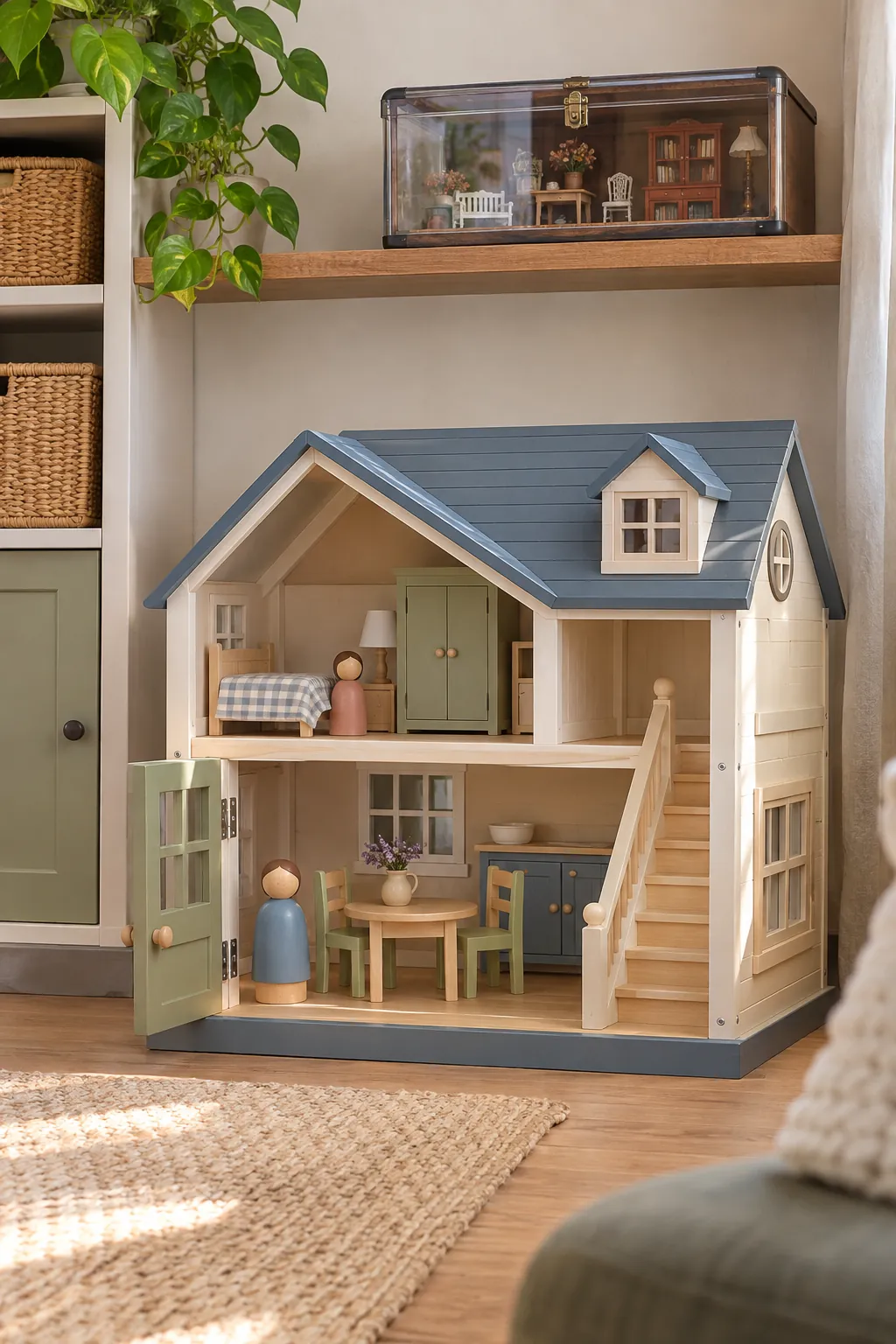
Confirm the intended owner, activity, age guidance, smallest loose part, material strength, required supervision, doll size, house footprint, storage, and repair access. If any answer depends on constant reminders that are unlikely to happen, choose a simpler and more durable option. Save the delicate version for a later stage or an adult display location.
For active play, the best house is the one that supports stories without frequent breakage or unsafe loose pieces. For adult miniatures, the best house is the one whose scale, detail, and construction process sustain the maker’s interest. A thoughtful choice serves the actual user instead of an idealized photograph.