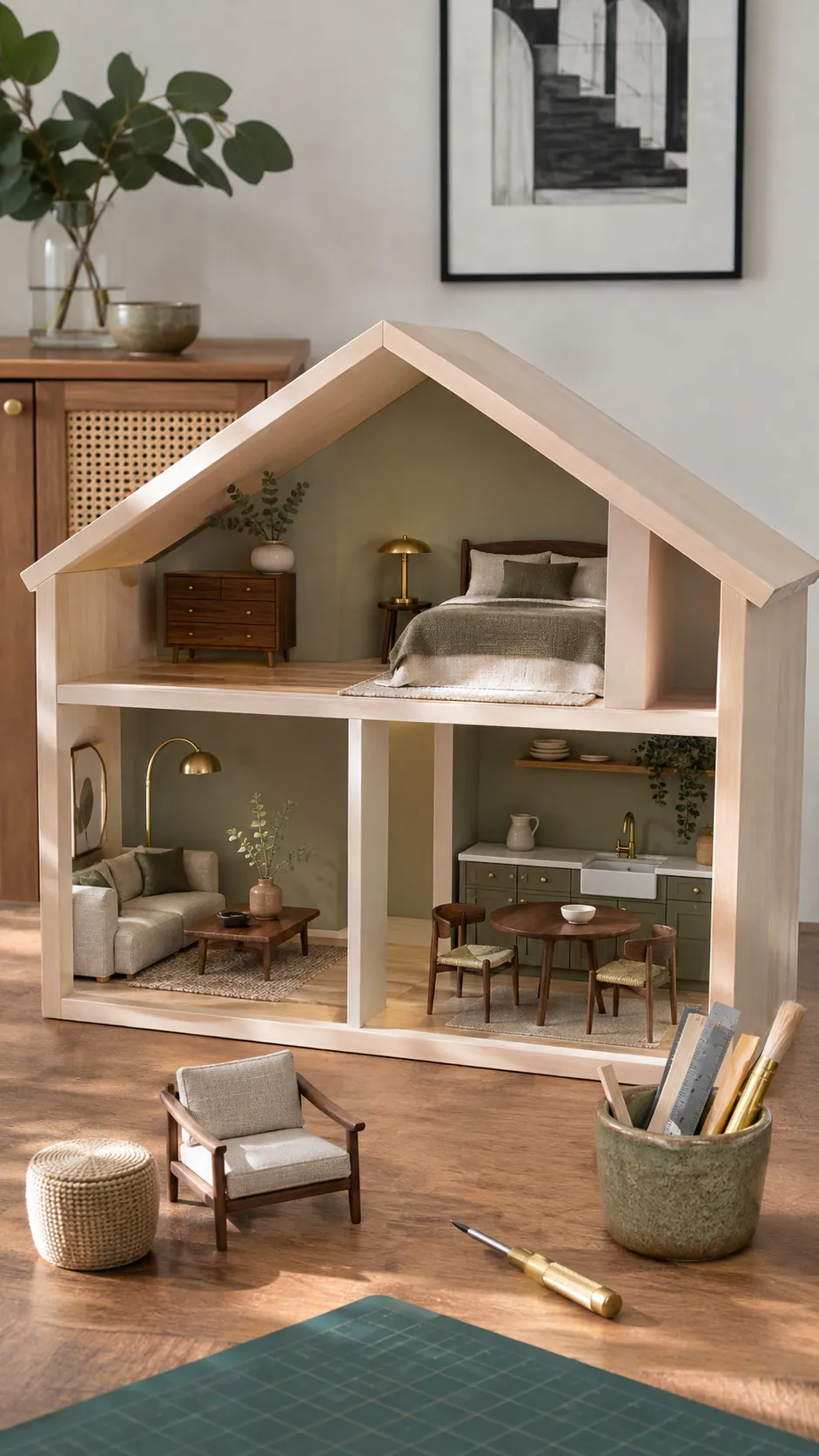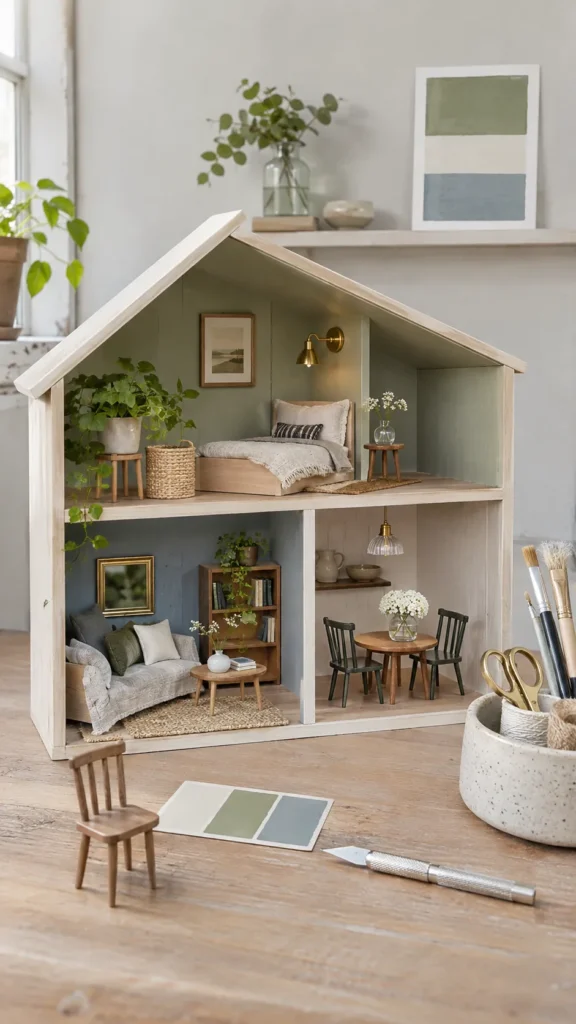
The open rooms make this house approachable, but the wide openings can expose every rough edge, thick paper seam, and furniture mismatch. A good conversion starts with dry fitting and thin finishes, then delays permanent glue until the room proportions feel convincing. That order also makes future wallpaper or furniture changes much easier.
Inspect, clean and test the wood
Check joints, roof edges, and shelf surfaces before decorating. Remove dust with a soft brush and barely damp cloth, then let the pine dry fully. Test primer, paint, and adhesive on a hidden underside because raw wood can raise grain or absorb color unevenly.
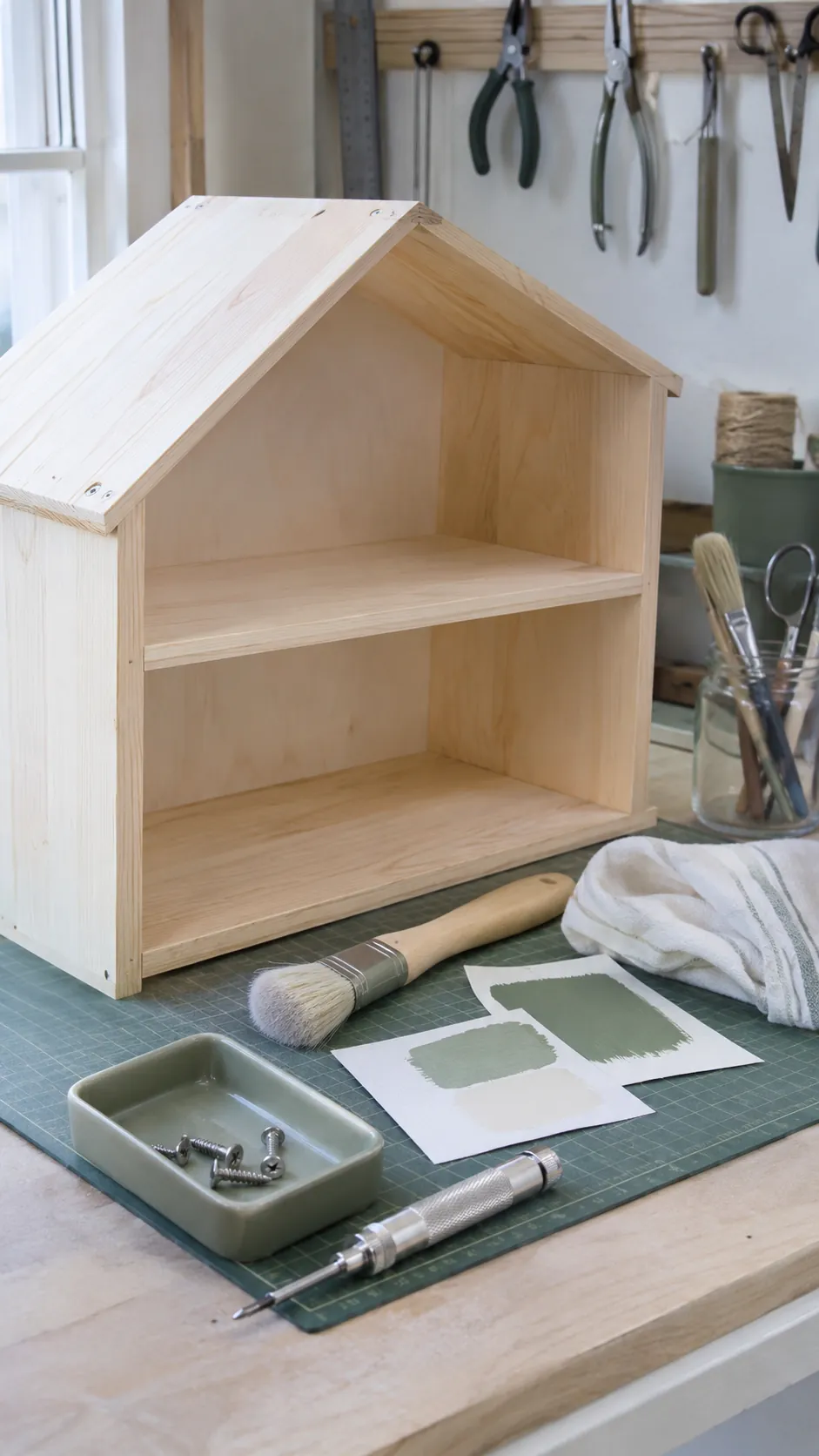
Plan room zones and furniture scale
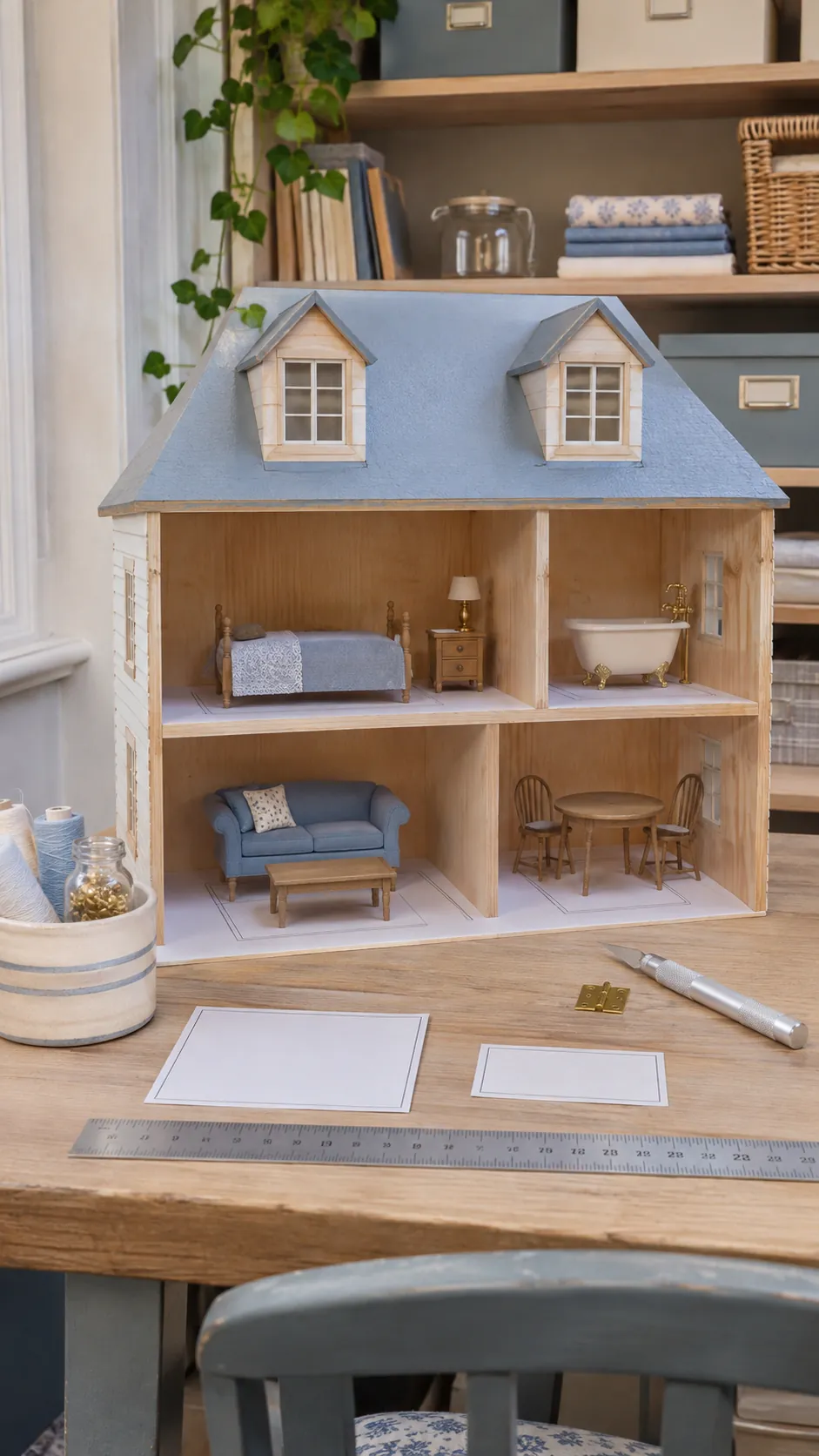
Measure each opening and make paper footprints for the largest furniture. Try the bed, sofa, table, and kitchen units before choosing wall divisions, since an attractive miniature can still block the open front. Photograph the best arrangement so it is easy to rebuild after painting.
Prime and paint in thin coats
Lightly smooth rough fibers and remove the dust before primer. Apply thin coats, keep the roof edges crisp, and allow full drying time between layers. Heavy paint can soften joints and create ridges that look oversized at miniature scale.
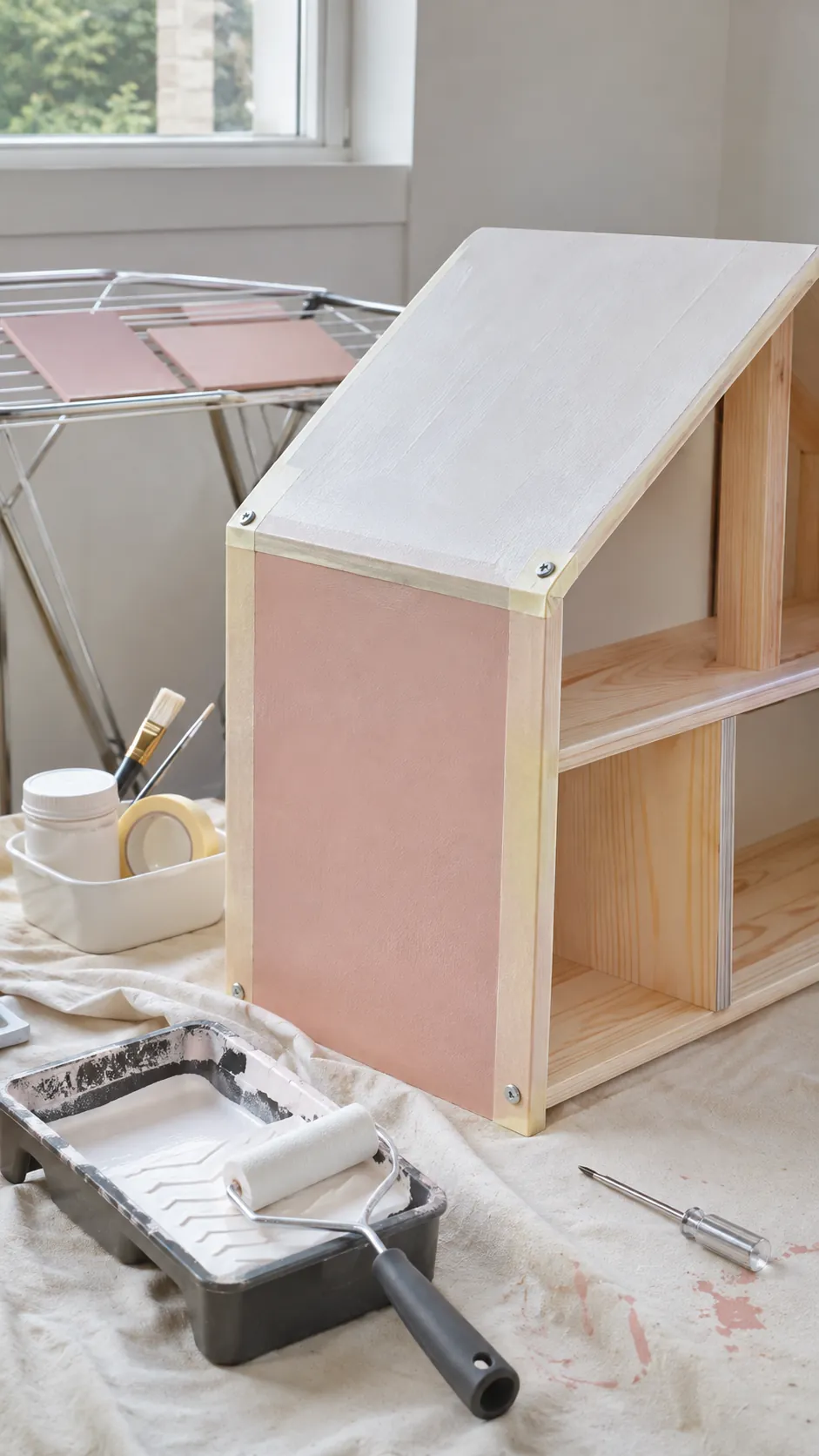
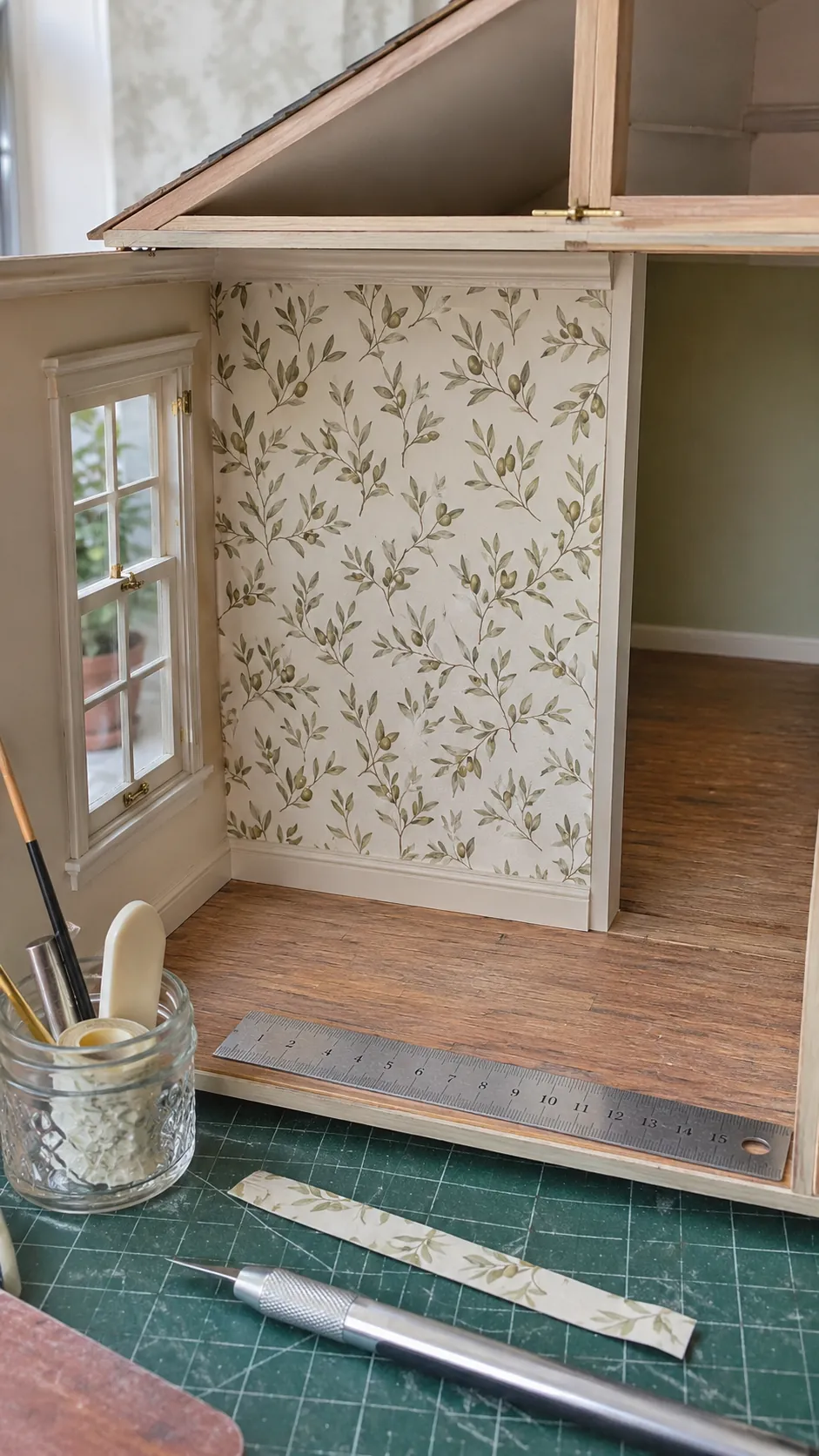
Fit wallpaper panels before gluing
Print or cut several pattern sizes before selecting wallpaper, because a full size motif can overwhelm these shallow rooms. Dry fit each panel and decide whether a removable card backing suits future changes better than direct adhesive. Trim openings carefully and keep glue away from visible edges.
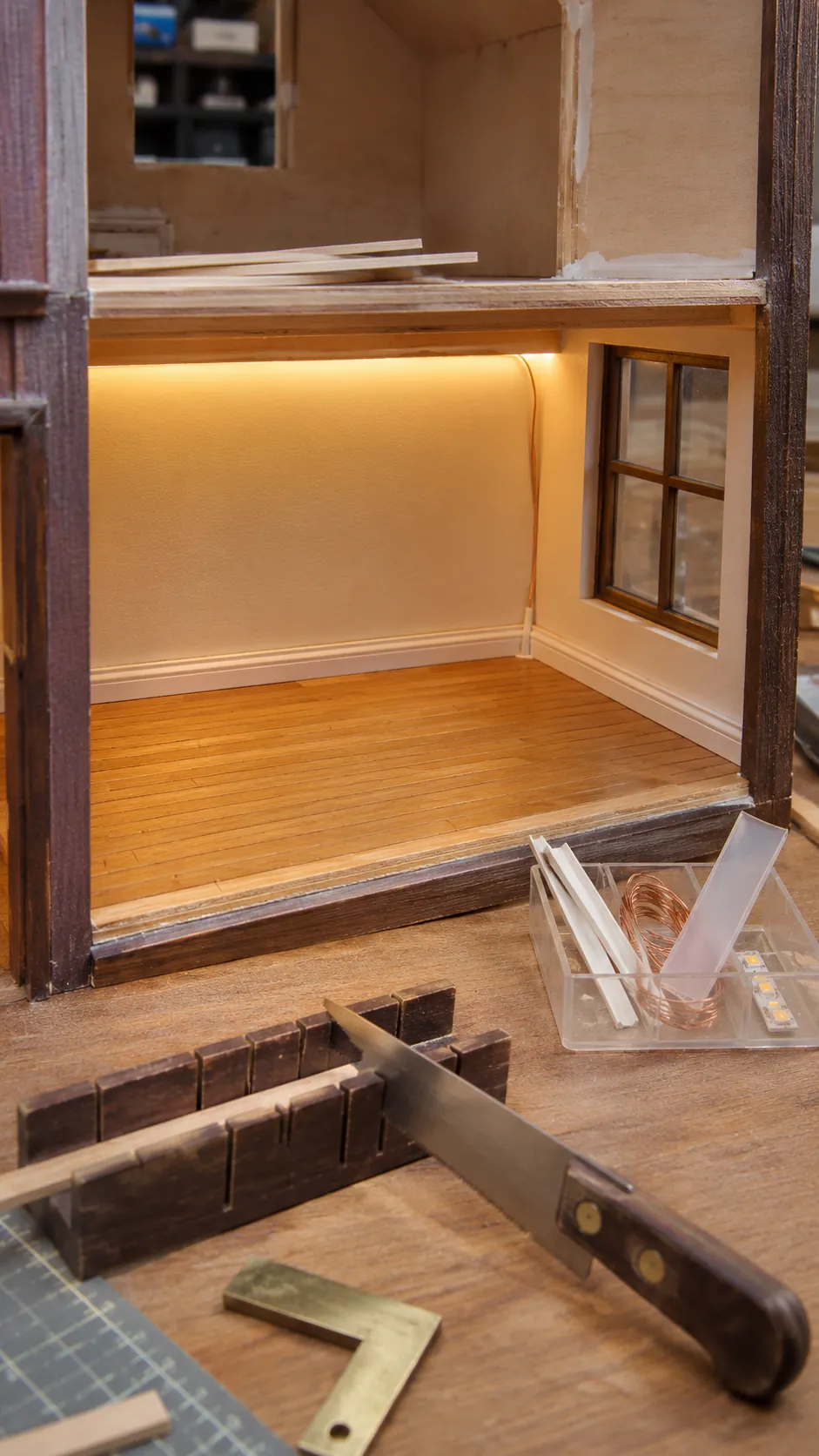
Add floors, trim and simple lighting
Install floors and wire paths before fixed cabinets or deep furniture. Thin wood strips give a more convincing floor than thick craft sticks, while simple concealed lighting adds depth without crowding the ceiling. Test every light before trim covers the connection.
Style the rooms, then edit the layout
Place the largest furniture first and keep a clear visual path through each opening. Add accessories slowly, comparing their scale and color from the normal viewing distance. Stop when the rooms explain their purpose without filling every surface.