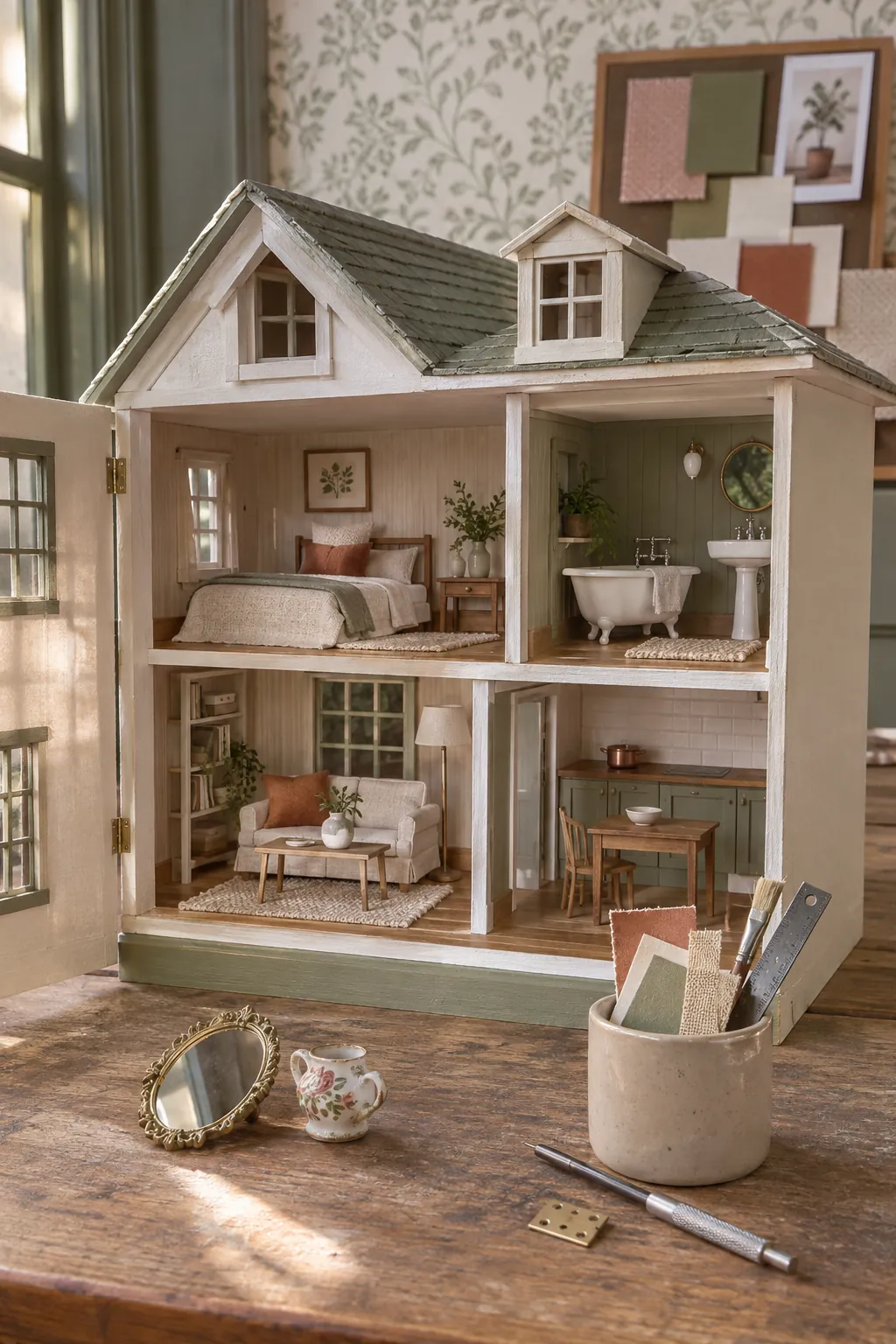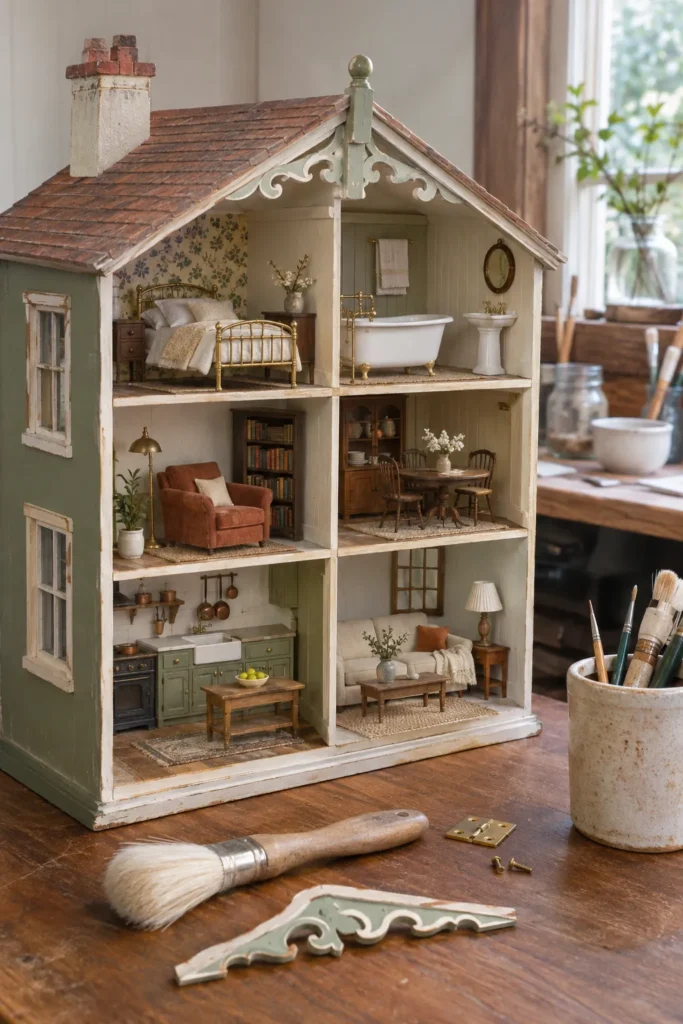
A thrifted dollhouse often arrives with real charm and several unknowns. Dust can hide loose joints, moisture damage, unstable finishes, and parts that belong to the original structure. A good makeover follows a deliberate order: document the condition, clean gently, stabilize the shell, repair small details, test finishes, and decorate only after the house is sound.
Inspect before you clean
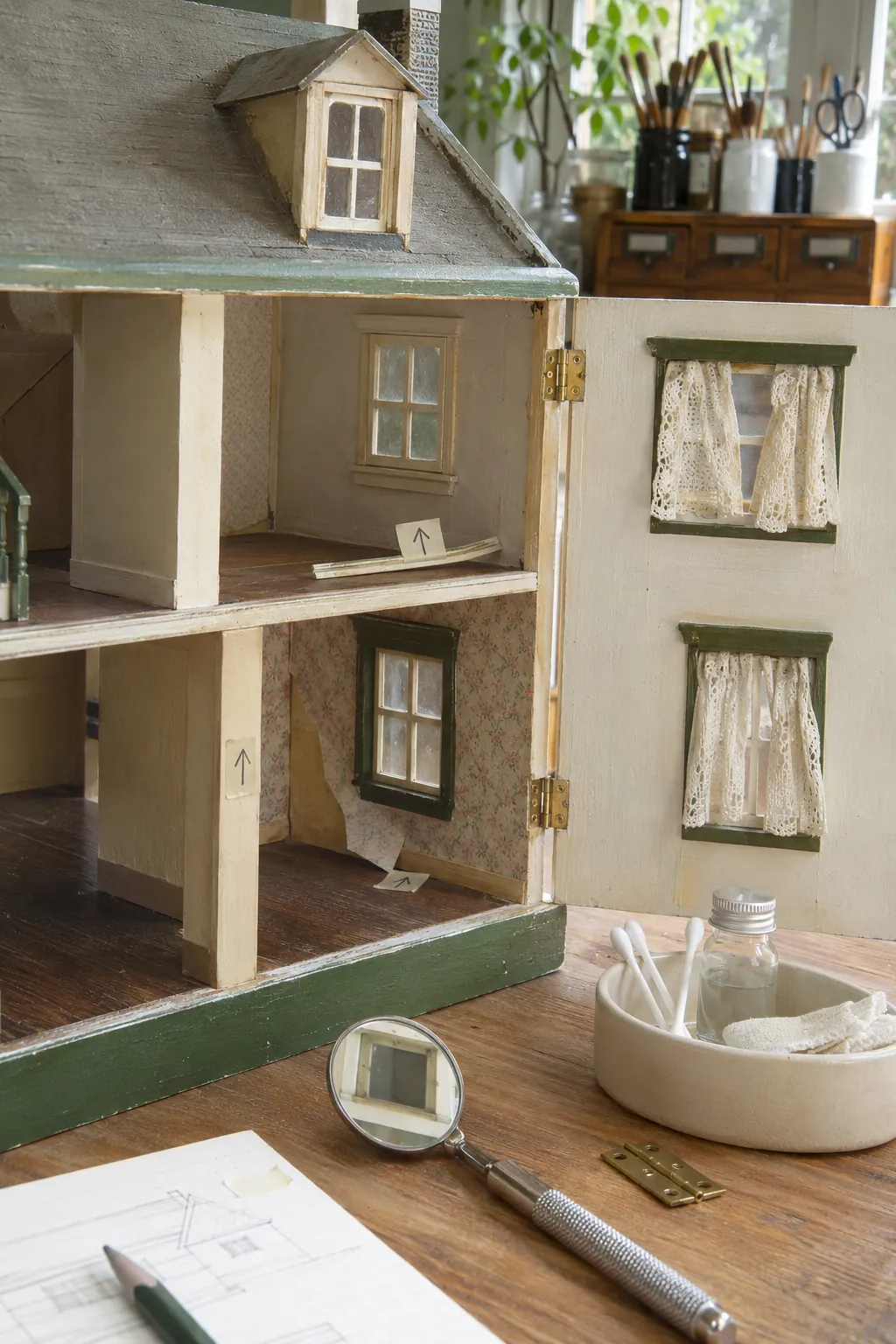
Start with a dry inspection in strong light. Photograph every room, then note loose walls, lifting floors, missing trim, stains, odors, and old wiring. Gently press only the structural joints that must carry weight. A cosmetic crack can wait, but a moving wall or sagging floor should be repaired before cleaning adds more stress.
Remove dust with the gentlest method
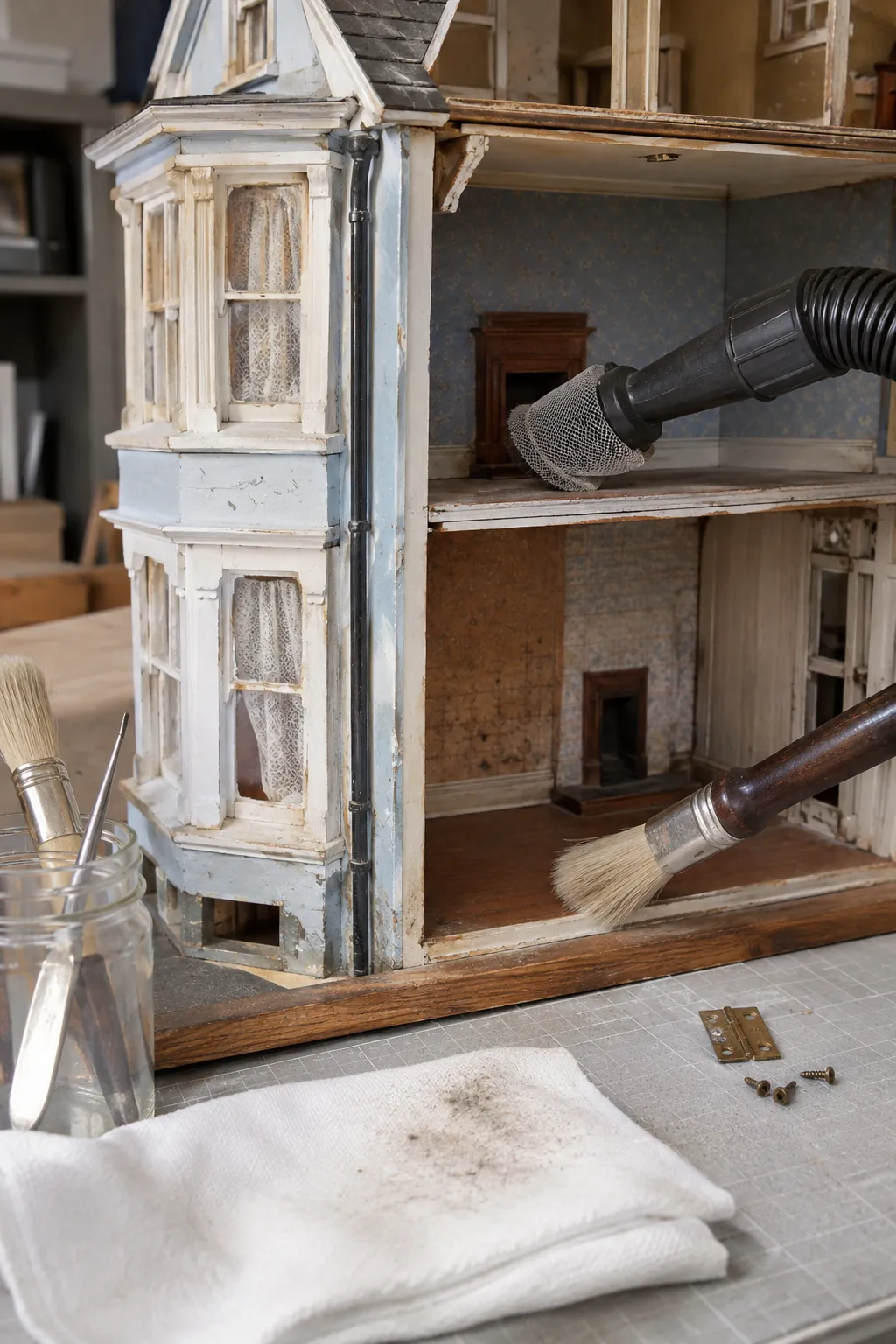
Begin with a soft brush and capture loosened dust through a mesh screen with low suction. Test a barely damp cotton swab on an unseen painted spot only after dry cleaning. Stop if color transfers, paper darkens, or wood swells. Avoid soaking the shell because moisture can release old paper, distort thin panels, and drive grime into raw wood.
Stabilize the shell before cosmetic work
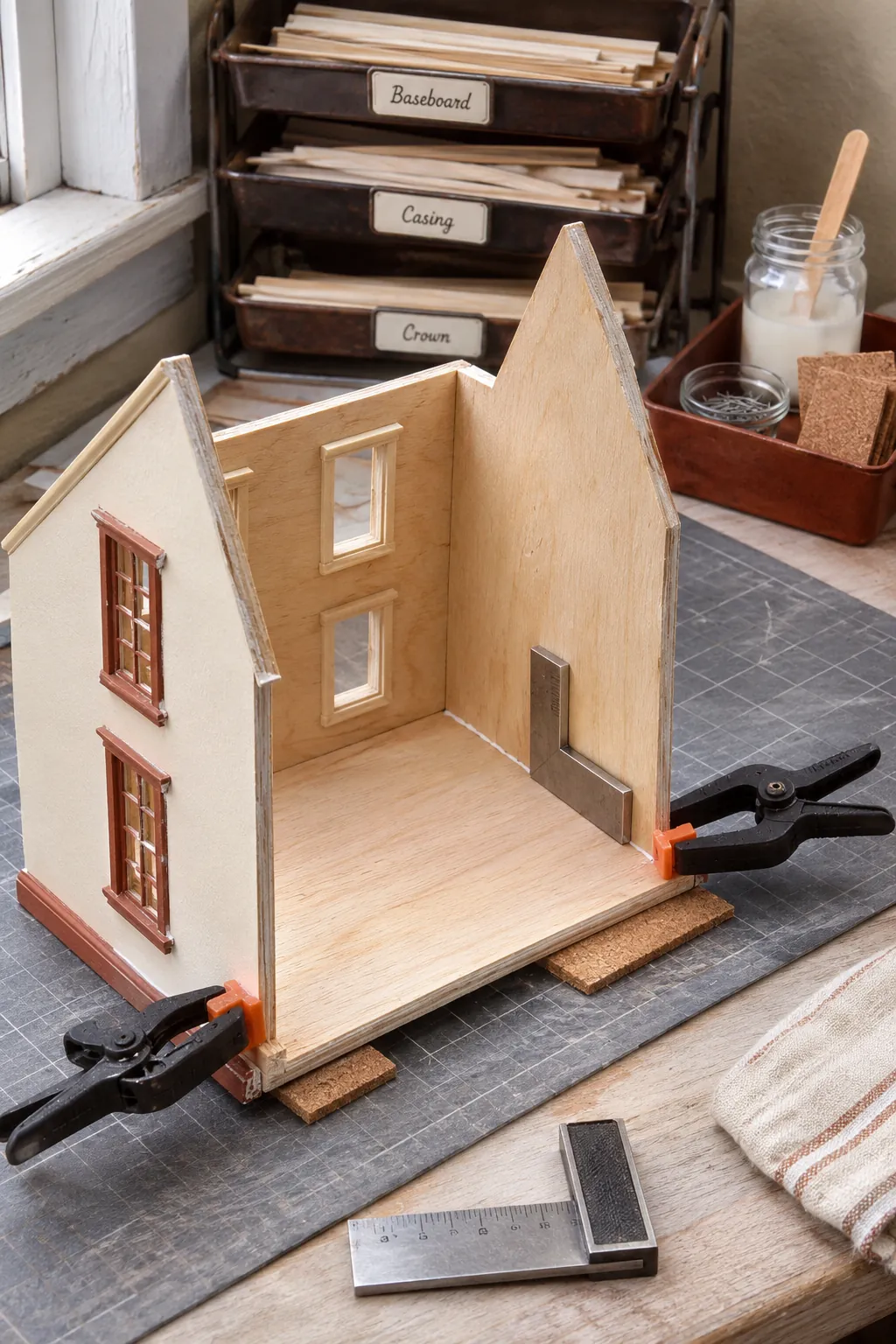
Set the house on a level surface and check that floors meet walls at square angles. Save every loose piece in a tray before applying a small amount of suitable wood adhesive to clean joints. Use padded clamps or temporary braces with light pressure. Allow the repair to cure fully so later sanding, painting, and furniture placement do not reopen it.
Repair trim, stairs, and openings
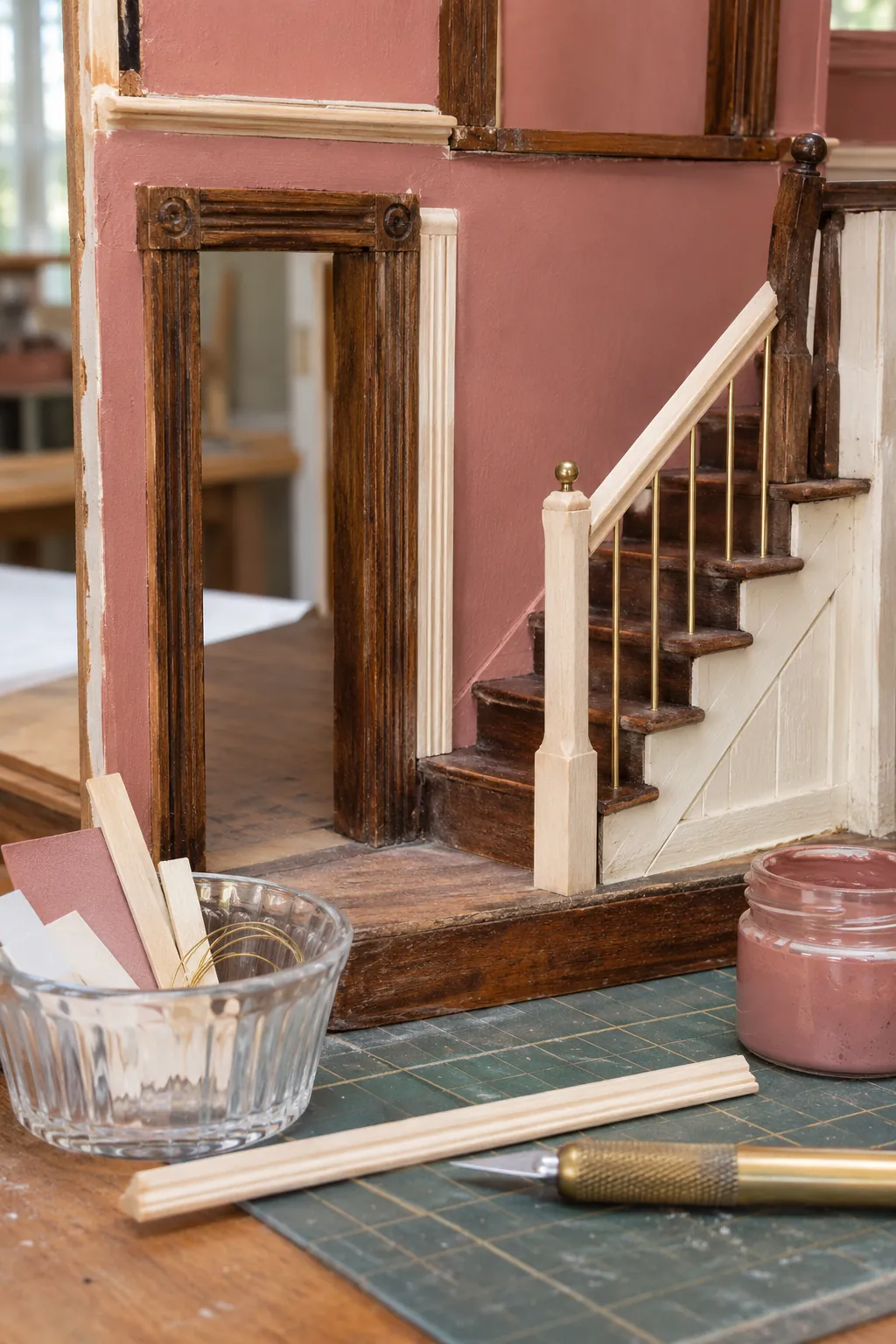
Match the thickness and profile of retained parts instead of making replacement trim visually heavy. Cut new molding slightly long, refine the fit in small steps, and dry fit it before adhesive is used. Rebuild rails and openings only where they improve safety or complete the architecture. Small evidence of age can remain when it is stable and attractive.
Test finishes in hidden areas
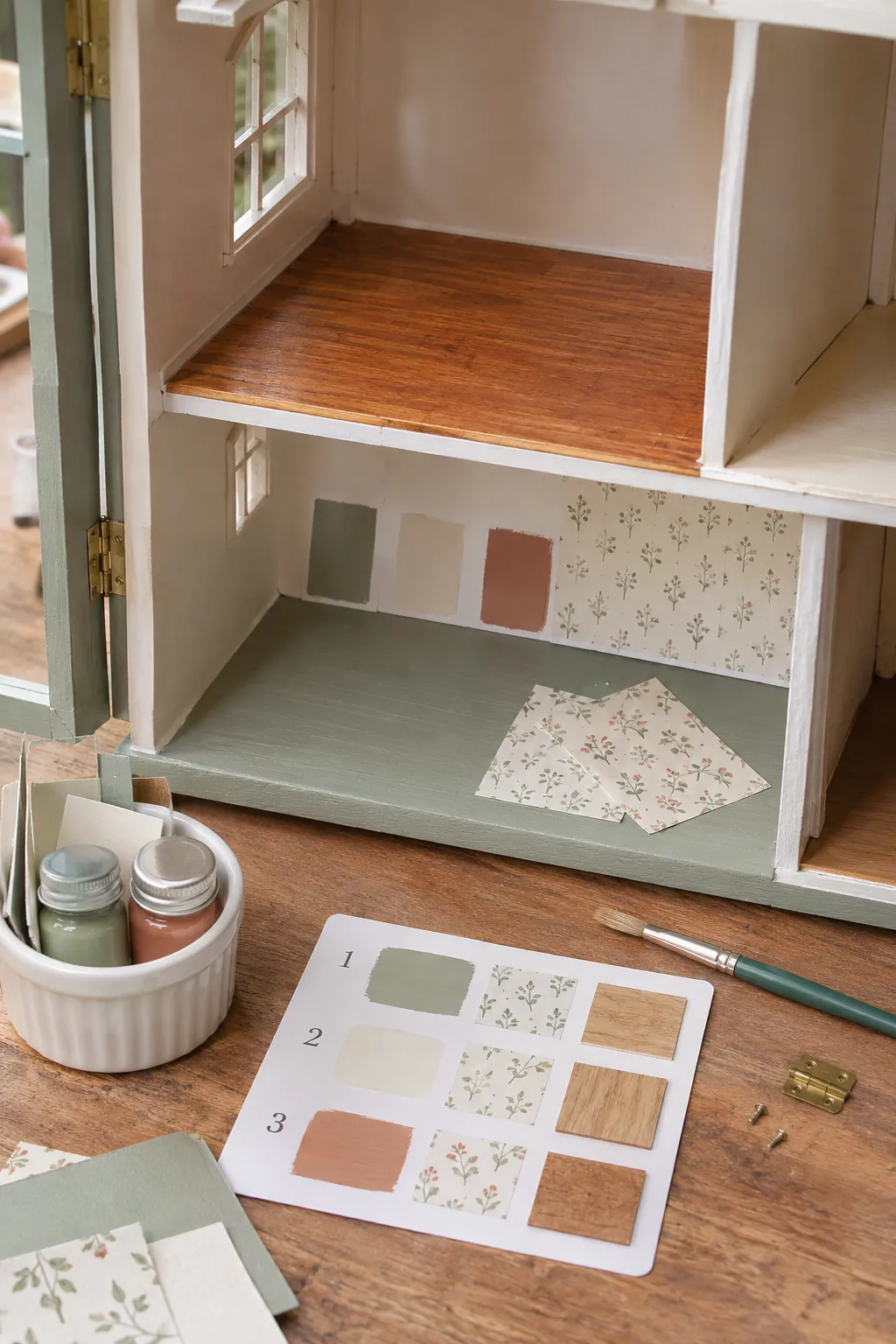
Old paint, paper, sealers, and glue can react with a new finish, so test each material where the result will be hidden. Let samples dry for a full cycle and check adhesion, staining, sheen, and color in daylight. A compatible primer may isolate a difficult surface, but stable vintage wallpaper or flooring can also become a useful part of the final design.
Restyle with a restrained room plan
Choose one limited palette and repeat a wood tone or metal finish across rooms to make mixed thrift finds feel intentional. Place the largest furniture first, keep paths and doors clear, then add a few accessories that support each room function. The result should show the repaired character of the house rather than cover every surface with new decoration.