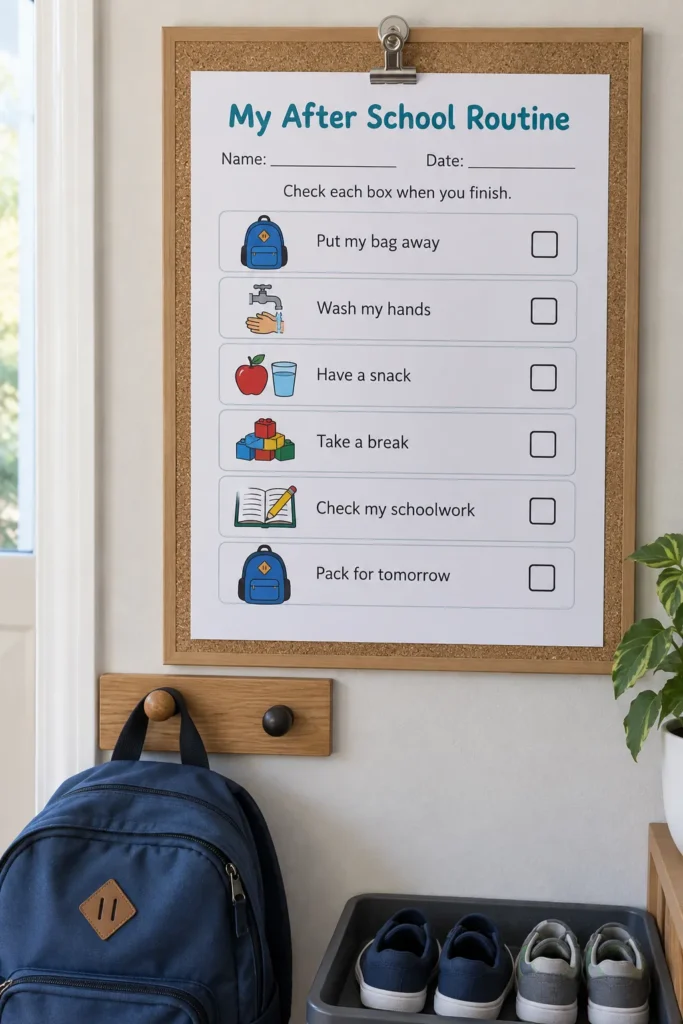
The hardest part of coming home can be switching from a full school day to another set of instructions. A short visible sequence gives your child somewhere to look when they forget the next step. Leave room for food and a real break before asking for focused work.
Save the daily picture checklist
This page is designed for early elementary children who can follow simple picture cues, with an adult nearby to explain unfamiliar words. It has six tasks, a blank checkbox beside each task, and a space for a name and date. The book symbol means check what school requires today, rather than assume every child has homework.
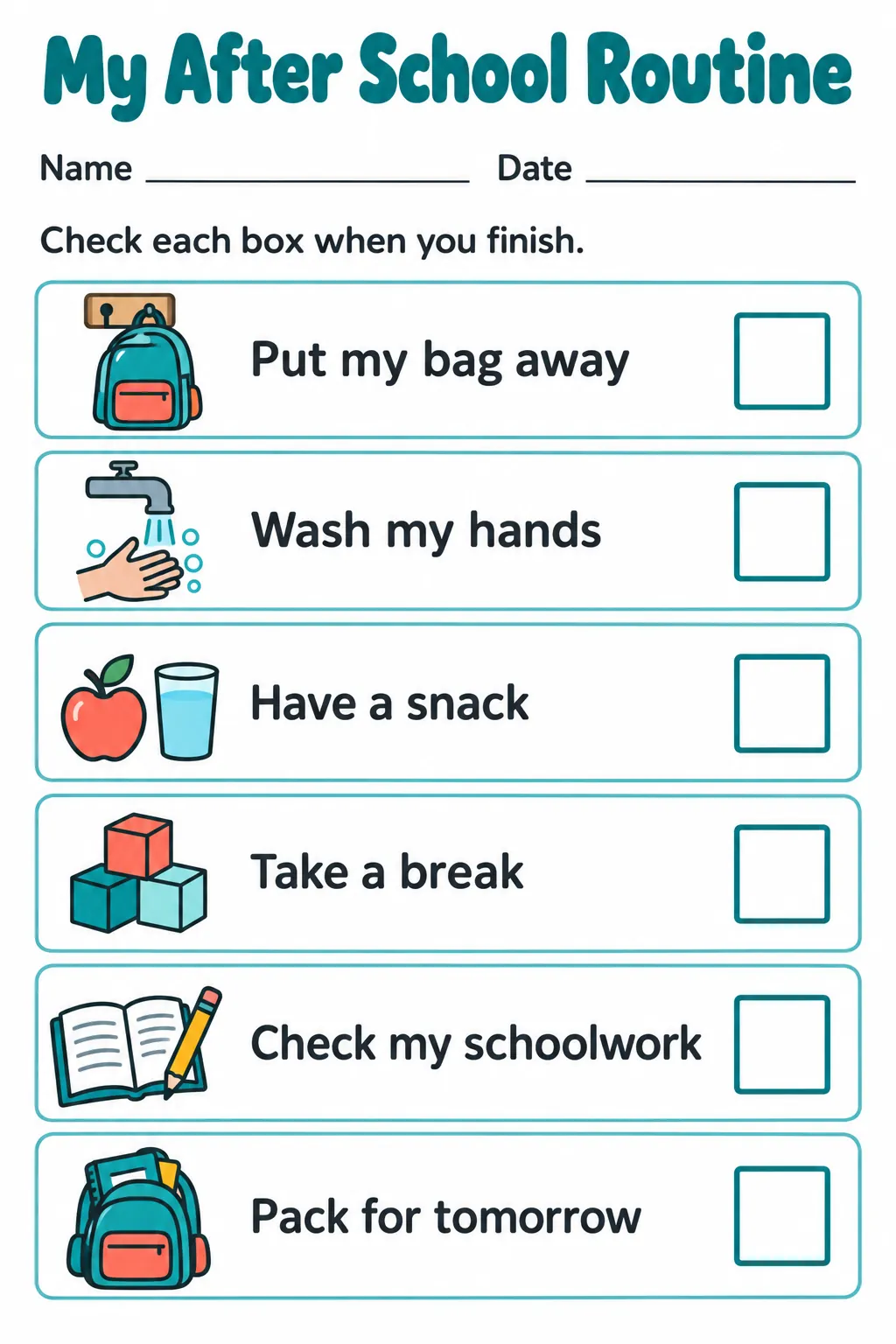
Download high-resolution printable
Click the preview to open the full size image, or use the download button to open it in a new tab. Save the image from that tab and print the saved file. The download is an image, so no separate worksheet needs to be rebuilt from this article.
Walk through the sequence together
Start by putting the school bag in its usual place and bringing out papers that need an adult. Washing hands and having a snack come before the break on this page. Choose a break activity with your child and agree on how you will signal its end.
At the schoolwork step, open the bag together and check the teacher’s instructions. If there is no homework, the check itself completes that box; reading can be included when it is part of the school requirement. Finish by putting the things needed tomorrow back in the bag, while keeping perishable food out until morning.
Make the break predictable
An after school checklist works best when the break has a clear ending your child understands. You might choose one short outdoor game or agree on a timer before the break begins. Avoid presenting an unfamiliar time limit only when you need your child to stop.
On a club day, the order may need to change. Use the chart as a shared reminder instead of a test that must be completed perfectly. When your child seems exhausted, offer help with the next task and review whether the plan asks too much for that afternoon.
Use the chart without constant reminders
Keep the page where the first task happens, at a height your child can see. Point to the next picture before giving a long explanation. Practice the sequence together for several days before expecting independent use.
The pictures support children who are still learning to read, but they do not replace clear teaching. Name each action and demonstrate what finished looks like, such as a bag hanging on its hook. A child who needs support with washing, packing, or schoolwork can complete the step with an adult.
Print and reset for another day
Choose portrait orientation and use the printer preview to check that all page edges remain visible. Fit the image to the printable area on your paper rather than stretching it to fill the sheet. Check one printed copy before making extras, especially that the task labels and empty checkboxes are easy to see.
Use a pencil for a single day, or place the page in a suitable reusable sleeve with a marker that wipes off it. Keep the marker out of reach when it is not appropriate for your child. Reset the boxes together, then leave the chart ready beside the bag for the next school day.