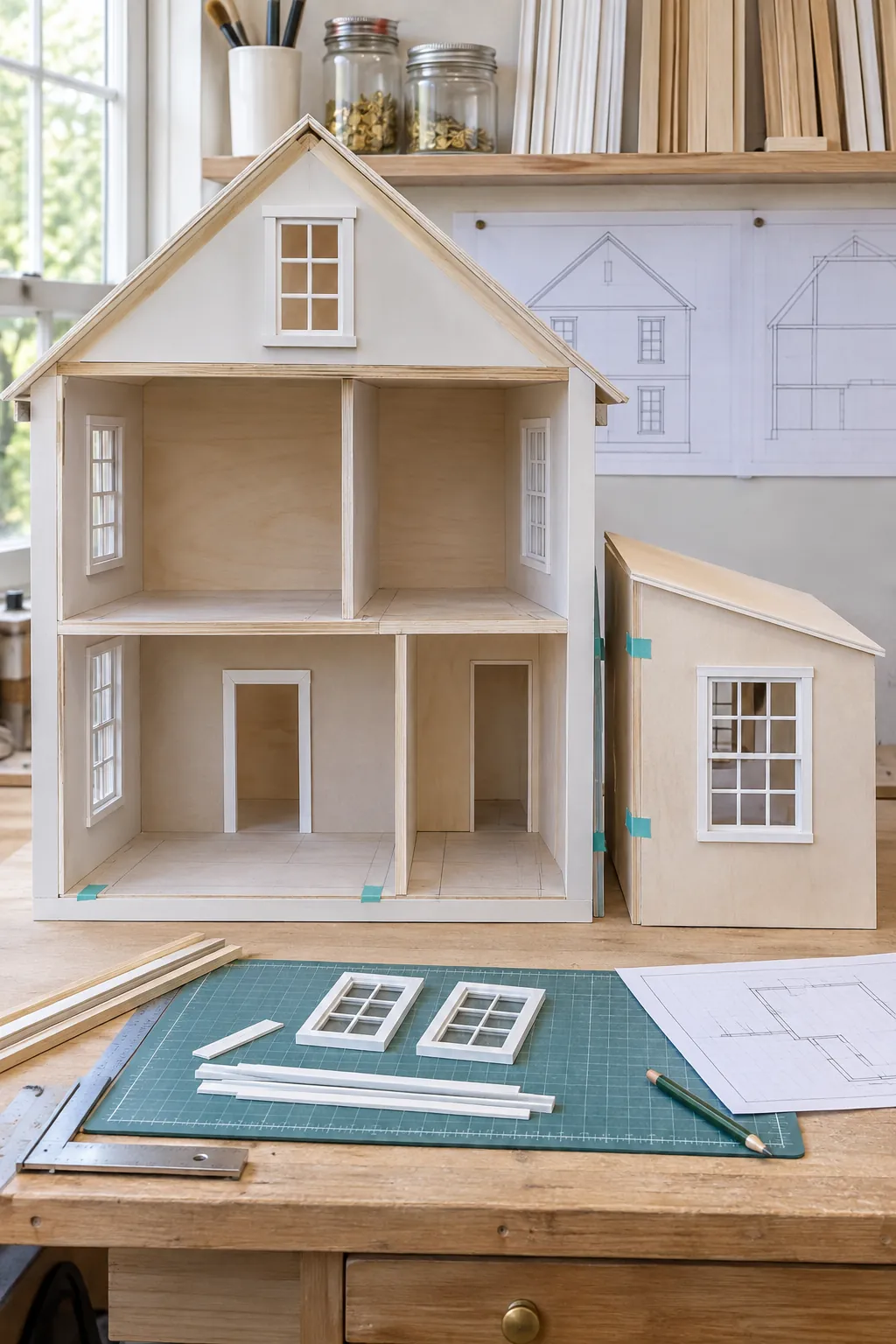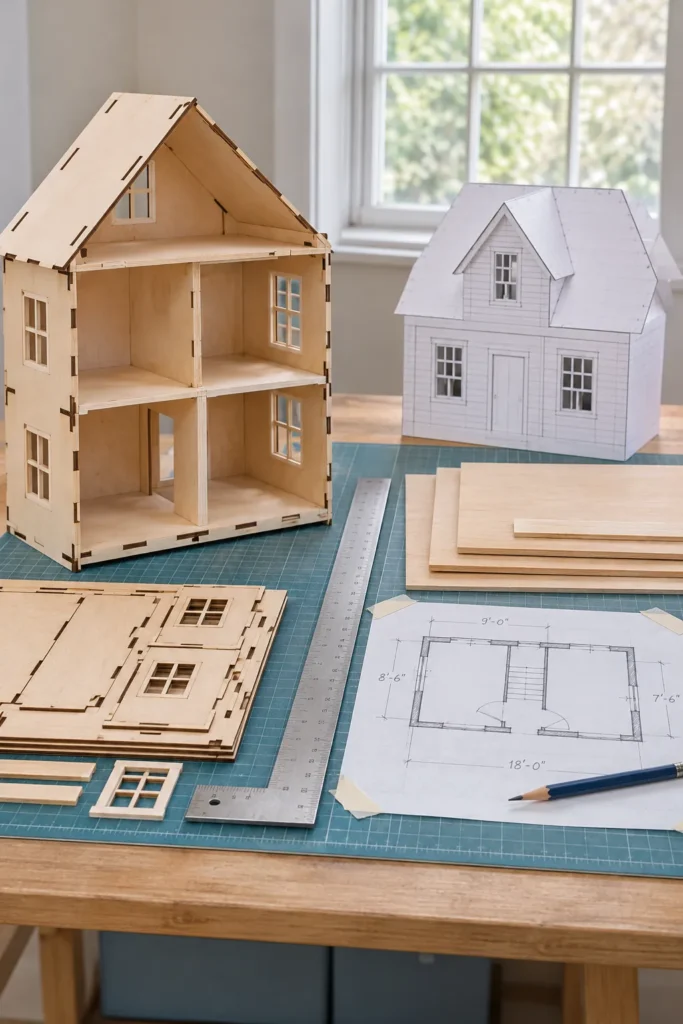
The better choice is the one that matches the part of the hobby you want to learn. A kit reduces structural decisions and gets you to decorating sooner. A scratch build gives you control over size, layout, and architecture, but it makes planning and accurate cutting part of the project.
Indexed discussions from dollhouse communities show that both routes can work for a beginner. Builders recommend starting small, making a paper model before a custom house, pricing standard windows and stairs early, and expecting some kits to need sanding or adjustment. Your available time, tools, and tolerance for uncertainty matter more than a simple beginner label.
Choose a kit for a guided first structure
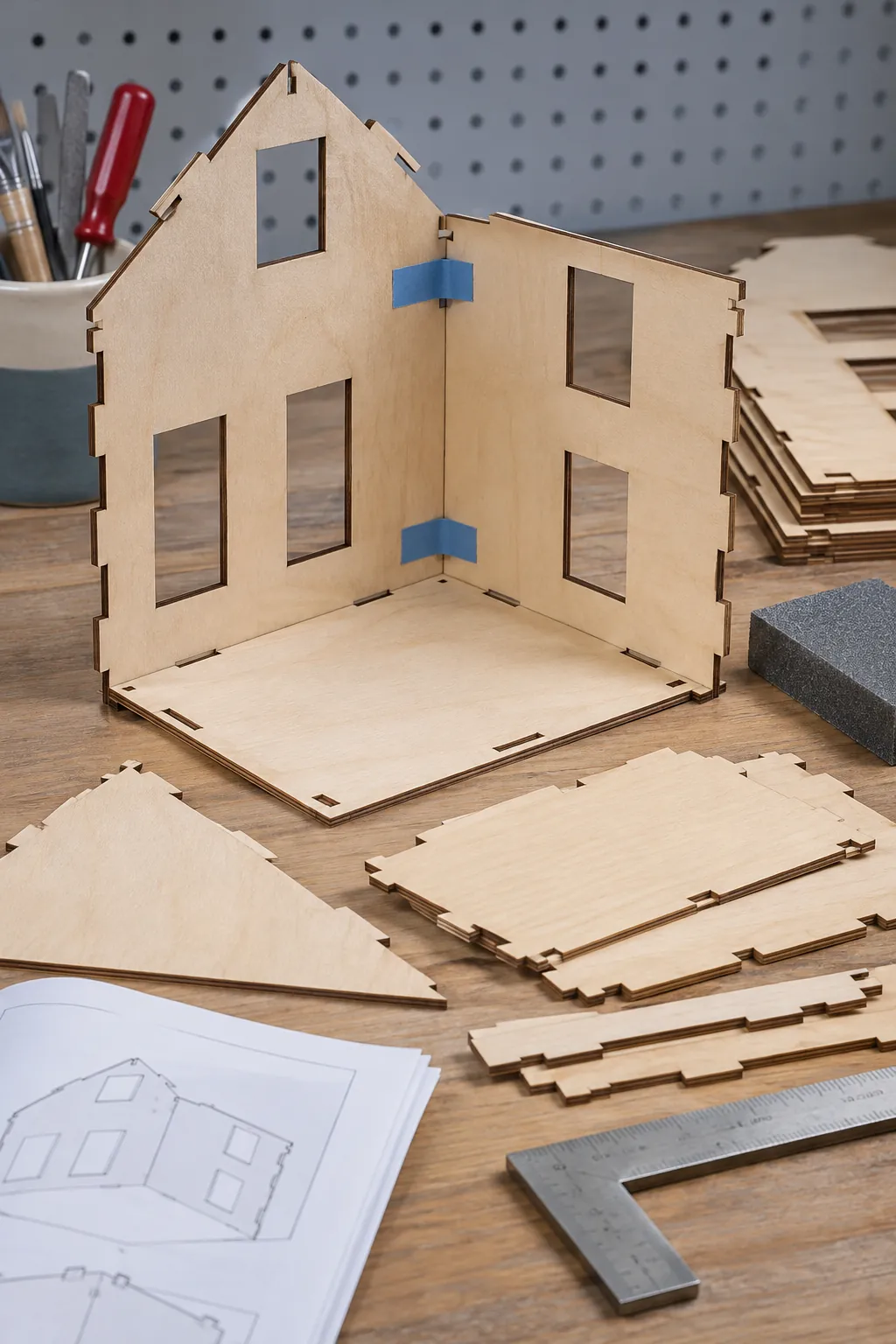
A good kit supplies precut walls, floors, roof parts, and an assembly order. That structure lets a new builder practice dry fitting, squaring walls, gluing, sanding, painting, and finishing without designing every joint. It is especially useful when your main goal is interior decoration or when you want several rooms in a proven footprint.
A kit is not the same as an effortless project. Thin plywood may warp, tabs may fit tightly, and instructions vary in clarity. Read recent reviews, identify the material thickness, and confirm the finished dimensions. A lower purchase price can lose its advantage if poor cutting demands replacement trim, extra filler, or hours of correction.
Choose scratch building for a specific vision
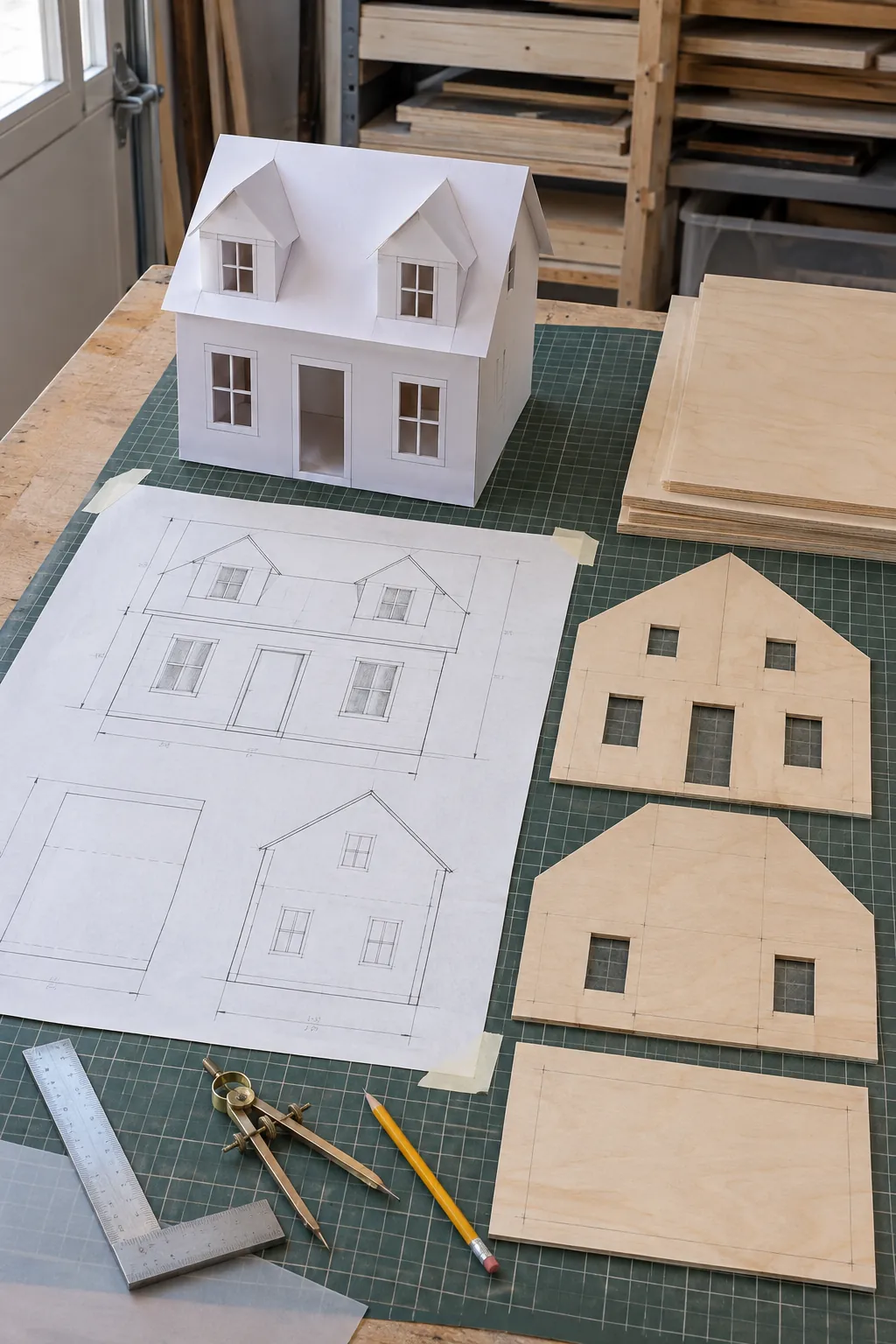
Scratch building makes sense when the house must fit a shelf, reproduce a real building, use an unusual scale, or support a layout that no kit offers. You can choose room sizes, window positions, wall thickness, access panels, and wiring routes before construction. That freedom is the main value, not an automatic saving in money.
The work begins with a measured drawing or a small paper model. You must select sheet material, plan joints, cut repeated parts consistently, and keep the shell square. A simple rectangular shape is a sensible first attempt. Complex roofs and stairs multiply alignment problems quickly.
Compare the real cost, not the box price
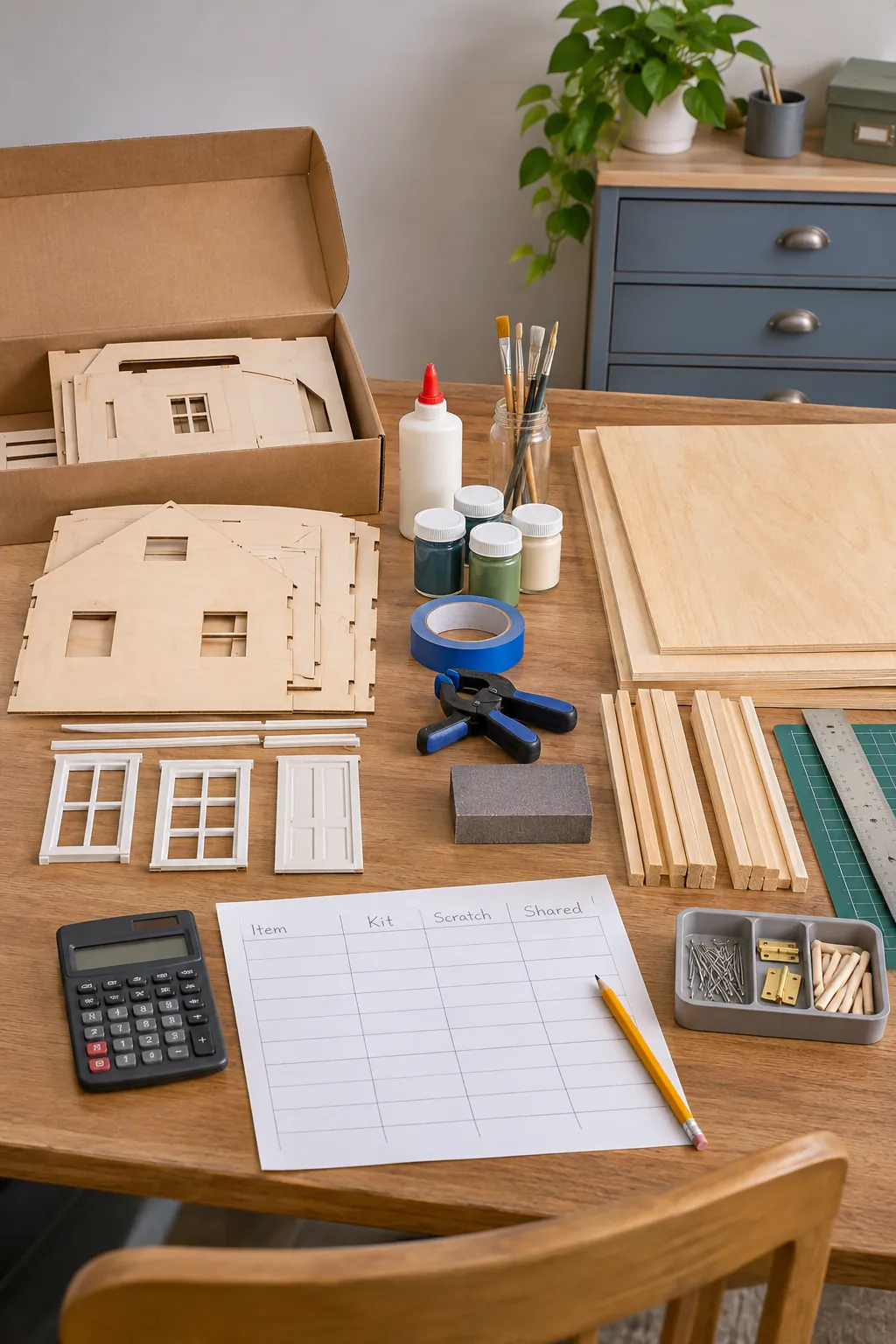
A kit price usually covers the structural shell, but it may not include glue, primer, paint, shingles, trim, wiring, doors, windows, stairs, flooring, or furnishings. List every likely addition before buying. Check whether components use standard sizes because unusual openings can make replacements expensive.
A scratch build requires sheet material plus the same finishing supplies. It may also require a saw, square, clamps, sanding tools, and safer dust control. Scrap wood lowers material cost only when it is flat and suitable. The most economical route is often the one that uses tools you already own and avoids costly corrections.
Compare time and problem solving
A kit removes design and most cutting time, yet assembly still includes repeated drying, sanding, painting, and test fitting. A scratch build adds drawing, material selection, templates, cutting, and correction. The difference grows when the design contains bay windows, multiple roof angles, or custom stairs.
Think about which problems feel rewarding. If adjusting a plan and making accurate parts sounds enjoyable, scratch building may hold your interest. If you would rather solve finish and decoration choices, a kit protects more time for those tasks. Neither route should be rushed because adhesives and coatings need real drying time.
Match the project to your current skills
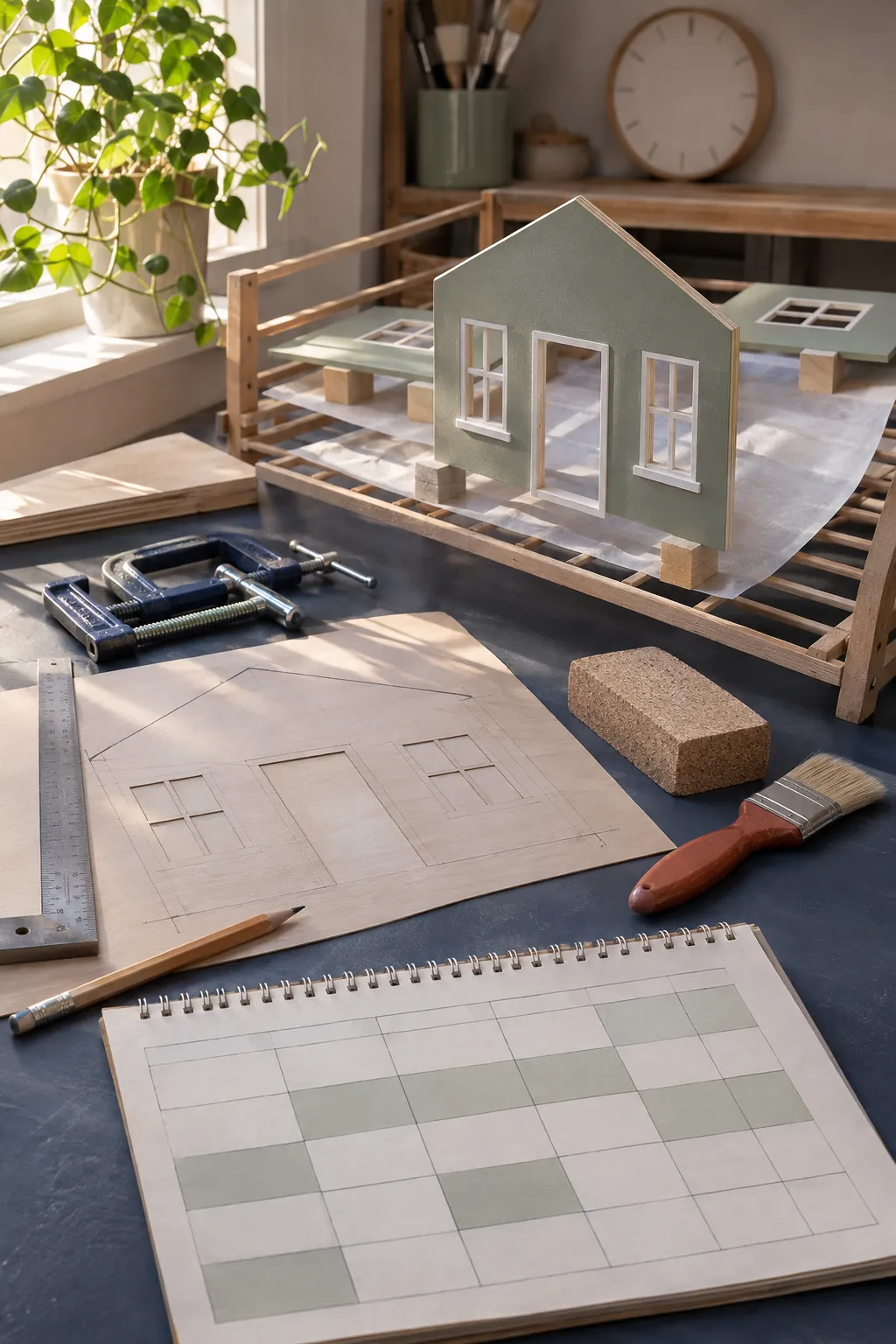
Both projects require patience, measurement, and safe tool habits. Kits emphasize following sequence, recognizing parts, correcting fit, and keeping a supplied structure square. Scratch builds add drawing, repeated measurement, material knowledge, and control of powered or hand cutting tools.
Begin with a room box or small house if you are uncertain. It reveals whether you enjoy structural work without committing to a large shell. A careful beginner can build from scratch, especially with a paper model and simple form. An experienced decorator may still prefer a kit because structure is not the skill they want to practice.
Use a hybrid approach when it removes risk
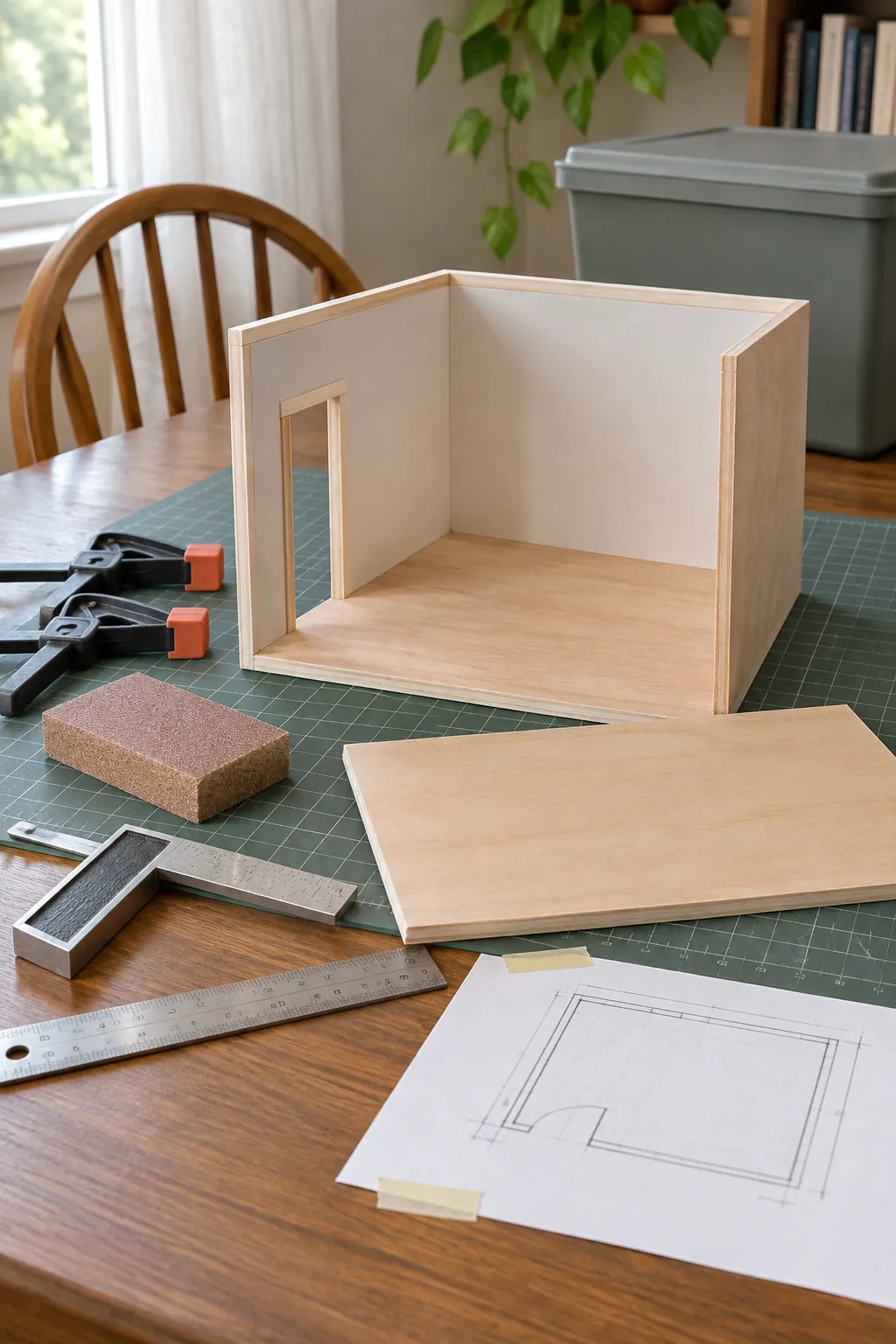
You do not have to keep the two methods separate. A kit shell can accept new partitions, a changed facade, a removable addition, or custom built furniture. A scratch built shell can use standard purchased doors, windows, stairs, and railings. Standard components save time where precision matters most.
Choose the kit if you want a guided shell, predictable proportions, and an earlier start on decorating. Choose scratch building if exact dimensions and architectural control are central to the goal. Choose the hybrid when one part of the vision is custom but the rest benefits from proven components. The strongest choice is the project you can plan, afford, and continue through the slow finishing stages.