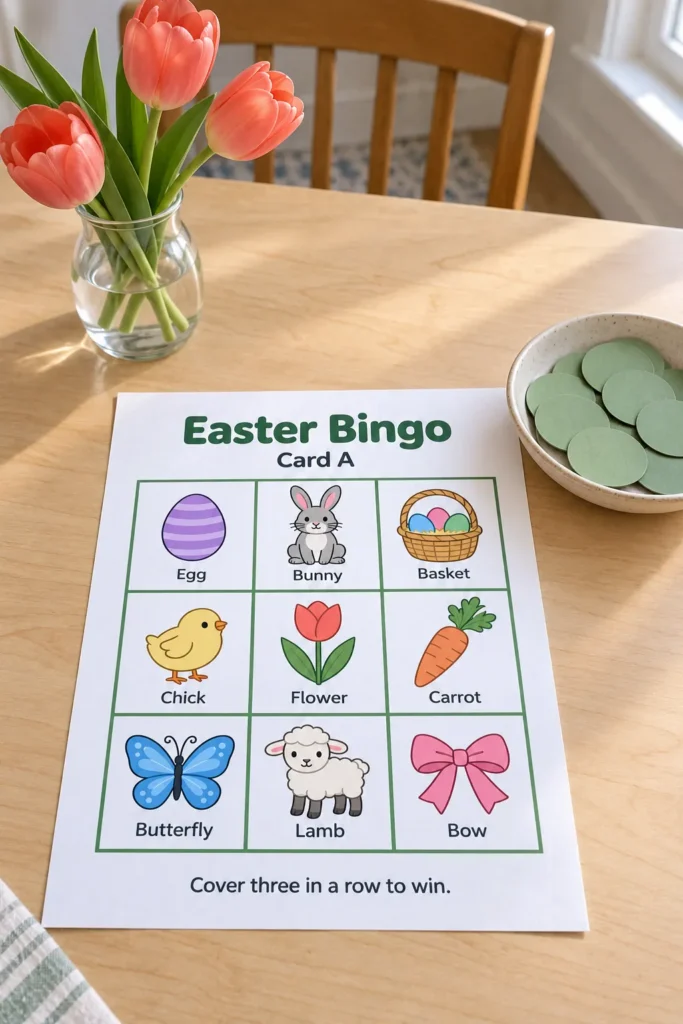
Young players can join a table game more comfortably when the pictures are familiar and the winning line is short. A small board also keeps the caller from racing through a long list while everyone searches. This set uses nine spring pictures, two different arrangements, and three covered squares in a row.
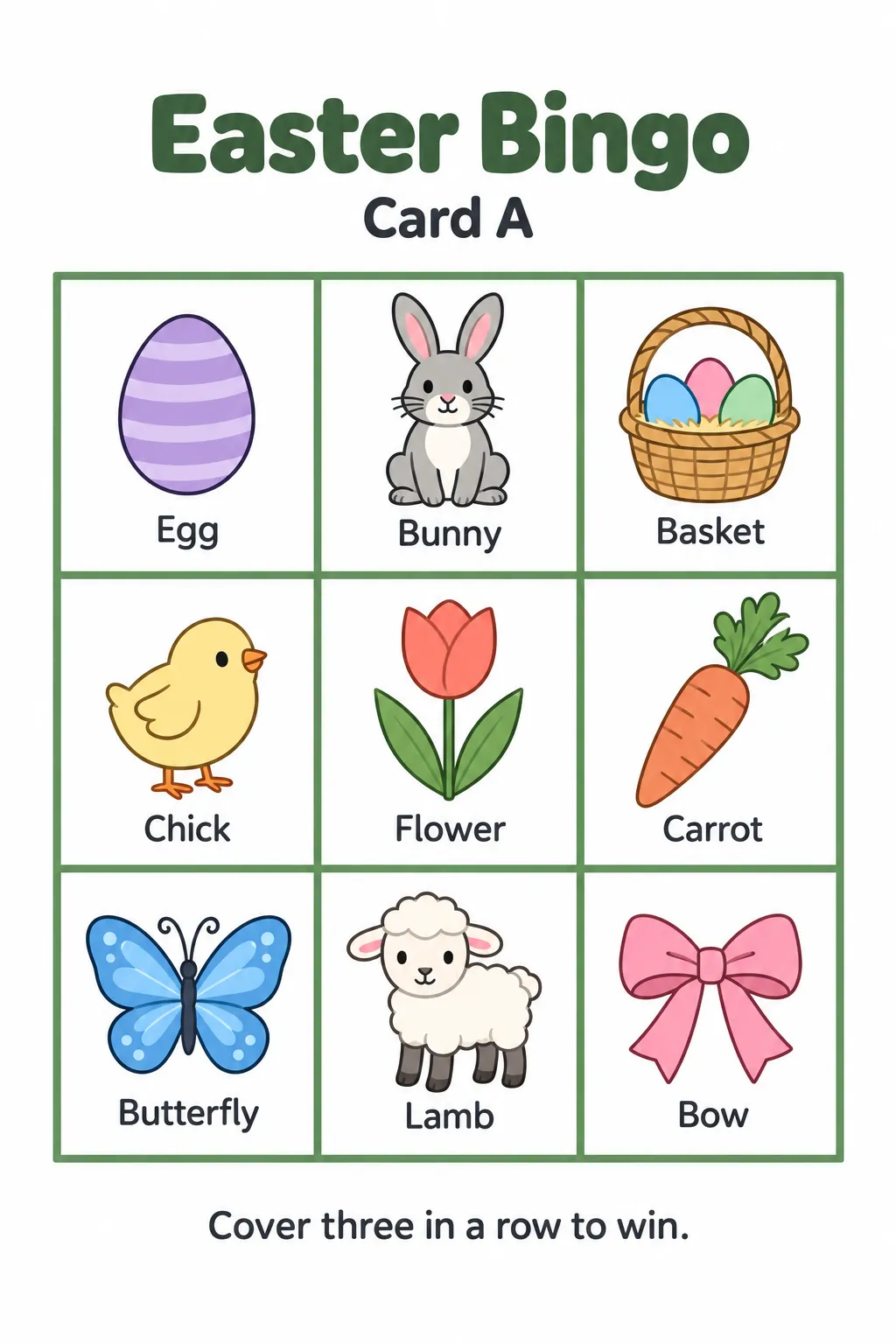
Save Card A for the first player
Card A starts with an egg, bunny, and basket across its top row. Each picture has a word underneath, so readers can check the name and younger children can match the illustration. Use the download button or open the preview to view the full size image in a new tab, then save it there.
Download high-resolution printable
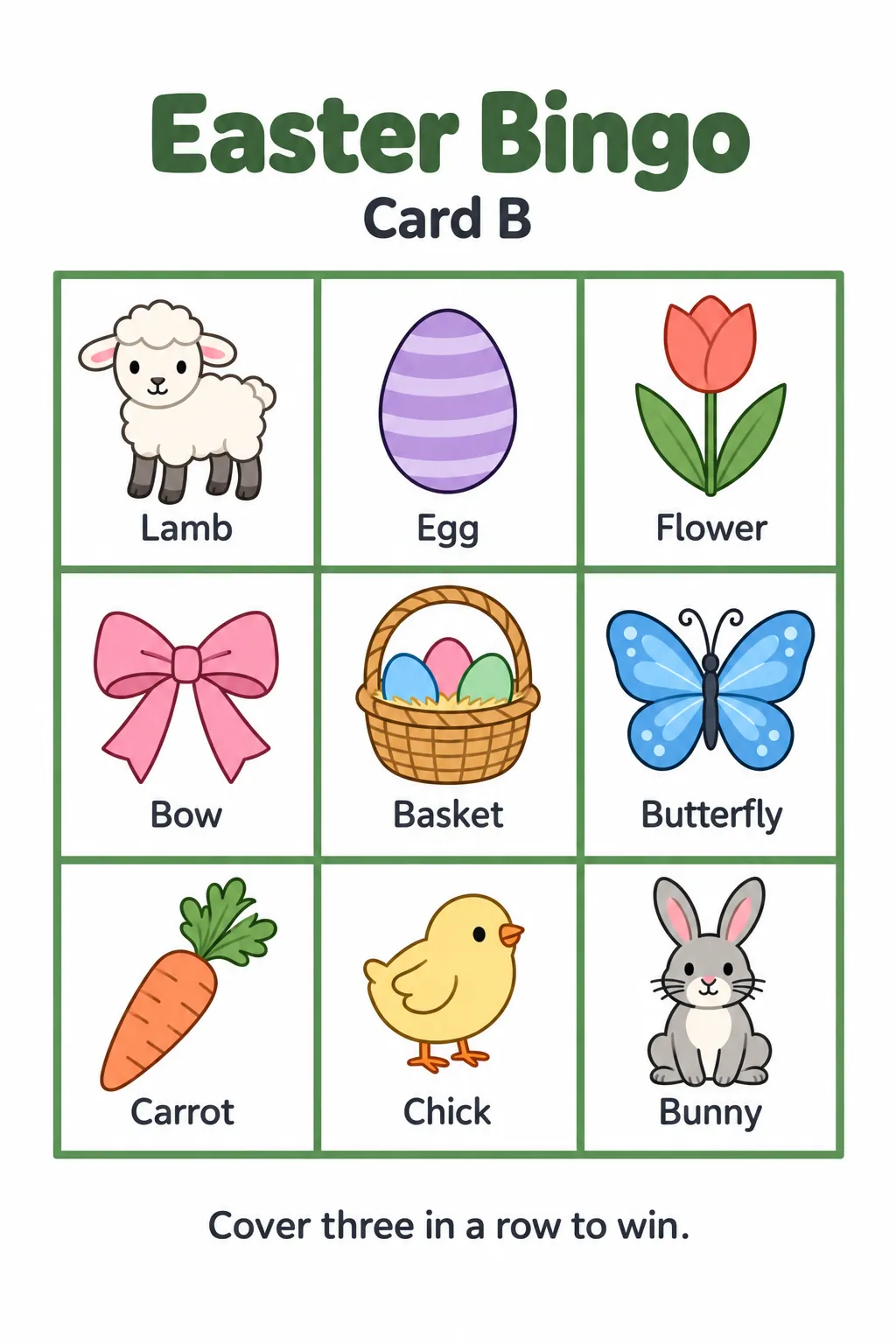
Give Card B to the second player
The second card uses the same nine objects in different positions. Its top row is lamb, egg, and flower, giving the other player a different route to a winning line. These are two unique Easter bingo cards, so a larger group should play as two teams rather than expect every printed copy to behave differently.
Download high-resolution printable
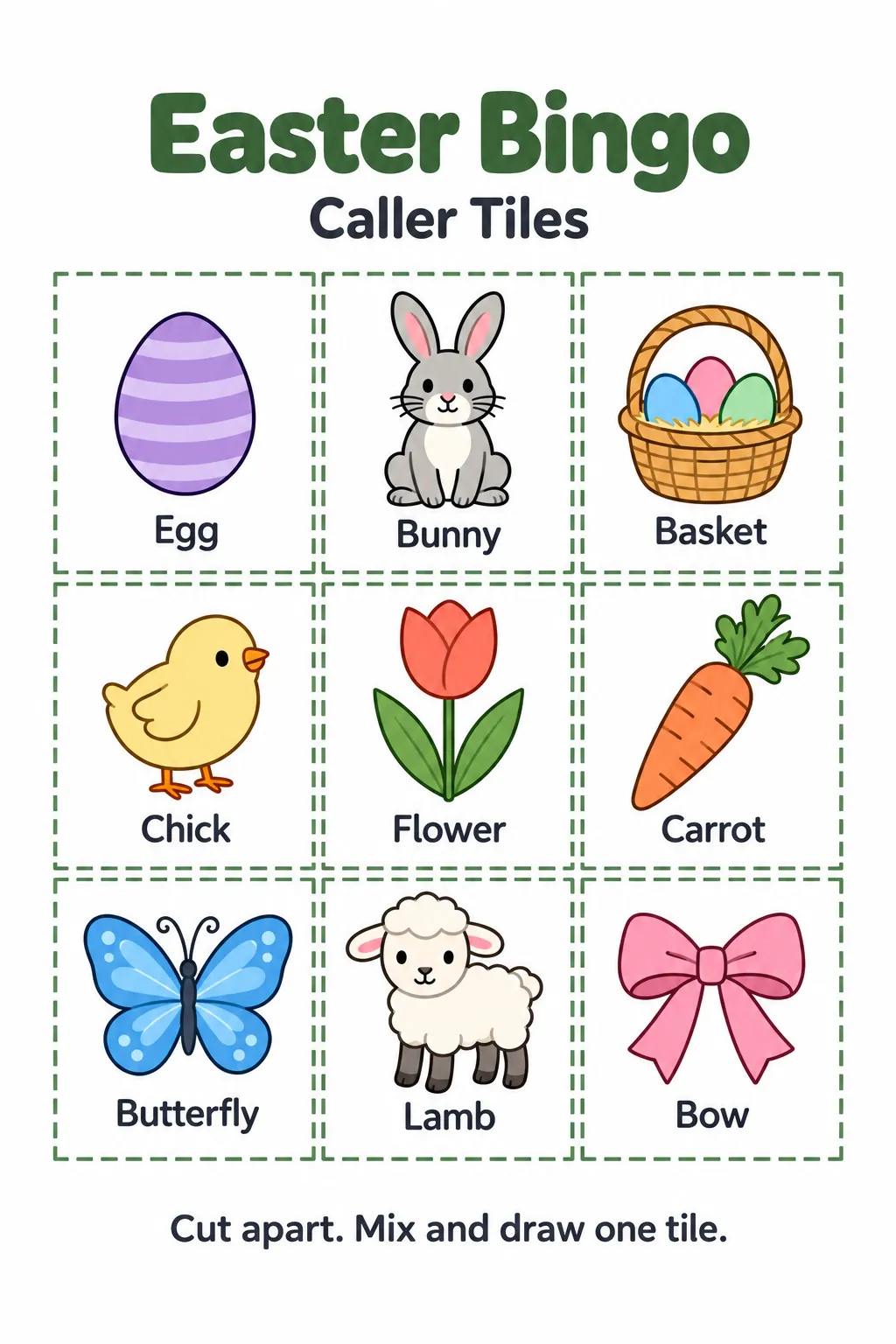
Prepare the matching caller tiles
Print the caller page once, then cut its nine tiles apart along the dashed boundaries. Put them in a bowl or an opaque bag and mix them before each round. Keep the picture and its label together on every tile, so the caller can show the same object they name.
Download high-resolution printable
Explain a winning line before starting
Give each player one board and nine age appropriate markers, or use a pencil if the pages will be used only once. A winning line contains three covered squares horizontally, vertically, or diagonally, and there is no free center square. Demonstrate one line on an unmarked board before calling the first picture.
Draw one tile, say its name clearly, and hold up its picture while players find the matching square. Set the drawn tile face up beside the bowl rather than returning it, then wait until both players are ready. Anyone with a completed line calls “Bingo,” and the caller checks all three pictures against the tiles already drawn.
Keep short rounds fair and friendly
The two layouts have different winning picture combinations, but they can still finish on the same call. Treat a simultaneous correct line as a shared win, rather than rewarding the loudest voice. Clear all markers and return the nine tiles to the bowl before starting again.
For bunny picture bingo with preschoolers, show every tile slowly and let an adult help with matching. Large paper markers can replace tiny counters, while a seated player can point to a square and have a helper cover it. Keep the pace cooperative if discovering the pictures is more useful than competing.
Print and plan for your group size
Print in portrait orientation with fit to page on letter or A4 paper, and check that the outer grid remains visible. The dark labels and cell boundaries still distinguish the objects when printing in grayscale. For repeated use, protect the boards with reusable sleeves after confirming the markers will stay in place.
These Easter party activities suit a pair of players, siblings, or two small classroom teams. Printing extra copies creates repeated layouts, so those copies will produce the same covered patterns when the same pictures are called. If you want every child to have an independent card in a large class, choose a larger set with more unique boards; use this one as a compact station among your spring classroom games.