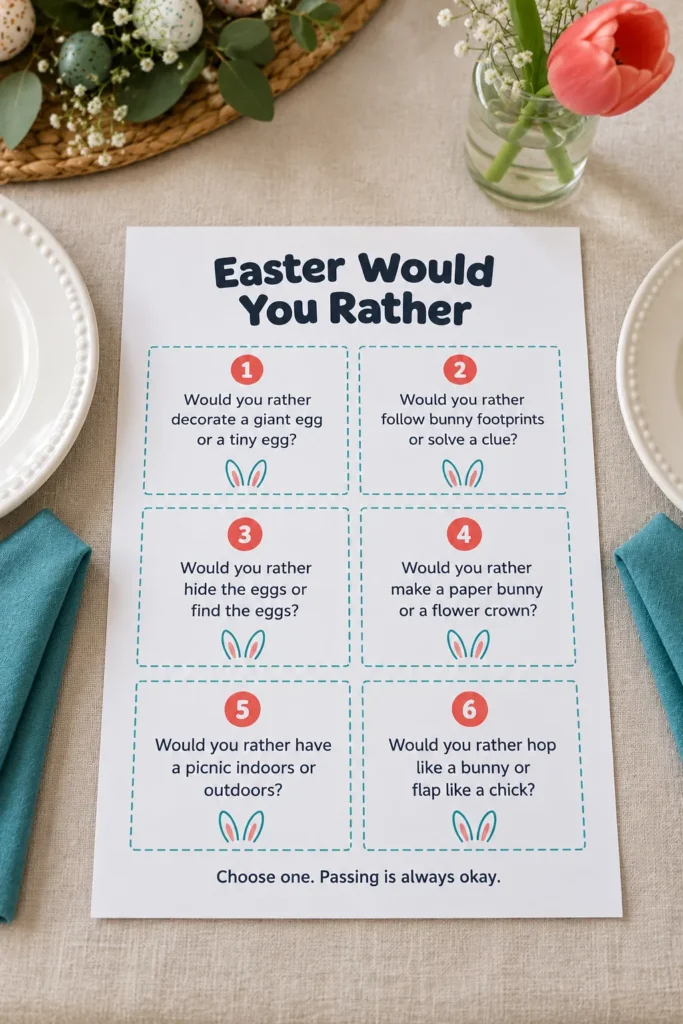
A quiet place at the table is easier to fill with a playful choice than a demand to say something interesting. Two silly options give a child somewhere to begin, while a grownup’s answer can make the conversation feel shared. Keep the stakes small: nobody has to defend a preference or perform for the group.
Save the question cards
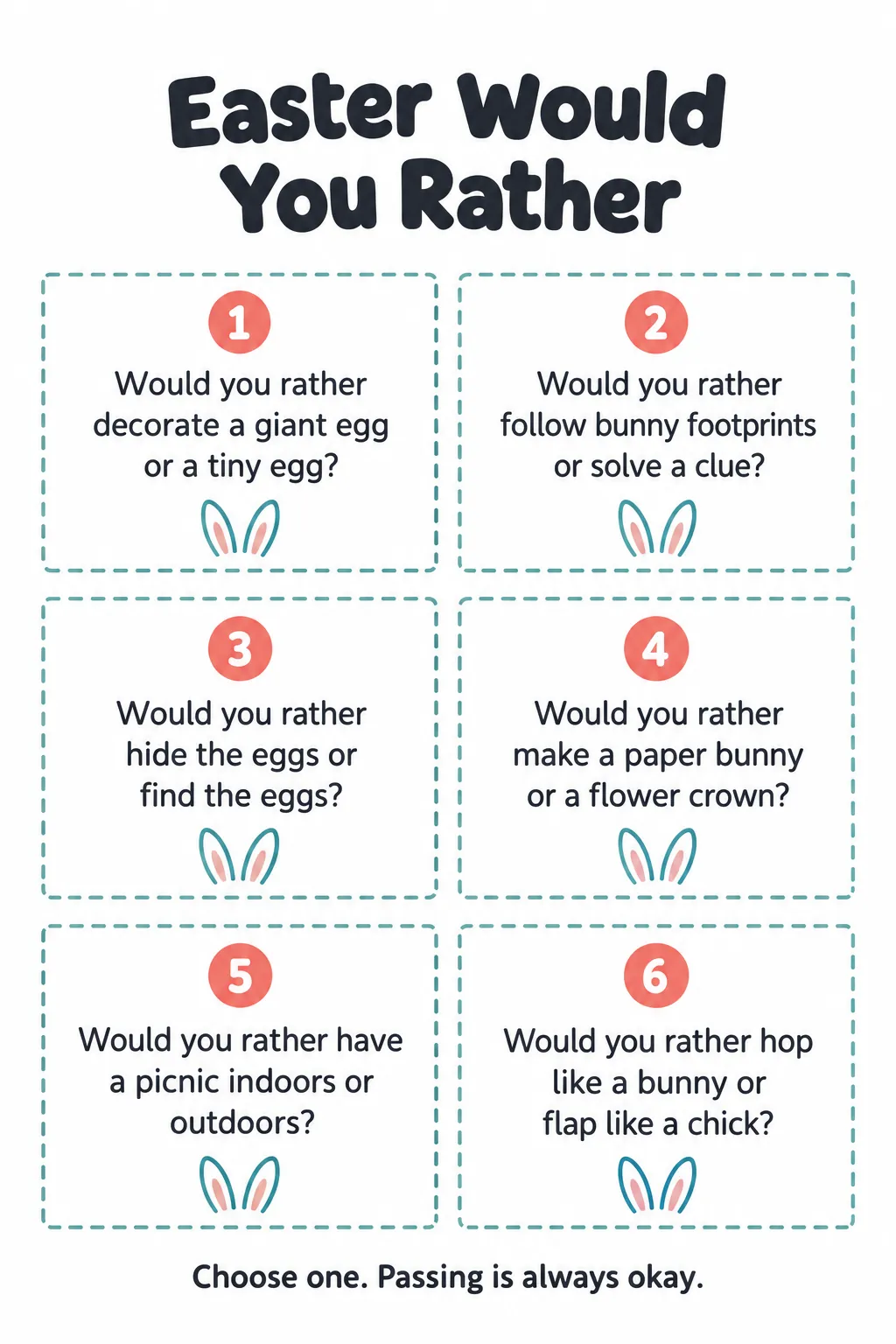
This page contains six Easter question cards about decorating, hunting, crafts, a picnic, and pretend animal movements. Each card is a complete choice, so you can use the whole sheet or cut out individual prompts. Open the preview or use the download button to open the full size image in a new tab, then save it from there.
Download high-resolution printable
Start with one choice and let it grow
Read a card aloud, then let each person choose either option or pass. Go around the table once before asking for explanations, so the quickest speaker does not take every turn. There are no correct answers, points, or winners in this version.
If someone wants to say more, ask what makes their choice appealing rather than arguing for the opposite answer. A child who chooses a giant egg might imagine the design, while an adult might think about where it would fit. Stop after a few cards if the meal or another activity needs everyone’s attention.
Use the prompts as imaginary choices
The footprint and clue card compares two kinds of hunt, while the hiding and finding card asks which role sounds more fun. Neither answer requires you to organize another game that day. Tell players that they can imagine an option even if it is not available at home.
The craft question offers a paper bunny or a flower crown, and the picnic question lets everyone picture their preferred setting. Those are conversation starters rather than instructions to make something or go outdoors. When a child asks what an unfamiliar option means, explain it briefly without suggesting which answer to choose.
Give every age a comfortable way to join
An adult can read the words for younger children and repeat the two options separately if needed. A player can point, say a short answer, or ask a trusted helper to speak for them. Keep the passing rule active for adults as well as children.
The bunny and chick card suggests imaginary movement, but no one needs to stand up or act it out. If your group enjoys acting, make that a separate optional activity with clear space around the chairs. The conversation works just as well for a seated group sharing ideas.
Print for a short table activity
Use portrait orientation and fit to page on letter or A4 paper, then check that the dashed borders and bottom instruction are visible. Cut around each card while keeping its number and question together. The small illustrations decorate the cards; the two options are always stated in the text.
For Easter table activities, place a small stack where one person can draw a card without passing a large sheet around the plates. You can also leave the page intact and choose a question by number during a family gathering. These spring conversation starters are most useful when the group listens to the answer instead of rushing toward the next prompt.