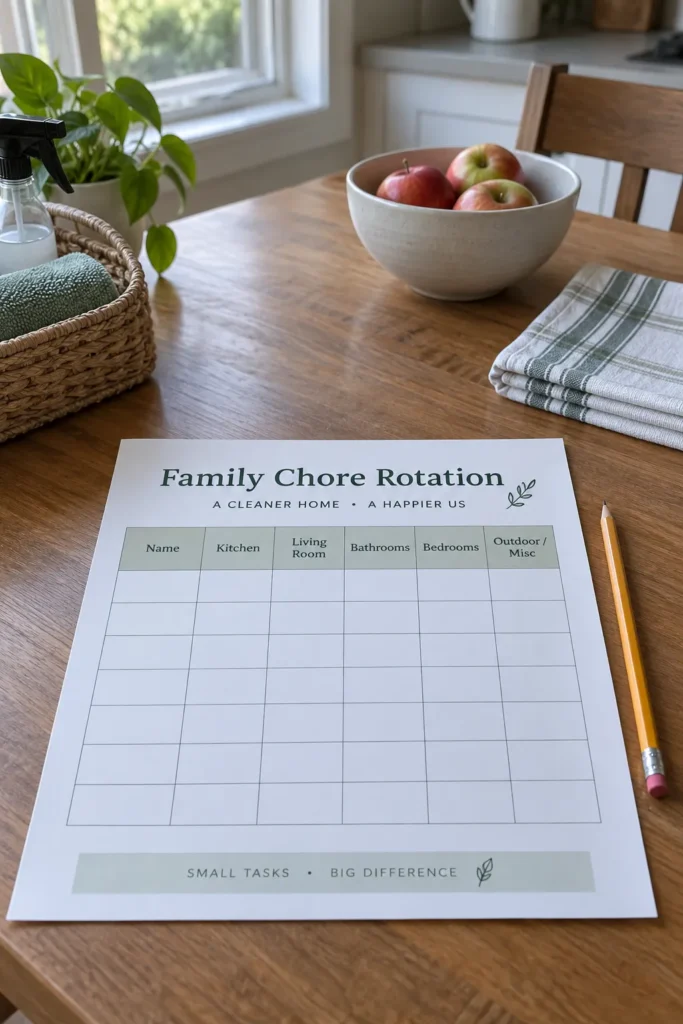
Housework feels harder to share when nobody can see who is doing what next. A simple four week grid makes the assignments visible before the dishes pile up or a weekend cleanup starts. This page gives six common household tasks a place for one responsible person each week, while leaving the names and timing to your family.
Print the weekly rotation chart
The chart has rows for dishes, laundry, trash, floors, bathroom, and a shared room tidy. Write one name or set of initials in each week cell. A parent can supervise, split a demanding task, or take an assignment that is not suitable for a younger child.
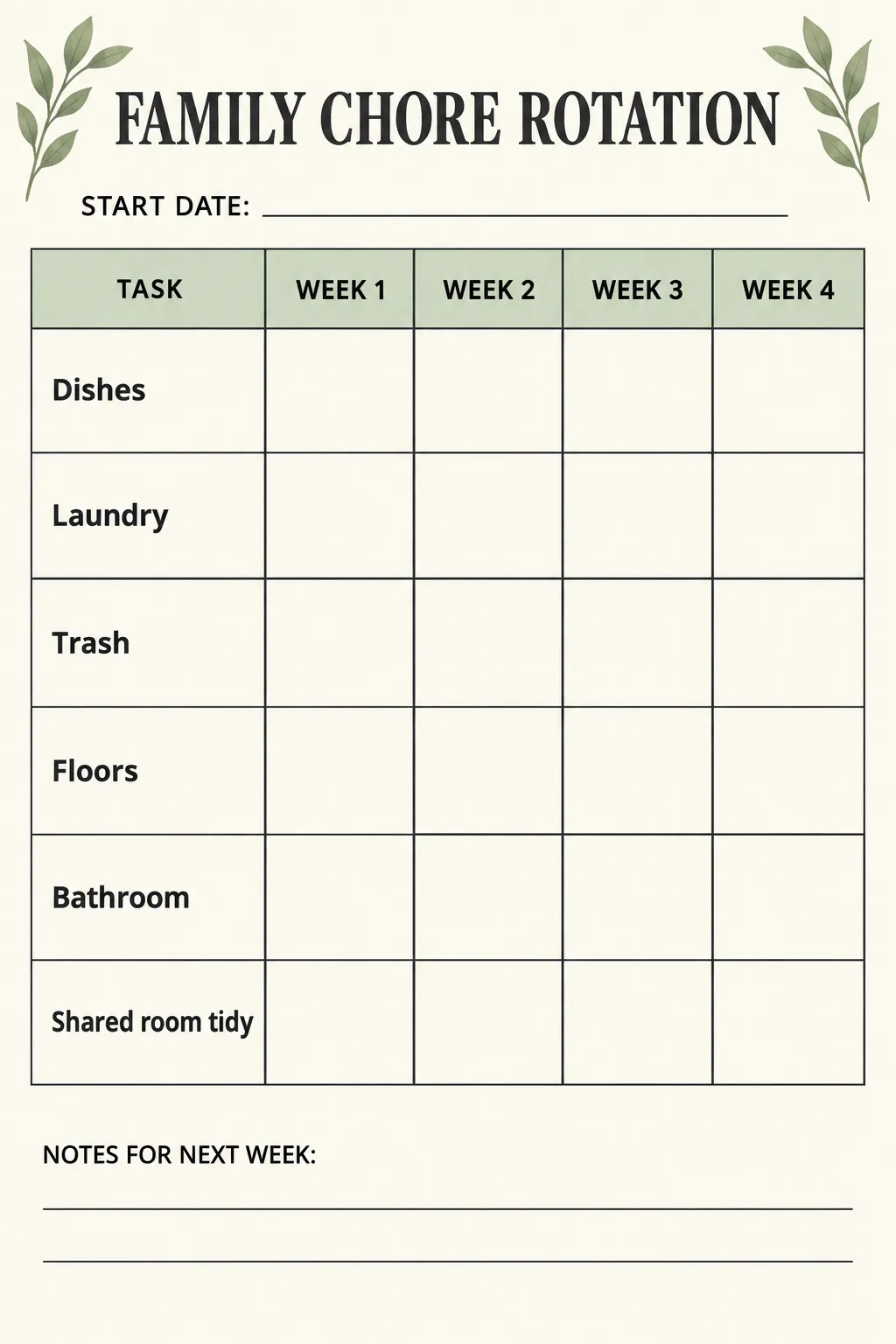
Download high-resolution printable
Set a rotation that fits your household
First agree on what each task actually means. Dishes might mean clearing the table and loading the dishwasher, while bathroom might mean wiping the sink and changing towels for one person but a deeper clean for an adult. A clear finish point prevents arguments about whether a task was really done.
Fill the first week with assignments that match each person’s age, schedule, and ability. For the next week, move people to a different suitable task instead of repeating the same burden automatically. If your household has fewer than six participants, one person may hold two light tasks; if it has more, pair people or divide a row by room.
Keep the plan fair without constant rewriting
A rotation works best when it accounts for effort, not just the number of boxes filled. Laundry for five people may take longer than taking out the trash, so balance that week with a lighter second assignment. Keep an adult responsible for hazardous cleaners, heavy lifting, and tasks that require close supervision.
Choose one short weekly check in to confirm the next set of names. If custody, work shifts, or school activities change who is home, adjust only that week’s column and explain the change. Treat the chart as a shared plan rather than a scorecard.
Save and reuse the page
Click the preview to open the full size chart, or use the download button to open the uploaded file in a new tab and save it there. Print at a size that leaves room for legible names in every cell. A fresh copy works for each new four week cycle, while a page in a clear sleeve can be filled with an erasable marker and revised as family routines change.