How Big Should Wall Decals Be? A Room-by-Room Size Guide
A wall decal can have the right color, typeface, and subject and still look wrong for one simple reason: its scale does not belong to the furniture and viewing distance around it. A 24-inch design may feel large on a product page, then disappear above an 84-inch sofa. The better question is not “What size is popular?” but “What must this decal relate to in my room?”
This wall decal size guide gives you a reliable starting point, then shows where to bend the rules. Measure first, make a full-size paper mockup, and judge it from the doorway or seat where you will actually see it. That cheap test resolves more uncertainty than staring at dimensions online.
The sizing rule that works in most rooms
When a decal sits above a sofa, bed, crib, desk, console, or dresser, size it to the furniture anchor rather than the entire wall. A useful target is 60–75% of the furniture width. Multiply the furniture width by 0.60 for the conservative end and 0.75 for the bolder end.
- 60-inch console: aim for a 36–45-inch-wide decal.
- 84-inch sofa: aim for roughly 50–63 inches wide.
- 54-inch full bed: aim for roughly 32–41 inches wide.
- 30-inch crib: a compact 18–23-inch composition is a sensible visual starting range, subject to safe placement.
For a grouped quote, name, or cluster of small wall stickers, measure the whole installed composition, including intentional gaps. Do not size each letter or motif in isolation. At the same time, leave breathing room at both sides so the design does not collide visually with lamps, curtains, shelving, or corners.
Above a sofa: go wider than your first instinct
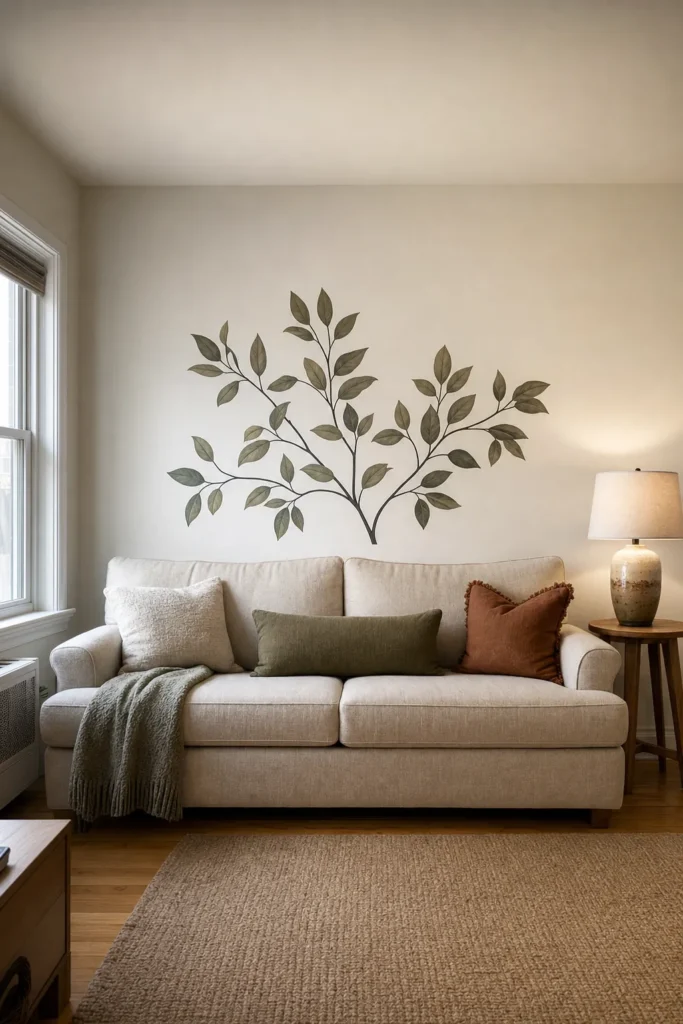
Large wall decals usually work better above a sofa because viewers see that wall from across the room. For an 84-inch sofa, a 24-inch decal is only 29% of the sofa width and will normally look stranded. A 50–63-inch design creates a visual relationship with the seating instead.
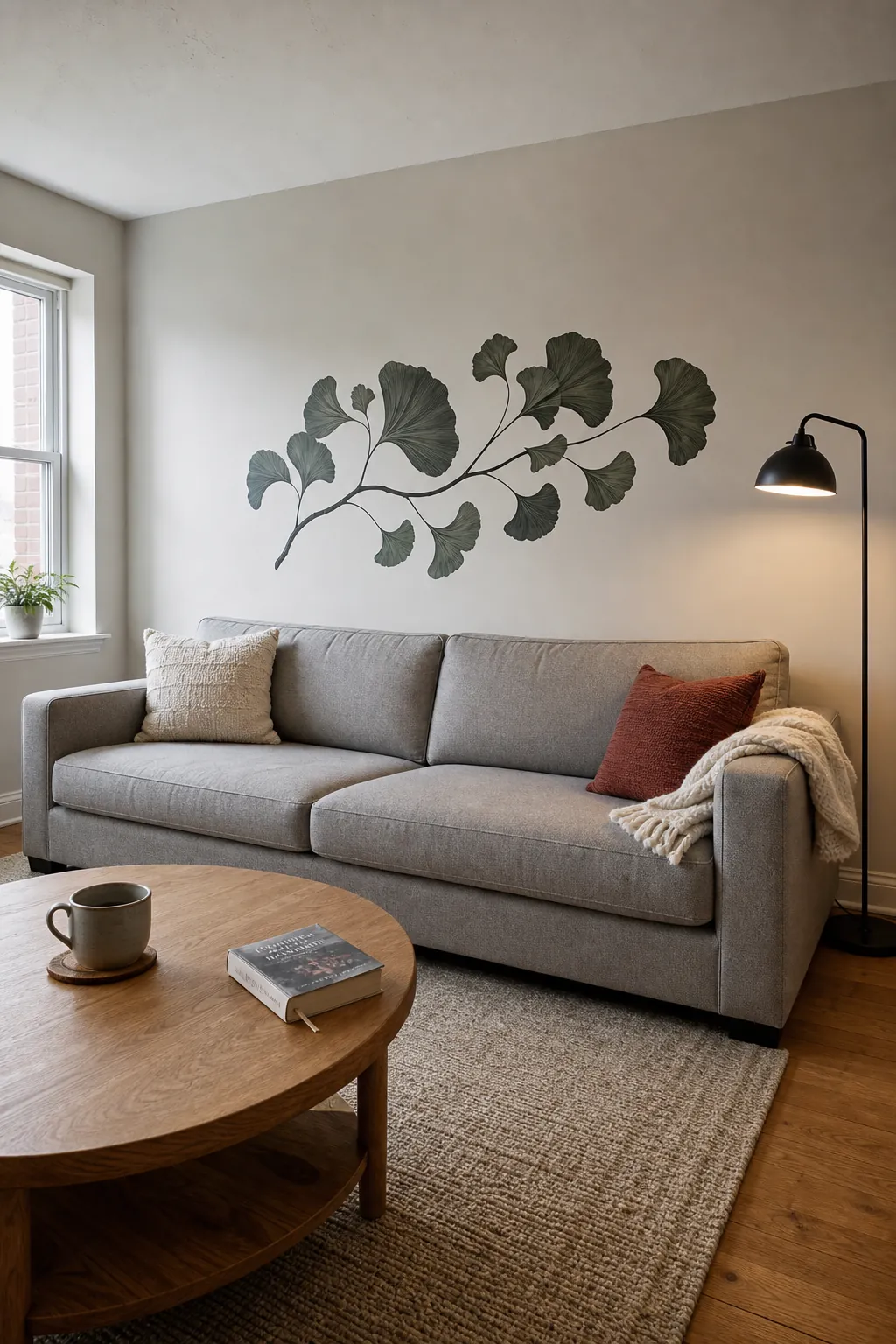
Place the lower edge about 6–10 inches above the sofa back as a starting point. The decal should feel connected to the sofa, not like it is floating toward the ceiling. Center it on the sofa—not automatically on the wall—unless the entire furniture arrangement is intentionally asymmetrical.
Above a bed: match the visual width, not the mattress label
Measure the visible headboard when there is one. It may be wider than the mattress and is the stronger visual anchor. A bedroom decal size around 60–70% of the headboard width often feels calm and balanced. For a queen bed with a 64-inch headboard, that is approximately 38–45 inches.
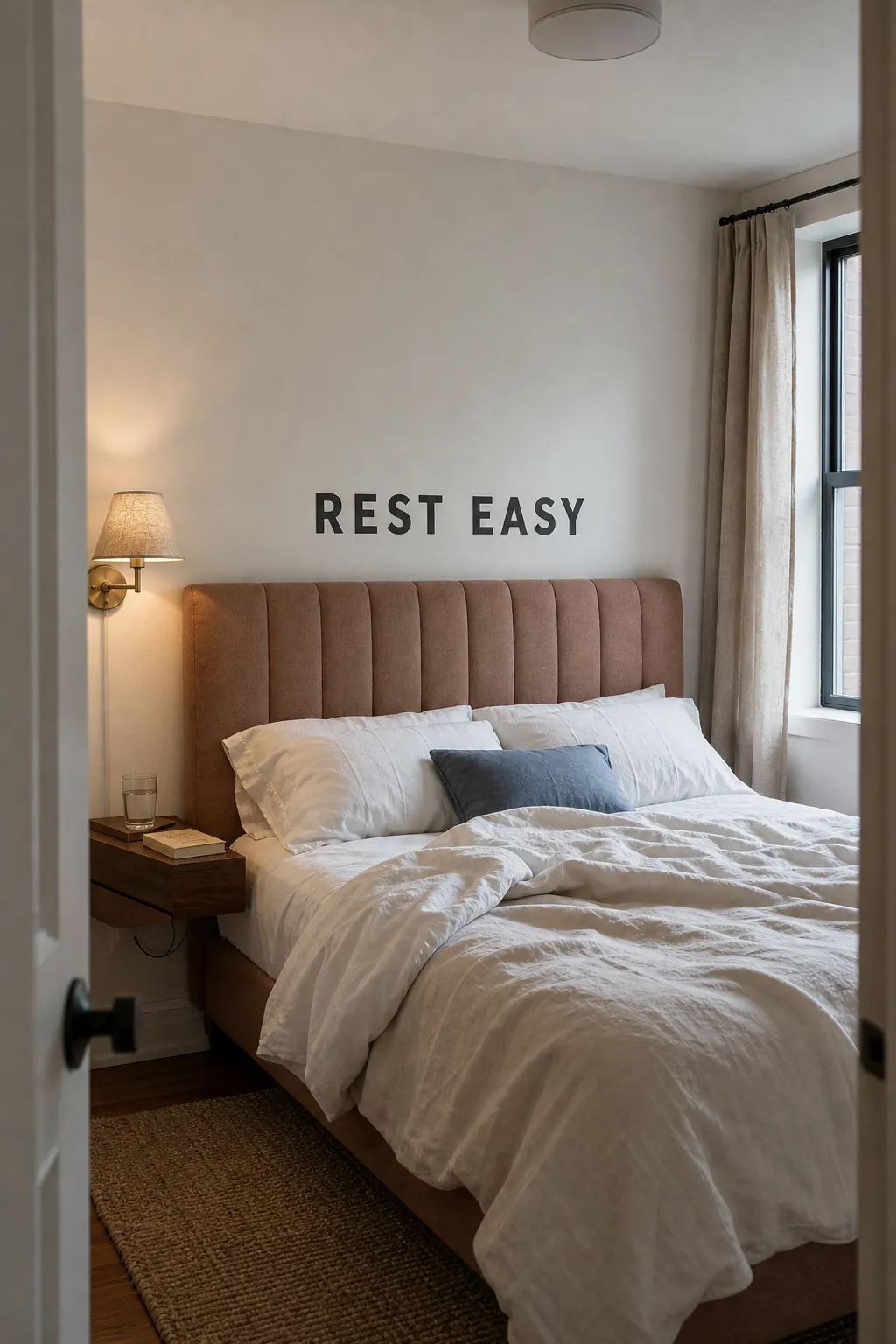
A long wall quote decal needs another check: readability. Print the proposed letter height on ordinary paper and tape it up. If the words blur together from the bedroom doorway, choose larger lettering or shorten the phrase rather than stretching delicate script across more width.
Nursery and above-crib decals: design around safety
For a nursery wall decal size, visual proportion comes after safe installation. Follow the decal maker’s surface and installation directions, keep edges fully adhered, and place the design where a child cannot reach, pick, or pull it as mobility changes. Avoid placing hard, heavy, or loosely attached decorative objects above a sleep space.
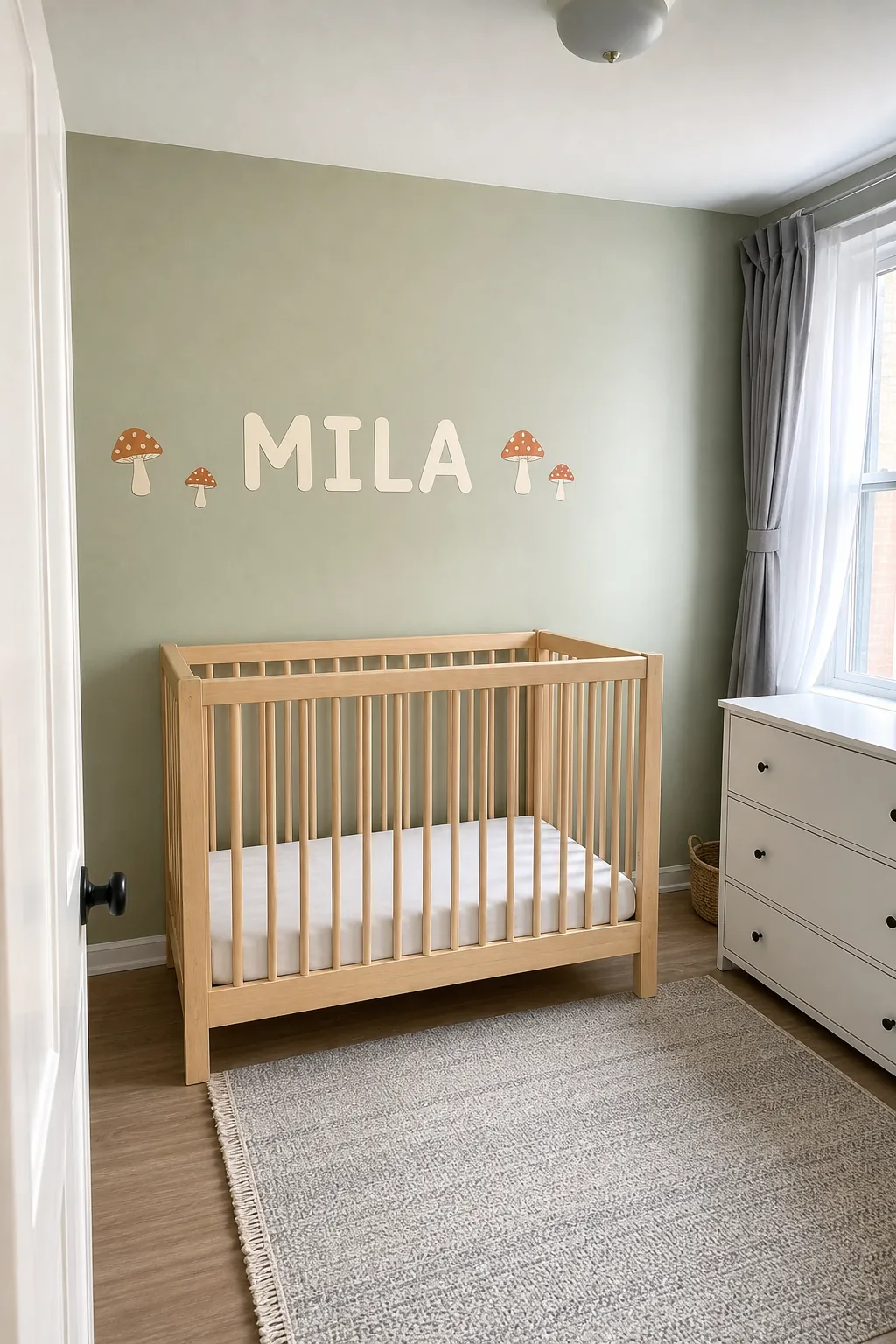
Use the crib or dresser as the visual anchor, but account for the mattress at its highest and lowest settings and for a standing toddler’s reach. A compact name with a few widely spaced motifs often scales more gracefully than a dense rectangle. Before ordering, mark both the design boundary and the no-reach zone on the wall.
Desks, consoles, and entryways need closer-view detail
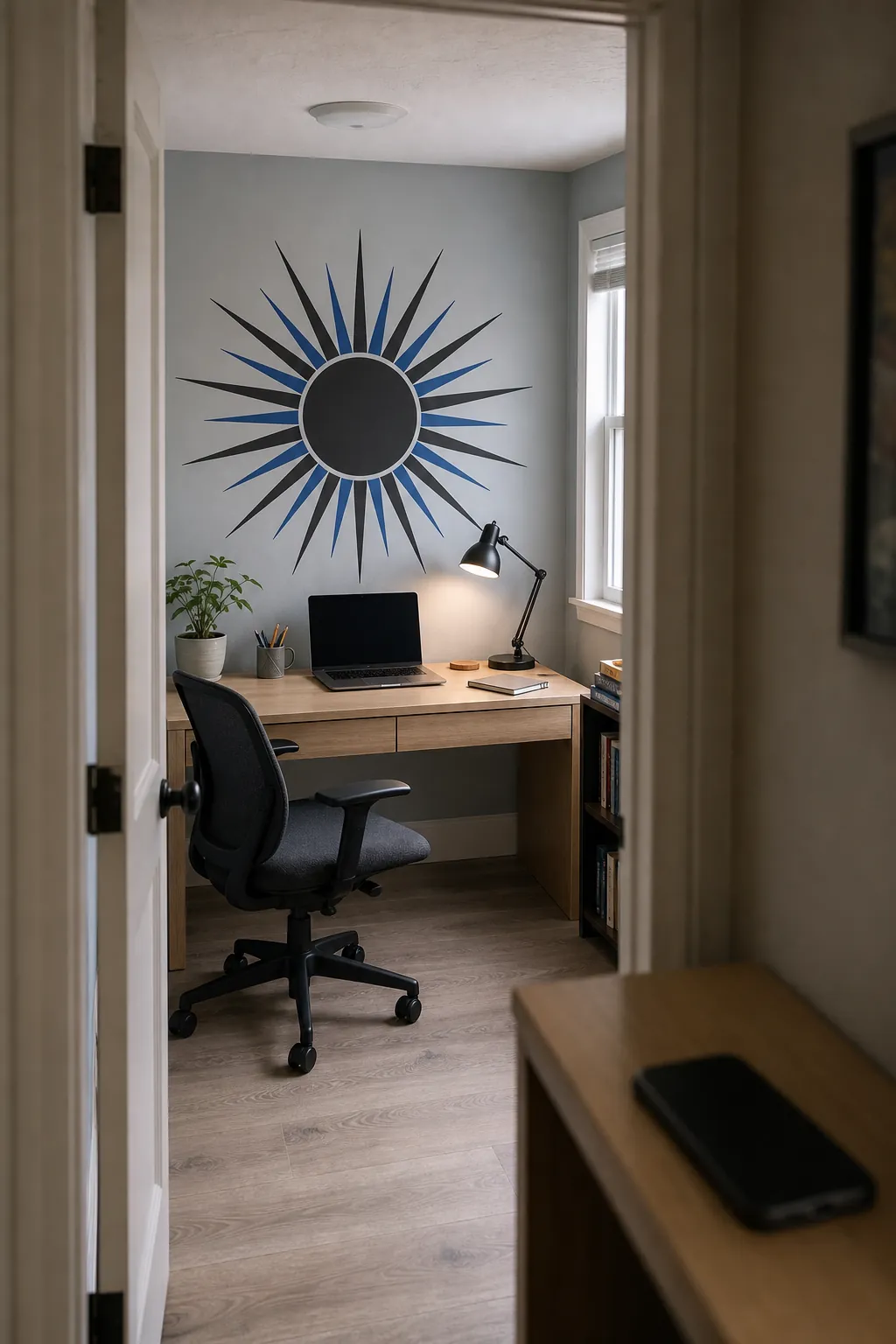
People approach an entry console or sit close to a desk, so these zones can support smaller wall stickers and finer detail. Start around 50–70% of the furniture width, then reduce the decal if table lamps, monitors, or tall accessories already occupy the wall plane. A 48-inch desk might suit a 24–34-inch composition.
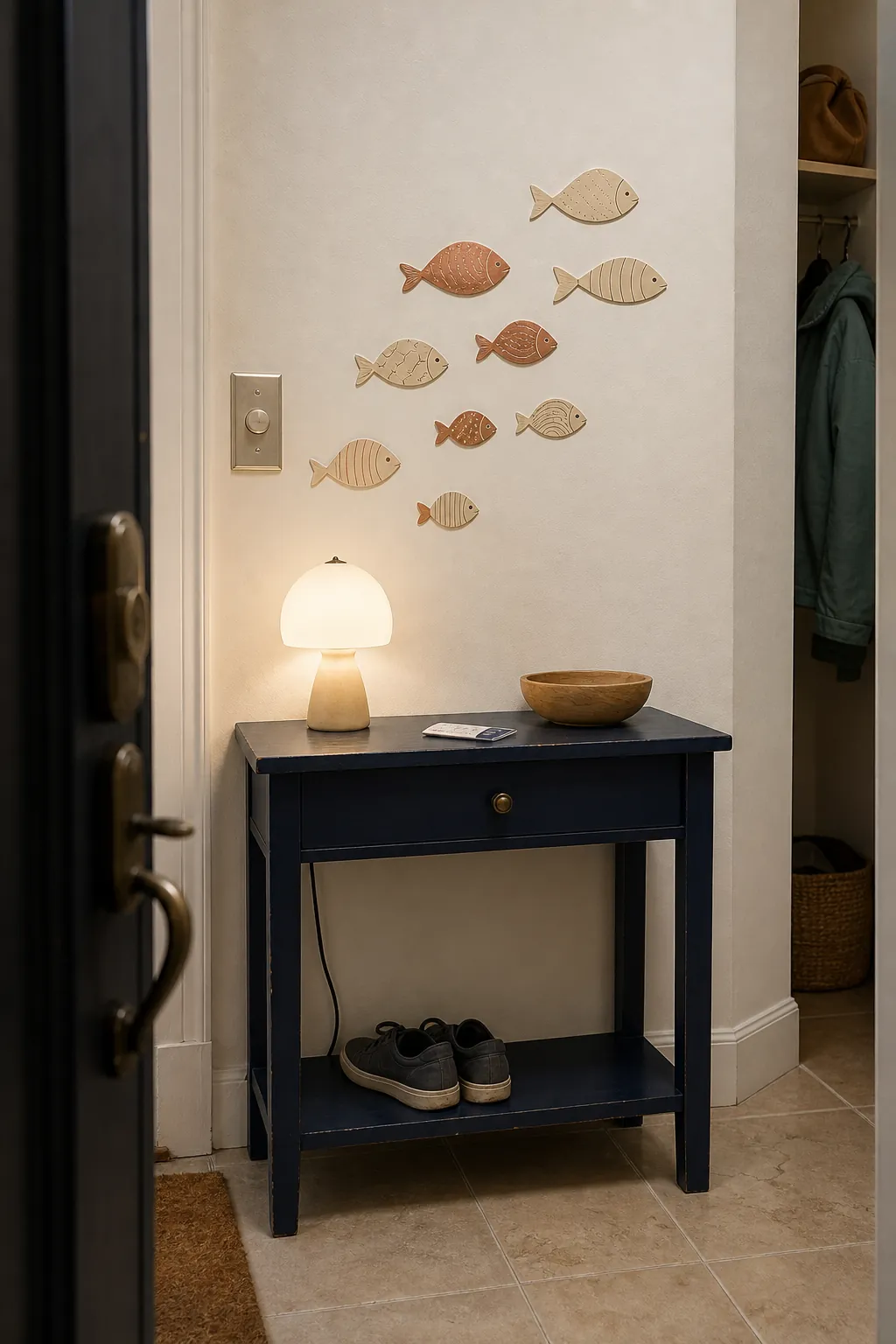
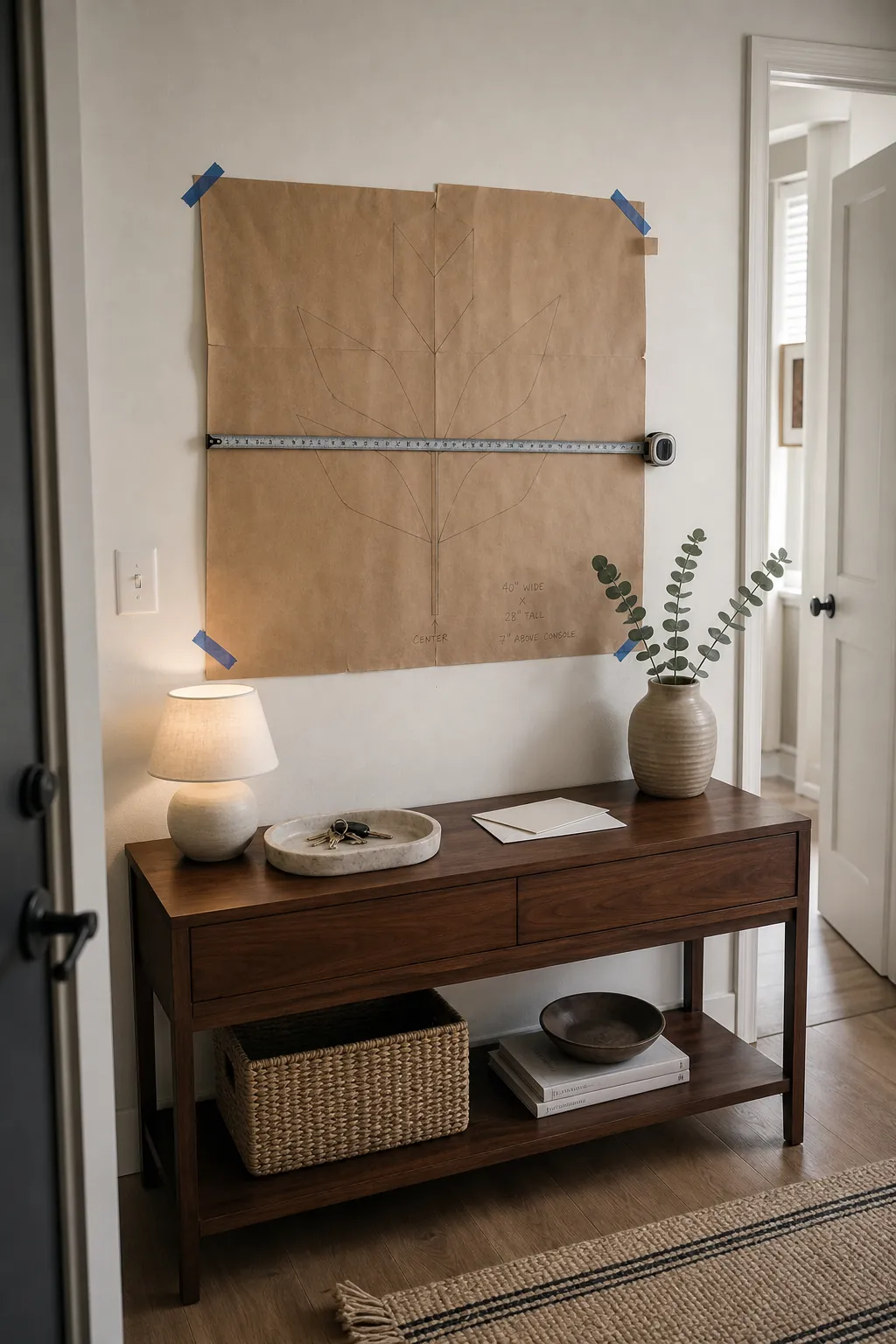
Use painter’s tape to outline the total footprint, including the space between separate elements. Open doors, pull out desk chairs, and switch on task lighting before approving the placement. Real rooms have movement and shadows that a clean product mockup cannot show.
Full walls and murals: measure the surface, then add tolerance
A mural size guide works differently because the wall—not furniture—is the boundary. Measure width and height at the left, center, and right because walls and ceilings are rarely perfectly square. Use the largest measurements and follow the seller’s required trim allowance. Record baseboards, crown molding, outlets, windows, sloped ceilings, and permanent obstructions.
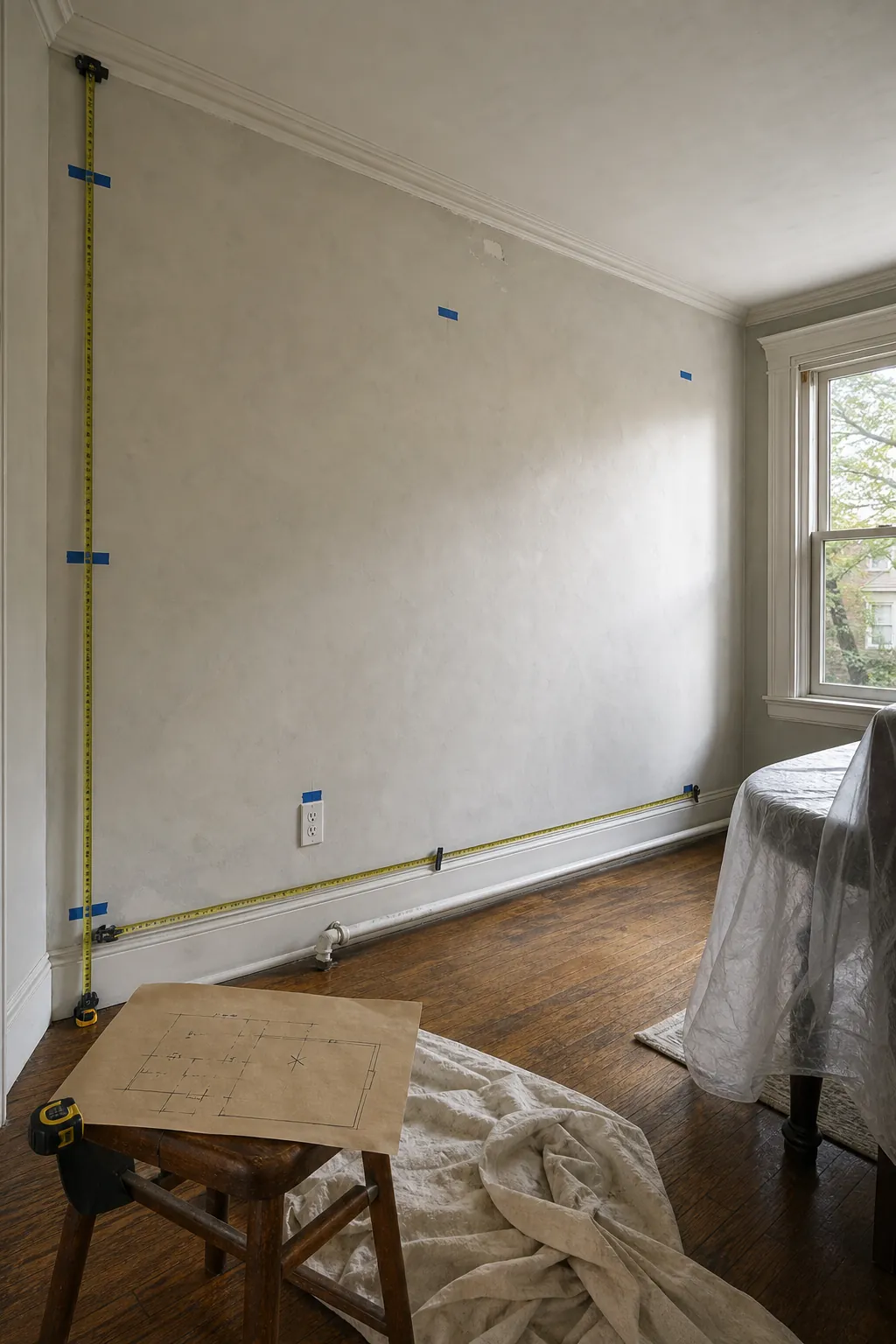
Check how cropping affects the subject. A mural with a face, doorway, or central botanical stem needs more careful positioning than an all-over pattern. Send the exact wall dimensions and obstruction locations when ordering custom artwork; do not assume the preview will crop intelligently.
How to make a full-size mockup before buying
- Measure the furniture anchor and calculate the 60% and 75% widths.
- Tape together kraft paper, newspaper, or printer paper to the proposed overall size.
- Mark the main letters or motif so you can judge visual weight, not only the outer rectangle.
- Tape the mockup to the wall with removable painter’s tape.
- View it from the doorway, main seat, and side approach in daylight and at night.
- Photograph the room straight-on; scale problems often become obvious on a small screen.
If the mockup looks timid, increase both width and letter or motif weight. If it crowds lamps or trim, shrink it or simplify the composition. If it looks correct only when viewed up close, it is probably too small for the room. The best decal size is the one that holds the wall from the room’s normal viewing point while keeping deliberate breathing space.
Quick room-by-room starting ranges
| Location | Starting width | Placement check |
|---|---|---|
| Above sofa | 60–75% of sofa width | Usually 6–10 inches above the back |
| Above bed | 60–70% of visible headboard | Keep connected to the headboard |
| Nursery | Scaled to crib or dresser | Prioritize secure, unreachable placement |
| Desk or console | 50–70% of furniture width | Account for lamps and screens |
| Small accent zone | Fit the defined nook | Judge from close viewing distance |
| Wall mural | Full wall plus seller tolerance | Measure multiple points and plan crop |
These figures are starting points, not a permit to ignore the room. A thermostat, tall lamp, asymmetrical sectional, narrow walkway, or dramatic ceiling can justify a different answer. Make the paper mockup, live with it for a day, and adjust. That is how a number on a listing becomes a decal that actually belongs in your home.