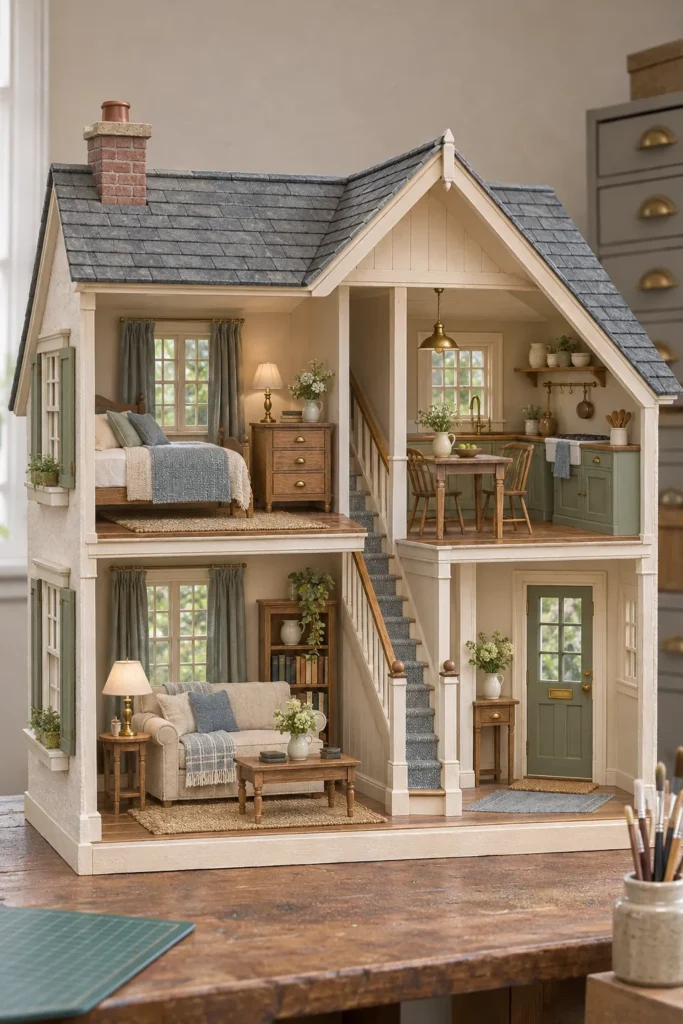
A dollhouse can become expensive long before it looks complete. The usual problem is not a lack of attractive pieces. It is buying lovely items that disagree about scale, period, color, or mood, then trying to force them into the same tiny home.
A simple design decision made early gives every later purchase a job. You do not need a rigid historical replica or a professional mood board. You need a clear visual promise, a few practical limits, and enough freedom for the house to feel collected rather than copied from a catalog.
Start With the Story the House Tells
Theme is the story behind the rooms, while style is the visual language used to tell it. A coastal retirement cottage is a theme. Pale painted wood, linen, simple pottery, and weathered brass are style choices that support it. Write one sentence that names the home, its imagined owner, and the feeling you want visitors to notice first.
That sentence becomes a useful filter. A delicate crystal chandelier may be beautiful, but it does not belong in every farmhouse kitchen. When you can explain why an object belongs in the story, the miniature home starts to look intentional instead of merely full.
Confirm Scale Before You Choose Furniture
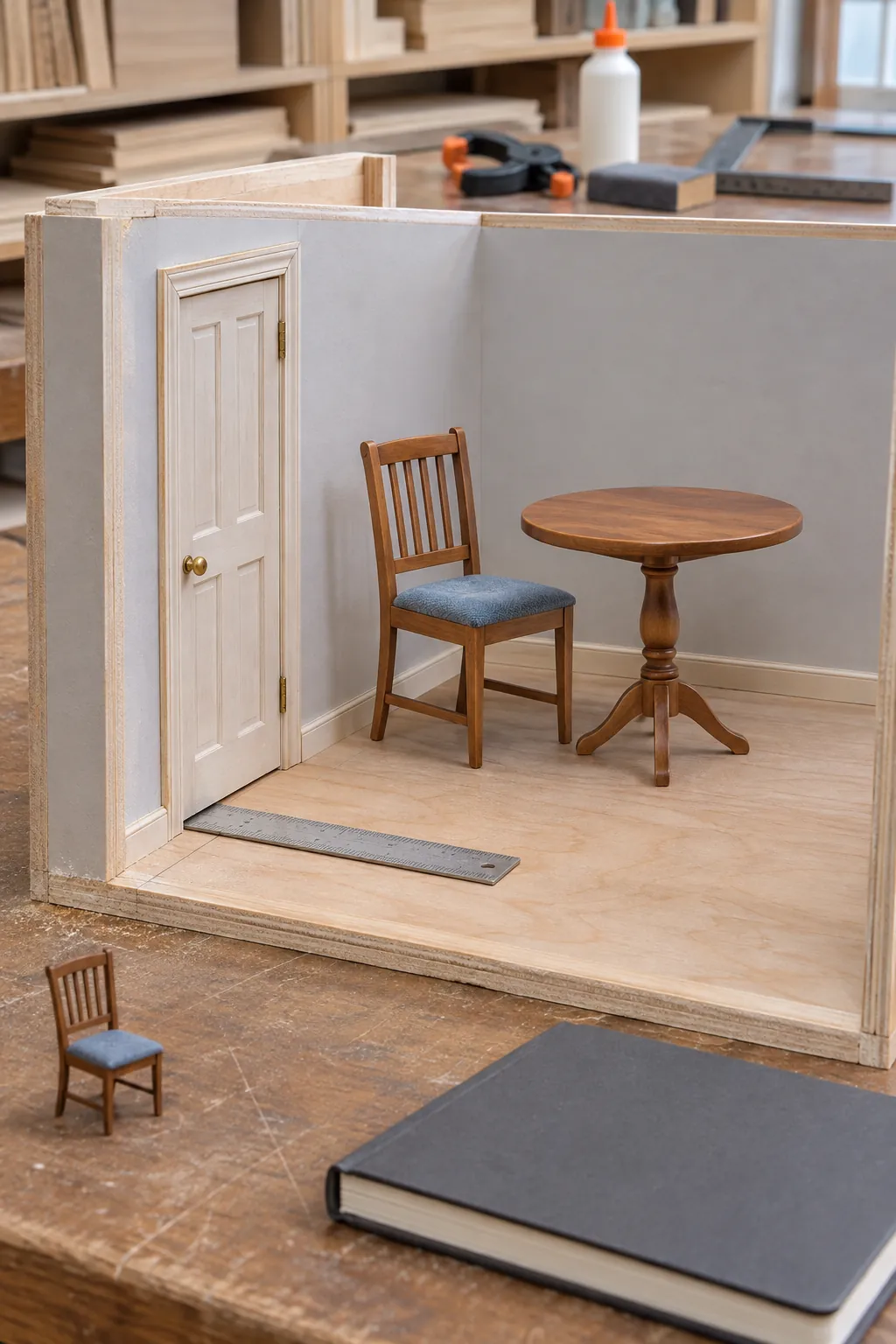
Scale is not a decorating preference. It is the physical rule that determines whether a chair, door, lamp, and person appear to share the same world. One twelfth scale is common for traditional adult dollhouses, but smaller houses may use one twenty fourth or another ratio. Measure the ceiling height and a door opening, then compare those dimensions with the maker’s stated scale.
Do this before shopping, especially when listings use vague words such as miniature or tiny. A slightly oversized vase can read as artistic. A sofa from the wrong scale can make the entire room feel uncertain. Keep the chosen ratio in your phone notes so it is available at shops and craft fairs.
Build a Small Whole House Palette
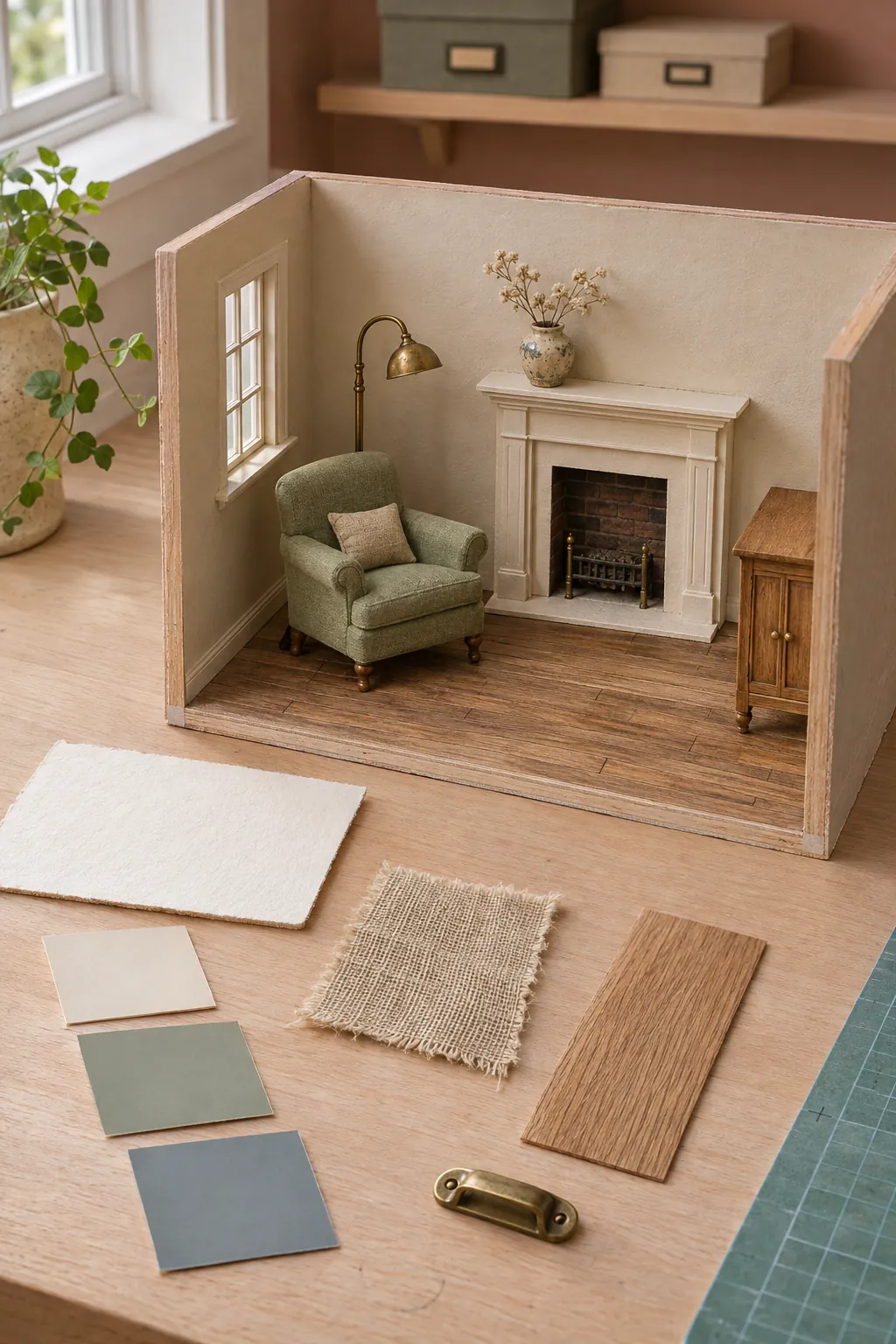
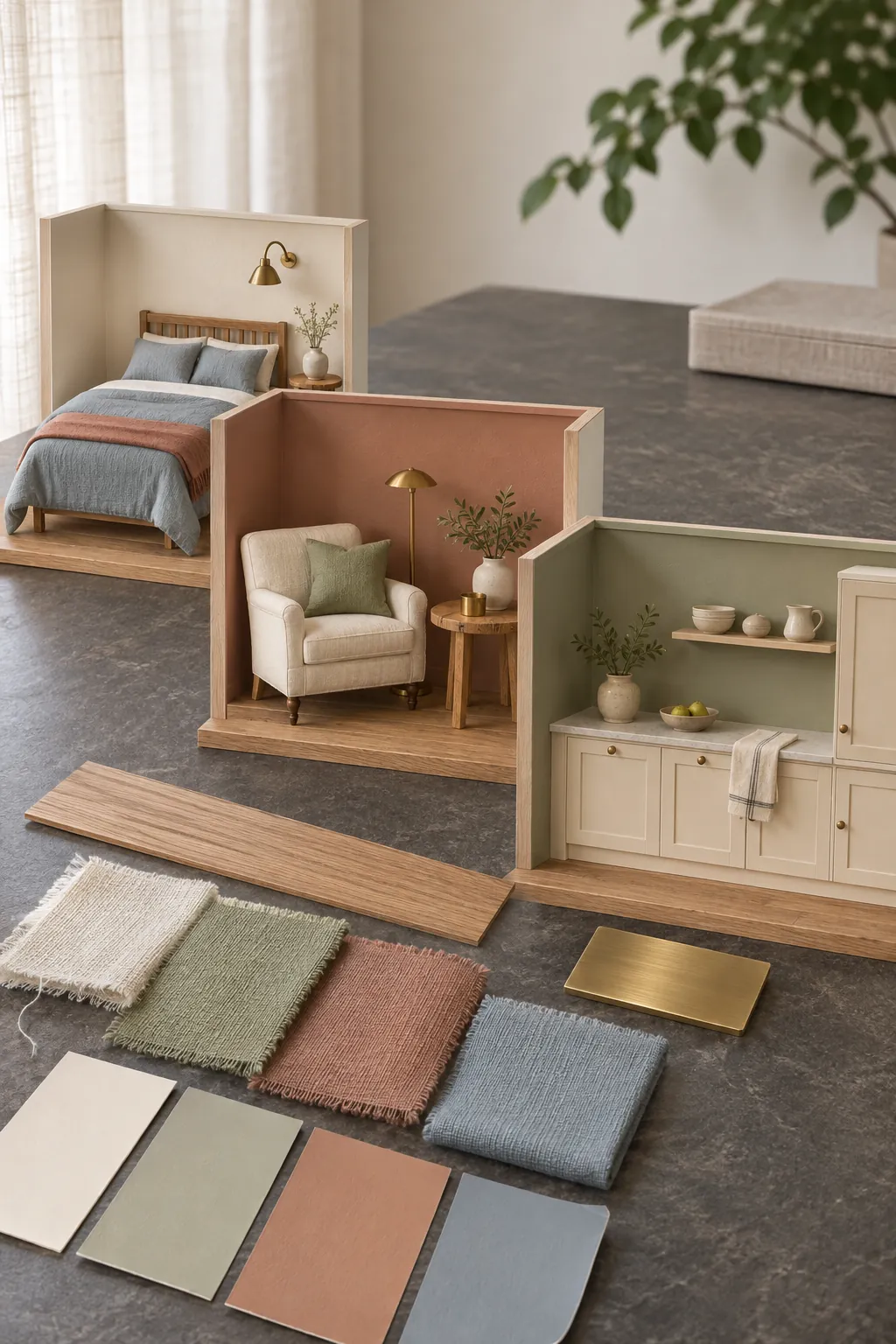
Choose one main neutral, two supporting colors, and one restrained accent. Repeat them in different proportions rather than making every room identical. The kitchen might use the neutral on cabinets, while the bedroom uses it on walls and brings a supporting color forward in bedding.
Material repetition matters as much as paint. If warm oak appears in the staircase, echo it in a table or a picture frame. If aged brass defines the entry, use the same metal family on nearby lamps. These quiet links create cohesive tiny room decor even when each room has its own purpose.
Let the Architecture Set Useful Boundaries
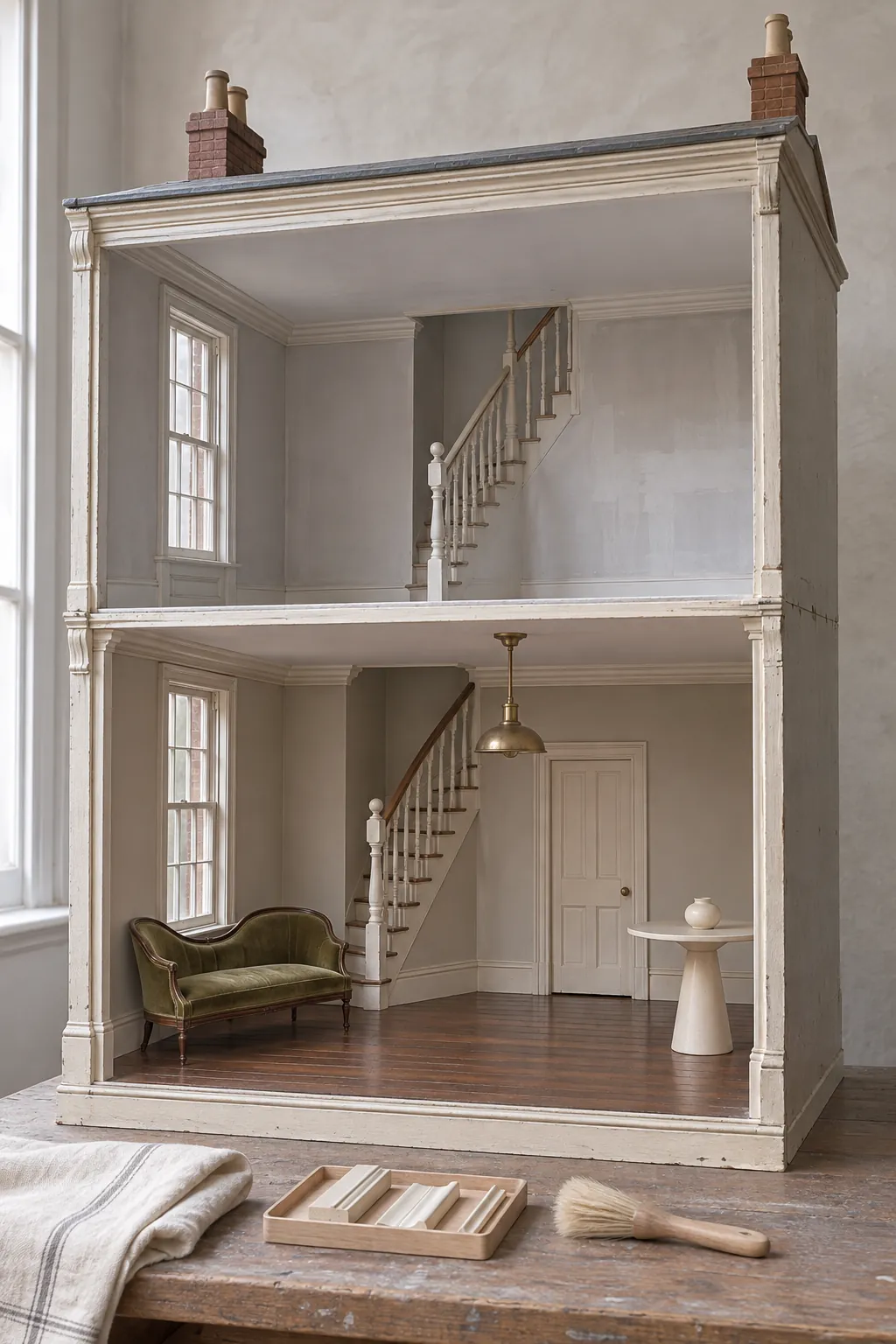
Look at the shell before deciding on a miniature home theme. Window shapes, ceiling height, trim, stair details, and exterior proportions already suggest certain directions. A tall narrow house with ornate brackets can carry Victorian detail easily. A plain open room box welcomes modern, industrial, or Scandinavian ideas without extensive rebuilding.
You can challenge the architecture, but make the contrast deliberate. A modern renovation inside an old townhouse works when some original trim remains and the new materials repeat from room to room. Randomly removing one period feature while keeping every other one often looks unfinished rather than inventive.
Mix Styles With a Clear Connecting Rule
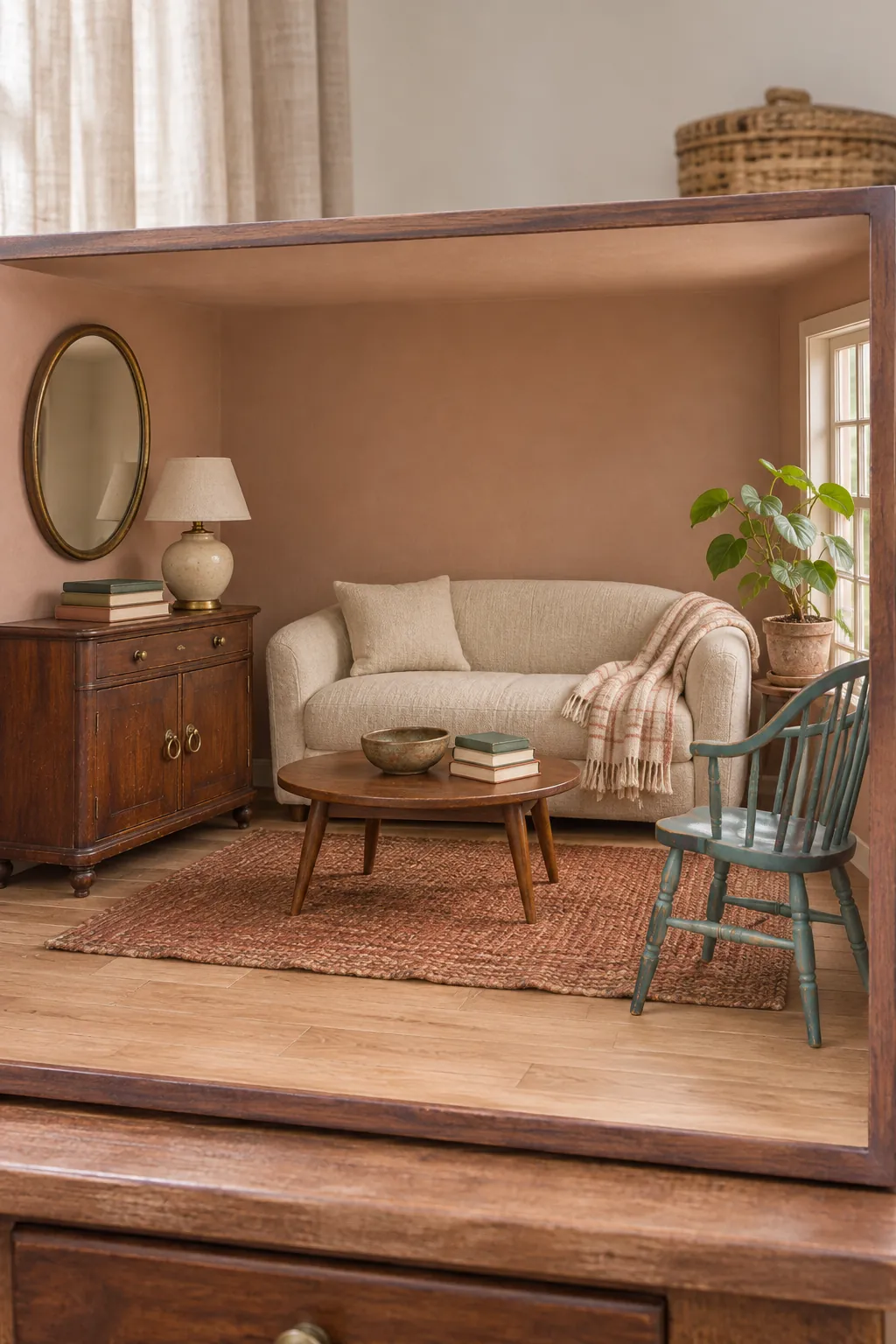
A coherent house does not require every object to come from one decade. Real homes contain inherited furniture, repairs, and personal taste. Give mixed pieces one visible connection, such as a shared wood tone, repeated curved shapes, a limited color family, or consistent hardware.
Use contrast as a focal point rather than a constant event. One modern chair in a traditional library feels considered when its color repeats in a rug or book spine. Five unrelated statement pieces compete for attention and weaken the room’s story. If an item has no visual or narrative link, save it for a future project.
Test the Plan in One Finished Corner
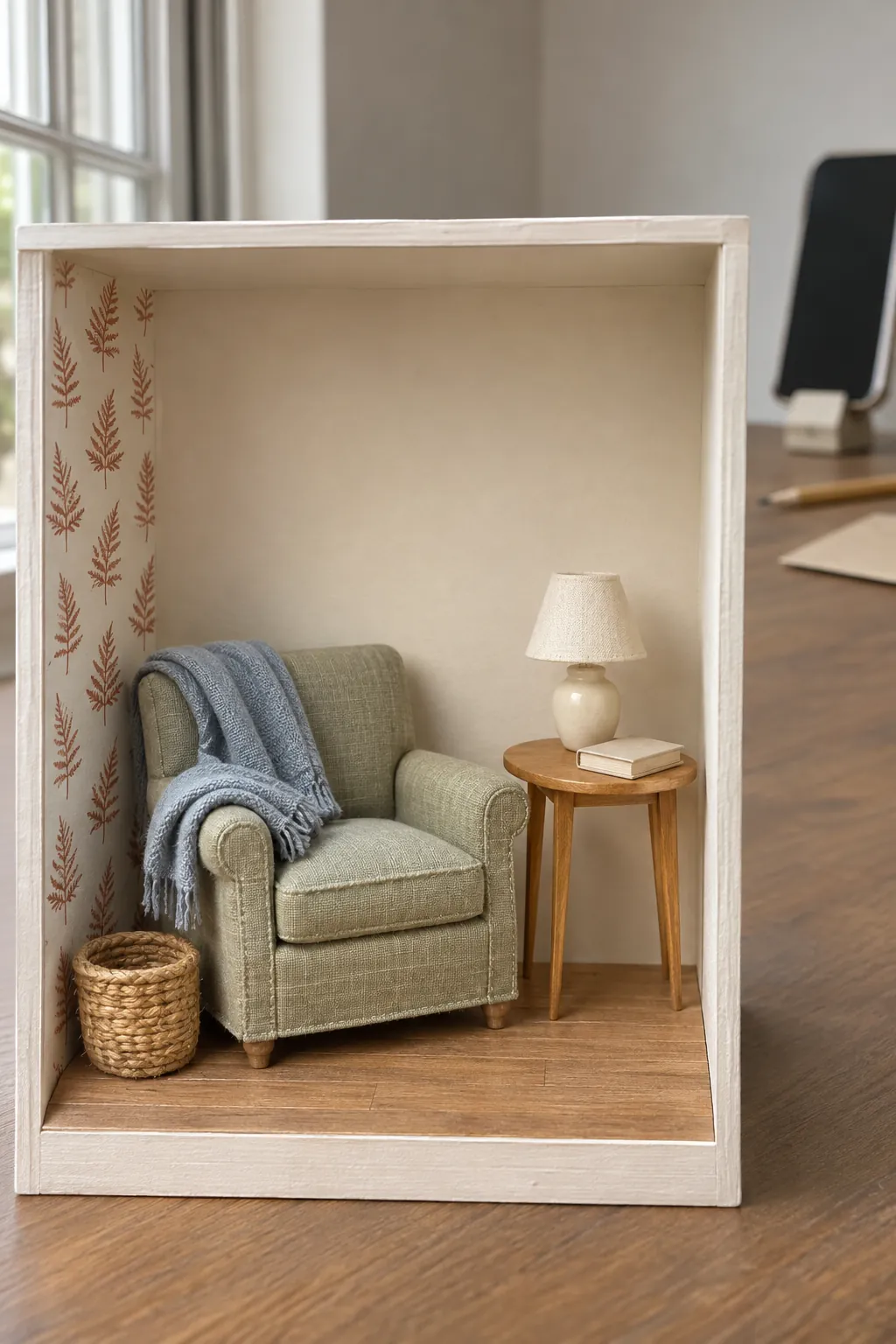
Before decorating the entire house, finish one small corner with a wall treatment, floor, main furniture piece, light, textile, and two accessories. Photograph it in ordinary daylight. The camera makes scale problems, crowded surfaces, and clashing colors easier to see.
Ask whether the corner communicates your story without an explanation. Check that the largest object has breathing room and that the smallest details reward a closer look instead of creating visual noise. Adjust the palette or material rule now, then carry the successful choices into the remaining rooms.
This test also protects your budget. You learn which handmade finishes are worth repeating and which purchased pieces do not earn their space. A clear miniature house style grows through a series of connected decisions, not through buying everything at once.