How to Choose Paneling for a TV Wall
A panel can look perfect in a sample photo and still leave your television too high, your sockets hidden or your room visually crowded. Decide where the screen and equipment belong before choosing the decorative surface. The paneling should fit the way you watch television, including the seat you actually use every evening.
Start with the screen and seating
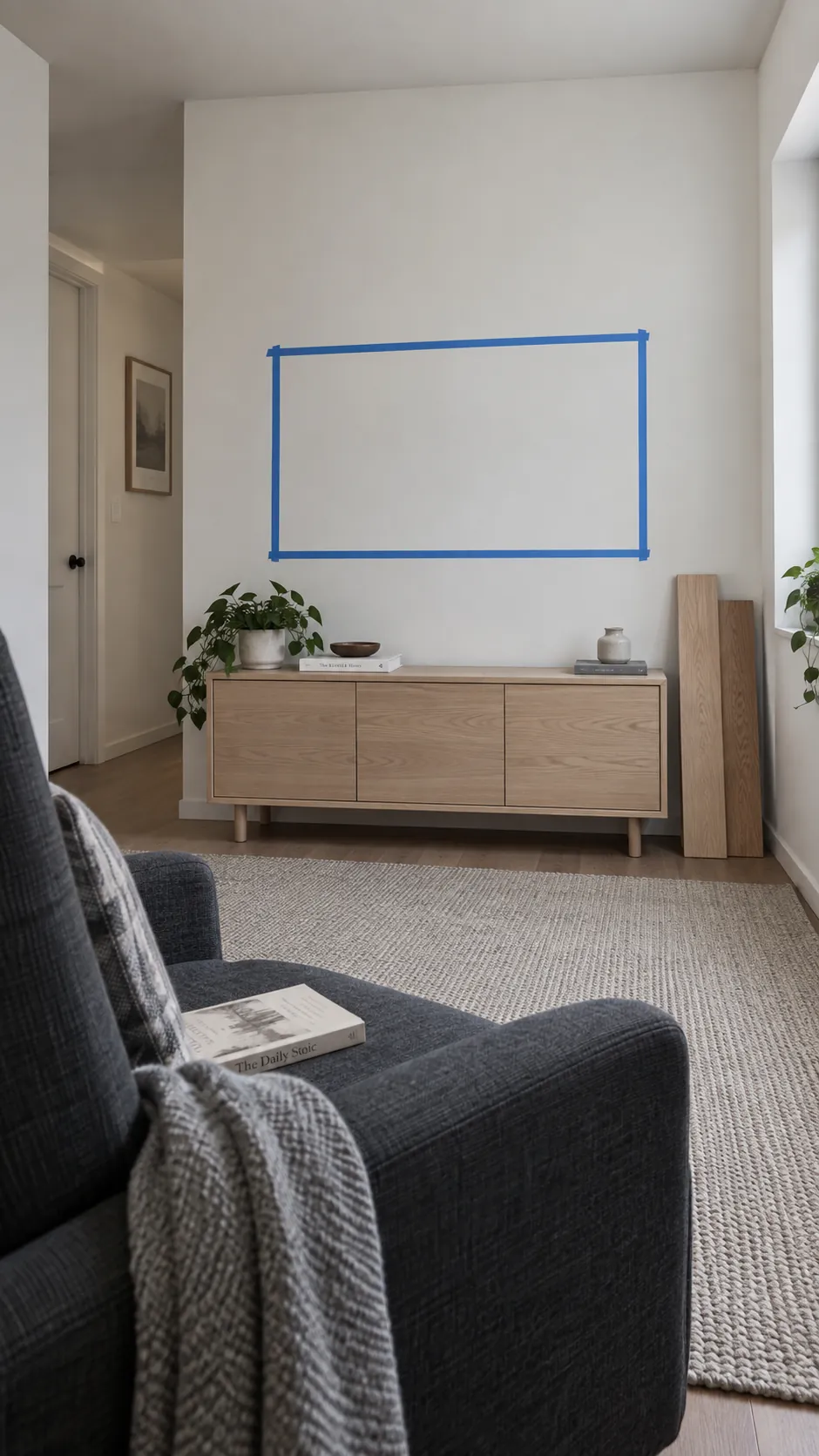
Start with your usual seat and mark the proposed screen outline with painters tape. Sit down, relax your shoulders and check whether you can look at the center comfortably without lifting your chin. There is no single mounting height that suits every sofa, screen size and room.
Next, mark the cabinet, soundbar and panel boundary separately. A living room TV wall needs room for the equipment you use, not just the black rectangle you see in inspiration photos. Leave the ventilation and service clearances required by each device, and check that cabinet doors can open without meeting a chair or walkway.
Choose the material behind the finish
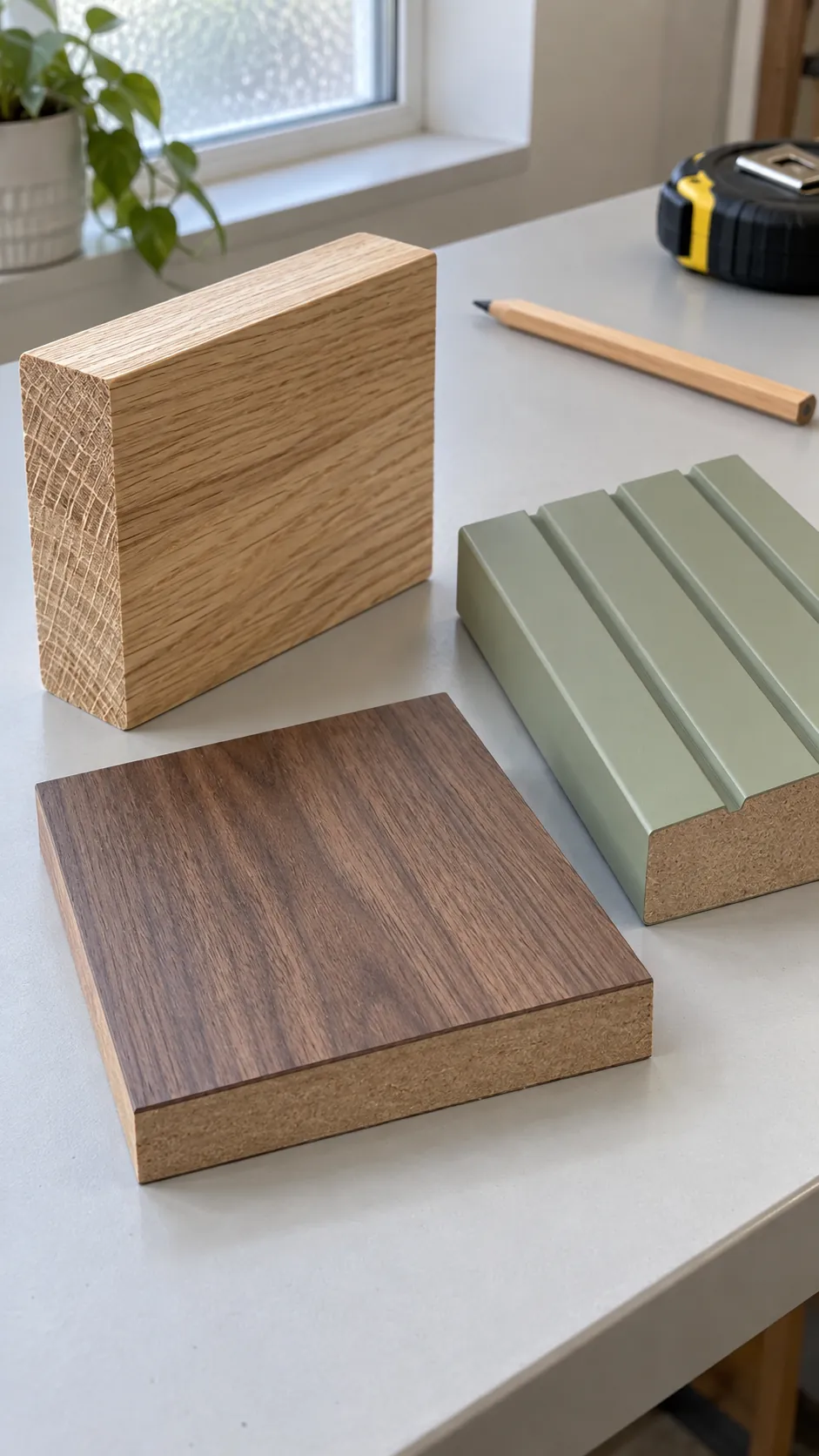
Choose solid wood when natural variation and the possibility of refinishing matter, but account for movement and follow the supplier’s installation instructions. A wood panel TV wall made with veneer can give you real wood grain over a more uniform core. Look at the cut edge of a sample: the visible face does not tell you what is underneath.
Painted MDF suits a smooth color finish and crisp shaped profiles in a dry interior. Its exposed edges need appropriate finishing, and ordinary MDF is a poor choice where recurring dampness is unresolved. PVC and composite products vary widely, so check the actual product specification for heat limits, indoor suitability and cleaning instructions rather than assuming every lightweight panel behaves alike.
Ask what the quotation includes. End trims, adhesive, battens, substrate repairs, finishing, electrical work and installation can change the total more than a small difference in the panel price. Compare complete coverage and finishing costs for the same measured area.
Match the texture to your viewing distance
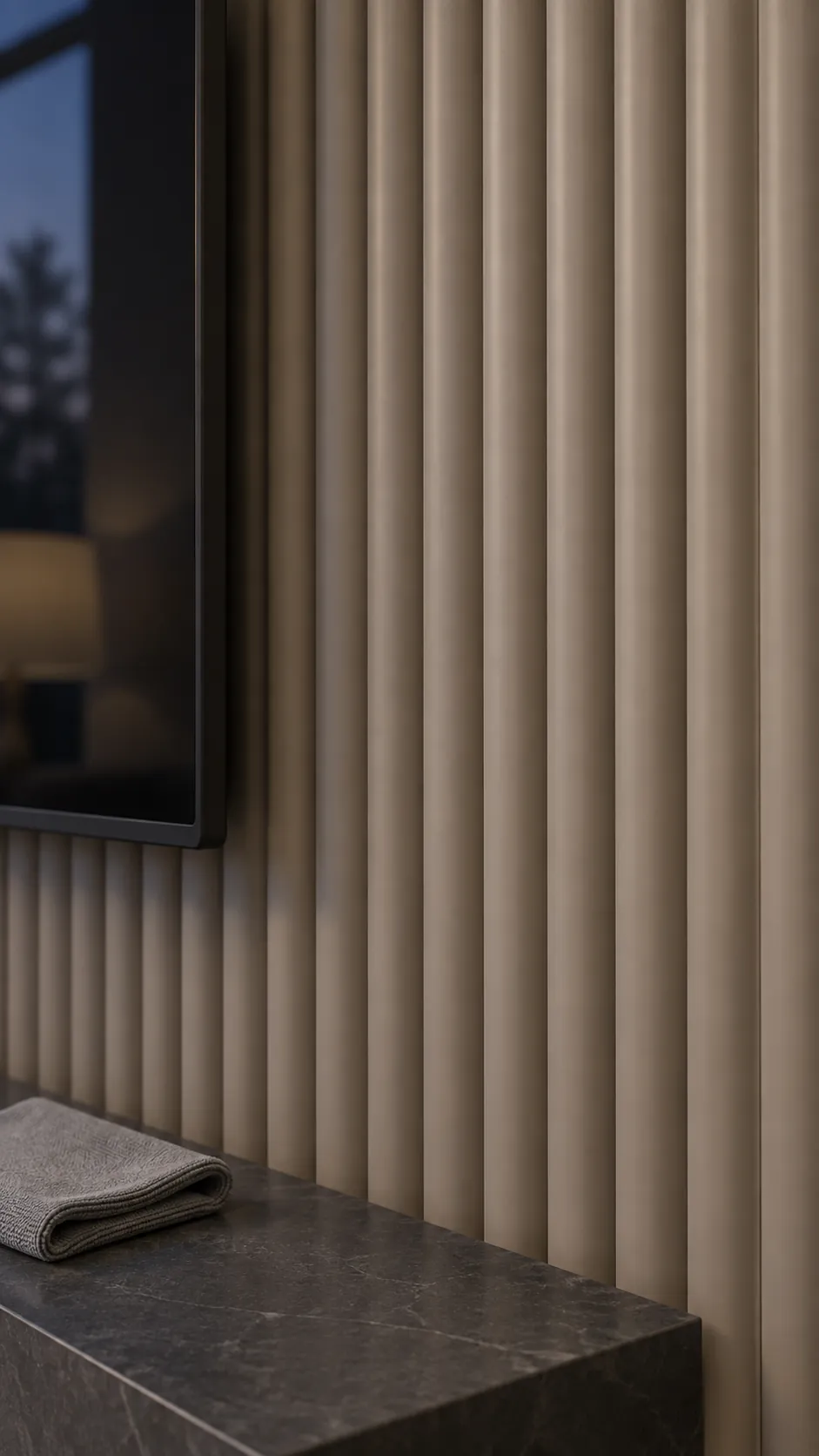
A fluted panel TV wall gives a softer ribbed surface, while spaced slats create stronger alternating lines and shadows. View a sample from the sofa, because texture that looks subtle in your hand can become busy across a large area. If the room already has patterned curtains or a strongly veined floor, a broad flat panel with quiet seams may be easier to live with.
Do not buy a slat wall behind TV equipment on an acoustic promise alone. Sound absorption depends on the tested product and installation, including backing and any required air gap. Decorative wood strips are not a substitute for a verified acoustic assembly. Deep grooves also add cleaning work, so compare the profile with the brush attachment you actually own.
Plan the mount and cable access before installation
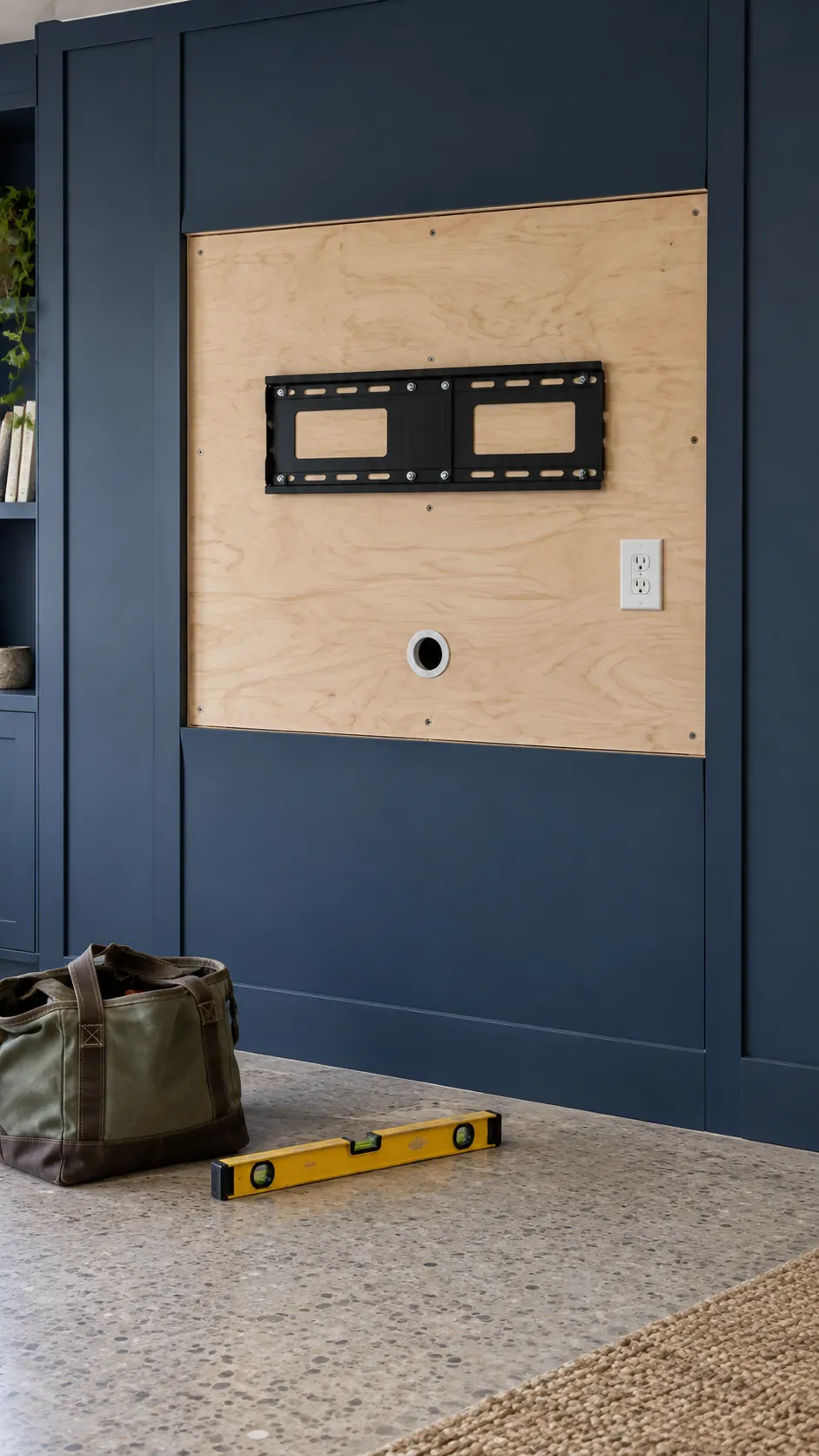
Treat decorative paneling as a finish unless a qualified installer has verified otherwise. The television mount needs an appropriate connection to the wall structure or designed backing, with fixings selected for the wall, mount and television. Thin panels, felt backing and decorative adhesive do not establish a safe mounting system.
Panel thickness changes the distance between the original wall and the mounting plate. Raised ribs may also leave the plate without a flat bearing surface. Resolve that detail with the mount instructions and installer before ordering, especially for an extending arm that increases the load away from the wall.
Plan access to sockets, data cables and connection boxes while the wall is open. Keep electrical work compliant with local rules and use a qualified electrician where required; do not hide an ordinary television power cord or extension lead inside the wall. Leave a practical route for replacing an HDMI cable and a way to reach connections after the screen is installed.
Give the paneling a deliberate stopping point
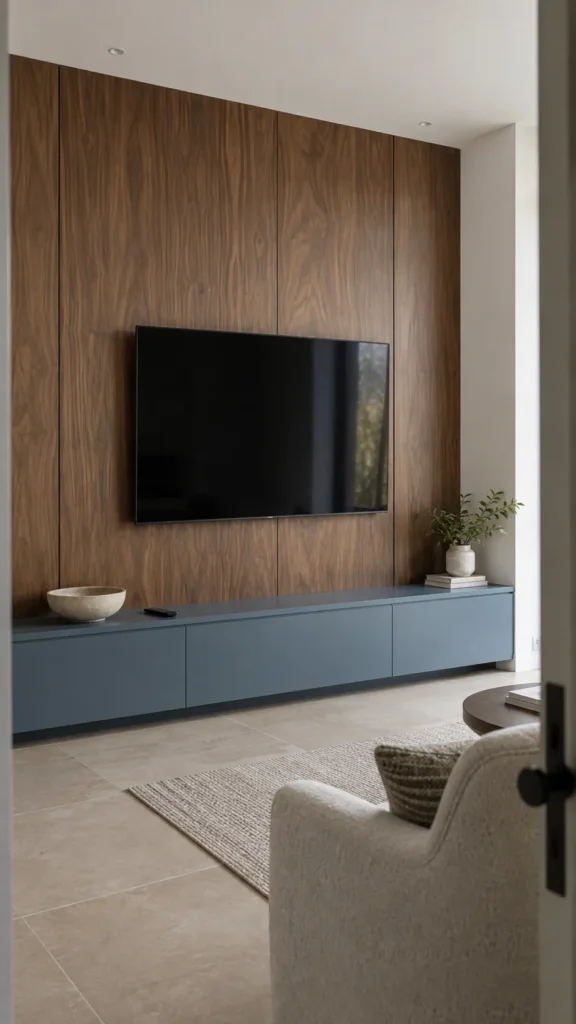
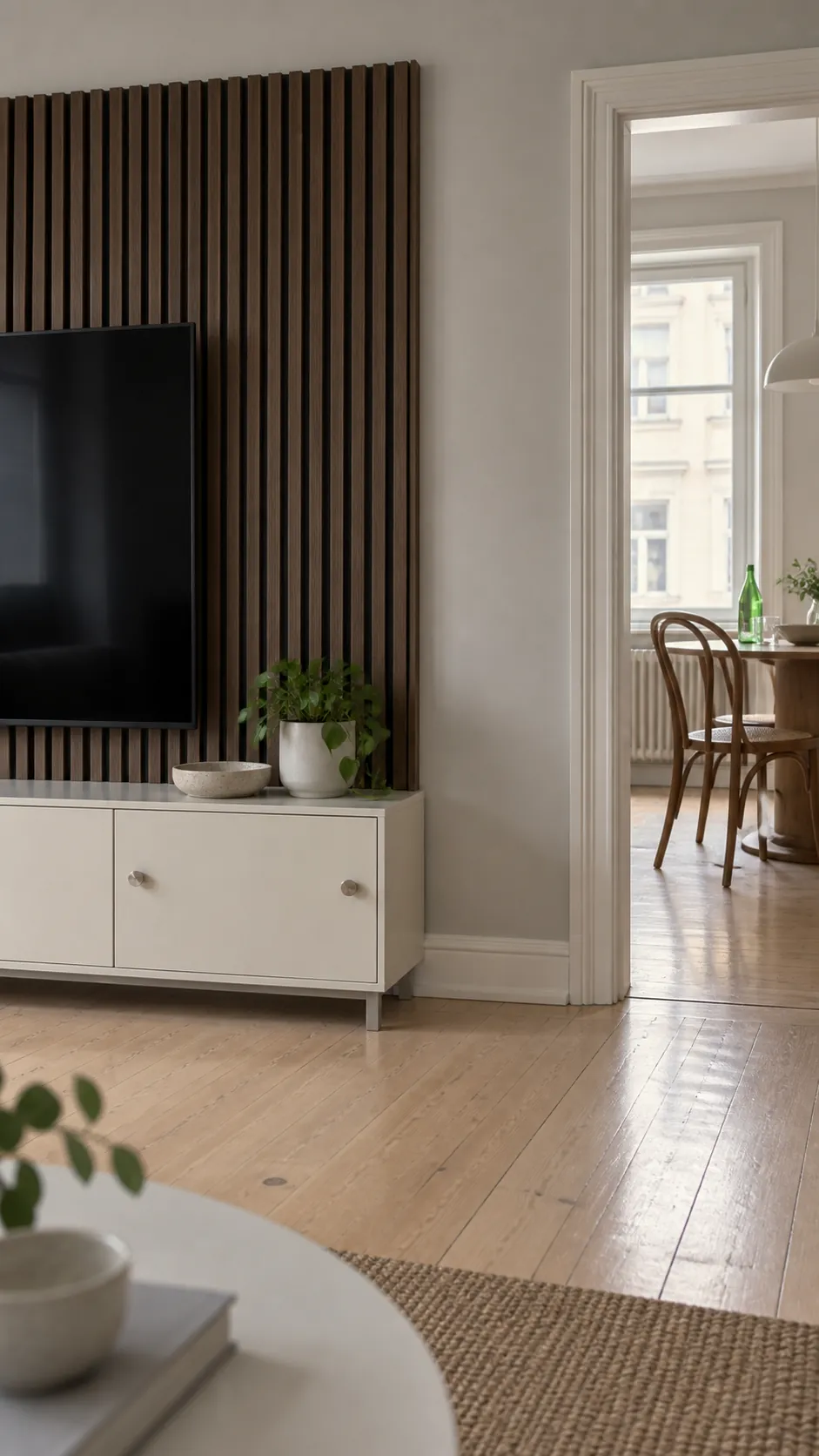
Choose a boundary that relates to something real: a cabinet width, an alcove, a corner or an architectural opening. Full wall coverage can work, but it should earn its place in the room rather than being the default. A smaller panel field often gives the screen enough presence while preserving a quieter adjoining wall.
Draw the joints before buying. Check the width of the last piece, the treatment at the ceiling and skirting, and how the pattern meets outlets. Include matching end trims in the order if the product needs them. An exposed backing edge can make an otherwise careful installation look unfinished.
For wall mounted TV ideas in a narrow room, look from the doorway as well as the sofa. The side view reveals projecting battens, awkward end cuts and furniture that intrudes into the route through the room. It is much easier to adjust a taped boundary than a glued panel.
Test the sample where it will live
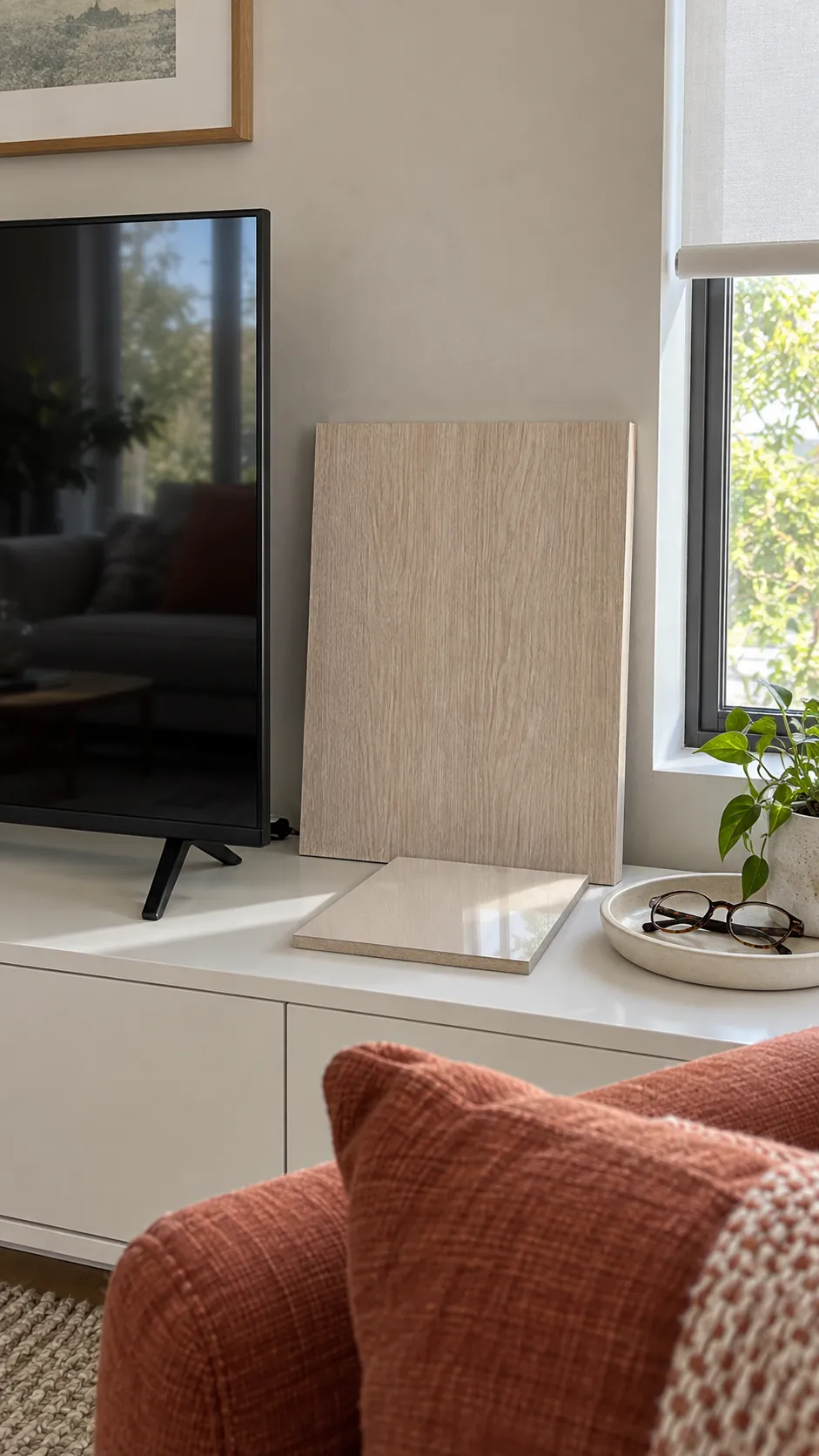
Place the largest practical sample upright beside the television for a full day. Check morning light, afternoon reflections and the lamps you use at night. A textured TV feature wall can look calm in daylight and cast strong stripes under a nearby lamp; a glossy finish can reflect a window that never troubled the old painted wall.
Try the manufacturer’s recommended cleaning method on the sample and inspect the grooves afterward. Compare the color against your flooring and sofa, then ask whether you still like it when the screen is off. Before ordering, you should be able to explain the material, the mounting solution, the cable route and the finished edge. If one is unresolved, keep the sample and settle that detail first.