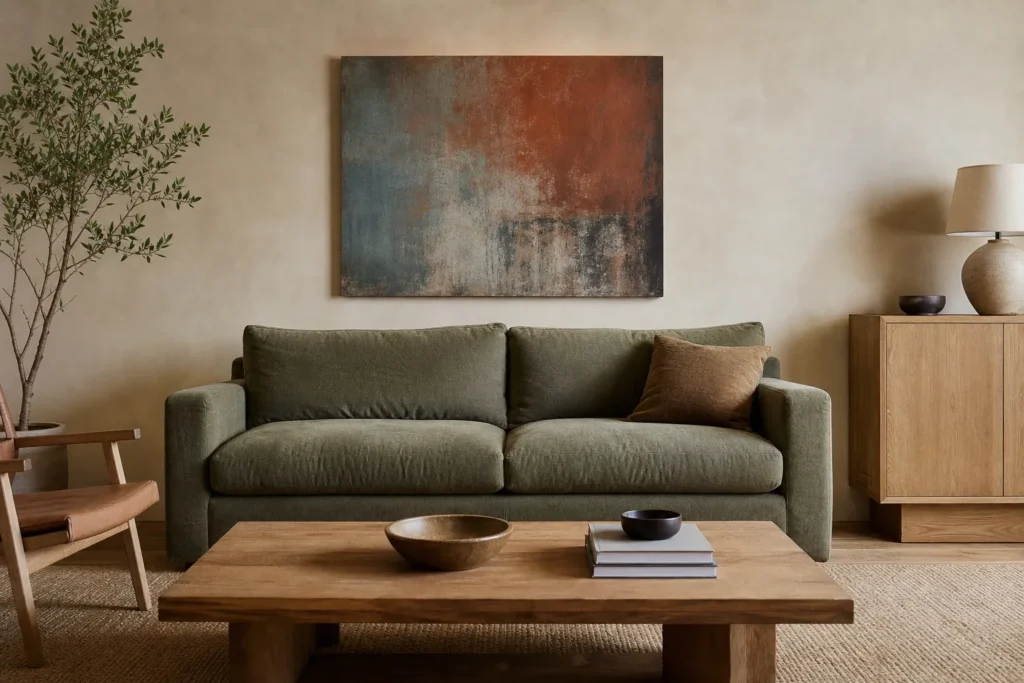
How to Choose Wall Decor: Size, Color & Placement Guide
When wall decor looks wrong, people usually blame color or hanging height. More often, the real problem is scale. A beautiful print can feel stranded above a wide sofa, while a correctly sized arrangement in an unexpected color can still make the room feel grounded.
Use this order: define the wall’s job, choose the total decorated width, set the placement relative to furniture, connect the color palette, and only then refine style. That sequence prevents expensive guesswork.
1. Decide what the wall needs to do
Not every wall needs a focal point. A living-room wall may need to anchor a sofa; an entry may need one strong welcome gesture; a bedroom may need calm visual weight; a hallway may need rhythm. Name the job before shopping.
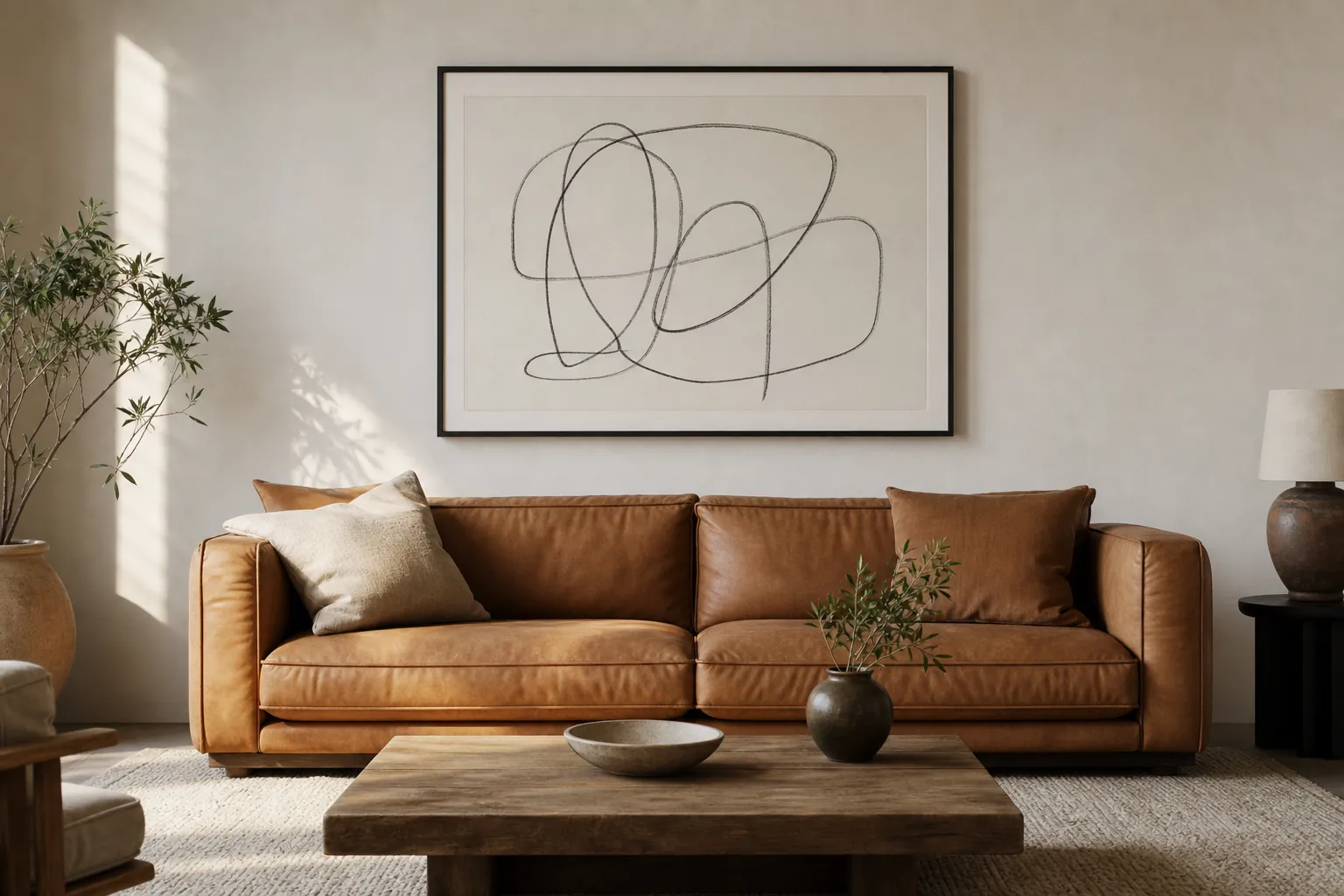
Also choose the boundary. Are you decorating the full architectural wall, the zone above furniture, or a narrow section between openings? Center decor on the relationship that matters. Above a sofa, center on the sofa—not automatically on the entire wall.
2. Get the size right before the style
A useful starting point for wall decor above furniture is about two-thirds of the furniture width. Treat a group of frames as one outer rectangle. This is a guide, not a law, but it quickly reveals why a small piece feels lonely.
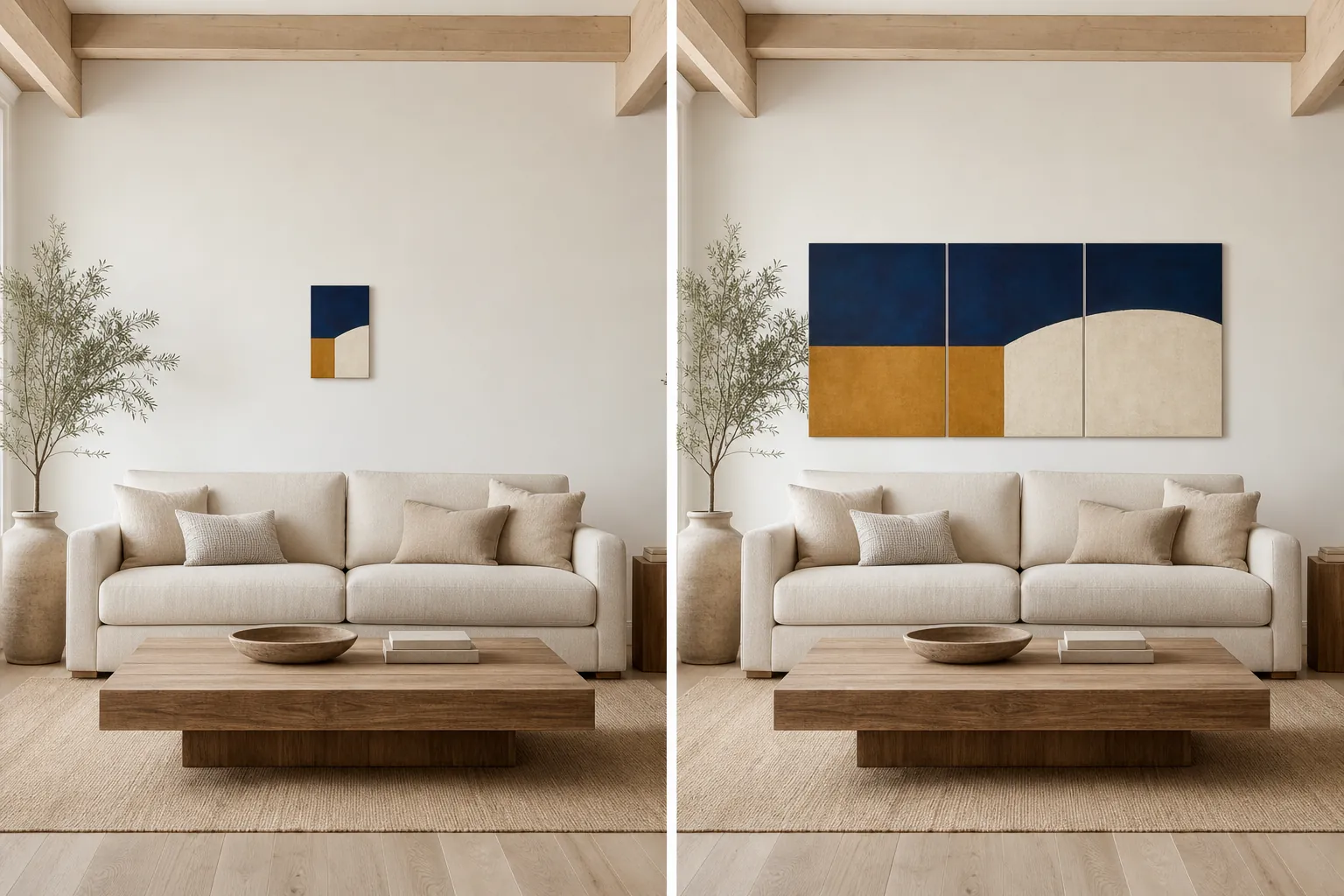
Measure the sofa, bed, console, or dining banquette. Multiply its width by roughly 0.60 to 0.75 to create a practical target range for the whole arrangement. For a 90-inch sofa, that suggests a decorated span near 54–68 inches. A triptych, gallery wall, mirror, mural, or large decal composition can all fill that span.
On a wall without furniture, judge the usable wall plane rather than the room’s total width. Doors, windows, sconces, and corners create natural edges. In a tall room, add vertical presence with a portrait piece, stacked pair, or taller decal composition rather than pushing one horizontal piece toward the ceiling.
3. Place it in relation to people and furniture
For standalone art, a center point around average eye level—often roughly 57–60 inches from the floor—is a sensible starting point. But wall decor above furniture belongs to the furniture grouping. Keep the lower edge visually connected, often about 6–10 inches above a sofa or headboard depending on proportions and safety.
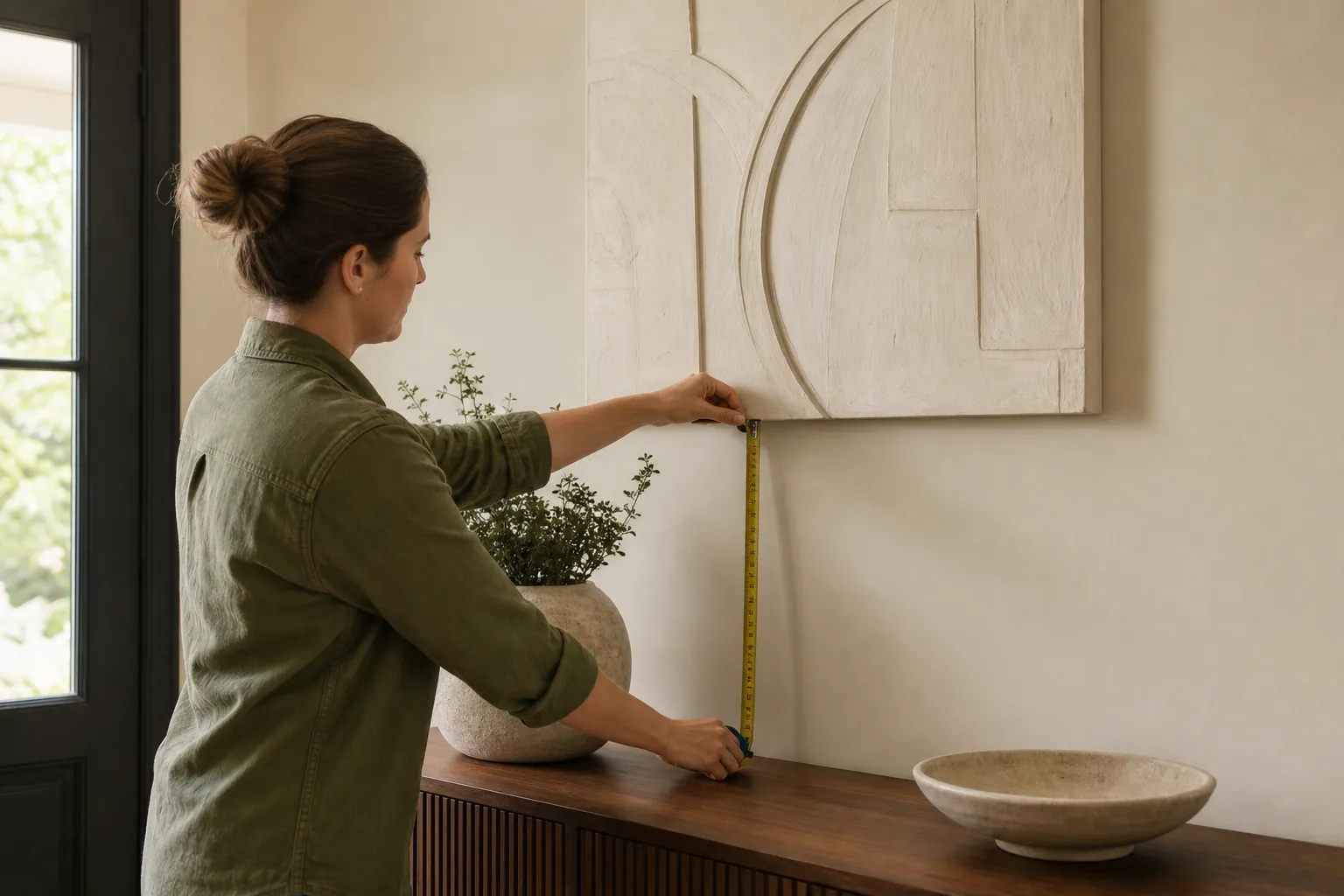
View dining-room decor while seated, hallway decor while walking, and bedroom decor from the doorway and bed. “Eye level” changes with use. Check that heads will not hit low pieces and that frames do not compete with lamps or cabinet doors.
4. Match color without copying everything
Wall art color matching works best through connection, not perfect repetition. Pull one supporting hue from a rug, upholstery, curtains, or a favorite object. Then allow the decor to introduce one new accent. A room becomes flat when every blue is identical and every finish matches.
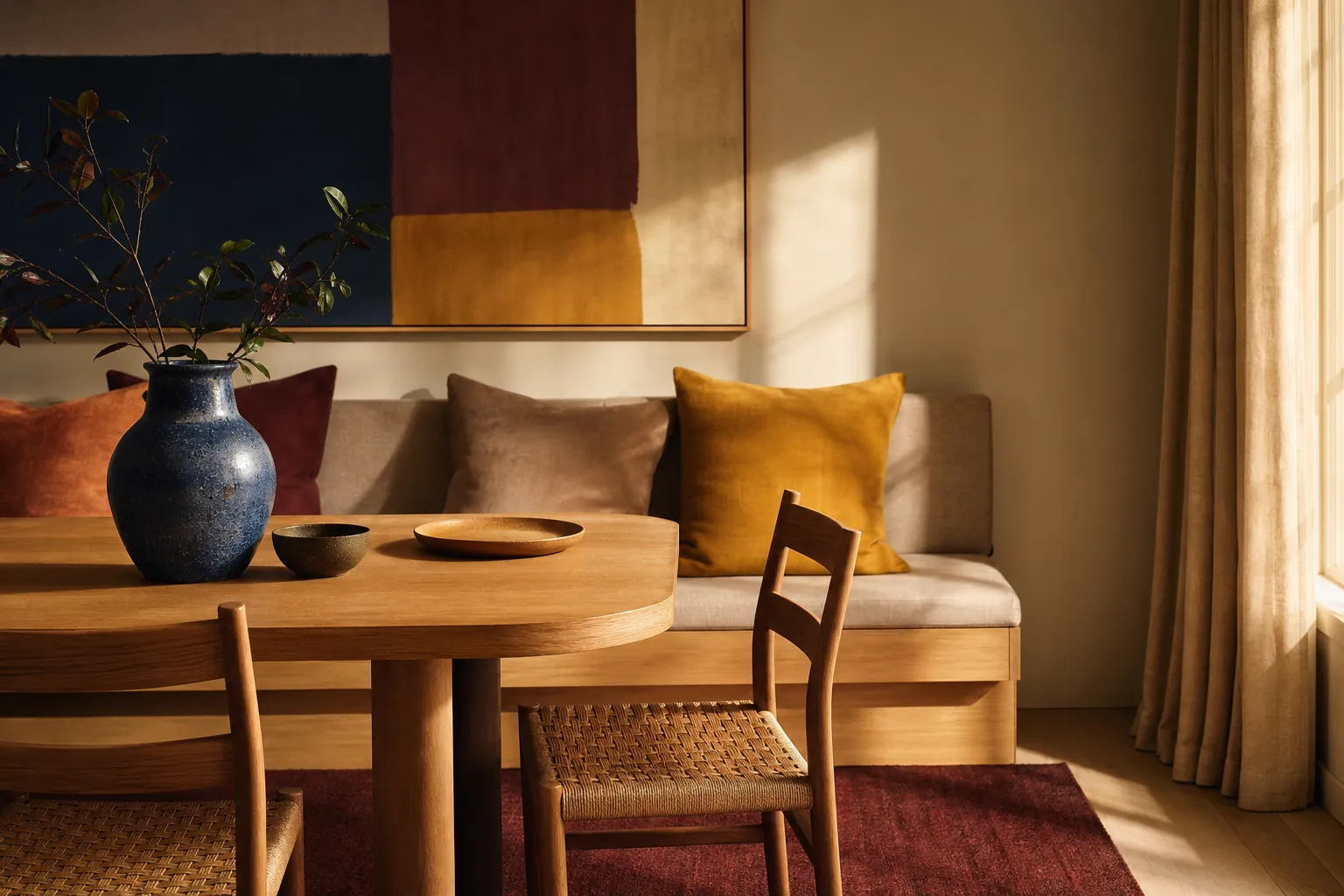
- Quiet room: repeat low-contrast tones and vary texture.
- Neutral room: use wall decor for one decisive color.
- Colorful room: choose art with breathing space or a dominant hue already present.
- Dark wall: test whether the decor needs a light mat, metallic edge, or stronger contrast.
5. Choose a style by contrast and character
Your wall decor does not need the same label as the furniture. A traditional room can gain energy from a bold abstract; a modern room can gain warmth from a vintage textile or botanical study. Repeat one element—color, line, material, or shape—so the contrast feels intentional.
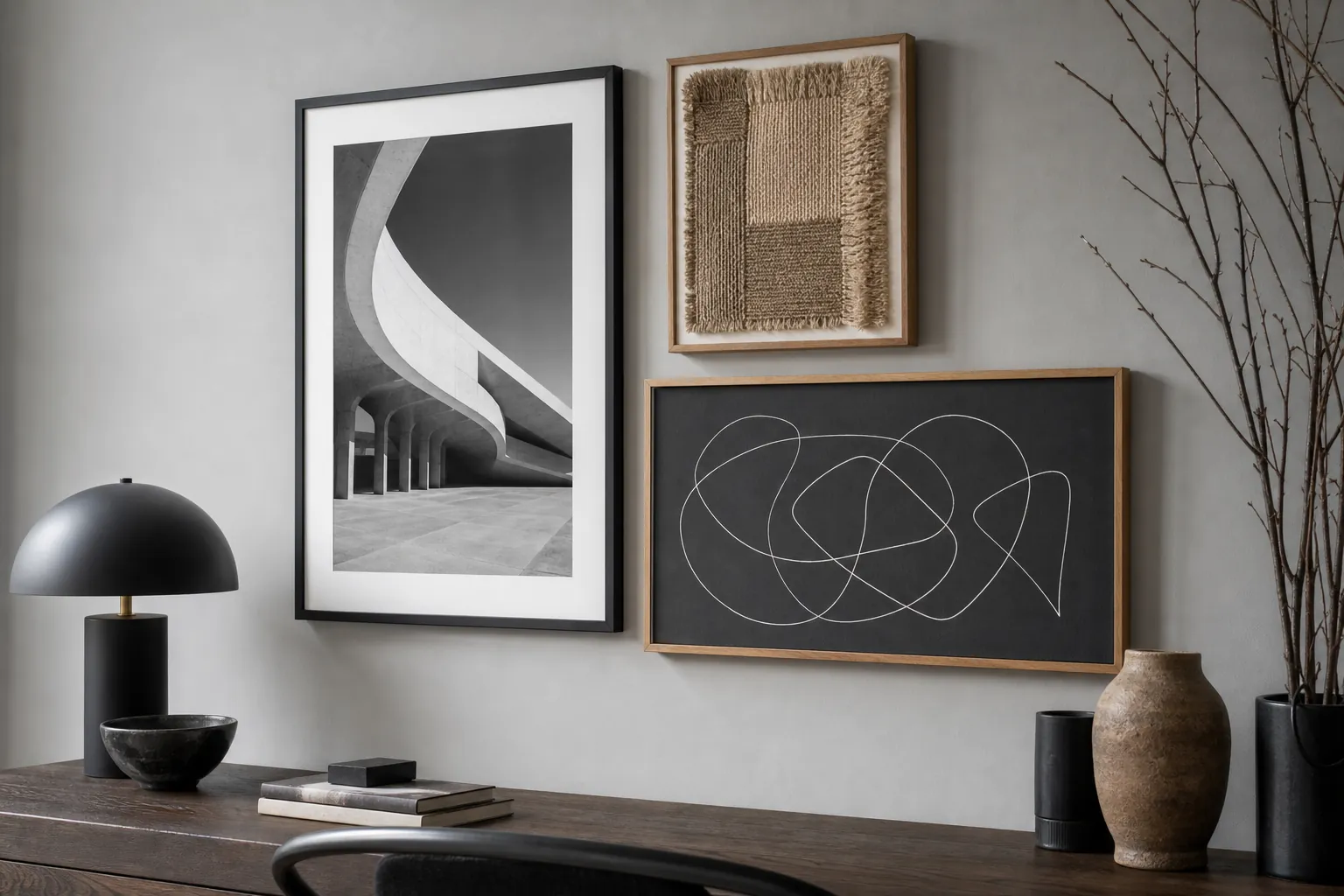
Mixing is easier when frames share either finish or visual weight. A gallery wall can combine photography, drawing, and objects if spacing stays consistent and the outer silhouette feels balanced.
Room-by-room shortcuts
- Living room: anchor the main seating group and size decor to the sofa or console.
- Bedroom: favor wider, calmer compositions above a headboard; secure everything appropriately.
- Dining room: assess the arrangement seated and use pieces that reward close viewing.
- Entry: one mirror, sculptural accent, or bold decal can establish the home’s character quickly.
- Kids’ room: removable decals by room zone make updates easier; keep peelable pieces out of reach.
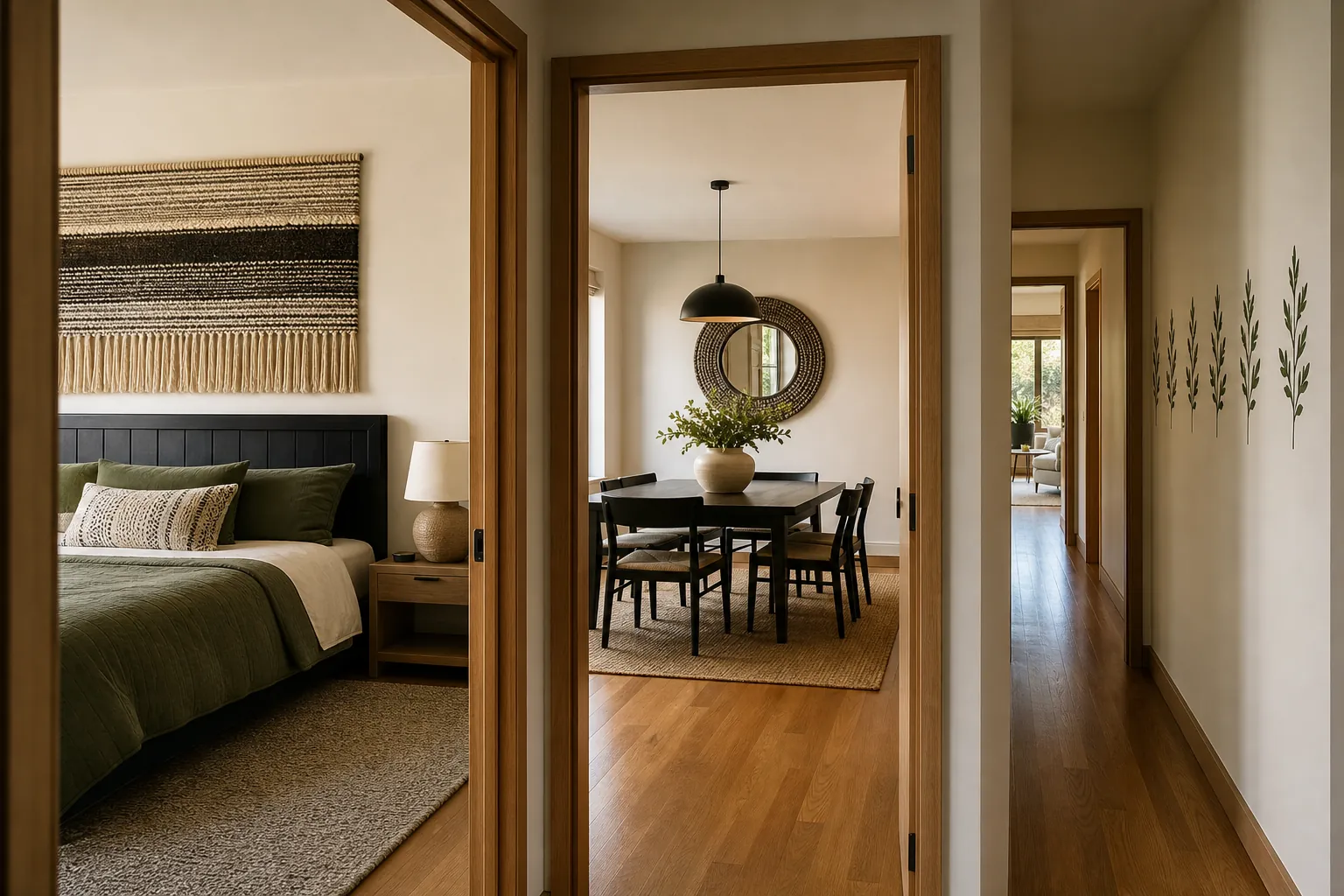
- Hallway: repeat a consistent centerline and spacing to create rhythm.
Test at full size before making holes
Outline the proposed arrangement with painter’s tape or cut paper templates for every piece. Live with it for a day. Look from the doorway, the main seat, and the adjacent room. Photograph it: a phone screen makes imbalance surprisingly easy to see.
If something still feels wrong, troubleshoot in this order: total width, distance above furniture, grouping spacing, alignment, then color. Do not buy extra objects until the basic rectangle works. The strongest home wall decor guide is not a catalog of trends; it is a method for making the wall relate to the room already in front of you.