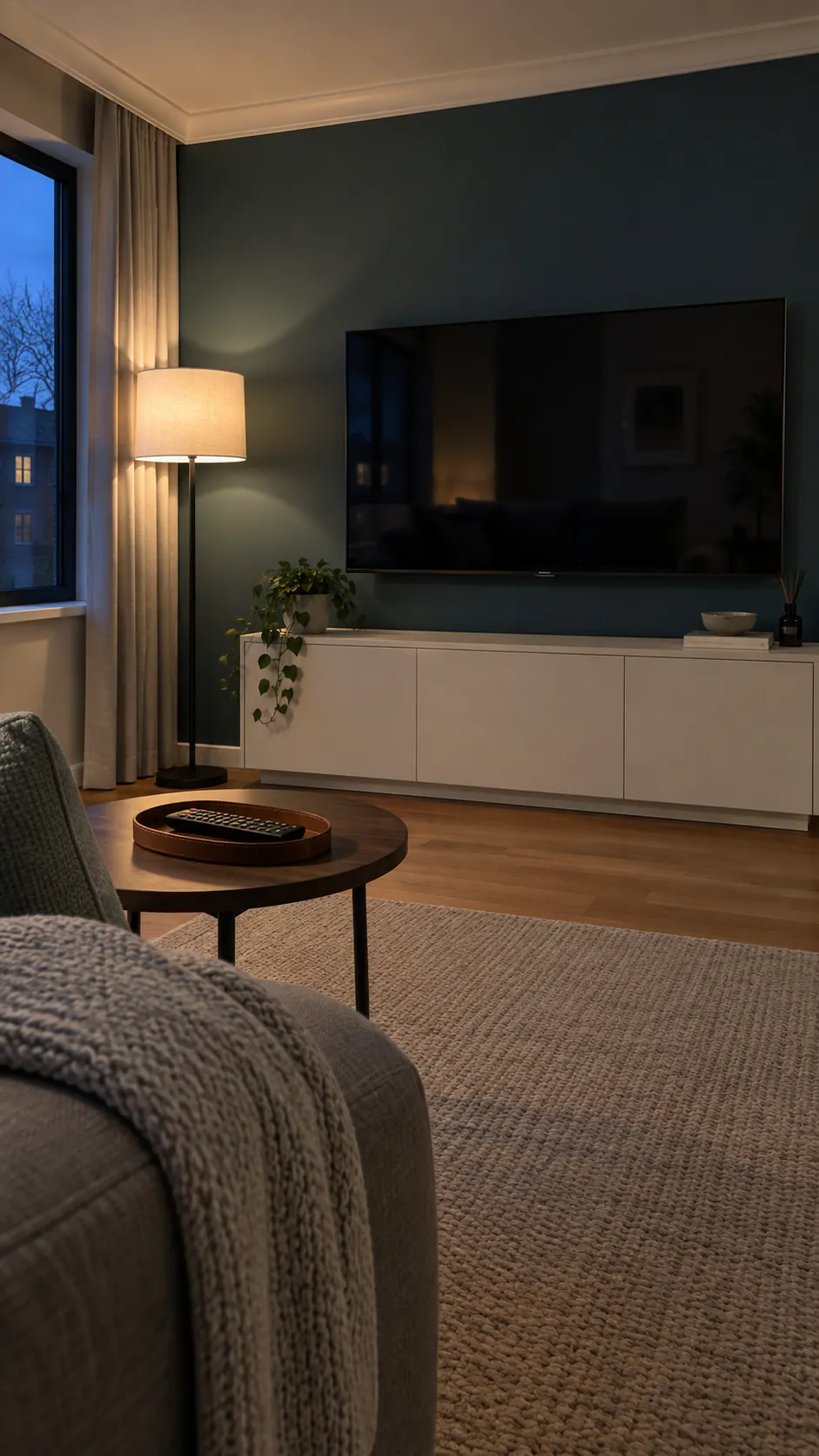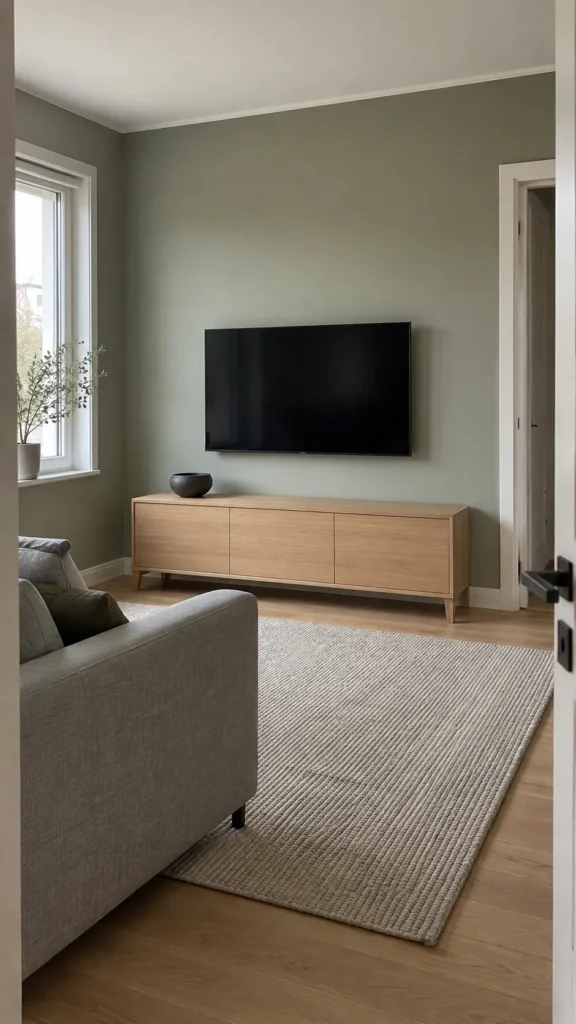
How to Create a Minimalist TV Wall
A bare wall can still feel cluttered when cables hang below the screen and every remote lives on the console. Start by giving those everyday things a place. The calm look follows from a setup that works, not from removing everything that makes the room useful.
Decide what the wall has to support
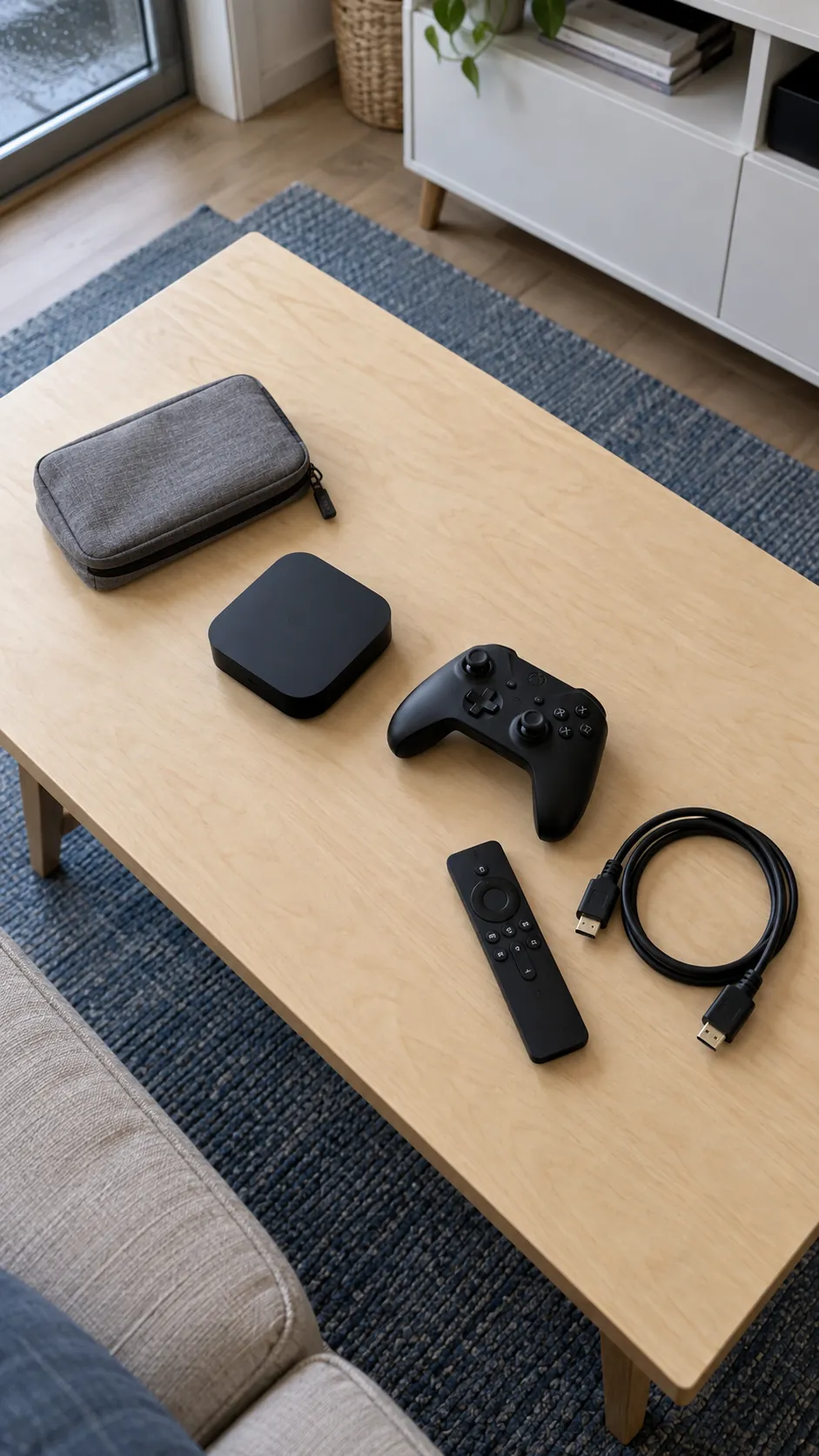
List the devices you use every week, including the sound system, games console, streaming box and controllers. Then separate those from retired equipment and spare cables. A modern minimal TV wall becomes much easier to plan when it serves your actual setup rather than every device you have ever owned.
Keep the sound system you enjoy in the plan. Hiding speakers inside an unsuitable cupboard or removing useful equipment for a photograph can make the room worse to use. Check the space, connections, remote control requirements and ventilation for each device before choosing a cabinet.
Build the composition from two main shapes
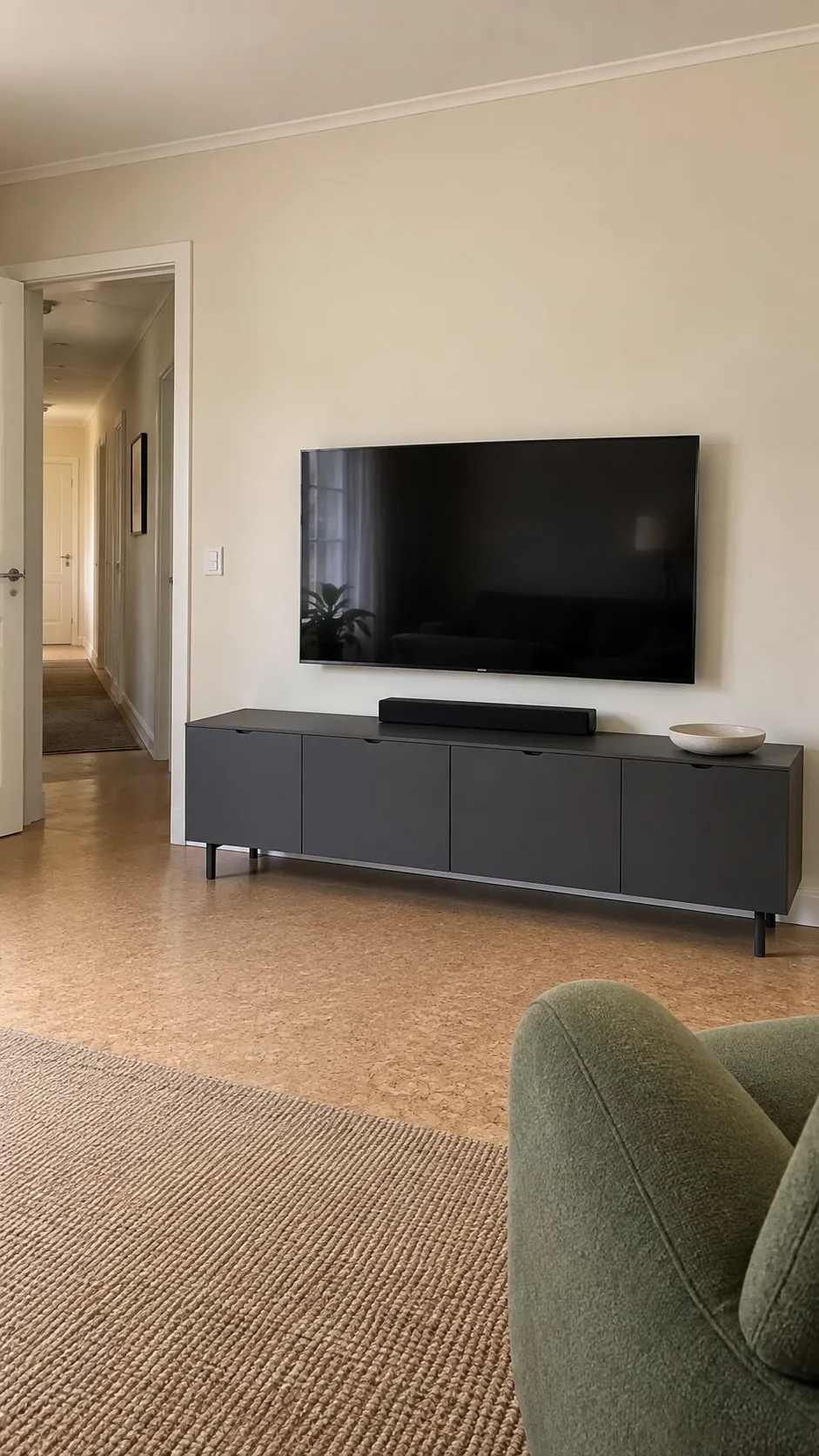
The screen and the storage unit can provide enough structure on their own. Start with a low console that visually grounds the television and leaves room for the soundbar or speakers you need. A unit wider than the screen is often a useful starting point, but the final width should respect doorways, corners and the scale of the room.
Position the television from the seat where you watch it. A visually centered wall arrangement is not a good trade if it leaves you looking upward all evening. Mark the proposed screen and cabinet outlines before making holes, then check the arrangement from the doorway to catch an off balance gap or a crowded passage.
Leave some wall visibly empty. You do not need to fill both sides with matching shelves, lamps and ornaments. Repeated small objects can make a clean TV wall design feel busier than one larger useful element.
Make the cable route part of the design
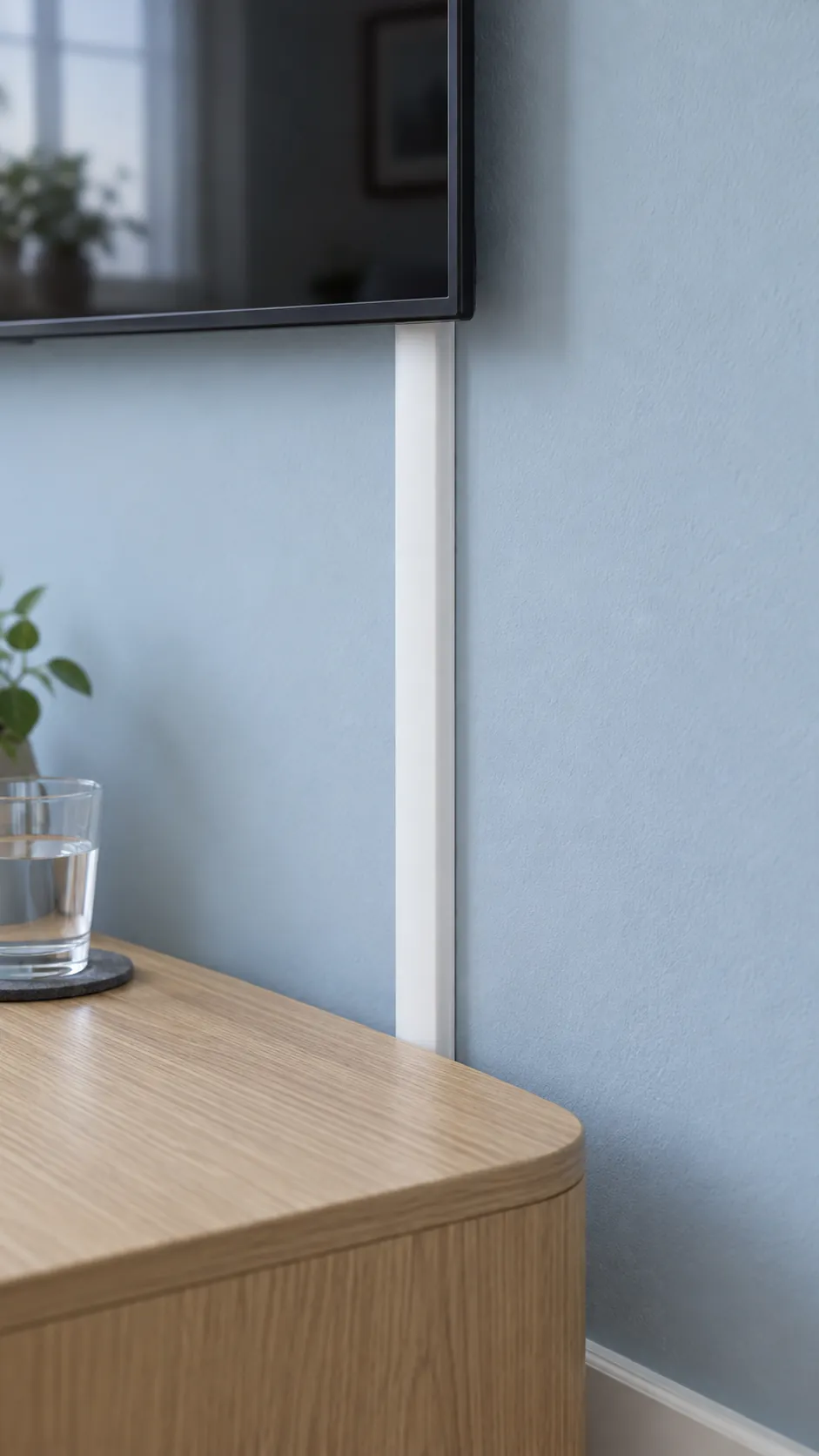
Choose between a properly designed concealed route and a neat surface route before installing the screen. A paintable cable cover can be a sensible option when opening the wall is impractical. Check permission in a rental and remember that adhesive products can still damage paint or plaster when removed.
Use suitable systems and follow local electrical requirements for anything inside the wall. An ordinary television power cord or extension lead should not be buried behind plaster. A qualified electrician can advise on moving an outlet, while data cables need an appropriate accessible route of their own.
Leave enough service slack for the intended mount movement and for reaching ports, without creating a bundle pressed against vents. Test every connection before closing covers. The neatest cable arrangement is one you can open again when a cable or device fails.
Hide the small things, keep the equipment usable
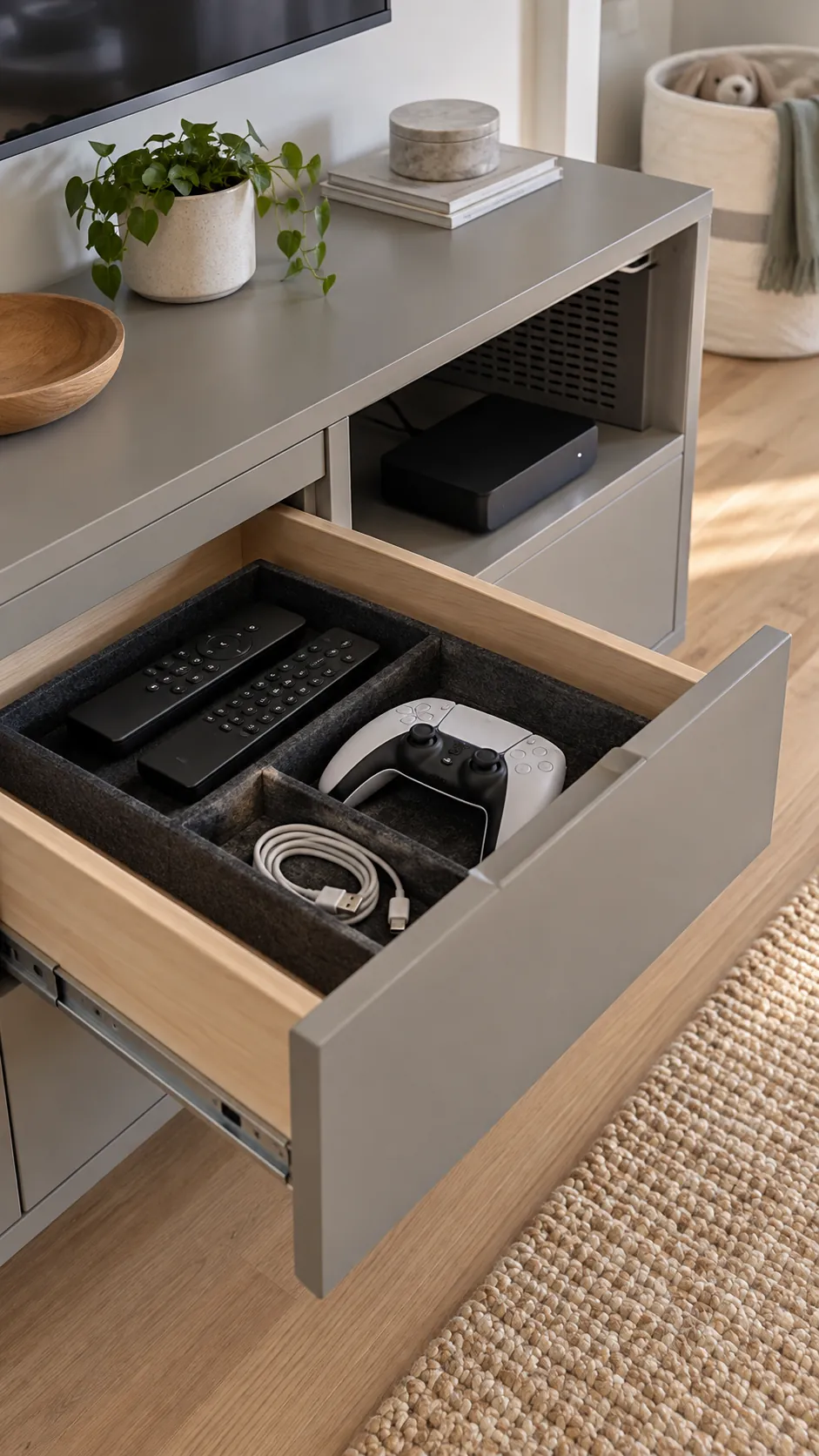
Closed storage earns its space when it has a clear job. Give controllers, remotes, headphones and spare batteries a shallow tray or drawer, so clearing the cabinet top takes seconds. Put occasional accessories elsewhere if keeping them here forces you to buy a larger unit.
Electronics need the clearances and airflow specified by their manufacturers. Check internal shelf dimensions as well as the outer cabinet size, and allow for plugs projecting from the back. Test whether remotes and wireless connections work with doors closed; the best looking door front is no help if you must leave it open all evening.
Use texture to keep the wall from feeling bare
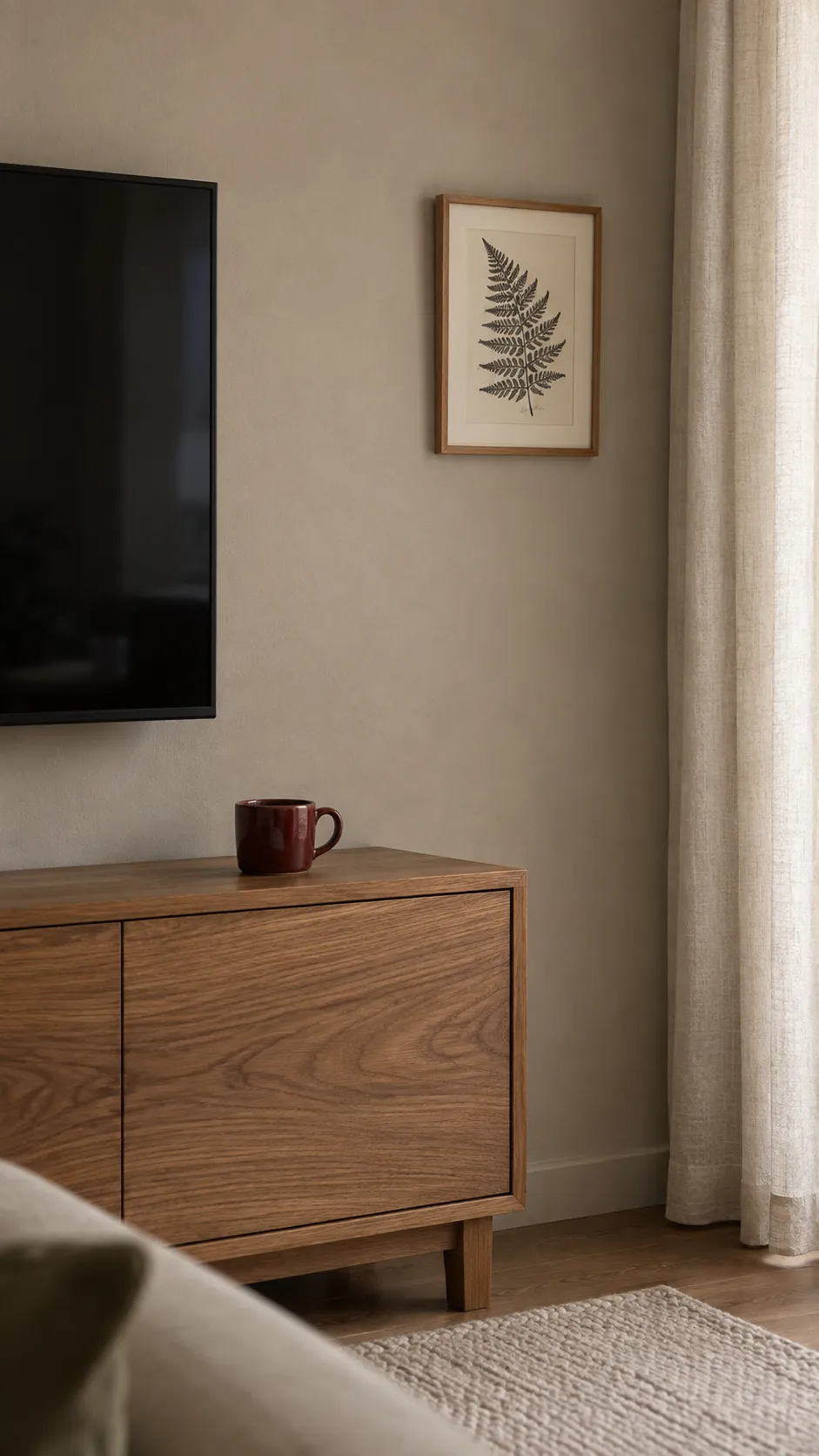
A neutral media wall does not have to be bright white. Choose a quiet paint color that relates to the floor and sofa, then bring warmth through one material you already like, such as a wood console or linen curtain. Large calm surfaces usually do more for visual simplicity than several new decorative objects.
Sample the paint beside the black screen. A pale wall gives a clear graphic contrast, while a deeper muted color can reduce that contrast when the television is off. Neither choice makes the screen disappear, so choose the relationship you prefer in your own light.
If you want art, place one deliberately chosen work away from the screen’s immediate outline and let it have its own space. Avoid building a dense gallery purely to camouflage the television. Simple TV wall ideas work best when the room still has something personal, rather than a strict ban on belongings.
Finish with an evening test
Turn on the lamps you normally use and watch from every regular seat. Move any light that reflects strongly in the screen, and check that a decorative glow does not become the brightest thing in your field of view. Gentle room lighting can feel more comfortable than watching in a dark room, but the level should suit you and your display.
Now use the room for a normal evening. Charge a controller, reach a socket, open the cabinet and put the remote away. If those small actions disturb the whole arrangement, simplify the storage or access before adding anything else. A minimalist living room TV wall succeeds when it stays easy to use after the photograph is taken.