How to Decorate an Awkward Blank Wall With Confidence
An odd wall rarely needs more decor. It needs a clearer relationship to the room. Before hanging anything, trace door swings, furniture edges, slopes, windows, and walking routes, then decide which part of the geometry deserves attention and which part should stay quiet.
Start with the obstruction
Identify the feature that makes the wall difficult, such as a projecting column, low ceiling, off center window, or active door. Mark the area that remains safely visible. A deliberate empty margin often resolves the shape better than several small fillers.
Align the display with furniture
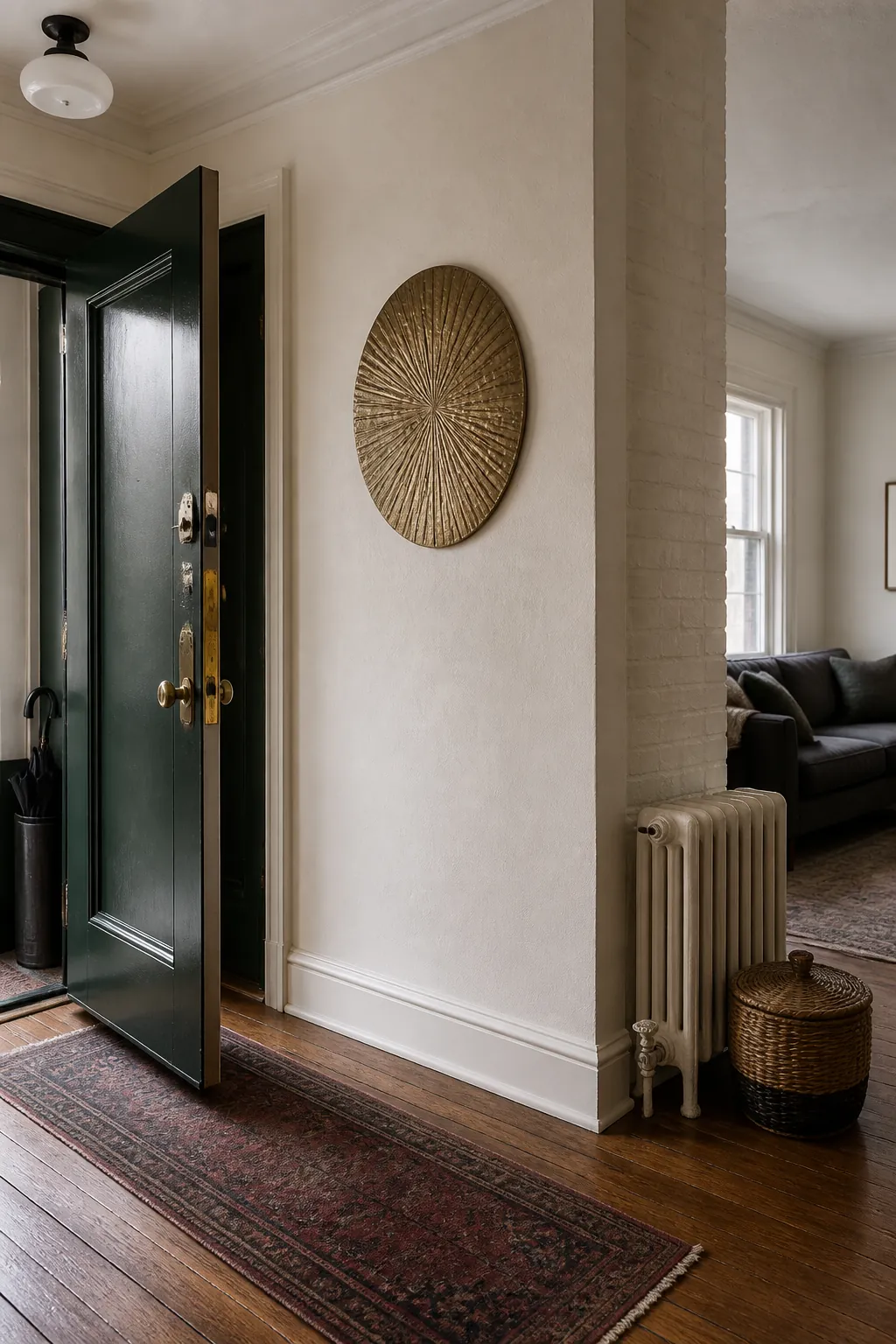
When architecture is asymmetrical, let the bed, desk, or cabinet define the visual center. Art can align with the usable furnishing rather than the entire wall. This makes an off center window feel intentional instead of like a mistake that must be disguised.
Bridge an empty corner
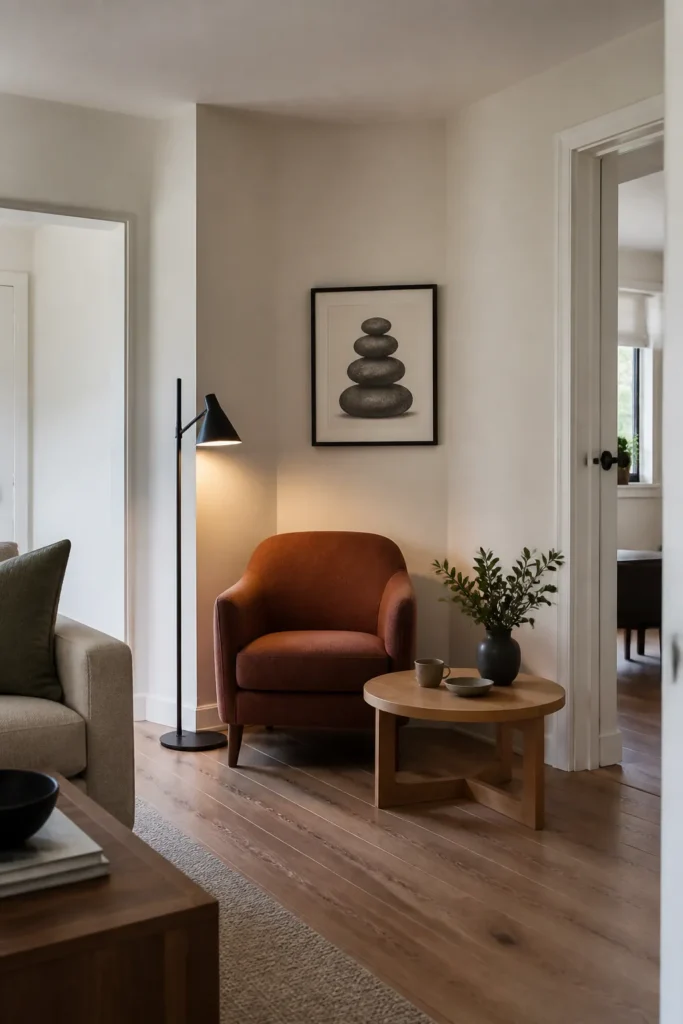
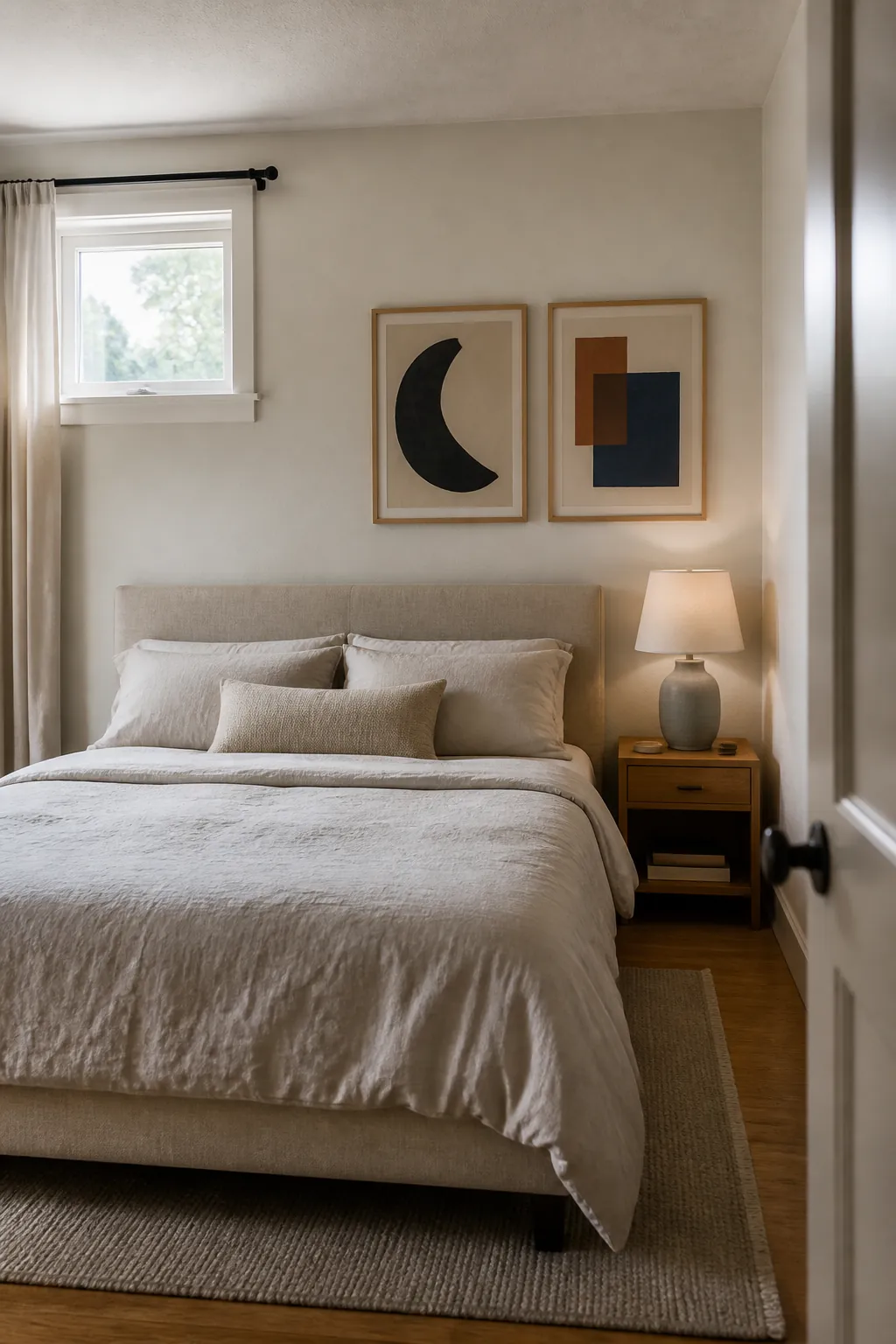
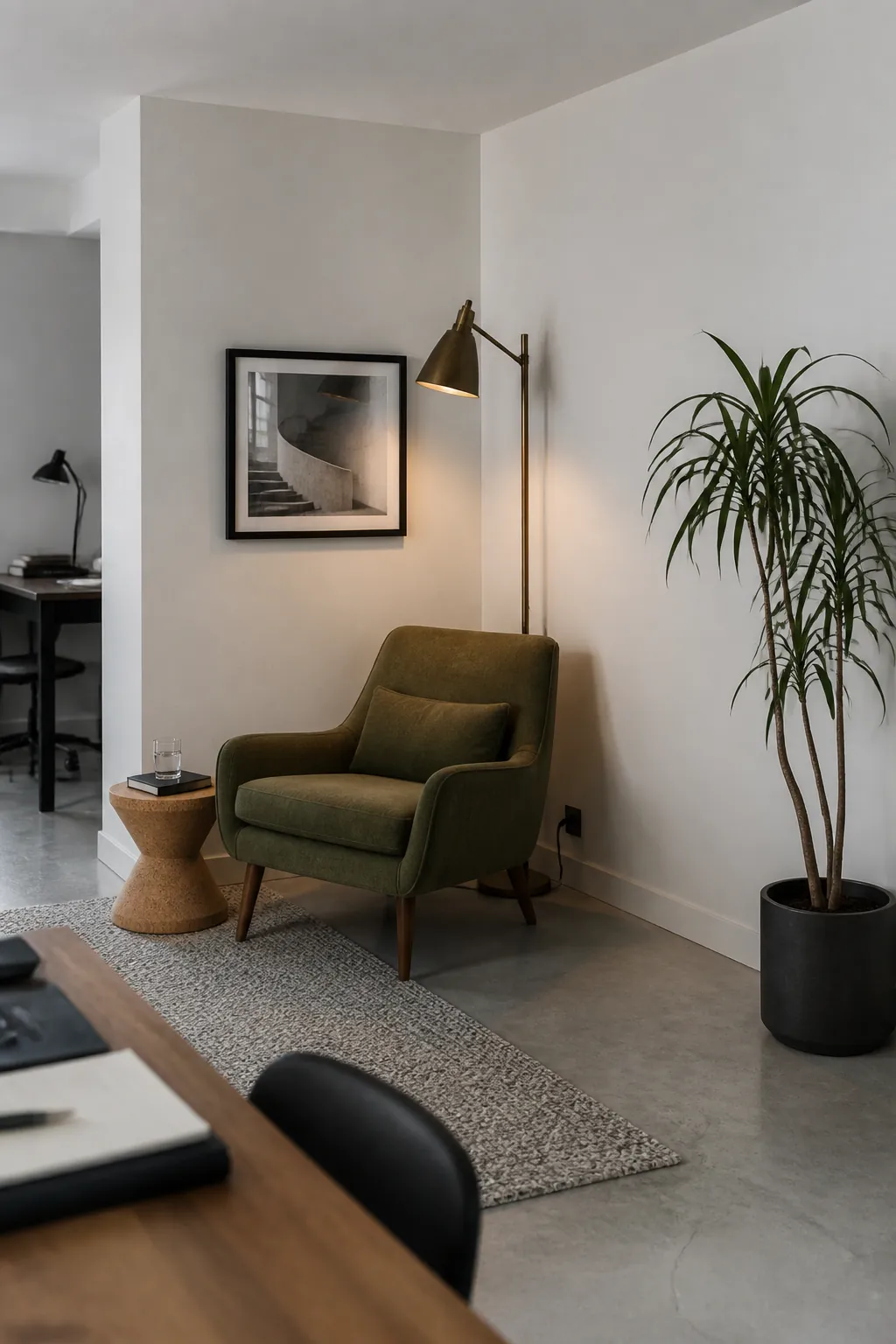
A corner can become one useful zone with a chair, floor lamp, and a small work of art on the more visible plane. Keep the arrangement proportional and leave enough floor around it to breathe. One tall plant can work when the room already contains many objects.
Follow a sloped ceiling
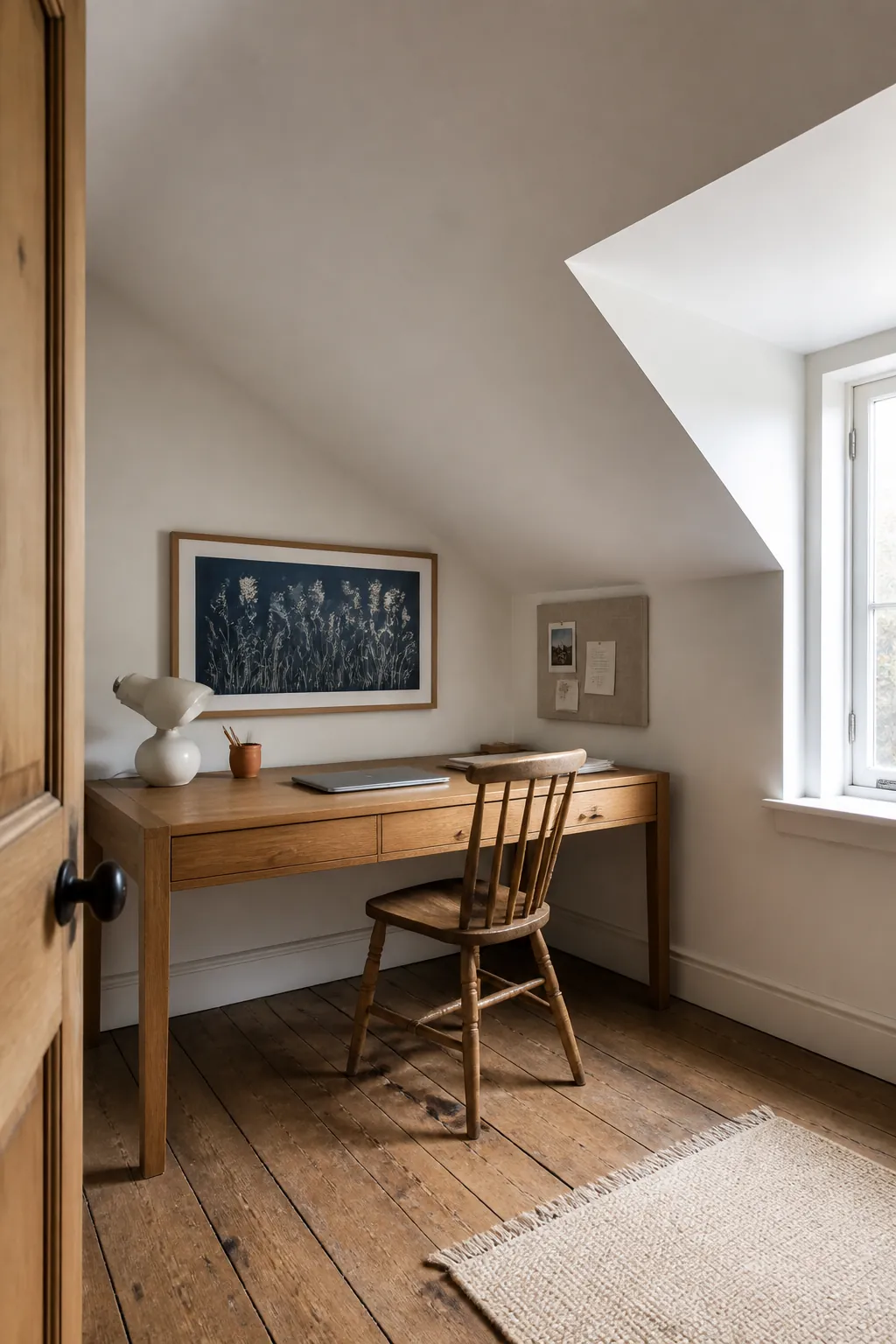
Under a roofline, resist forcing a level gallery into a triangular field. Use one low horizontal piece, a compact desk, or paint that continues across the slope. Keeping objects below the lowest ceiling point makes the shape feel spacious and reduces visual collisions.
Use asymmetry on purpose
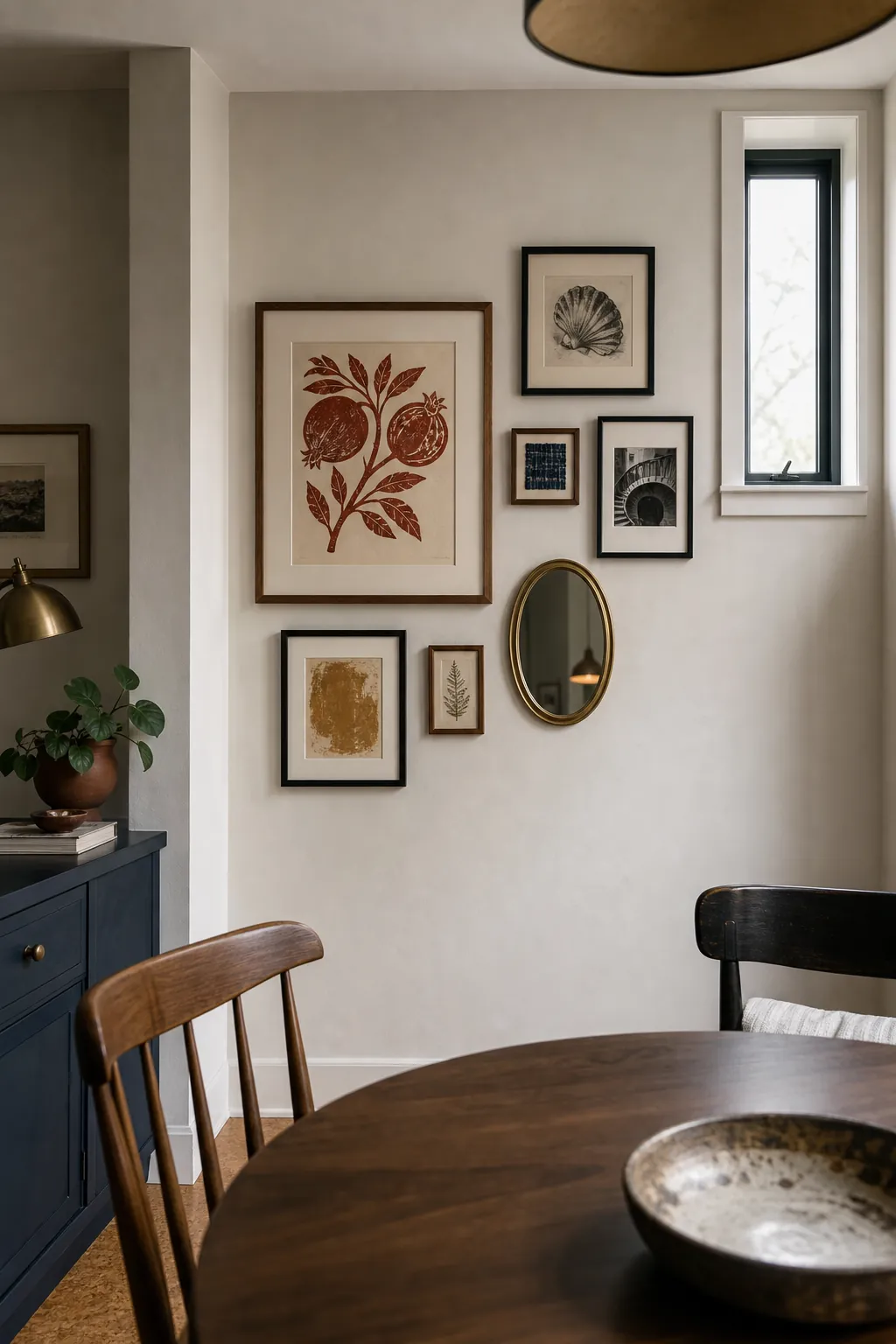
An irregular cluster can balance a window or wall return when its outer edge remains controlled. Begin with one larger piece, then add only what strengthens the composition. Repeat frame material or color so the different shapes still speak the same visual language.
Unify the geometry with finish and light
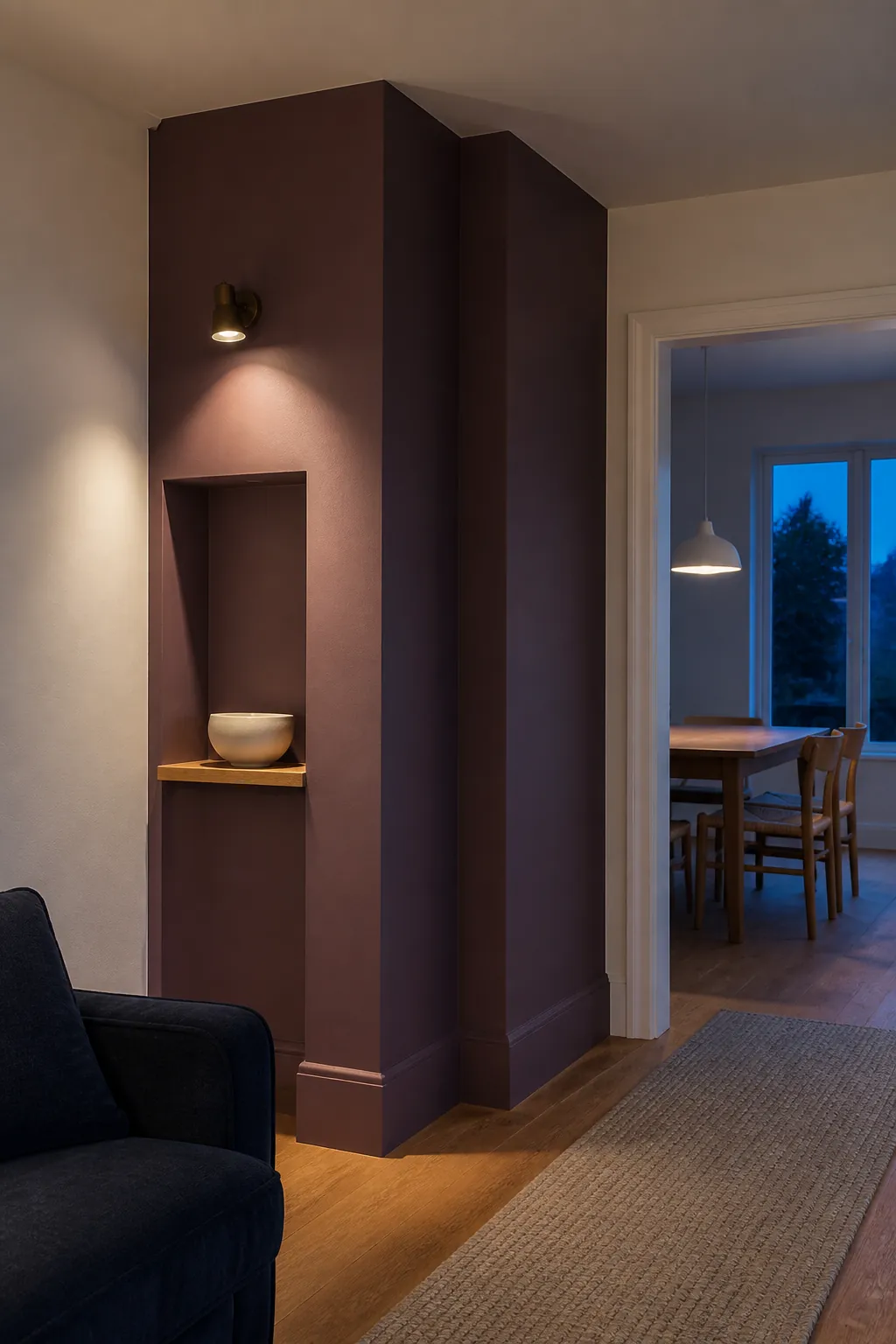
Color can connect a column, niche, and short return without adding depth. A wall washer or shaded lamp then reveals the architecture after dark. Test the finish from the doorway and main seat; if the route feels open and the odd shape reads as one zone, the wall no longer needs another object.