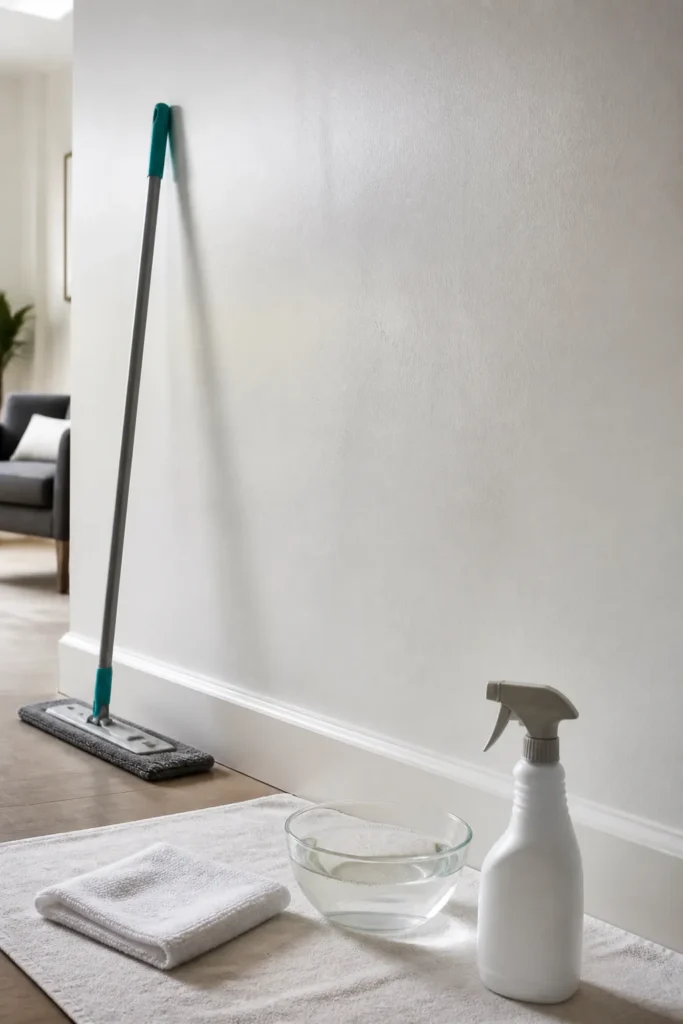
How to Wash Walls Easy Without Damaging Paint
If you searched for how to wash walls easy, you probably do not want a perfect-house fantasy. You want a fast routine that removes dust, fingerprints, scuffs, and dull gray buildup without leaving streaks or pulling paint onto the cloth. The simple answer is this: dust first, use very little moisture, clean stains separately, then dry the wall before you move on.
The mistake that makes wall washing hard is treating every mark the same. Loose dust needs a dry tool. Hand oils need a mild soapy solution. Grease needs a little more patience. Flat or older paint needs less water and less pressure. Once you match the method to the wall, the job gets much easier.
Start With Dry Dusting Before Any Water
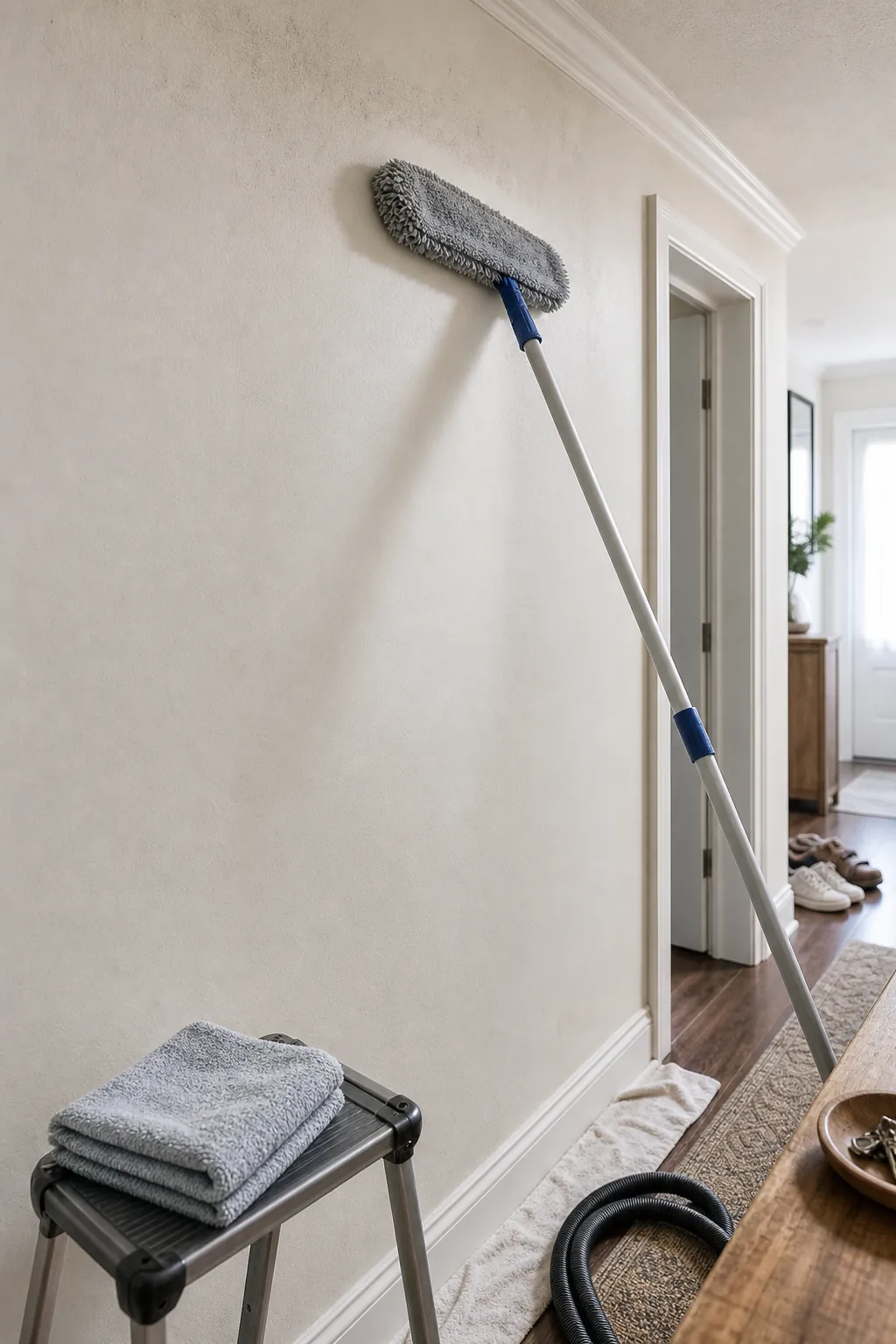
The best way to clean walls is not to start with a wet sponge. Dry dust the wall first with a microfiber cloth, microfiber mop, soft duster, or vacuum brush attachment. This matters because water turns dust into gray streaks, especially near ceilings, vents, baseboards, and hallway corners.
Work from top to bottom. Run the duster along ceiling lines, corners, door trim, and baseboards, then sweep the larger wall area with long overlapping passes. If you are cleaning a tall stairwell or hallway, a dry flat mop can work like a simple wall ceiling cleaner without needing a ladder for every section.
Mix a Mild Cleaner That Respects the Paint
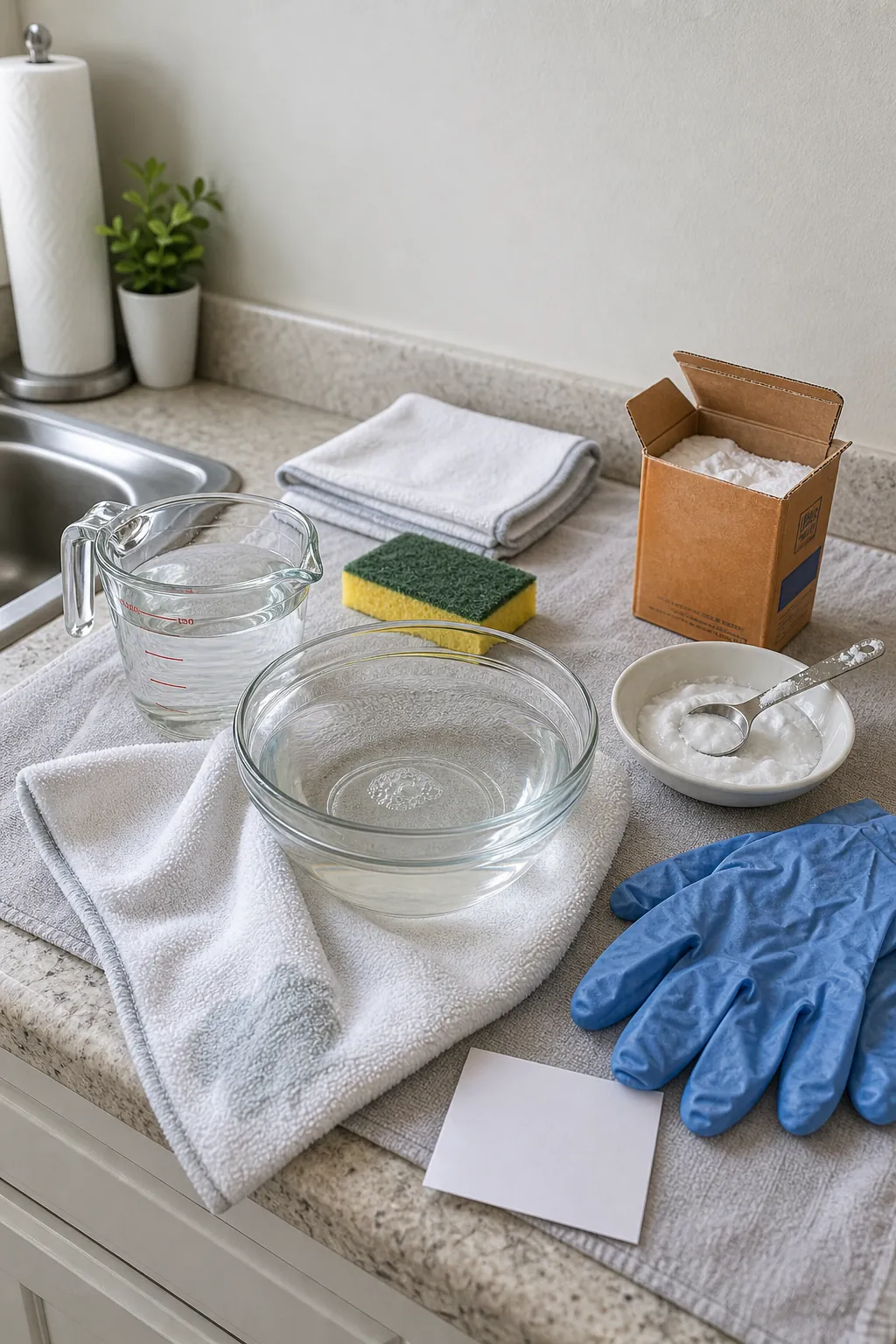
For most painted walls, the easiest solution to clean walls is warm water with a very small amount of mild dish soap. You only need enough soap to cut hand oils, not a bucket of bubbles. Dip a microfiber cloth or soft sponge, wring it until it is barely damp, then test a hidden spot before cleaning the visible wall.
If you want a DIY natural wall cleaner, a light vinegar and water mix can help with general dullness or odors, but it is not a magic grease remover. For the common search how to clean walls with vinegar and water, keep it diluted, use it sparingly, and dry the wall right away. Avoid soaking seams, outlets, switches, and damaged paint.
For how to clean walls with baking soda and vinegar, the more useful approach is not mixing them into a fizzing bucket. Use vinegar-water as one gentle wipe option, and use baking soda separately as a soft paste for small scuffs. That gives you a practical homemade wall cleaner recipe without overworking the whole wall.
Wash Big Wall Areas With a Barely Damp Mop
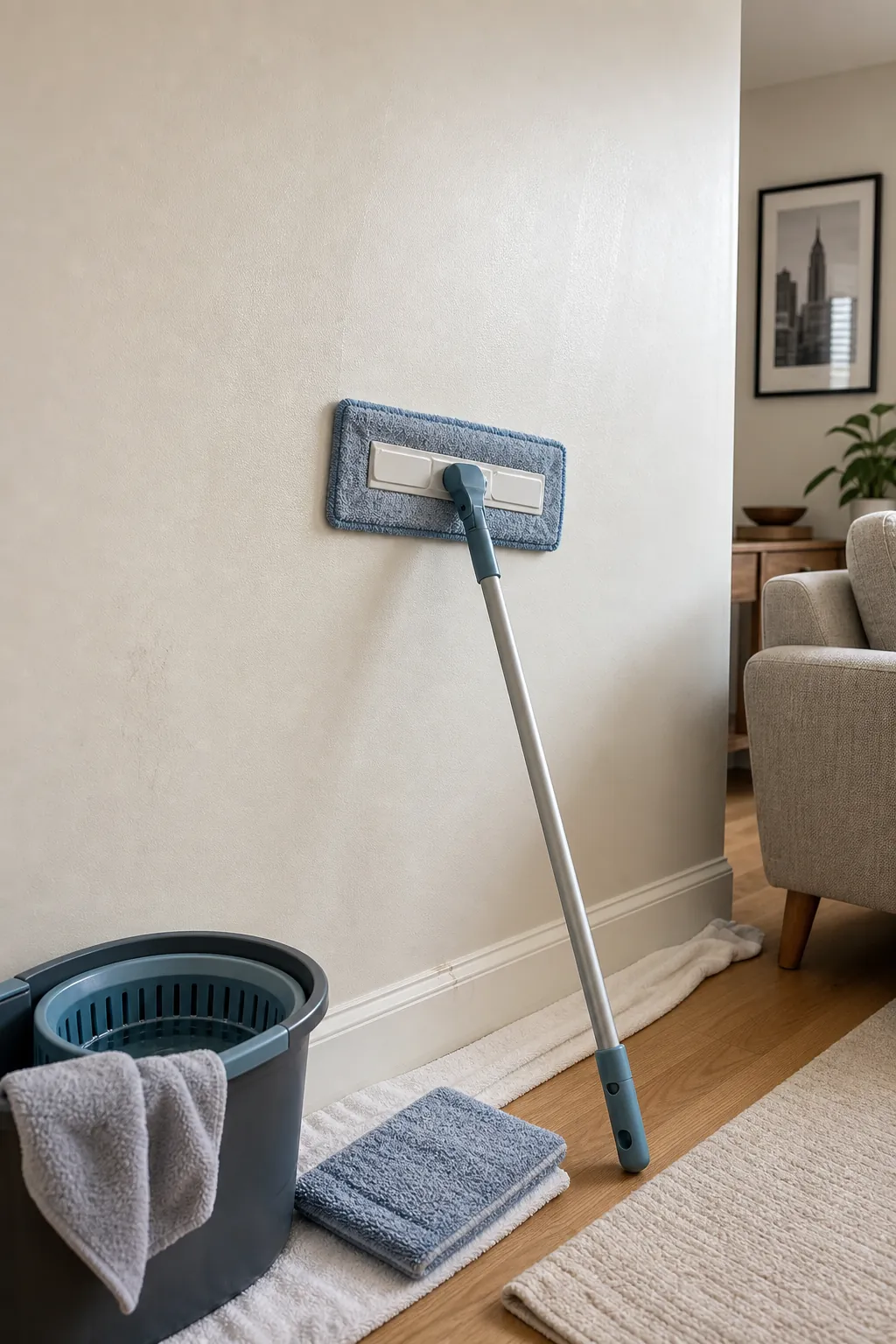
For large rooms, the easiest way to clean walls is often a flat microfiber mop or clean spin mop head. The key is moisture control. The pad should be damp enough to pick up soil, but dry enough that no water runs down the wall. If you see drips, stop and wring it out again.
- Work in small sections. Clean a few feet at a time so the wall never stays wet for long.
- Use overlapping passes. Move in gentle vertical or circular motions without scrubbing aggressively.
- Rinse the pad often. Dirty water puts grime back on the wall.
- Dry after each section. A dry microfiber towel prevents streaks and water marks.
This method is especially helpful for routine cleaning in bedrooms, living rooms, hallways, and entryways. It is also safer than attacking the whole wall with a harsh sponge. If the paint is flat, chalky, old, or already rubbing off, use even less pressure and treat the job as a light wipe, not a deep scrub.
Treat Scuffs, Fingerprints, and Grease as Separate Jobs
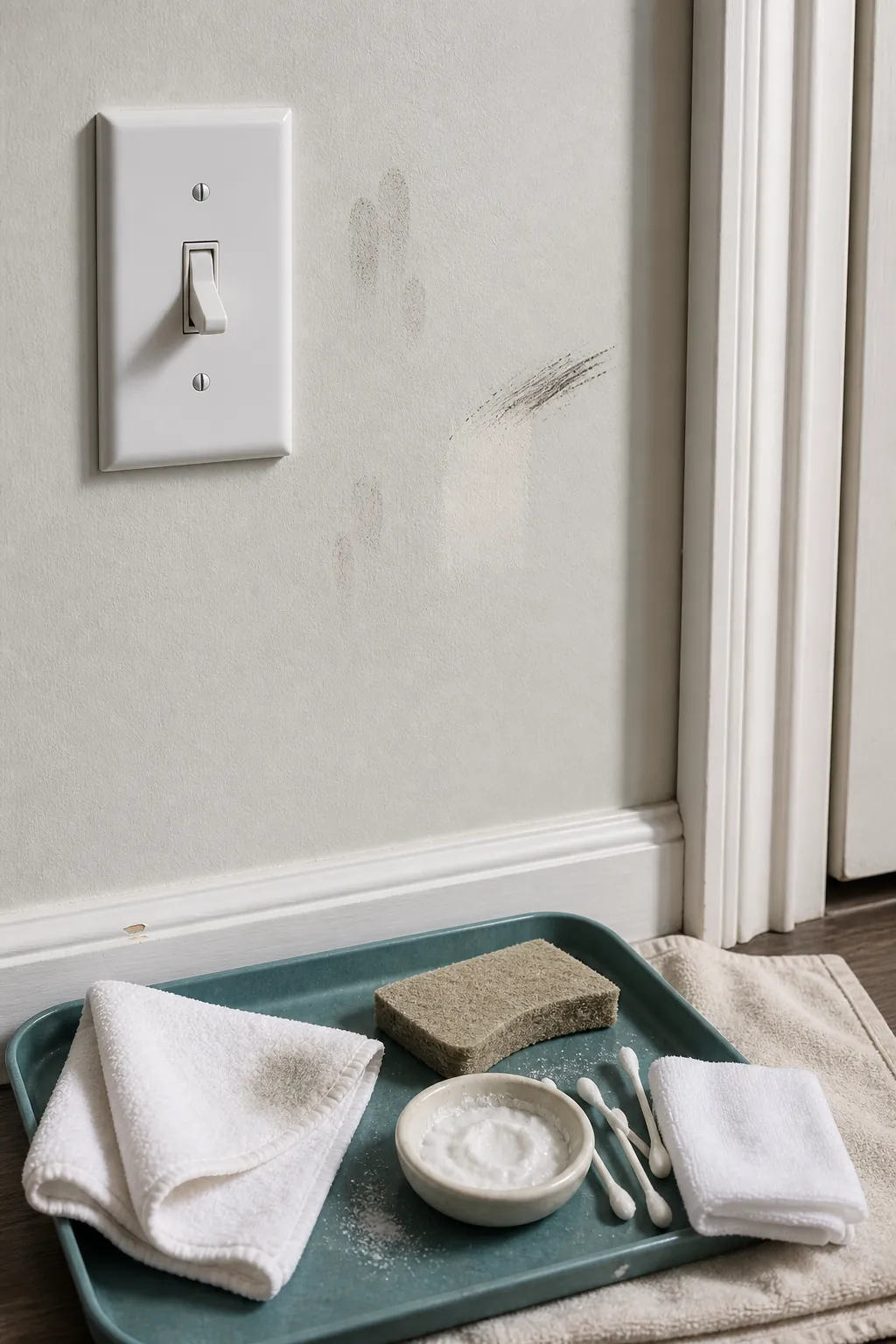
A full wall wash should not become a fight with one stubborn mark. If fingerprints remain around switches, doorways, or stair rails, dab the area with your mild soapy cloth and let it soften for a moment before wiping. For kitchen grease on durable satin, semi-gloss, or glossy paint, a slightly stronger non-abrasive cleaner may be needed, but still test first.
For gray furniture scuffs, pencil marks, or small rubbed areas, try a baking soda paste on a soft cloth or non-scratch sponge. Use tiny circles and stop as soon as the mark lifts. A melamine sponge can work, but it can also polish or dull paint if you press too hard, so treat it as a last step, not the first step.
This is the heart of how to clean walls without damaging paint: keep the whole-wall cleaning gentle, then give stubborn spots a controlled treatment. If a spot does not improve after light pressure, repainting or touch-up may be safer than grinding through the finish.
Use Less Water on Textured Walls and Drywall
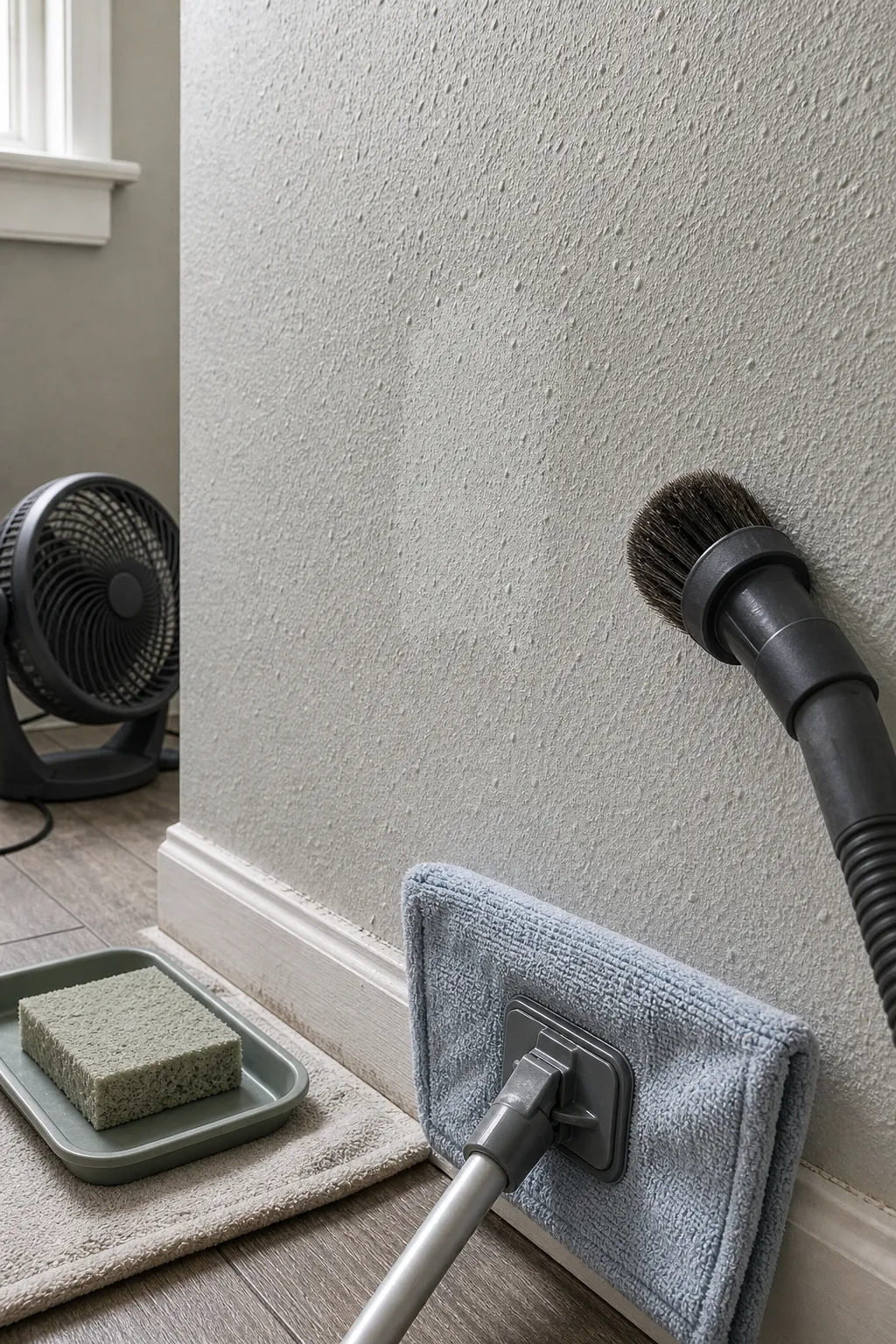
Cleaning textured walls takes a lighter hand because raised texture catches dust and holds moisture. Start with a vacuum brush or dry microfiber mop. If the wall still looks dull, use a barely damp cloth or sponge and blot instead of scrubbing. The goal is to lift soil from the raised texture without flattening, smearing, or soaking the surface.
If you are wondering how to clean drywall, assume less water is better. Painted drywall can tolerate light wiping when the paint is sound, but exposed drywall, damaged paint, and poorly sealed patches can swell or scar. On older matte paint, do a hidden test, wait for it to dry, and check for shine marks before cleaning the rest.
For deep cleaning walls in a dusty room, repeat the gentle process instead of making one aggressive pass: dry dust, lightly wipe, dry, inspect, then spot clean only what remains. A fan or open window can help the room dry faster, but avoid blasting dust back onto the wall while it is still damp.
Dry the Wall and Check It in Side Light
After washing, go back with a clean dry microfiber cloth. Drying is not optional. It removes leftover cleaner, catches faint streaks, and stops moisture from sitting on paint, trim, seams, and corners. Look at the wall from the side once it dries; side light reveals streaks that straight-on light hides.
If you see streaks, wipe that section again with a cloth dampened with clean water, then dry immediately. If you see a shiny patch, the finish may have been polished by too much pressure. Let it fully dry before deciding whether it needs a paint touch-up.
Keep Walls Clean Longer With a Small Routine
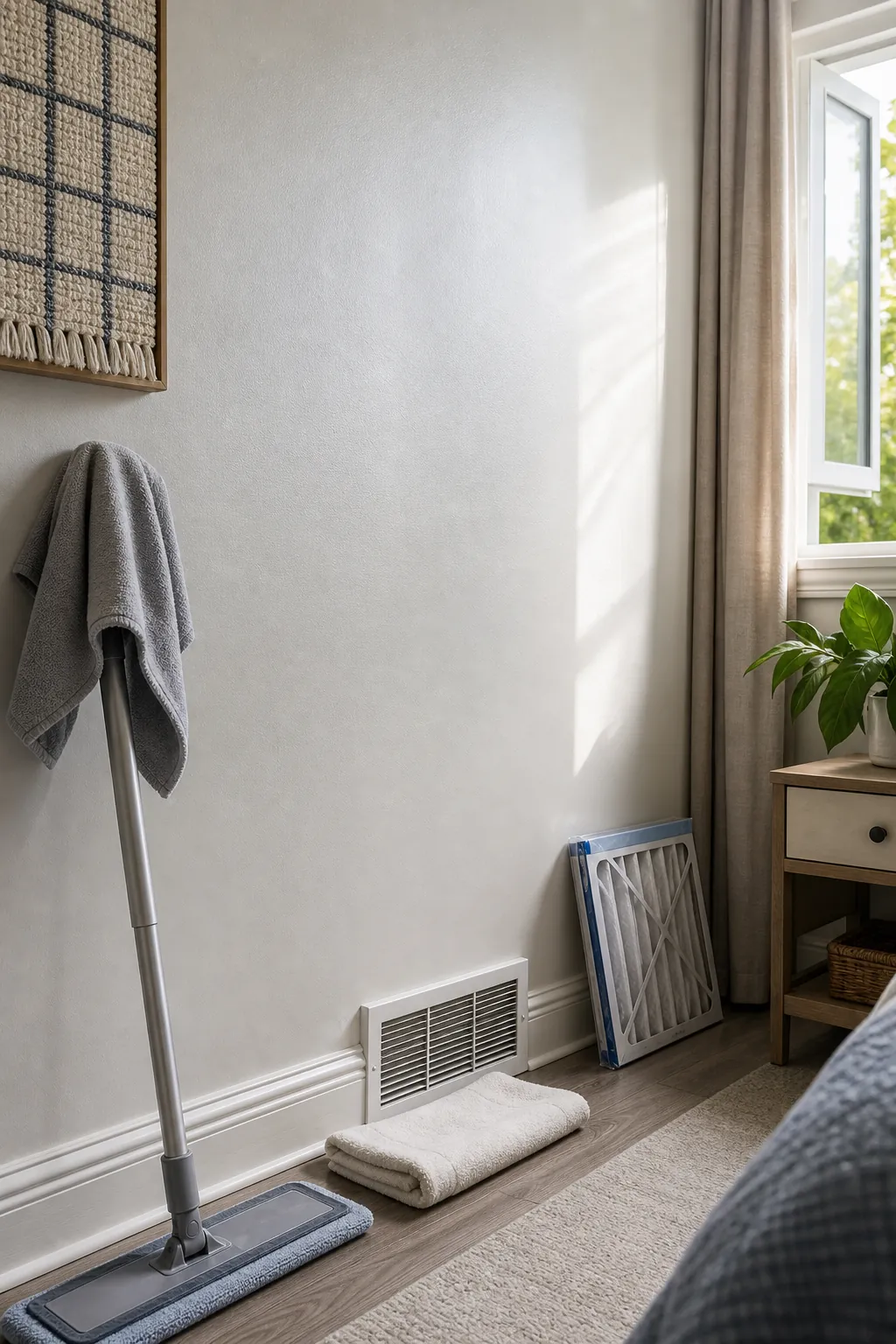
The easiest wall cleaning routine is the one you do before the walls look dirty. Dust high corners, vents, and baseboards once a month. Spot clean fingerprints when you notice them. Keep cooking grease from settling by running ventilation in the kitchen. Change or clean HVAC filters on schedule so dust does not keep collecting on vertical surfaces.
For a simple kit, keep a dry microfiber duster, two clean cloths, a mild soap solution, a soft sponge, and a small baking soda paste option ready. That covers most questions about what to clean walls with without sending you into harsh cleaners. When in doubt, choose less water, less pressure, and more drying time.
The easy version is not complicated: dust, damp wipe, spot treat, dry, inspect. That sequence works for most painted walls because it solves the real problem in order. Dust does not smear, paint is not soaked, stains get individual attention, and the wall dries clean instead of streaky.