A sticker is most useful when everyone knows what it marks. Choose one small action your child can practice, agree on what counts, and make progress visible without turning every family interaction into a negotiation.
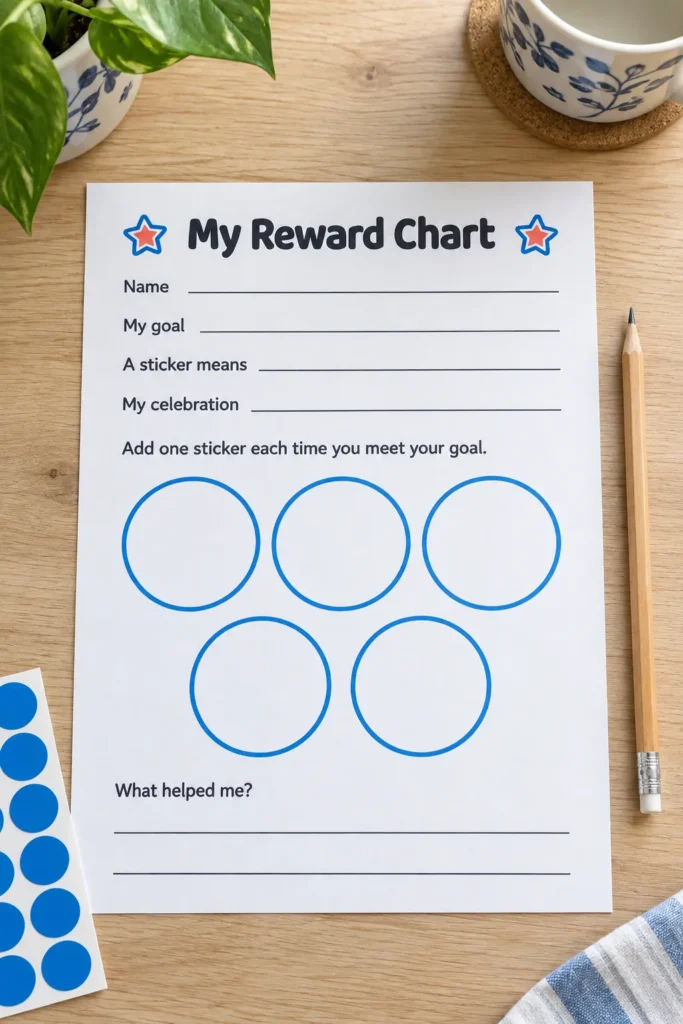
The page below is a blank reward tracker for one goal and five successful attempts. An adult can fill in the short labels, so early readers can use it with help and older children can help choose their own goal.
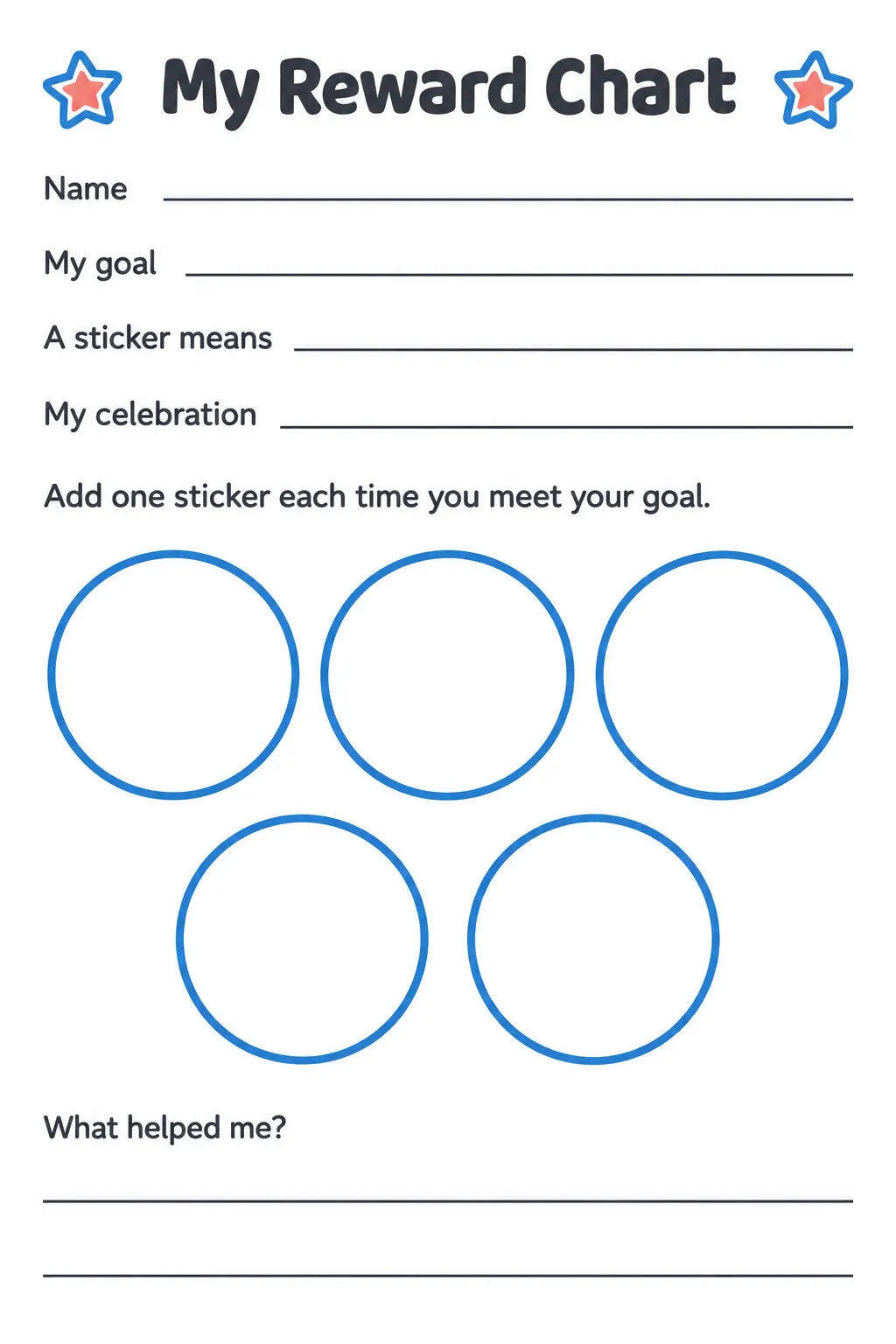
Download high-resolution printable
Click the preview to open the full size image, or use the download button to open it in a new tab. Save the image from that tab, then print it using the tips below.
Choose a goal your child can act on
Write an observable action in the goal field, such as putting shoes in the basket after coming home. Avoid a broad label like being good, which leaves the child guessing. Show the action once and give the help your child needs before expecting independent practice.
A goal chart for kids should fit the skill being learned. If a whole room feels too difficult to tidy, start with returning three books to the shelf. Do not use the chart to demand that a child stop feeling upset or to reward withholding basic needs.
Agree on the sticker and the celebration
Use the success field to describe exactly when one circle earns a sticker. For example, shoes go in the basket after each trip outside, with a reminder allowed. The five circles track successful attempts, not necessarily five consecutive days.
Choose a small celebration together before you start, such as picking a family game or choosing the bedtime story. Stickers themselves may be enough for a child who enjoys collecting them. Keep the agreement steady rather than raising the prize each time interest drops.
Mark progress while the action is fresh
Add a sticker soon after the agreed action, and name what your child did: you put both shoes away. Leave an unearned circle blank rather than crossing it out or removing an earlier sticker. If an attempt is difficult, offer help and another chance to practice.
Keep the sticker reward chart near the place where the action happens. A private family spot is better than a public scoreboard that compares siblings. Each child can have a separate page and an appropriately different goal.
Adjust the plan when it becomes a struggle
Parent discussions about reward charts raise recurring concerns about delayed rewards, rising prize expectations, and children who do not care about stickers. Indexed Reddit snippets from a discussion about reward chart expectations and a discussion about different motivations show those questions; they are family experiences, not proof that one method works for every child.
If the chart triggers bargaining or distress, pause and look at the task, timing, and support. A positive reinforcement chart cannot supply a skill the child has not learned. For persistent difficulties that disrupt daily life, discuss your child’s needs with a qualified professional rather than adding more prizes.
Print, use, and retire the page
Print in portrait orientation on A4 or US Letter paper, using fit to page so the outer margins remain visible. Check the preview before printing because this image has a different shape from standard paper. The page uses dark lettering and clear outlines so its fields remain useful in grayscale.
Fill in the name, goal, success rule, and celebration before the first attempt. Use small stickers or pencil marks in the five circles, and write one useful observation in the reflection area when the chart is finished. When the action becomes familiar, try keeping the specific praise while reducing the chart’s role in your family routines.