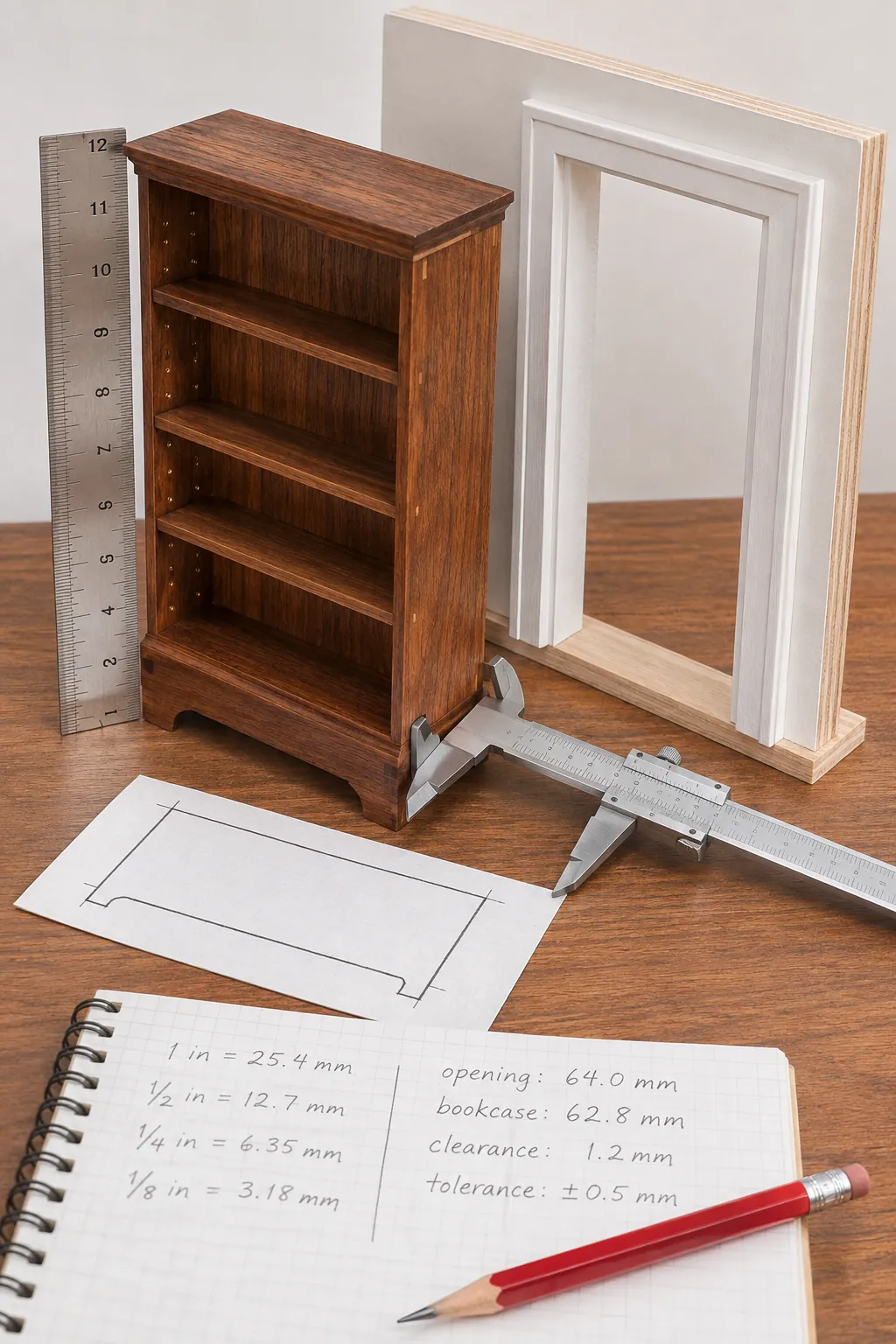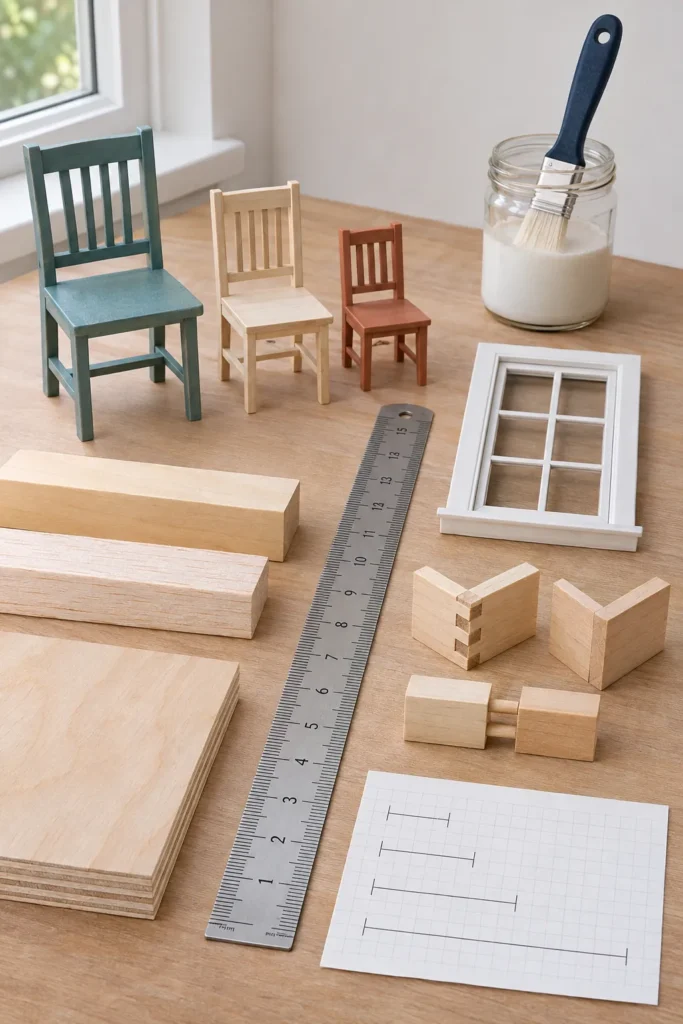
Miniature terms become confusing because dollhouses, railway models, tabletop figures, and dioramas sometimes use different names for similar size systems. A ratio is the safest common language. Keep a ruler nearby, check actual dimensions, and treat a scale label as the start of a fit check rather than the final proof.
Indexed community discussions show recurring beginner questions about one sixth versus one twelfth scale, sheet thickness, balsa versus basswood, and how to turn a real measurement into a miniature size. This glossary groups the words by the decision they help you make.
Scale and proportion terms
Scale is the fixed relationship between a model and the real object. Ratio scale writes that relationship as two numbers. One twelfth scale means one unit in the miniature represents twelve of the same units in real life. One sixth scale is twice as large as one twelfth, while one twenty fourth is half its size.
Proportion describes how dimensions relate within one object or scene. Two pieces can share a scale label yet look mismatched if one has an unusually tall seat or thick legs. Scale creep is an informal description for pieces that gradually become larger or smaller than the stated system. Actual dimensions resolve the doubt.
Common dollhouse sizes
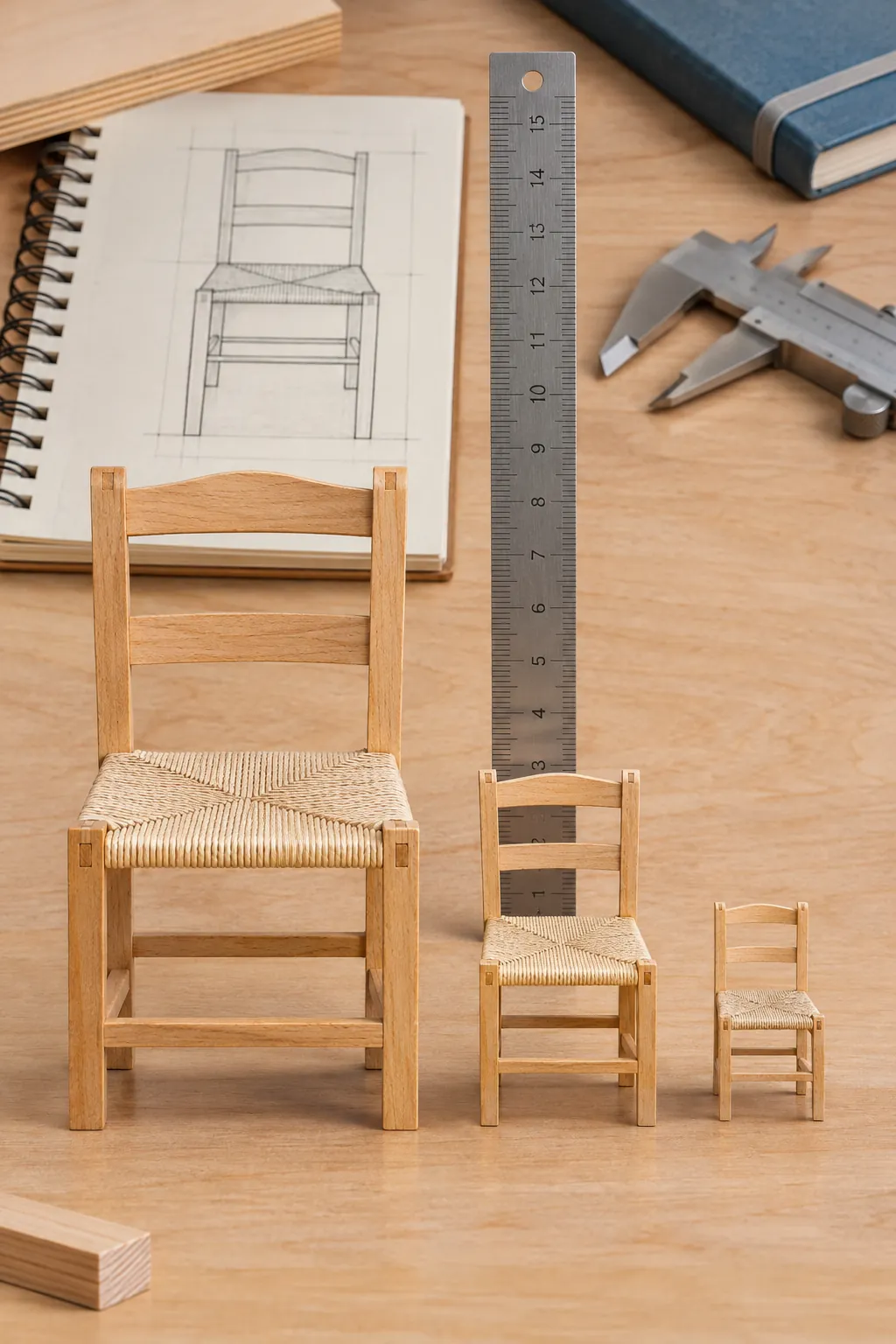
One sixth scale is often associated with fashion dolls and large play scale settings. One inch represents six real inches. One twelfth scale is a widely used dollhouse size in which one inch represents one real foot. It offers room for visible detail but requires a larger house.
One twenty fourth scale is often called half scale because it is half the linear size of one twelfth. Half an inch represents one real foot. One forty eighth scale is often called quarter scale. Each step reduces length, but usable area and volume shrink much faster, so materials and detail methods must also change.
Wood and sheet material terms
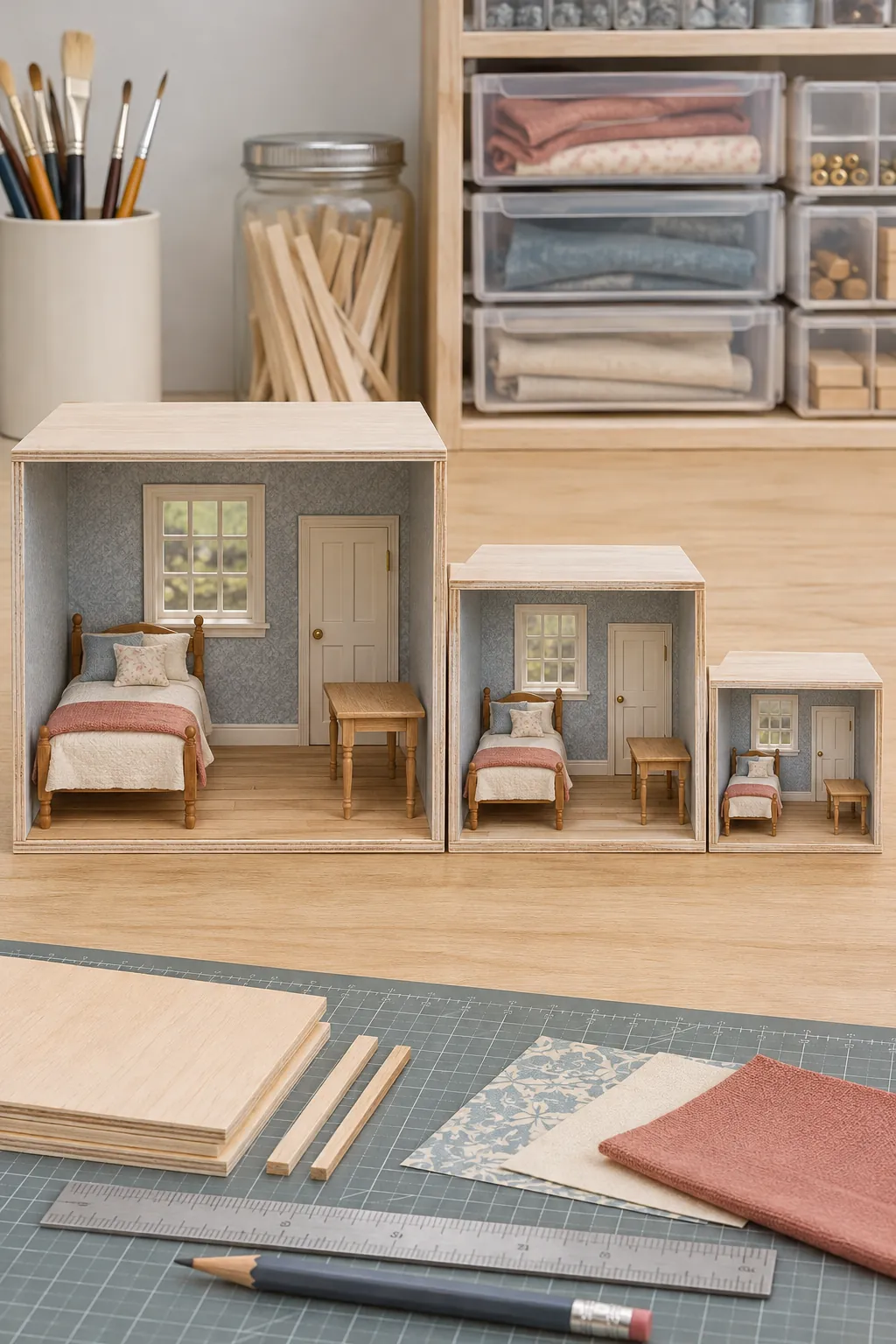
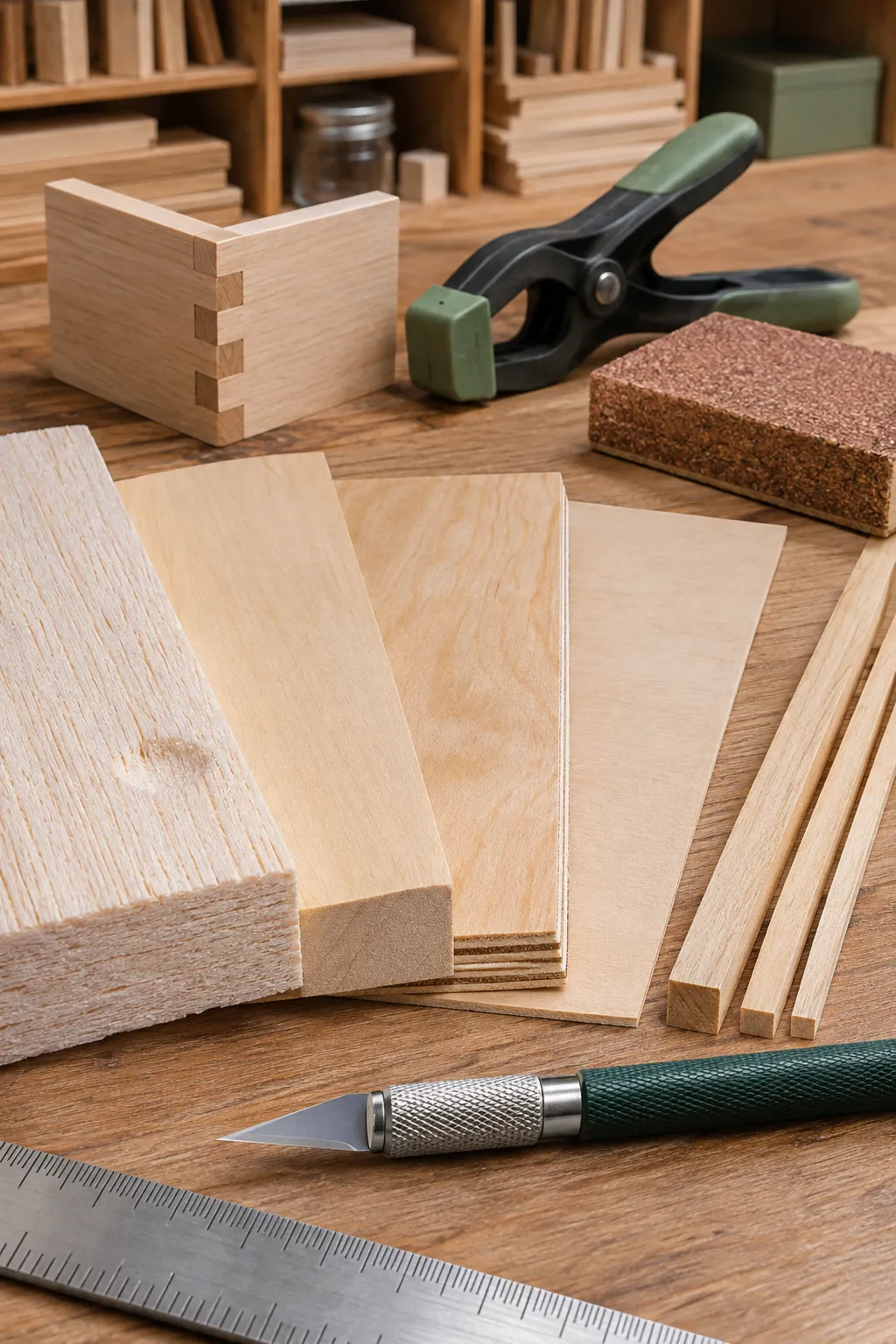
Balsa is a very light, soft wood that cuts easily and dents easily. It suits mockups, light forms, and parts that do not need crisp durable edges. Basswood is denser and usually holds fine cuts, sanding, and small joints more cleanly, which makes it useful for furniture and trim.
Plywood uses thin wood layers with alternating grain directions for stability. Sheet stock means a flat material sold by length, width, and thickness. Stripwood is narrow prepared wood in consistent rectangular sizes. Always match the stated thickness to the joint design, not only the overall scale.
Construction and fit terms
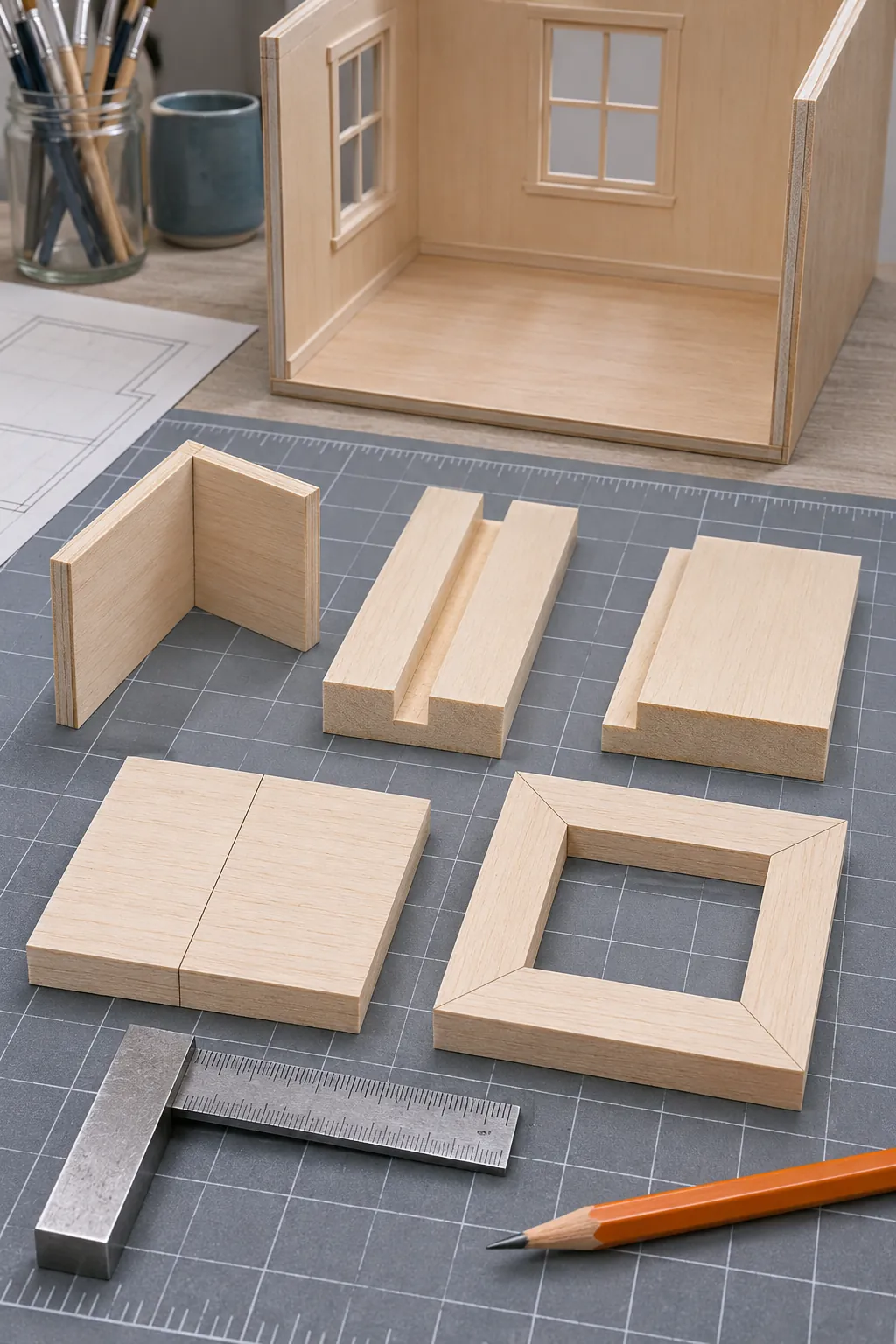
Dry fit means assembling parts without adhesive to check alignment and sequence. Kerf is the material removed by a saw or cutting tool. It matters when repeated cuts must produce an exact final width. Square means two surfaces meet at a right angle, not merely that a part has four equal sides.
Rabbet is a recessed step cut along an edge. Dado is a channel across a surface that receives another part. Butt joint joins one plain edge to another. Mitre joins angled edges, commonly at a corner. Reveal is the intentional visible offset around a door, window, panel, or trim piece.
Finish and surface terms
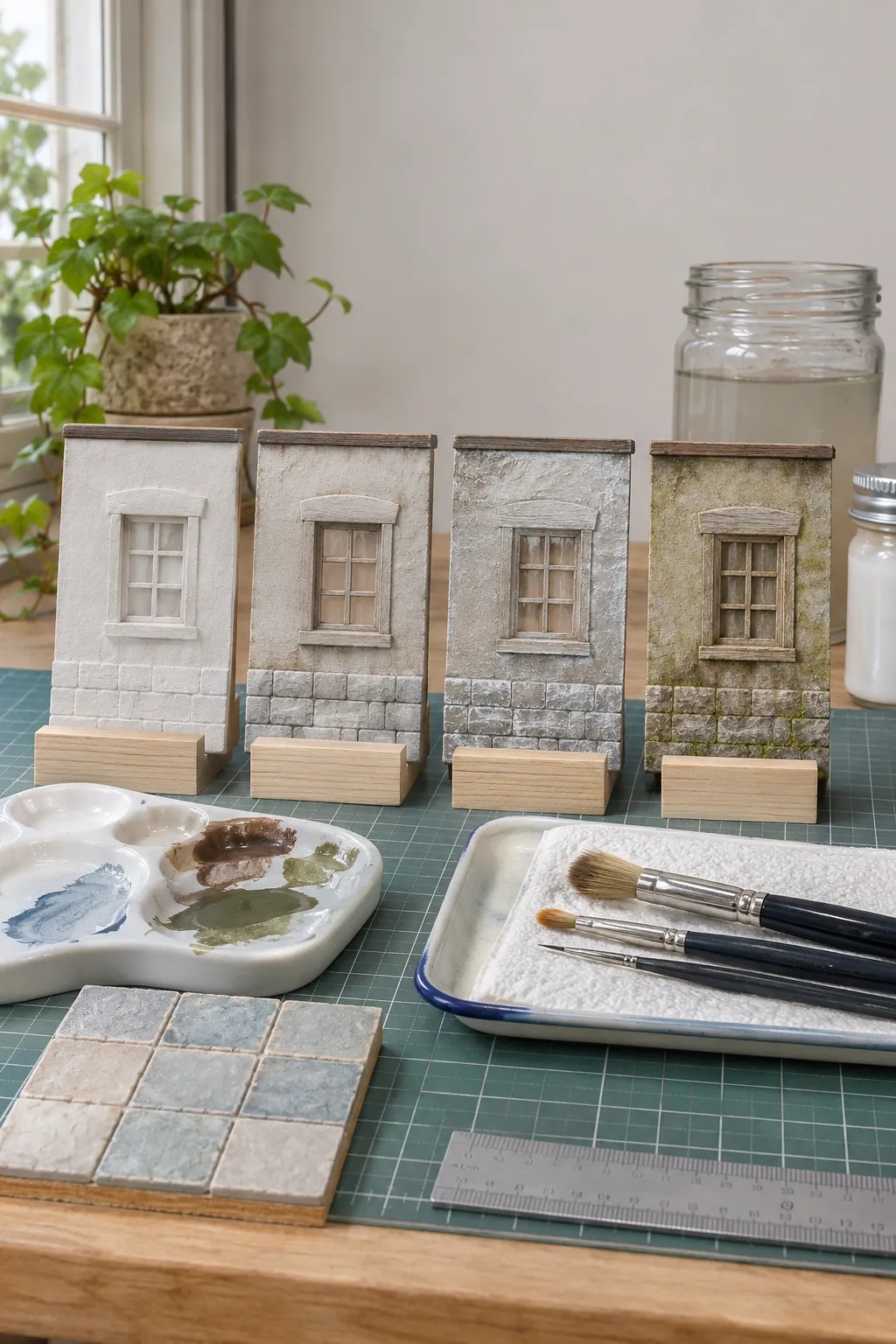
Primer creates a consistent surface for paint and can reveal flaws before the final color. Sealer limits absorption in porous wood or paper. Gesso is a prepared ground used before some paint finishes. The products are not automatically interchangeable, so follow the material and coating instructions.
Wash is a thin color that settles into recesses. Dry brushing uses very little paint on the brush to catch raised texture. Weathering adds controlled signs of age, use, or exposure. Grout line is the visible gap between miniature tiles or masonry units. At small scale, subtle finish variation usually looks more convincing than heavy texture.
Measurement and shopping terms
Nominal size is the name used for a standard material or component, which may differ slightly from its measured size. Actual size is what the ruler shows. Clearance is the open space available for a part to pass, open, or move. Footprint is the floor area an object occupies when viewed from above.
Conversion changes a real dimension into a miniature one by dividing by the scale denominator. A real seventy two inch bookcase becomes six inches at one twelfth scale and three inches at one twenty fourth scale. Tolerance is the permitted variation around a target measurement. Record units every time, compare actual dimensions, and make a paper template when a purchase must fit a specific room.