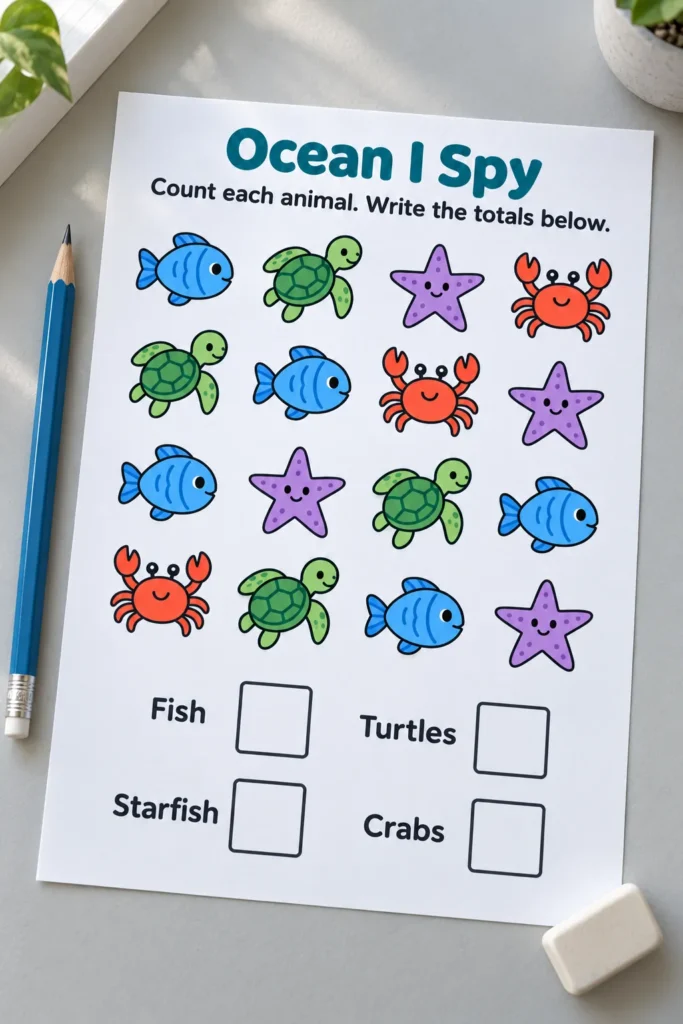
Counting a busy picture can be harder than saying the number words. A child must recognize the target, keep track of what has already been counted, and connect the final count to an answer. This beginner page uses a spaced picture grid so the search stays manageable.
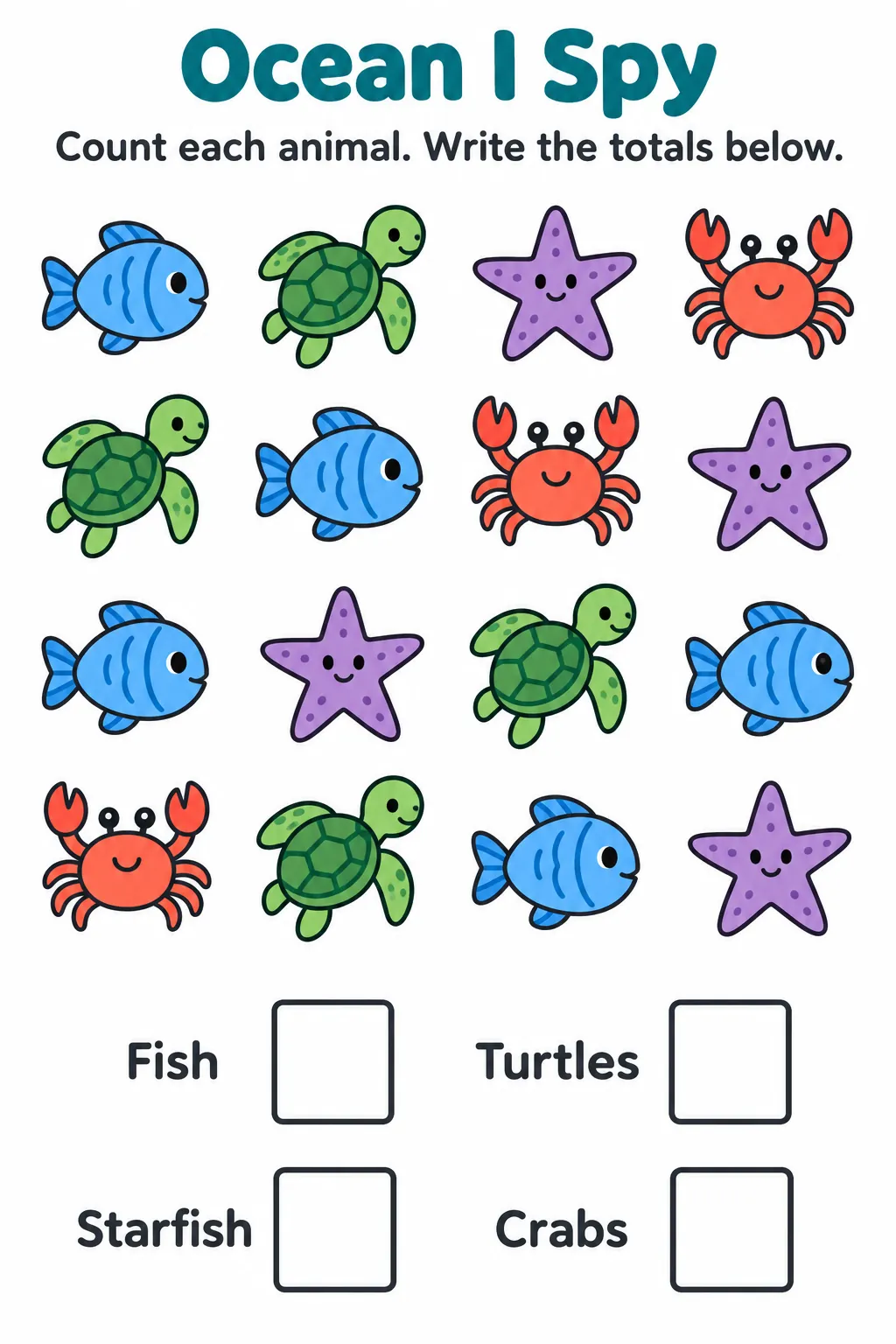
Download high-resolution printable
Open the download button in a new tab to save the full size image, then print the activity. The page has sixteen pictures and four blank answer boxes. Keep the separate answer key below out of sight until the child has tried the search.
Search for one animal at a time
Begin by naming a fish, turtle, starfish, and crab in the picture area. Ask the child to find all the fish first, moving across each row before continuing to the next. Pointing to each picture helps connect one spoken number with one object. The goal is careful sea animal counting, not finishing faster than someone else.
The four answer labels do not contain extra animal pictures to count. Count only the sixteen pictures in the main grid. A child who cannot read the labels can listen as an adult reads them and points to the matching answer box.
Record the count without losing your place
Write the final number in the box next to the animal name. If writing numerals interrupts the search, let an adult record the spoken count instead. A light pencil mark beside each found picture can help prevent counting it twice. Work through one category completely before starting another.
Check with the matching answer key
The verified answers are 5 fish, 4 turtles, 4 starfish, and 3 crabs. Together these totals account for all sixteen pictures in the grid. If a count differs, revisit that animal row by row rather than replacing the child’s answer immediately.
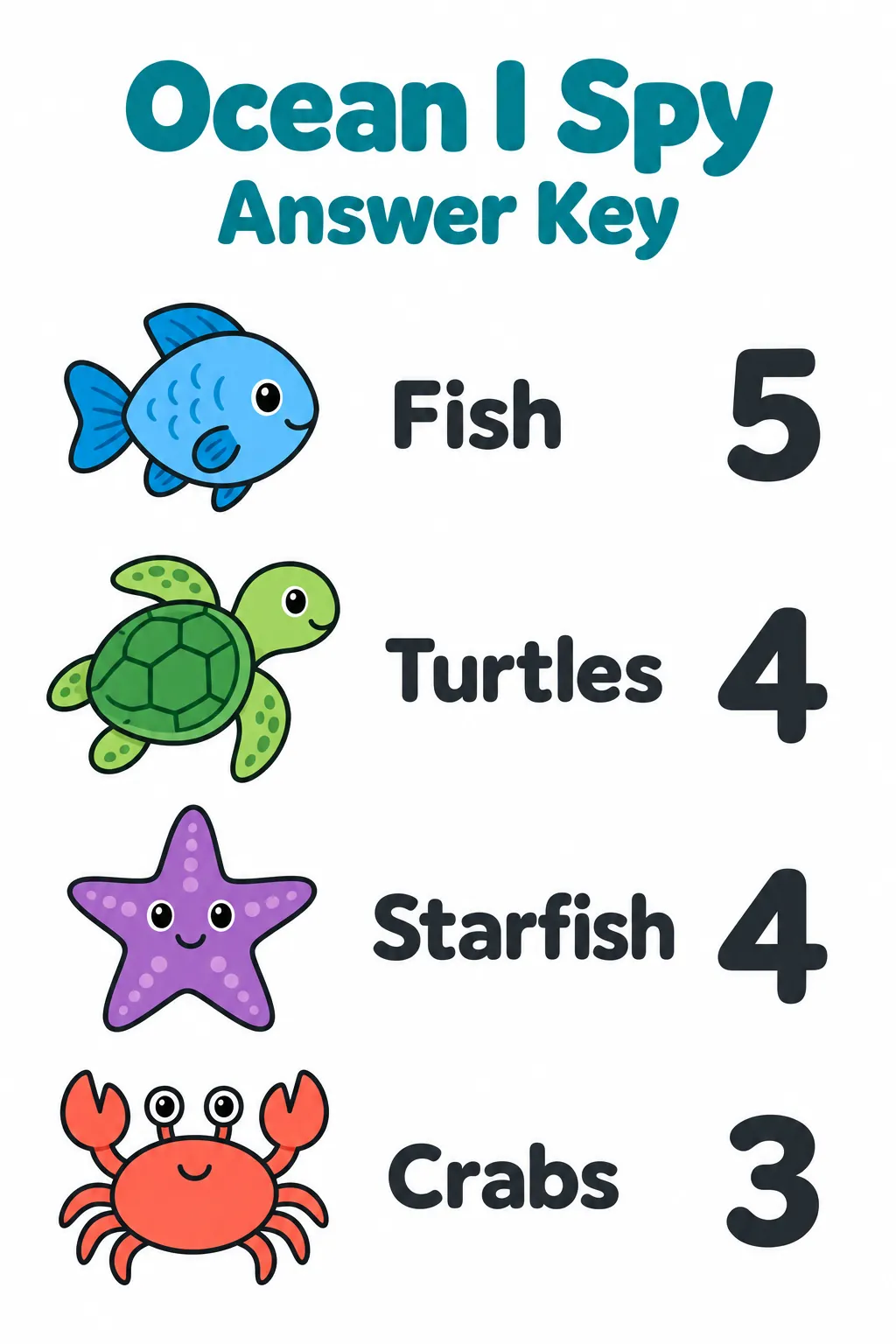
Download high-resolution printable
Adjust the challenge to the child
For a simpler start, cover the lower half of the grid and look at the top two rows together. Count just one type in that smaller area before uncovering the full page. This practice count will differ from the full page answer key, so save the printed boxes for the complete search.
For another round, ask which animal appears most often or whether two categories have the same total. Fish appear most often, while turtles and starfish both appear four times. These comparisons add a new question without making the picture area more crowded.
Print for a clear and comfortable activity
Use fit to page and check the preview so the title, picture grid, and answer boxes stay inside the printable area. Dark outlines distinguish the animals even if the ocean worksheets are printed in grayscale. Ordinary paper is enough for pencil answers, and you can print a fresh sheet for another child.
Keep this summer printable among a few screen free activities for a quiet indoor session. Read the instruction aloud and allow breaks if scanning the page becomes tiring. The most useful next step is a count the child can explain by pointing to the pictures, rather than a page filled with unsupported guesses.