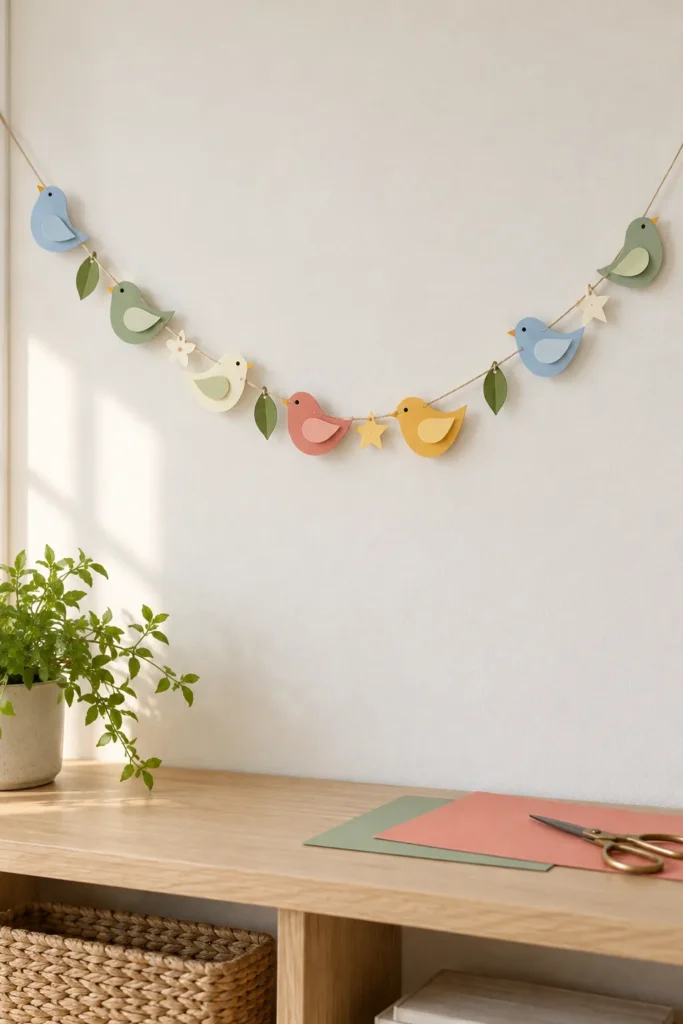
Light paper shapes can bring color to a shelf, nursery, classroom, or spring gathering without adding bulky decor. The useful part is a pattern with strong contours and enough space around every piece. This sheet keeps the birds simple so beginners can cut them cleanly and string them without fragile details tearing.
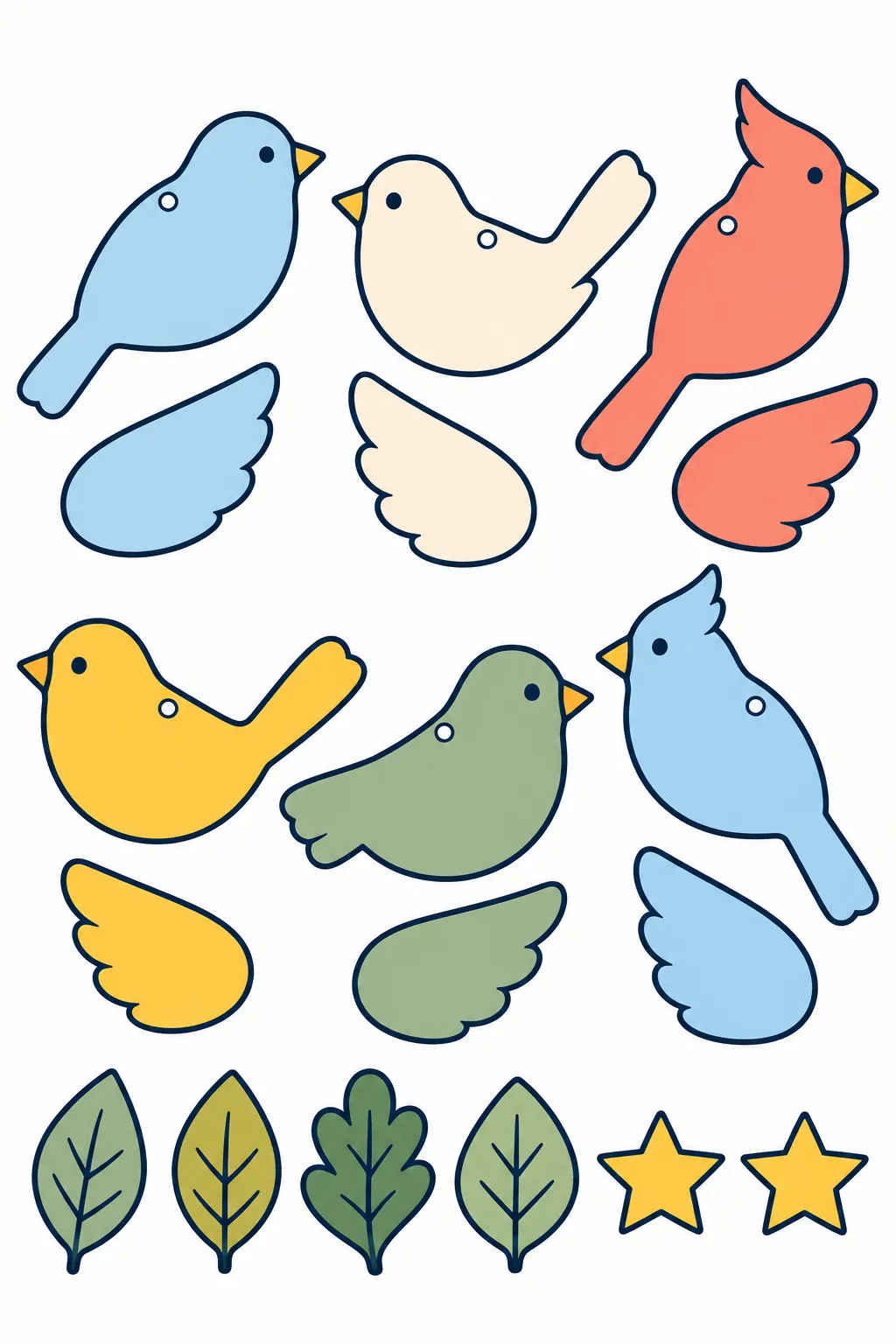
Download high-resolution printable
Click the preview to open the full size sheet, or use the download button to open it in a new tab. Save the image from that tab before printing. Print on light cardstock for ready colored birds, or use ordinary paper as a tracing guide on patterned scraps.
Choose Paper That Can Bend
Light cardstock holds its shape but still bends gently around string. Very heavy board makes small beaks and tails hard to cut, while thin copy paper can curl after glue is added. If you use patterned paper, choose a design with similar contrast on both sides so turned birds still look intentional.
Cut the Sturdy Shapes First
Begin with the broad bird bodies before moving to wings, leaves, and stars. Turn the paper as you guide the scissors around curves instead of twisting your wrist. If a beak or tail begins to split, stop and approach the narrow point from the other direction.
Layer the Wings With Little Glue
Dry fit one wing on every bird before opening the glue. A thin swipe through the center is enough because glue along every edge can wrinkle the paper. Let the pieces dry flat under a clean book, with a protective sheet between the craft and the cover.
String Birds Without Tearing
Punch the small marked circle only after the glued wing is dry. Thread cotton string through each hole and secure the position with a tiny paper friendly adhesive dot on the back if the birds slide. Leave a hand width between shapes so the garland drapes instead of bunching.
Hang It Where Paper Stays Dry
Use removable hooks on a clean indoor wall, shelf edge, or window trim. Keep the garland away from heaters, open flames, damp rooms, and places where a small child could pull the string. Store it flat between sheets of tissue when the season changes, and the birds can return next year.