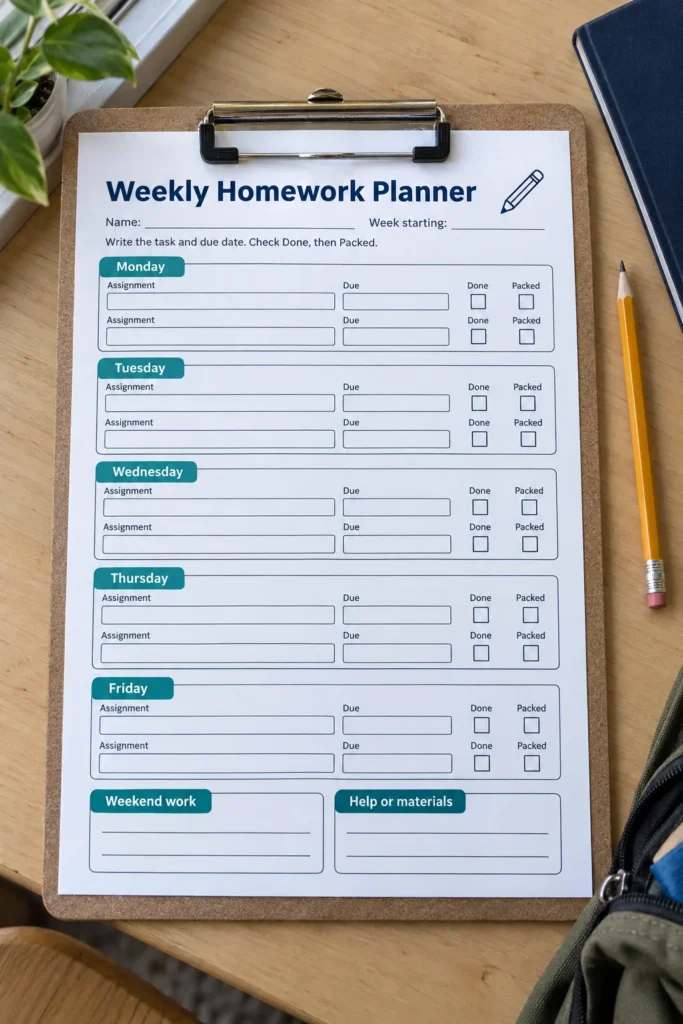
Finishing an assignment and getting it into the school bag are two different tasks. A visible place to record both can make the evening check more specific than asking whether everything is done. This page keeps schoolwork and the final packing step together, without turning the family routine into a detailed timetable.
Save the blank planner
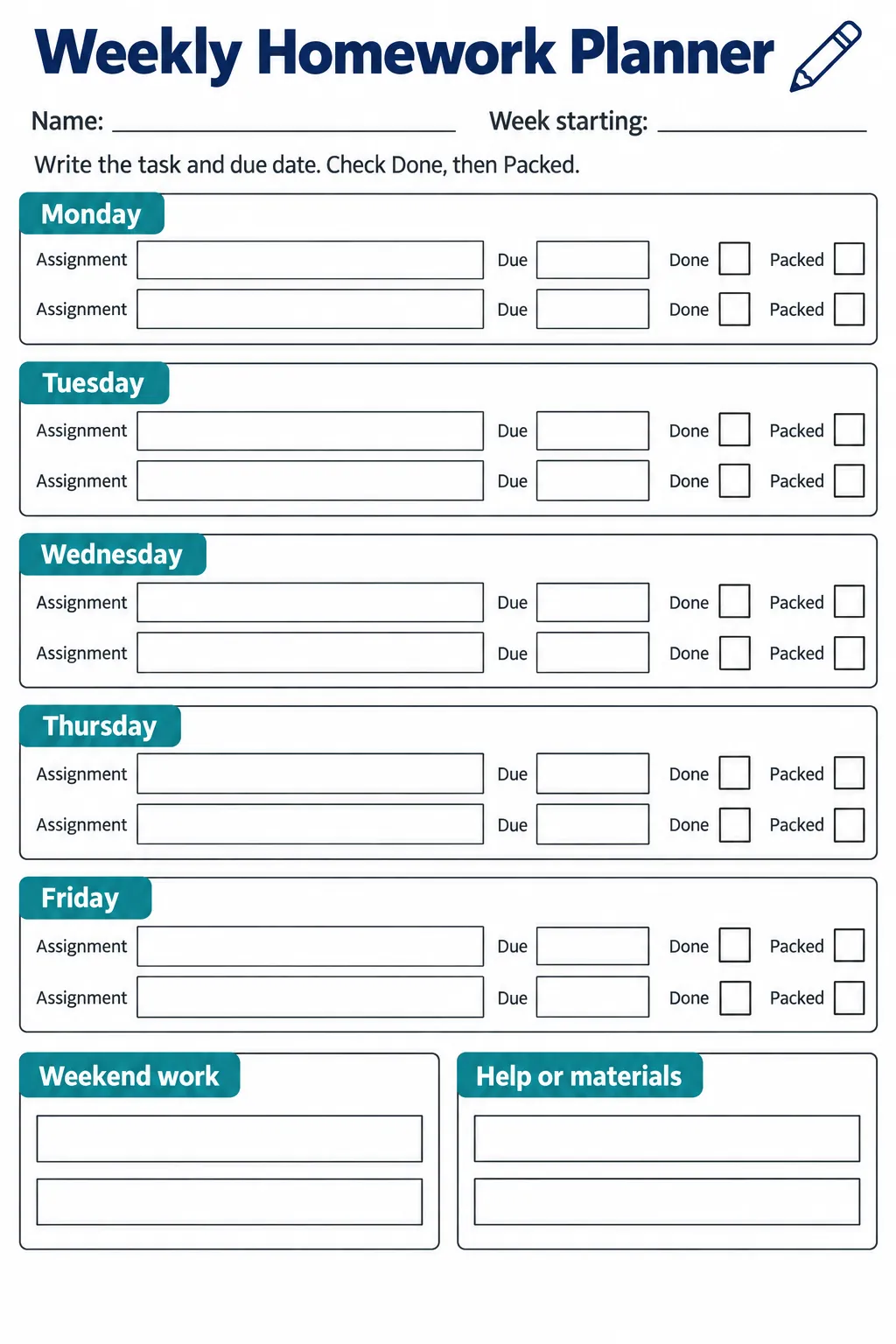
The sheet below is designed for students who can write short assignment notes, with adult help for younger readers. It has five weekday panels, two assignment spaces per day, and a small area for weekend work. Click the preview to open the full size image, or use the button to open it in a new tab and save it from there.
Download high-resolution printable
Record the work before choosing a start time
Write the week starting date at the top so an old page cannot be mistaken for the current one. In each assignment space, record the subject and the actual task, then add its due date. For example, write “Math: questions 1 to 6” instead of “Math homework.” Put the task under the day you plan to work on it; the separate due field preserves the teacher’s deadline.
This weekly school planner is a short view of the work ahead, not a replacement for the school portal or teacher instructions. Check those sources together when a deadline is unclear. If a day has more than two assignments, continue on the back and note that on the front. Keep longer project requirements in the original instructions rather than squeezing them into a tiny space.
Use done and packed as separate checks
Mark Done only after the work is complete and any required review is finished. Mark Packed when the paper or needed materials are in the school bag. For digital work, use Packed to mean the file has been submitted and the confirmation checked. Agree on that meaning before using the student assignment tracker so a tick has a clear purpose.
Keep the after school check small
Place the homework organizer where the student already opens the bag, such as a desk or kitchen work spot. Ask the student to choose one next task and collect the materials for it. A younger child may need an adult to read the task aloud and help write the note. The page supports after school organization, but it does not prescribe how long every child should work or replace any learning support they need.
Use the Help or materials box for a concrete obstacle: ask about question 4, find the library book, or bring scissors. Weekend work belongs in its own box so it stays visible without filling the weekday panels. These written fields can sit beside visual schedules for kids, while picture based routines may work better for children who do not yet read.
Print with room to write
Open the saved image in your print dialog and choose portrait orientation. Fit the complete page within the printable area on Letter or A4 paper and check the preview for clipped edges. The artwork has a taller shape than either paper size, so white space at the sides is normal. Use ordinary paper and pencil, then test one copy before printing several weeks.
The sheet is intentionally blank and has no answer key or fixed school dates. Start a fresh page each week and carry forward unfinished work only after checking its deadline. At the evening bag check, the useful question is specific: which completed task still needs to be packed?