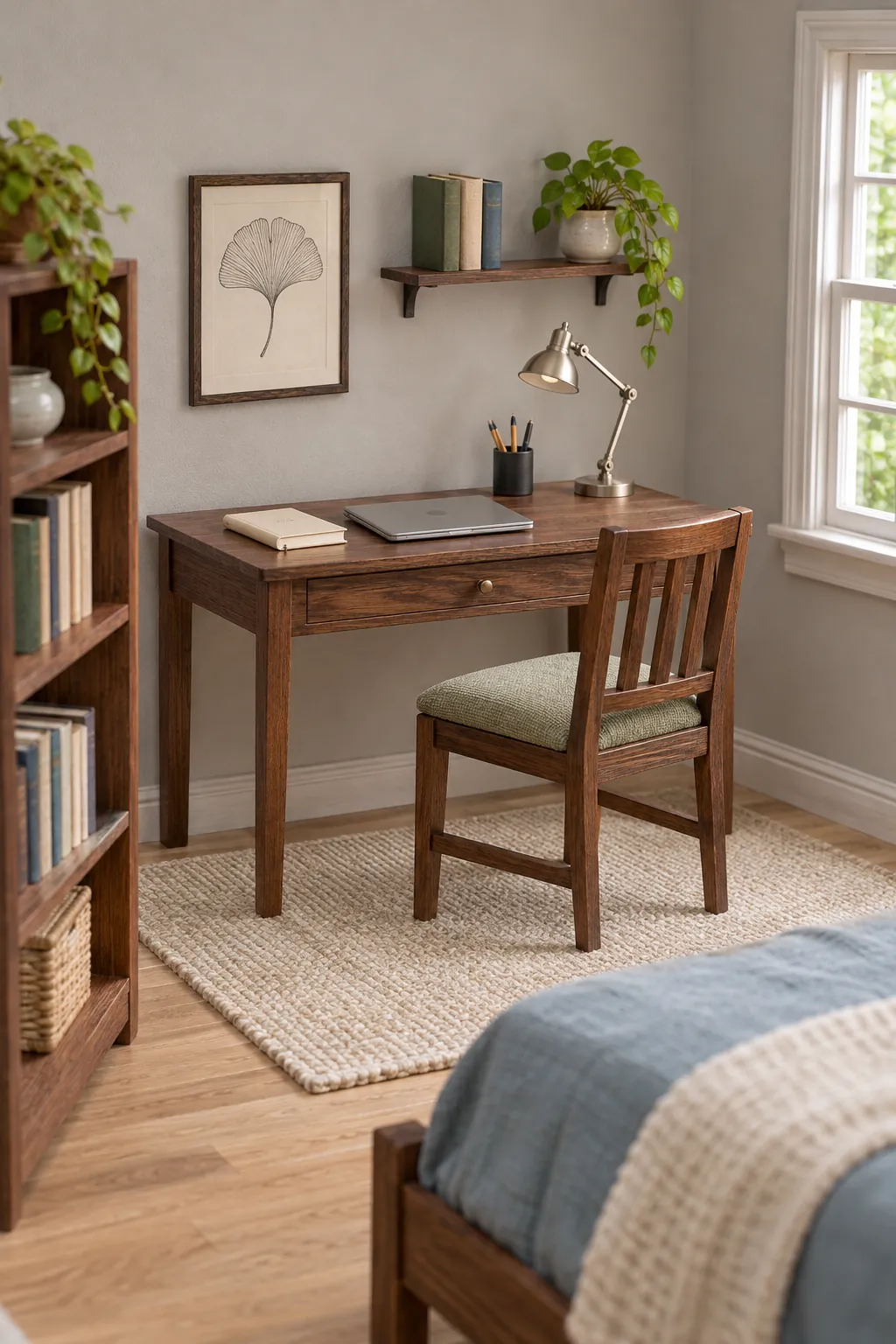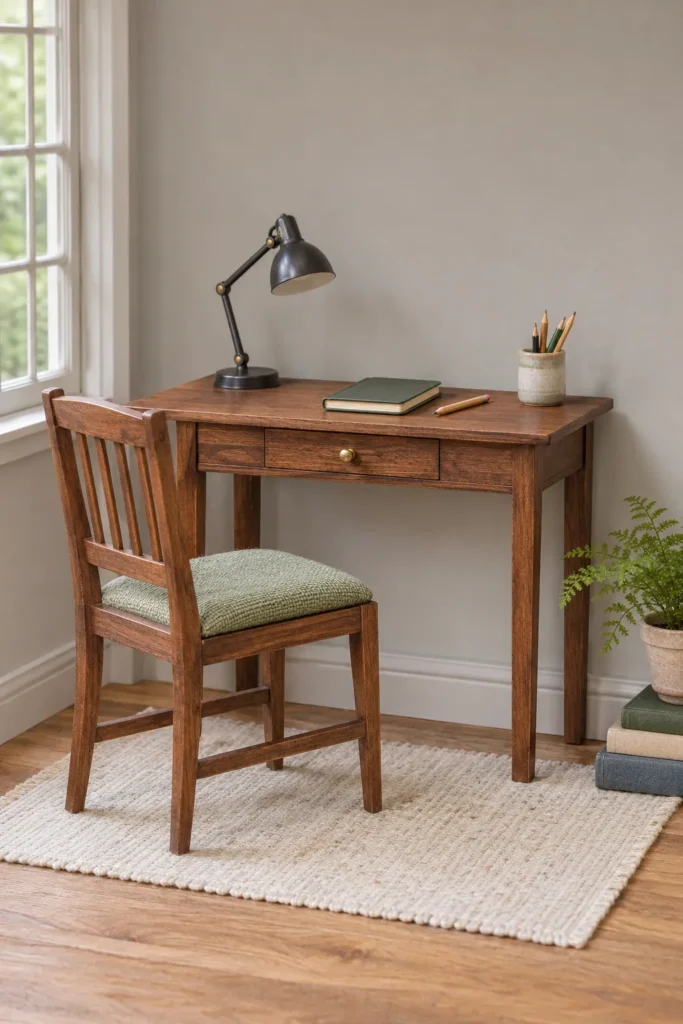
A tiny office can look convincing only when the furniture fits the room and the doll. A desk that is too tall makes the chair seem wrong, while thin legs and weak joints can fail as soon as the piece is moved. This project solves both problems with simple measurements, layered craft wood, and careful dry fitting.
You will build a compact desk with a shallow drawer and a matching office chair. The method suits a one twelfth scale dollhouse, but the scale formula lets you adapt every dimension. The finished set works in a study, bedroom corner, library, or modern miniature apartment.
Choose the scale and finished size
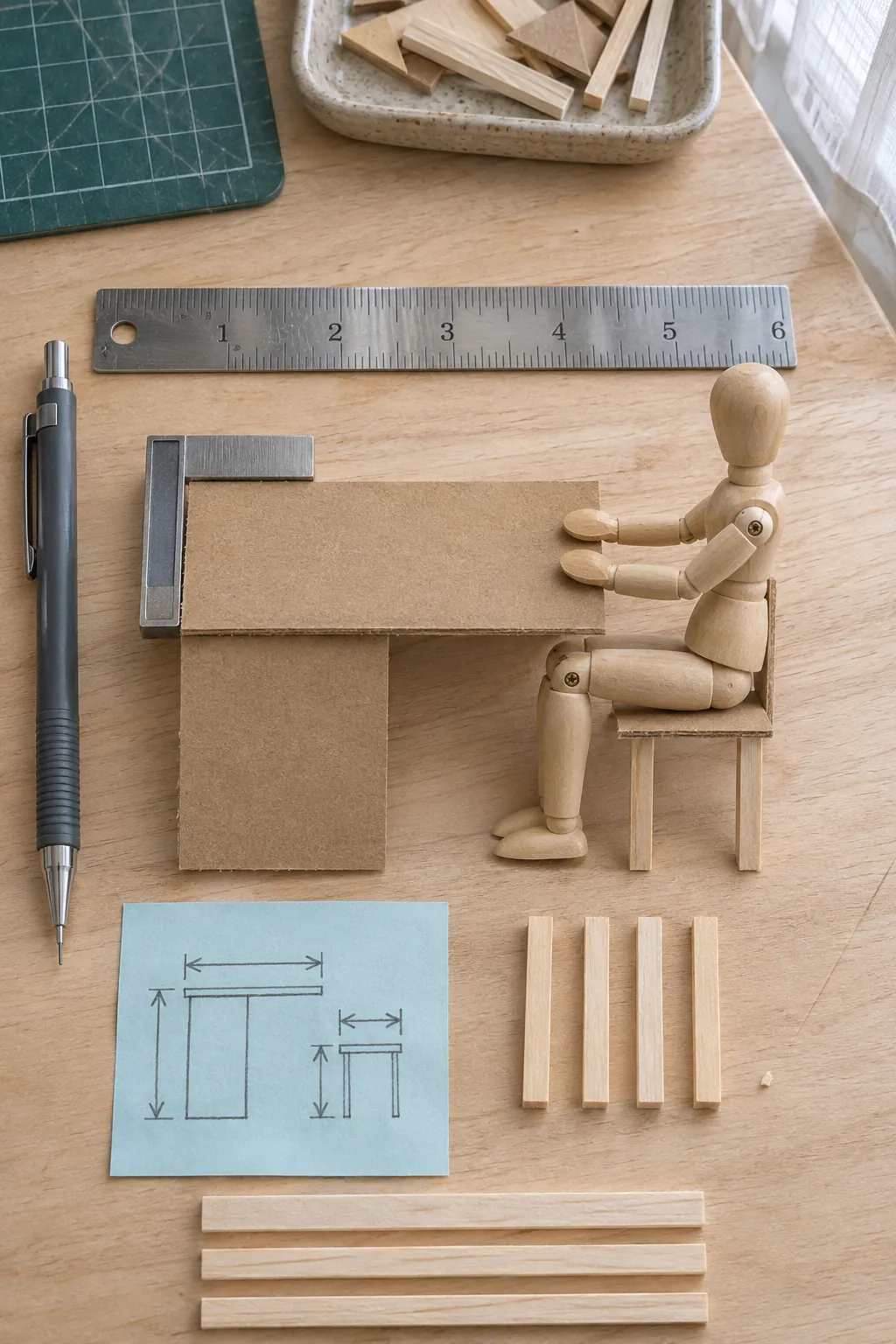
Start with the doll or room rather than a fixed plan. In one twelfth scale, one inch in the miniature represents one foot in real life. A practical desk can be 5 inches wide, 2 inches deep, and 2.5 inches high. A matching chair can have a seat about 1.5 inches wide, 1.4 inches deep, and 1.5 inches above the floor.
Check the doll before cutting. Place a temporary cardboard seat beneath the doll and raise or lower it until the feet and knees look natural. Then place a cardboard strip at desk height. The desk top should clear the thighs while leaving the forearms close to a comfortable writing position.
Gather simple tools and materials
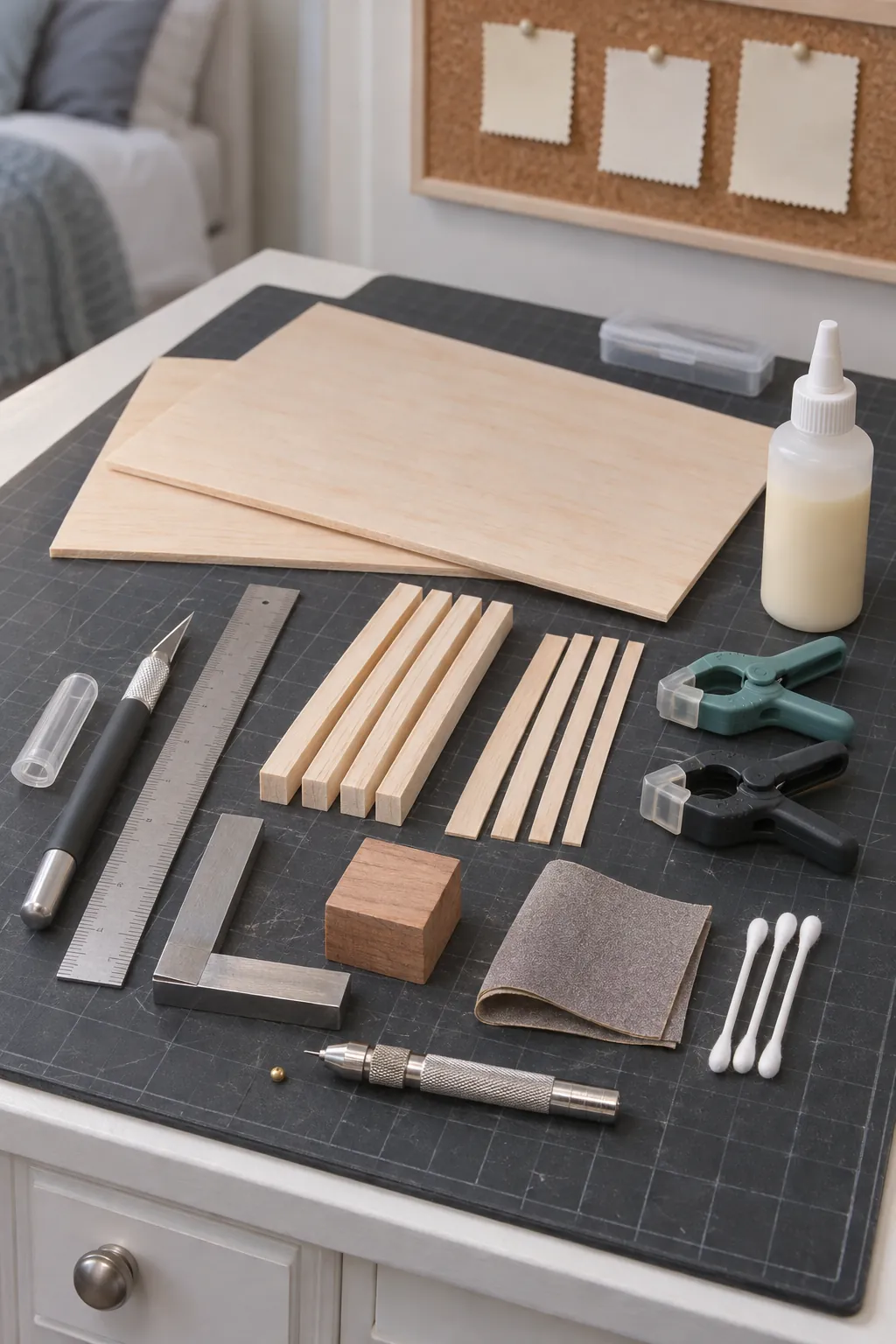
Use basswood sheets and strips when you want crisp edges and easy sanding. A 1/16 inch sheet works well for the desk top, drawer front, chair seat, and back. Square strip wood makes dependable legs. Thin card can replace wood for a budget version, but laminate two layers for the desk top and chair seat so they stay flat.
You also need a sharp craft knife, metal ruler, cutting mat, fine sandpaper, tacky glue or wood glue, small clamps, and a square object that can guide right angle joints. A pin vise is useful for drawer pulls, though a tiny bead can be glued directly to the drawer front. Keep a damp cotton swab nearby so you can remove glue squeeze out before it dries.
Build a square and sturdy desk
Cut the desk top first, then sand every edge with light strokes. Cut four legs to the same 2 7/16 inch length. Glue each front leg to a narrow apron strip, then make a matching rear assembly. Let those two frames firm up before joining them with side aprons. This sequence is easier to keep square than attaching four loose legs at once.
Rest each frame against a small box while the glue sets. Measure the distance between the legs at the top and bottom. Equal measurements show that the legs are parallel. Join the frames, check that all four feet touch the work surface, and add the desk top with a small overhang on every side.
For the drawer, make a shallow open box that slides beneath the front apron. Leave a fine gap around it so paint will not make it stick. If a working drawer feels too demanding, glue only a drawer front beneath the top. The visual effect is nearly the same, and the desk remains sturdy.
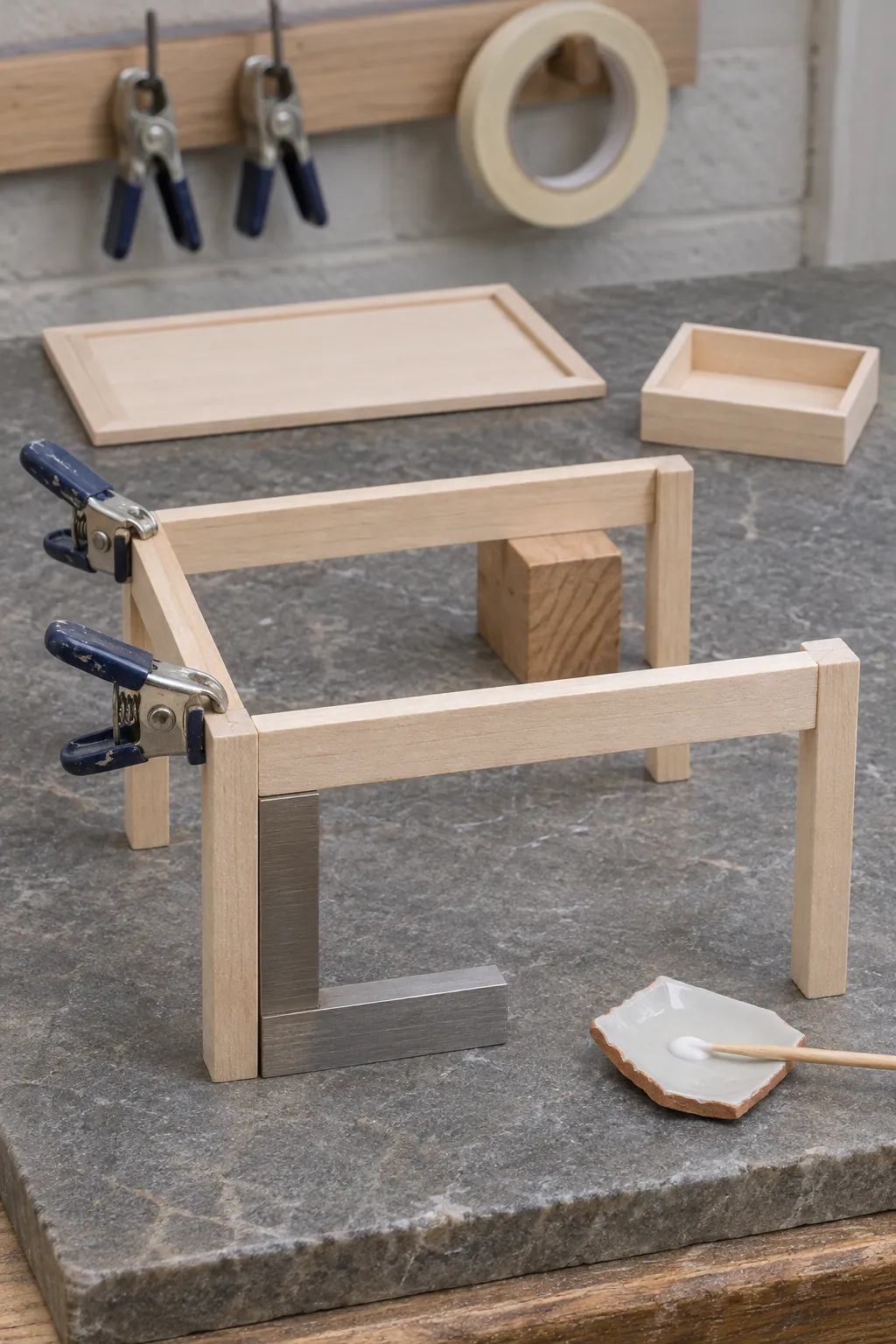
Assemble the office chair
Cut a seat rectangle and soften its front corners with sandpaper. Make two side frames, each with a front leg and a longer rear leg. The rear legs continue upward to support the back. Glue one side frame at a time against the seat, using a square block to hold the joint while it dries.
Add a narrow rail between the rear legs, then attach the chair back. A slight backward angle looks more comfortable, but keep it subtle. Test the chair beside the desk before the glue fully cures. The seat should slide beneath the desk apron without catching, and the chair back should remain clear of the desk top.
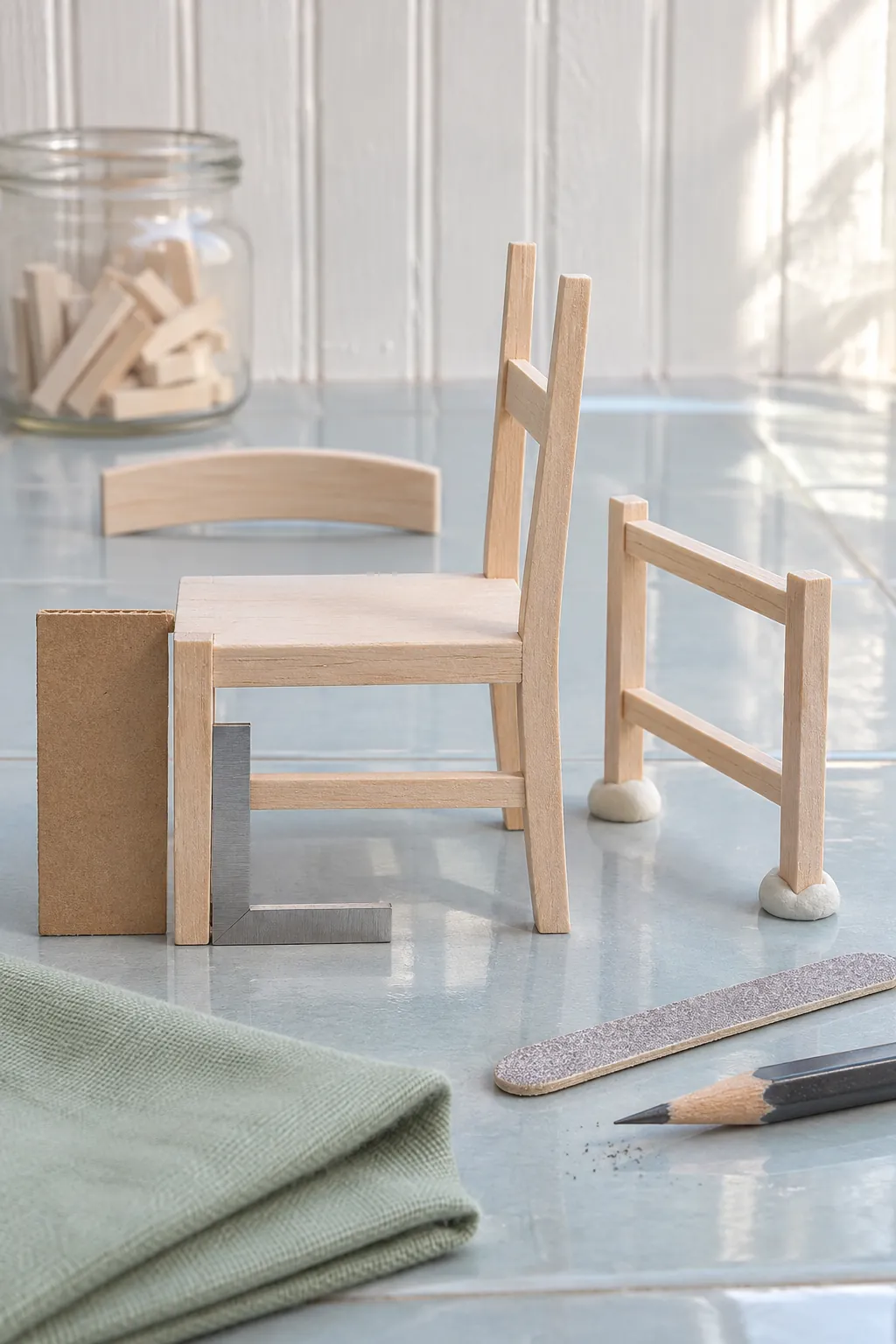
Sand, paint, and add realistic details
Fill visible gaps with a tiny amount of wood filler and sand again after it dries. Seal raw wood before painting so the color stays even. Two thin coats give a cleaner miniature finish than one heavy coat. Sand very lightly between coats if the grain rises.
A warm walnut stain suits a traditional study. Muted sage, soft cream, charcoal, or dusty blue can make the set feel more modern. Keep the drawer pull small enough to remain in scale. A seed bead, short jewelry pin, or shaped wire loop can become a convincing handle.
Make a simple seat cushion from thin foam wrapped in tightly woven fabric. Choose a fine weave because large threads can resemble rope at miniature scale. Add a closed laptop, tiny notebook, pencil cup, and desk lamp only after the furniture finish has cured.
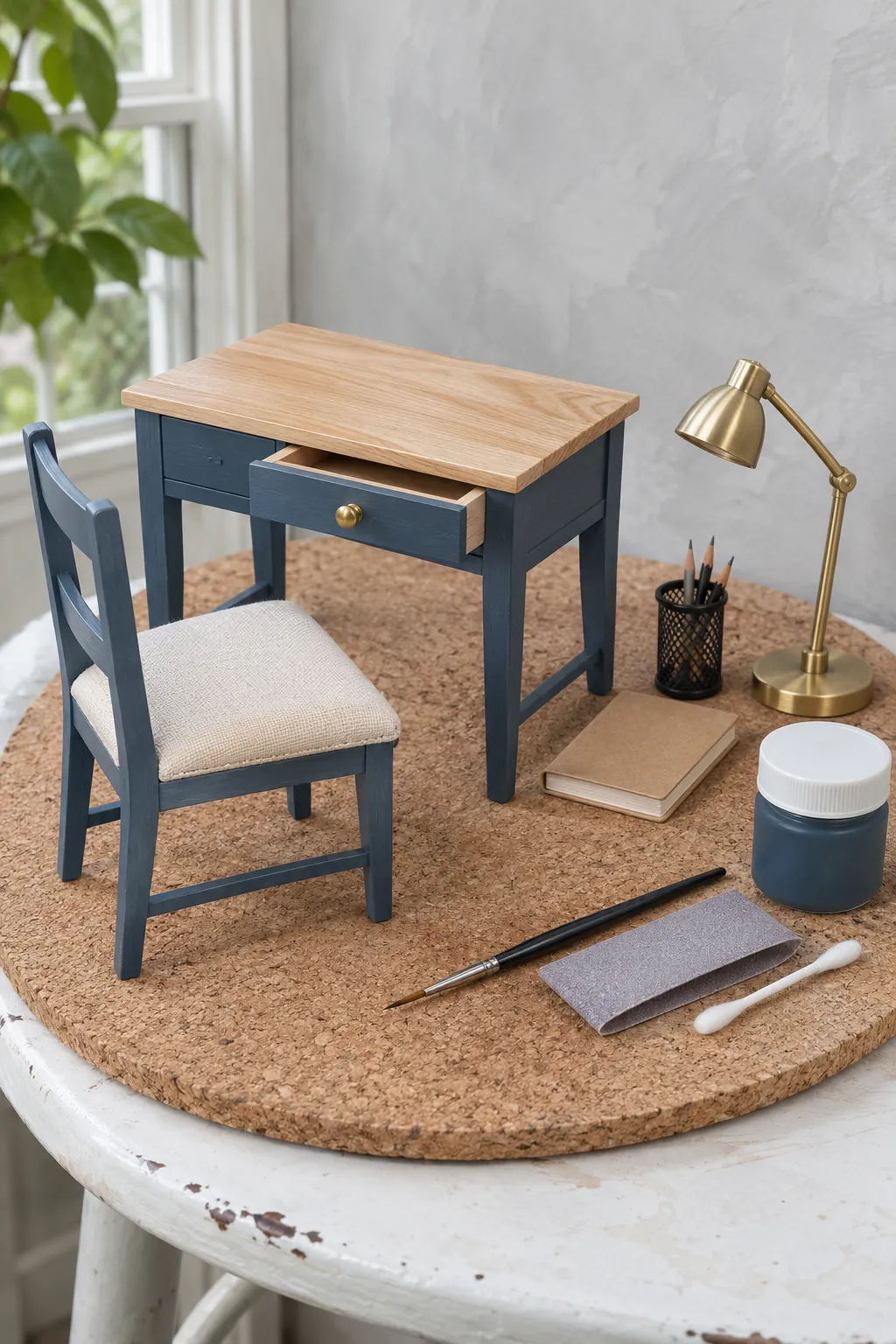
Style the finished miniature office
Place the desk where the chair can pull back without hitting a bed or bookcase. A small rug defines the office zone, while a narrow shelf above the desk uses the wall without crowding the floor. Keep accessories limited so the furniture remains easy to see.
If the set rocks, place it on a flat surface and identify the high leg. Sand that foot with one or two controlled strokes, then test again. If a joint loosens, remove old glue with the tip of a knife and reglue the clean surfaces. A patient repair is stronger than adding a large bead of glue around the outside.
The best final check is simple: the chair fits beneath the desk, all feet touch the floor, the drawer moves freely, and the proportions suit the room. Once those details work, even inexpensive materials can look like purposeful miniature furniture.