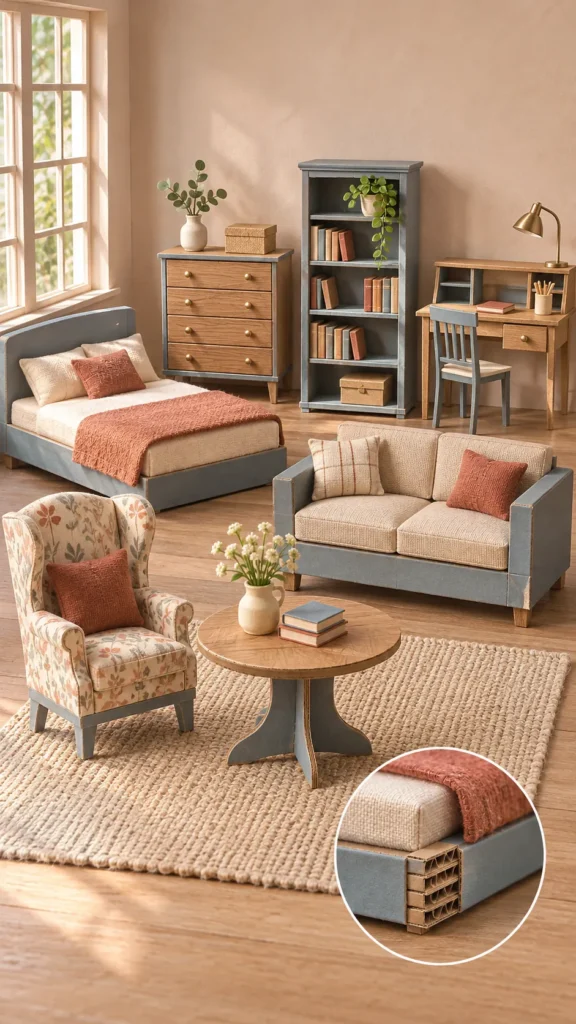
Packaging board can look rough at first, yet it becomes surprisingly convincing furniture when the layers, edges, and scale are controlled. The weak points are usually exposed corrugation, warped panels, and joints that rely on one thin glue line. Alternate the grain direction between layers, press every lamination flat, and cover raw edges with paper before adding the finish.
Low Platform Bed
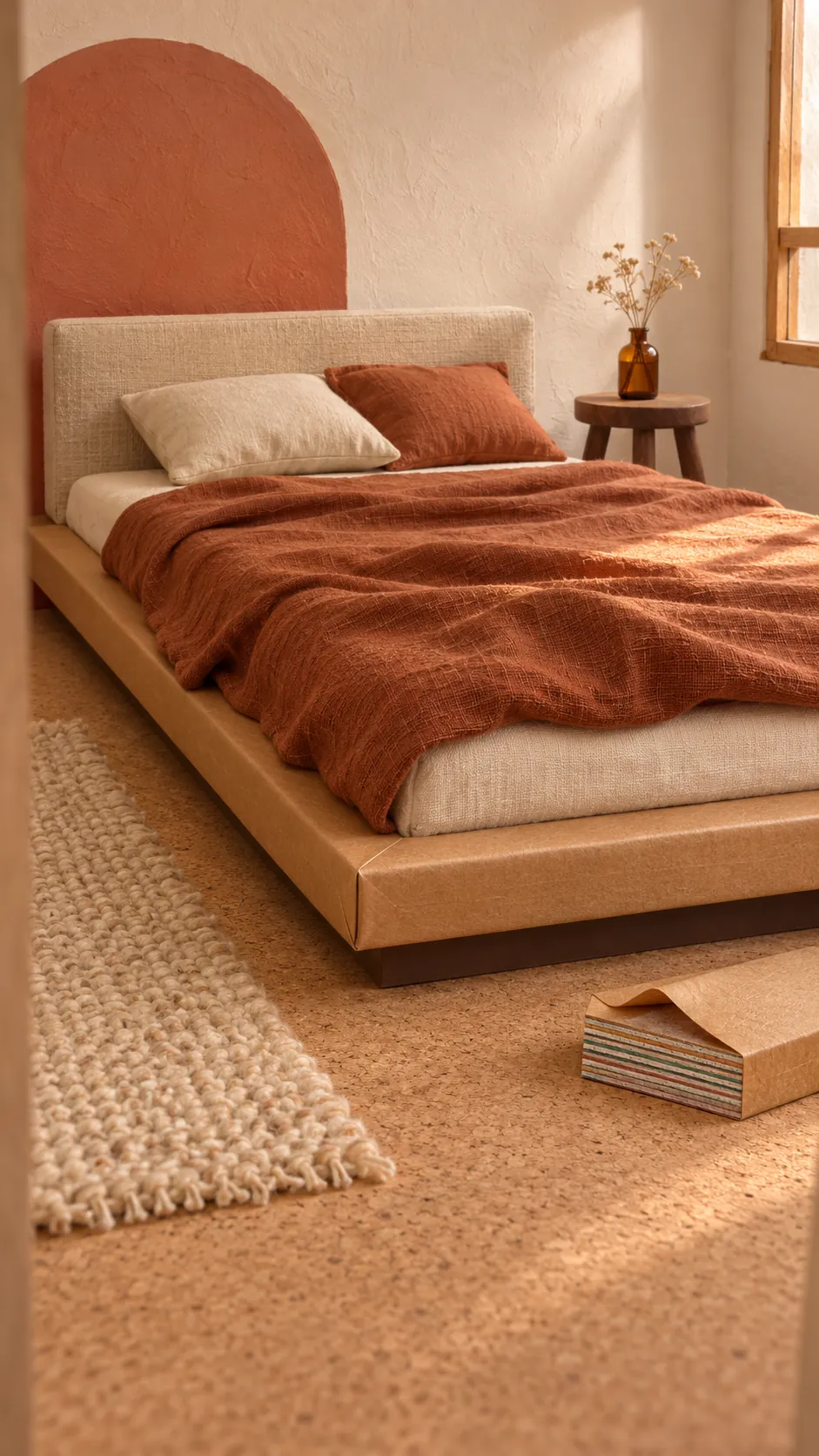
Laminate two broad rectangles from cereal box board for a rigid mattress platform, then add a recessed base beneath it. A 1:12 double bed can be about 4 1/2 inches wide and 6 1/4 inches long, though the room should decide the final size. Wrap the visible edge with kraft paper before paint so the layered construction reads as solid furniture.
Box Frame Sofa
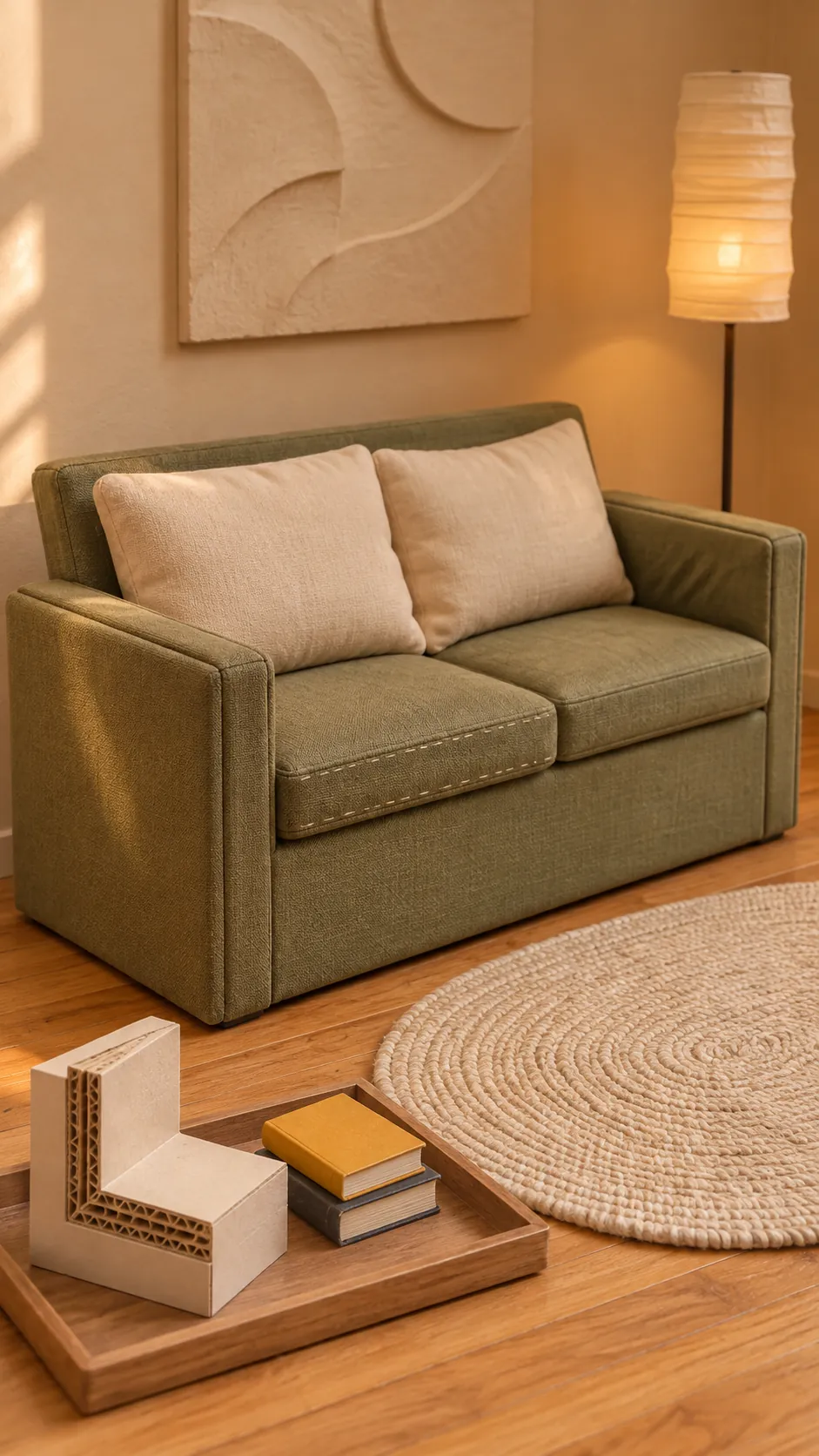
Build the seat as a shallow closed box, then attach double layer arms and a slightly reclined back panel. Corrugated board works well inside the hidden frame, while smooth food packaging gives the outer surfaces a cleaner skin. Add fabric cushions only after the frame sits square, since soft filling cannot hide a twisted base.
Curved Wingback Chair
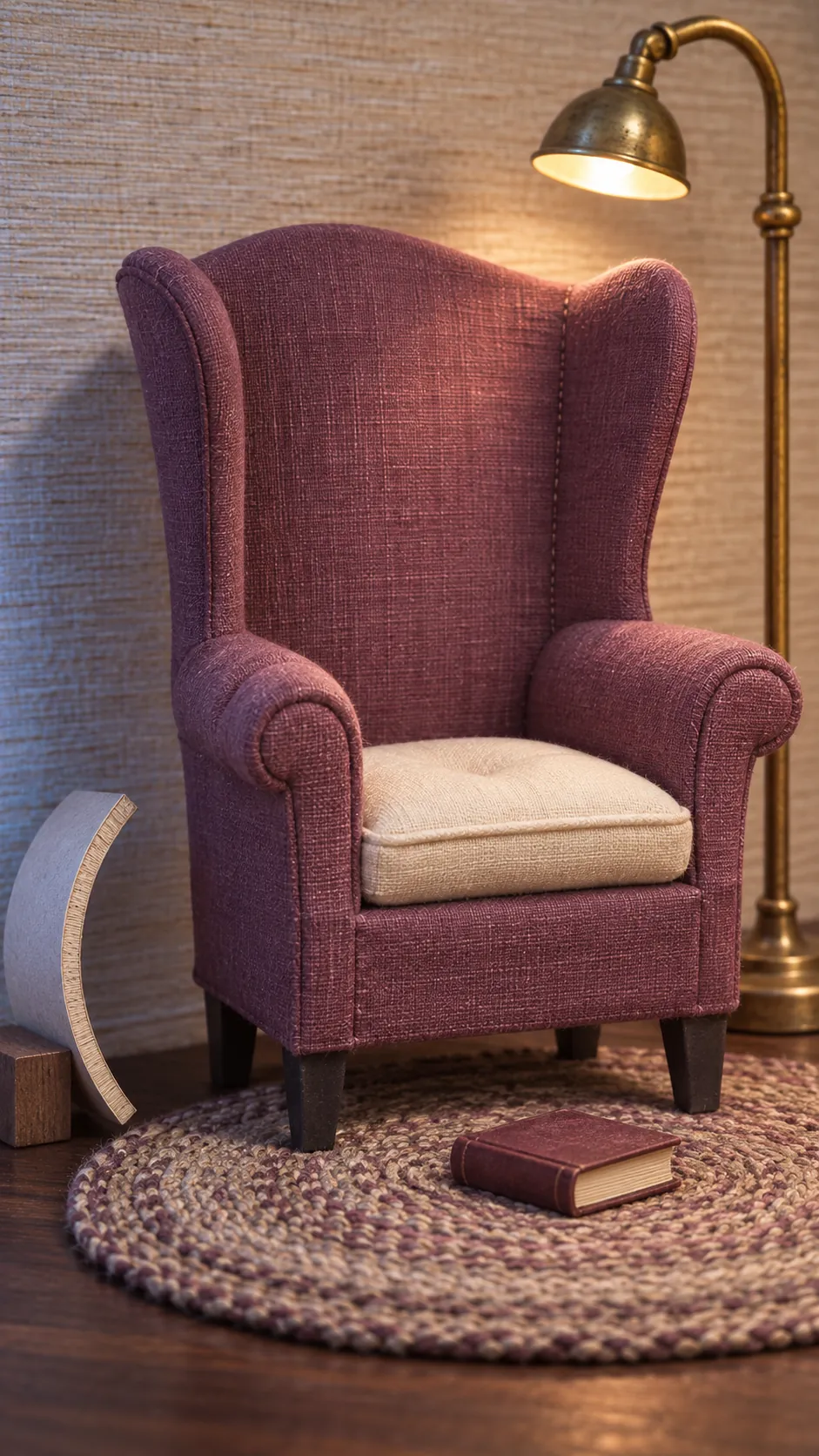
Cut a tall back from thin card and score two gentle folds to create the wings without cracking the surface. Glue a second layer behind it with the paper grain turned across the first layer, then hold the curve around a bottle while it dries. A compact seat box and rolled paper arms give the chair enough depth to look upholstered.
Trestle Dining Table
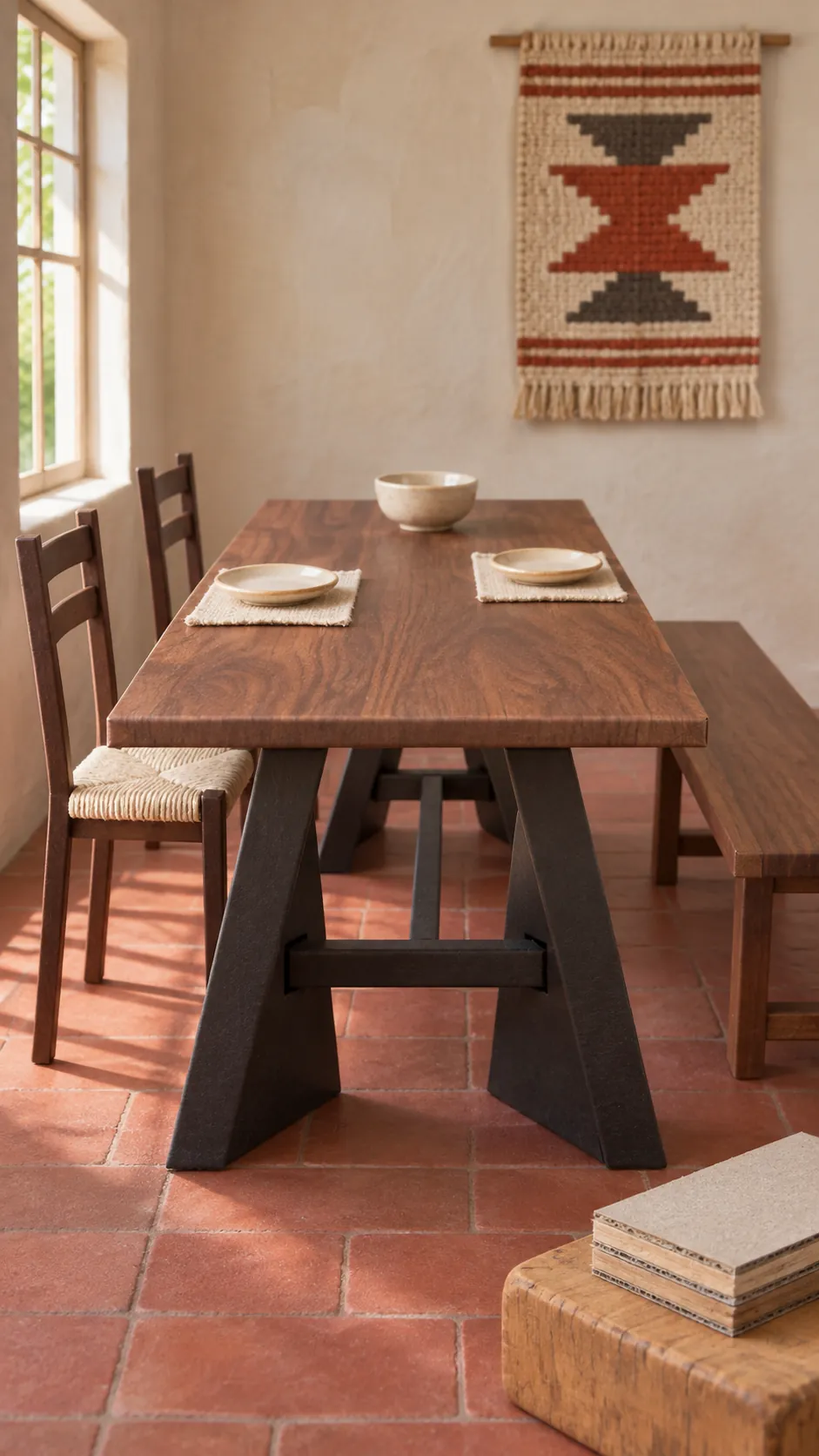
Use three laminated card layers for the top and press them beneath a heavy book until fully dry. Each trestle can be a folded triangular support with a narrow cross rail fitted between the two ends. Apply printed wood paper in one continuous direction so the surface looks like boards rather than patched packaging.
Slat Back Dining Chair
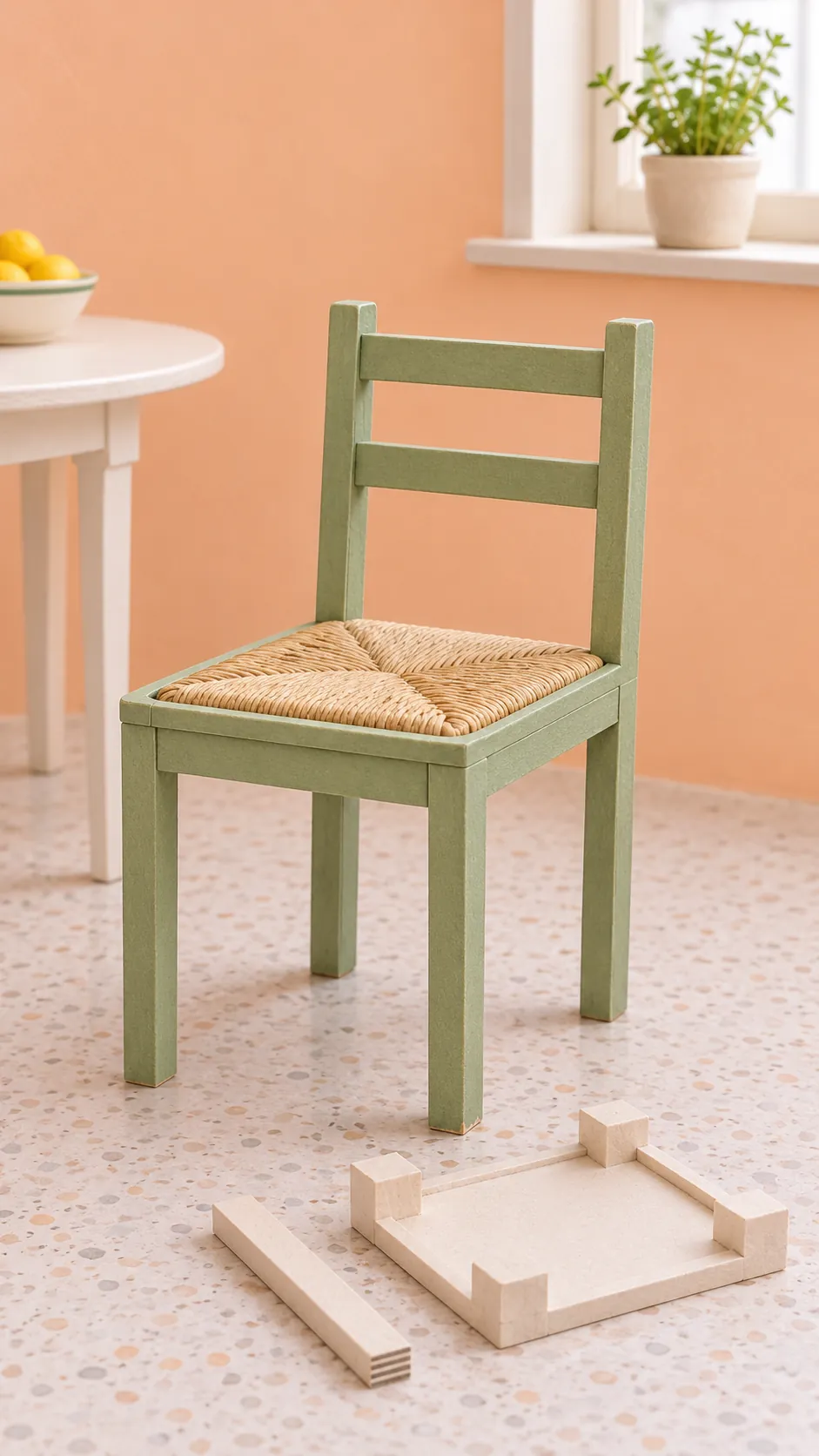
Make the back legs and uprights from narrow strips formed by laminating dense box card. Set a small square seat between them, then add two thin cross slats across the back after the frame is dry. A simple assembly jig made from scrap card keeps all four legs touching the same flat surface.
Drawer Bedside Table
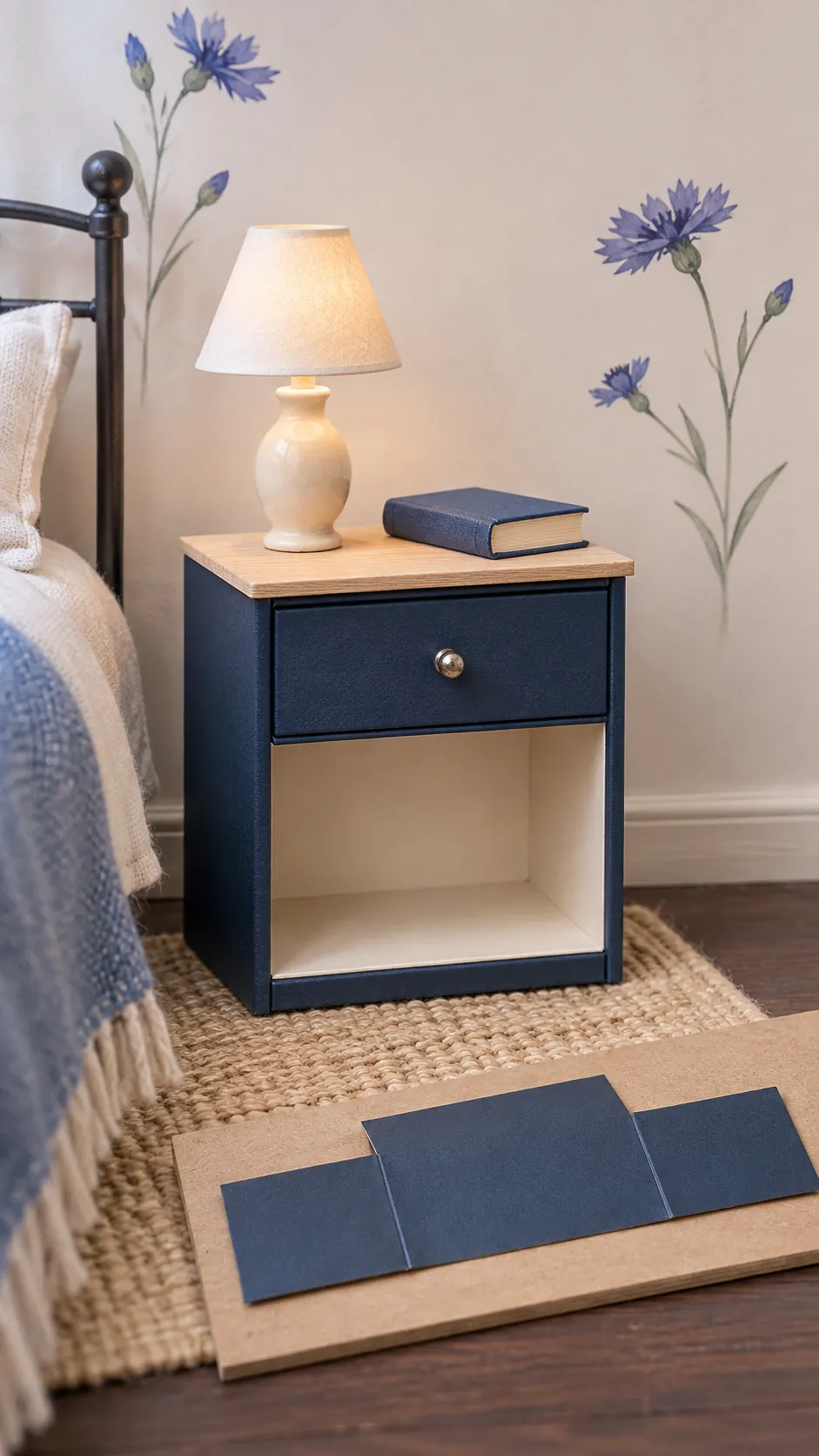
Fold the main case from one scored strip so the two sides and top stay aligned. Insert a lower shelf, then glue a false drawer front over a solid inner block for strength. A seed bead or short pin head becomes a convincing pull when it sits exactly on the center line.
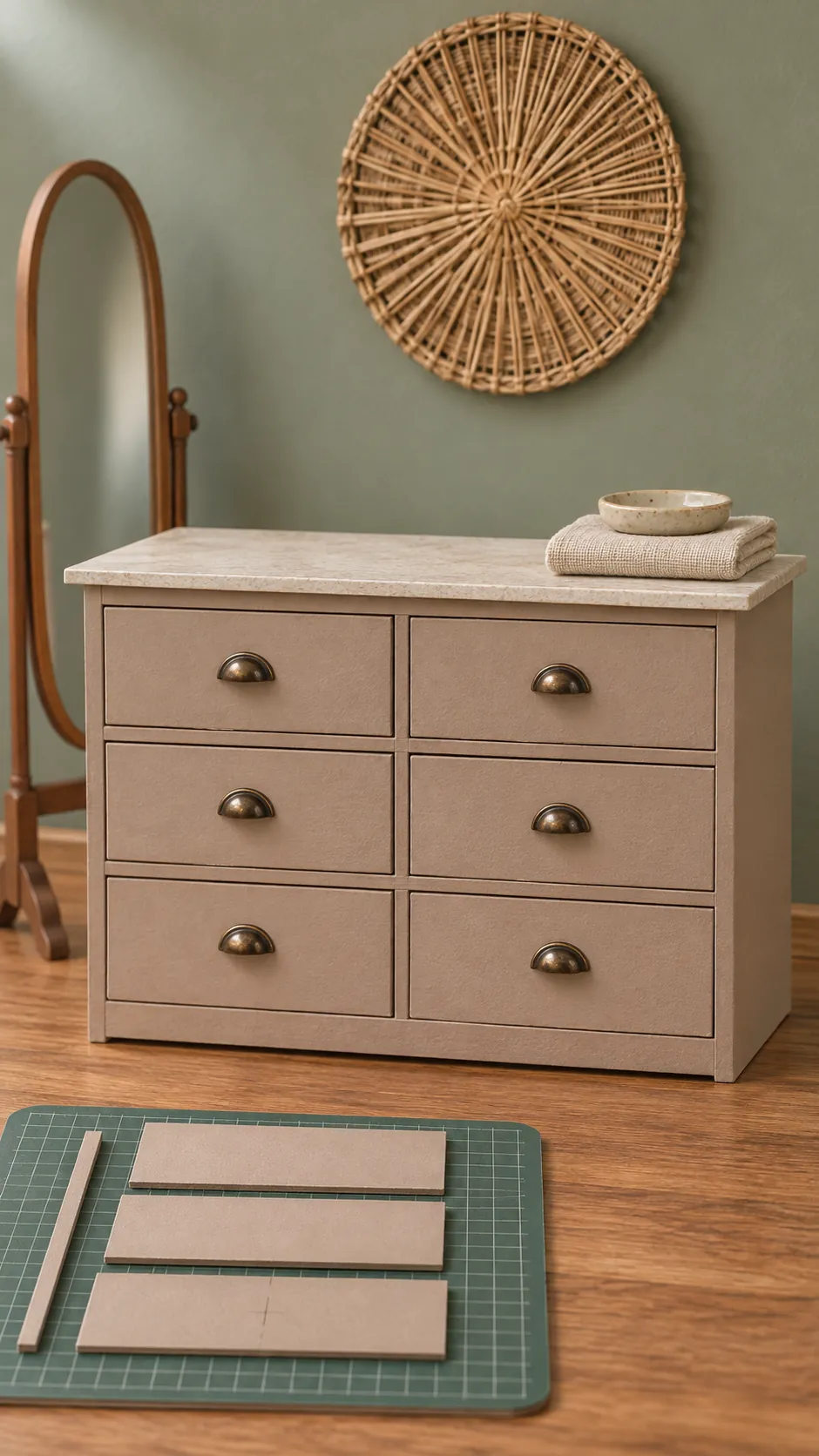
Six Drawer Dresser
Start with a rigid rectangular case and cover its front with six equal drawer faces cut from one piece of card. Use a spacer strip to keep the horizontal and vertical reveals consistent while the fronts are glued. A thin top panel with a slight overhang adds a finished silhouette and hides the case seams.
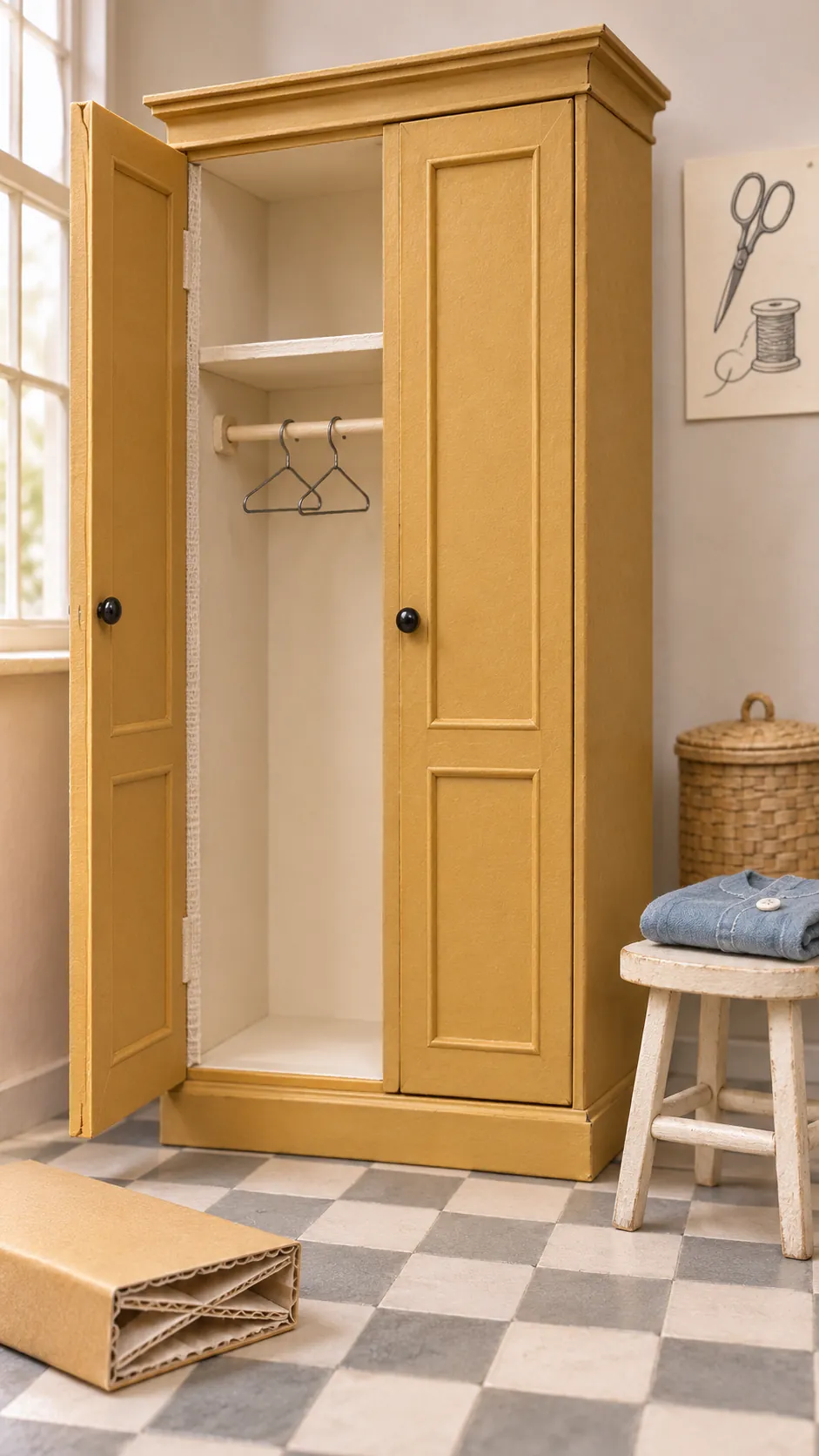
Double Door Wardrobe
Reinforce the tall side panels with a second layer because narrow cardboard walls can bow as glue dries. Fit a top, base, and fixed inner shelf before applying the back, then weight the case flat. The doors may be fixed or hinged with fabric tape, while a paper wrapped skewer creates a tiny clothes rail.
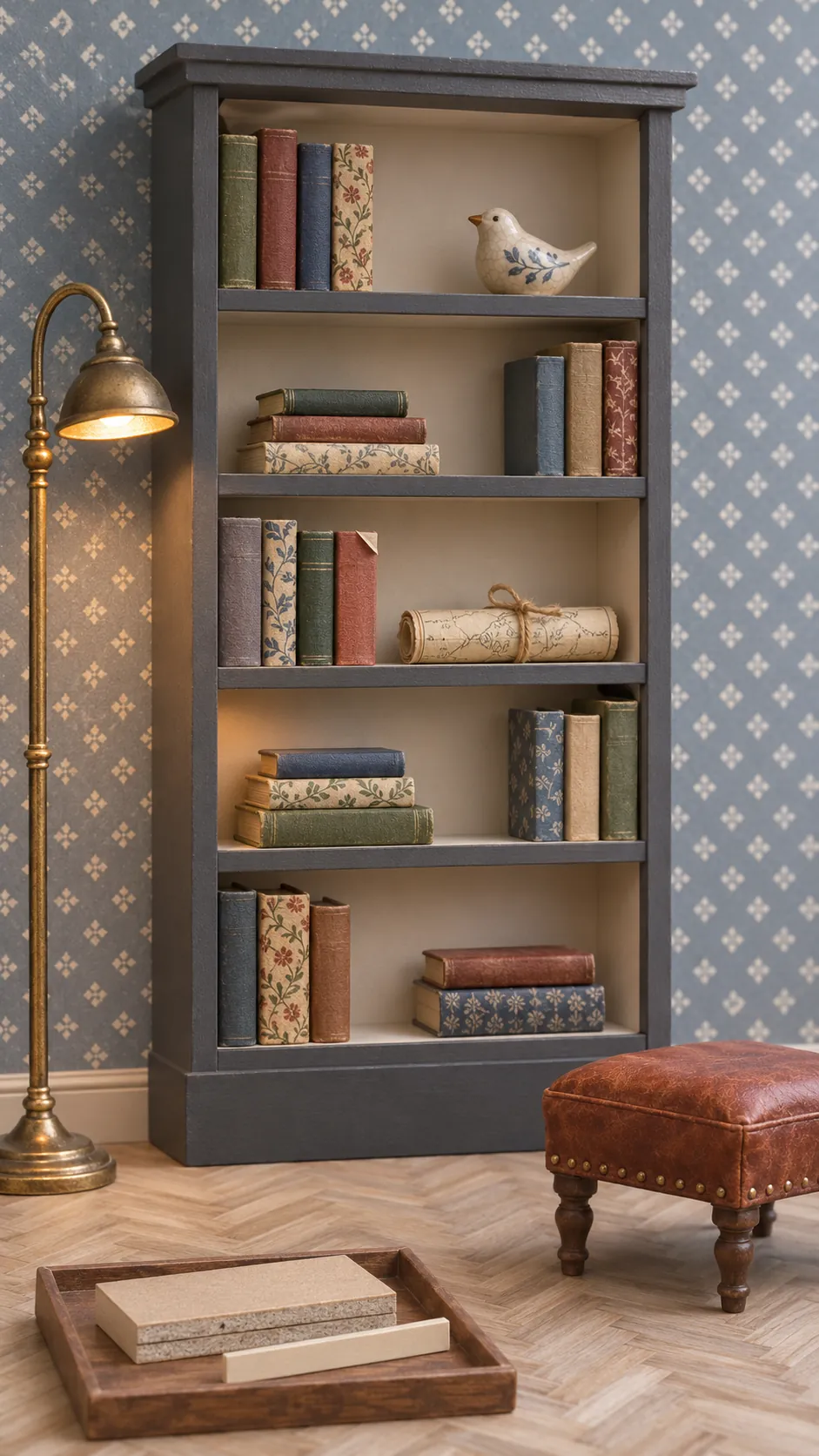
Open Library Bookcase
Cut two matching sides, then mark every shelf position on both pieces at the same time. Sandwich each shelf from two card layers and glue it between the sides with a small square as a guide. A full back panel prevents racking, and a narrow face strip hides every exposed shelf edge.
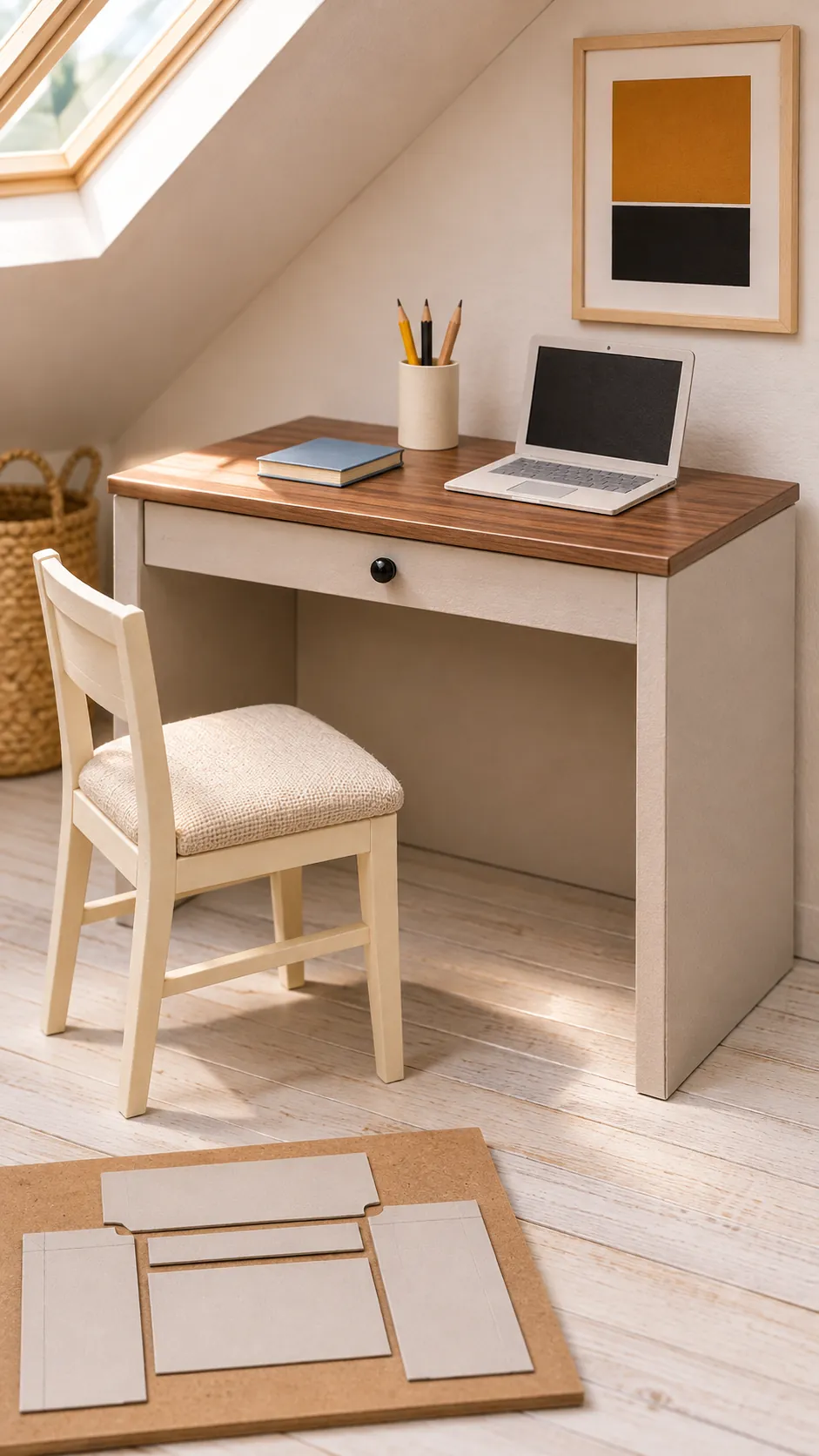
Compact Writing Desk
A narrow top, two slab sides, and a rear modesty panel form a sturdy desk with very few joints. Add a shallow false drawer beneath the top and keep the knee opening wide enough for a miniature chair. Cover the top with smooth paper before assembly so glue marks never reach the most visible surface.
Swivel Style Office Chair
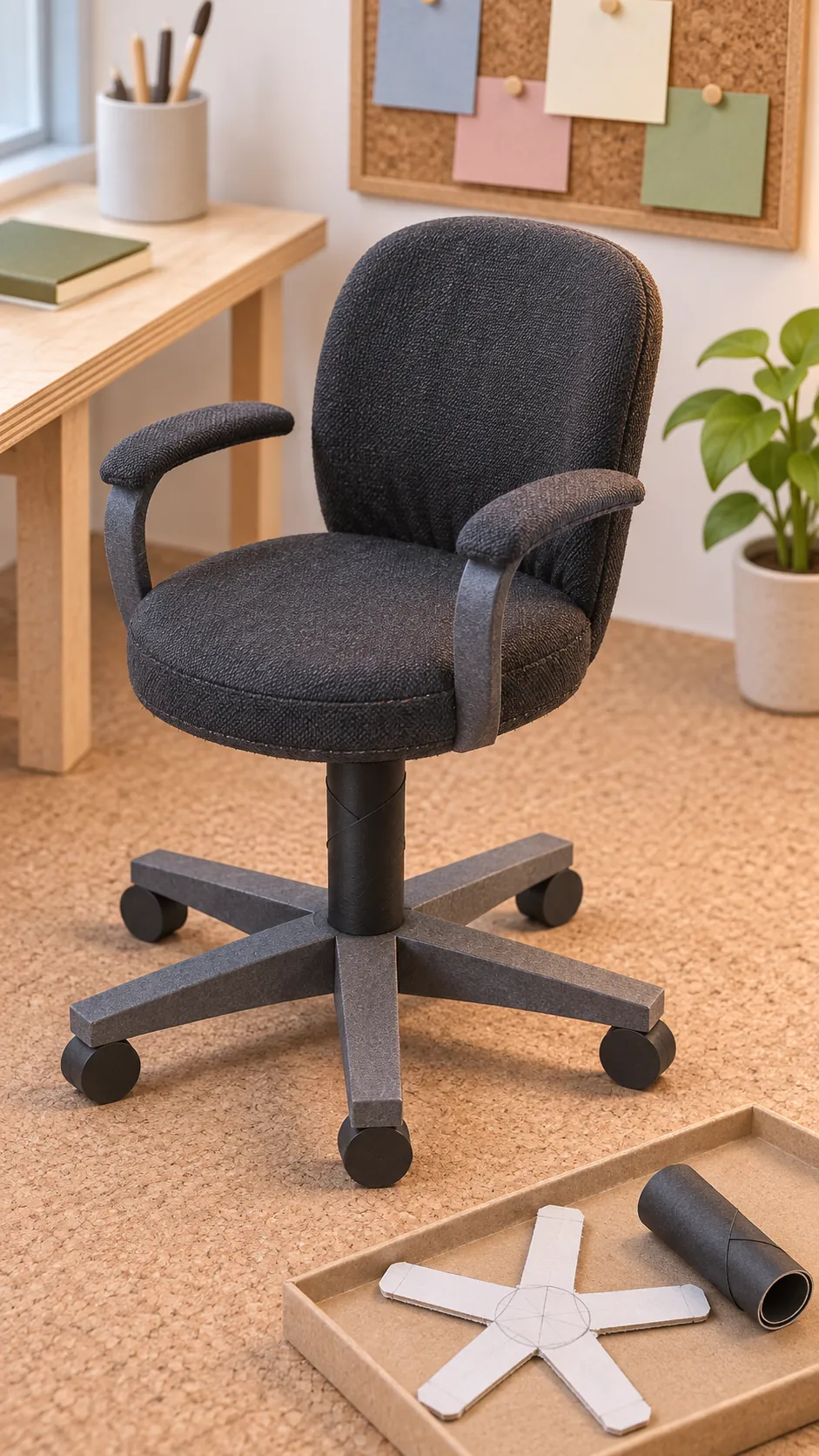
Shape the seat and back from doubled card with rounded corners, then wrap each piece in thin fabric. A tightly rolled paper tube forms the central post, while five narrow laminated strips create a stable star base. Keep the wheels suggested rather than functional because oversized rolling parts can make the chair look out of scale.
Kitchen Island with Shelf
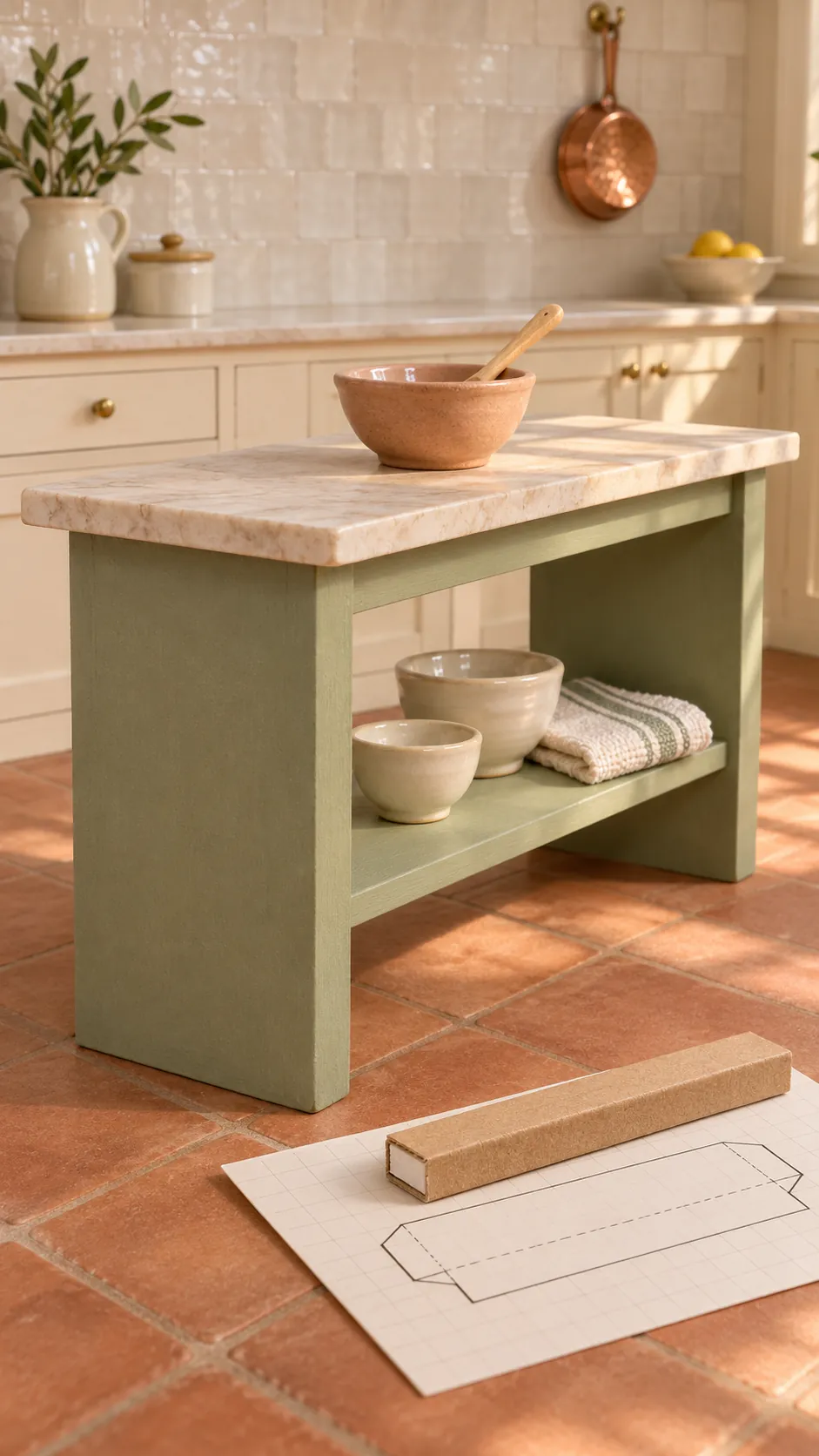
Construct two thick end panels and connect them with a low shelf and a narrow upper rail. The counter should project slightly on all sides, which visually separates it from the base. Reinforce the underside with hidden strips if the island will hold miniature dishes or a heavy clay mixing bowl.
Glass Front Display Cabinet
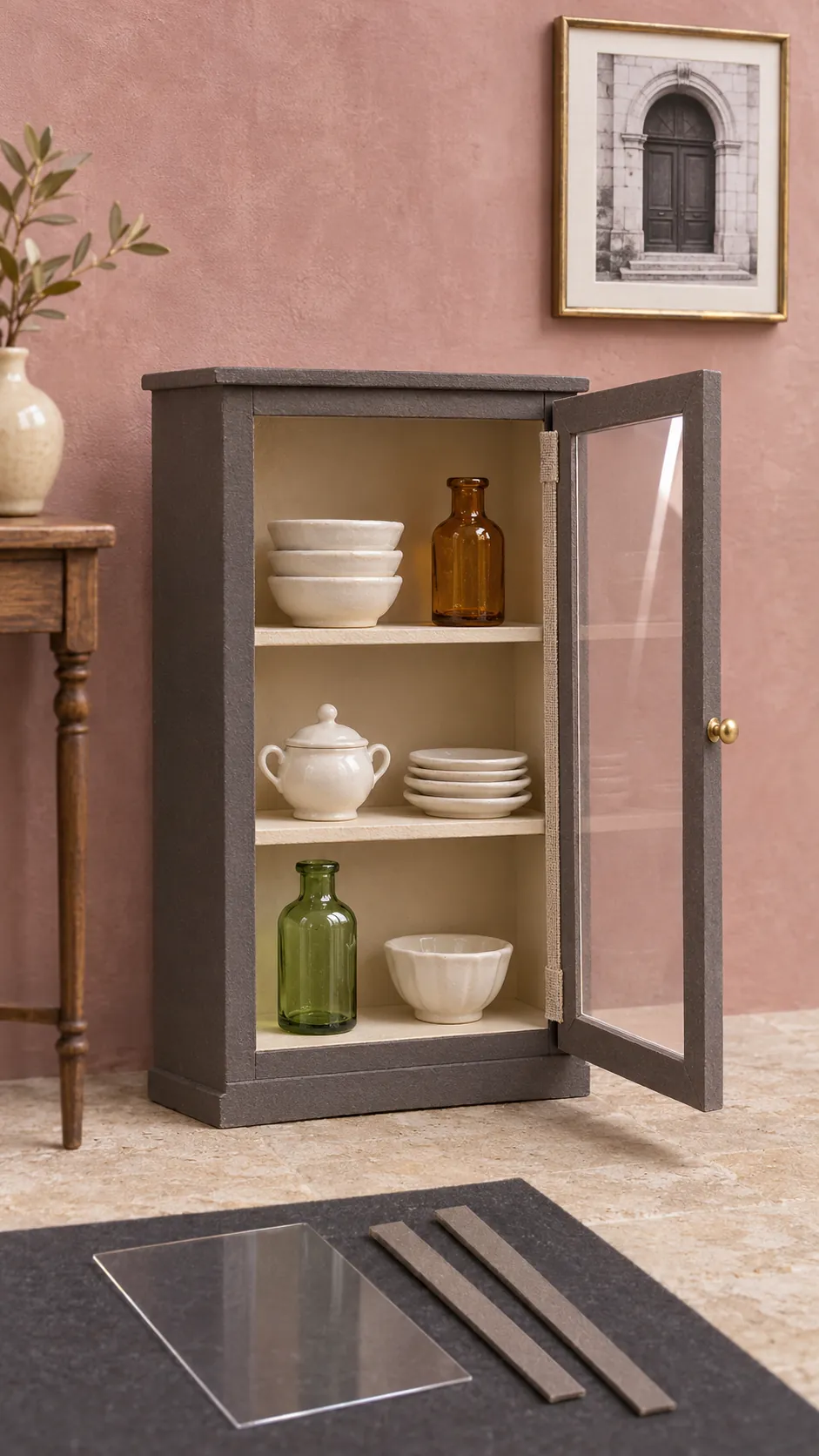
Build a shallow box with a solid back, then add card shelves and a narrow frame around the opening. Clear food packaging can stand in for glass when it is cut cleanly and trapped behind the door frame. Keep adhesive away from the clear center because even a small smear becomes obvious at miniature scale.
Bathroom Vanity Cabinet
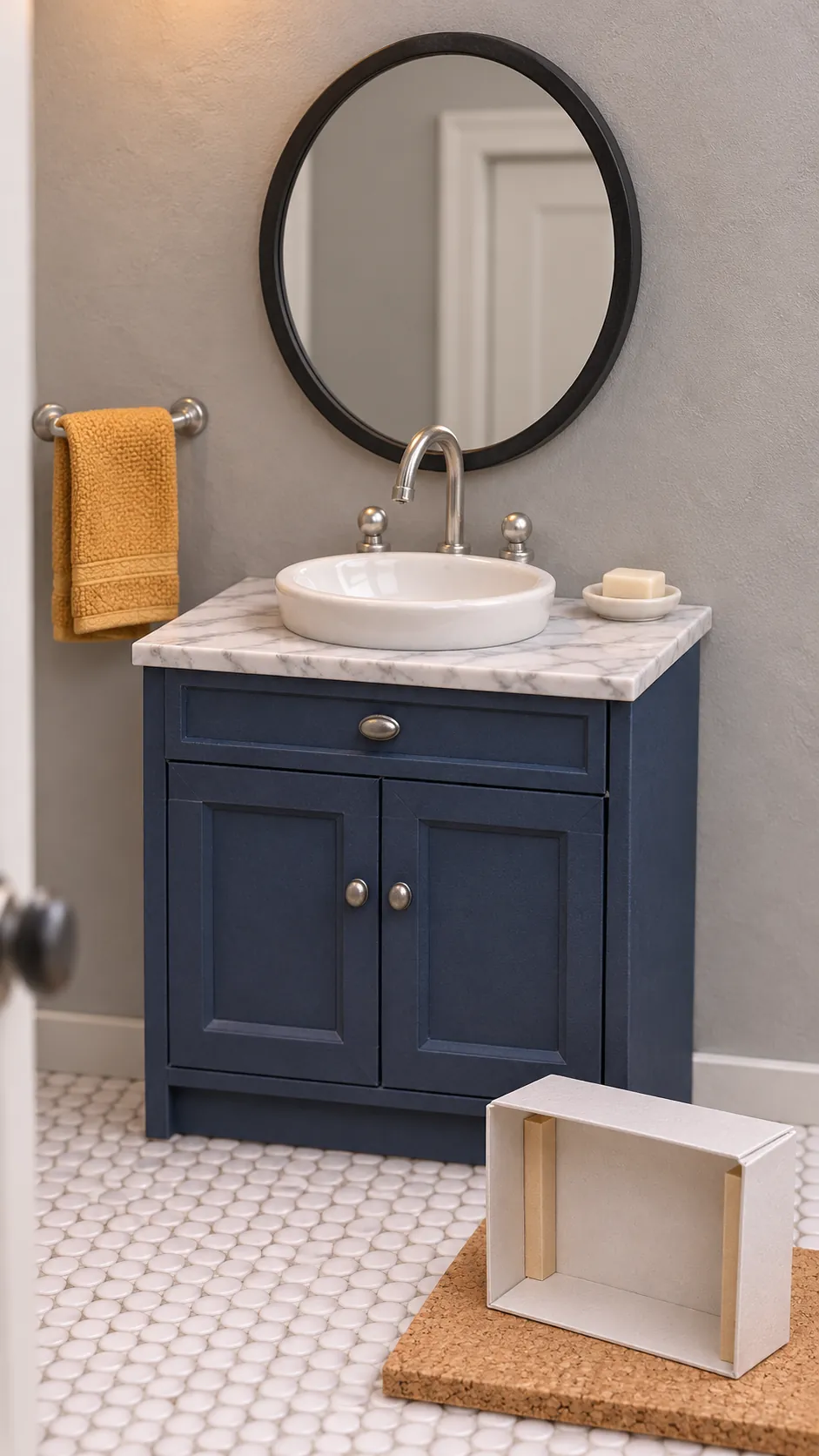
Fold a shallow cabinet case from smooth packaging card and reinforce the inside corners with narrow strips. Add two false doors, a top drawer front, and a sealed counter made from laminated board. Test the basin and faucet together before gluing so the spout reaches the bowl and the counter retains a believable front edge.
Window Storage Bench
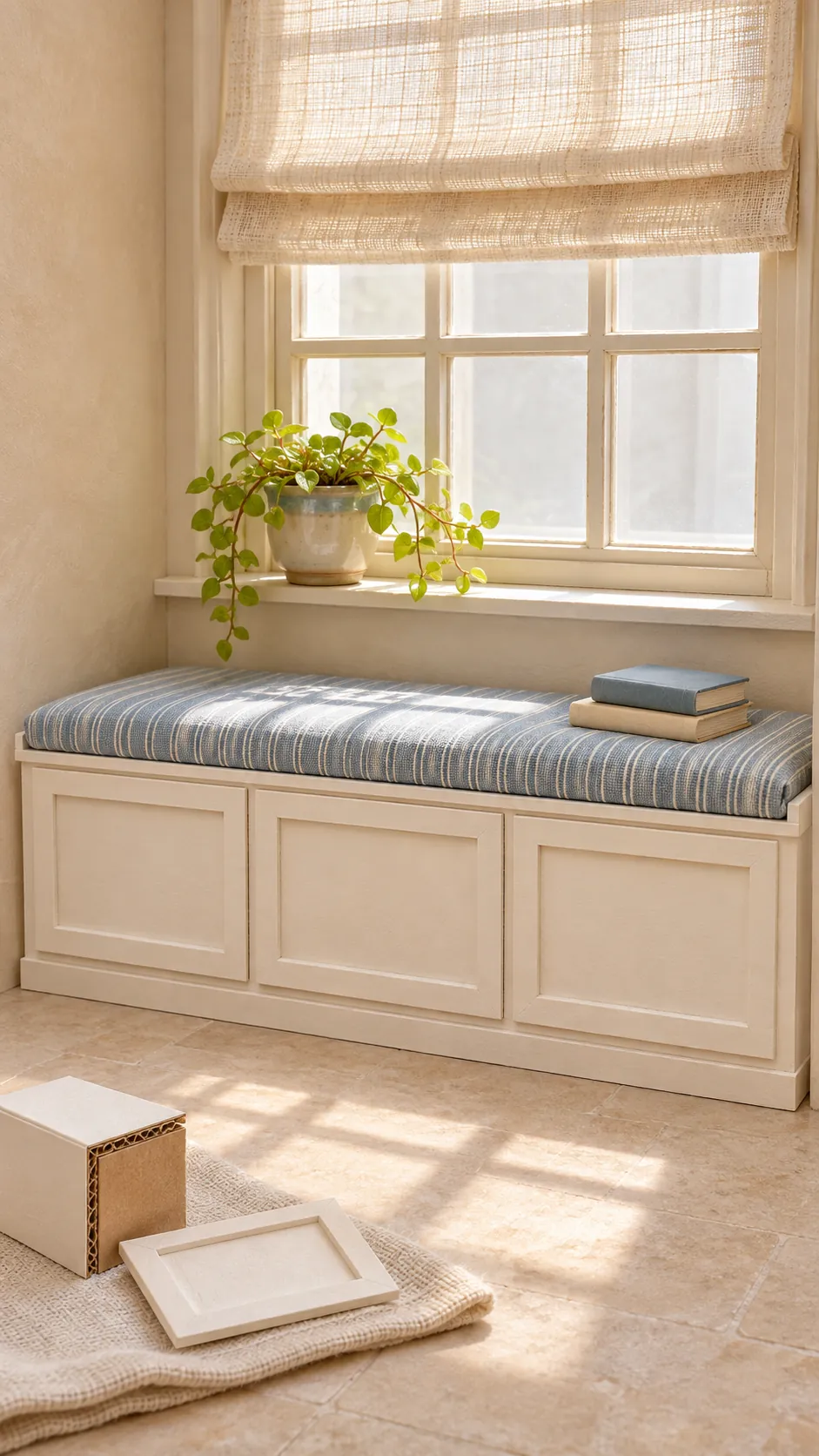
A long closed box makes a strong bench body and also provides a broad surface for a padded seat. Divide the front with three applied panels so it suggests hidden storage without requiring fragile hinges. Fit a cushion from fabric wrapped card, then place the bench below a window or at the foot of a bed.
Round Pedestal Coffee Table
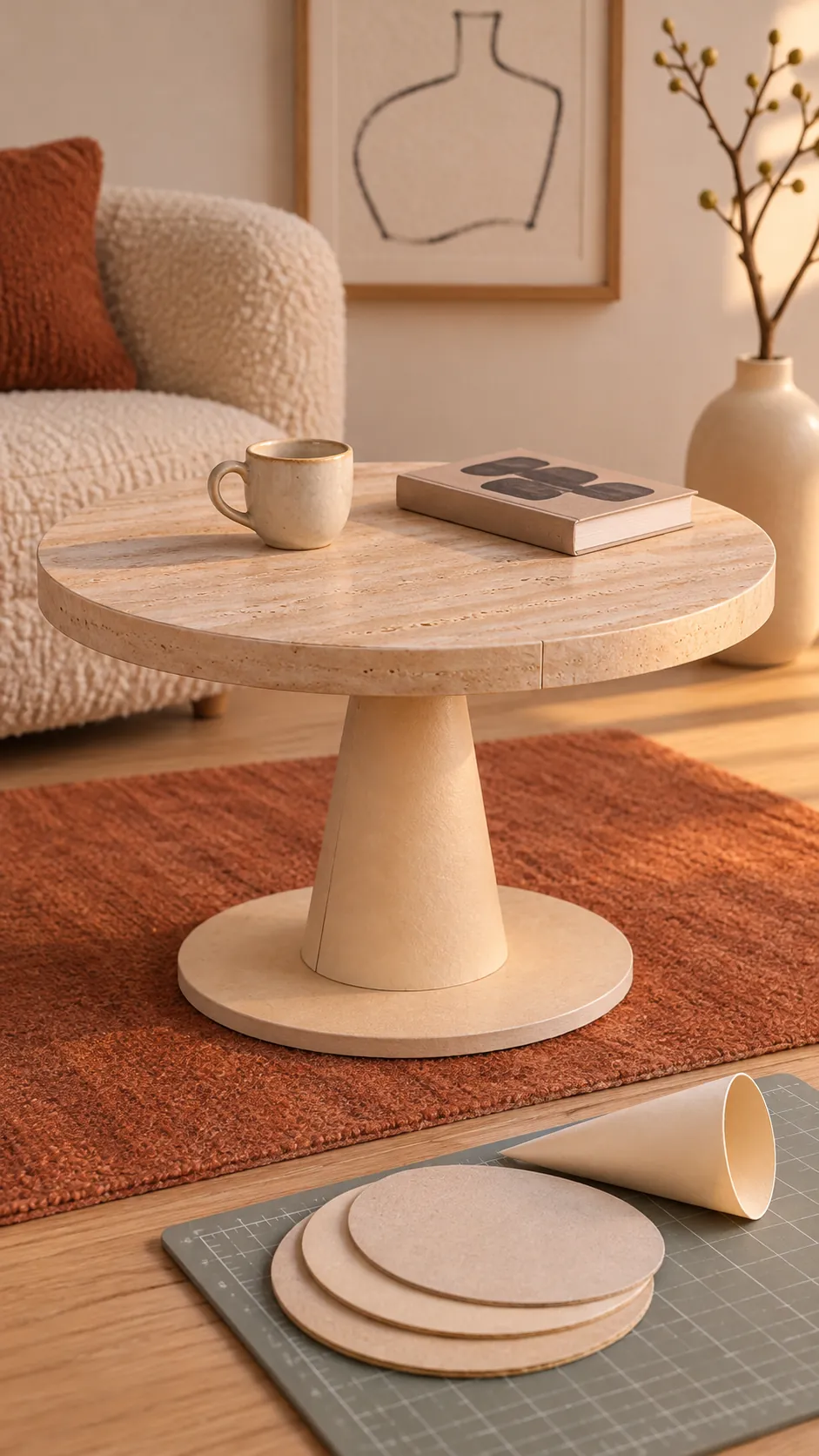
Trace several matching circles on thin card, cut them carefully, and laminate them into one smooth tabletop. Roll a tapered paper tube for the pedestal and glue it between a small upper disk and a wider floor disk. Sand the layered table edge lightly, then cover it with a narrow paper strip for a clean continuous rim.
Narrow Hall Console
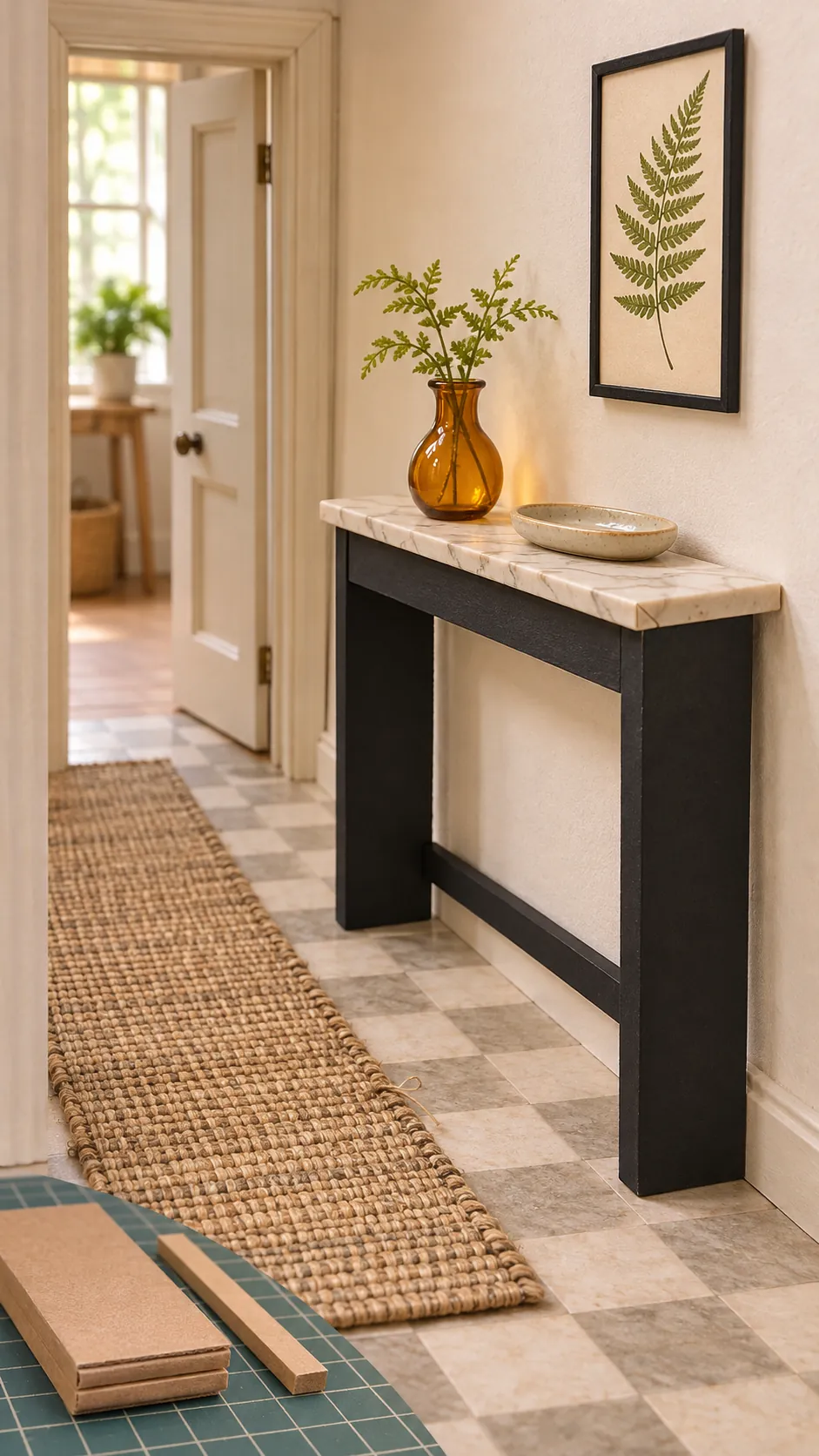
Keep this table shallow enough to fit a dollhouse hallway without blocking the visual path. Two slab legs and a rear stretcher support a doubled card top, while a thin apron makes the construction look more refined. A marble paper top or painted wood grain can turn plain packaging into a convincing accent piece.
Nursery Crib
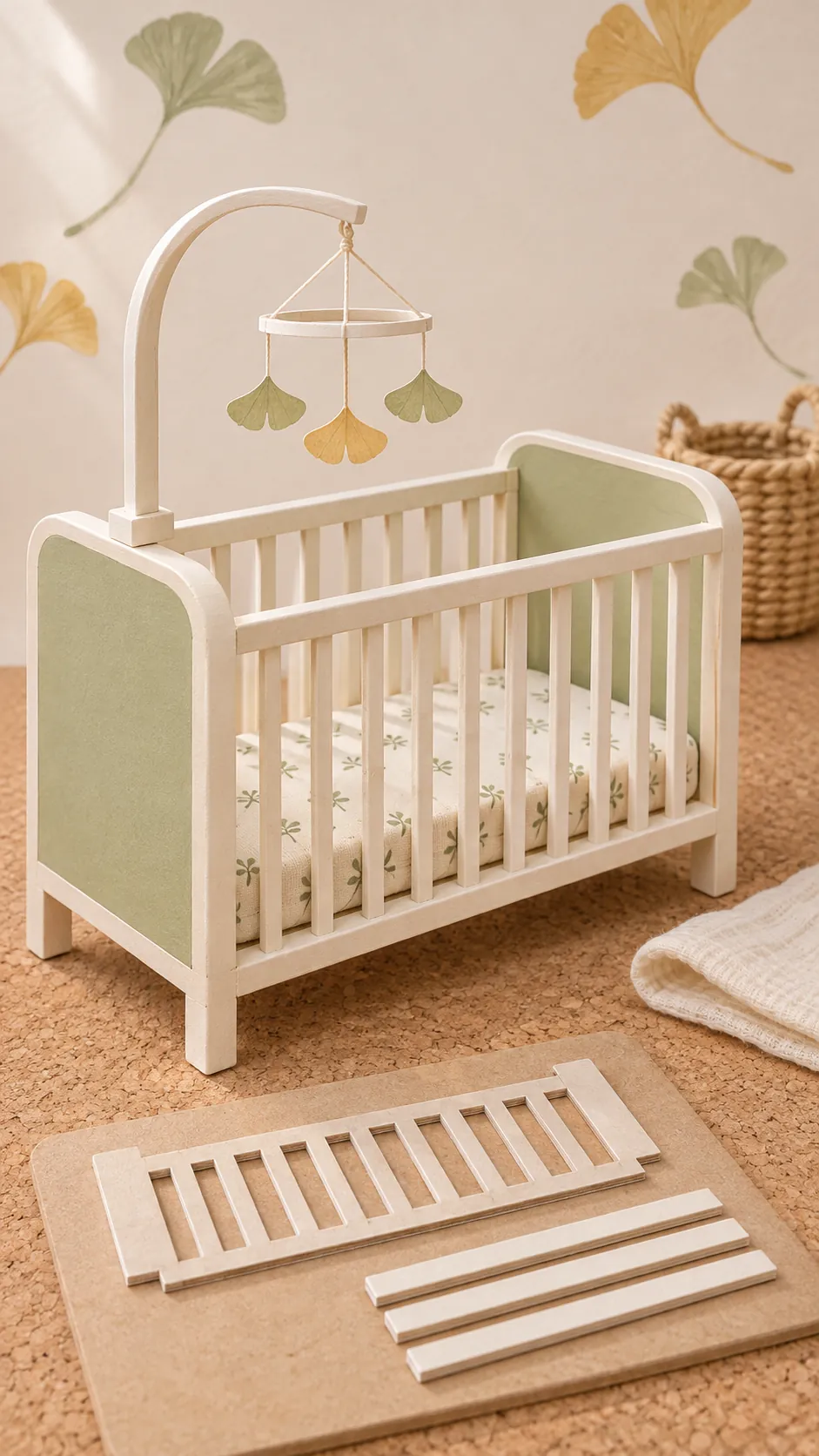
Use solid card panels for the head and foot, then make the side rails from narrow laminated strips spaced evenly on a temporary guide. Attach the rails to a low mattress platform only after they have dried flat. Smooth every cut edge and keep decorative parts firmly fixed if the miniature will be handled by children.
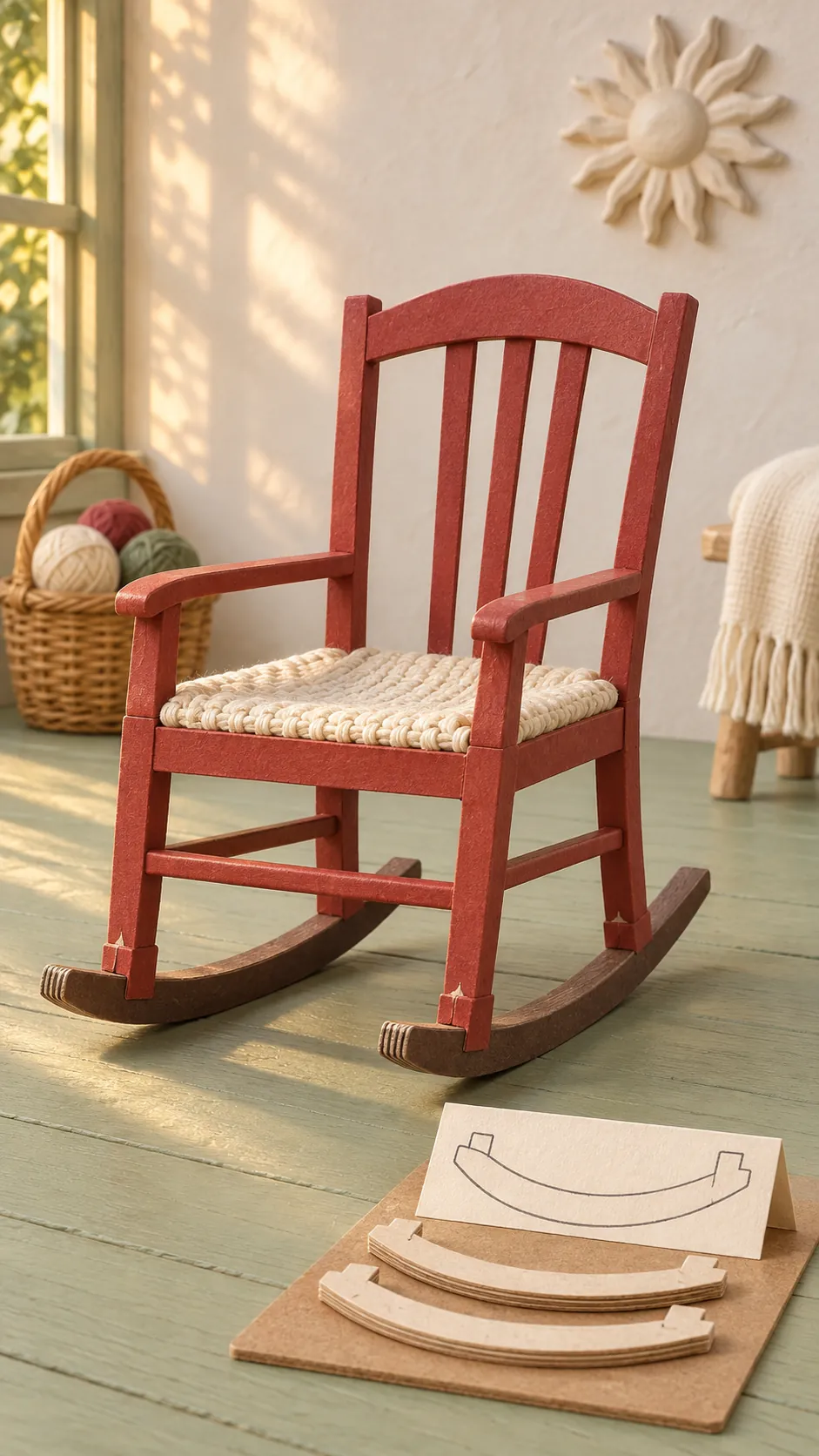
Gentle Rocking Chair
Cut both rockers together from a folded piece of dense card so their curves match exactly. Build a small chair frame above them with a solid seat, slim back, and narrow arms reinforced at every joint. Test the balance before painting, since the rockers need equal contact and the seat must sit over their middle.
Folding Style Room Divider
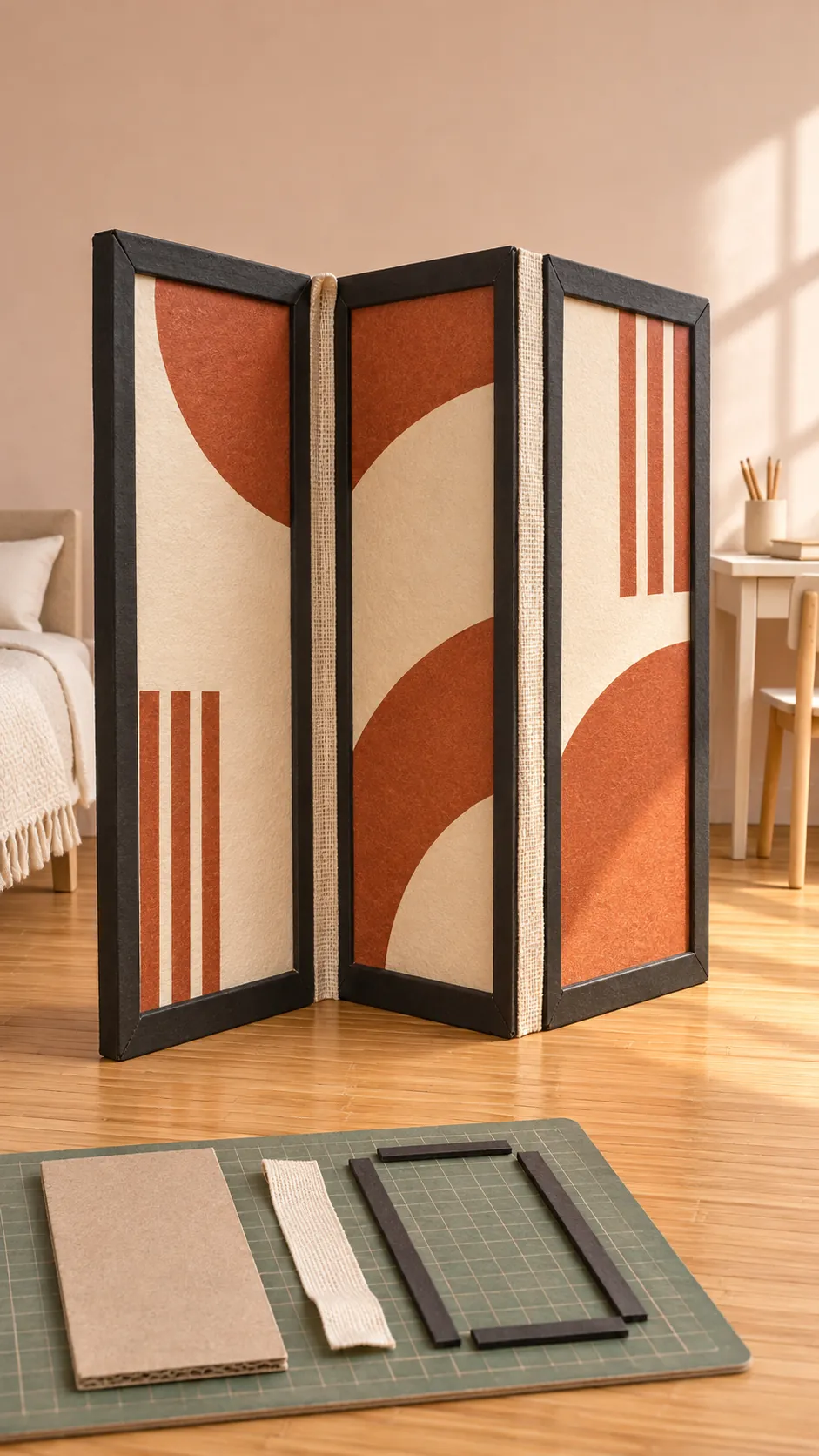
Cut three equal panels from smooth card and cover both faces with paper before joining them. Narrow fabric strips glued between the panels act as flexible hinges and allow the screen to stand in a shallow zigzag. Add thin frame pieces around each face, then use a restrained printed paper inset that suits the room rather than overwhelming it.